Radiotherapy for Seminoma
Dr Sheetal R Kashid
Introduction
• Incidence of testicular tumors 74,458 in 2020 - Globocan 2020
• Age standardised incidence rate 0.95 per 100,000
• Seminoma accounts for >60% of all germ cell neoplasms
McGlynn KA, Devesa SS, Sigurdson AJ, et al . Trends in the incidence
of testicular germ cell tumors in the United States.Cancer 2003;97:
63e70
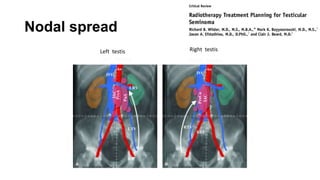
Nodal spread
Left testis Right testis
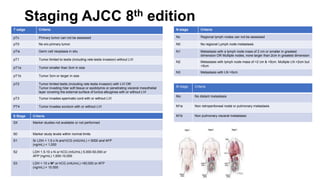
Staging AJCC 8th edition
T satge Criteria
pTx Primary tumor can not be assessed
pT0 No e/o primary tumor
pTis Germ cell neoplasia in situ
pT1 Tumor limited to testis (including rete testis invasion) without LVI
pT1a Tumor smaller than 3cm in size
pT1b Tumor 3cm or larger in size
pT2 Tumor limited testis (including rete testis invasion) with LVI OR
Tumor invading hilar soft tissue or epididymis or penetrating visceral mesothelial
layer covering the external surface of tunica albuginea with or without LVI
pT3 Tumor invades spermatic cord with or without LVI
PT4 Tumor invades scrotum with or without LVI
N stage Criteria
Nx Regional lymph nodes can not be assessed
N0 No regional Lymph node metastasis
N1 Metastasis with a lymph node mass of 2 cm or smaller in greatest
dimension OR Multiple nodes, none larger than 2cm in greatest dimension
N2 Metastasis with lymph node mass of >2 cm & <5cm. Multiple LN >2cm but
<5cm
N3 Metastasis with LN >5cm
S Stage Criteria
SX Marker studies not available or not performed
S0 Marker study levels within normal limits
S1 Sr LDH < 1.5 x N and hCG (mlU/mL) < 5000 and AFP
(ng/mL) < 1,000
S2 LDH 1.5-10 x N or hCG (mlU/mL) 5,000-50,000 or
AFP (ng/mL) 1,000-10,000
S3 LDH > 10 x N* or hCG (mlU/mL) >50,000 or AFP
(ng/mL) > 10.000
M stage Criteria
Mo No distant metastasis
M1a Non retroperitoneal nodal or pulmonary metastasis
M1b Non pulmonary visceral metastasis
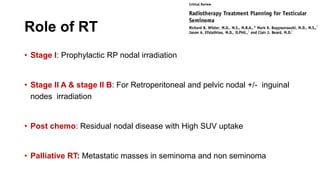
Role of RT
• Stage I: Prophylactic RP nodal irradiation
• Stage II A & stage II B: For Retroperitoneal and pelvic nodal +/- inguinal
nodes irradiation
• Post chemo: Residual nodal disease with High SUV uptake
• Palliative RT: Metastatic masses in seminoma and non seminoma
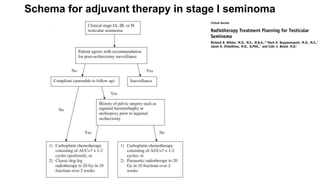
Schema for adjuvant therapy in stage I seminoma
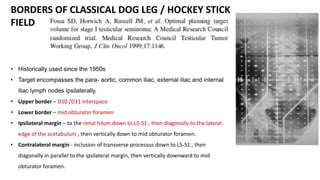
• Historically used since the 1950s
• Target encompasses the para- aortic, common iliac, external iliac and internal
iliac lymph nodes ipsilaterally.
• Upper border – D10 /D11 interspace
• Lower border – mid obturator foramen
• Ipsilateral margin – to the renal hilum down to L5-S1 , then diagonally to the lateral
edge of the acetabulum , then vertically down to mid obturator foramen.
• Contralateral margin - inclusion of transverse processus down to L5-S1 , then
diagonally in parallel to the ipsilateral margin, then vertically downward to mid
obturator foramen.
BORDERS OF CLASSICAL DOG LEG / HOCKEY STICK
FIELD
Premise for reducing field border for stage I
• Stage I seminoma (w/o prior inguinoscrotal surgery)
• Standard of care : Paraaortic nodes only
• Microscopic iliac node metastases are extremely rare in stage I seminoma
patients with undisturbed testicular lymphatics
• Radiation can therefore be restricted to the first echelon only
• Only 15% of patients relapse without radiotherapy
RT Target Volumes
• Dogleg: PA nodes and I/L Iliac nodes
• Rationale for target volume reduction: Acute GI toxicity: 60% and
chronic GI toxicity in 5% . High incidence of upper GI and
hematological malignancies
Aass N, Fossa˚ SD, Høst H: Acute and subacute side effects due to
infradiaphragmatic radiotherapy for testicular cancer: A prospective
study. Int J Radiat Oncol Biol Phys 22:1057-1064, 1992
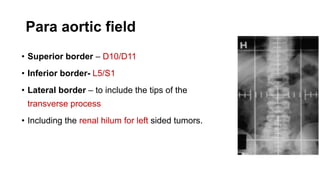
Para aortic field
• Superior border – D10/D11
• Inferior border- L5/S1
• Lateral border – to include the tips of the
transverse process
• Including the renal hilum for left sided tumors.
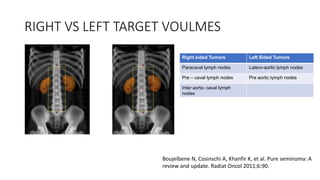
RIGHT VS LEFT TARGET VOULMES
Boujelbene N, Cosinschi A, Khanfir K, et al. Pure seminoma: A
review and update. Radiat Oncol 2011;6:90.
Right sided Tumors Left Sided Tumors
Paracaval lymph nodes Latero-aortic lymph nodes
Pre – caval lymph nodes Pre aortic lymph nodes
Inter aorto- caval lymph
nodes
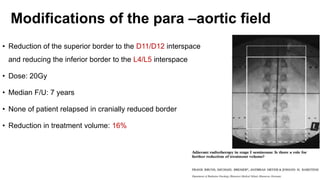
Modifications of the para –aortic field
• Reduction of the superior border to the D11/D12 interspace
and reducing the inferior border to the L4/L5 interspace
• Dose: 20Gy
• Median F/U: 7 years
• None of patient relapsed in cranially reduced border
• Reduction in treatment volume: 16%
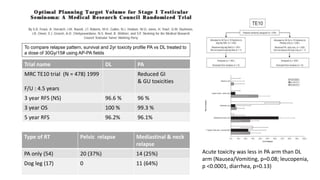
Trial name DL PA
MRC TE10 trial (N = 478) 1999
F/U : 4.5 years
Reduced GI
& GU toxicities
3 year RFS (NS) 96.6 % 96 %
3 year OS 100 % 99.3 %
5 year RFS 96.2% 96.1%
Type of RT Pelvic relapse Mediastinal & neck
relapse
PA only (54) 20 (37%) 14 (25%)
Dog leg (17) 0 11 (64%)
To compare relapse pattern, survival and 2yr toxicity profile PA vs DL treated to
a dose of 30Gy/15# using AP-PA fields
Acute toxicity was less in PA arm than DL
arm (Nausea/Vomiting, p=0.08; leucopenia,
p <0.0001, diarrhea, p=0.13)
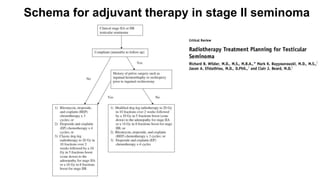
Schema for adjuvant therapy in stage II seminoma
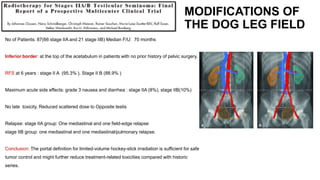
MODIFICATIONS OF
THE DOG LEG FIELD
No of Patients: 87(66 stage IIA and 21 stage IIB) Median F/U: 70 months
Inferior border: at the top of the acetabulum in patients with no prior history of pelvic surgery.
RFS at 6 years : stage II A (95.3% ), Stage II B (88.9% )
Maximum acute side effects: grade 3 nausea and diarrhea : stage IIA (8%), stage IIB(10%)
No late toxicity, Reduced scattered dose to Opposite testis
Relapse: stage IIA group: One mediastinal and one field-edge relapse
stage IIB group: one mediastinal and one mediastinal/pulmonary relapse.
Conclusion: The portal definition for limited-volume hockey-stick irradiation is sufficient for safe
tumor control and might further reduce treatment-related toxicities compared with historic
series.
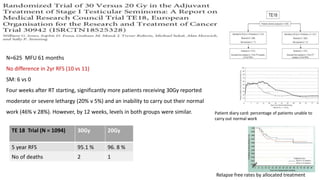
TE 18 Trial (N = 1094) 30Gy 20Gy
5 year RFS 95.1 % 96. 8 %
No of deaths 2 1
N=625 MFU 61 months
No difference in 2yr RFS (10 vs 11)
SM: 6 vs 0
Four weeks after RT starting, significantly more patients receiving 30Gy reported
moderate or severe lethargy (20% v 5%) and an inability to carry out their normal
work (46% v 28%). However, by 12 weeks, levels in both groups were similar.
Relapse free rates by allocated treatment
Patient diary card: percentage of patients unable to
carry out normal work
Stage IIA
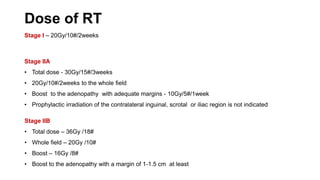
• Total dose - 30Gy/15#/3weeks
• 20Gy/10#/2weeks to the whole field
• Boost to the adenopathy with adequate margins - 10Gy/5#/1week
• Prophylactic irradiation of the contralateral inguinal, scrotal or iliac region is not indicated
Stage IIB
• Total dose – 36Gy /18#
• Whole field – 20Gy /10#
• Boost – 16Gy /8#
• Boost to the adenopathy with a margin of 1-1.5 cm at least
Dose of RT
Stage I – 20Gy/10#/2weeks
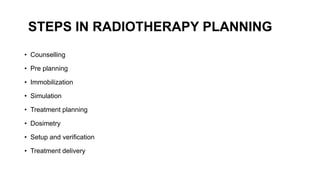
STEPS IN RADIOTHERAPY PLANNING
• Counselling
• Pre planning
• Immobilization
• Simulation
• Treatment planning
• Dosimetry
• Setup and verification
• Treatment delivery
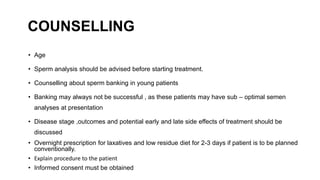
COUNSELLING
• Age
• Sperm analysis should be advised before starting treatment.
• Counselling about sperm banking in young patients
• Banking may always not be successful , as these patients may have sub – optimal semen
analyses at presentation
• Disease stage ,outcomes and potential early and late side effects of treatment should be
discussed
• Overnight prescription for laxatives and low residue diet for 2-3 days if patient is to be planned
conventionally.
• Explain procedure to the patient
• Informed consent must be obtained
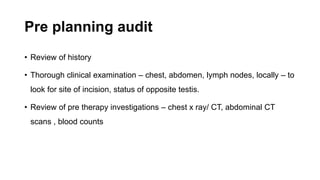
Pre planning audit
• Review of history
• Thorough clinical examination – chest, abdomen, lymph nodes, locally – to
look for site of incision, status of opposite testis.
• Review of pre therapy investigations – chest x ray/ CT, abdominal CT
scans , blood counts
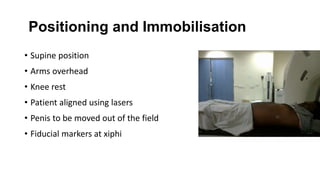
Positioning and Immobilisation
• Supine position
• Arms overhead
• Knee rest
• Patient aligned using lasers
• Penis to be moved out of the field
• Fiducial markers at xiphi
Simulation
• Setup should be comfortable and easily reproducible
• IV contrast for easy visualization of vascular anatomy
• 5mm CECT cuts taken from the domes of the diaphragm to mid thigh
• Fiducial points tattooed
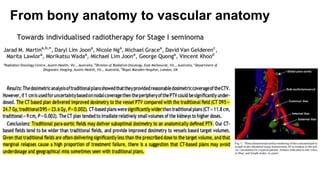
From bony anatomy to vascular anatomy
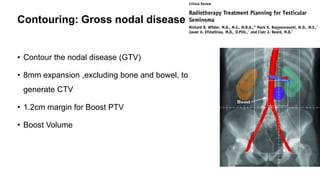
Contouring: Gross nodal disease
• Contour the nodal disease (GTV)
• 8mm expansion ,excluding bone and bowel, to
generate CTV
• 1.2cm margin for Boost PTV
• Boost Volume
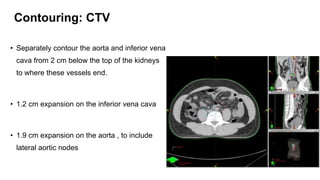
Contouring: CTV
• Separately contour the aorta and inferior vena
cava from 2 cm below the top of the kidneys
to where these vessels end.
• 1.2 cm expansion on the inferior vena cava
• 1.9 cm expansion on the aorta , to include
lateral aortic nodes
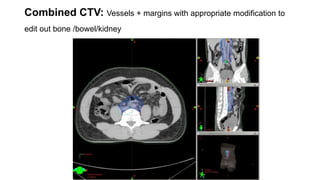
Combined CTV: Vessels + margins with appropriate modification to
edit out bone /bowel/kidney
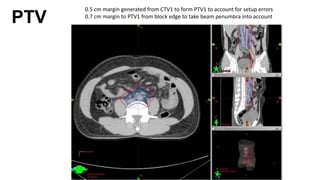
PTV
0.5 cm margin generated from CTV1 to form PTV1 to account for setup errors
0.7 cm margin to PTV1 from block edge to take beam penumbra into account
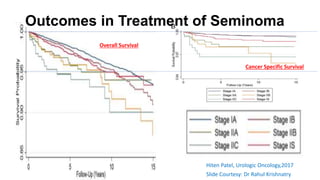
Overall Survival
Cancer Specific Survival
Hiten Patel, Urologic Oncology,2017
Outcomes in Treatment of Seminoma
Slide Courtesy: Dr Rahul Krishnatry
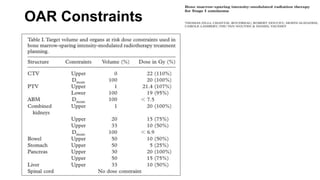
OAR Constraints
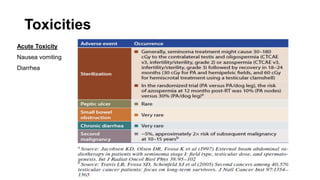
Toxicities
Acute Toxicity
Nausea vomiting
Diarrhea
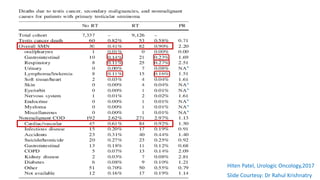
Slide Courtesy: Dr Rahul Krishnatry
Hiten Patel, Urologic Oncology,2017
c
c
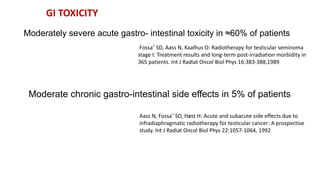
Moderately severe acute gastro- intestinal toxicity in ≈60% of patients
Fossa˚ SD, Aass N, Kaalhus O: Radiotherapy for testicular seminoma
stage I: Treatment results and long-term post-irradiation morbidity in
365 patients. Int J Radiat Oncol Biol Phys 16:383-388,1989
Moderate chronic gastro-intestinal side effects in 5% of patients
Aass N, Fossa˚ SD, Høst H: Acute and subacute side effects due to
infradiaphragmatic radiotherapy for testicular cancer: A prospective
study. Int J Radiat Oncol Biol Phys 22:1057-1064, 1992
GI TOXICITY
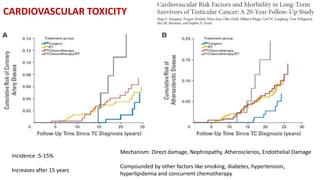
CARDIOVASCULAR TOXICITY
Incidence :5-15%
Increases after 15 years
Mechanism: Direct damage, Nephropathy, Atherosclerios, Endothelial Damage
Compounded by other factors like smoking, diabetes, hypertension,
hyperlipidemia and concurrent chemotherapy
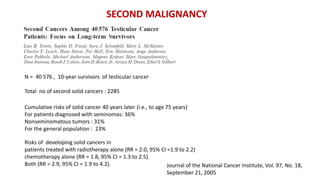
N = 40 576 , 10-year survivors of testicular cancer
Total no of second solid cancers : 2285
Cumulative risks of solid cancer 40 years later (i.e., to age 75 years)
For patients diagnosed with seminomas: 36%
Nonseminomatous tumors : 31%
For the general population : 23%
Risks of developing solid cancers in
patients treated with radiotherapy alone (RR = 2.0, 95% CI =1.9 to 2.2)
chemotherapy alone (RR = 1.8, 95% CI = 1.3 to 2.5)
Both (RR = 2.9, 95% CI = 1.9 to 4.2). Journal of the National Cancer Institute, Vol. 97, No. 18,
September 21, 2005
SECOND MALIGNANCY
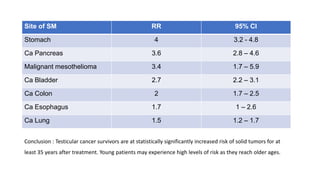
Conclusion : Testicular cancer survivors are at statistically significantly increased risk of solid tumors for at
least 35 years after treatment. Young patients may experience high levels of risk as they reach older ages.
Site of SM RR 95% CI
Stomach 4 3.2 - 4.8
Ca Pancreas 3.6 2.8 – 4.6
Malignant mesothelioma 3.4 1.7 – 5.9
Ca Bladder 2.7 2.2 – 3.1
Ca Colon 2 1.7 – 2.5
Ca Esophagus 1.7 1 – 2.6
Ca Lung 1.5 1.2 – 1.7
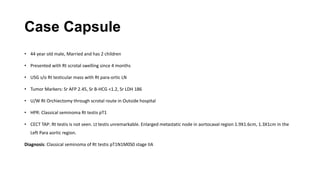
Case Capsule
• 44 year old male, Married and has 2 children
• Presented with Rt scrotal swelling since 4 months
• USG s/o Rt testicular mass with Rt para-ortic LN
• Tumor Markers: Sr AFP 2.45, Sr B-HCG <1.2, Sr LDH 186
• U/W Rt Orchiectomy through scrotal route in Outside hospital
• HPR: Classical seminoma Rt testis pT1
• CECT TAP: Rt testis is not seen. Lt testis unremarkable. Enlarged metastatic node in aortocaval region 1.9X1.6cm, 1.3X1cm in the
Left Para aortic region.
Diagnosis: Classical seminoma of Rt testis pT1N1M0S0 stage IIA
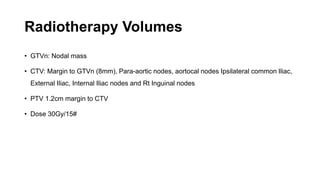
Radiotherapy Volumes
• GTVn: Nodal mass
• CTV: Margin to GTVn (8mm), Para-aortic nodes, aortocal nodes Ipsilateral common Iliac,
External Iliac, Internal Iliac nodes and Rt Inguinal nodes
• PTV 1.2cm margin to CTV
• Dose 30Gy/15#
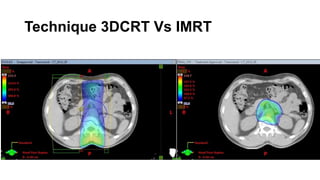
Technique 3DCRT Vs IMRT
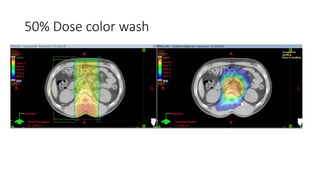
50% Dose color wash
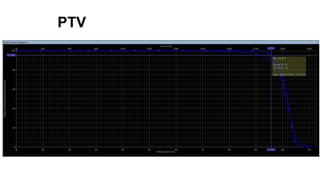
PTV
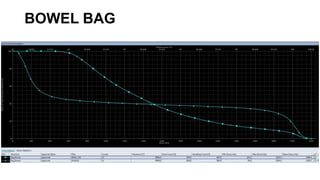
BOWEL BAG
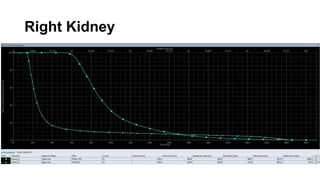
Right Kidney
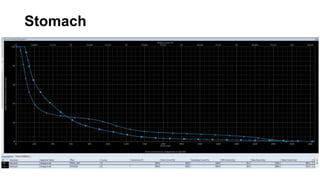
Stomach
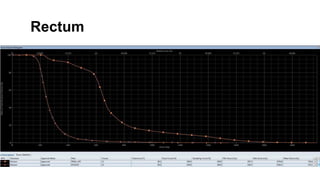
Rectum
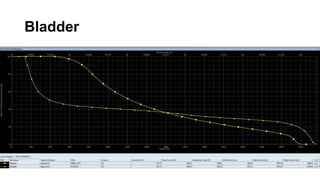
Bladder
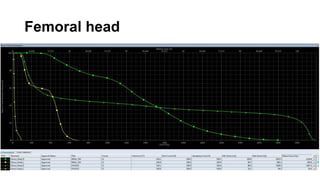
Femoral head
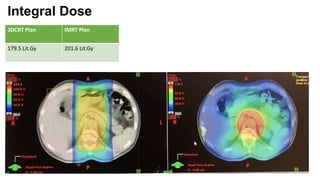
Integral Dose
• Total energy absorbed by body or by some specified part of it.
• Product of mean dose multiplied by the volume of tissue irradiated.
• Higher the Energy  Lesser Integral Dose
• Increase Integral dose with IMRT
• Theoretically increased risk of second malignancy
• Practically less toxicity using IMRT and no evidence to suggest high integral
dose of IMRT causing second malignancy
Integral Dose
3DCRT Plan IMRT Plan
179.5 Lit.Gy 201.6 Lit.Gy
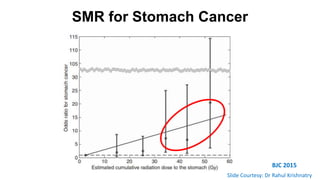
SMR for Stomach Cancer
BJC 2015
Slide Courtesy: Dr Rahul Krishnatry
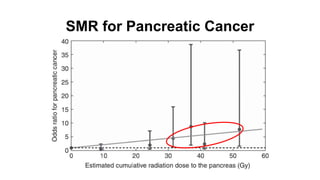
SMR for Pancreatic Cancer
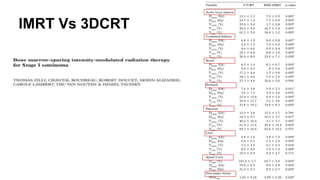
IMRT Vs 3DCRT
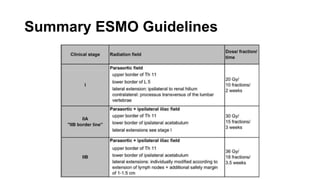
Summary ESMO Guidelines
Thank You

Radiotherapy in Seminoma

  • 1.
  • 2.
    Introduction • Incidence oftesticular tumors 74,458 in 2020 - Globocan 2020 • Age standardised incidence rate 0.95 per 100,000 • Seminoma accounts for >60% of all germ cell neoplasms McGlynn KA, Devesa SS, Sigurdson AJ, et al . Trends in the incidence of testicular germ cell tumors in the United States.Cancer 2003;97: 63e70
  • 3.
  • 4.
    Staging AJCC 8thedition T satge Criteria pTx Primary tumor can not be assessed pT0 No e/o primary tumor pTis Germ cell neoplasia in situ pT1 Tumor limited to testis (including rete testis invasion) without LVI pT1a Tumor smaller than 3cm in size pT1b Tumor 3cm or larger in size pT2 Tumor limited testis (including rete testis invasion) with LVI OR Tumor invading hilar soft tissue or epididymis or penetrating visceral mesothelial layer covering the external surface of tunica albuginea with or without LVI pT3 Tumor invades spermatic cord with or without LVI PT4 Tumor invades scrotum with or without LVI N stage Criteria Nx Regional lymph nodes can not be assessed N0 No regional Lymph node metastasis N1 Metastasis with a lymph node mass of 2 cm or smaller in greatest dimension OR Multiple nodes, none larger than 2cm in greatest dimension N2 Metastasis with lymph node mass of >2 cm & <5cm. Multiple LN >2cm but <5cm N3 Metastasis with LN >5cm S Stage Criteria SX Marker studies not available or not performed S0 Marker study levels within normal limits S1 Sr LDH < 1.5 x N and hCG (mlU/mL) < 5000 and AFP (ng/mL) < 1,000 S2 LDH 1.5-10 x N or hCG (mlU/mL) 5,000-50,000 or AFP (ng/mL) 1,000-10,000 S3 LDH > 10 x N* or hCG (mlU/mL) >50,000 or AFP (ng/mL) > 10.000 M stage Criteria Mo No distant metastasis M1a Non retroperitoneal nodal or pulmonary metastasis M1b Non pulmonary visceral metastasis
  • 5.
    Role of RT •Stage I: Prophylactic RP nodal irradiation • Stage II A & stage II B: For Retroperitoneal and pelvic nodal +/- inguinal nodes irradiation • Post chemo: Residual nodal disease with High SUV uptake • Palliative RT: Metastatic masses in seminoma and non seminoma
  • 6.
    Schema for adjuvanttherapy in stage I seminoma
  • 7.
    • Historically usedsince the 1950s • Target encompasses the para- aortic, common iliac, external iliac and internal iliac lymph nodes ipsilaterally. • Upper border – D10 /D11 interspace • Lower border – mid obturator foramen • Ipsilateral margin – to the renal hilum down to L5-S1 , then diagonally to the lateral edge of the acetabulum , then vertically down to mid obturator foramen. • Contralateral margin - inclusion of transverse processus down to L5-S1 , then diagonally in parallel to the ipsilateral margin, then vertically downward to mid obturator foramen. BORDERS OF CLASSICAL DOG LEG / HOCKEY STICK FIELD
  • 8.
    Premise for reducingfield border for stage I • Stage I seminoma (w/o prior inguinoscrotal surgery) • Standard of care : Paraaortic nodes only • Microscopic iliac node metastases are extremely rare in stage I seminoma patients with undisturbed testicular lymphatics • Radiation can therefore be restricted to the first echelon only • Only 15% of patients relapse without radiotherapy
  • 9.
    RT Target Volumes •Dogleg: PA nodes and I/L Iliac nodes • Rationale for target volume reduction: Acute GI toxicity: 60% and chronic GI toxicity in 5% . High incidence of upper GI and hematological malignancies Aass N, Fossa˚ SD, Høst H: Acute and subacute side effects due to infradiaphragmatic radiotherapy for testicular cancer: A prospective study. Int J Radiat Oncol Biol Phys 22:1057-1064, 1992
  • 10.
    Para aortic field •Superior border – D10/D11 • Inferior border- L5/S1 • Lateral border – to include the tips of the transverse process • Including the renal hilum for left sided tumors.
  • 11.
    RIGHT VS LEFTTARGET VOULMES Boujelbene N, Cosinschi A, Khanfir K, et al. Pure seminoma: A review and update. Radiat Oncol 2011;6:90. Right sided Tumors Left Sided Tumors Paracaval lymph nodes Latero-aortic lymph nodes Pre – caval lymph nodes Pre aortic lymph nodes Inter aorto- caval lymph nodes
  • 12.
    Modifications of thepara –aortic field • Reduction of the superior border to the D11/D12 interspace and reducing the inferior border to the L4/L5 interspace • Dose: 20Gy • Median F/U: 7 years • None of patient relapsed in cranially reduced border • Reduction in treatment volume: 16%
  • 13.
    Trial name DLPA MRC TE10 trial (N = 478) 1999 F/U : 4.5 years Reduced GI & GU toxicities 3 year RFS (NS) 96.6 % 96 % 3 year OS 100 % 99.3 % 5 year RFS 96.2% 96.1% Type of RT Pelvic relapse Mediastinal & neck relapse PA only (54) 20 (37%) 14 (25%) Dog leg (17) 0 11 (64%) To compare relapse pattern, survival and 2yr toxicity profile PA vs DL treated to a dose of 30Gy/15# using AP-PA fields Acute toxicity was less in PA arm than DL arm (Nausea/Vomiting, p=0.08; leucopenia, p <0.0001, diarrhea, p=0.13)
  • 14.
    Schema for adjuvanttherapy in stage II seminoma
  • 15.
    MODIFICATIONS OF THE DOGLEG FIELD No of Patients: 87(66 stage IIA and 21 stage IIB) Median F/U: 70 months Inferior border: at the top of the acetabulum in patients with no prior history of pelvic surgery. RFS at 6 years : stage II A (95.3% ), Stage II B (88.9% ) Maximum acute side effects: grade 3 nausea and diarrhea : stage IIA (8%), stage IIB(10%) No late toxicity, Reduced scattered dose to Opposite testis Relapse: stage IIA group: One mediastinal and one field-edge relapse stage IIB group: one mediastinal and one mediastinal/pulmonary relapse. Conclusion: The portal definition for limited-volume hockey-stick irradiation is sufficient for safe tumor control and might further reduce treatment-related toxicities compared with historic series.
  • 16.
    TE 18 Trial(N = 1094) 30Gy 20Gy 5 year RFS 95.1 % 96. 8 % No of deaths 2 1 N=625 MFU 61 months No difference in 2yr RFS (10 vs 11) SM: 6 vs 0 Four weeks after RT starting, significantly more patients receiving 30Gy reported moderate or severe lethargy (20% v 5%) and an inability to carry out their normal work (46% v 28%). However, by 12 weeks, levels in both groups were similar. Relapse free rates by allocated treatment Patient diary card: percentage of patients unable to carry out normal work
  • 17.
    Stage IIA • Totaldose - 30Gy/15#/3weeks • 20Gy/10#/2weeks to the whole field • Boost to the adenopathy with adequate margins - 10Gy/5#/1week • Prophylactic irradiation of the contralateral inguinal, scrotal or iliac region is not indicated Stage IIB • Total dose – 36Gy /18# • Whole field – 20Gy /10# • Boost – 16Gy /8# • Boost to the adenopathy with a margin of 1-1.5 cm at least Dose of RT Stage I – 20Gy/10#/2weeks
  • 18.
    STEPS IN RADIOTHERAPYPLANNING • Counselling • Pre planning • Immobilization • Simulation • Treatment planning • Dosimetry • Setup and verification • Treatment delivery
  • 19.
    COUNSELLING • Age • Spermanalysis should be advised before starting treatment. • Counselling about sperm banking in young patients • Banking may always not be successful , as these patients may have sub – optimal semen analyses at presentation • Disease stage ,outcomes and potential early and late side effects of treatment should be discussed • Overnight prescription for laxatives and low residue diet for 2-3 days if patient is to be planned conventionally. • Explain procedure to the patient • Informed consent must be obtained
  • 20.
    Pre planning audit •Review of history • Thorough clinical examination – chest, abdomen, lymph nodes, locally – to look for site of incision, status of opposite testis. • Review of pre therapy investigations – chest x ray/ CT, abdominal CT scans , blood counts
  • 21.
    Positioning and Immobilisation •Supine position • Arms overhead • Knee rest • Patient aligned using lasers • Penis to be moved out of the field • Fiducial markers at xiphi
  • 22.
    Simulation • Setup shouldbe comfortable and easily reproducible • IV contrast for easy visualization of vascular anatomy • 5mm CECT cuts taken from the domes of the diaphragm to mid thigh • Fiducial points tattooed
  • 23.
    From bony anatomyto vascular anatomy
  • 24.
    Contouring: Gross nodaldisease • Contour the nodal disease (GTV) • 8mm expansion ,excluding bone and bowel, to generate CTV • 1.2cm margin for Boost PTV • Boost Volume
  • 25.
    Contouring: CTV • Separatelycontour the aorta and inferior vena cava from 2 cm below the top of the kidneys to where these vessels end. • 1.2 cm expansion on the inferior vena cava • 1.9 cm expansion on the aorta , to include lateral aortic nodes
  • 26.
    Combined CTV: Vessels+ margins with appropriate modification to edit out bone /bowel/kidney
  • 27.
    PTV 0.5 cm margingenerated from CTV1 to form PTV1 to account for setup errors 0.7 cm margin to PTV1 from block edge to take beam penumbra into account
  • 28.
    Overall Survival Cancer SpecificSurvival Hiten Patel, Urologic Oncology,2017 Outcomes in Treatment of Seminoma Slide Courtesy: Dr Rahul Krishnatry
  • 29.
  • 30.
  • 31.
    Slide Courtesy: DrRahul Krishnatry Hiten Patel, Urologic Oncology,2017 c c
  • 32.
    Moderately severe acutegastro- intestinal toxicity in ≈60% of patients Fossa˚ SD, Aass N, Kaalhus O: Radiotherapy for testicular seminoma stage I: Treatment results and long-term post-irradiation morbidity in 365 patients. Int J Radiat Oncol Biol Phys 16:383-388,1989 Moderate chronic gastro-intestinal side effects in 5% of patients Aass N, Fossa˚ SD, Høst H: Acute and subacute side effects due to infradiaphragmatic radiotherapy for testicular cancer: A prospective study. Int J Radiat Oncol Biol Phys 22:1057-1064, 1992 GI TOXICITY
  • 33.
    CARDIOVASCULAR TOXICITY Incidence :5-15% Increasesafter 15 years Mechanism: Direct damage, Nephropathy, Atherosclerios, Endothelial Damage Compounded by other factors like smoking, diabetes, hypertension, hyperlipidemia and concurrent chemotherapy
  • 34.
    N = 40576 , 10-year survivors of testicular cancer Total no of second solid cancers : 2285 Cumulative risks of solid cancer 40 years later (i.e., to age 75 years) For patients diagnosed with seminomas: 36% Nonseminomatous tumors : 31% For the general population : 23% Risks of developing solid cancers in patients treated with radiotherapy alone (RR = 2.0, 95% CI =1.9 to 2.2) chemotherapy alone (RR = 1.8, 95% CI = 1.3 to 2.5) Both (RR = 2.9, 95% CI = 1.9 to 4.2). Journal of the National Cancer Institute, Vol. 97, No. 18, September 21, 2005 SECOND MALIGNANCY
  • 35.
    Conclusion : Testicularcancer survivors are at statistically significantly increased risk of solid tumors for at least 35 years after treatment. Young patients may experience high levels of risk as they reach older ages. Site of SM RR 95% CI Stomach 4 3.2 - 4.8 Ca Pancreas 3.6 2.8 – 4.6 Malignant mesothelioma 3.4 1.7 – 5.9 Ca Bladder 2.7 2.2 – 3.1 Ca Colon 2 1.7 – 2.5 Ca Esophagus 1.7 1 – 2.6 Ca Lung 1.5 1.2 – 1.7
  • 36.
    Case Capsule • 44year old male, Married and has 2 children • Presented with Rt scrotal swelling since 4 months • USG s/o Rt testicular mass with Rt para-ortic LN • Tumor Markers: Sr AFP 2.45, Sr B-HCG <1.2, Sr LDH 186 • U/W Rt Orchiectomy through scrotal route in Outside hospital • HPR: Classical seminoma Rt testis pT1 • CECT TAP: Rt testis is not seen. Lt testis unremarkable. Enlarged metastatic node in aortocaval region 1.9X1.6cm, 1.3X1cm in the Left Para aortic region. Diagnosis: Classical seminoma of Rt testis pT1N1M0S0 stage IIA
  • 37.
    Radiotherapy Volumes • GTVn:Nodal mass • CTV: Margin to GTVn (8mm), Para-aortic nodes, aortocal nodes Ipsilateral common Iliac, External Iliac, Internal Iliac nodes and Rt Inguinal nodes • PTV 1.2cm margin to CTV • Dose 30Gy/15#
  • 38.
  • 39.
  • 40.
  • 41.
  • 42.
  • 43.
  • 44.
  • 45.
  • 46.
  • 47.
    Integral Dose • Totalenergy absorbed by body or by some specified part of it. • Product of mean dose multiplied by the volume of tissue irradiated. • Higher the Energy  Lesser Integral Dose • Increase Integral dose with IMRT • Theoretically increased risk of second malignancy • Practically less toxicity using IMRT and no evidence to suggest high integral dose of IMRT causing second malignancy
  • 48.
    Integral Dose 3DCRT PlanIMRT Plan 179.5 Lit.Gy 201.6 Lit.Gy
  • 49.
    SMR for StomachCancer BJC 2015 Slide Courtesy: Dr Rahul Krishnatry
  • 50.
  • 51.
  • 52.
  • 53.

Editor's Notes