RADIOACTIVE WASTE
MANAGEMENT
To protect the people and
environment
Generation
 Radioactive wastes are wastes that contain radioactive
material.
 Various operations of the nuclear fuel cycle.
 Mining
 nuclear power generation
 various processes in industry, defense, medicine
 scientific research
Types
Very low level waste (VLLW)
Low-level waste (LLW)
Intermediate-level waste (ILW)
High-level waste (HLW)
Very low level waste (VLLW)
 consists mainly of demolished material (such as
concrete, plaster, bricks, metal, valves, piping etc.)
produced during dismantling operations on
nuclear industrial sites.
 Naturally-Occurring Radioactive Materials
(NORM)
 Not harmful to humans or environment
 recycling or using as byproducts
Low-level waste (LLW)
 electricity generation
 diagnosis and treatment of disease
 medical research
 testing of new pharmaceuticals
 nondestructive testing of airplanes and bridges
 smoke detectors
 hardening of materials like hardwood flooring
 breeding of new varieties of seed with higher crop yields
 eradication of insect pests
 food preservation.
Low-level waste (LLW)
 short-lived radioactivity
 suitable for shallow land burial
Low-level waste (LLW)
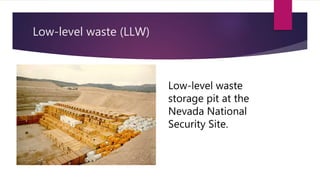
Low-level waste
storage pit at the
Nevada National
Security Site.
Intermediate-level waste (ILW)
 Contains higher amounts of radioactivity and
some requires shielding.
 Resins
 Chemical sludges
 Metal fuel cladding
Intermediate-level waste (ILW)
Some low-level liquid wastes from
reprocessing plants are discharged
to the sea
Include radionuclides technetium-
99.
High level waste(HLW)
 Arises from the 'burning' of uranium fuel in a
nuclear reactor.
 Produced during reprocessing of used fuel.
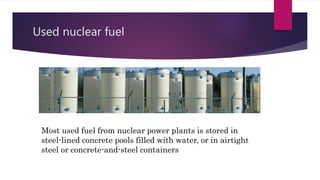
Used nuclear fuel
Most used fuel from nuclear power plants is stored in
steel-lined concrete pools filled with water, or in airtight
steel or concrete-and-steel containers
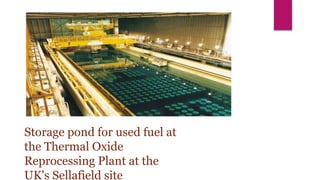
Storage pond for used fuel at
the Thermal Oxide
Reprocessing Plant at the
UK's Sellafield site
POND
 7-12 metres deep
 The multiple racks are made of metal with
neutron absorbers incorporated in it
 The circulating water both shields and cools
the fuel
 Made of thick reinforced concrete with steel
liners
Deep geological disposal
A key idea was that long-term
disposal would be best carried out by
identifying suitable sites at which the
waste could be buried, a process
called deep geological disposal.
It must be located at least 200 m
below the ground surface to avoid
the effects of erosion and human
Recycle:
 Direct disposal (after storage) to a geological repository.
It takes 300,000 years
 Aqueous reprocessing to remove only uranium and
plutonium. It take 9000 years.
 Advanced electrometallurgical reprocessing which
removes uranium, plutonium and minor actinides
together for recycling in a fast reactor. It takes only
300years. (not commercialy available).
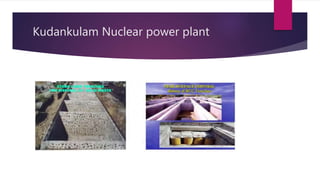
Kudankulam Nuclear power plant
conclusion
 Disposal of radioactive waste is a complex issue, not only
because of the nature of the waste, but also because of the
stringent regulatory structure for dealing with radioactive
waste.
 India has achieved self-reliance in the management of all
type of radioactive waste.
 An ongoing effort to upgrade technology to minimize
radioactive discharge is also on.
Citations
THANK YOU
BY Murali.E

Radioactive waste management

  • 1.
    RADIOACTIVE WASTE MANAGEMENT To protectthe people and environment
  • 2.
    Generation  Radioactive wastesare wastes that contain radioactive material.  Various operations of the nuclear fuel cycle.  Mining  nuclear power generation  various processes in industry, defense, medicine  scientific research
  • 3.
    Types Very low levelwaste (VLLW) Low-level waste (LLW) Intermediate-level waste (ILW) High-level waste (HLW)
  • 5.
    Very low levelwaste (VLLW)  consists mainly of demolished material (such as concrete, plaster, bricks, metal, valves, piping etc.) produced during dismantling operations on nuclear industrial sites.  Naturally-Occurring Radioactive Materials (NORM)  Not harmful to humans or environment  recycling or using as byproducts
  • 6.
    Low-level waste (LLW) electricity generation  diagnosis and treatment of disease  medical research  testing of new pharmaceuticals  nondestructive testing of airplanes and bridges  smoke detectors  hardening of materials like hardwood flooring  breeding of new varieties of seed with higher crop yields  eradication of insect pests  food preservation.
  • 7.
    Low-level waste (LLW) short-lived radioactivity  suitable for shallow land burial
  • 8.
    Low-level waste (LLW) Low-levelwaste storage pit at the Nevada National Security Site.
  • 9.
    Intermediate-level waste (ILW) Contains higher amounts of radioactivity and some requires shielding.  Resins  Chemical sludges  Metal fuel cladding
  • 10.
    Intermediate-level waste (ILW) Somelow-level liquid wastes from reprocessing plants are discharged to the sea Include radionuclides technetium- 99.
  • 11.
    High level waste(HLW) Arises from the 'burning' of uranium fuel in a nuclear reactor.  Produced during reprocessing of used fuel.
  • 12.
    Used nuclear fuel Mostused fuel from nuclear power plants is stored in steel-lined concrete pools filled with water, or in airtight steel or concrete-and-steel containers
  • 13.
    Storage pond forused fuel at the Thermal Oxide Reprocessing Plant at the UK's Sellafield site
  • 14.
    POND  7-12 metresdeep  The multiple racks are made of metal with neutron absorbers incorporated in it  The circulating water both shields and cools the fuel  Made of thick reinforced concrete with steel liners
  • 15.
    Deep geological disposal Akey idea was that long-term disposal would be best carried out by identifying suitable sites at which the waste could be buried, a process called deep geological disposal. It must be located at least 200 m below the ground surface to avoid the effects of erosion and human
  • 16.
    Recycle:  Direct disposal(after storage) to a geological repository. It takes 300,000 years  Aqueous reprocessing to remove only uranium and plutonium. It take 9000 years.  Advanced electrometallurgical reprocessing which removes uranium, plutonium and minor actinides together for recycling in a fast reactor. It takes only 300years. (not commercialy available).
  • 17.
  • 18.
    conclusion  Disposal ofradioactive waste is a complex issue, not only because of the nature of the waste, but also because of the stringent regulatory structure for dealing with radioactive waste.  India has achieved self-reliance in the management of all type of radioactive waste.  An ongoing effort to upgrade technology to minimize radioactive discharge is also on.
  • 19.
  • 20.