adithya ramesh
Niranjankumar.l
Nuclear WASTE:
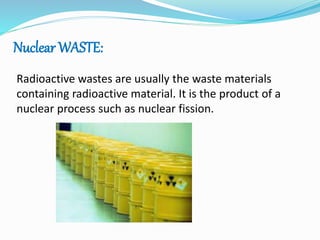
Radioactive wastes are usually the waste materials
containing radioactive material. It is the product of a
nuclear process such as nuclear fission.
INTRODUCTION
Radio activity
 Certain elements that compose matter emit
particles and radiations spontaneously. This
phenomenon is referred to as ‘radioactivity’
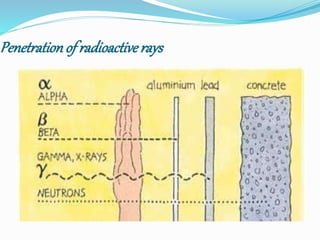
 Three different kinds of rays; Alpha, Beta and
Gamma rays are associated with radioactivity.
The alpha rays consist of particles (nuclei of
helium atoms) carrying a +ve charge, beta rays
particles have –ve charge (streams of electrons)
and gamma rays are charge less EM radiation
 Radioactive elements decay at different rates.
 Rates are measured as half-lives – that is, the
time it takes for onehalf of any given quantity of a
radioactive element to disintegrate.
 The longest half-life is that of the‘isotope’ 238U
of uranium. It is 4.5 billion years. Some isotopes
have half-lives of years, months, days, minutes,
seconds, or even less than millionths of a second.
Penetrationof radioactiverays
Introduction
Radio active
waste
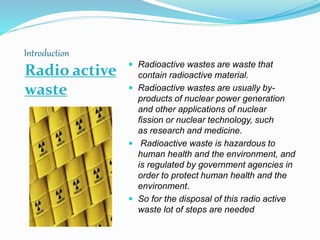
 Radioactive wastes are waste that
contain radioactive material.
 Radioactive wastes are usually by-
products of nuclear power generation
and other applications of nuclear
fission or nuclear technology, such
as research and medicine.
 Radioactive waste is hazardous to
human health and the environment, and
is regulated by government agencies in
order to protect human health and the
environment.
 So for the disposal of this radio active
waste lot of steps are needed
TYPE OF RADIOACTIVEWASTE
 High activity, long life
Medium activity, Long life
Low activity, Long life
Medium activity, Short life
 Low activity, Short life
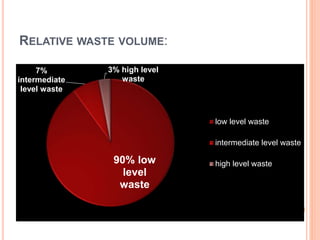
RELATIVE WASTE VOLUME:
90% low
level
waste
7%
intermediate
level waste
3% high level
waste
low level waste
intermediate level waste
high level waste
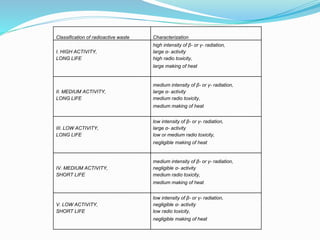
Classification of radioactive waste Characterization
high intensity of β- or γ- radiation,
I. HIGH ACTIVITY, large α- activity
LONG LIFE high radio toxicity,
large making of heat
medium intensity of β- or γ- radiation,
II. MEDIUM ACTIVITY, large α- activity
LONG LIFE medium radio toxicity,
medium making of heat
low intensity of β- or γ- radiation,
III. LOW ACTIVITY, large α- activity
LONG LIFE low or medium radio toxicity,
negligible making of heat
medium intensity of β- or γ- radiation,
IV. MEDIUM ACTIVITY, negligible α- activity
SHORT LIFE medium radio toxicity,
medium making of heat
low intensity of β- or γ- radiation,
V. LOW ACTIVITY, negligible α- activity
SHORT LIFE low radio toxicity,
negligible making of heat
nuclear WASTE DISPOSAL
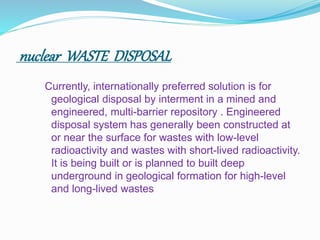
Currently, internationally preferred solution is for
geological disposal by interment in a mined and
engineered, multi-barrier repository . Engineered
disposal system has generally been constructed at
or near the surface for wastes with low-level
radioactivity and wastes with short-lived radioactivity.
It is being built or is planned to built deep
underground in geological formation for high-level
and long-lived wastes
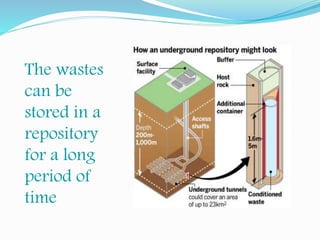
The wastes
can be
stored in a
repository
for a long
period of
time
Transport of Radio Active nuclear waste
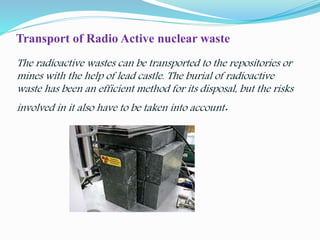
The radioactive wastes can be transported to the repositories or
mines with the help of lead castle. The burial of radioactive
waste has been an efficient method for its disposal, but the risks
involved in it also have to be taken into account.
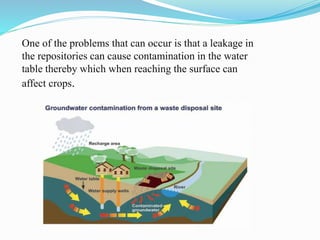
One of the problems that can occur is that a leakage in
the repositories can cause contamination in the water
table thereby which when reaching the surface can
affect crops.
Microbial action on nuclear waste
The view here is to implement BIO REMEDIATION in the disposal of
radioactive wastes. Bio remediation is the process that uses micro
organisms to return the natural environment altered by the
contaminants. So during the disposal of radioactive wastes if bio
remediation is implied then it would be easy to reduce the
complexity of these waste materials. Since the decomposition of the
nuclear wastes are a great hazard for us if we implement this
method then the disposal of the nuclear waste would be easier.
Components of nuclear waste
•Hydro carbons
•Radio isotopes
•Uranium
•Mercury
•Cyanide
MICROBES THAT DECOMPOSES
MERCURY:
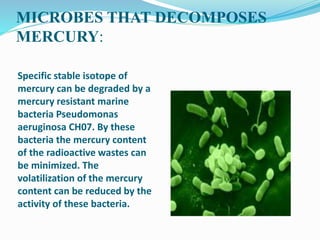
Specific stable isotope of
mercury can be degraded by a
mercury resistant marine
bacteria Pseudomonas
aeruginosa CH07. By these
bacteria the mercury content
of the radioactive wastes can
be minimized. The
volatilization of the mercury
content can be reduced by the
activity of these bacteria.
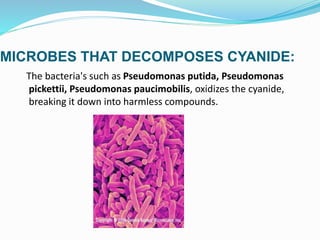
MICROBES THAT DECOMPOSES CYANIDE:
The bacteria's such as Pseudomonas putida, Pseudomonas
pickettii, Pseudomonas paucimobilis, oxidizes the cyanide,
breaking it down into harmless compounds.
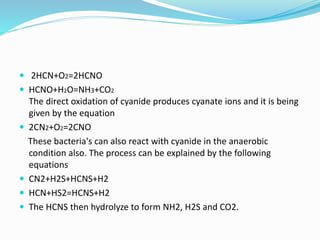
 2HCN+O2=2HCNO
 HCNO+H2O=NH3+CO2
The direct oxidation of cyanide produces cyanate ions and it is being
given by the equation
 2CN2+O2=2CNO
These bacteria's can also react with cyanide in the anaerobic
condition also. The process can be explained by the following
equations
 CN2+H2S+HCNS+H2
 HCN+HS2=HCNS+H2
 The HCNS then hydrolyze to form NH2, H2S and CO2.
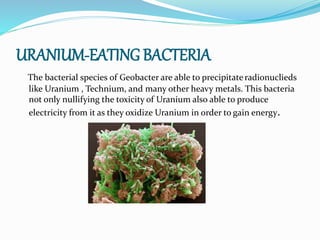
URANIUM-EATING BACTERIA
The bacterial species of Geobacter are able to precipitateradionuclieds
like Uranium , Technium, and many other heavy metals. This bacteria
not only nullifying the toxicity of Uranium also able to produce
electricity from it as they oxidize Uranium in order to gain energy.
Production of Energy
 The production of energy by the Geobacter is by the
process of transfer of electrons through their pili.
Energy from bacteria can be collected through forced
induction or with the help of bacteria present in water
which is able to convert water into their respective
components,hydrogen and oxygen. Thereby the
produced hydrogen can be used a source of energy.
Radioactive waste management

Radioactive waste management

  • 1.
  • 2.
    Nuclear WASTE: Radioactive wastesare usually the waste materials containing radioactive material. It is the product of a nuclear process such as nuclear fission.
  • 3.
    INTRODUCTION Radio activity  Certainelements that compose matter emit particles and radiations spontaneously. This phenomenon is referred to as ‘radioactivity’  Three different kinds of rays; Alpha, Beta and Gamma rays are associated with radioactivity. The alpha rays consist of particles (nuclei of helium atoms) carrying a +ve charge, beta rays particles have –ve charge (streams of electrons) and gamma rays are charge less EM radiation  Radioactive elements decay at different rates.  Rates are measured as half-lives – that is, the time it takes for onehalf of any given quantity of a radioactive element to disintegrate.  The longest half-life is that of the‘isotope’ 238U of uranium. It is 4.5 billion years. Some isotopes have half-lives of years, months, days, minutes, seconds, or even less than millionths of a second.
  • 4.
  • 5.
    Introduction Radio active waste  Radioactivewastes are waste that contain radioactive material.  Radioactive wastes are usually by- products of nuclear power generation and other applications of nuclear fission or nuclear technology, such as research and medicine.  Radioactive waste is hazardous to human health and the environment, and is regulated by government agencies in order to protect human health and the environment.  So for the disposal of this radio active waste lot of steps are needed
  • 6.
    TYPE OF RADIOACTIVEWASTE High activity, long life Medium activity, Long life Low activity, Long life Medium activity, Short life  Low activity, Short life
  • 7.
    RELATIVE WASTE VOLUME: 90%low level waste 7% intermediate level waste 3% high level waste low level waste intermediate level waste high level waste
  • 8.
    Classification of radioactivewaste Characterization high intensity of β- or γ- radiation, I. HIGH ACTIVITY, large α- activity LONG LIFE high radio toxicity, large making of heat medium intensity of β- or γ- radiation, II. MEDIUM ACTIVITY, large α- activity LONG LIFE medium radio toxicity, medium making of heat low intensity of β- or γ- radiation, III. LOW ACTIVITY, large α- activity LONG LIFE low or medium radio toxicity, negligible making of heat medium intensity of β- or γ- radiation, IV. MEDIUM ACTIVITY, negligible α- activity SHORT LIFE medium radio toxicity, medium making of heat low intensity of β- or γ- radiation, V. LOW ACTIVITY, negligible α- activity SHORT LIFE low radio toxicity, negligible making of heat
  • 9.
    nuclear WASTE DISPOSAL Currently,internationally preferred solution is for geological disposal by interment in a mined and engineered, multi-barrier repository . Engineered disposal system has generally been constructed at or near the surface for wastes with low-level radioactivity and wastes with short-lived radioactivity. It is being built or is planned to built deep underground in geological formation for high-level and long-lived wastes
  • 10.
    The wastes can be storedin a repository for a long period of time
  • 11.
    Transport of RadioActive nuclear waste The radioactive wastes can be transported to the repositories or mines with the help of lead castle. The burial of radioactive waste has been an efficient method for its disposal, but the risks involved in it also have to be taken into account.
  • 12.
    One of theproblems that can occur is that a leakage in the repositories can cause contamination in the water table thereby which when reaching the surface can affect crops.
  • 13.
    Microbial action onnuclear waste The view here is to implement BIO REMEDIATION in the disposal of radioactive wastes. Bio remediation is the process that uses micro organisms to return the natural environment altered by the contaminants. So during the disposal of radioactive wastes if bio remediation is implied then it would be easy to reduce the complexity of these waste materials. Since the decomposition of the nuclear wastes are a great hazard for us if we implement this method then the disposal of the nuclear waste would be easier.
  • 14.
    Components of nuclearwaste •Hydro carbons •Radio isotopes •Uranium •Mercury •Cyanide
  • 15.
    MICROBES THAT DECOMPOSES MERCURY: Specificstable isotope of mercury can be degraded by a mercury resistant marine bacteria Pseudomonas aeruginosa CH07. By these bacteria the mercury content of the radioactive wastes can be minimized. The volatilization of the mercury content can be reduced by the activity of these bacteria.
  • 16.
    MICROBES THAT DECOMPOSESCYANIDE: The bacteria's such as Pseudomonas putida, Pseudomonas pickettii, Pseudomonas paucimobilis, oxidizes the cyanide, breaking it down into harmless compounds.
  • 17.
     2HCN+O2=2HCNO  HCNO+H2O=NH3+CO2 Thedirect oxidation of cyanide produces cyanate ions and it is being given by the equation  2CN2+O2=2CNO These bacteria's can also react with cyanide in the anaerobic condition also. The process can be explained by the following equations  CN2+H2S+HCNS+H2  HCN+HS2=HCNS+H2  The HCNS then hydrolyze to form NH2, H2S and CO2.
  • 18.
    URANIUM-EATING BACTERIA The bacterialspecies of Geobacter are able to precipitateradionuclieds like Uranium , Technium, and many other heavy metals. This bacteria not only nullifying the toxicity of Uranium also able to produce electricity from it as they oxidize Uranium in order to gain energy.
  • 19.
    Production of Energy The production of energy by the Geobacter is by the process of transfer of electrons through their pili. Energy from bacteria can be collected through forced induction or with the help of bacteria present in water which is able to convert water into their respective components,hydrogen and oxygen. Thereby the produced hydrogen can be used a source of energy.