SUBMITTED BY- Aarush Jewaria
• Radioactive and extremely toxic byproducts of
nuclear medicine and nuclear weapons
industries are known as nuclear waste.
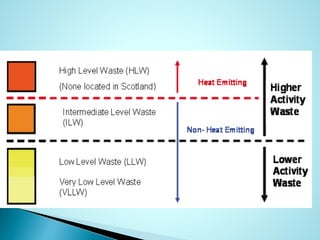
1. EXEMPT WASTE & VERY LOW LEVEL WASTE
2. VERY SHORT LIVED WASTE (VSLW)
3. VERY LOW-LEVEL WASTE (VLLW)
4. LOW-LEVEL WASTE (LLW)
5. INTERMEDIATE –LEVEL WASTE (ILW)
6. HIGH-LEVEL WASTE (HLW)
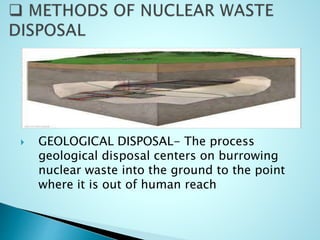
 GEOLOGICAL DISPOSAL- The process
geological disposal centers on burrowing
nuclear waste into the ground to the point
where it is out of human reach
 REPROCESSING- This process involves taking
waste and separating the useful components
from those that aren’t as useful.
 SPACE DISPOSAL- Space disposal centers
around the putting the nuclear waste on a
space shuttle and launching the shuttle into
the space
 PRETEATMEANT- Preteatment is the intial
step that occur just after waste generation . It
may involve collection, segregation, chemical
adjustment and decontamination and may
also include a period of interim storage. The
aim of this step is to segregate waste into
stream that will be managed in similar ways
and to isolate non-radioactive waste those
materials that can be recycled.
 TREATMEANT- Treatment involves changing
the characteristic of the waste by volume
reduction, radionuclide removal or change of
composition. The typical treatment operation
include-
 Compaction of dry solid waste
 Filtration or ion exchange of liquid waste
 Precipitation or flocculation of chemical
species
 Conditioning- It involves the transforming
radioactive waste into a form that is suitable
for handling, transporting, storage and
disposal. This might involves immobilization
of radio active waste , placing waste into
container or providing additional packaging.
 Storage – storage of radio active waste may
take place at any stage in the radioactive
waste management process and aims to
isolate the radioactive waste, help protect the
environment and make it easier to control its
disposal. Storage may be used to make the
next step in the management process more
straightforward or to act as a buffer between
or within steps.
 RETRIEVAL- Retrieval involves recovering
waste packages from storage either for
inspection, for disposal or for further storage
in new facilities. Some storage facilities are
designed so the equipment that deposits
waste can be operated in reverse to retrieve
waste package. Other may need retrieve
equipment to be installed.
 DISPOSAL- Disposal occurs when packages of
radioactive waste are deposited in a disposal
facility with no intention of retrieval. Disposal
may also include discharging radioactive
waste such as liquid and gaseous effluent
into the environment and transfer of waste
from one site to another.
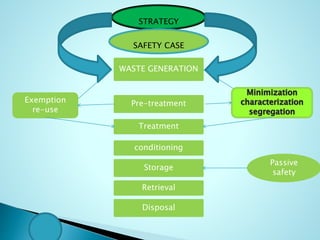
STRATEGY
SAFETY CASE
WASTE GENERATION
Exemption
re-use
Pre-treatment
Treatment
conditioning
Storage
Retrieval
Disposal
Passive
safety

Nuclear waste disposal

  • 1.
  • 2.
    • Radioactive andextremely toxic byproducts of nuclear medicine and nuclear weapons industries are known as nuclear waste.
  • 3.
    1. EXEMPT WASTE& VERY LOW LEVEL WASTE 2. VERY SHORT LIVED WASTE (VSLW) 3. VERY LOW-LEVEL WASTE (VLLW) 4. LOW-LEVEL WASTE (LLW) 5. INTERMEDIATE –LEVEL WASTE (ILW) 6. HIGH-LEVEL WASTE (HLW)
  • 5.
     GEOLOGICAL DISPOSAL-The process geological disposal centers on burrowing nuclear waste into the ground to the point where it is out of human reach
  • 6.
     REPROCESSING- Thisprocess involves taking waste and separating the useful components from those that aren’t as useful.
  • 7.
     SPACE DISPOSAL-Space disposal centers around the putting the nuclear waste on a space shuttle and launching the shuttle into the space
  • 8.
     PRETEATMEANT- Preteatmentis the intial step that occur just after waste generation . It may involve collection, segregation, chemical adjustment and decontamination and may also include a period of interim storage. The aim of this step is to segregate waste into stream that will be managed in similar ways and to isolate non-radioactive waste those materials that can be recycled.
  • 9.
     TREATMEANT- Treatmentinvolves changing the characteristic of the waste by volume reduction, radionuclide removal or change of composition. The typical treatment operation include-  Compaction of dry solid waste  Filtration or ion exchange of liquid waste  Precipitation or flocculation of chemical species
  • 10.
     Conditioning- Itinvolves the transforming radioactive waste into a form that is suitable for handling, transporting, storage and disposal. This might involves immobilization of radio active waste , placing waste into container or providing additional packaging.
  • 11.
     Storage –storage of radio active waste may take place at any stage in the radioactive waste management process and aims to isolate the radioactive waste, help protect the environment and make it easier to control its disposal. Storage may be used to make the next step in the management process more straightforward or to act as a buffer between or within steps.
  • 12.
     RETRIEVAL- Retrievalinvolves recovering waste packages from storage either for inspection, for disposal or for further storage in new facilities. Some storage facilities are designed so the equipment that deposits waste can be operated in reverse to retrieve waste package. Other may need retrieve equipment to be installed.
  • 13.
     DISPOSAL- Disposaloccurs when packages of radioactive waste are deposited in a disposal facility with no intention of retrieval. Disposal may also include discharging radioactive waste such as liquid and gaseous effluent into the environment and transfer of waste from one site to another.
  • 14.