1
UP-FLOW ANAEROBIC SLUDGE BLANKET( UASB)
Introduction
Up flow anaerobic sludge blanket technology also known as UASB reactor is a form of
anaerobic digester which used in wastewater treatment. UASB reactor is a methane-producing
digester, which uses an anaerobic process and forming a blanket of granular sludge and is
processed by the anaerobic microorganisms.
UASB reactor is a single tank process used in a centralized or decentralized anaerobic industrial
wastewater treatment that seeks to achieve the removal of a high rated volume of organic
pollutants. It has been recognized as one of the most important technologies in the anaerobic
treatment process.
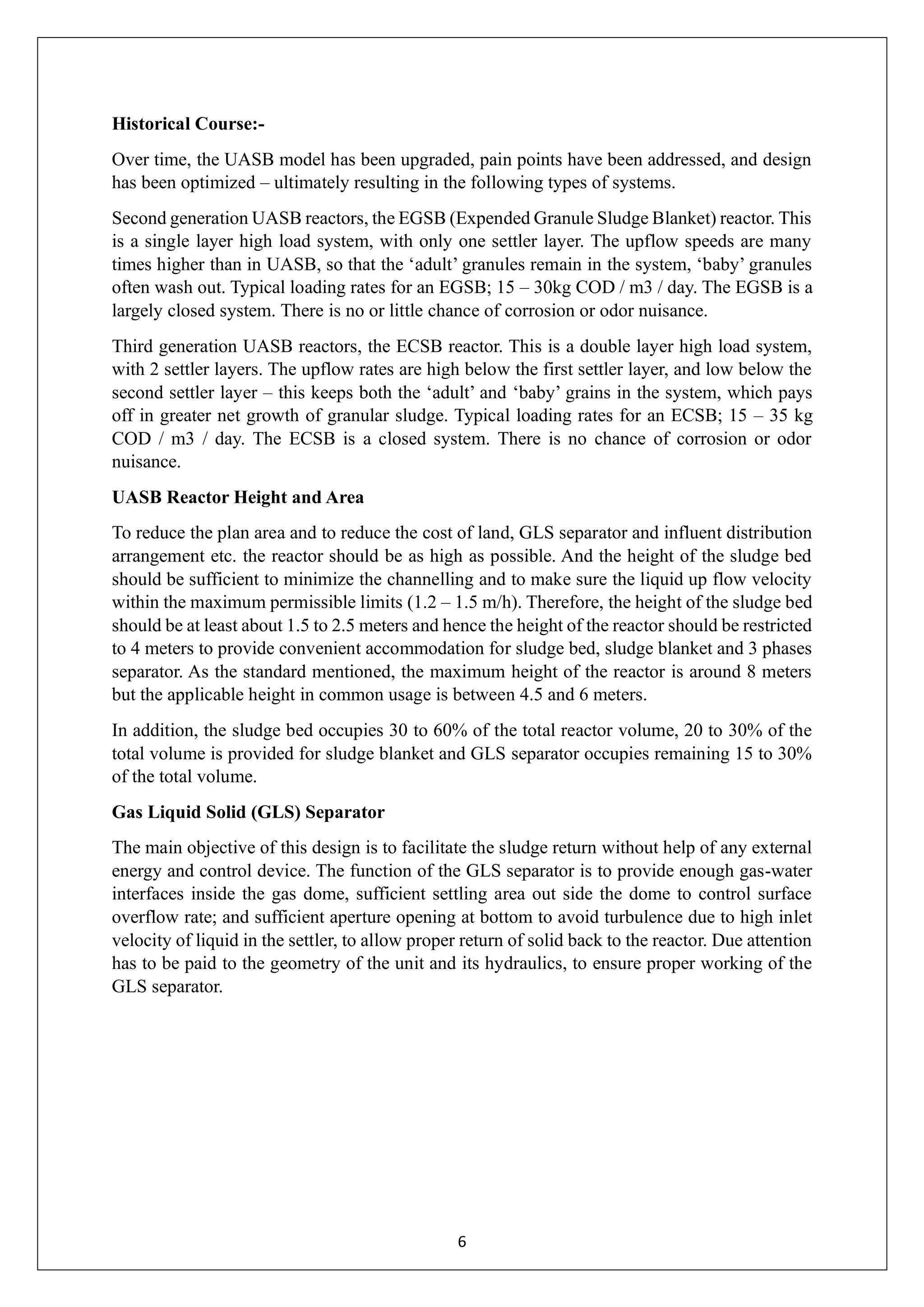
Anaerobic treatment means that it uses no air or oxygen in its process. It aims to remove organic
pollutants from the wastewater, slurries, and sludge. The microorganisms convert the organic
pollutants into biogas that contains methane and carbon dioxide.
Up flow-Anaerobic Sludge Blanket is efficient and able to remove the BOD, COD, AND TSS
but it is minimal for nutrients in wastewater. It is also able to treat blackwater and greywater,
industry effluent, and agriculture wastewater
Process Discription
UASB uses an anaerobic process whilst forming a blanket of granular sludge which suspends
in the tank. Wastewater flows upwards through the blanket and is processed (degraded) by the
anaerobic microorganisms. The upward flow combined with the settling action of gravity
suspends the blanket with the aid of flocculants.
The blanket begins to reach maturity at around three months. Small sludge granules begin to
form whose surface area is covered in aggregations of bacteria. In the absence of any support
matrix, the flow conditions create a selective environment in which only those microorganisms
2
capable of attaching to each other survive and proliferate. Eventually the aggregates form into
dense compact biofilms referred to as “granules”.
Biogas with a high concentration of methane is produced as a by-product, and this may be
captured and used as an energy source, to generate electricity for export and to cover its own
running power. The technology needs constant monitoring when put into use to ensure that the
sludge blanket is maintained, and not washed out (thereby losing the effect). The heat produced
as a by-product of electricity generation can be reused to heat the digestion tanks.
The blanketing of the sludge enables a dual solid and hydraulic (liquid) retention time in the
digesters. Solids requiring a high degree of digestion can remain in the reactors for periods up
to 90 days.[3] Sugars dissolved in the liquid waste stream can be converted into gas quickly in
the liquid phase which can exit the system in less than a day.
UASB reactors are typically suited to dilute waste water streams (3% TSS with particle size
>0.75mm).
Concept and Design
UASB reactor is based on the so-called three-phase separator, which enables the reactor to
separate gas, water and sludge mixtures under high turbulence conditions. This allows for
compact, cheaper designs
3
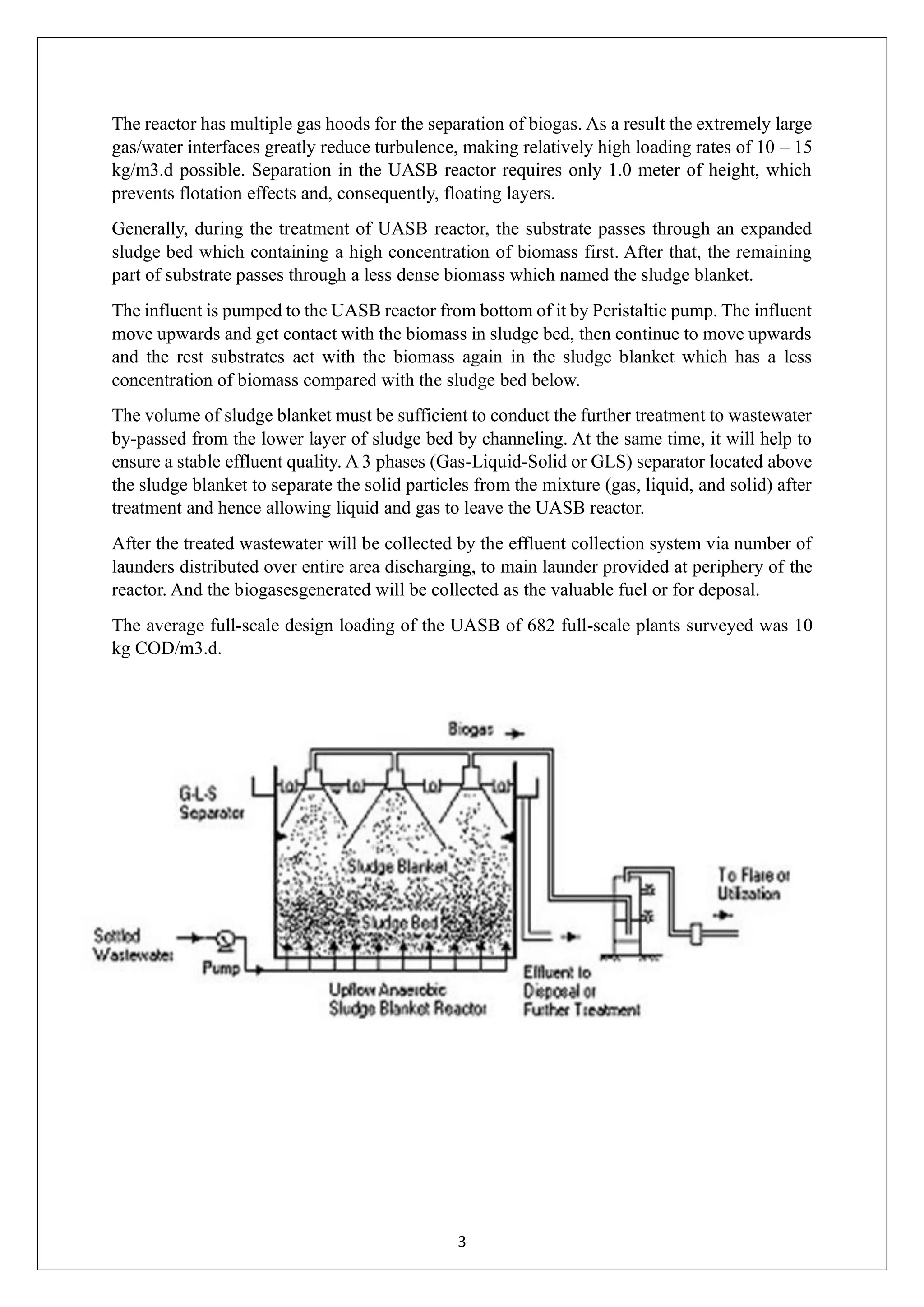
The reactor has multiple gas hoods for the separation of biogas. As a result the extremely large
gas/water interfaces greatly reduce turbulence, making relatively high loading rates of 10 – 15
kg/m3.d possible. Separation in the UASB reactor requires only 1.0 meter of height, which
prevents flotation effects and, consequently, floating layers.
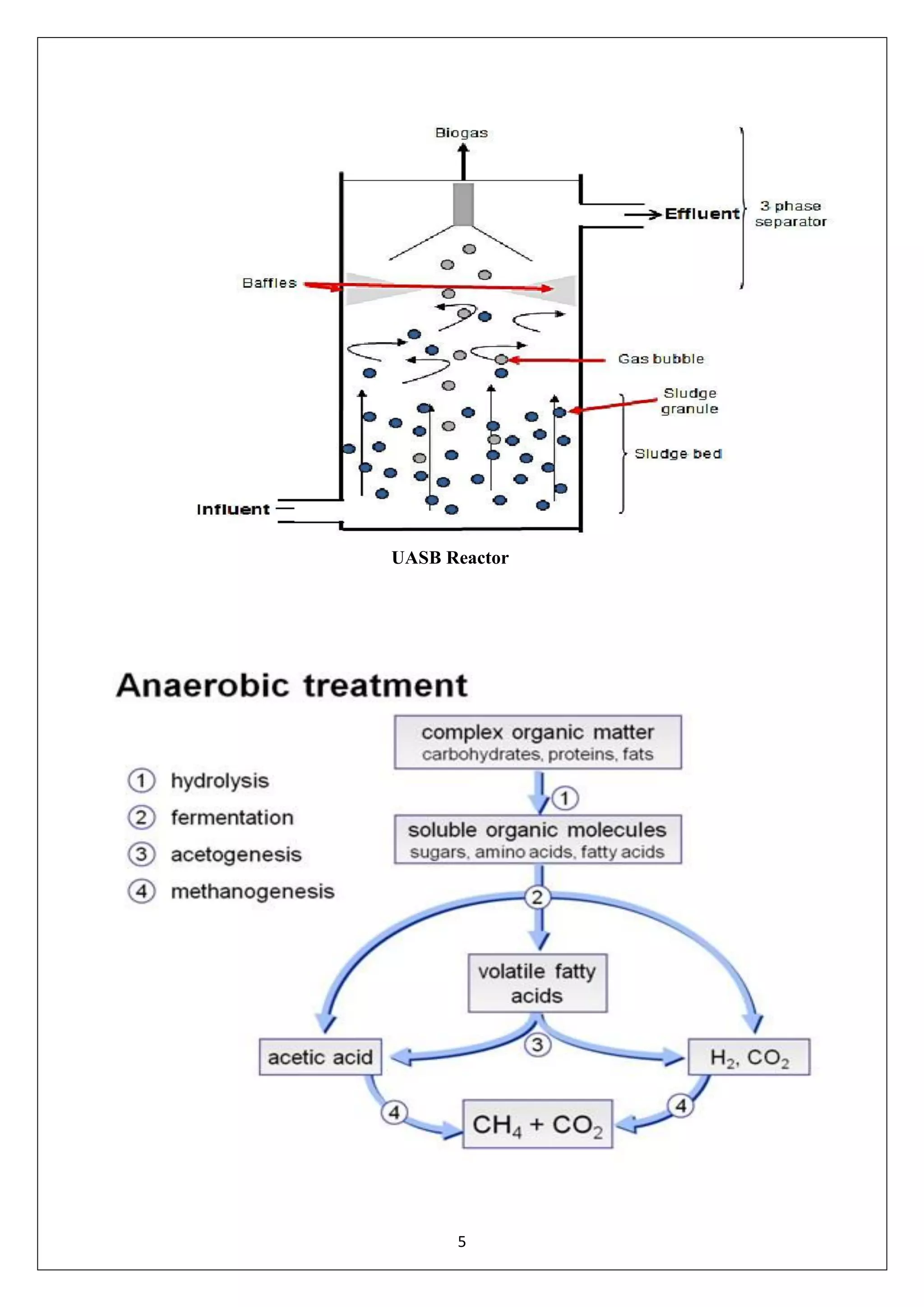
Generally, during the treatment of UASB reactor, the substrate passes through an expanded
sludge bed which containing a high concentration of biomass first. After that, the remaining
part of substrate passes through a less dense biomass which named the sludge blanket.
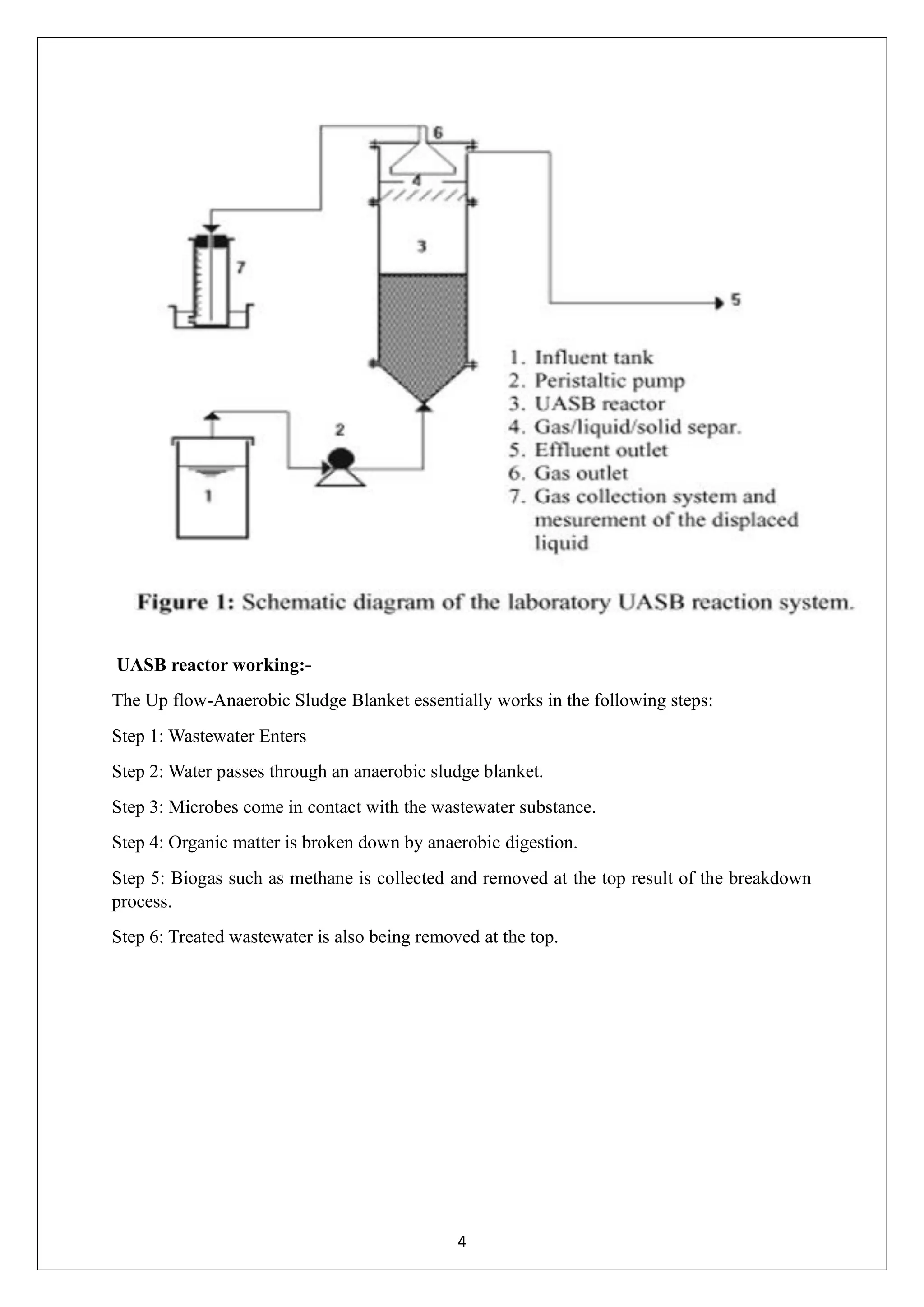
The influent is pumped to the UASB reactor from bottom of it by Peristaltic pump. The influent
move upwards and get contact with the biomass in sludge bed, then continue to move upwards
and the rest substrates act with the biomass again in the sludge blanket which has a less
concentration of biomass compared with the sludge bed below.
The volume of sludge blanket must be sufficient to conduct the further treatment to wastewater
by-passed from the lower layer of sludge bed by channeling. At the same time, it will help to
ensure a stable effluent quality. A 3 phases (Gas-Liquid-Solid or GLS) separator located above
the sludge blanket to separate the solid particles from the mixture (gas, liquid, and solid) after
treatment and hence allowing liquid and gas to leave the UASB reactor.
After the treated wastewater will be collected by the effluent collection system via number of
launders distributed over entire area discharging, to main launder provided at periphery of the
reactor. And the biogasesgenerated will be collected as the valuable fuel or for deposal.
The average full-scale design loading of the UASB of 682 full-scale plants surveyed was 10
kg COD/m3.d.
4
UASB reactor working:-
The Up flow-Anaerobic Sludge Blanket essentially works in the following steps:
Step 1: Wastewater Enters
Step 2: Water passes through an anaerobic sludge blanket.
Step 3: Microbes come in contact with the wastewater substance.
Step 4: Organic matter is broken down by anaerobic digestion.
Step 5: Biogas such as methane is collected and removed at the top result of the breakdown
process.
Step 6: Treated wastewater is also being removed at the top.
5
UASB Reactor
6
Historical Course:-
Over time, the UASB model has been upgraded, pain points have been addressed, and design
has been optimized – ultimately resulting in the following types of systems.
Second generation UASB reactors, the EGSB (Expended Granule Sludge Blanket) reactor. This
is a single layer high load system, with only one settler layer. The upflow speeds are many
times higher than in UASB, so that the ‘adult’ granules remain in the system, ‘baby’ granules
often wash out. Typical loading rates for an EGSB; 15 – 30kg COD / m3 / day. The EGSB is a
largely closed system. There is no or little chance of corrosion or odor nuisance.
Third generation UASB reactors, the ECSB reactor. This is a double layer high load system,
with 2 settler layers. The upflow rates are high below the first settler layer, and low below the
second settler layer – this keeps both the ‘adult’ and ‘baby’ grains in the system, which pays
off in greater net growth of granular sludge. Typical loading rates for an ECSB; 15 – 35 kg
COD / m3 / day. The ECSB is a closed system. There is no chance of corrosion or odor
nuisance.
UASB Reactor Height and Area
To reduce the plan area and to reduce the cost of land, GLS separator and influent distribution
arrangement etc. the reactor should be as high as possible. And the height of the sludge bed
should be sufficient to minimize the channelling and to make sure the liquid up flow velocity
within the maximum permissible limits (1.2 – 1.5 m/h). Therefore, the height of the sludge bed
should be at least about 1.5 to 2.5 meters and hence the height of the reactor should be restricted
to 4 meters to provide convenient accommodation for sludge bed, sludge blanket and 3 phases
separator. As the standard mentioned, the maximum height of the reactor is around 8 meters
but the applicable height in common usage is between 4.5 and 6 meters.
In addition, the sludge bed occupies 30 to 60% of the total reactor volume, 20 to 30% of the
total volume is provided for sludge blanket and GLS separator occupies remaining 15 to 30%
of the total volume.
Gas Liquid Solid (GLS) Separator
The main objective of this design is to facilitate the sludge return without help of any external
energy and control device. The function of the GLS separator is to provide enough gas-water
interfaces inside the gas dome, sufficient settling area out side the dome to control surface
overflow rate; and sufficient aperture opening at bottom to avoid turbulence due to high inlet
velocity of liquid in the settler, to allow proper return of solid back to the reactor. Due attention
has to be paid to the geometry of the unit and its hydraulics, to ensure proper working of the
GLS separator.
7
Hybrid Type (combination of UASB and an anaerobic filter)
A hybrid biological reactor (HBR) was developed which involved the introduction of a new
phase of attached-biomass into a regular suspended-growth system (activated sludge process)
by addition of carriers to the aeration tanks.
A novel hybrid biological reactor which contained both suspended and attached-growth
biomass was developed by introducing porous materials into a regular activated sludge unit
and used for the treatment of domestic wastewater.
Ahybrid reactor is an anaerobic digester that combines a UASB reactor with an anaerobic filter.
This combination is an advanced form enabling improved solid retention time in the treatment
of waste water. This waste water can be built up in the secondary chamber and must be removed
daily or an explosion is imminent to occur.
Comparison Between Anaerobic and Aerobic Process
Parameters Anaerobic Aerobic
Power consumption (kW) 1.5 65
Net biosolids produce (kgTs/d) 15-100 200-600
Energy produced (kW) 140 Nil
Anaerobic vs Aerobic Treatment for 1000 kg CODB/d.
Factors Affecting the UASB Reactor
1)pH
There are three principal bacteria involved in biogas production: bacteria responsible for
hydrolysis, acid-producing bacteria, and methane-producing bacteria.Theacid-Producing
bacteria commonly tolerate a low pH, but their optimal pH range is from 5.0 to 6.0, on the other
8
hand, most methane-producing bacteria work better in a pH Range of 6.7 to 7.4. If the reactor
pH goes out of the 6.0 – 8.0 range, the activity of the methane-producing bacteria is reduced
and this may negatively influence the reactor performance. The bicarbonate produced by the
methane-producing bacteria normally controls the pH reduction caused by acid-producing
bacteria.
2)TEMPERATURE
Methanogenic activity is seriously affected at temperatures below 30 °C. In the range from 37
to 55 °C, have reported sludge washout and an Inefficient COD removal. When the UASB
reactor temperature is above 55 °C, the Quality of the effluents is not as good as when the
temperature is under mesophilic Conditions. Additional energy is then needed to heat the
reactor and this increases Operation costs. The UASB reactor must operate under Mesophilic
conditions (30-35°C) .
3)ORGANIC LOADING RATE (OLR)
The OLR Is the mass of organic matter loaded per day per cross-section area of the reactor The
degree of starvation of microorganisms in Biological systems is dependent on the OLR. At a
high OLR, microorganisms are Subject to fast microbial growth (but intoxication may occur
with high quantities of organic matter), whereas at a low OLR, microorganism starvation takes
place.
A practical approach for the rapid start-up of a UASB reactor is to operate the system at a COD
reduction of 80%, which can be reached by manipulating the OLR However, if the applied
OLR is too high, the biogas production rate may increase, and the resulting strong agitation
can then lead to washout of the Inoculated sludge .
4) SUBSTRATE
Many types of wastewater can be fed into a UASB reactor; but, the wastewater should contain
nutrients and dissolved organic material. For this reason, wastewater from the food industry is
one of the most effective feeds for a UASB reactor. In some cases, Sewage does not contain
sufficient nutrients and it is necessary to add nutrients to create the right conditions to ensure
the efficiency of the anaerobic reactor.
5) SLUDGE INOCULATION
Any medium containing the appropriate microbial flora can be used as seed sludge for a UASB
reactor .In a mesophilic environment, the particles Can be classified into three types according
to the predominant acetate substrate that is utilized by the methanogens bacteria
• Rod-type granules, which are mainly composed of rod-shaped bacteria in fragments of
four to five cells, like Methanothrix.
• Filament-type granules, which consist predominantly of long multicellular rod-shaped
bacteria.
• Sarcina-type granules, which develop when a high concentration of acetic acid is
maintained in the reactor.
Advantages:
• The Up flow-Anaerobic Sludge Blanket handles the organic shock load very effectively.
9
• Very few nutrients are required in this process.
• Without serious deterioration, the system can be shut down for extended periods.
• There is a low energy requirement and low maintenance costs needed in the UASB
reactor.
• Biogas produced in this technology can be utilised further.
• It is compact and less space is required.
• Due to much energy converted in gaseous form, fewer bio-solids wastes are generated.
Disadvantages:
• For monitoring the internal condition of the plant, trained and professional staff is
required.
• Anaerobic treatment processes cannot achieve surface water discharge quality without
post-water treatment.
• Sulphur compounds are produced in this process which needs to be safely disposed of
in terms of safety, corrosion, and odour.
• UASB reactors require a longer start-up period.
• A proper temperature range is required for the anaerobic process to be successful.
Applications of UASB reactors:-
• Textile industry wastewater treatment.
• Breweries and beverage industry.
• Treatment of chemicals and petrochemical industry effluents.
• Distillation and Fermentation industry.
• Food Industry.
• Pulp and Paper Industry.
Quality of treated water using a UASB reactor:-
The UASB treatment process is a popular treatment method. This treatment method is also used
in Arab countries to convert wastewater, particularly to purified drinking water. In deserty
areas, it is used to convert the saltwater to clean and purified drinking water.
Hence we can conclude that the treated wastewater is of high quality and safe for drinking
purposes.
Case study
Cairo, Egypt-this study is carried out to propose an appropriate treatment technology for
wastewater discharged from a flavor production factory. Industrial wastewater discharged from
this factory ranges between 50–70 m3/d with an average value of 60 m3/d. The major source
of pollution in this factory is due to cleaning of the vessels therefore the treatment has been
carried out on the end-of pipe wastewater.
10
The wastewater is characterized by high values of COD, BOD, TSS and Oil and grease 4646,
2298, 1790 and 626 mg/l respectively. Primary sedimentation of the wastewater for four hours
reduced the COD, BOD, TSS and Oil and grease by 43, 47, 80 and 74%, respectively. For the
treatment of the produced wastewater, the biological treatment process such as activated
sludge, rotating biological contactor (RBC), up-flow anaerobic sludgebed reactor (UASB) have
been selected.
The results from each treatment process proved to be efficient for the treatment of such
wastewater. The treated wastewater characteristics are in compliance with the Egyptian law
which regulates the discharge of industrial wastewater to the sewerage system.
Conclusion
In conclusion, up flow Anaerobic Sludge Blanket (UASB) reactor is a form of anaerobic
digester that is used in the treatment of wastewater. It’s typically suited to dilute waste water
streams (3% TSS with particle size >0.75mm).
these are the 5 top applications of the reactors:
Breweries and beverage industry
Distilleries and fermentation industry
Dairy Industry
Food Industry
Pulp and paper
Together, these four industrial sectors account for 87% of the applications. However, the
applications of the technology are rapidly expanding, including:
• Treatment of chemical and petrochemical industry effluents
• Textile industry wastewater
• Landfill leachates
• Conversions in the sulfur cycle and removal of metals.

Up flow anaerobic Sludge Blanket (UASB)

  • 1.
    1 UP-FLOW ANAEROBIC SLUDGEBLANKET( UASB) Introduction Up flow anaerobic sludge blanket technology also known as UASB reactor is a form of anaerobic digester which used in wastewater treatment. UASB reactor is a methane-producing digester, which uses an anaerobic process and forming a blanket of granular sludge and is processed by the anaerobic microorganisms. UASB reactor is a single tank process used in a centralized or decentralized anaerobic industrial wastewater treatment that seeks to achieve the removal of a high rated volume of organic pollutants. It has been recognized as one of the most important technologies in the anaerobic treatment process. Anaerobic treatment means that it uses no air or oxygen in its process. It aims to remove organic pollutants from the wastewater, slurries, and sludge. The microorganisms convert the organic pollutants into biogas that contains methane and carbon dioxide. Up flow-Anaerobic Sludge Blanket is efficient and able to remove the BOD, COD, AND TSS but it is minimal for nutrients in wastewater. It is also able to treat blackwater and greywater, industry effluent, and agriculture wastewater Process Discription UASB uses an anaerobic process whilst forming a blanket of granular sludge which suspends in the tank. Wastewater flows upwards through the blanket and is processed (degraded) by the anaerobic microorganisms. The upward flow combined with the settling action of gravity suspends the blanket with the aid of flocculants. The blanket begins to reach maturity at around three months. Small sludge granules begin to form whose surface area is covered in aggregations of bacteria. In the absence of any support matrix, the flow conditions create a selective environment in which only those microorganisms
  • 2.
    2 capable of attachingto each other survive and proliferate. Eventually the aggregates form into dense compact biofilms referred to as “granules”. Biogas with a high concentration of methane is produced as a by-product, and this may be captured and used as an energy source, to generate electricity for export and to cover its own running power. The technology needs constant monitoring when put into use to ensure that the sludge blanket is maintained, and not washed out (thereby losing the effect). The heat produced as a by-product of electricity generation can be reused to heat the digestion tanks. The blanketing of the sludge enables a dual solid and hydraulic (liquid) retention time in the digesters. Solids requiring a high degree of digestion can remain in the reactors for periods up to 90 days.[3] Sugars dissolved in the liquid waste stream can be converted into gas quickly in the liquid phase which can exit the system in less than a day. UASB reactors are typically suited to dilute waste water streams (3% TSS with particle size >0.75mm). Concept and Design UASB reactor is based on the so-called three-phase separator, which enables the reactor to separate gas, water and sludge mixtures under high turbulence conditions. This allows for compact, cheaper designs
  • 3.
    3 The reactor hasmultiple gas hoods for the separation of biogas. As a result the extremely large gas/water interfaces greatly reduce turbulence, making relatively high loading rates of 10 – 15 kg/m3.d possible. Separation in the UASB reactor requires only 1.0 meter of height, which prevents flotation effects and, consequently, floating layers. Generally, during the treatment of UASB reactor, the substrate passes through an expanded sludge bed which containing a high concentration of biomass first. After that, the remaining part of substrate passes through a less dense biomass which named the sludge blanket. The influent is pumped to the UASB reactor from bottom of it by Peristaltic pump. The influent move upwards and get contact with the biomass in sludge bed, then continue to move upwards and the rest substrates act with the biomass again in the sludge blanket which has a less concentration of biomass compared with the sludge bed below. The volume of sludge blanket must be sufficient to conduct the further treatment to wastewater by-passed from the lower layer of sludge bed by channeling. At the same time, it will help to ensure a stable effluent quality. A 3 phases (Gas-Liquid-Solid or GLS) separator located above the sludge blanket to separate the solid particles from the mixture (gas, liquid, and solid) after treatment and hence allowing liquid and gas to leave the UASB reactor. After the treated wastewater will be collected by the effluent collection system via number of launders distributed over entire area discharging, to main launder provided at periphery of the reactor. And the biogasesgenerated will be collected as the valuable fuel or for deposal. The average full-scale design loading of the UASB of 682 full-scale plants surveyed was 10 kg COD/m3.d.
  • 4.
    4 UASB reactor working:- TheUp flow-Anaerobic Sludge Blanket essentially works in the following steps: Step 1: Wastewater Enters Step 2: Water passes through an anaerobic sludge blanket. Step 3: Microbes come in contact with the wastewater substance. Step 4: Organic matter is broken down by anaerobic digestion. Step 5: Biogas such as methane is collected and removed at the top result of the breakdown process. Step 6: Treated wastewater is also being removed at the top.
  • 5.
  • 6.
    6 Historical Course:- Over time,the UASB model has been upgraded, pain points have been addressed, and design has been optimized – ultimately resulting in the following types of systems. Second generation UASB reactors, the EGSB (Expended Granule Sludge Blanket) reactor. This is a single layer high load system, with only one settler layer. The upflow speeds are many times higher than in UASB, so that the ‘adult’ granules remain in the system, ‘baby’ granules often wash out. Typical loading rates for an EGSB; 15 – 30kg COD / m3 / day. The EGSB is a largely closed system. There is no or little chance of corrosion or odor nuisance. Third generation UASB reactors, the ECSB reactor. This is a double layer high load system, with 2 settler layers. The upflow rates are high below the first settler layer, and low below the second settler layer – this keeps both the ‘adult’ and ‘baby’ grains in the system, which pays off in greater net growth of granular sludge. Typical loading rates for an ECSB; 15 – 35 kg COD / m3 / day. The ECSB is a closed system. There is no chance of corrosion or odor nuisance. UASB Reactor Height and Area To reduce the plan area and to reduce the cost of land, GLS separator and influent distribution arrangement etc. the reactor should be as high as possible. And the height of the sludge bed should be sufficient to minimize the channelling and to make sure the liquid up flow velocity within the maximum permissible limits (1.2 – 1.5 m/h). Therefore, the height of the sludge bed should be at least about 1.5 to 2.5 meters and hence the height of the reactor should be restricted to 4 meters to provide convenient accommodation for sludge bed, sludge blanket and 3 phases separator. As the standard mentioned, the maximum height of the reactor is around 8 meters but the applicable height in common usage is between 4.5 and 6 meters. In addition, the sludge bed occupies 30 to 60% of the total reactor volume, 20 to 30% of the total volume is provided for sludge blanket and GLS separator occupies remaining 15 to 30% of the total volume. Gas Liquid Solid (GLS) Separator The main objective of this design is to facilitate the sludge return without help of any external energy and control device. The function of the GLS separator is to provide enough gas-water interfaces inside the gas dome, sufficient settling area out side the dome to control surface overflow rate; and sufficient aperture opening at bottom to avoid turbulence due to high inlet velocity of liquid in the settler, to allow proper return of solid back to the reactor. Due attention has to be paid to the geometry of the unit and its hydraulics, to ensure proper working of the GLS separator.
  • 7.
    7 Hybrid Type (combinationof UASB and an anaerobic filter) A hybrid biological reactor (HBR) was developed which involved the introduction of a new phase of attached-biomass into a regular suspended-growth system (activated sludge process) by addition of carriers to the aeration tanks. A novel hybrid biological reactor which contained both suspended and attached-growth biomass was developed by introducing porous materials into a regular activated sludge unit and used for the treatment of domestic wastewater. Ahybrid reactor is an anaerobic digester that combines a UASB reactor with an anaerobic filter. This combination is an advanced form enabling improved solid retention time in the treatment of waste water. This waste water can be built up in the secondary chamber and must be removed daily or an explosion is imminent to occur. Comparison Between Anaerobic and Aerobic Process Parameters Anaerobic Aerobic Power consumption (kW) 1.5 65 Net biosolids produce (kgTs/d) 15-100 200-600 Energy produced (kW) 140 Nil Anaerobic vs Aerobic Treatment for 1000 kg CODB/d. Factors Affecting the UASB Reactor 1)pH There are three principal bacteria involved in biogas production: bacteria responsible for hydrolysis, acid-producing bacteria, and methane-producing bacteria.Theacid-Producing bacteria commonly tolerate a low pH, but their optimal pH range is from 5.0 to 6.0, on the other
  • 8.
    8 hand, most methane-producingbacteria work better in a pH Range of 6.7 to 7.4. If the reactor pH goes out of the 6.0 – 8.0 range, the activity of the methane-producing bacteria is reduced and this may negatively influence the reactor performance. The bicarbonate produced by the methane-producing bacteria normally controls the pH reduction caused by acid-producing bacteria. 2)TEMPERATURE Methanogenic activity is seriously affected at temperatures below 30 °C. In the range from 37 to 55 °C, have reported sludge washout and an Inefficient COD removal. When the UASB reactor temperature is above 55 °C, the Quality of the effluents is not as good as when the temperature is under mesophilic Conditions. Additional energy is then needed to heat the reactor and this increases Operation costs. The UASB reactor must operate under Mesophilic conditions (30-35°C) . 3)ORGANIC LOADING RATE (OLR) The OLR Is the mass of organic matter loaded per day per cross-section area of the reactor The degree of starvation of microorganisms in Biological systems is dependent on the OLR. At a high OLR, microorganisms are Subject to fast microbial growth (but intoxication may occur with high quantities of organic matter), whereas at a low OLR, microorganism starvation takes place. A practical approach for the rapid start-up of a UASB reactor is to operate the system at a COD reduction of 80%, which can be reached by manipulating the OLR However, if the applied OLR is too high, the biogas production rate may increase, and the resulting strong agitation can then lead to washout of the Inoculated sludge . 4) SUBSTRATE Many types of wastewater can be fed into a UASB reactor; but, the wastewater should contain nutrients and dissolved organic material. For this reason, wastewater from the food industry is one of the most effective feeds for a UASB reactor. In some cases, Sewage does not contain sufficient nutrients and it is necessary to add nutrients to create the right conditions to ensure the efficiency of the anaerobic reactor. 5) SLUDGE INOCULATION Any medium containing the appropriate microbial flora can be used as seed sludge for a UASB reactor .In a mesophilic environment, the particles Can be classified into three types according to the predominant acetate substrate that is utilized by the methanogens bacteria • Rod-type granules, which are mainly composed of rod-shaped bacteria in fragments of four to five cells, like Methanothrix. • Filament-type granules, which consist predominantly of long multicellular rod-shaped bacteria. • Sarcina-type granules, which develop when a high concentration of acetic acid is maintained in the reactor. Advantages: • The Up flow-Anaerobic Sludge Blanket handles the organic shock load very effectively.
  • 9.
    9 • Very fewnutrients are required in this process. • Without serious deterioration, the system can be shut down for extended periods. • There is a low energy requirement and low maintenance costs needed in the UASB reactor. • Biogas produced in this technology can be utilised further. • It is compact and less space is required. • Due to much energy converted in gaseous form, fewer bio-solids wastes are generated. Disadvantages: • For monitoring the internal condition of the plant, trained and professional staff is required. • Anaerobic treatment processes cannot achieve surface water discharge quality without post-water treatment. • Sulphur compounds are produced in this process which needs to be safely disposed of in terms of safety, corrosion, and odour. • UASB reactors require a longer start-up period. • A proper temperature range is required for the anaerobic process to be successful. Applications of UASB reactors:- • Textile industry wastewater treatment. • Breweries and beverage industry. • Treatment of chemicals and petrochemical industry effluents. • Distillation and Fermentation industry. • Food Industry. • Pulp and Paper Industry. Quality of treated water using a UASB reactor:- The UASB treatment process is a popular treatment method. This treatment method is also used in Arab countries to convert wastewater, particularly to purified drinking water. In deserty areas, it is used to convert the saltwater to clean and purified drinking water. Hence we can conclude that the treated wastewater is of high quality and safe for drinking purposes. Case study Cairo, Egypt-this study is carried out to propose an appropriate treatment technology for wastewater discharged from a flavor production factory. Industrial wastewater discharged from this factory ranges between 50–70 m3/d with an average value of 60 m3/d. The major source of pollution in this factory is due to cleaning of the vessels therefore the treatment has been carried out on the end-of pipe wastewater.
  • 10.
    10 The wastewater ischaracterized by high values of COD, BOD, TSS and Oil and grease 4646, 2298, 1790 and 626 mg/l respectively. Primary sedimentation of the wastewater for four hours reduced the COD, BOD, TSS and Oil and grease by 43, 47, 80 and 74%, respectively. For the treatment of the produced wastewater, the biological treatment process such as activated sludge, rotating biological contactor (RBC), up-flow anaerobic sludgebed reactor (UASB) have been selected. The results from each treatment process proved to be efficient for the treatment of such wastewater. The treated wastewater characteristics are in compliance with the Egyptian law which regulates the discharge of industrial wastewater to the sewerage system. Conclusion In conclusion, up flow Anaerobic Sludge Blanket (UASB) reactor is a form of anaerobic digester that is used in the treatment of wastewater. It’s typically suited to dilute waste water streams (3% TSS with particle size >0.75mm). these are the 5 top applications of the reactors: Breweries and beverage industry Distilleries and fermentation industry Dairy Industry Food Industry Pulp and paper Together, these four industrial sectors account for 87% of the applications. However, the applications of the technology are rapidly expanding, including: • Treatment of chemical and petrochemical industry effluents • Textile industry wastewater • Landfill leachates • Conversions in the sulfur cycle and removal of metals.