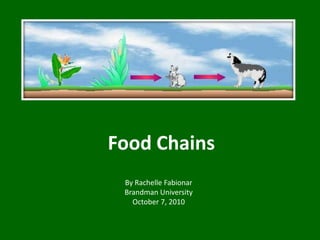
Food ChainsBy Rachelle FabionarBrandman UniversityOctober 7, 2010
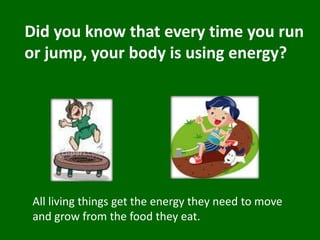
Did you know that every time you run or jump, your body is using energy? All living things get the energy they need to move and grow from the food they eat.
Do you know where that energy comes from? It starts with theSUN !!!!
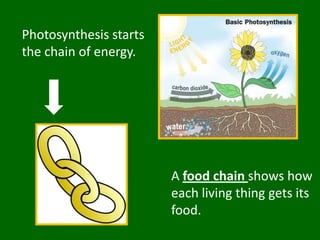
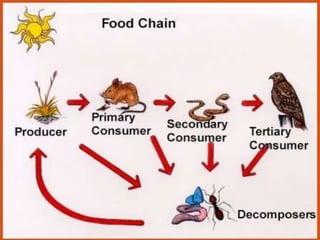
Photosynthesis starts the chain of energy. A food chainshows how each living thing gets its food.
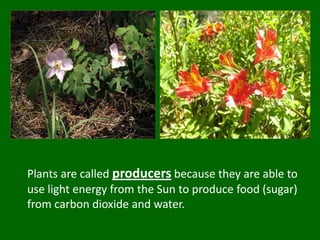
Plants are called producers because they are able to use light energy from the Sun to produce food (sugar) from carbon dioxide and water.
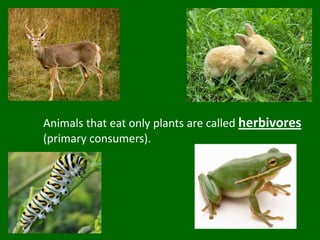
Animals that eat only plants are called herbivores(primary consumers).
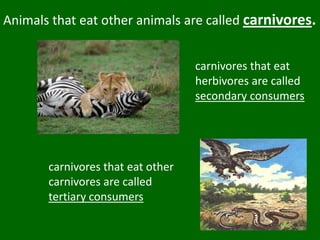
Animals that eat other animals are called carnivores.carnivores that eat herbivores are called secondary consumerscarnivores that eat other carnivores are called tertiary consumers
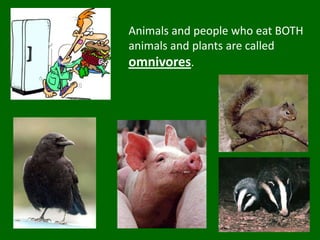
Animals and people who eat BOTH animals and plants are called omnivores.
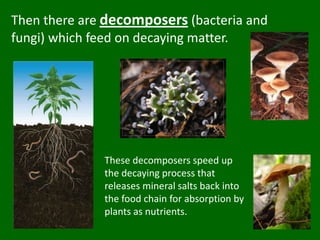
Then there are decomposers (bacteria and fungi) which feed on decaying matter. These decomposers speed up the decaying process that releases mineral salts back into the food chain for absorption by plants as nutrients.
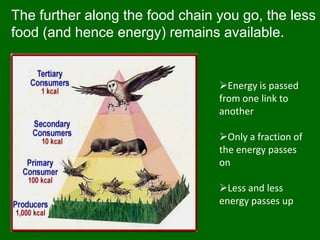
The further along the food chain you go, the less food (and hence energy) remains available. Energy is passed from one link to another
Only a fraction of the energy passes on
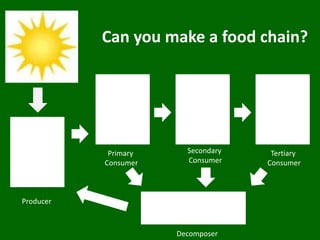
Less and less energy passes upCan you make a food chain?Secondary ConsumerPrimary ConsumerTertiary ConsumerProducerDecomposer
Interactive websites where you can build your own food chain:http://www.ecokids.ca/pub/eco_info/topics/frogs/chain_reaction/play_chainreaction.cfmhttp://www.sheppardsoftware.com/content/animals/kidscorner/foodchain/foodchain.htm
4th Grade Content Standards - Life Science 2. All organisms need energy and matter to live and grow. As a basis for understanding this concept: Students know plants are the primary source of matter and energy entering most food chains. Students know producers and consumers (herbivores, carnivores, omnivores, and decomposers) are related in food chains and food webs and may compete with each other for resources in an ecosystem. Students know decomposers, including many fungi, insects, and microorganisms, recycle matter from dead plants and animals.

Rachellefabionar.powerpoint.foodchains

  • 1.
    Food ChainsBy RachelleFabionarBrandman UniversityOctober 7, 2010
  • 2.
    Did you knowthat every time you run or jump, your body is using energy? All living things get the energy they need to move and grow from the food they eat.
  • 3.
    Do you knowwhere that energy comes from? It starts with theSUN !!!!
  • 4.
    Photosynthesis starts thechain of energy. A food chainshows how each living thing gets its food.
  • 6.
    Plants are calledproducers because they are able to use light energy from the Sun to produce food (sugar) from carbon dioxide and water.
  • 7.
    Animals that eatonly plants are called herbivores(primary consumers).
  • 8.
    Animals that eatother animals are called carnivores.carnivores that eat herbivores are called secondary consumerscarnivores that eat other carnivores are called tertiary consumers
  • 9.
    Animals and peoplewho eat BOTH animals and plants are called omnivores.
  • 10.
    Then there aredecomposers (bacteria and fungi) which feed on decaying matter. These decomposers speed up the decaying process that releases mineral salts back into the food chain for absorption by plants as nutrients.
  • 11.
    The further alongthe food chain you go, the less food (and hence energy) remains available. Energy is passed from one link to another
  • 12.
    Only a fractionof the energy passes on
  • 13.
    Less and lessenergy passes upCan you make a food chain?Secondary ConsumerPrimary ConsumerTertiary ConsumerProducerDecomposer
  • 14.
    Interactive websites whereyou can build your own food chain:http://www.ecokids.ca/pub/eco_info/topics/frogs/chain_reaction/play_chainreaction.cfmhttp://www.sheppardsoftware.com/content/animals/kidscorner/foodchain/foodchain.htm
  • 15.
    4th Grade ContentStandards - Life Science 2. All organisms need energy and matter to live and grow. As a basis for understanding this concept: Students know plants are the primary source of matter and energy entering most food chains. Students know producers and consumers (herbivores, carnivores, omnivores, and decomposers) are related in food chains and food webs and may compete with each other for resources in an ecosystem. Students know decomposers, including many fungi, insects, and microorganisms, recycle matter from dead plants and animals.

Editor's Notes

  • #3 When your body digests your breakfast, it releases the energy you need to play
  • #5 A food chain shows the order which animals eat plants and other animals.Each part of a food chain is a link connected to the others.
  • #8 Consumers can not make their own food like producers, they must eat other plants or animals to get their energy.