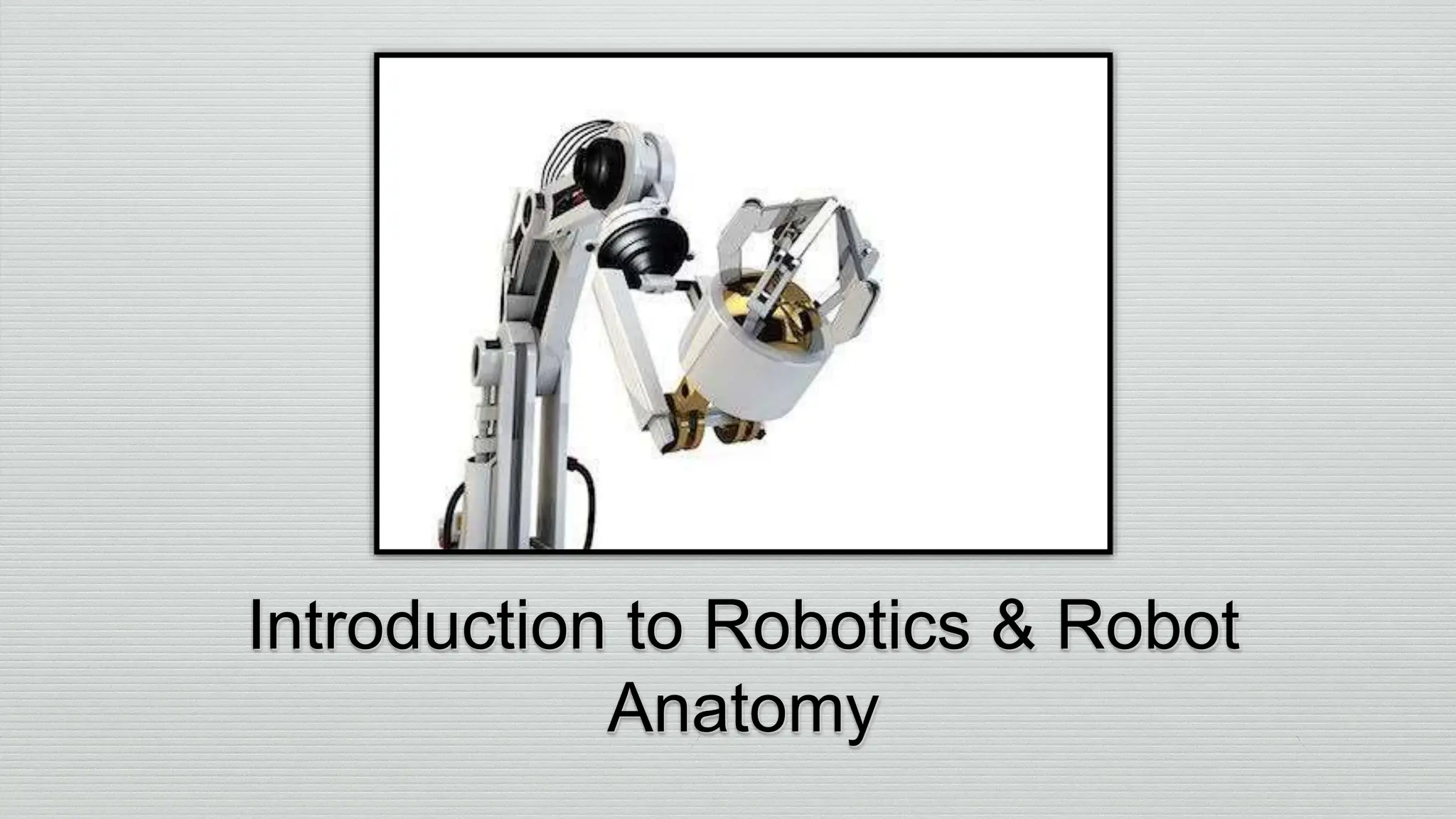
Introduction to Robotics & Robot
Anatomy
Robotics- Introduction
• Robotics is a branch of engineering and science that includes
electronics engineering, mechanical engineering and computer
science and so on.
• Robots can take any form but most of them have been given the
human appearance. Most of the robots of today are inspired by
nature and are known as bio-inspired robots.
• Robotics is that branch of engineering that deals with conception,
design, operation, and manufacturing of robots.
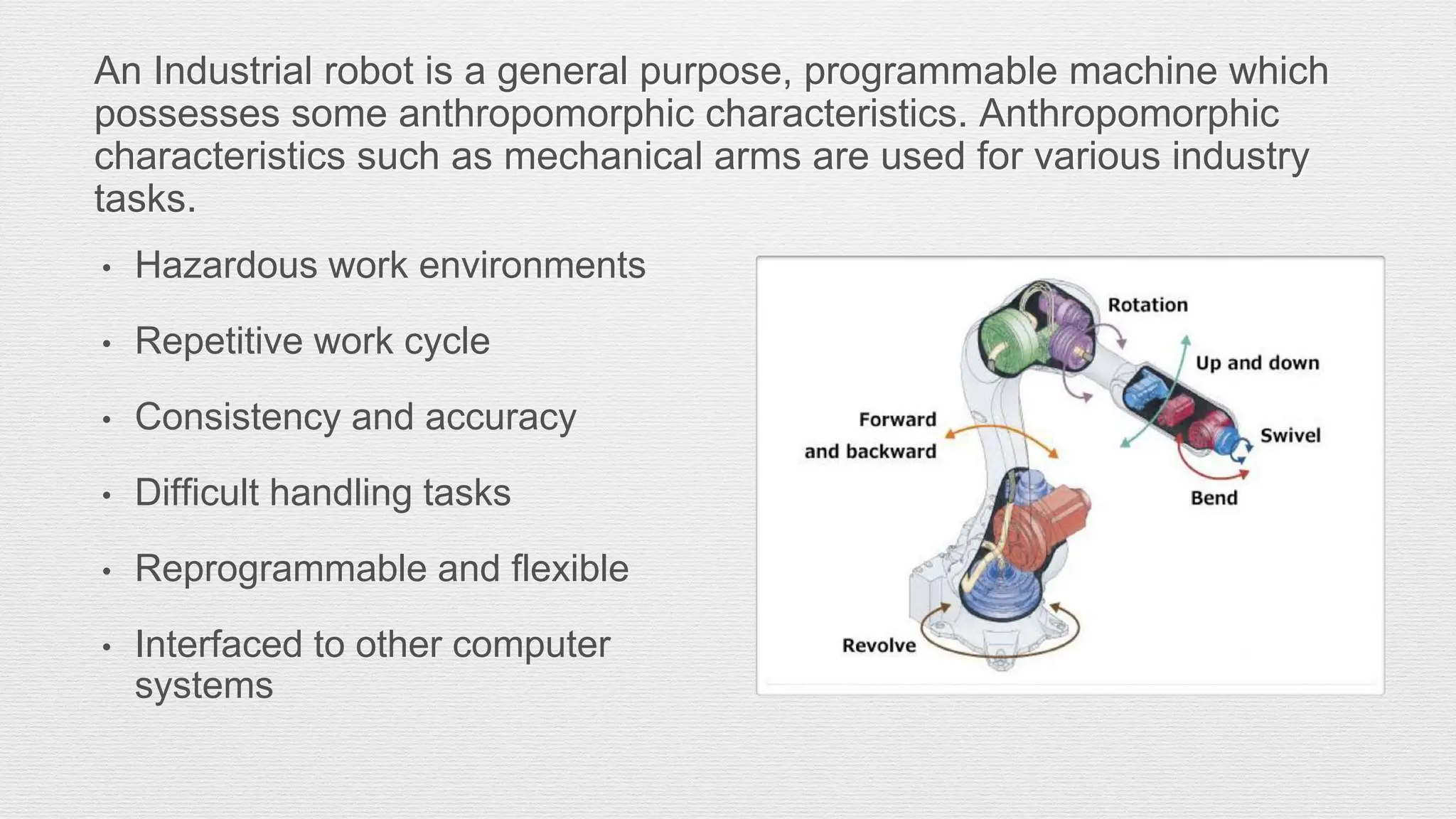
An Industrial robot is a general purpose, programmable machine which
possesses some anthropomorphic characteristics. Anthropomorphic
characteristics such as mechanical arms are used for various industry
tasks.
• Hazardous work environments
• Repetitive work cycle
• Consistency and accuracy
• Difficult handling tasks
• Reprogrammable and flexible
• Interfaced to other computer
systems
Characteristics of Robots
• Appearance: held by the structure of their body, moved by their
mechanical parts.
• Brain: On-board control unit- receive information and sends
commands
• Sensors: gather info from the outside world and send it to Brain.
• Actuators: The part with help of which these robots move
• Program: work or responds to the instructions provided in the form
of a program.
• Behaviour: decided by the program built for it.
Commercial and Technological
Advantages
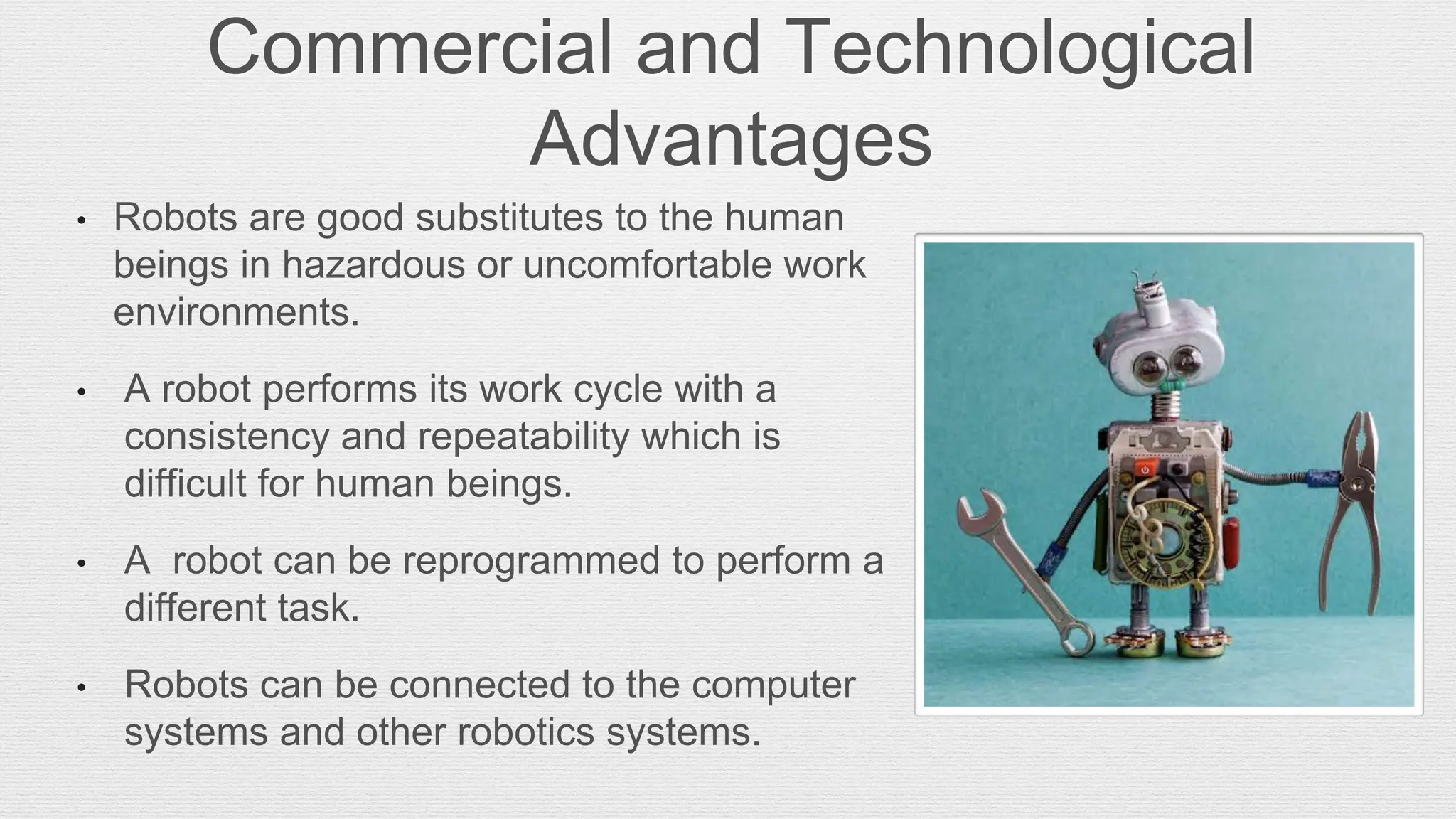
• Robots are good substitutes to the human
beings in hazardous or uncomfortable work
environments.
• A robot performs its work cycle with a
consistency and repeatability which is
difficult for human beings.
• A robot can be reprogrammed to perform a
different task.
• Robots can be connected to the computer
systems and other robotics systems.
Robot Anatomy
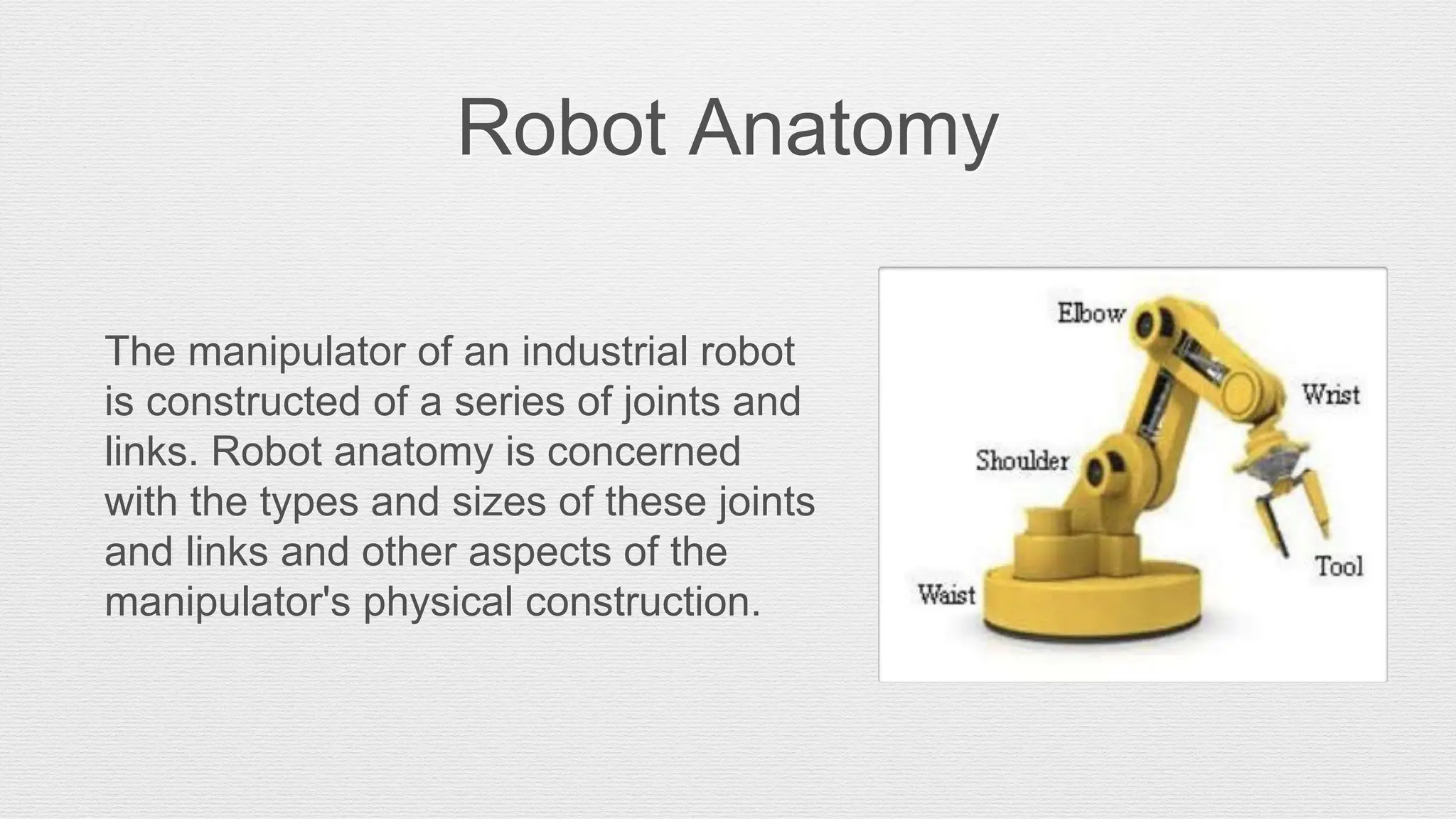
The manipulator of an industrial robot
is constructed of a series of joints and
links. Robot anatomy is concerned
with the types and sizes of these joints
and links and other aspects of the
manipulator's physical construction.
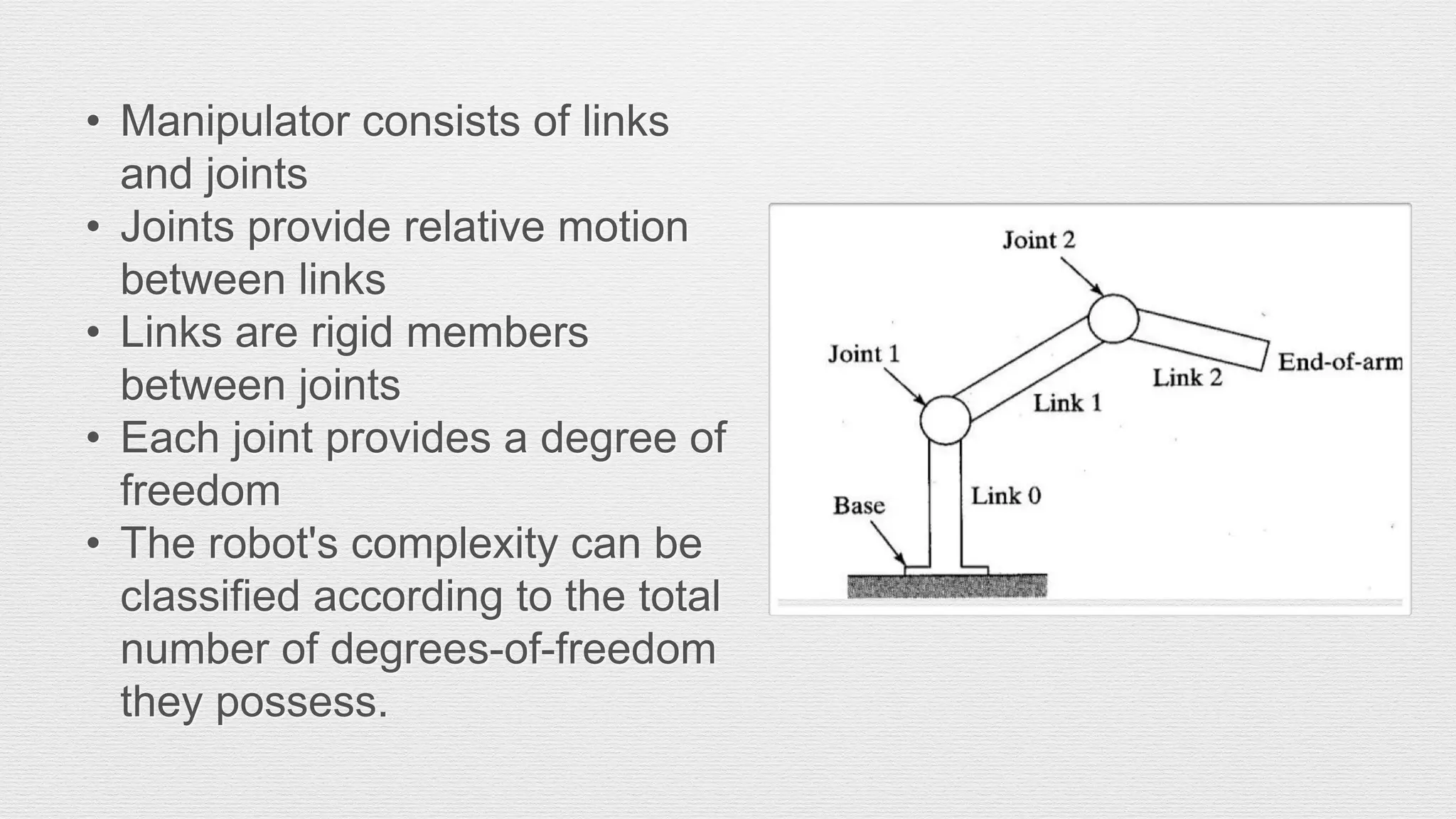
• Manipulator consists of links
and joints
• Joints provide relative motion
between links
• Links are rigid members
between joints
• Each joint provides a degree of
freedom
• The robot's complexity can be
classified according to the total
number of degrees-of-freedom
they possess.
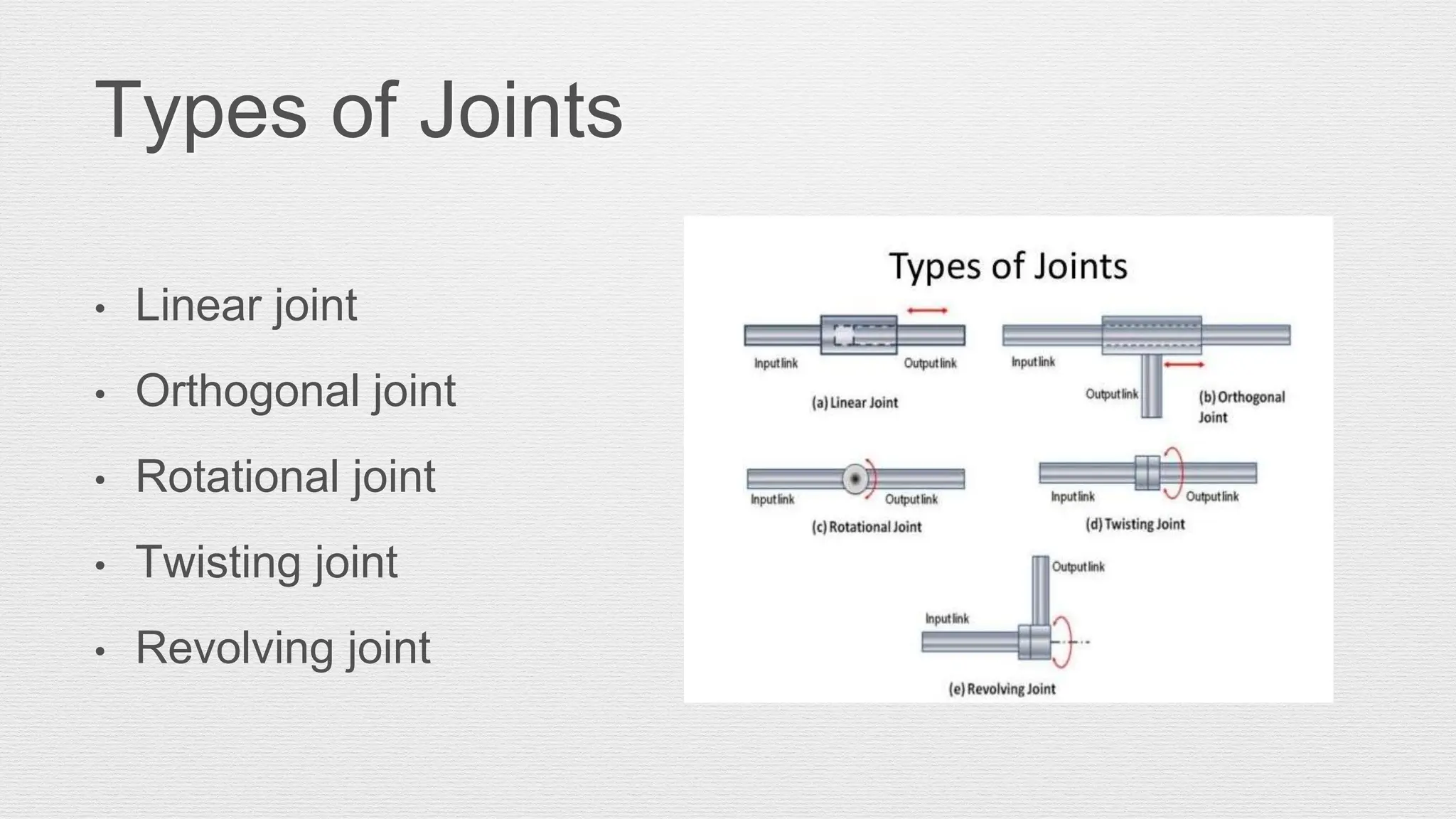
Types of Joints
• Linear joint
• Orthogonal joint
• Rotational joint
• Twisting joint
• Revolving joint
Common Robot Configurations
A robot manipulator can he divided into two sections: a body-
and-arm assembly and a wrist Assembly. At the end of the
manipulator's wrist is a device related to the task that must be
accomplished by the robot.
Body and arm- for positioning of objects of robot’s work volume.
Wrist assembly- for orientation of end effector
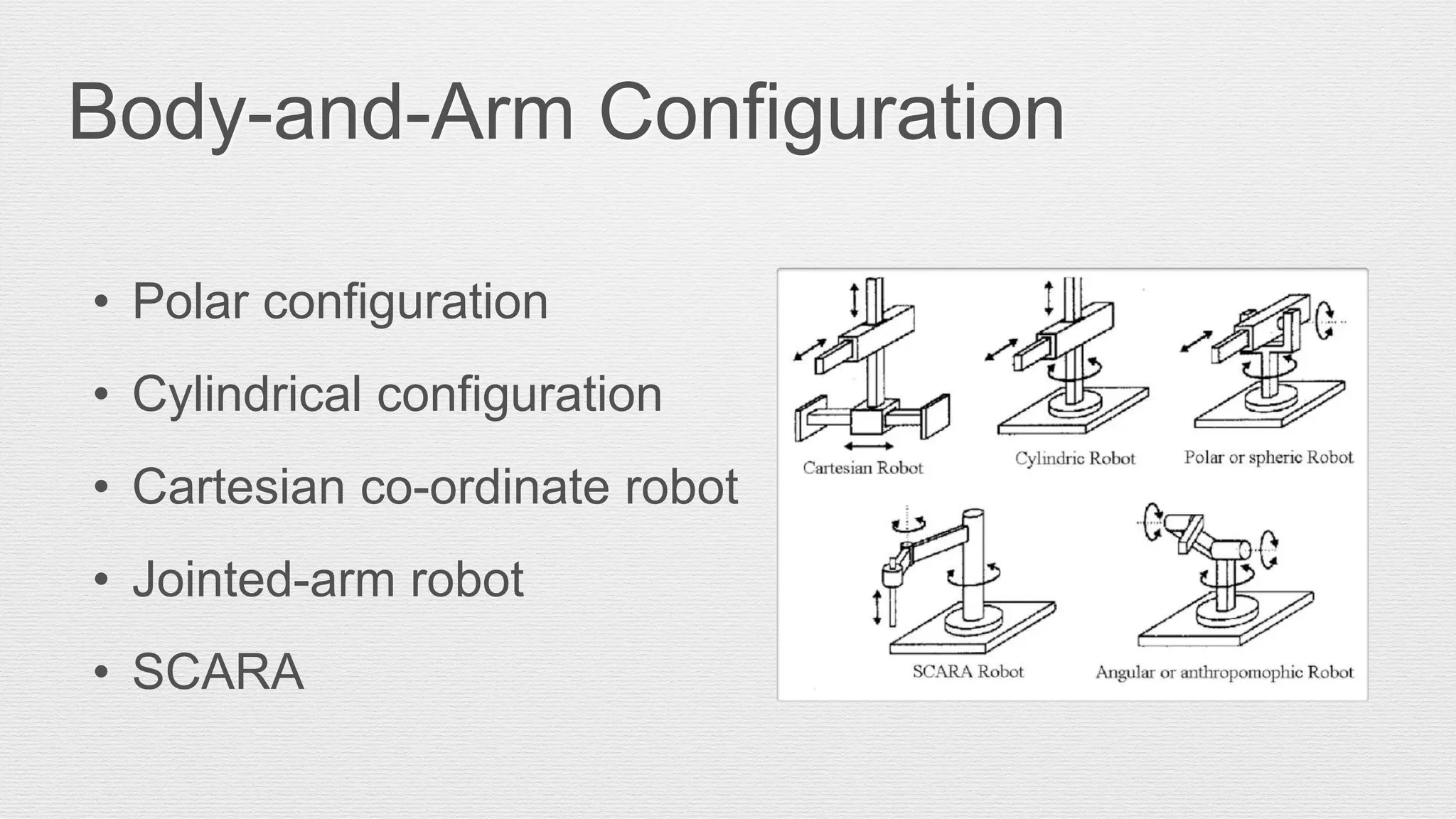
• Polar configuration
• Cylindrical configuration
• Cartesian co-ordinate robot
• Jointed-arm robot
• SCARA
Body-and-Arm Configuration
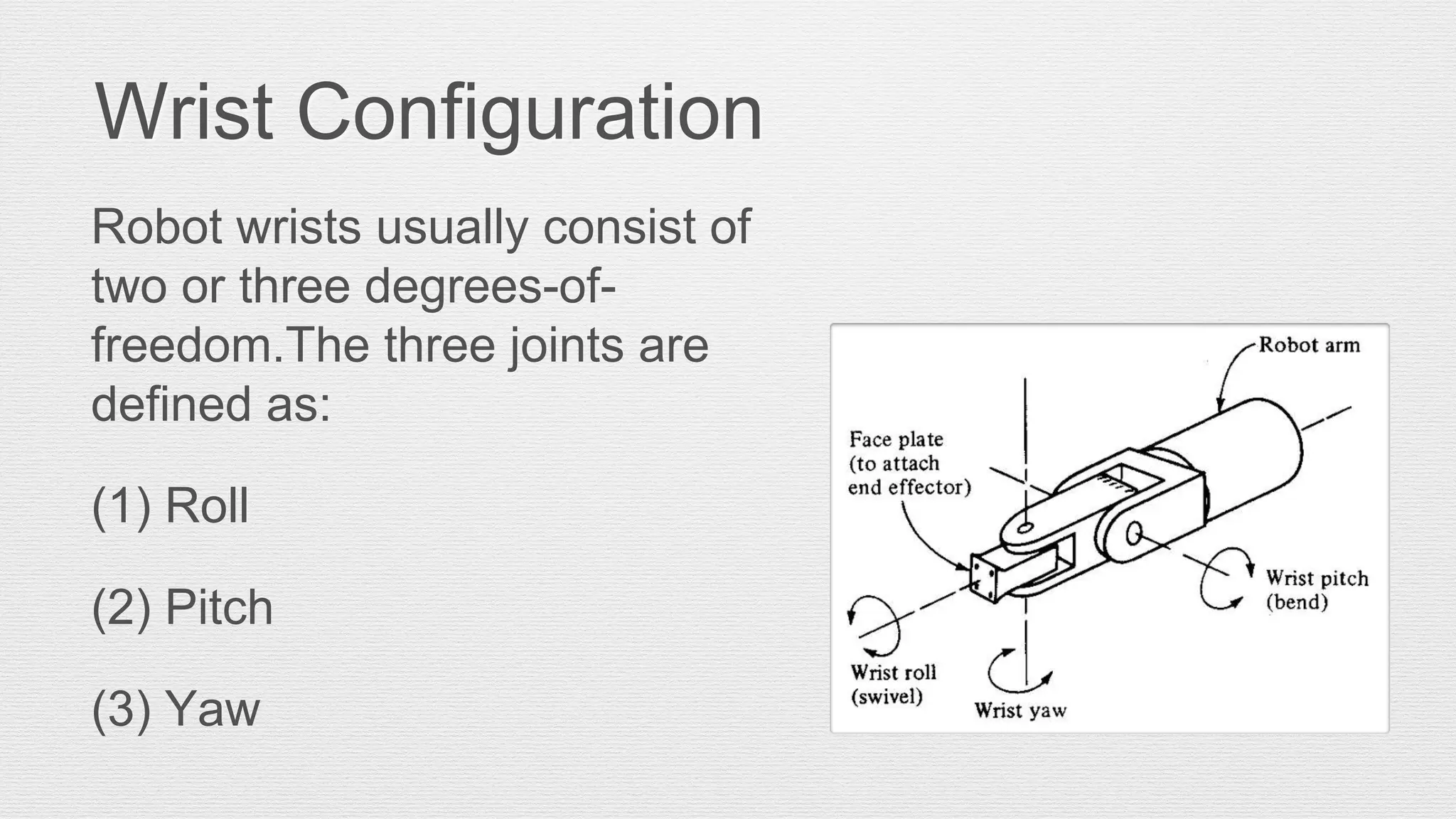
Wrist Configuration
Robot wrists usually consist of
two or three degrees-of-
freedom.The three joints are
defined as:
(1) Roll
(2) Pitch
(3) Yaw
Joint Drive Systems
Robot joints are actuated using any of three possible types of
drive systems:
Electric: uses electric motors to actuate individual joints. Preferred drive
system in today’s robots.
Hydraulic : uses hydraulic pistons and rotary vane actuator. Noted for their
high power and lift capacity
Pneumatic : typical limited to smaller robots and simple material transfer
applications
Industrial Robot Applications
The following robotic applications are the most common in the automotive
industry:
• Collaborative Robots: These collaborative robots are built to work together
with other robots, on enormous assembly lines.
• Robotic Welding: Robotic welding has been the top robotic application in the
automotive sector for a long time, as every car needs a high number of welds
before it’s complete.
• Robotic Assembly: In many automotive plants, robots are assembling smaller
components like pumps and motors at high speeds.
• Material Removal: High consistency and repeatability make robots perfect for
material removal processes like trimming and cutting.
Thank You!

R01 Introduction to Robotics and Robot Anatomy

  • 1.
    Introduction to Robotics& Robot Anatomy
  • 2.
    Robotics- Introduction • Roboticsis a branch of engineering and science that includes electronics engineering, mechanical engineering and computer science and so on. • Robots can take any form but most of them have been given the human appearance. Most of the robots of today are inspired by nature and are known as bio-inspired robots. • Robotics is that branch of engineering that deals with conception, design, operation, and manufacturing of robots.
  • 3.
    An Industrial robotis a general purpose, programmable machine which possesses some anthropomorphic characteristics. Anthropomorphic characteristics such as mechanical arms are used for various industry tasks. • Hazardous work environments • Repetitive work cycle • Consistency and accuracy • Difficult handling tasks • Reprogrammable and flexible • Interfaced to other computer systems
  • 4.
    Characteristics of Robots •Appearance: held by the structure of their body, moved by their mechanical parts. • Brain: On-board control unit- receive information and sends commands • Sensors: gather info from the outside world and send it to Brain. • Actuators: The part with help of which these robots move • Program: work or responds to the instructions provided in the form of a program. • Behaviour: decided by the program built for it.
  • 5.
    Commercial and Technological Advantages •Robots are good substitutes to the human beings in hazardous or uncomfortable work environments. • A robot performs its work cycle with a consistency and repeatability which is difficult for human beings. • A robot can be reprogrammed to perform a different task. • Robots can be connected to the computer systems and other robotics systems.
  • 6.
    Robot Anatomy The manipulatorof an industrial robot is constructed of a series of joints and links. Robot anatomy is concerned with the types and sizes of these joints and links and other aspects of the manipulator's physical construction.
  • 7.
    • Manipulator consistsof links and joints • Joints provide relative motion between links • Links are rigid members between joints • Each joint provides a degree of freedom • The robot's complexity can be classified according to the total number of degrees-of-freedom they possess.
  • 8.
    Types of Joints •Linear joint • Orthogonal joint • Rotational joint • Twisting joint • Revolving joint
  • 9.
    Common Robot Configurations Arobot manipulator can he divided into two sections: a body- and-arm assembly and a wrist Assembly. At the end of the manipulator's wrist is a device related to the task that must be accomplished by the robot. Body and arm- for positioning of objects of robot’s work volume. Wrist assembly- for orientation of end effector
  • 10.
    • Polar configuration •Cylindrical configuration • Cartesian co-ordinate robot • Jointed-arm robot • SCARA Body-and-Arm Configuration
  • 11.
    Wrist Configuration Robot wristsusually consist of two or three degrees-of- freedom.The three joints are defined as: (1) Roll (2) Pitch (3) Yaw
  • 12.
    Joint Drive Systems Robotjoints are actuated using any of three possible types of drive systems: Electric: uses electric motors to actuate individual joints. Preferred drive system in today’s robots. Hydraulic : uses hydraulic pistons and rotary vane actuator. Noted for their high power and lift capacity Pneumatic : typical limited to smaller robots and simple material transfer applications
  • 13.
    Industrial Robot Applications Thefollowing robotic applications are the most common in the automotive industry: • Collaborative Robots: These collaborative robots are built to work together with other robots, on enormous assembly lines. • Robotic Welding: Robotic welding has been the top robotic application in the automotive sector for a long time, as every car needs a high number of welds before it’s complete. • Robotic Assembly: In many automotive plants, robots are assembling smaller components like pumps and motors at high speeds. • Material Removal: High consistency and repeatability make robots perfect for material removal processes like trimming and cutting.
  • 14.