Assistive Technology 
Ronda Bynon 
Technology And Education 
ED5059 
August 30, 2014
What is Assistive Technology? 
Assistive technology is devices that aid 
students with special needs meet the 
requirements of regular education 
classes. AT can be anything from a 
rubber grip on a pencil to a laptop 
computer assigned to a student.
Assistive Technology and 
the Law 
“Assistive technology device means any item, piece of 
equipment, or product system, whether acquired 
commercially off the shelf, modified, or customized, 
that is used to increase, maintain, or improve the 
functional capabilities of a child with a disability. The 
term does not include a medical device that is 
surgically implanted, or the replacement of such 
device.” (Assistive, 2008).
AT and the Hearing 
Impaired 
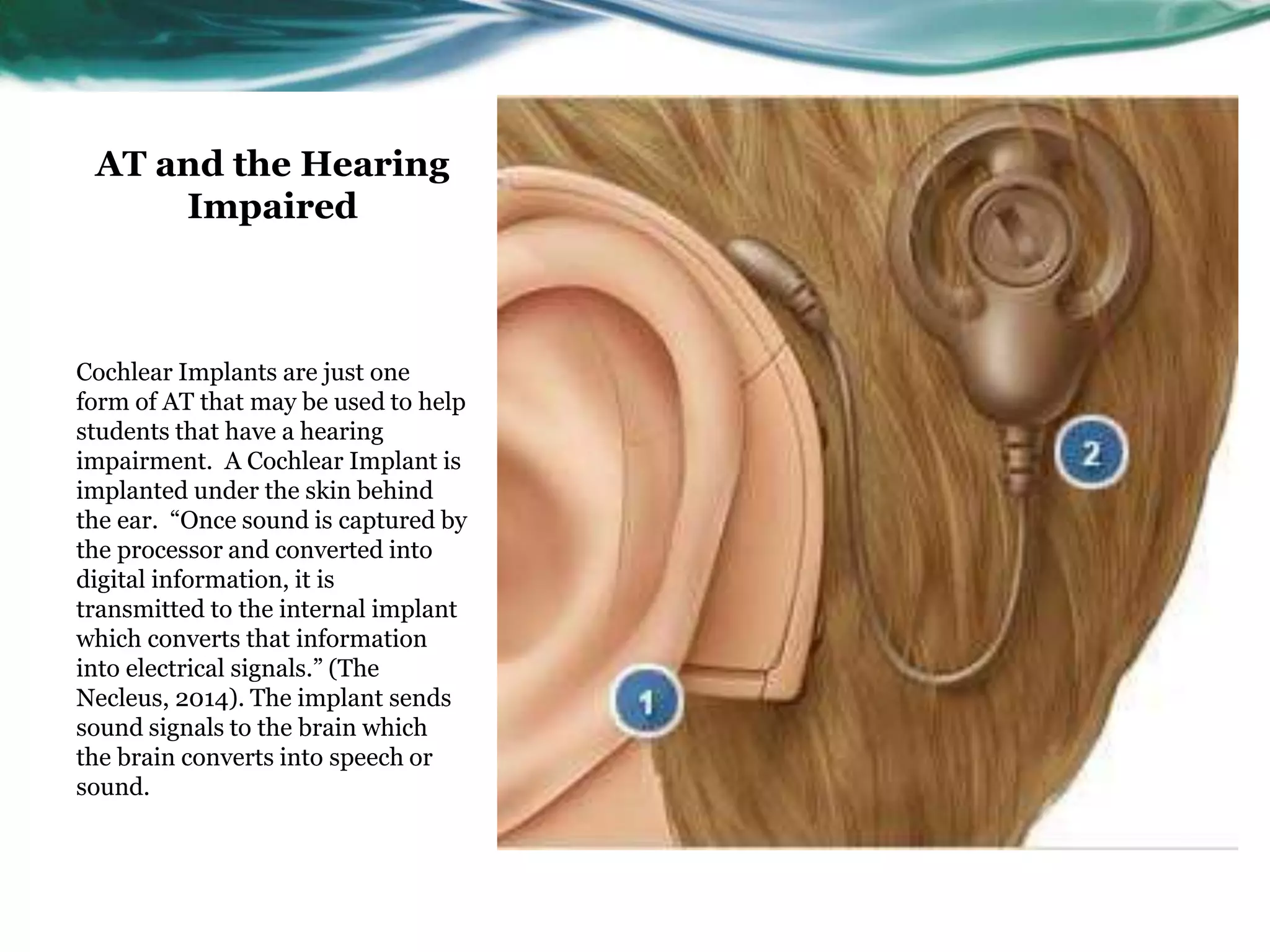
Cochlear Implants are just one 
form of AT that may be used to help 
students that have a hearing 
impairment. A Cochlear Implant is 
implanted under the skin behind 
the ear. “Once sound is captured by 
the processor and converted into 
digital information, it is 
transmitted to the internal implant 
which converts that information 
into electrical signals.” (The 
Necleus, 2014). The implant sends 
sound signals to the brain which 
the brain converts into speech or 
sound.
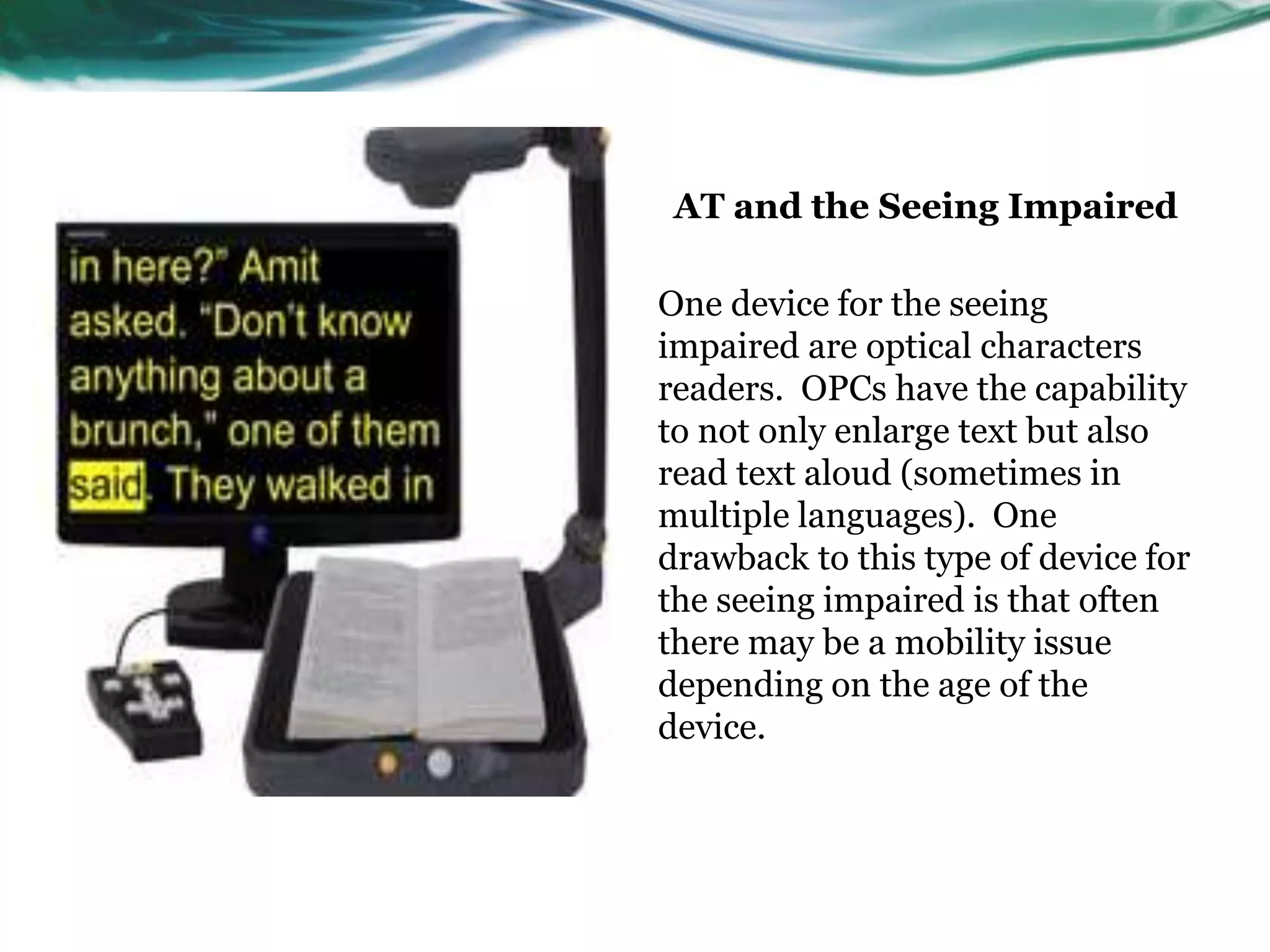
AT and the Seeing Impaired 
One device for the seeing 
impaired are optical characters 
readers. OPCs have the capability 
to not only enlarge text but also 
read text aloud (sometimes in 
multiple languages). One 
drawback to this type of device for 
the seeing impaired is that often 
there may be a mobility issue 
depending on the age of the 
device.
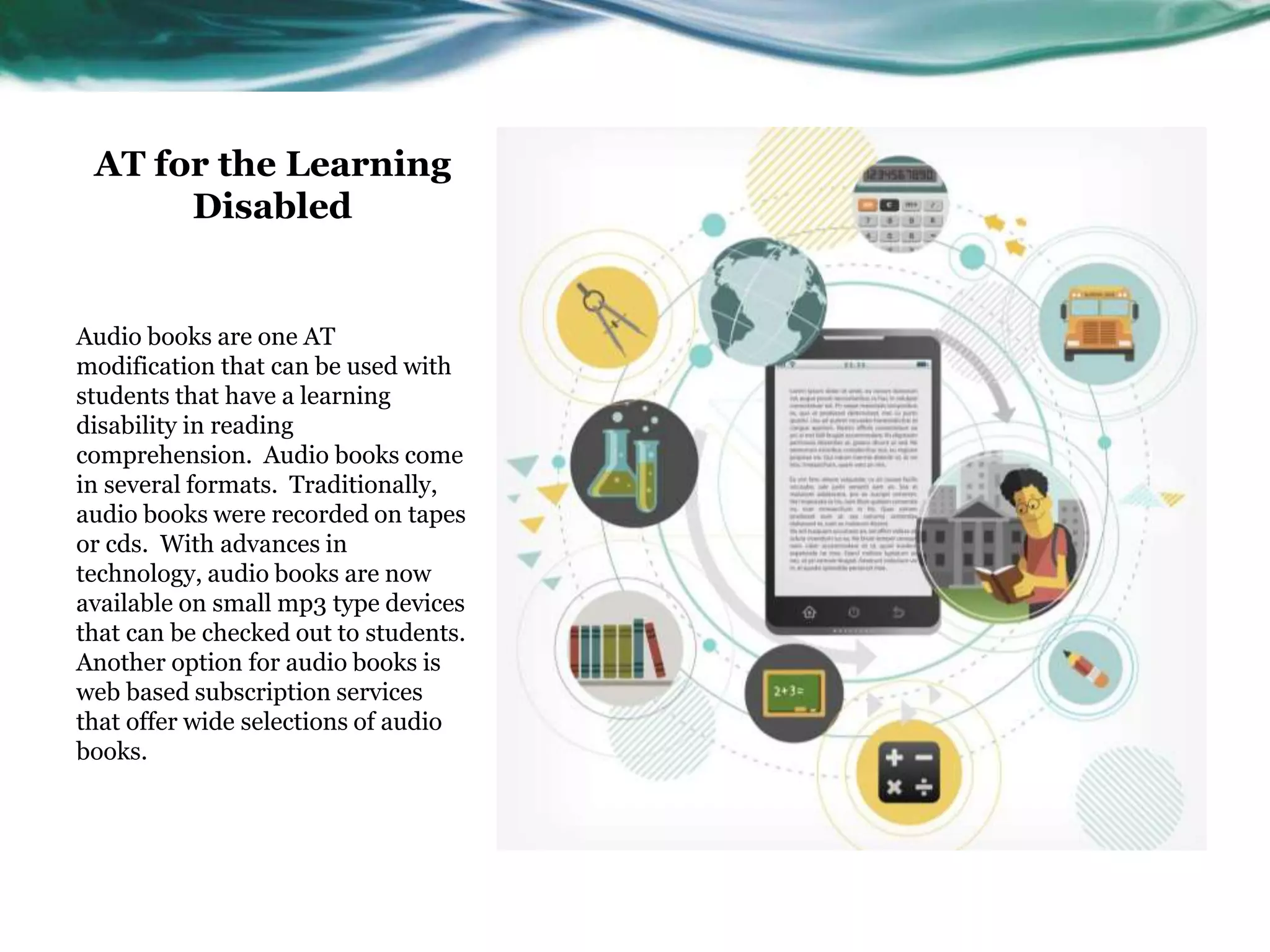
AT for the Learning 
Disabled 
Audio books are one AT 
modification that can be used with 
students that have a learning 
disability in reading 
comprehension. Audio books come 
in several formats. Traditionally, 
audio books were recorded on tapes 
or cds. With advances in 
technology, audio books are now 
available on small mp3 type devices 
that can be checked out to students. 
Another option for audio books is 
web based subscription services 
that offer wide selections of audio 
books.
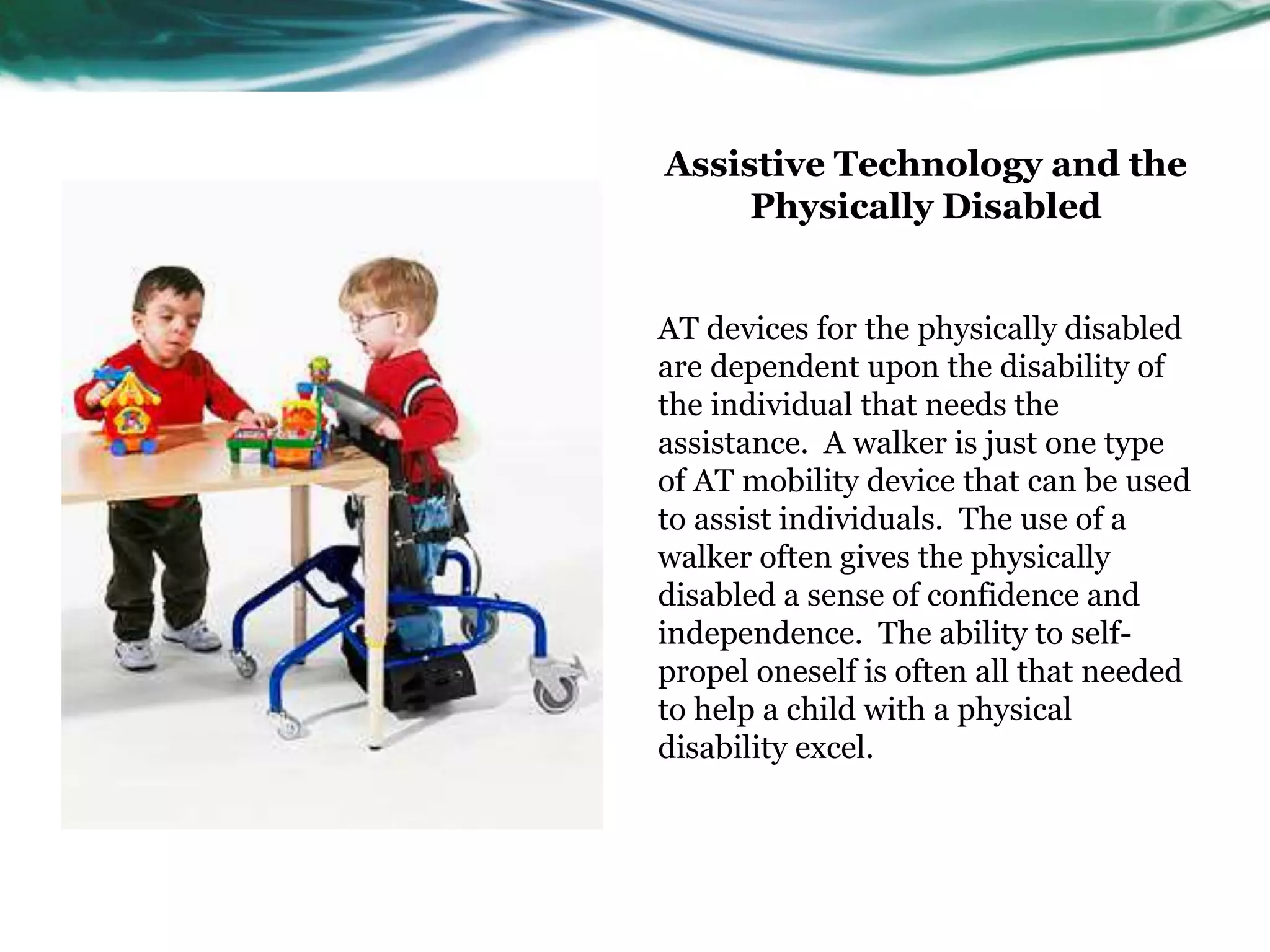
Assistive Technology and the 
Physically Disabled 
AT devices for the physically disabled 
are dependent upon the disability of 
the individual that needs the 
assistance. A walker is just one type 
of AT mobility device that can be used 
to assist individuals. The use of a 
walker often gives the physically 
disabled a sense of confidence and 
independence. The ability to self-propel 
oneself is often all that needed 
to help a child with a physical 
disability excel.
References 
Assistive Technology. (n.d.) Retrieved from http://iris.peabody.vanderbilt.edu/module/at/#content 
Assistive Technology in Education. (2008). Retrieved from 
http://www.atp.ne.gov/techassistdoc.html 
Goebel, Gerald (author). (n.d.). Funding Adaptive Mobility Equipment for Young Children with Disabilities 
[electronic image]. Retrieved August 30, 2014, from http://www.rifton.com 
Kerr, Michael (educator). (2014). MOBILE ASSISTIVE TECHNOLGY 
FOR LEARNING IN A DIGITAL WORLD [electronic image]. 
Retrieved August 30, 2014, from: http://ldatschool.ca/pro-learning/ articles/mobile-assistive-technology-for-learning- 
in-a-digital-world 
Kugler, Sean (author). (2012). Welcome to Assistive Technology [electronic image]. Retrieved August 30, 
2014 from http://www.fusd1.org 
Nielson, Lisa (author). (2011). 25 Incredible Assistive Technologies [electronic image]. Retrieved August 30, 
2014 from http://theinnovativeeducator.blogspot.com/2011/09/25-incredible-assistive-technologies.html 
Optical Character Readers. (n.d.). Retrieved from http://www.christal-vision.com/default.htm 
The Necleus System. Everything we’ve learned over 30 years makes 
it simply smarter. (2014). Retrieved at http://www.cochlear.com

R bynon assistive_technology

  • 1.
    Assistive Technology RondaBynon Technology And Education ED5059 August 30, 2014
  • 2.
    What is AssistiveTechnology? Assistive technology is devices that aid students with special needs meet the requirements of regular education classes. AT can be anything from a rubber grip on a pencil to a laptop computer assigned to a student.
  • 3.
    Assistive Technology and the Law “Assistive technology device means any item, piece of equipment, or product system, whether acquired commercially off the shelf, modified, or customized, that is used to increase, maintain, or improve the functional capabilities of a child with a disability. The term does not include a medical device that is surgically implanted, or the replacement of such device.” (Assistive, 2008).
  • 4.
    AT and theHearing Impaired Cochlear Implants are just one form of AT that may be used to help students that have a hearing impairment. A Cochlear Implant is implanted under the skin behind the ear. “Once sound is captured by the processor and converted into digital information, it is transmitted to the internal implant which converts that information into electrical signals.” (The Necleus, 2014). The implant sends sound signals to the brain which the brain converts into speech or sound.
  • 5.
    AT and theSeeing Impaired One device for the seeing impaired are optical characters readers. OPCs have the capability to not only enlarge text but also read text aloud (sometimes in multiple languages). One drawback to this type of device for the seeing impaired is that often there may be a mobility issue depending on the age of the device.
  • 6.
    AT for theLearning Disabled Audio books are one AT modification that can be used with students that have a learning disability in reading comprehension. Audio books come in several formats. Traditionally, audio books were recorded on tapes or cds. With advances in technology, audio books are now available on small mp3 type devices that can be checked out to students. Another option for audio books is web based subscription services that offer wide selections of audio books.
  • 7.
    Assistive Technology andthe Physically Disabled AT devices for the physically disabled are dependent upon the disability of the individual that needs the assistance. A walker is just one type of AT mobility device that can be used to assist individuals. The use of a walker often gives the physically disabled a sense of confidence and independence. The ability to self-propel oneself is often all that needed to help a child with a physical disability excel.
  • 8.
    References Assistive Technology.(n.d.) Retrieved from http://iris.peabody.vanderbilt.edu/module/at/#content Assistive Technology in Education. (2008). Retrieved from http://www.atp.ne.gov/techassistdoc.html Goebel, Gerald (author). (n.d.). Funding Adaptive Mobility Equipment for Young Children with Disabilities [electronic image]. Retrieved August 30, 2014, from http://www.rifton.com Kerr, Michael (educator). (2014). MOBILE ASSISTIVE TECHNOLGY FOR LEARNING IN A DIGITAL WORLD [electronic image]. Retrieved August 30, 2014, from: http://ldatschool.ca/pro-learning/ articles/mobile-assistive-technology-for-learning- in-a-digital-world Kugler, Sean (author). (2012). Welcome to Assistive Technology [electronic image]. Retrieved August 30, 2014 from http://www.fusd1.org Nielson, Lisa (author). (2011). 25 Incredible Assistive Technologies [electronic image]. Retrieved August 30, 2014 from http://theinnovativeeducator.blogspot.com/2011/09/25-incredible-assistive-technologies.html Optical Character Readers. (n.d.). Retrieved from http://www.christal-vision.com/default.htm The Necleus System. Everything we’ve learned over 30 years makes it simply smarter. (2014). Retrieved at http://www.cochlear.com

Editor's Notes

  • #4 * If any of these issues caused a schedule delay or need to be discussed further, include details in next slide.
  • #5 Duplicate this slide as necessary if there is more than one issue. This and related slides can be moved to the appendix or hidden if necessary.