AMISULPRIDE
prepared by: Dr. Omaima Khalid
Iraqi board of psychiatry
4th stage
Amisulpride
Background
Amisulpride is a benzamide derivative and a dopamine receptor
antagonist that selectively works on dopamine D2 and D3 receptors.
As an antipsychotic agent, amisulpride alleviates both positive and
negative symptoms of schizophrenia, and it exhibits antidepressant
properties in patients with psychiatric disorders, dysthymia, and major
depression. Amisulpride predominantly works in the limbic system,
which explains its relatively lower risk of extrapyramidal adverse effects
compared to other atypical antipsychotic agents.
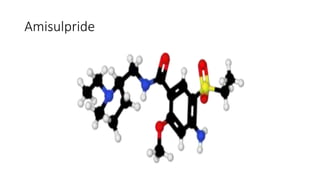
Amisulpride
Sulpride is chemically and clinically similar to amisulpride. Which is a
medication of the benzamide class, used mainly in the treatment of
psychosis associated with schizophrenia and major depressive disorder,
and sometimes used in low dosage to treat anxiety and mild
depression.
In clinical trials, amisulpride improved reduced secondary negative
symptoms, affective symptoms, and psychomotor retardation in
patients with acute exacerbation of schizophrenia.
Indication
• Intravenous amisulpride is indicated in adults for the prevention of
postoperative nausea and vomiting, either alone or in combination
with an antiemetic of a different class.
• Oral amisulpride is indicated for the treatment of acute and chronic
schizophrenic disorders, characterized by positive symptoms with
delusions, hallucinations, thought disorders, hostility and suspicious
behavior; or primarily negative symptoms (deficit syndrome) with
blunted affect, emotional and social withdrawal. Amisulpride also
controls secondary negative symptoms such as depressive mood or
retardation.
Dosage
In patients with acute exacerbations of schizophrenia, the
recommended dosage of amisulpride is 400 to 800 mg/day, although
dosages < or =1200 mg/day may be administered. In comparative trials,
amisulpride administered within this range (400 to 1200 mg/day) was
as effective as haloperidol 5 to 40 mg/day, flupenthixol 25 mg/day and
risperidone 8 mg/day in patients with acute exacerbations of
schizophrenia with predominantly positive symptoms.
patients with acute exacerbations of schizophrenia with predominantly
positive symptoms. Amisulpride was more effective than haloperidol
but equally effective as risperidone in controlling negative symptoms.
Amisulpride 400 to 800 mg/day was more effective than haloperidol,
risperidone and flupenthixol in controlling affective symptoms in these
patients.
Pharmacodynamic
Amisulpride is a selective dopamine D2 and D3 receptor antagonist
with no affinity towards other dopamine receptor subtypes.
Amisulpride is an atypical antipsychotic agent that works as an
antagonist at dopamine receptors in the limbic system. Since it works
preferentially in the limbic system, amisulpride is less likely to be
associated with extrapyramidal adverse effects than other atypical
antipsychotic agents.
Notably, amisulpride has a differential target binding profile at
different doses: at low doses, amisulpride selectively binds to
presynaptic dopamine autoreceptors. At high doses, it preferentially
binds to post-synaptic dopamine receptors. This explains how
amisulpride reduces negative symptoms at low doses and mediates
antipsychotic effects at high doses.
One study alluded that the antinociceptive effects of amisulpride are
mediated through opioid receptor activation and D2 receptor
antagonism. the actions of amisulpride at opioid receptors may explain
its pro-convulsant properties.
It primarily works by blocking dopamine signalling in the
chemoreceptor trigger zone, which is a brain area that relays stimuli to
the vomiting center , thus amisulpride is an antiemetic agent that
prevents and alleviates postoperative nausea and vomiting.
Amisulpride and its relatives sulpiride, levosulpiride, and sultopride
have been shown to bind to dopamine receptor at concentrations that
are therapeutically relevant.
Mechanism of action
It has high preferential activity towards dopamine receptors in the
limbic system rather than the striatum, leading to a lower risk of
extrapyramidal side effects than other atypical antipsychotic agents.
At low doses, amisulpride reduces negative symptoms of schizophrenia
by blocking pre-synaptic dopamine D2 and D3 receptors, increasing the
levels of dopamine in the synaptic cleft and facilitating dopaminergic
transmission.
At higher doses, amisulpride blocks postsynaptic receptors, inhibiting
dopaminergic hyperactivity, this explains the drug improving positive
symptoms. Amisulpride also works as an antagonist at 5-HT7A
receptors and 5-HT2A receptors, which may be related to its
antidepressant effects.
Absorption
Following oral administration, amisulpride is rapidly absorbed with
absolute bioavailability of 48%. amisulpride has two absorption peaks,
with one rapidly achieved within one hour post-dose and a second
peak occurring between three to four hours post-dose. Following oral
administration of a 50 mg dose.
Following intravenous administration, the peak plasma concentration
of amisulpride is achieved at the end of the infusion period and the
plasma concentration decreases by 50% within approximately 15
minutes.
Volume of distribution
Following oral administration, the volume of distribution is 5.8 L/kg.
Following intravenous infusion, the mean volume of distribution of
amisulpride is estimated to be 127 to 144 L in surgical patients and 171
L in healthy subjects.
Protein binding
Plasma protein binding ranges from 25% to 30% in the concentration
range from 37 to 1850 mg/mL.
Metabolism
Metabolism of amisulpride does not involve cytochrome P450
enzymes.
Amisulpride undergoes minimal metabolism and its metabolites in
plasma are largely undetectable. two identified metabolites, formed by
de-ethylation and oxidation, are pharmacologically inactive and
account for approximately 4% of the dose.
metabolites remain largely uncharacterized.
Route of elimination
About 22 to 25% of orally administered amisulpride is excreted in
urine, mostly as the unchanged drug.
Following intravenous administration, about 74% of amisulpride is
excreted in urine, where 58% of the recovered dose was excreted as
unchanged amisulpride.
About 23% of the dose is excreted in feces, with 20% of the excreted
dose as unchanged.
• The elimination half-life of amisulpride is approximately 12 hours
after an oral dose.
The mean elimination half-life is approximately four to five hours in
patients receiving intravenous amisulpride.
Toxicity
Oral doses of amisulpride above 1200 mg/day are associated with
adverse effects related to dopamine-2 (D2) antagonism. Cardiovascular
adverse reactions include prolongation of the QT interval, torsades de
pointes, bradycardia, and hypotension. Neuropsychiatric adverse
reactions include sedation, coma, seizures, and dystonic and
extrapyramidal reactions.
As there is no specific antidote for amisulpride overdosage,
management includes cardiac monitoring and treatment of severe
extrapyramidal symptoms. Drug elimination with the use of
hemodialysis is effective. Severe extrapyramidal effects may be
managed with anticholinergic drugs.
Food and drugs interaction
_Avoid alcohol, Amisulpride may enhance the effects of alcohol.
_ A high fat meal does not significantly affect drug pharmacokinetics,
although a carbohydrate rich meal decreases drug absorption and
levels.
_Amisulpride should not be used in conjunction with drugs that
prolong the QT interval (such as citalopram, bupropion, clozapine,
tricyclic antidepressants, sertindole, ziprasidone, etc.), reduce heart
rate and those that can induce hypokalaemia.
Contraindications
Amisulpride’s use is contraindicated in the following disease states:
• Pheochromocytoma
• Concomitant prolactin-dependent tumours e.g. prolactinoma, breast
cancer
• Movement disorders (e.g. Parkinson's disease and dementia with
Lewy bodies)
• Lactation
• Children before the onset of puberty
Adverse effects
Very Common (≥10% incidence)
• Extrapyramidal side effects (EPS; including dystonia, tremor,
akathesia, parkinsonism)
Common (≥1%, <10% incidence)
• Insomnia
• Hypersalivation
• Nausea
• Headache
• Hyperactivity
• Vomiting
• Hyperprolactinaemia (which can lead to galactorrhoea, breast
enlargement and tenderness, sexual dysfunction, etc.)
• Anticholinergic side effects (although it does not bind to the
muscarinic acetylcholine receptors and hence these side effects are
usually quite mild) such as
• - constipation
• - dry mouth
• - disorder of accommodation
• - Blurred vision
• Weight gain (produces less weight gain than chlorpromazine,
clozapine, iloperidone, olanzapine, paliperidone, quetiapine,
risperidone, sertindole, zotepine and more (although not statistically
significantly) weight gain than haloperidol, lurasidone, ziprasidone
and approximately as much weight gain as aripiprazole and
asenapine)
Rare (<1% incidence)
• Hyponatraemia
• Bradycardia
• Hypotension
• Palpitations
• Urticaria
• Seizures
• Mania
• Oculogyric crisis
• Tardive dyskinesia
• Blood dyscrasias such as leucopenia, neutropenia and agranulocytosis
• QT interval prolongation (in a recent meta-analysis of the safety and
efficacy of 15 antipsychotic drugs amisulpride was found to have the
2nd highest effect size for causing QT interval prolongation)
Discontinuation
a gradual withdrawal when discontinuing antipsychotics to avoid acute
withdrawal syndrome or rapid relapse. Symptoms of withdrawal
commonly include nausea, vomiting, and loss of appetite. Other
symptoms may include restlessness, increased sweating, and trouble
sleeping. Less commonly there may be a feeling of the world spinning,
numbness, or muscle pains.
Symptoms generally resolve after a short period of time.
THANKS

Amisulpride.pptx

  • 1.
    AMISULPRIDE prepared by: Dr.Omaima Khalid Iraqi board of psychiatry 4th stage
  • 2.
  • 3.
    Background Amisulpride is abenzamide derivative and a dopamine receptor antagonist that selectively works on dopamine D2 and D3 receptors. As an antipsychotic agent, amisulpride alleviates both positive and negative symptoms of schizophrenia, and it exhibits antidepressant properties in patients with psychiatric disorders, dysthymia, and major depression. Amisulpride predominantly works in the limbic system, which explains its relatively lower risk of extrapyramidal adverse effects compared to other atypical antipsychotic agents.
  • 4.
  • 5.
    Sulpride is chemicallyand clinically similar to amisulpride. Which is a medication of the benzamide class, used mainly in the treatment of psychosis associated with schizophrenia and major depressive disorder, and sometimes used in low dosage to treat anxiety and mild depression.
  • 6.
    In clinical trials,amisulpride improved reduced secondary negative symptoms, affective symptoms, and psychomotor retardation in patients with acute exacerbation of schizophrenia.
  • 7.
    Indication • Intravenous amisulprideis indicated in adults for the prevention of postoperative nausea and vomiting, either alone or in combination with an antiemetic of a different class.
  • 8.
    • Oral amisulprideis indicated for the treatment of acute and chronic schizophrenic disorders, characterized by positive symptoms with delusions, hallucinations, thought disorders, hostility and suspicious behavior; or primarily negative symptoms (deficit syndrome) with blunted affect, emotional and social withdrawal. Amisulpride also controls secondary negative symptoms such as depressive mood or retardation.
  • 9.
    Dosage In patients withacute exacerbations of schizophrenia, the recommended dosage of amisulpride is 400 to 800 mg/day, although dosages < or =1200 mg/day may be administered. In comparative trials, amisulpride administered within this range (400 to 1200 mg/day) was as effective as haloperidol 5 to 40 mg/day, flupenthixol 25 mg/day and risperidone 8 mg/day in patients with acute exacerbations of schizophrenia with predominantly positive symptoms.
  • 10.
    patients with acuteexacerbations of schizophrenia with predominantly positive symptoms. Amisulpride was more effective than haloperidol but equally effective as risperidone in controlling negative symptoms. Amisulpride 400 to 800 mg/day was more effective than haloperidol, risperidone and flupenthixol in controlling affective symptoms in these patients.
  • 11.
    Pharmacodynamic Amisulpride is aselective dopamine D2 and D3 receptor antagonist with no affinity towards other dopamine receptor subtypes. Amisulpride is an atypical antipsychotic agent that works as an antagonist at dopamine receptors in the limbic system. Since it works preferentially in the limbic system, amisulpride is less likely to be associated with extrapyramidal adverse effects than other atypical antipsychotic agents.
  • 13.
    Notably, amisulpride hasa differential target binding profile at different doses: at low doses, amisulpride selectively binds to presynaptic dopamine autoreceptors. At high doses, it preferentially binds to post-synaptic dopamine receptors. This explains how amisulpride reduces negative symptoms at low doses and mediates antipsychotic effects at high doses.
  • 14.
    One study alludedthat the antinociceptive effects of amisulpride are mediated through opioid receptor activation and D2 receptor antagonism. the actions of amisulpride at opioid receptors may explain its pro-convulsant properties.
  • 15.
    It primarily worksby blocking dopamine signalling in the chemoreceptor trigger zone, which is a brain area that relays stimuli to the vomiting center , thus amisulpride is an antiemetic agent that prevents and alleviates postoperative nausea and vomiting.
  • 16.
    Amisulpride and itsrelatives sulpiride, levosulpiride, and sultopride have been shown to bind to dopamine receptor at concentrations that are therapeutically relevant.
  • 17.
    Mechanism of action Ithas high preferential activity towards dopamine receptors in the limbic system rather than the striatum, leading to a lower risk of extrapyramidal side effects than other atypical antipsychotic agents. At low doses, amisulpride reduces negative symptoms of schizophrenia by blocking pre-synaptic dopamine D2 and D3 receptors, increasing the levels of dopamine in the synaptic cleft and facilitating dopaminergic transmission.
  • 18.
    At higher doses,amisulpride blocks postsynaptic receptors, inhibiting dopaminergic hyperactivity, this explains the drug improving positive symptoms. Amisulpride also works as an antagonist at 5-HT7A receptors and 5-HT2A receptors, which may be related to its antidepressant effects.
  • 20.
    Absorption Following oral administration,amisulpride is rapidly absorbed with absolute bioavailability of 48%. amisulpride has two absorption peaks, with one rapidly achieved within one hour post-dose and a second peak occurring between three to four hours post-dose. Following oral administration of a 50 mg dose.
  • 21.
    Following intravenous administration,the peak plasma concentration of amisulpride is achieved at the end of the infusion period and the plasma concentration decreases by 50% within approximately 15 minutes.
  • 22.
    Volume of distribution Followingoral administration, the volume of distribution is 5.8 L/kg. Following intravenous infusion, the mean volume of distribution of amisulpride is estimated to be 127 to 144 L in surgical patients and 171 L in healthy subjects.
  • 23.
    Protein binding Plasma proteinbinding ranges from 25% to 30% in the concentration range from 37 to 1850 mg/mL.
  • 24.
    Metabolism Metabolism of amisulpridedoes not involve cytochrome P450 enzymes. Amisulpride undergoes minimal metabolism and its metabolites in plasma are largely undetectable. two identified metabolites, formed by de-ethylation and oxidation, are pharmacologically inactive and account for approximately 4% of the dose. metabolites remain largely uncharacterized.
  • 25.
    Route of elimination About22 to 25% of orally administered amisulpride is excreted in urine, mostly as the unchanged drug. Following intravenous administration, about 74% of amisulpride is excreted in urine, where 58% of the recovered dose was excreted as unchanged amisulpride. About 23% of the dose is excreted in feces, with 20% of the excreted dose as unchanged.
  • 26.
    • The eliminationhalf-life of amisulpride is approximately 12 hours after an oral dose. The mean elimination half-life is approximately four to five hours in patients receiving intravenous amisulpride.
  • 27.
    Toxicity Oral doses ofamisulpride above 1200 mg/day are associated with adverse effects related to dopamine-2 (D2) antagonism. Cardiovascular adverse reactions include prolongation of the QT interval, torsades de pointes, bradycardia, and hypotension. Neuropsychiatric adverse reactions include sedation, coma, seizures, and dystonic and extrapyramidal reactions.
  • 28.
    As there isno specific antidote for amisulpride overdosage, management includes cardiac monitoring and treatment of severe extrapyramidal symptoms. Drug elimination with the use of hemodialysis is effective. Severe extrapyramidal effects may be managed with anticholinergic drugs.
  • 29.
    Food and drugsinteraction _Avoid alcohol, Amisulpride may enhance the effects of alcohol. _ A high fat meal does not significantly affect drug pharmacokinetics, although a carbohydrate rich meal decreases drug absorption and levels. _Amisulpride should not be used in conjunction with drugs that prolong the QT interval (such as citalopram, bupropion, clozapine, tricyclic antidepressants, sertindole, ziprasidone, etc.), reduce heart rate and those that can induce hypokalaemia.
  • 30.
    Contraindications Amisulpride’s use iscontraindicated in the following disease states: • Pheochromocytoma • Concomitant prolactin-dependent tumours e.g. prolactinoma, breast cancer • Movement disorders (e.g. Parkinson's disease and dementia with Lewy bodies) • Lactation • Children before the onset of puberty
  • 31.
    Adverse effects Very Common(≥10% incidence) • Extrapyramidal side effects (EPS; including dystonia, tremor, akathesia, parkinsonism)
  • 32.
    Common (≥1%, <10%incidence) • Insomnia • Hypersalivation • Nausea • Headache • Hyperactivity • Vomiting • Hyperprolactinaemia (which can lead to galactorrhoea, breast enlargement and tenderness, sexual dysfunction, etc.)
  • 33.
    • Anticholinergic sideeffects (although it does not bind to the muscarinic acetylcholine receptors and hence these side effects are usually quite mild) such as • - constipation • - dry mouth • - disorder of accommodation • - Blurred vision
  • 34.
    • Weight gain(produces less weight gain than chlorpromazine, clozapine, iloperidone, olanzapine, paliperidone, quetiapine, risperidone, sertindole, zotepine and more (although not statistically significantly) weight gain than haloperidol, lurasidone, ziprasidone and approximately as much weight gain as aripiprazole and asenapine)
  • 35.
    Rare (<1% incidence) •Hyponatraemia • Bradycardia • Hypotension • Palpitations • Urticaria • Seizures • Mania • Oculogyric crisis • Tardive dyskinesia
  • 36.
    • Blood dyscrasiassuch as leucopenia, neutropenia and agranulocytosis • QT interval prolongation (in a recent meta-analysis of the safety and efficacy of 15 antipsychotic drugs amisulpride was found to have the 2nd highest effect size for causing QT interval prolongation)
  • 37.
    Discontinuation a gradual withdrawalwhen discontinuing antipsychotics to avoid acute withdrawal syndrome or rapid relapse. Symptoms of withdrawal commonly include nausea, vomiting, and loss of appetite. Other symptoms may include restlessness, increased sweating, and trouble sleeping. Less commonly there may be a feeling of the world spinning, numbness, or muscle pains. Symptoms generally resolve after a short period of time.
  • 38.