Name:- Bhadani Smit Ramjibhai
Roll No.:- 17BPH095
Program:- B.Pharm
Sem.:- IV
Subject:- Pharmacology
1. Definition :- Psychosis:-
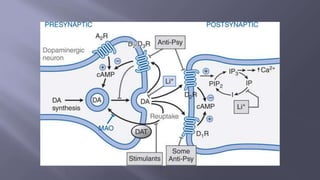
2. Dopamine Hypothesis:-
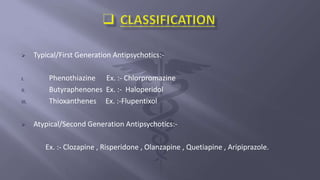
3. Classification of Antipsychotics:-
4. Pharmacological Profile of Each Category:-
5. Clinical Usage:-
• A Symptom Of Mental illnesses.
• Characterised by Distorted or Non-Existent sense of Reality:-
- Hallucination.
- Delusions.
- Disorganised Speech.
- Disorganised or Agitated Behaviour.
 Mood Disorder (Major Depression or Mania With Psychotic Features).
 Substance Induced Psychosis.
 Dementia with Psychotic features.
 Delirium with Psychotic features.
 Schizophrenia.
 Put Forward by Arvid Carlsson.
 “The Clinical features Of Schizophrenia (Sometimes extended to
psychosis in General) is related to over activity of dopaminergic
function within the brain.”
 Typical/First Generation Antipsychotics:-
I. Phenothiazine Ex. :- Chlorpromazine
II. Butyraphenones Ex. :- Haloperidol
III. Thioxanthenes Ex. :-Flupentixol
 Atypical/Second Generation Antipsychotics:-
Ex. :- Clozapine , Risperidone , Olanzapine , Quetiapine , Aripiprazole.
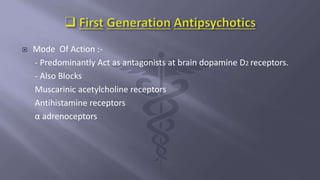
 Mode Of Action :-
- Predominantly Act as antagonists at brain dopamine D2 receptors.
- Also Blocks
Muscarinic acetylcholine receptors
Antihistamine receptors
α adrenoceptors
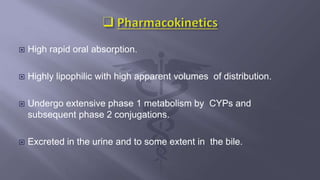
 High rapid oral absorption.
 Highly lipophilic with high apparent volumes of distribution.
 Undergo extensive phase 1 metabolism by CYPs and
subsequent phase 2 conjugations.
 Excreted in the urine and to some extent in the bile.
 Extrapyramidal Motor Effects:-
 Due to dopamine D2 receptor blockade in the nigrostriatal
pathway (except tardive dyskinesia).
A. Acute dystonia
B. Akathisia
C. Parkinsonism
D. Tardive Dyskinesia
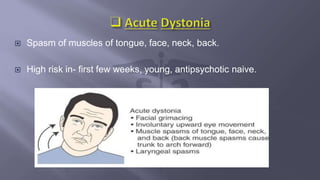
 Spasm of muscles of tongue, face, neck, back.
 High risk in- first few weeks, young, antipsychotic naive.
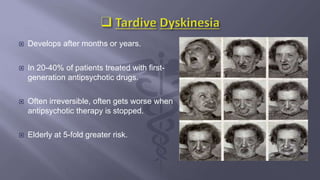
 Develops after months or years.
 In 20-40% of patients treated with first-
generation antipsychotic drugs.
 Often irreversible, often gets worse when
antipsychotic therapy is stopped.
 Elderly at 5-fold greater risk.
 Endocrine effects:-
Due to blockage of dopamine D2 receptors in tuberohypophyseal
pathway     Increased prolactin.:-
 Gynaecomastia.
 Agalactorrhea.
 amenorrhea in women.
 sexual dysfunction or infertility in men.
 Central antagonism of H1 receptors:-
a) Sedation.
b) Weight gain via appetite stimulation.
 Muscarinic antagonism -anticholinergic effects.
 1 Adrenergic antagonism - orthostatic hypotension.
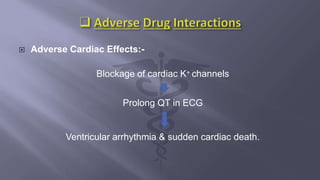
 Adverse Cardiac Effects:-
Blockage of cardiac K+ channels
Prolong QT in ECG
Ventricular arrhythmia & sudden cardiac death.
 Increased risk for cerebrovascular events and all- cause
mortality in dementia patients.
 Lowers seizure threshold.
 Increased triglycerides.
 Hyperglycaemia.
 A fatal idiosyncratic ADR of antipsychotics.
 Characterized by,
1. Mental status changes.
2. Muscle rigidity.
3. Hyperthermia.
4. Autonomic dysfunction.
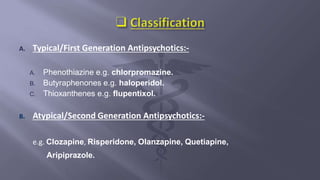
A. Typical/First Generation Antipsychotics:-
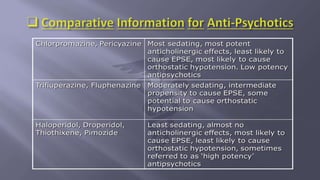
A. Phenothiazine e.g. chlorpromazine.
B. Butyraphenones e.g. haloperidol.
C. Thioxanthenes e.g. flupentixol.
B. Atypical/Second Generation Antipsychotics:-
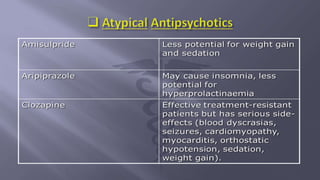
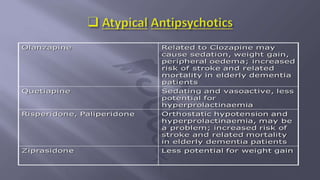
e.g. Clozapine, Risperidone, Olanzapine, Quetiapine,
Aripiprazole.
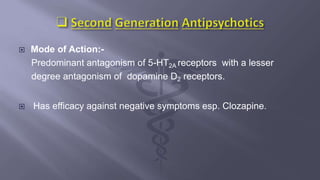
 Mode of Action:-
Predominant antagonism of 5-HT2A receptors with a lesser
degree antagonism of dopamine D2 receptors.
 Has efficacy against negative symptoms esp. Clozapine.
 Extrapyramidal Motor Effects:-
 Considerably less compared to typical antipsychotics.
 Blockage of 5-HT2A receptors increase dopamine in striatum preventing
extrapyramidal effects.
 Cardiotoxicity:-
 Less associated with QT prolongation at therapeutic doses.
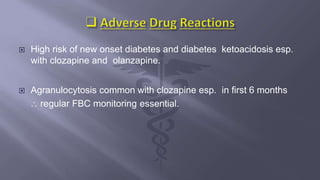
 High risk of new onset diabetes and diabetes ketoacidosis esp.
with clozapine and olanzapine.
 Agranulocytosis common with clozapine esp. in first 6 months
 regular FBC monitoring essential.
 Various disorders treated with antipsychotics in the elderly –
psychosis, bipolar affective disorder, delirium & dementia.
 Use extreme caution because of side effect profile.
 ‘Start low & go slow’ (Malone et al 2007) & titrate over longer periods
of time to reach the required dose.
 Avoid polypharmacy wherever possible.
 Avoid antipsychotics if possible.
 Use the lowest effective dose.
 Neonatal adverse effects observed include generalized hypertonicity
and dystonic reactions.
 The safety of atypical agents is yet to be established but preliminary reports
there to be no deleterious effects to the fetus.
 Isolated cases of congenital abnormalities with the use of Clozapine.
 No increased risk has emerged with the use of Olanzapine.
 The conventional agents are generally preferred.
 Supervised dose reduction and cessation 7-10 days prior to delivery should
be considered.
 Remember that antidepressant medication is only part of the
treatment for antenatal depression and anxiety. Also consider:-
 Psychological therapies.
 Exclude organic illness as a cause of mental health symptoms.
 Address any alcohol and/or illicit substance abuse.
 Assess the social situation.
 General lifestyle measures: adequate rest/sleep, balanced diet, exercise.
 The decision to treat should be made on an individual case basis.
 Conventional and atypical antipsychotics are used as the foundation for pharmacological
management of schizophrenia and related psychosis.
 All have equal efficacy, exception Clozapine.
 Atypical generally better tolerated & have less EPSE.
 Atypical first line treatment.
 Start lowest effective possible dose & titrate upwards.
 Ongoing monitoring & management of adverse effects.
 Caution numerous drug interaction & potential for neuroleptic malignant syndrome.

Antipsychotics

  • 1.
    Name:- Bhadani SmitRamjibhai Roll No.:- 17BPH095 Program:- B.Pharm Sem.:- IV Subject:- Pharmacology
  • 2.
    1. Definition :-Psychosis:- 2. Dopamine Hypothesis:- 3. Classification of Antipsychotics:- 4. Pharmacological Profile of Each Category:- 5. Clinical Usage:-
  • 3.
    • A SymptomOf Mental illnesses. • Characterised by Distorted or Non-Existent sense of Reality:- - Hallucination. - Delusions. - Disorganised Speech. - Disorganised or Agitated Behaviour.
  • 4.
     Mood Disorder(Major Depression or Mania With Psychotic Features).  Substance Induced Psychosis.  Dementia with Psychotic features.  Delirium with Psychotic features.  Schizophrenia.
  • 5.
     Put Forwardby Arvid Carlsson.  “The Clinical features Of Schizophrenia (Sometimes extended to psychosis in General) is related to over activity of dopaminergic function within the brain.”
  • 6.
     Typical/First GenerationAntipsychotics:- I. Phenothiazine Ex. :- Chlorpromazine II. Butyraphenones Ex. :- Haloperidol III. Thioxanthenes Ex. :-Flupentixol  Atypical/Second Generation Antipsychotics:- Ex. :- Clozapine , Risperidone , Olanzapine , Quetiapine , Aripiprazole.
  • 7.
     Mode OfAction :- - Predominantly Act as antagonists at brain dopamine D2 receptors. - Also Blocks Muscarinic acetylcholine receptors Antihistamine receptors α adrenoceptors
  • 9.
     High rapidoral absorption.  Highly lipophilic with high apparent volumes of distribution.  Undergo extensive phase 1 metabolism by CYPs and subsequent phase 2 conjugations.  Excreted in the urine and to some extent in the bile.
  • 10.
     Extrapyramidal MotorEffects:-  Due to dopamine D2 receptor blockade in the nigrostriatal pathway (except tardive dyskinesia). A. Acute dystonia B. Akathisia C. Parkinsonism D. Tardive Dyskinesia
  • 11.
     Spasm ofmuscles of tongue, face, neck, back.  High risk in- first few weeks, young, antipsychotic naive.
  • 12.
     Develops aftermonths or years.  In 20-40% of patients treated with first- generation antipsychotic drugs.  Often irreversible, often gets worse when antipsychotic therapy is stopped.  Elderly at 5-fold greater risk.
  • 13.
     Endocrine effects:- Dueto blockage of dopamine D2 receptors in tuberohypophyseal pathway     Increased prolactin.:-  Gynaecomastia.  Agalactorrhea.  amenorrhea in women.  sexual dysfunction or infertility in men.
  • 14.
     Central antagonismof H1 receptors:- a) Sedation. b) Weight gain via appetite stimulation.  Muscarinic antagonism -anticholinergic effects.  1 Adrenergic antagonism - orthostatic hypotension.
  • 15.
     Adverse CardiacEffects:- Blockage of cardiac K+ channels Prolong QT in ECG Ventricular arrhythmia & sudden cardiac death.
  • 16.
     Increased riskfor cerebrovascular events and all- cause mortality in dementia patients.  Lowers seizure threshold.  Increased triglycerides.  Hyperglycaemia.
  • 17.
     A fatalidiosyncratic ADR of antipsychotics.  Characterized by, 1. Mental status changes. 2. Muscle rigidity. 3. Hyperthermia. 4. Autonomic dysfunction.
  • 18.
    A. Typical/First GenerationAntipsychotics:- A. Phenothiazine e.g. chlorpromazine. B. Butyraphenones e.g. haloperidol. C. Thioxanthenes e.g. flupentixol. B. Atypical/Second Generation Antipsychotics:- e.g. Clozapine, Risperidone, Olanzapine, Quetiapine, Aripiprazole.
  • 19.
     Mode ofAction:- Predominant antagonism of 5-HT2A receptors with a lesser degree antagonism of dopamine D2 receptors.  Has efficacy against negative symptoms esp. Clozapine.
  • 21.
     Extrapyramidal MotorEffects:-  Considerably less compared to typical antipsychotics.  Blockage of 5-HT2A receptors increase dopamine in striatum preventing extrapyramidal effects.  Cardiotoxicity:-  Less associated with QT prolongation at therapeutic doses.
  • 22.
     High riskof new onset diabetes and diabetes ketoacidosis esp. with clozapine and olanzapine.  Agranulocytosis common with clozapine esp. in first 6 months  regular FBC monitoring essential.
  • 26.
     Various disorderstreated with antipsychotics in the elderly – psychosis, bipolar affective disorder, delirium & dementia.  Use extreme caution because of side effect profile.  ‘Start low & go slow’ (Malone et al 2007) & titrate over longer periods of time to reach the required dose.  Avoid polypharmacy wherever possible.
  • 27.
     Avoid antipsychoticsif possible.  Use the lowest effective dose.  Neonatal adverse effects observed include generalized hypertonicity and dystonic reactions.
  • 28.
     The safetyof atypical agents is yet to be established but preliminary reports there to be no deleterious effects to the fetus.  Isolated cases of congenital abnormalities with the use of Clozapine.  No increased risk has emerged with the use of Olanzapine.  The conventional agents are generally preferred.  Supervised dose reduction and cessation 7-10 days prior to delivery should be considered.
  • 29.
     Remember thatantidepressant medication is only part of the treatment for antenatal depression and anxiety. Also consider:-  Psychological therapies.  Exclude organic illness as a cause of mental health symptoms.  Address any alcohol and/or illicit substance abuse.  Assess the social situation.  General lifestyle measures: adequate rest/sleep, balanced diet, exercise.  The decision to treat should be made on an individual case basis.
  • 30.
     Conventional andatypical antipsychotics are used as the foundation for pharmacological management of schizophrenia and related psychosis.  All have equal efficacy, exception Clozapine.  Atypical generally better tolerated & have less EPSE.  Atypical first line treatment.  Start lowest effective possible dose & titrate upwards.  Ongoing monitoring & management of adverse effects.  Caution numerous drug interaction & potential for neuroleptic malignant syndrome.