Questions to Ask Before Selecting a Global Payroll Provider
Phil Calandra, VP Global
Channels & Alliances,
SafeGuard World
International
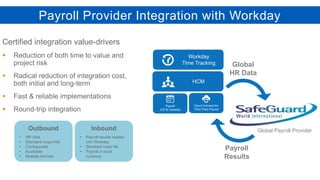
Certified integration value-drivers
 Reduction of both time to value and
project risk
 Radical reduction of integration cost,
both initial and long-term
 Fast & reliable implementations
 Round-trip integration
Inbound
• Payroll results loaded
into Workday
• Standard input file
• Payroll in local
currency
Outbound
• HR data
• Standard output file
• Configurable
• Auditable
• Multiple formats
Payroll
(US & Canada)
HCM
Workday
Time Tracking
Cloud Connect for
Third Party Payroll
Payroll
Results
Global
HR Data
Payroll Provider Integration with Workday
Global Payroll Provider
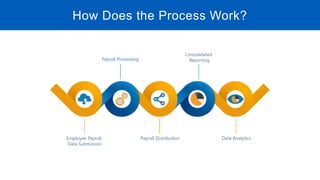
How Does the Process Work?
Questions You Should Ask
• In-Country Payroll Charges - True Cost?
• Time Zones - How do you manage a ‘round-the-clock’ project?
• Payroll Balances - Can I do a mid-year conversion?
• Implementation - How long does it take?
• Time Entry - Do you have a portal that EE’s can use?
• Data Privacy - What do I need to know/do?
• GL Files - How are they formatted/delivered?
• Gross-to-Net Calculations - How and Where are these performed?
Questions You Should Ask
• The Real Cost = Local Payroll Fees PLUS:
‒ Training classes and seminars annually
‒ New legislative requirements
‒ Backup Resource
‒ Auditing & SOX compliance
‒ Disaster Recovery Plan
Country Charges
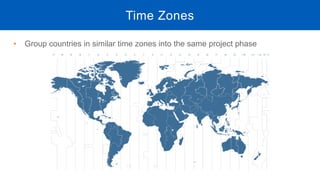
• Group countries in similar time zones into the same project phase
Time Zones
• How do you provide balances for a mid-year implementation?
1. Spreadsheets
– If this is the answer, do not do a mid-year implementation
2. Payroll Registers
Payroll Balances
a
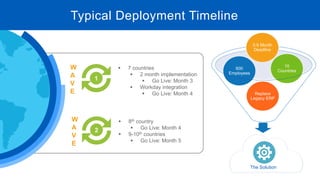
 7 countries
 2 month implementation
 Go Live: Month 3
 Workday integration
 Go Live: Month 4
 8th country
 Go Live: Month 4
 9-10th countries
 Go Live: Month 5
1
W
A
V
E
2
W
A
V
E
Replace
Legacy ERP
600
Employees
10
Countries
3-5 Month
Deadline
The Solution
Typical Deployment Timeline
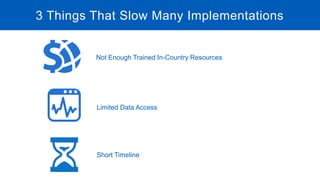
Not Enough Trained In-Country Resources
Limited Data Access
Short Timeline
3 Things That Slow Many Implementations
• What You Should Consider
‒ Your business process
‒ How you capture local time data
‒ Going from a decentralized to centralized model
• What You Should Ask a Provider
‒ Do you have certified integrations?
‒ What about interfaces?
‒ Where does time evaluation take place? (Payroll providers want Hours @ Pay Code/
Rate)
Time Entry
• Consider Employment Contract implications around movement of data
‒ This probably came up in your Workday deployment, anyway
• Check vendor Privacy Controls
‒ Audit Standards
• Remember it is still your data – you’re not outsourcing the responsibility
for it
• Use PGP Encryption on files flowing between you and provider
‒ Workday makes this process easy
• Remember the Data Privacy landscape continues to evolve; keep in
touch with Legal on implications for HR and Payroll
Data Privacy
• If you can’t get a good GL file, you’re probably not going live
• GL files should be delivered monthly via an SFTP site
• You should be able to get as many formats as you need
• A Global Payroll vendor should be able to take your requirements and
create each country’s file format & Chart of Accounts/ Reporting
Structure
GL Files
• How and Where are gross-to-net calculations performed?
‒ In-Country Partner (ICP) network
 Do you have ICPs in every country I require?
 To whom do I speak for every payroll that I run?
‒ Gross-to-net software
 Do you have staff in every country I require, or who are my country-specific experts for every
payroll?
 What if my tax filings or payments are incorrect? Who can help resolve that, is in the local time
zone, and knows the local language and customs?
Gross-to-Net Calculations
Your Global Payroll Provider Needs To Play
“Nice” With Workday!
• Certified outbound integrations
• Labor costing integrations into Workday
• Global access to payroll data
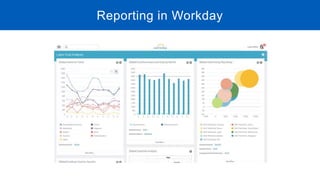
• Global reporting
‒ Reporting in your currency
• Analytics
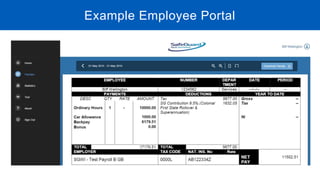
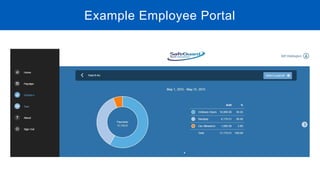
• Pay slips online and mobile
‒ Compliant and in local language
What You Should Expect
Example Employee Portal
Reporting in Workday
• Corporate Visibility
• Disaster Recovery
• SOX
• Feedback
• Partnership
What Separates Good from Great?
• Phil Calandra
‒ philcalandra@safeguardworld.com
‒ +1 (650) 242-4437
• SafeGuard World International
‒ info@safeguardworld.com
‒ +1 (737) 704-2200
‒ Corporate HQ: Austin, TX
‒ European HQ: Sandbach, Cheshire, England
Contact Information
TM

Questions to Ask Before Selecting a Global Payroll Provider

  • 1.
    Questions to AskBefore Selecting a Global Payroll Provider Phil Calandra, VP Global Channels & Alliances, SafeGuard World International
  • 2.
    Certified integration value-drivers Reduction of both time to value and project risk  Radical reduction of integration cost, both initial and long-term  Fast & reliable implementations  Round-trip integration Inbound • Payroll results loaded into Workday • Standard input file • Payroll in local currency Outbound • HR data • Standard output file • Configurable • Auditable • Multiple formats Payroll (US & Canada) HCM Workday Time Tracking Cloud Connect for Third Party Payroll Payroll Results Global HR Data Payroll Provider Integration with Workday Global Payroll Provider
  • 3.
    How Does theProcess Work?
  • 4.
  • 5.
    • In-Country PayrollCharges - True Cost? • Time Zones - How do you manage a ‘round-the-clock’ project? • Payroll Balances - Can I do a mid-year conversion? • Implementation - How long does it take? • Time Entry - Do you have a portal that EE’s can use? • Data Privacy - What do I need to know/do? • GL Files - How are they formatted/delivered? • Gross-to-Net Calculations - How and Where are these performed? Questions You Should Ask
  • 6.
    • The RealCost = Local Payroll Fees PLUS: ‒ Training classes and seminars annually ‒ New legislative requirements ‒ Backup Resource ‒ Auditing & SOX compliance ‒ Disaster Recovery Plan Country Charges
  • 7.
    • Group countriesin similar time zones into the same project phase Time Zones
  • 8.
    • How doyou provide balances for a mid-year implementation? 1. Spreadsheets – If this is the answer, do not do a mid-year implementation 2. Payroll Registers Payroll Balances
  • 9.
    a  7 countries 2 month implementation  Go Live: Month 3  Workday integration  Go Live: Month 4  8th country  Go Live: Month 4  9-10th countries  Go Live: Month 5 1 W A V E 2 W A V E Replace Legacy ERP 600 Employees 10 Countries 3-5 Month Deadline The Solution Typical Deployment Timeline
  • 10.
    Not Enough TrainedIn-Country Resources Limited Data Access Short Timeline 3 Things That Slow Many Implementations
  • 11.
    • What YouShould Consider ‒ Your business process ‒ How you capture local time data ‒ Going from a decentralized to centralized model • What You Should Ask a Provider ‒ Do you have certified integrations? ‒ What about interfaces? ‒ Where does time evaluation take place? (Payroll providers want Hours @ Pay Code/ Rate) Time Entry
  • 12.
    • Consider EmploymentContract implications around movement of data ‒ This probably came up in your Workday deployment, anyway • Check vendor Privacy Controls ‒ Audit Standards • Remember it is still your data – you’re not outsourcing the responsibility for it • Use PGP Encryption on files flowing between you and provider ‒ Workday makes this process easy • Remember the Data Privacy landscape continues to evolve; keep in touch with Legal on implications for HR and Payroll Data Privacy
  • 13.
    • If youcan’t get a good GL file, you’re probably not going live • GL files should be delivered monthly via an SFTP site • You should be able to get as many formats as you need • A Global Payroll vendor should be able to take your requirements and create each country’s file format & Chart of Accounts/ Reporting Structure GL Files
  • 14.
    • How andWhere are gross-to-net calculations performed? ‒ In-Country Partner (ICP) network  Do you have ICPs in every country I require?  To whom do I speak for every payroll that I run? ‒ Gross-to-net software  Do you have staff in every country I require, or who are my country-specific experts for every payroll?  What if my tax filings or payments are incorrect? Who can help resolve that, is in the local time zone, and knows the local language and customs? Gross-to-Net Calculations
  • 15.
    Your Global PayrollProvider Needs To Play “Nice” With Workday!
  • 16.
    • Certified outboundintegrations • Labor costing integrations into Workday • Global access to payroll data • Global reporting ‒ Reporting in your currency • Analytics • Pay slips online and mobile ‒ Compliant and in local language What You Should Expect
  • 17.
  • 18.
  • 19.
  • 20.
    • Corporate Visibility •Disaster Recovery • SOX • Feedback • Partnership What Separates Good from Great?
  • 21.
    • Phil Calandra ‒philcalandra@safeguardworld.com ‒ +1 (650) 242-4437 • SafeGuard World International ‒ info@safeguardworld.com ‒ +1 (737) 704-2200 ‒ Corporate HQ: Austin, TX ‒ European HQ: Sandbach, Cheshire, England Contact Information
  • 22.

Editor's Notes

  • #4 SIMPLIFIED VERSION This is how a centralized solution generally works – Your provider will oversee all aspects of the local and global payments processes. This includes: Ensuring that all inputs for each country payroll have been received and validated for completeness Dispatching that data to relevant in-country experts Ensuring that in-country experts have computed gross-to-net calculations in accordance with all local statutory requirements Aggregating the gross-to-net data for payroll validation, and hopefully reporting and analytics, before being submitted for final approval This is where the sophistication of your provider’s technology really matters. And lastly, after approval, the provider generates the requisite and general ledger files, along with the final payroll reports, tax filings and employee pay slips. PAINSTAKING VERSION Employee Payroll Data Submission Employee updates personal data using HR Self Service Client (you) updates employee data using HR Self Service or HRMS HRMS sends HR indicative data to payroll provider Payroll Processing Payroll provider receives and enters various data: standard interface of HR indicative data, time data; and other data elements like garnishments, tax elections, bank details and so on. ICP then receives & enters standard interface into their payroll system before performing gross to net, calculating local taxes, remitting tax and producing payroll registers Payroll provider receives gross to net data from ICP, performs reasonableness review of results and uses website or similar to alert Client that payroll is ready to review Client accesses consolidated payroll reports from provider’s site and reviews, advises, changes and/or approves payroll data Provider process changes??? Payroll distribution ICP distributes local pay slips and sends ACH file to bank, generates YE wage and tax statement, and sends full gross to net data back to provider Consolidated Reproting Provider consolidates gross to net and total workforce costs from global ICPs and sends to client for visibility into workforce costs Data Analytics And lastly, data analytics, which I’ll address later in the session
  • #6 Country Charges Value v.s. in-country
  • #14 In UK, doing more than one file format
  • #21 Ultimately, while timely and accurate integration and payroll processing/distribution are critically important, they make up the baseline. Those are the integral aspects of any provider’s service model, so if you can’t effectively integrate a solution, or if your employees aren’t being paid accurately or on time, your shouldn’t be in business with that provider. Assuming providers are fulfilling those needs effectively – and make no mistake about it, some do it better than others – there are a few value adds that separate top solutions./providers from the pack.
  • #22 Yes or no?