Question 7 Looking back at your preliminary task, what do you feel you have learnt in the progression from it to the full product?
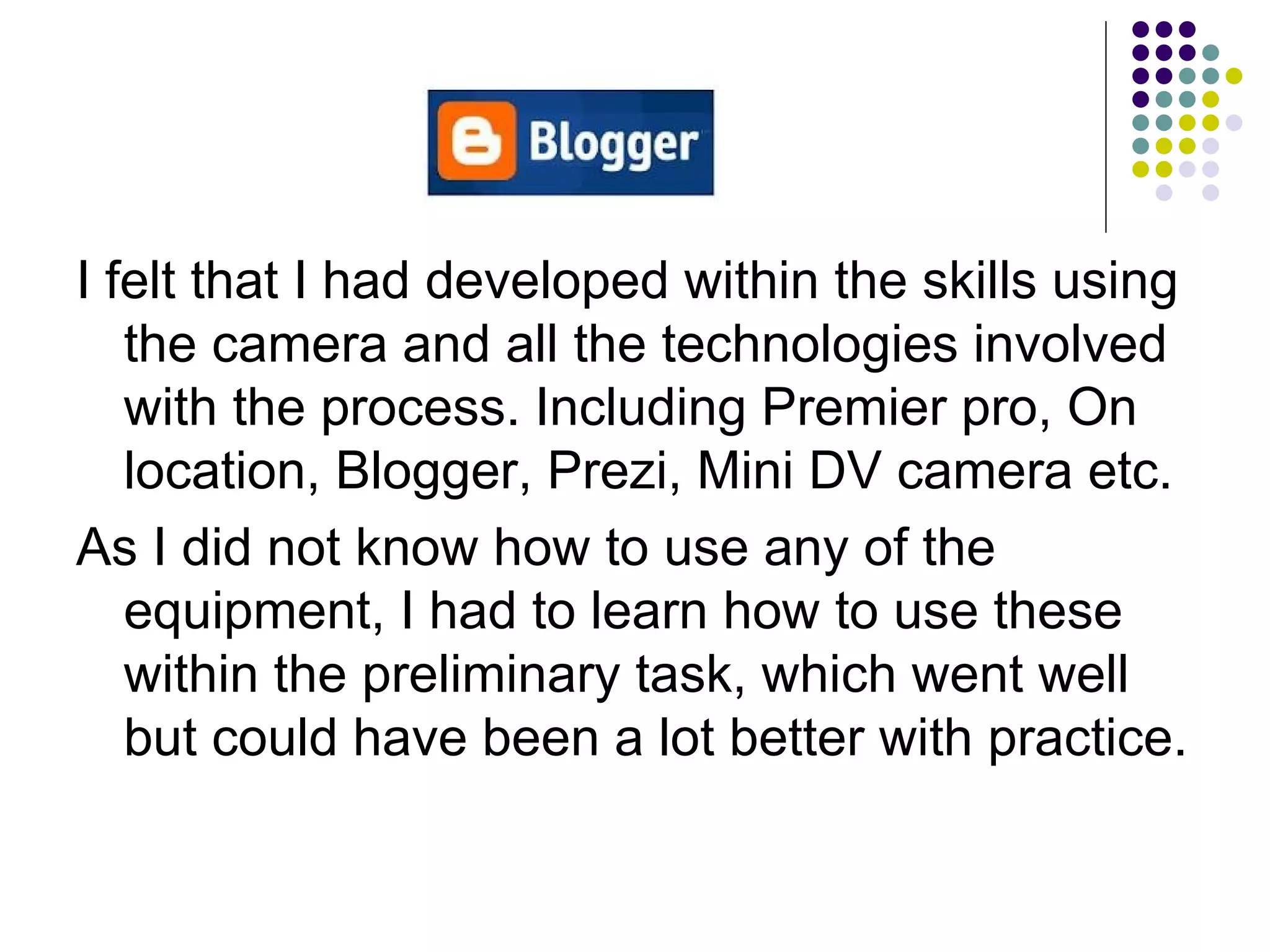
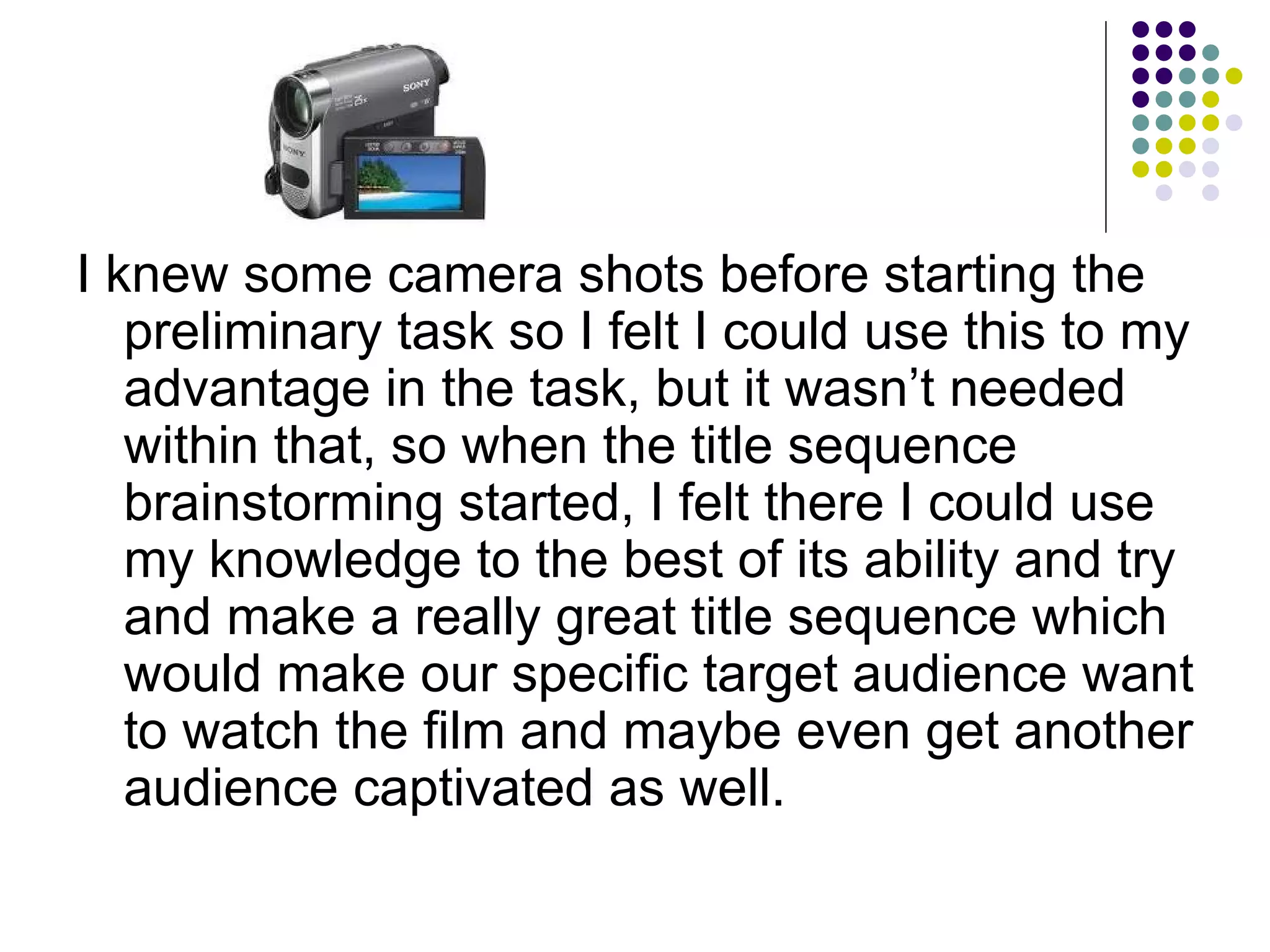
I felt that I had developed within the skills using the camera and all the technologies involved with the process. Including Premier pro, On location, Blogger, Prezi, Mini DV camera etc. As I did not know how to use any of the equipment, I had to learn how to use these within the preliminary task, which went well but could have been a lot better with practice.
I knew some camera shots before starting the preliminary task so I felt I could use this to my advantage in the task, but it wasn’t needed within that, so when the title sequence brainstorming started, I felt there I could use my knowledge to the best of its ability and try and make a really great title sequence which would make our specific target audience want to watch the film and maybe even get another audience captivated as well.
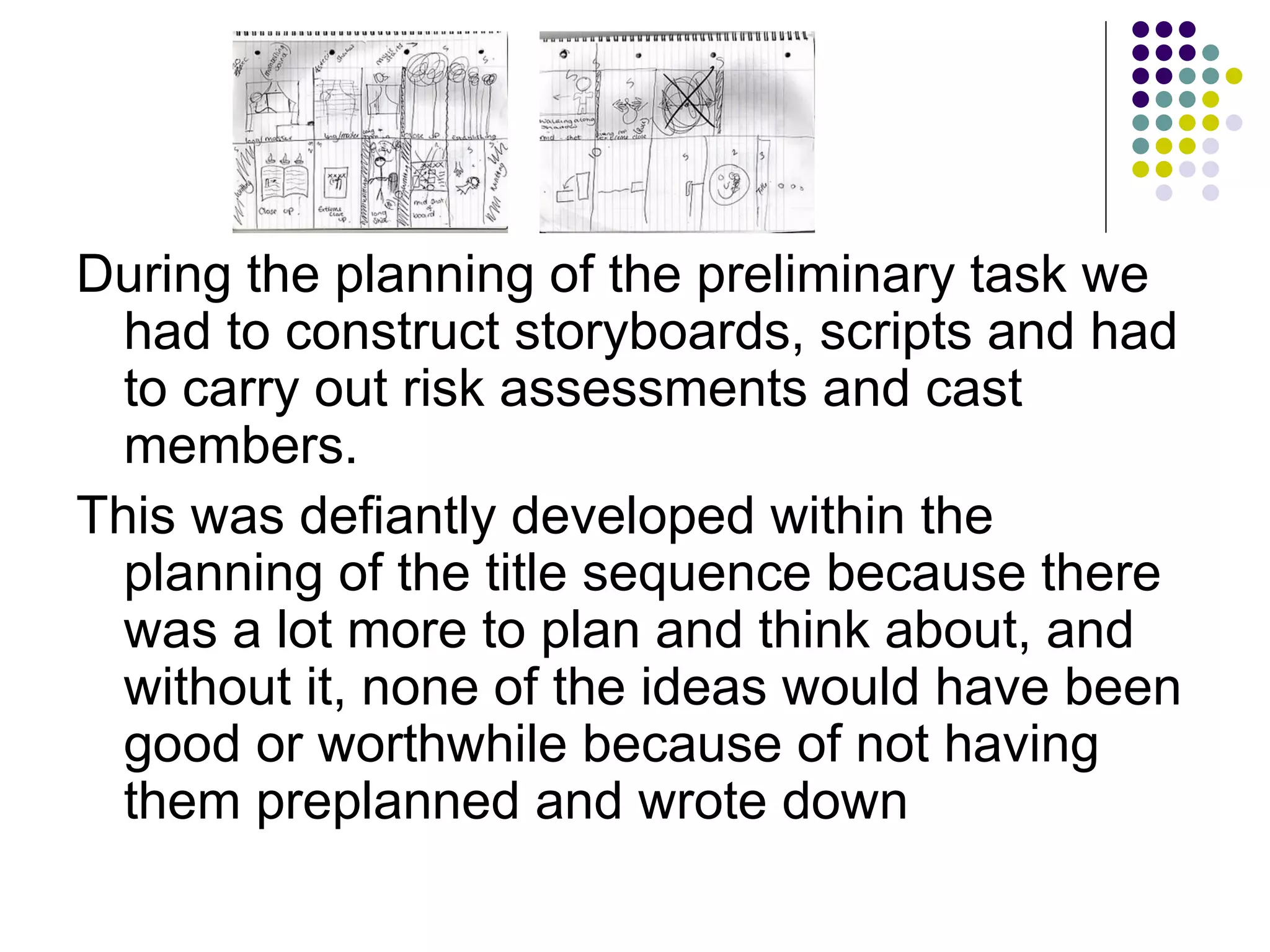
During the planning of the preliminary task we had to construct storyboards, scripts and had to carry out risk assessments and cast members. This was defiantly developed within the planning of the title sequence because there was a lot more to plan and think about, and without it, none of the ideas would have been good or worthwhile because of not having them preplanned and wrote down
Lots of drafting was made during the making of the full product, this was because we did not want to make any mistakes during filming.  Whereas with the preliminary task we had a leniency with going wrong because it wasn’t a larger scale production.
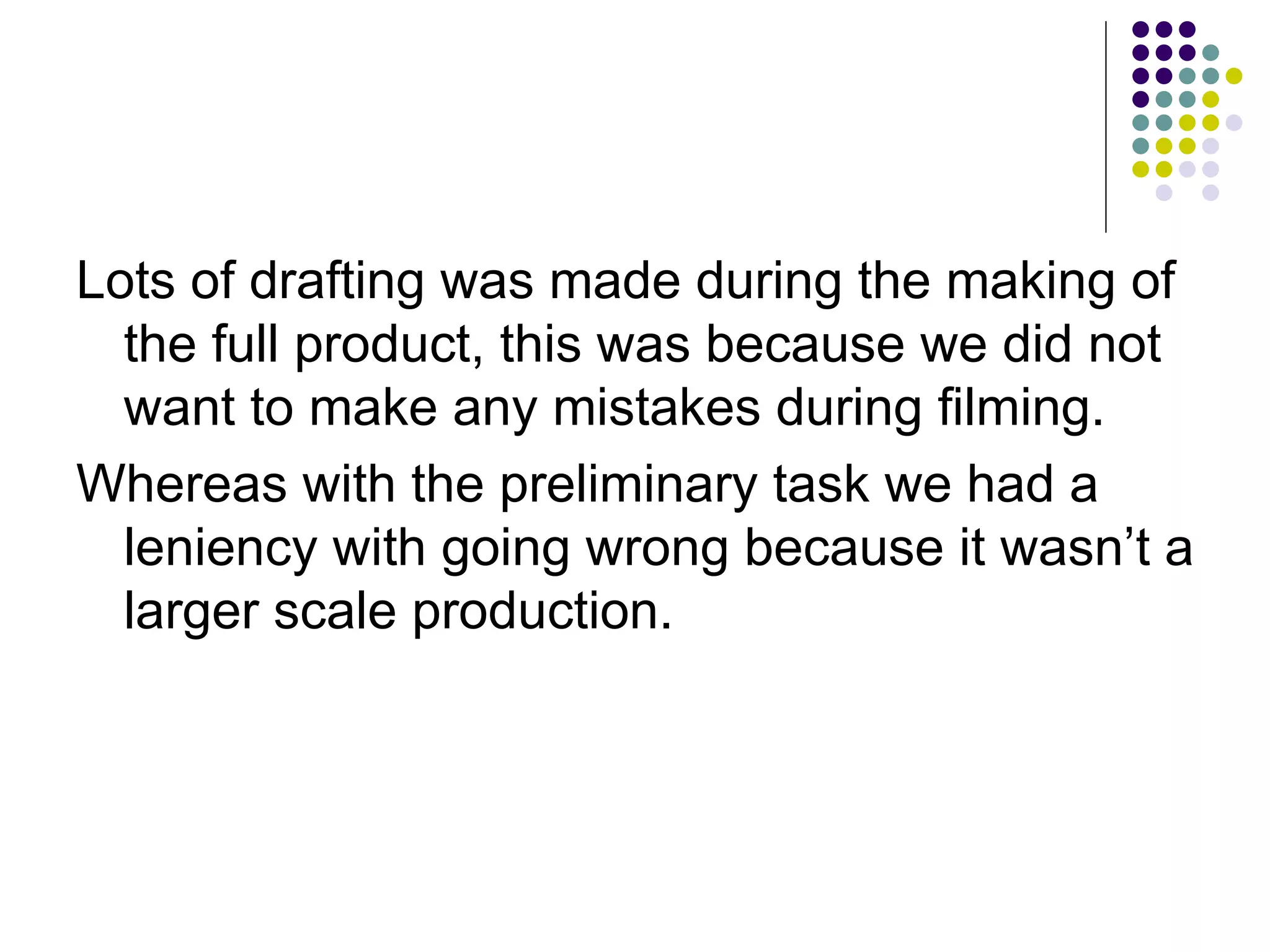
With the preliminary task, we had a certain time to do each task and were told when to do it. So independently we couldn’t construct our own time boundaries, which made it more organised. But when we organised our time plan for the filming, editing and planning we had to stick to the guidelines we had given to ourselves so we don’t do things wrong, or forget things which maybe important during another part of the construction of our title sequence. I used the time more affectively so we could get the best possible outcome for the sequence within all aspects of it.
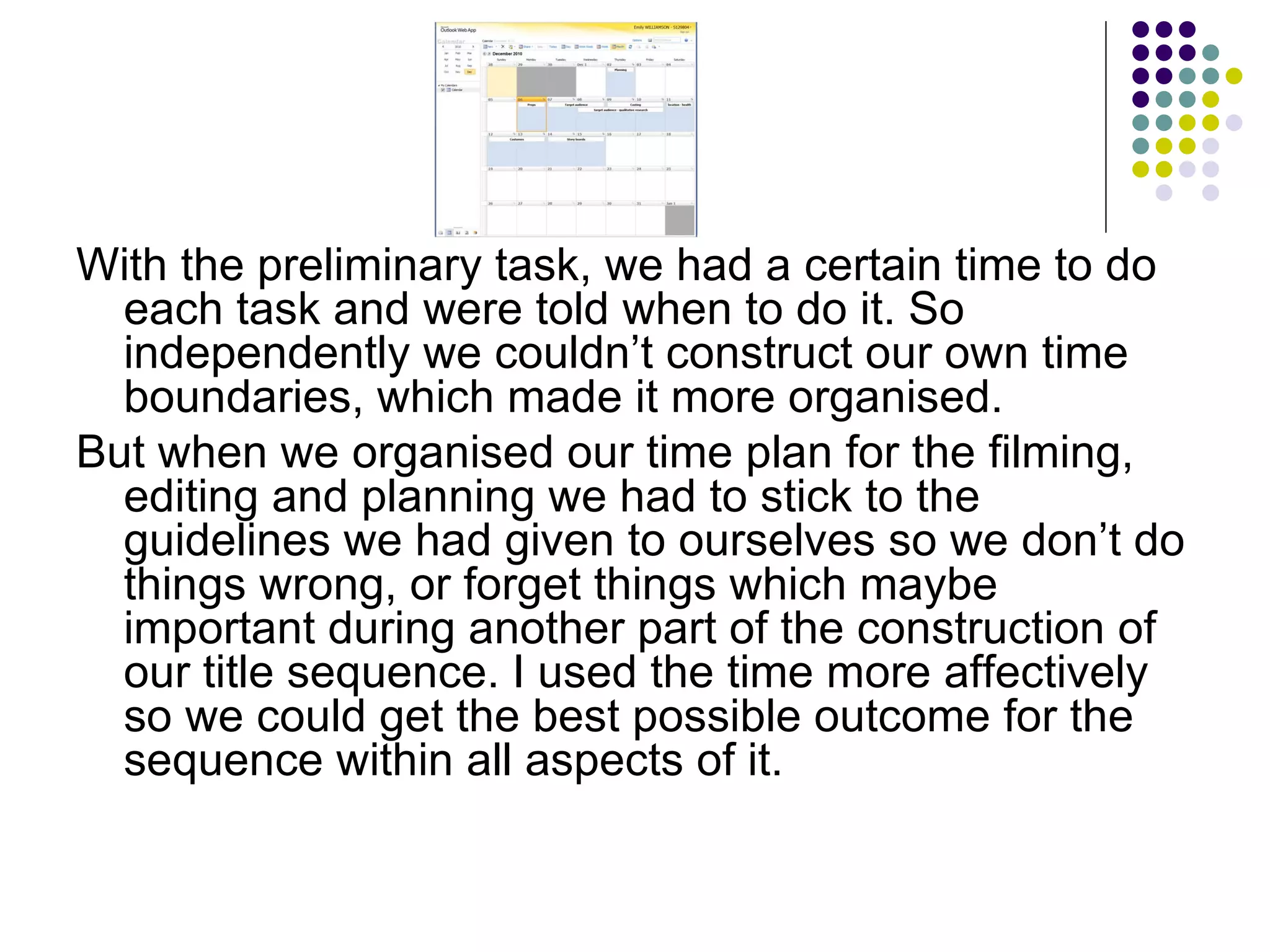
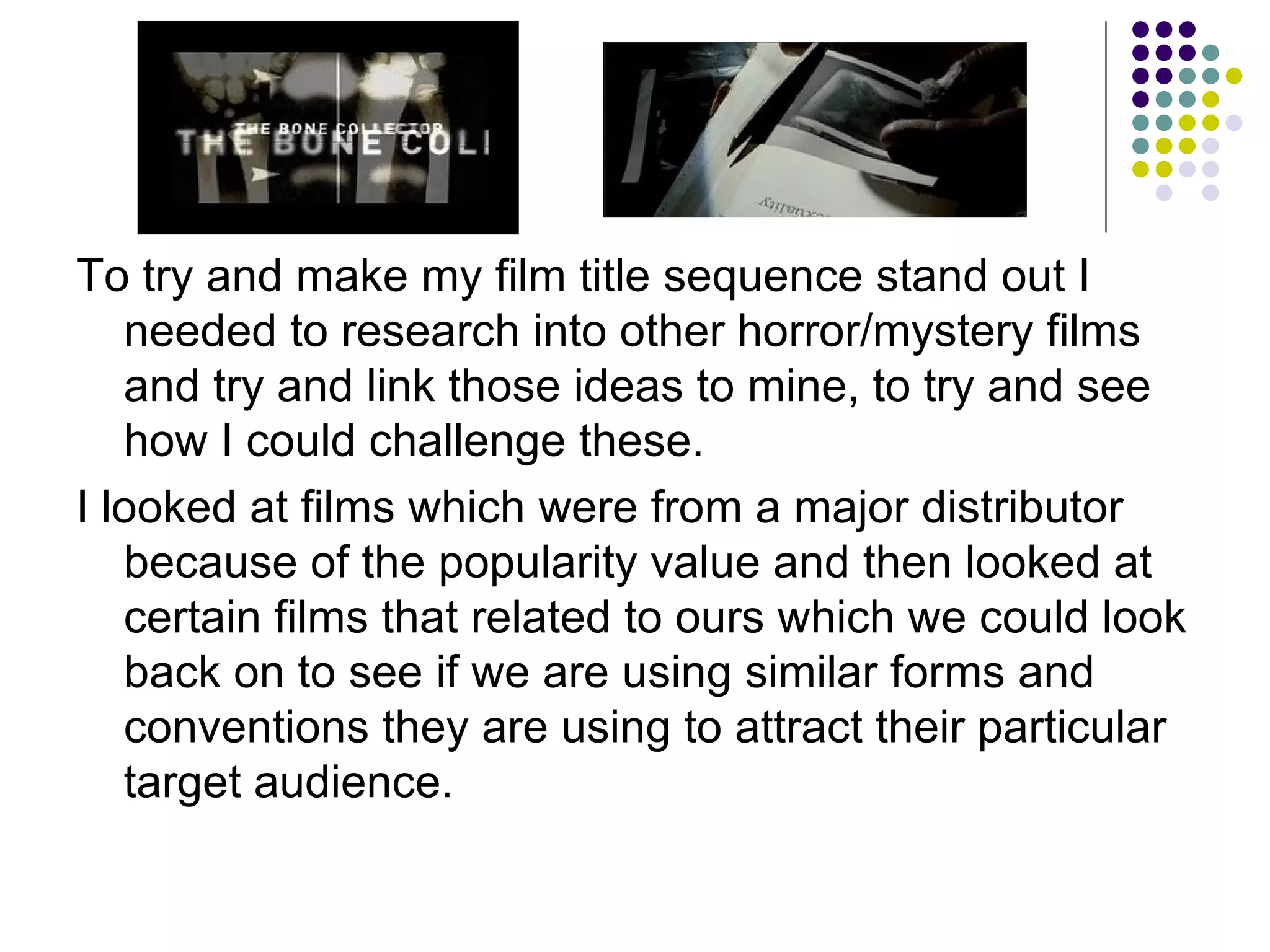
To try and make my film title sequence stand out I needed to research into other horror/mystery films and try and link those ideas to mine, to try and see how I could challenge these. I looked at films which were from a major distributor because of the popularity value and then looked at certain films that related to ours which we could look back on to see if we are using similar forms and conventions they are using to attract their particular target audience.
After filming our scenes for the sequence, we had to upload these and capture the clips on ‘On Location’ and then upload these into ‘Premier Pro’ where we could edit and start our post-production skills onto the product. I used lots of things which made the audience feel like they wanted to watch more. For example when the girl disappears. Here we used a dither dissolve and used lots of blank, black titles in between so it shows like a fast disappearance and shocks the audience.
We had a slight lighting problem within the filming and we corrected this within post-production by changing the lighting via the effects on ‘Premier Pro’. This was very helpful, and made it look like a smooth transition where as before it was very obvious that there was a difference.
I felt that making sure I had the correct target audience was one of the main things because of all the work we did in production would have been wrong because it wouldn’t of suited a different audience. By this we had to portray in the title sequence what would interest them and I felt that the story of the girl getting taken away was a good way of going about this.
As it was for a specific audience, relating back to them was always a good thing, I did this by including cast members that were in that age range and tried to keep the feel modern, not old, but I feel that looking back the titles and the font could have been developed a lot more to pursue this idea.
What is the biggest thing that you have learnt from undertaking this project? I think that without planning nothing could be made, and the planning being detailed and well thought out is the best because of all the ideas being in one place, it can be easily added too, and modified to fit certain things such as the target audience or genre of film.

Question 7

  • 1.
    Question 7 Lookingback at your preliminary task, what do you feel you have learnt in the progression from it to the full product?
  • 2.
    I felt thatI had developed within the skills using the camera and all the technologies involved with the process. Including Premier pro, On location, Blogger, Prezi, Mini DV camera etc. As I did not know how to use any of the equipment, I had to learn how to use these within the preliminary task, which went well but could have been a lot better with practice.
  • 3.
    I knew somecamera shots before starting the preliminary task so I felt I could use this to my advantage in the task, but it wasn’t needed within that, so when the title sequence brainstorming started, I felt there I could use my knowledge to the best of its ability and try and make a really great title sequence which would make our specific target audience want to watch the film and maybe even get another audience captivated as well.
  • 4.
    During the planningof the preliminary task we had to construct storyboards, scripts and had to carry out risk assessments and cast members. This was defiantly developed within the planning of the title sequence because there was a lot more to plan and think about, and without it, none of the ideas would have been good or worthwhile because of not having them preplanned and wrote down
  • 5.
    Lots of draftingwas made during the making of the full product, this was because we did not want to make any mistakes during filming. Whereas with the preliminary task we had a leniency with going wrong because it wasn’t a larger scale production.
  • 6.
    With the preliminarytask, we had a certain time to do each task and were told when to do it. So independently we couldn’t construct our own time boundaries, which made it more organised. But when we organised our time plan for the filming, editing and planning we had to stick to the guidelines we had given to ourselves so we don’t do things wrong, or forget things which maybe important during another part of the construction of our title sequence. I used the time more affectively so we could get the best possible outcome for the sequence within all aspects of it.
  • 7.
    To try andmake my film title sequence stand out I needed to research into other horror/mystery films and try and link those ideas to mine, to try and see how I could challenge these. I looked at films which were from a major distributor because of the popularity value and then looked at certain films that related to ours which we could look back on to see if we are using similar forms and conventions they are using to attract their particular target audience.
  • 8.
    After filming ourscenes for the sequence, we had to upload these and capture the clips on ‘On Location’ and then upload these into ‘Premier Pro’ where we could edit and start our post-production skills onto the product. I used lots of things which made the audience feel like they wanted to watch more. For example when the girl disappears. Here we used a dither dissolve and used lots of blank, black titles in between so it shows like a fast disappearance and shocks the audience.
  • 9.
    We had aslight lighting problem within the filming and we corrected this within post-production by changing the lighting via the effects on ‘Premier Pro’. This was very helpful, and made it look like a smooth transition where as before it was very obvious that there was a difference.
  • 10.
    I felt thatmaking sure I had the correct target audience was one of the main things because of all the work we did in production would have been wrong because it wouldn’t of suited a different audience. By this we had to portray in the title sequence what would interest them and I felt that the story of the girl getting taken away was a good way of going about this.
  • 11.
    As it wasfor a specific audience, relating back to them was always a good thing, I did this by including cast members that were in that age range and tried to keep the feel modern, not old, but I feel that looking back the titles and the font could have been developed a lot more to pursue this idea.
  • 12.
    What is thebiggest thing that you have learnt from undertaking this project? I think that without planning nothing could be made, and the planning being detailed and well thought out is the best because of all the ideas being in one place, it can be easily added too, and modified to fit certain things such as the target audience or genre of film.