By,
           ROLLNO :
                ECE
      ENGG. COLLEGE
LIST OF CONTENT
 Introduction
 Quantum & development of quantum theory
 Basic concept of quantum computer
 Applications
 Advantages
 Difficulties
 Future work
 Conclusion
INTRODUCTION
 1980, development of a quantum computer
 was started
 1,000,000,000 times faster

 Theoretically -no energy consumption

 Feynman, 1982

 Bit &Qubits
QUANTUM & DEVELOPMENT OF
         QUANTUM THEORY
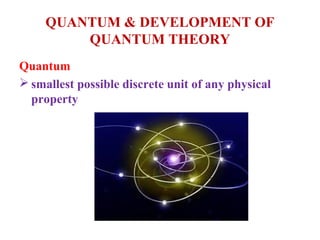
Quantum
 smallest possible discrete unit of any physical
  property
QUANTUM THEORY

 Quantum mechanics

 light's duality

 James C. Maxwell(E M wave)

 photoelectric effect

 Schrödinger Equation
BASIC CONCEPT OF QUANTUM
             COMPUTER
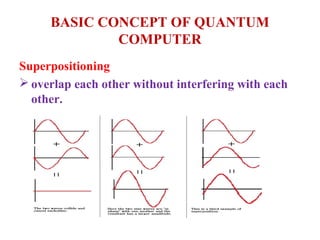
Superpositioning
 overlap each other without interfering with each
  other.
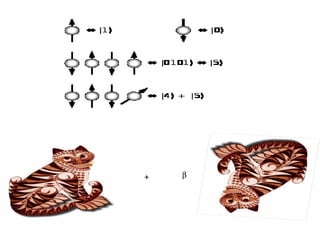
+   β
 If this state is measured, we see only one or the
  other state (live or dead) with some probability.


Quantum Turing machine
 simple model

 Express any quantum algorithm
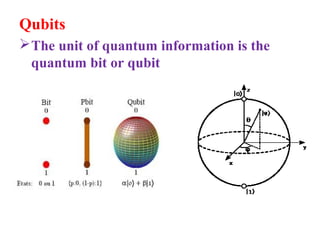
Qubits
 The unit of quantum information is the
  quantum bit or qubit
Quantum teleportation
 Transmission of q bit

 quantum information processing

Quantum gates
 act on qubits and quantum registers
 change their states – rotating state vectors
Quantum register
 more than one qubits
 multi-dimensional

Quantum computing
 circuit model

 Input- quantum register-computation-result
Quantum computer working
 not limited by the binary nature
 qubit-1 or 0 – combination- any number –decimal
 NMR
 change the states
 Difficult to hold in steady state
 Separate atoms
 2-5 atoms
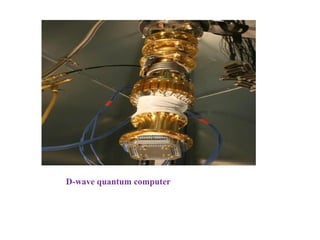
D-wave quantum computer
APPLICATION
Encryption Technology
 Ultra-secure and Super-dense
  Communications
 Improved Error Correction and Error
  Detection
 Molecular Simulations
 True Randomness
 cryptography

 searching

 factorization

 simulating

 encryption problem & quantum chemistry

 problem
ADVANTAGES
 Much more powerful

 Faster

 Smaller

 Improvements to science

 Can improve on practical personal
 electronics
DIFFICULTIES
 Hard to control quantum particles

 Lots of heat

 Expensive

 Difficult to build

 Not enough is known about quantum mechanics
FUTURE WORK
 Silicon Quantum Computer

 It may become technology sooner than we
 expect
 New algorithms and communication

 Maximum exploitation

 Simulate other quantum systems.
CONCLUSION

 very advance technology

 very faster & powerful

 Stage of infancy

 Implementation is difficult
Q’S& A’S
FIRST QUANTUM COMPUTER(VIDEO)
THANK YOU

Quantum computer

  • 1.
    By, ROLLNO : ECE ENGG. COLLEGE
  • 2.
    LIST OF CONTENT Introduction  Quantum & development of quantum theory  Basic concept of quantum computer  Applications  Advantages  Difficulties  Future work  Conclusion
  • 3.
    INTRODUCTION  1980, developmentof a quantum computer was started  1,000,000,000 times faster  Theoretically -no energy consumption  Feynman, 1982  Bit &Qubits
  • 4.
    QUANTUM & DEVELOPMENTOF QUANTUM THEORY Quantum  smallest possible discrete unit of any physical property
  • 5.
    QUANTUM THEORY  Quantummechanics  light's duality  James C. Maxwell(E M wave)  photoelectric effect  Schrödinger Equation
  • 6.
    BASIC CONCEPT OFQUANTUM COMPUTER Superpositioning  overlap each other without interfering with each other.
  • 7.
    + β
  • 8.
     If thisstate is measured, we see only one or the other state (live or dead) with some probability. Quantum Turing machine  simple model  Express any quantum algorithm
  • 9.
    Qubits  The unitof quantum information is the quantum bit or qubit
  • 10.
    Quantum teleportation  Transmissionof q bit  quantum information processing Quantum gates  act on qubits and quantum registers  change their states – rotating state vectors
  • 11.
    Quantum register  morethan one qubits  multi-dimensional Quantum computing  circuit model  Input- quantum register-computation-result
  • 12.
    Quantum computer working not limited by the binary nature  qubit-1 or 0 – combination- any number –decimal  NMR  change the states  Difficult to hold in steady state  Separate atoms  2-5 atoms
  • 13.
  • 14.
    APPLICATION Encryption Technology  Ultra-secureand Super-dense Communications  Improved Error Correction and Error Detection  Molecular Simulations  True Randomness
  • 15.
     cryptography  searching factorization  simulating  encryption problem & quantum chemistry problem
  • 16.
    ADVANTAGES  Much morepowerful  Faster  Smaller  Improvements to science  Can improve on practical personal electronics
  • 17.
    DIFFICULTIES  Hard tocontrol quantum particles  Lots of heat  Expensive  Difficult to build  Not enough is known about quantum mechanics
  • 18.
    FUTURE WORK  SiliconQuantum Computer  It may become technology sooner than we expect  New algorithms and communication  Maximum exploitation  Simulate other quantum systems.
  • 19.
    CONCLUSION  very advancetechnology  very faster & powerful  Stage of infancy  Implementation is difficult
  • 20.
  • 21.
  • 22.