

1
Quantum Artificial Intelligence
Artificial intelligence (AI)
Artificial intelligence (AI) is the simulation of human
intelligence processes by machines, especially
computer systems. These processes include
learning (the acquisition of information and rules
for using the information), reasoning (using rules to
reach approximate or definite conclusions) and
self-correction. Particular applications of AI include
expert systems, speech recognition and machine
vision.
Quantum Artificial intelligence
A research effort from Google AI that aims
to build quantum processors and develop
novel quantum algorithms to dramatically
accelerate computational tasks for machine
learning.
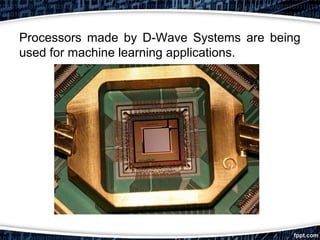
Processors made by D-Wave Systems are being
used for machine learning applications.
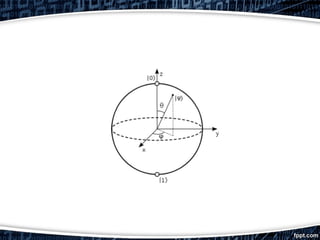
What is a quantum bit?
• a basic unit of memory that uses
superposition of "quantum" effect
(entanglement) to store
information.
• a "qubit" stores the probability of
information. It represents both "1"
and "0" at the same time.
What is the advantage?
• it is very very fast compared to
conventional computers.
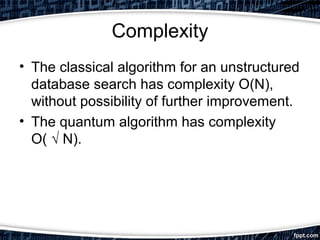
Complexity
• The classical algorithm for an unstructured
database search has complexity O(N),
without possibility of further improvement.
• The quantum algorithm has complexity
O( √ N).
How to make a quantum bit?
• photon entanglement
• cold atom
• electron spin
How quantum computing works
• Michelle Simmons, research head at the Centre for Quantum
Computation and Communication Technology at the University of
New South Wale explains. “If I could have 300 qubits, that would be
more powerful than all the computers in the world connected
together.”
Hartmut Neven
"Quantum Artificial Intelligence will enhance
the most consequential of human activities,
explaining observations of the world around
us."
13
Conclusion
At present, a normal home computer
wouldn’t have the ability to process large
amounts of data at once. Quantum
computers could have the capability of
reaching into a database, instantly
accessing all items at once, and deliver an
analysis within seconds. With quantum
computers, we could uncover patterns
instantly.
Quantum artificial intelligence

Quantum artificial intelligence

  • 1.
  • 2.
  • 3.
    Artificial intelligence (AI) Artificialintelligence (AI) is the simulation of human intelligence processes by machines, especially computer systems. These processes include learning (the acquisition of information and rules for using the information), reasoning (using rules to reach approximate or definite conclusions) and self-correction. Particular applications of AI include expert systems, speech recognition and machine vision.
  • 4.
    Quantum Artificial intelligence Aresearch effort from Google AI that aims to build quantum processors and develop novel quantum algorithms to dramatically accelerate computational tasks for machine learning.
  • 5.
    Processors made byD-Wave Systems are being used for machine learning applications.
  • 6.
    What is aquantum bit? • a basic unit of memory that uses superposition of "quantum" effect (entanglement) to store information. • a "qubit" stores the probability of information. It represents both "1" and "0" at the same time.
  • 8.
    What is theadvantage? • it is very very fast compared to conventional computers.
  • 9.
    Complexity • The classicalalgorithm for an unstructured database search has complexity O(N), without possibility of further improvement. • The quantum algorithm has complexity O( √ N).
  • 10.
    How to makea quantum bit? • photon entanglement • cold atom • electron spin
  • 11.
    How quantum computingworks • Michelle Simmons, research head at the Centre for Quantum Computation and Communication Technology at the University of New South Wale explains. “If I could have 300 qubits, that would be more powerful than all the computers in the world connected together.”
  • 12.
    Hartmut Neven "Quantum ArtificialIntelligence will enhance the most consequential of human activities, explaining observations of the world around us."
  • 13.
    13 Conclusion At present, anormal home computer wouldn’t have the ability to process large amounts of data at once. Quantum computers could have the capability of reaching into a database, instantly accessing all items at once, and deliver an analysis within seconds. With quantum computers, we could uncover patterns instantly.