QUANTIFIERS
MICHELL DAYANA CARRILLO
PAULA CAMILA SANCHEZ
MEANING
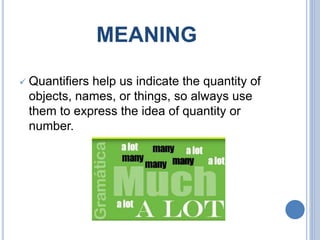
 Quantifiers help us indicate the quantity of
objects, names, or things, so always use
them to express the idea of ​​quantity or
number.
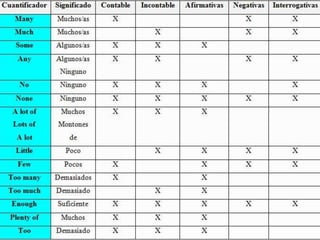
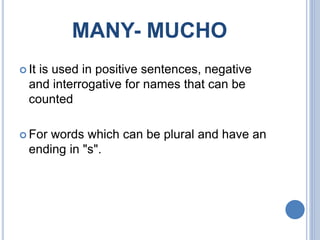
MANY- MUCHO
 It is used in positive sentences, negative
and interrogative for names that can be
counted
 For words which can be plural and have an
ending in "s".
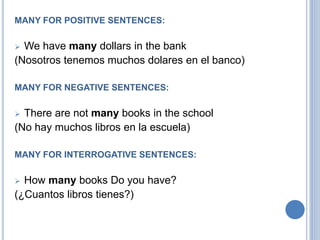
MANY FOR POSITIVE SENTENCES:
 We have many dollars in the bank
(Nosotros tenemos muchos dolares en el banco)
MANY FOR NEGATIVE SENTENCES:
 There are not many books in the school
(No hay muchos libros en la escuela)
MANY FOR INTERROGATIVE SENTENCES:
 How many books Do you have?
(¿Cuantos libros tienes?)
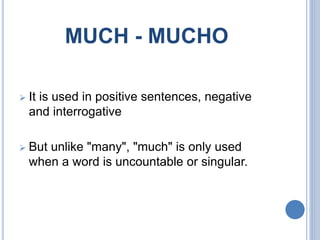
MUCH - MUCHO
 It is used in positive sentences, negative
and interrogative
 But unlike "many", "much" is only used
when a word is uncountable or singular.
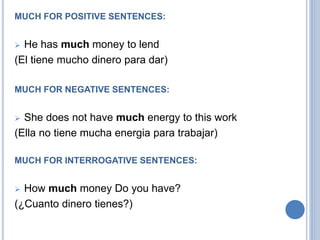
MUCH FOR POSITIVE SENTENCES:
 He has much money to lend
(El tiene mucho dinero para dar)
MUCH FOR NEGATIVE SENTENCES:
 She does not have much energy to this work
(Ella no tiene mucha energia para trabajar)
MUCH FOR INTERROGATIVE SENTENCES:
 How much money Do you have?
(¿Cuanto dinero tienes?)
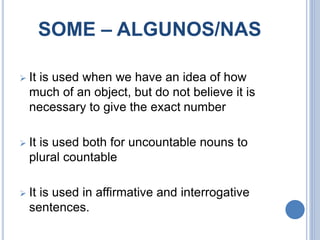
SOME – ALGUNOS/NAS
 It is used when we have an idea of ​​how
much of an object, but do not believe it is
necessary to give the exact number
 It is used both for uncountable nouns to
plural countable
 It is used in affirmative and interrogative
sentences.
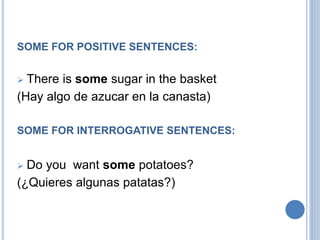
SOME FOR POSITIVE SENTENCES:
 There is some sugar in the basket
(Hay algo de azucar en la canasta)
SOME FOR INTERROGATIVE SENTENCES:
 Do you want some potatoes?
(¿Quieres algunas patatas?)
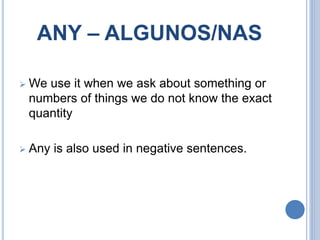
ANY – ALGUNOS/NAS
 We use it when we ask about something or
numbers of things we do not know the exact
quantity
 Any is also used in negative sentences.
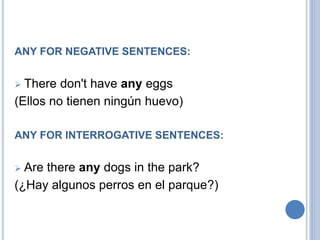
ANY FOR NEGATIVE SENTENCES:
 There don't have any eggs
(Ellos no tienen ningún huevo)
ANY FOR INTERROGATIVE SENTENCES:
 Are there any dogs in the park?
(¿Hay algunos perros en el parque?)
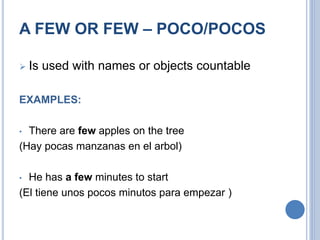
A FEW OR FEW – POCO/POCOS
 Is used with names or objects countable
EXAMPLES:
• There are few apples on the tree
(Hay pocas manzanas en el arbol)
• He has a few minutes to start
(El tiene unos pocos minutos para empezar )
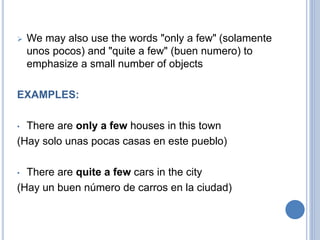
 We may also use the words "only a few" (solamente
unos pocos) and "quite a few" (buen numero) to
emphasize a small number of objects
EXAMPLES:
• There are only a few houses in this town
(Hay solo unas pocas casas en este pueblo)
• There are quite a few cars in the city
(Hay un buen número de carros en la ciudad)
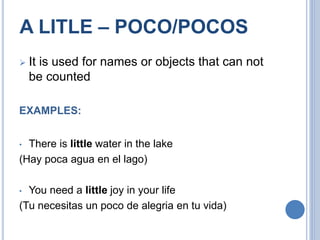
A LITLE – POCO/POCOS
 It is used for names or objects that can not
be counted
EXAMPLES:
• There is little water in the lake
(Hay poca agua en el lago)
• You need a little joy in your life
(Tu necesitas un poco de alegria en tu vida)
Quantifiers

Quantifiers

  • 1.
  • 2.
    MEANING  Quantifiers helpus indicate the quantity of objects, names, or things, so always use them to express the idea of ​​quantity or number.
  • 4.
    MANY- MUCHO  Itis used in positive sentences, negative and interrogative for names that can be counted  For words which can be plural and have an ending in "s".
  • 5.
    MANY FOR POSITIVESENTENCES:  We have many dollars in the bank (Nosotros tenemos muchos dolares en el banco) MANY FOR NEGATIVE SENTENCES:  There are not many books in the school (No hay muchos libros en la escuela) MANY FOR INTERROGATIVE SENTENCES:  How many books Do you have? (¿Cuantos libros tienes?)
  • 6.
    MUCH - MUCHO It is used in positive sentences, negative and interrogative  But unlike "many", "much" is only used when a word is uncountable or singular.
  • 7.
    MUCH FOR POSITIVESENTENCES:  He has much money to lend (El tiene mucho dinero para dar) MUCH FOR NEGATIVE SENTENCES:  She does not have much energy to this work (Ella no tiene mucha energia para trabajar) MUCH FOR INTERROGATIVE SENTENCES:  How much money Do you have? (¿Cuanto dinero tienes?)
  • 8.
    SOME – ALGUNOS/NAS It is used when we have an idea of ​​how much of an object, but do not believe it is necessary to give the exact number  It is used both for uncountable nouns to plural countable  It is used in affirmative and interrogative sentences.
  • 9.
    SOME FOR POSITIVESENTENCES:  There is some sugar in the basket (Hay algo de azucar en la canasta) SOME FOR INTERROGATIVE SENTENCES:  Do you want some potatoes? (¿Quieres algunas patatas?)
  • 10.
    ANY – ALGUNOS/NAS We use it when we ask about something or numbers of things we do not know the exact quantity  Any is also used in negative sentences.
  • 11.
    ANY FOR NEGATIVESENTENCES:  There don't have any eggs (Ellos no tienen ningún huevo) ANY FOR INTERROGATIVE SENTENCES:  Are there any dogs in the park? (¿Hay algunos perros en el parque?)
  • 12.
    A FEW ORFEW – POCO/POCOS  Is used with names or objects countable EXAMPLES: • There are few apples on the tree (Hay pocas manzanas en el arbol) • He has a few minutes to start (El tiene unos pocos minutos para empezar )
  • 13.
     We mayalso use the words "only a few" (solamente unos pocos) and "quite a few" (buen numero) to emphasize a small number of objects EXAMPLES: • There are only a few houses in this town (Hay solo unas pocas casas en este pueblo) • There are quite a few cars in the city (Hay un buen número de carros en la ciudad)
  • 14.
    A LITLE –POCO/POCOS  It is used for names or objects that can not be counted EXAMPLES: • There is little water in the lake (Hay poca agua en el lago) • You need a little joy in your life (Tu necesitas un poco de alegria en tu vida)