ALL YOU NEED
TO KNOW ABOUT
CENTRAL
STERILE SUPPLY
DEPARTMENT
DAY 1
Module 7: QUALITY ASSURANCE
Central Sterilization Supply Department
Goals and Objectives
By the end of this module, you will be able to:
Define quality in the context of the CSSD.
Clarify the importance of standards.
Explain the function of quality management systems and quality
improvement.
Clarify the differences between quality assurance and quality
control.
Outline staff performance and training requirements.
Stress the importance of documentation and auditing.
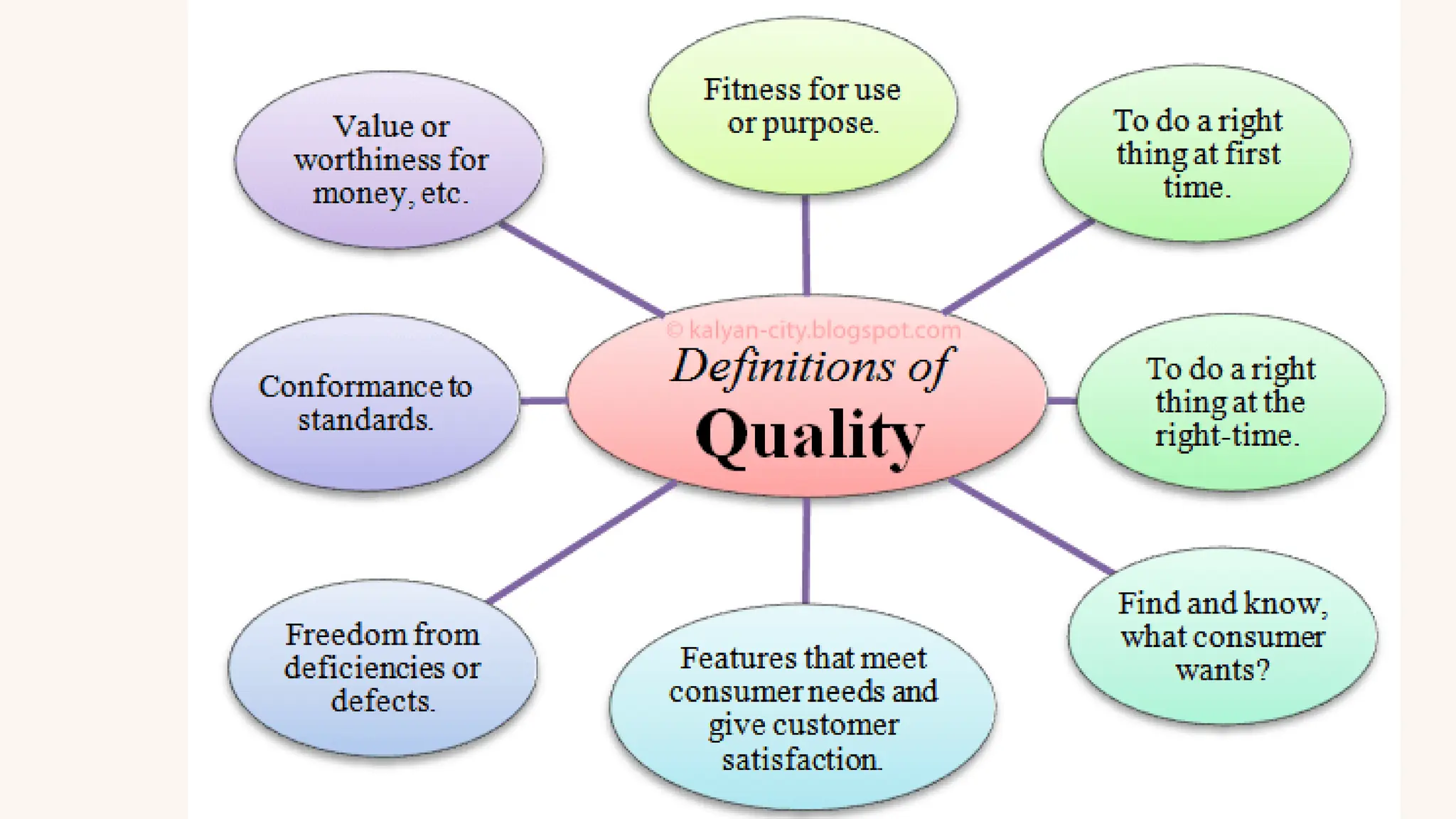
WHAT IS QUALITY ?
The meaning of quality continues to evolve as the quality profession
grows and matures.
Perfection.
Consistency.
Speed of delivery.
Compliance with polices and procedure.
Providing good, usable product.
Doing it right for the first time.
Quality means “Performance upon expectations” and “fit
for functions.”
Quality in CSSD
The role of quality plays in ensuring all reusable medical devices
processed in the CSSD are “fit for purpose” and that all work
activities support this outcome to ensure patient safety.
Using a quality management system (QMS), having written
policies and procedures, a system of auditing practices and a
means to record defects, all contribute to high quality devices
being produced.
What do we mean by quality in relation to the work of the
CSSD?
The production of reusable medical devices that are “fit for purpose”.
1.
How we process and provide these devices using best practices and the
latest technologies.
2.
Customer service, and how we deal with device users.
3.
Quality is the consistent delivery of products and services according to
established standards.
4.
CSSDs always work towards producing 100%
defect-free devices for the sake of the people on
whom they will be used. Always keep in mind
“would I like this used on me?”
when working, it’s a good reminder to strive for
excellence in everything you do in the CSSD.
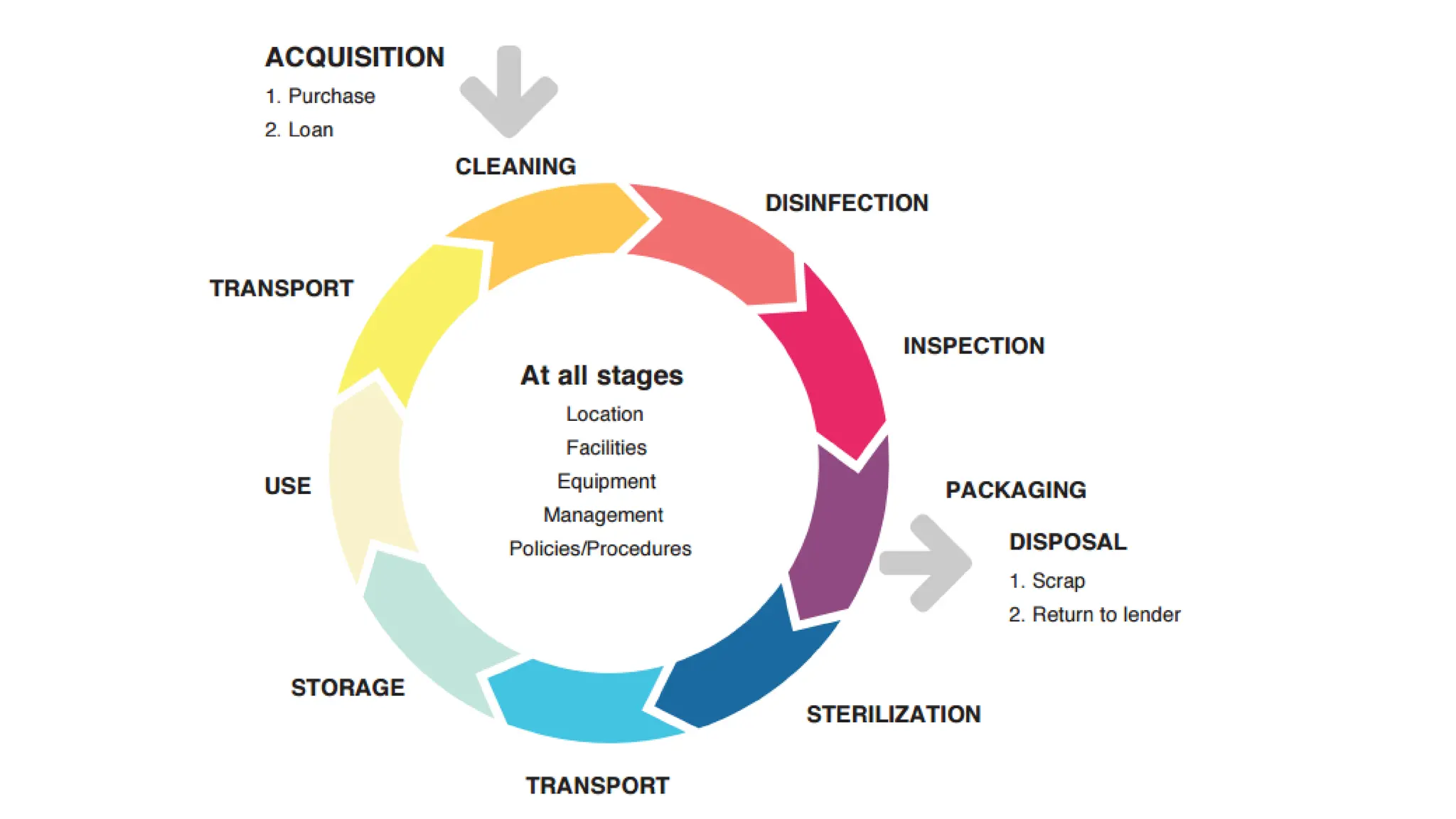
CSSD manages an optimal flow of devices, under
the highest standards of quality and infection
control, from the moment they have been used
until they are cleaned, disinfected and/or
sterilized in new packaging and returned for use
again. In order to
succeed, we need to ensure we can measure and
monitor quality at all stages of the reprocessing
life cycle
Standards
Standards can be defined as “a level of quality or
attainments, something that can be used as a
measure” or
“a level of quality or achievement, especially a
level that is thought to be acceptable”.
In the CSSD, standards can be defined by a statement
specifying how activities will be carried out and by quoting
the official standards for both equipment and processes.
Quality Management Systems (QMS)
A QMS is a formalized system that documents processes,
procedures
and responsibilities for achieving quality policies and objectives.
A QMS helps coordinate and direct an organization’s activities to
meet customer and regulatory requirements and improve its
effectiveness and efficiency on a continuous basis.
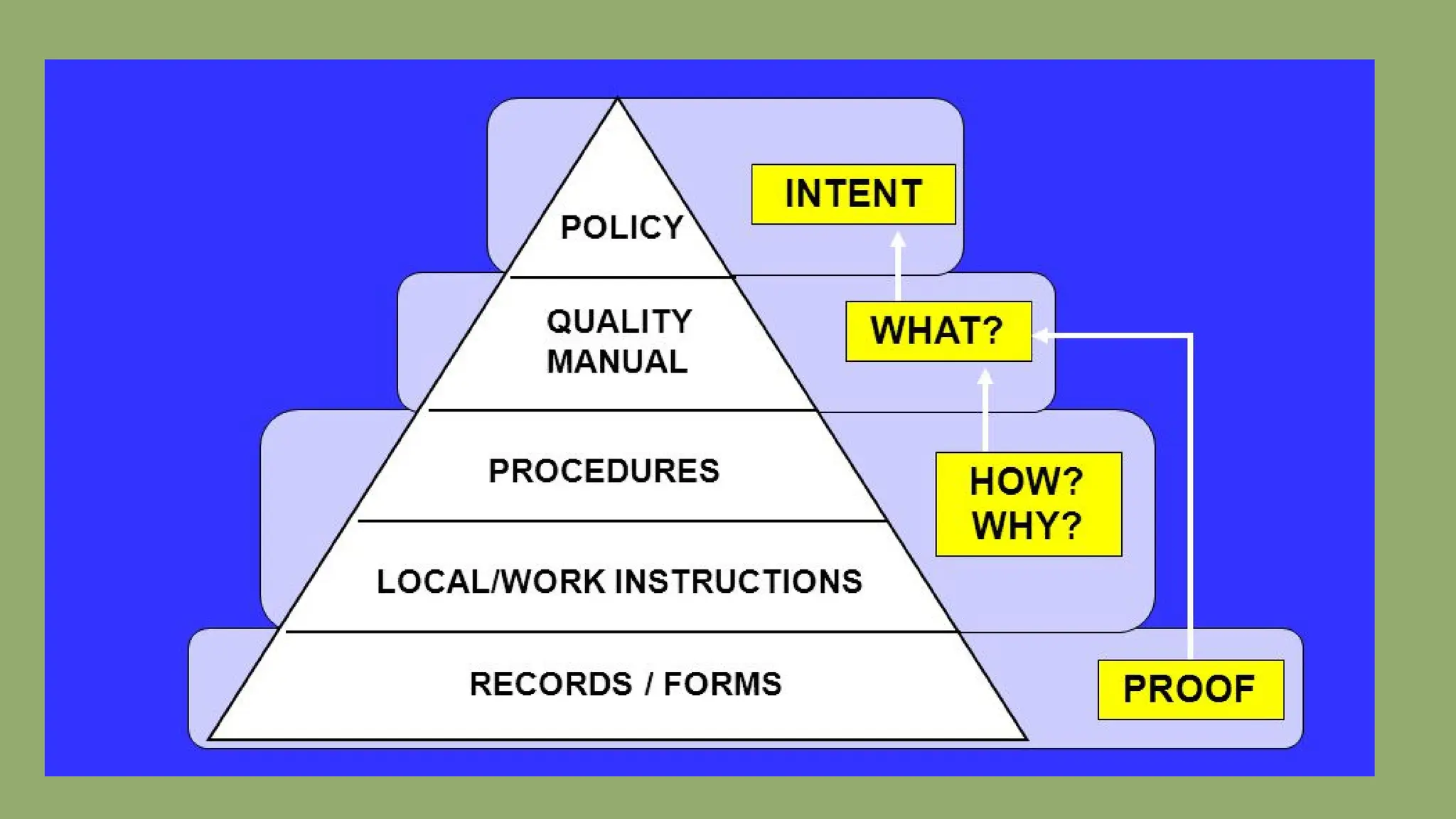
A quality policy provides a short declaration
of how an organization will ensure the
quality of its product or service by detailing
what processes are in place to ensure that
an organization delivers what it says it can.
The Quality Manual contains procedures
to outline activities in each area of the
CSSD supplemented by work instructions
that provide step-by-step instructions to
specialists who will carry out the work.
Quality Improvement (QI)
- QI is a formal system of performance analysis and
systematic
improvement.
- It involves measuring current performance and
identifying ways to make things better.
- Create systems to prevent errors from happening.
- It can be challenging to find where the defect in the
system.
- figure out new ways to do things.
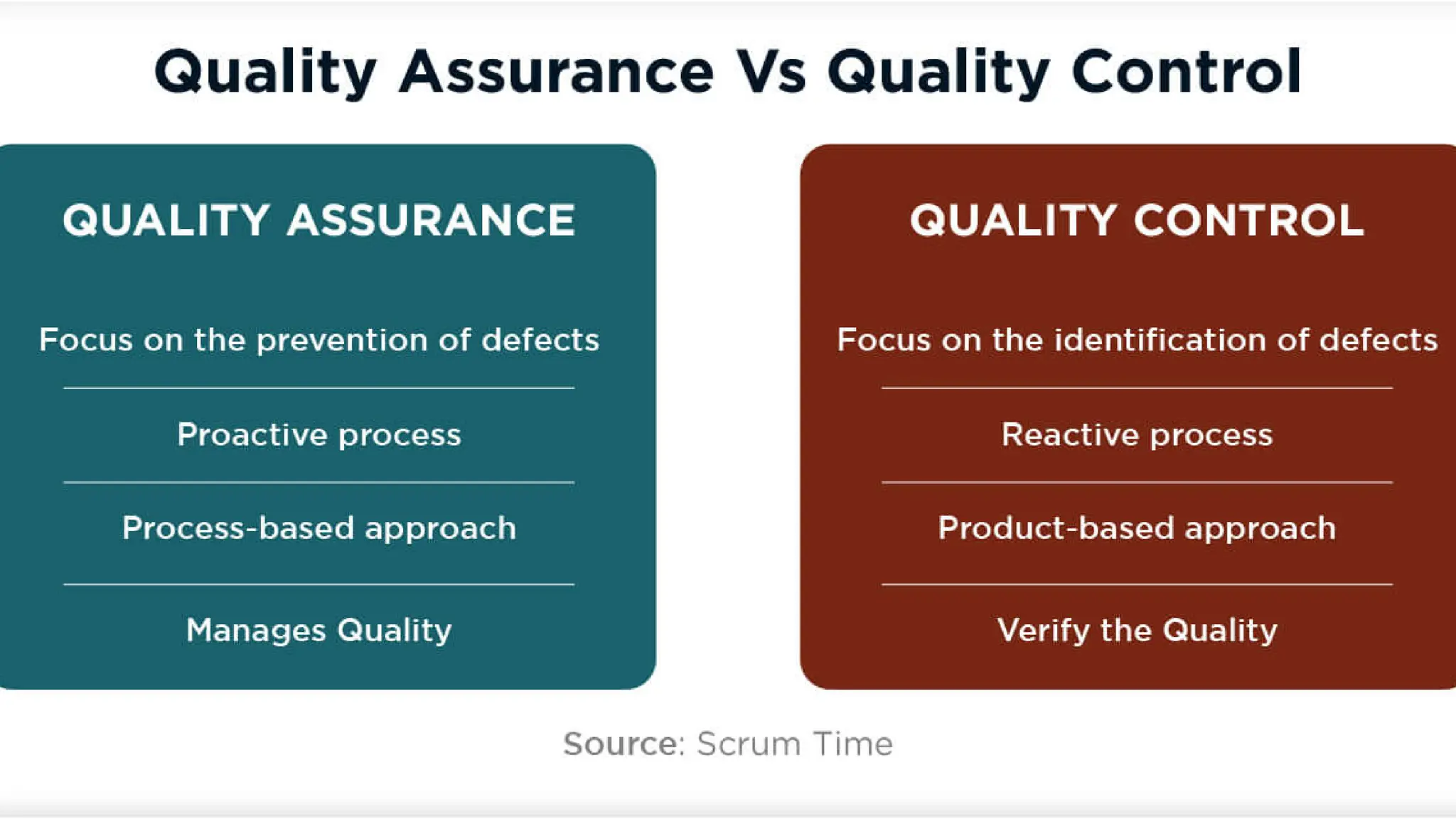
Quality assurance (QA):- focuses on preventing defects.
By ensures that the approaches, techniques, methods and
processes used to manage and create procedures were followed
correctly and are operative. It is a proactive process and
preventative in nature. It recognizes flaws in the process. Quality
assurance precedes quality control, although one cannot exist
without the other.
Quality control (QC) focuses on identifying defects.
It ensures that the approaches, techniques, methods and processes
are followed correctly. It monitors and verifies that defined quality
standards have been met. It is a reactive, detection-based process.
Quality control must be completed after quality assurance has been completed.
DAY 2
Module 7: QUALITY ASSURANCE
Central Sterilization Supply Department
Performance Monitoring and Management in
CSSD
We must monitor the process to ensure the standards are being
followed.
We must consider quantitative (data and statistics) and
qualitative (descriptive) information to determine the quality of
the service offered.
Monitoring quality can pose many challenges and involves
evaluating current performance including end-user
perspectives against a standard or expected level of
performance.
Defect reporting system
-Where quantitative data is collected relating to defects received by customers.
-Undertaking an annual customer survey is a good way to seek views of the service
from individuals whose perception may not be reflected by statistics on defects.
-CSSDs need to know what the customer likes and dislikes and the CSSD must act
as a team and see their actions as reflecting the quality of the total service offered.
Most reported defects can be
managed by
Identifying
the cause of
the defect.
Determining
an appropriate
corrective
action.
Closing the
investigation.
Why do we monitor quality?
We monitor quality to ensure standards are maintained
and to identify opportunities to improve where we have
noticed that performance is not at the standard, we want it
to be.
Product recall system
A written procedure for product recall describing how it will be
undertaken and who is responsible for completing the action. In some
circumstances where risk to patients is identified, it is necessary to
inform users/hospital management or a responsible person at the
customer end.
Staff Performance and Training
Staff orientation is the first point at which basic
training is provided.
1.
The quality of all future work is based on how well
staff are trained.
2.
All staff working in the CSSD must recognize their
role in supporting the unit’s quality goals.
3.
Staff annual appraisal systems
-provide an opportunity for two-way conversations about
work.
-The supervisor or manager can discuss performance
including feedback on general work and personal defects.
-It gives the specialist an opportunity to share their opinions
about work and potentially identify additional training
requirements and share ideas on how practices may be
improved.
Documentation
Documentation is critical to the operation of
the CSSD.
QMS containing clear policies, procedures and
document information relating to the reusable
medical devices processed.
Keep in mind, if it is not written down, it did not happen!
CSSD Electronic Tracking Systems
-There are many IT tracking systems on the market, all with very different
features and benefits. Each CSSD must evaluate its own requirements
and purchase the system most closely matching their local needs.
-The system records all items in circulation including surgical
instruments and trays and contain information on tray contents
supporting the printing of tray lists for assembly.
-All devices must be uniquely marked in some way to allow scanning.
- Most tracking systems will scan bar coded devices at each stage
of the decontamination process and will prevent items from
moving to the next stage of the process before successful
completion of the previous one. No device can easily miss a critical
step in the process
Key Performance Indicators (KPI)
-Provide an indicator of how well or badly an organization is
performing.
-Is a quantifiable (able to be expressed or measured as a quantity)
measure of performance.
-KPIs need to be agreed, reasonable and achievable to both parties, i.e.,
the CSSD and the customers.
- Once KPIs and targets have been set, it is important to routinely
monitor performance.
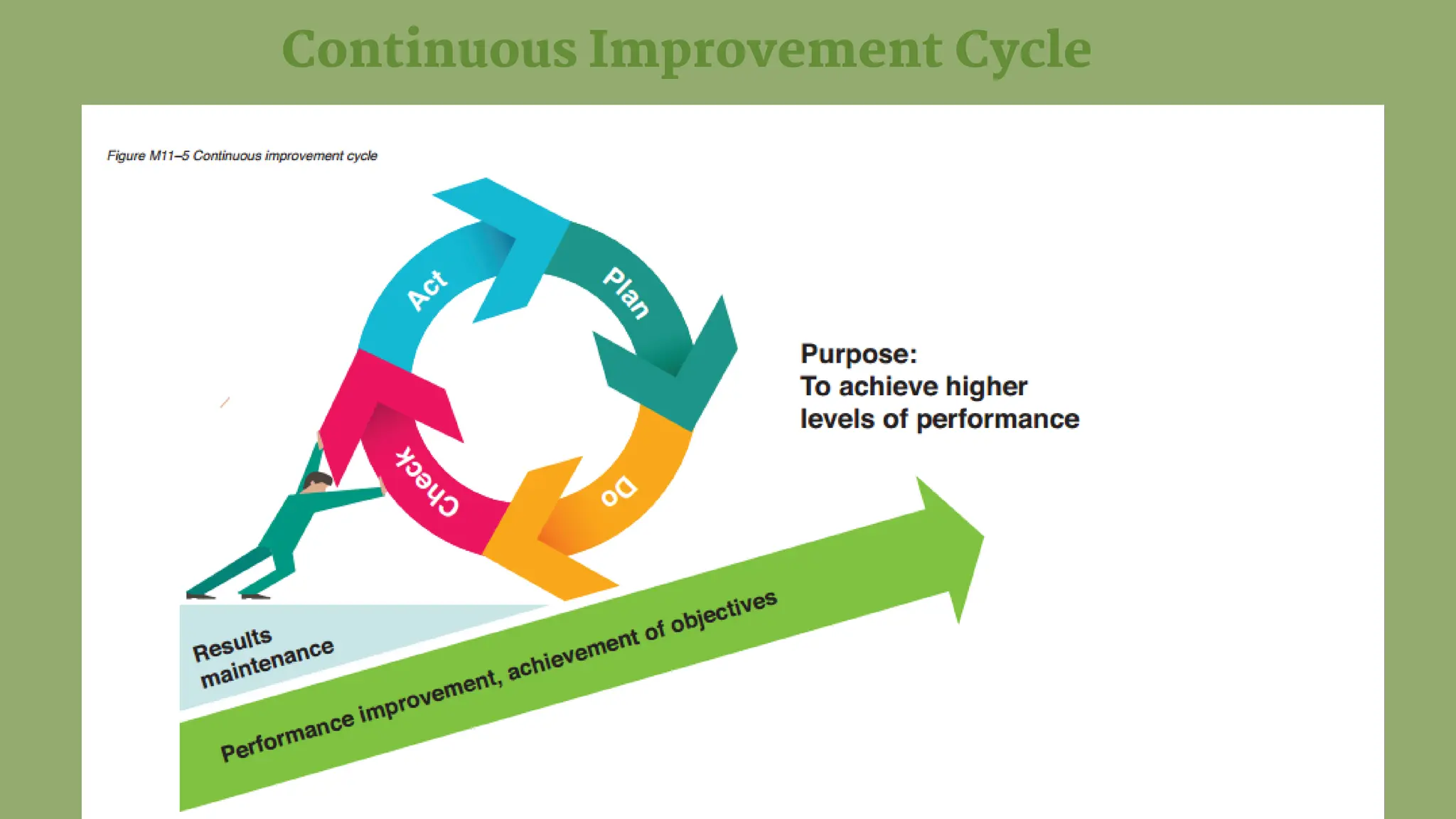
Continuous Improvement Cycle
CSSD Auditing
- Regular auditing is a requirement of any QMS.
- An audit system covers all relevant processes and procedures in order to
determine the effectiveness of the QMS’s application.
-All audits must be documented and the records kept for inspection.
- Different types of audit are routinely carried out both internally and
externally.
Internal audits
Identify non-conformities, are counted in
departmental defect reporting and are
discussed at management review
meetings.
External Audits
External audits comprise those carried
out by the notified body (certification
body for accredited CSSDs) and those
carried out by customers.
QUALITY ASSURANCE .. quality assurance and quality control.

QUALITY ASSURANCE .. quality assurance and quality control.

  • 1.
    ALL YOU NEED TOKNOW ABOUT CENTRAL STERILE SUPPLY DEPARTMENT
  • 2.
    DAY 1 Module 7:QUALITY ASSURANCE Central Sterilization Supply Department
  • 3.
    Goals and Objectives Bythe end of this module, you will be able to: Define quality in the context of the CSSD. Clarify the importance of standards. Explain the function of quality management systems and quality improvement. Clarify the differences between quality assurance and quality control. Outline staff performance and training requirements. Stress the importance of documentation and auditing.
  • 4.
  • 6.
    The meaning ofquality continues to evolve as the quality profession grows and matures. Perfection. Consistency. Speed of delivery. Compliance with polices and procedure. Providing good, usable product. Doing it right for the first time. Quality means “Performance upon expectations” and “fit for functions.”
  • 7.
    Quality in CSSD Therole of quality plays in ensuring all reusable medical devices processed in the CSSD are “fit for purpose” and that all work activities support this outcome to ensure patient safety. Using a quality management system (QMS), having written policies and procedures, a system of auditing practices and a means to record defects, all contribute to high quality devices being produced.
  • 8.
    What do wemean by quality in relation to the work of the CSSD? The production of reusable medical devices that are “fit for purpose”. 1. How we process and provide these devices using best practices and the latest technologies. 2. Customer service, and how we deal with device users. 3. Quality is the consistent delivery of products and services according to established standards. 4.
  • 9.
    CSSDs always worktowards producing 100% defect-free devices for the sake of the people on whom they will be used. Always keep in mind “would I like this used on me?” when working, it’s a good reminder to strive for excellence in everything you do in the CSSD.
  • 10.
    CSSD manages anoptimal flow of devices, under the highest standards of quality and infection control, from the moment they have been used until they are cleaned, disinfected and/or sterilized in new packaging and returned for use again. In order to succeed, we need to ensure we can measure and monitor quality at all stages of the reprocessing life cycle
  • 12.
    Standards Standards can bedefined as “a level of quality or attainments, something that can be used as a measure” or “a level of quality or achievement, especially a level that is thought to be acceptable”.
  • 13.
    In the CSSD,standards can be defined by a statement specifying how activities will be carried out and by quoting the official standards for both equipment and processes.
  • 14.
    Quality Management Systems(QMS) A QMS is a formalized system that documents processes, procedures and responsibilities for achieving quality policies and objectives. A QMS helps coordinate and direct an organization’s activities to meet customer and regulatory requirements and improve its effectiveness and efficiency on a continuous basis.
  • 16.
    A quality policyprovides a short declaration of how an organization will ensure the quality of its product or service by detailing what processes are in place to ensure that an organization delivers what it says it can. The Quality Manual contains procedures to outline activities in each area of the CSSD supplemented by work instructions that provide step-by-step instructions to specialists who will carry out the work.
  • 18.
    Quality Improvement (QI) -QI is a formal system of performance analysis and systematic improvement. - It involves measuring current performance and identifying ways to make things better. - Create systems to prevent errors from happening. - It can be challenging to find where the defect in the system. - figure out new ways to do things.
  • 19.
    Quality assurance (QA):-focuses on preventing defects. By ensures that the approaches, techniques, methods and processes used to manage and create procedures were followed correctly and are operative. It is a proactive process and preventative in nature. It recognizes flaws in the process. Quality assurance precedes quality control, although one cannot exist without the other. Quality control (QC) focuses on identifying defects. It ensures that the approaches, techniques, methods and processes are followed correctly. It monitors and verifies that defined quality standards have been met. It is a reactive, detection-based process. Quality control must be completed after quality assurance has been completed.
  • 21.
    DAY 2 Module 7:QUALITY ASSURANCE Central Sterilization Supply Department
  • 22.
    Performance Monitoring andManagement in CSSD We must monitor the process to ensure the standards are being followed. We must consider quantitative (data and statistics) and qualitative (descriptive) information to determine the quality of the service offered. Monitoring quality can pose many challenges and involves evaluating current performance including end-user perspectives against a standard or expected level of performance.
  • 23.
    Defect reporting system -Wherequantitative data is collected relating to defects received by customers. -Undertaking an annual customer survey is a good way to seek views of the service from individuals whose perception may not be reflected by statistics on defects. -CSSDs need to know what the customer likes and dislikes and the CSSD must act as a team and see their actions as reflecting the quality of the total service offered.
  • 24.
    Most reported defectscan be managed by Identifying the cause of the defect. Determining an appropriate corrective action. Closing the investigation.
  • 25.
    Why do wemonitor quality? We monitor quality to ensure standards are maintained and to identify opportunities to improve where we have noticed that performance is not at the standard, we want it to be.
  • 26.
    Product recall system Awritten procedure for product recall describing how it will be undertaken and who is responsible for completing the action. In some circumstances where risk to patients is identified, it is necessary to inform users/hospital management or a responsible person at the customer end.
  • 27.
    Staff Performance andTraining Staff orientation is the first point at which basic training is provided. 1. The quality of all future work is based on how well staff are trained. 2. All staff working in the CSSD must recognize their role in supporting the unit’s quality goals. 3.
  • 28.
    Staff annual appraisalsystems -provide an opportunity for two-way conversations about work. -The supervisor or manager can discuss performance including feedback on general work and personal defects. -It gives the specialist an opportunity to share their opinions about work and potentially identify additional training requirements and share ideas on how practices may be improved.
  • 29.
    Documentation Documentation is criticalto the operation of the CSSD. QMS containing clear policies, procedures and document information relating to the reusable medical devices processed. Keep in mind, if it is not written down, it did not happen!
  • 30.
    CSSD Electronic TrackingSystems -There are many IT tracking systems on the market, all with very different features and benefits. Each CSSD must evaluate its own requirements and purchase the system most closely matching their local needs. -The system records all items in circulation including surgical instruments and trays and contain information on tray contents supporting the printing of tray lists for assembly. -All devices must be uniquely marked in some way to allow scanning.
  • 31.
    - Most trackingsystems will scan bar coded devices at each stage of the decontamination process and will prevent items from moving to the next stage of the process before successful completion of the previous one. No device can easily miss a critical step in the process
  • 33.
    Key Performance Indicators(KPI) -Provide an indicator of how well or badly an organization is performing. -Is a quantifiable (able to be expressed or measured as a quantity) measure of performance. -KPIs need to be agreed, reasonable and achievable to both parties, i.e., the CSSD and the customers. - Once KPIs and targets have been set, it is important to routinely monitor performance.
  • 34.
  • 35.
    CSSD Auditing - Regularauditing is a requirement of any QMS. - An audit system covers all relevant processes and procedures in order to determine the effectiveness of the QMS’s application. -All audits must be documented and the records kept for inspection. - Different types of audit are routinely carried out both internally and externally.
  • 36.
    Internal audits Identify non-conformities,are counted in departmental defect reporting and are discussed at management review meetings. External Audits External audits comprise those carried out by the notified body (certification body for accredited CSSDs) and those carried out by customers.