A global education design and innovation firm

Quantum Thinking takes a human-centered, design-based approach to
  helping institutions innovate and transform teaching and learning
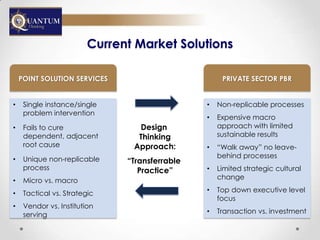
Current Market Solutions

    POINT SOLUTION SERVICES                           PRIVATE SECTOR PBR


•    Single instance/single                      •   Non-replicable processes
     problem intervention
                                                 •   Expensive macro
•    Fails to cure dependent,     Design             approach with limited
     adjacent root cause          Thinking           sustainable results

•    Unique non-replicable
                                 Approach:       •   “Walk away” no leave-
     process                                         behind processes
                                “Transferrable
•    Micro vs. macro               Practice”     •   Limited strategic cultural
                                                     change
•    Tactical vs. Strategic
                                                 •   Top down executive level
•    Vendor vs. Institution                          focus
     serving
                                                 •   Transaction vs. investment
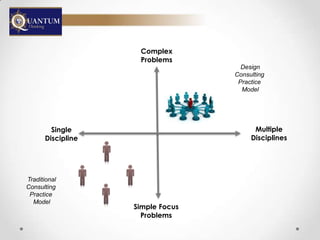
Complex
                    Problems
                                    Design
                                  Consulting
                                   Practice
                                    Model


        Single                          Multiple
      Discipline                       Disciplines


Traditional
Consulting
 Practice
  Model
                   Simple Focus
                     Problems
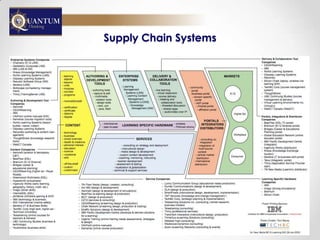
Supply Chain Systems
Institutional Systems


 Anne’s Graphic)
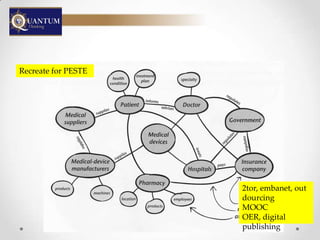
Recreate for PESTE


                     2tor, embanet,
                     outdourcing
                     MOOC OER,
                     digital publishing
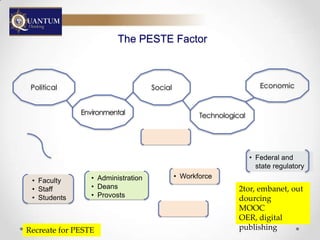
The PESTE Factor


 Political                          Social                             Economic


              Environmental                         Technological


                                                                    • Federal and
                                                                      state regulatory
                 • Administration            • Workforce
 • Faculty
 • Staff         • Deans                                       2tor, embanet,
 • Students      • Provosts                                    outdourcing
                                                               MOOC OER,
                                                               digital publishing
Recreate for PESTE
+   =
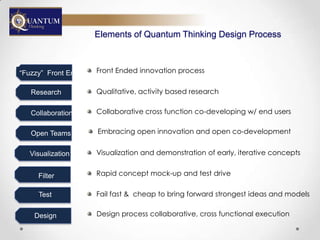
Elements of Quantum Thinking Design Process


“Fuzzy” Front End   Front Ended innovation process


   Research         Qualitative, activity based research


   Collaboration    Collaborative cross function co-developing w/ end users


   Open Teams       Embracing open innovation and open co-development


  Visualization     Visualization and demonstration of early, iterative concepts


     Filter         Rapid concept mock-up and test drive

     Test           Fail fast & cheap to bring forward strongest ideas and models


    Design          Design process collaborative, cross functional execution
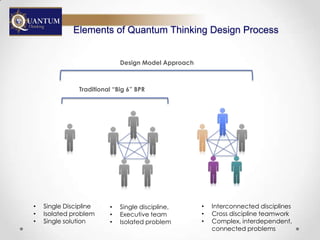
Elements of Quantum Thinking Design Process


                             Design Model Approach


               Traditional “Big 6” BPR


•   Single Discipline    •   Single discipline,      •   Interconnected disciplines
•   Isolated problem     •   Executive team          •   Cross discipline teamwork
•   Single solution      •   Isolated problem        •   Complex, interdependent,
                                                         connected problems
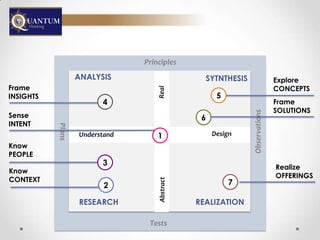
Principles
                   ANALYSIS                      SYTNTHESIS                  Explore
Frame                                                                        CONCEPTS


                                    Real
INSIGHTS                                             5
                         4                                                   Frame
                                                                             SOLUTIONS


                                                              Observations
Sense                                           6
INTENT
           Plans


                   Understand       1               Design
Know
PEOPLE
                         3
                                                                             Realize
Know
                                                                             OFFERINGS
CONTEXT
                                    Abstract


                          2                              7

                   RESEARCH                    REALIZATION

                                 Tests
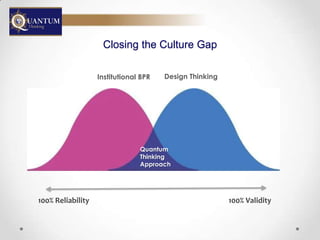
Closing the Culture Gap

                   Institutional BPR   Design Thinking


                                Quantum
                                Thinking
                                Approach


100% Reliability                                         100% Validity
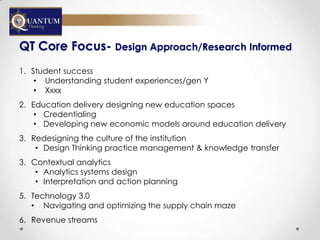
QT Core Focus- Design Approach/Research Informed
1. Student success
    • Understanding student experiences/gen Y
    • Xxxx
2. Education delivery designing new education spaces
    • Credentialing
    • Developing new economic models around education delivery
3. Redesigning the culture of the institution
    • Design Thinking practice management & knowledge transfer
3. Contextual analytics
    • Analytics systems design
    • Interpretation and action planning
5. Technology 3.0
   • Navigating and optimizing the supply chain maze
6. Revenue streams
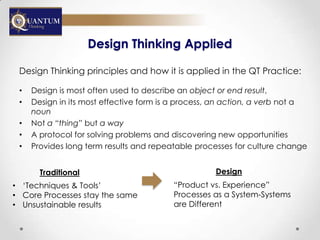
Design Thinking Applied

 Design Thinking principles and how it is applied in the QT Practice:

 •   Design is most often used to describe an object or end result,
 •   Design in its most effective form is a process, an action, a verb not a
     noun
 •   Not a “thing” but a way
 •   A protocol for solving problems and discovering new opportunities
 •   Provides long term results and repeatable processes for culture change


       Traditional                                  Design
• „Techniques & Tools‟                   “Product vs. Experience”
• Core Processes stay the same           Processes as a System-Systems
• Unsustainable results                  are Different
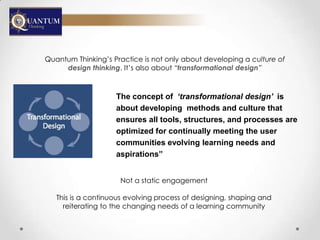
Quantum Thinking‟s Practice is not only about developing a culture of
     design thinking. It‟s also about “transformational design”


                    The concept of ‘transformational design’ is
                    about developing methods and culture that
                    ensures all tools, structures, and processes are
                    optimized for continually meeting the user
                    communities evolving learning needs and
                    aspirations”


                     Not a static engagement

   This is a continuous evolving process of designing, shaping and
     reiterating to the changing needs of a learning community
Questions

•   What is the opportunity gap? (product opportunity gap)
     o Political, Environment, Social, Technology and Economic factors?

•   What‟s missing from current institutional consulting services
    landscape? (Bain north texas)

•   What institutional change is needed ?

•   Does a Design Thinking approach make sense?
•   Is Design Thinking a framework that can change institutional culture
•   Can this approach be effectively adopted?
•   Are the product offerings that provide services/product revenue
    contribution as a scalable business?
Qt draft educause

Qt draft educause

  • 1.
    A global educationdesign and innovation firm Quantum Thinking takes a human-centered, design-based approach to helping institutions innovate and transform teaching and learning
  • 2.
    Current Market Solutions POINT SOLUTION SERVICES PRIVATE SECTOR PBR • Single instance/single • Non-replicable processes problem intervention • Expensive macro • Fails to cure dependent, Design approach with limited adjacent root cause Thinking sustainable results • Unique non-replicable Approach: • “Walk away” no leave- process behind processes “Transferrable • Micro vs. macro Practice” • Limited strategic cultural change • Tactical vs. Strategic • Top down executive level • Vendor vs. Institution focus serving • Transaction vs. investment
  • 3.
    Complex Problems Design Consulting Practice Model Single Multiple Discipline Disciplines Traditional Consulting Practice Model Simple Focus Problems
  • 4.
  • 5.
  • 6.
    Recreate for PESTE 2tor, embanet, outdourcing MOOC OER, digital publishing
  • 7.
    The PESTE Factor Political Social Economic Environmental Technological • Federal and state regulatory • Administration • Workforce • Faculty • Staff • Deans 2tor, embanet, • Students • Provosts outdourcing MOOC OER, digital publishing Recreate for PESTE
  • 8.
    + =
  • 9.
    Elements of QuantumThinking Design Process “Fuzzy” Front End Front Ended innovation process Research Qualitative, activity based research Collaboration Collaborative cross function co-developing w/ end users Open Teams Embracing open innovation and open co-development Visualization Visualization and demonstration of early, iterative concepts Filter Rapid concept mock-up and test drive Test Fail fast & cheap to bring forward strongest ideas and models Design Design process collaborative, cross functional execution
  • 10.
    Elements of QuantumThinking Design Process Design Model Approach Traditional “Big 6” BPR • Single Discipline • Single discipline, • Interconnected disciplines • Isolated problem • Executive team • Cross discipline teamwork • Single solution • Isolated problem • Complex, interdependent, connected problems
  • 11.
    Principles ANALYSIS SYTNTHESIS Explore Frame CONCEPTS Real INSIGHTS 5 4 Frame SOLUTIONS Observations Sense 6 INTENT Plans Understand 1 Design Know PEOPLE 3 Realize Know OFFERINGS CONTEXT Abstract 2 7 RESEARCH REALIZATION Tests
  • 12.
    Closing the CultureGap Institutional BPR Design Thinking Quantum Thinking Approach 100% Reliability 100% Validity
  • 13.
    QT Core Focus-Design Approach/Research Informed 1. Student success • Understanding student experiences/gen Y • Xxxx 2. Education delivery designing new education spaces • Credentialing • Developing new economic models around education delivery 3. Redesigning the culture of the institution • Design Thinking practice management & knowledge transfer 3. Contextual analytics • Analytics systems design • Interpretation and action planning 5. Technology 3.0 • Navigating and optimizing the supply chain maze 6. Revenue streams
  • 14.
    Design Thinking Applied Design Thinking principles and how it is applied in the QT Practice: • Design is most often used to describe an object or end result, • Design in its most effective form is a process, an action, a verb not a noun • Not a “thing” but a way • A protocol for solving problems and discovering new opportunities • Provides long term results and repeatable processes for culture change Traditional Design • „Techniques & Tools‟ “Product vs. Experience” • Core Processes stay the same Processes as a System-Systems • Unsustainable results are Different
  • 15.
    Quantum Thinking‟s Practiceis not only about developing a culture of design thinking. It‟s also about “transformational design” The concept of ‘transformational design’ is about developing methods and culture that ensures all tools, structures, and processes are optimized for continually meeting the user communities evolving learning needs and aspirations” Not a static engagement This is a continuous evolving process of designing, shaping and reiterating to the changing needs of a learning community
  • 17.
    Questions • What is the opportunity gap? (product opportunity gap) o Political, Environment, Social, Technology and Economic factors? • What‟s missing from current institutional consulting services landscape? (Bain north texas) • What institutional change is needed ? • Does a Design Thinking approach make sense? • Is Design Thinking a framework that can change institutional culture • Can this approach be effectively adopted? • Are the product offerings that provide services/product revenue contribution as a scalable business?