六標準差 郭倉義 中山企管 [email_address]
歷史緣起 1986 Motorola: George Fisher Metric for measuring defects and improving quality Business improvement Methodology (later) Understanding and managing customer requirements Aligning key business processes to achieve those requirements  Bob Galvin, CEO Tenfold improvement in five years
Alan Larson Motorola  六標準差  內部顧問 將  6 sigma  引入  奇異、 Allied Signal Larry Bossidy, Allied Signal, CEO 原是  GE  高階資深主管 將  6 sigma  介紹給  Jack Welch Jack Welch, GE, CEO 90’s  利用  6 sigma  獲利屢創新高
Six Sigma, Alan Larson 是文化產物 是行為方式 Welch 最佳的六標準差專案 並非從企業內部開始 而是由外而內 重點在於 如何讓我們的顧客更具競爭力 顧客的成功關鍵是什麼 只要能助顧客成功,最後都能讓我們的荷包滿載而歸
GE  六標準差成功案例 奇異照明公司 改善與主要客戶  Walt Mart  之間, 98%  的發票錯誤與爭執 奇異融資 編制內的律師精簡合約檢驗審核流程,使交易速度加快,更快回應顧客,且每年省下百萬美元 奇異電力系統 更進一步了解顧客需求。使電力公司能更有效回應主管機構的規定
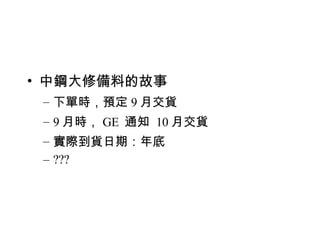
中鋼大修備料的故事 下單時,預定 9 月交貨 9 月時, GE  通知  10 月交貨 實際到貨日期:年底 ???
 
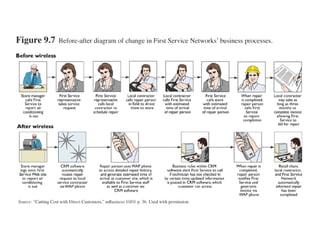
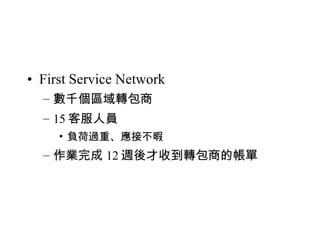
First Service Network 數千個區域轉包商 15 客服人員 負荷過重、應接不暇 作業完成 12 週後才收到轉包商的帳單
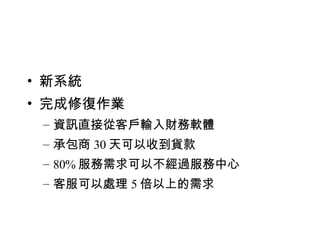
新系統 完成修復作業 資訊直接從客戶輸入財務軟體 承包商 30 天可以收到貨款 80% 服務需求可以不經過服務中心 客服可以處理 5 倍以上的需求
六標準差的六大主旨 真心以顧客為尊 顧客需求的本質是多變的 改進與否端視能否影響顧客滿意和價值 例:完美通心麵 管理依資料和事實而更新 釐清評定業務績效所需的衡量  (measurement) 再著手理解主要變數為何,以獲取最大的成效 流程為重、管理和改進 六標準差視流程為通往成功的主要工具
主動管理 事前採取行動 防範問題、而非救火 取代事後反映的習慣 協力合作無界限 打破藩籬 公司間、銷售商間與顧客間 無界限的合作,而非無私的犧牲 追求完美;容忍失敗 新觀念、新作法皆須承擔風險 過度擔心犯錯,決不會付諸行動
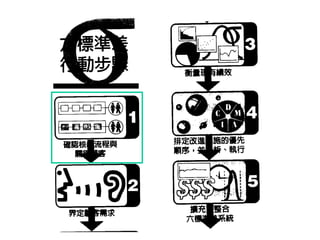
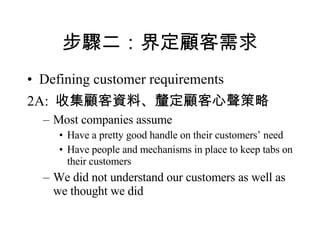
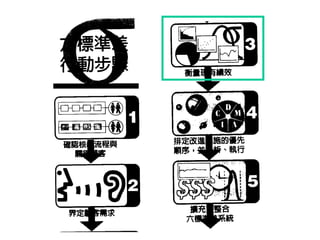
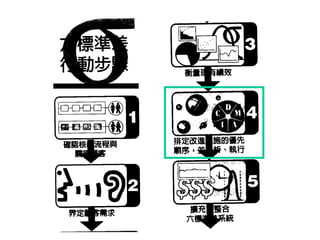
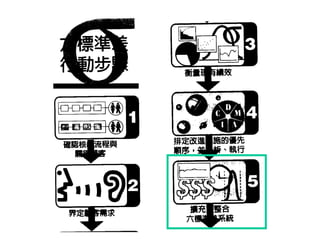
六標準差行動五步驟 確認核心流程與關鍵顧客 界定顧客需求 衡量現有績效 排定改進措施的優先順序,並分析、執行 擴充並整合六標準差系統
 
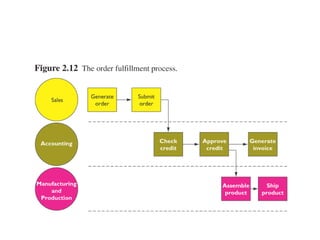
步驟一 確認核心流程與關鍵顧客 Identify core processes and key customers 1A.  確認核心流程 一連串可以提供價值  ( 產品、服務、支援、資訊 )  給顧客的任務 涉及不同部門和功能單位 跨功能管理 價值鏈
 
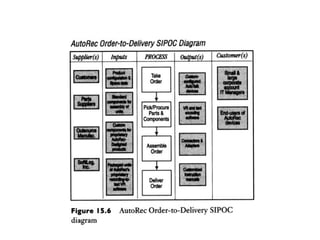
1B.  界定關鍵流程的產出和關鍵顧客 Only the final product or the primary output is relevant Avoid pushing too many items or products into the category 1C. Create high-level core process maps Identify major activities that make up each core process The “SIPOC” process model Supplier Input Process Output Customer
 
使用核心流程圖 為什麼我們這樣做? 這些作業真的重要嗎? 這兩個流程銜接得好嗎? Benefits Display a cross-functional set of activities in a single, simple diagram Applicable to processes of all sizes Maintain a “big picture” perspective
確認核心流程與關鍵顧客 注意事項 Do Focus on activities that directly add value to customers Stay at a high level Involve a mix of people Don’t Overload the process with Inputs and Outputs Look upon your core processes as unchangeable
 
步驟二:界定顧客需求 Defining customer requirements 2A:  收集顧客資料、釐定顧客心聲策略 Most companies assume Have a pretty good handle on their customers’ need Have people and mechanisms in place to keep tabs on their customers We did not understand our customers as well as we thought we did
顧客心聲 Airbus A380 Seats: 840, plan to accommodate 555 未來空中交通將日趨頻繁, 國際航空公司 需要更大的飛機載運旅客 Boeing 787 Dreamliner Seats: 250 旅客 喜歡更直接的點對點飛行 Boeing 747, current leader (450 seats)
2A:  收集顧客資料、釐定顧客心聲策略 Voice of customer 市場研究、顧客調查 資料倉儲 Datamining 360° 的顧客關係
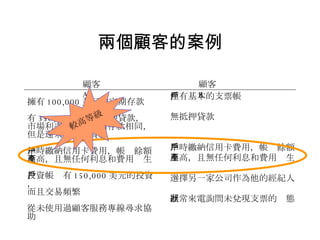
兩個顧客的案例 較高等級 擁有 100,000 美元的定期存款 有 350,000 美元的抵押貸款, 市場利率與上述定期存款相同, 但是還未作二次貸款 準時繳納信用卡費用,帳戶餘額 不高,且無任何利息和費用產生 投資帳戶有 150,000 美元的投資, 而且交易頻繁 從未使用過顧客服務專線尋求協助 僅有基本的支票帳戶  無抵押貸款 準時繳納信用卡費用,帳戶餘額 不高,且無任何利息和費用產生 選擇另一家公司作為他的經紀人 經常來電詢問未兌現支票的狀態 顧客 A 顧客 B
無 360° 關係的後果 正確的政策、錯誤的執行 政策:加強顧客忠誠度以增加獲利 執行 無法取得 360° 的顧客關係 Rule of Thumb Wave service charges under $25 when customer complaints Bad customers complain $20 Good customers complain $30
為什麼大部分公司沒有 360° 觀點 未將小型資料庫整合 互相矛盾的資料  郭倉義先生  ( 客服系統 ) vs  郭倉義教授  ( 訂單系統 ) 兼顧通用規則與維護自主性 採用共通的資訊科技基礎建設 共用的系統 共用的顧客命名與辨識 定期將顧客資訊載入資料倉儲
建立 360° 關係 超越 360° 觀點 建立 360° 關係 在任何接觸點採取一致的行動 某接觸點得知顧客有房屋貸款的需求 郵寄建議書 顧客到分行時主動提出 網站的訊息 電話服務中心 建立 360° 關係必需的基礎建設是建立顧客智慧必需的第一步
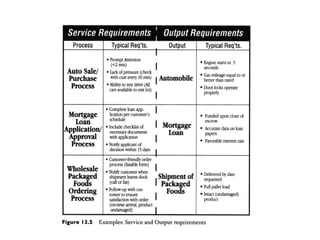
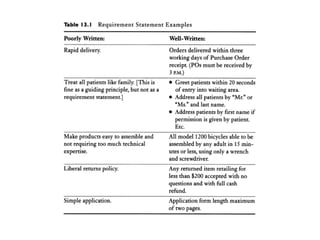
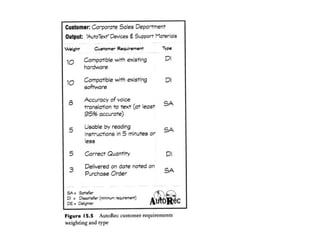
步驟二:界定顧客需求 2B.  開發績效標準和需求清單 Develop performance standards and requirement statements 需求 (requirement) 的種類 產品需求  output requirements Features and/or characteristics of the final products or services 服務需求  service requirements Guidelines for how the customers should be treated/served during the execution of the process itself
 
 
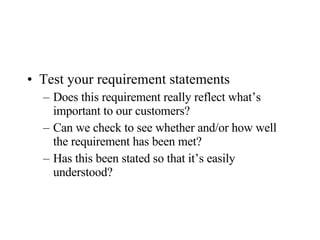
Test your requirement statements Does this requirement really reflect what’s important to our customers? Can we check to see whether and/or how well the requirement has been met? Has this been stated so that it’s easily understood?
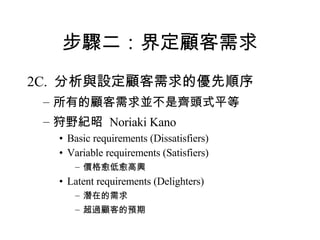
步驟二:界定顧客需求 2C.  分析與設定顧客需求的優先順序 所有的顧客需求並不是齊頭式平等 狩野紀昭  Noriaki Kano Basic requirements (Dissatisfiers) Variable requirements (Satisfiers) 價格愈低愈高興 Latent requirements (Delighters) 潛在的需求 超過顧客的預期
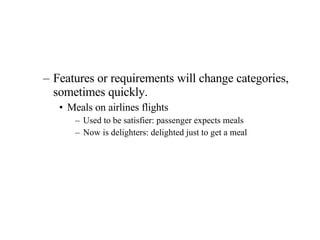
Features or requirements will change categories, sometimes quickly. Meals on airlines flights Used to be satisfier: passenger expects meals Now is delighters: delighted just to get a meal
步驟二:界定顧客需求 注意事項 Do Have a broad-based system to collect and use customer and market input Pay equal attention to service and output requirements Make the effort to create clear, observable, and relevant requirement statements
Don’t Close your mind to new information on what customers really want Hold people suddenly responsible for the newly defined requirements Turn new requirements into new “paradigms” Be prepared to see customer needs change – and soon. Fail to measure and track performance to requirements
 
步驟三:衡量現有的績效 衡量概念 先觀察、再衡量 『你不可能衡量我們所做的事!』 旅館業:好好照顧顧客 3, 2, 1  原則  (Hotel123.pdf) 連續的  vs  離散的 衡量的單位可無限的分割 身高  體重 特徵值 教育程度  訂單數目
衡量要有理由 衡量消耗資源、注意力和精力 Efficiency and effectiveness measures Efficiency: use less money, time, material Effectiveness: how closely did we meet customers’ needs and requirements 衡量的流程 本身也應該不停的改善
步驟三:衡量現有的績效 3A:  以顧客的需求來規劃和衡量績效 Plan and measure performance against customer’s requirement 選什麼來衡量 可行的 有價值的 錯誤的衡量 浪費公司資源 打擊員工士氣
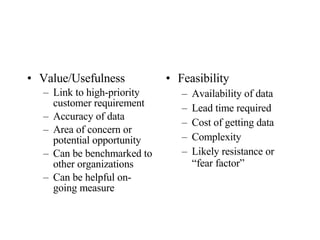
Value/Usefulness Link to high-priority customer requirement Accuracy of data Area of concern or potential opportunity Can be benchmarked to other organizations Can be helpful on-going measure Feasibility Availability of data Lead time required Cost of getting data Complexity Likely resistance or “fear factor”
制定操作型定義 Clear, understandable, and unambiguous description of what’s to be measured or observed Everyone can operate, or measure, consistently on the basis of definition 隔夜送達  Fedex: next day delivery 10am, next day
準備收集和抽樣的計畫 表格 Keep it simple, label it well, include space for date (and time) and collector’s name,… 分層 Who: department, individual, customer type What: type of complaint, defect category, reason for incoming call When: Month, quarter, day of week, time of day Where: region, city, specific location on product
執行並精化衡量 準確度 可重複性  repeatability 相同的衡量,重複做皆可得相同的結果 再生力  reproducibility 兩個不同的人或機器,亦可衡量出相同的結果 穩定性 不會隨時間的變化而改變
步驟三:衡量現有的績效 3B:  確立不良 ( 率 ) 的底限並確認改善的機會點 Establish performance “baselines”  Determine how well processes are working  today Focus of six sigma measurement Tracking and reducing  defects  in a process 以瑕疵 ( 不良 ) 為主的衡量 益處:簡單、一致、互容 可用於任何流程
利用各種衡量來決定改善的優先順序 良率  defect 、產出率  yield 、 Defect opportunity, DPMO, Cost of poor quality
步驟三:衡量現有的績效 注意事項 Do Set measurement priorities that match your resources If you can afford and have all the knowledge to begin measuring all core processes, go for it. Consider ways to measure service as well as output factors Practice continuous improvement of your measurement Stop measures that are not needed or useful 電腦製造商 ( 衡量零組件到貨比例 ) 需  10  個零件、準時到  9 個零件 90 分或零分
Don’t Use all the measurement formats available Use those are most meaningful Ignore other measurement options 偏狹 台灣金融界的雙卡風暴 只管接單 不管訂單的風險品質 Expect the data to confirm your assumptions
 
步驟 4A :六標準差流程改進 DMAI ( C ), define, measure, analysis, improve Control  是另一個循環的開始 Define  釐清問題、目標和流程 What is the  problem  or opportunity on which we will focus What is our goal Who is the customer served and/or impacted by this process and problem What is the process we are investigating
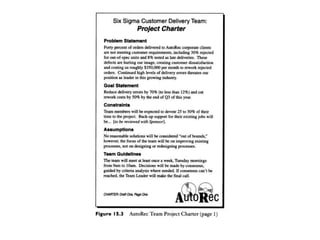
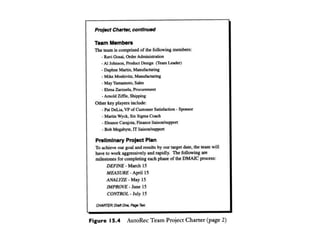
制定六標準差專案章程 問題聲明 確定改進小組明白專案的邏輯依據 強化針對問題解決的共識和小組成員向心力 設定可以追蹤進展和成果的底線衡量 目標聲明 待完成事項的陳述 想見到的成果要有可衡量的結果 專案的最後期限與見到成果的時間範圍
Constraints and assumptions Resources and expectation limitation Initial problem or opportunity data Supplement of  問題聲明 Team members and responsibilities Preliminary project plan Identifying and setting dates for key milestones
 
 
確認和聆聽顧客心聲 Voice of Customer Ensuring that the problem and goal are defined in terms that truly relate to key customer requirement Avoid cost- and time-cutting solutions that actually hurt service to or relations with customers Providing information on possible “output” measures that may need to be tracked as solutions are implemented Giving team members practice in, and reinforcing the importance of, focusing work on the customer
 
Identifying and documenting the process Putting the problem in context Refining the scope of the project, or focusing analysis Revealing possible “obvious” root causes Clarifying inputs, roles, and supplier/customer relationships. Helping to target what and when to measure.
Define  之注意事項 Do Make problem statements as specific and fact-based as they can be Use the Charter to set direction and to gain agreement on the problem, goal, and project parameters Keep the Charter “visible,” and revise it as needed Listen to the Voice of Customer
Don’t Describe suspected causes or assign blame for the problem Over - publicize preliminary goals Over - “wordsmith” the Charter Get mired in process detail
步驟 4A :六標準差流程改進 衡量  measure: baselining and refining problem Transitional phase to analysis Validate or refine the problem Begin the search for root causes 產出的衡量 Defects, yield,… 投入及流程的衡量 Discrepancies between order from the final shipment Cycle time Lead time
Decisions on what to measure are often difficult Many option available Challenge of collecting data Results of the measurement phase One solid, repeatable measure confirming – and often clarifying, the problem or opportunity A new, more sophisticated set of questions about the problem
Measurement  之注意事項 Do Balance Output with Process/Input measures Use measure to narrow the problem Anticipate what you’ll want to analyze later Don’t Try to do too much Skip the key steps in measurements Collection forms, sampling plans,…
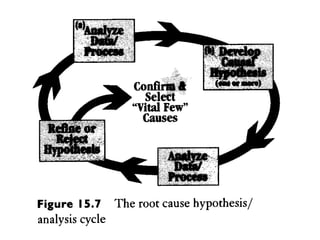
分析  analyze: becoming a process detective The root cause analysis cycle 裝紗窗來解決蚊子多的問題 Starting points for the root cause cycle 魚骨圖 Process mapping and analysis ……
 
Analyze  之注意事項 Do Carefully state your causal hypothesis Be skeptical about your hypothesis Apply common sense and creativity Don’t Over-analyze Under-analyze
步驟 4A :六標準差流程改進 改進  improve: generating, selecting, and implementing solution 腦力激盪 Synthesizing and selecting solutions Implementing process improvement Completing the improve phase
Improve  之注意事項 Do Look for really innovative solution Target your solution Plan carefully and proactively Don’t Implement full-scale the first time Forget to measure Forget to celebrate successes
步驟 4B : 六標準差流程設計 \ 再設計 流程設計 \ 再設計的重要條件 出現重大的需求、威脅或機會 你已做好準備,並願面對風險 界定:界定重新設計的目標、規模和需求  (requirements) 設計 \ 再設計章程 專案 \ 流程的規模 界定和修改流程產出和需求事項
衡量:設定績效的底線 標竿與內部衡量 界定未來的衡量 分析:建構重新設計的基礎 流程設計與分析 流程價值分析 增加價值、強化價值、無加值
改進:設計與執行新流程 流程進展和管理選項 簡化 直線流程 平行流程 替代途徑 瓶頸管理 …… 檢討與精調設計
執行新流程 Piloting approaches The final process rollout
 
步驟 5 : 擴充並整合六標準差系統 執行持續的衡量和行動,以維持改進成效 爭取對解決方案強有力的支持 與管理流程的人 (process owner) 同心齊力 光靠黑帶和小組無法做到顯著的改善 使用事實和資料的告示板 Treat the people managing and using the new process as your customers
記載變革與新方法 Keep the documentation simple Keep the documentation clear and inviting Including options and instructions for “emergencies” Establish meaningful measures and charts Building process response plan Sooner or later something will go wrong Action alarms Short-term or emergency fixes Continuous improvement
界定流程擁有者的責任和管理 六標準差與流程管理的願景 People at all levels will understand how their work fits into the process and add values to customers Customer requirements will be known throughout the process
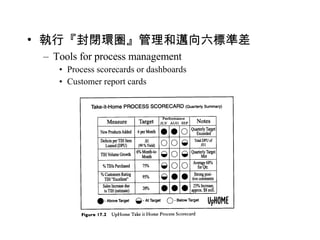
執行『封閉環圈』管理和邁向六標準差 Tools for process management Process scorecards or dashboards Customer report cards
 
Presentation outlines SIPOC Problems Measurement 專案章程  project charter Problem statement Goal statement

QM-045-六標準差

  • 1.
  • 2.
    歷史緣起 1986 Motorola:George Fisher Metric for measuring defects and improving quality Business improvement Methodology (later) Understanding and managing customer requirements Aligning key business processes to achieve those requirements Bob Galvin, CEO Tenfold improvement in five years
  • 3.
    Alan Larson Motorola 六標準差 內部顧問 將 6 sigma 引入 奇異、 Allied Signal Larry Bossidy, Allied Signal, CEO 原是 GE 高階資深主管 將 6 sigma 介紹給 Jack Welch Jack Welch, GE, CEO 90’s 利用 6 sigma 獲利屢創新高
  • 4.
    Six Sigma, AlanLarson 是文化產物 是行為方式 Welch 最佳的六標準差專案 並非從企業內部開始 而是由外而內 重點在於 如何讓我們的顧客更具競爭力 顧客的成功關鍵是什麼 只要能助顧客成功,最後都能讓我們的荷包滿載而歸
  • 5.
    GE 六標準差成功案例奇異照明公司 改善與主要客戶 Walt Mart 之間, 98% 的發票錯誤與爭執 奇異融資 編制內的律師精簡合約檢驗審核流程,使交易速度加快,更快回應顧客,且每年省下百萬美元 奇異電力系統 更進一步了解顧客需求。使電力公司能更有效回應主管機構的規定
  • 6.
    中鋼大修備料的故事 下單時,預定 9月交貨 9 月時, GE 通知 10 月交貨 實際到貨日期:年底 ???
  • 7.
  • 8.
    First Service Network數千個區域轉包商 15 客服人員 負荷過重、應接不暇 作業完成 12 週後才收到轉包商的帳單
  • 9.
    新系統 完成修復作業 資訊直接從客戶輸入財務軟體承包商 30 天可以收到貨款 80% 服務需求可以不經過服務中心 客服可以處理 5 倍以上的需求
  • 10.
    六標準差的六大主旨 真心以顧客為尊 顧客需求的本質是多變的改進與否端視能否影響顧客滿意和價值 例:完美通心麵 管理依資料和事實而更新 釐清評定業務績效所需的衡量 (measurement) 再著手理解主要變數為何,以獲取最大的成效 流程為重、管理和改進 六標準差視流程為通往成功的主要工具
  • 11.
    主動管理 事前採取行動 防範問題、而非救火取代事後反映的習慣 協力合作無界限 打破藩籬 公司間、銷售商間與顧客間 無界限的合作,而非無私的犧牲 追求完美;容忍失敗 新觀念、新作法皆須承擔風險 過度擔心犯錯,決不會付諸行動
  • 12.
    六標準差行動五步驟 確認核心流程與關鍵顧客 界定顧客需求衡量現有績效 排定改進措施的優先順序,並分析、執行 擴充並整合六標準差系統
  • 13.
  • 14.
    步驟一 確認核心流程與關鍵顧客 Identifycore processes and key customers 1A. 確認核心流程 一連串可以提供價值 ( 產品、服務、支援、資訊 ) 給顧客的任務 涉及不同部門和功能單位 跨功能管理 價值鏈
  • 15.
  • 16.
    1B. 界定關鍵流程的產出和關鍵顧客Only the final product or the primary output is relevant Avoid pushing too many items or products into the category 1C. Create high-level core process maps Identify major activities that make up each core process The “SIPOC” process model Supplier Input Process Output Customer
  • 17.
  • 18.
    使用核心流程圖 為什麼我們這樣做? 這些作業真的重要嗎?這兩個流程銜接得好嗎? Benefits Display a cross-functional set of activities in a single, simple diagram Applicable to processes of all sizes Maintain a “big picture” perspective
  • 19.
    確認核心流程與關鍵顧客 注意事項 DoFocus on activities that directly add value to customers Stay at a high level Involve a mix of people Don’t Overload the process with Inputs and Outputs Look upon your core processes as unchangeable
  • 20.
  • 21.
    步驟二:界定顧客需求 Defining customerrequirements 2A: 收集顧客資料、釐定顧客心聲策略 Most companies assume Have a pretty good handle on their customers’ need Have people and mechanisms in place to keep tabs on their customers We did not understand our customers as well as we thought we did
  • 22.
    顧客心聲 Airbus A380Seats: 840, plan to accommodate 555 未來空中交通將日趨頻繁, 國際航空公司 需要更大的飛機載運旅客 Boeing 787 Dreamliner Seats: 250 旅客 喜歡更直接的點對點飛行 Boeing 747, current leader (450 seats)
  • 23.
    2A: 收集顧客資料、釐定顧客心聲策略Voice of customer 市場研究、顧客調查 資料倉儲 Datamining 360° 的顧客關係
  • 24.
    兩個顧客的案例 較高等級 擁有100,000 美元的定期存款 有 350,000 美元的抵押貸款, 市場利率與上述定期存款相同, 但是還未作二次貸款 準時繳納信用卡費用,帳戶餘額 不高,且無任何利息和費用產生 投資帳戶有 150,000 美元的投資, 而且交易頻繁 從未使用過顧客服務專線尋求協助 僅有基本的支票帳戶 無抵押貸款 準時繳納信用卡費用,帳戶餘額 不高,且無任何利息和費用產生 選擇另一家公司作為他的經紀人 經常來電詢問未兌現支票的狀態 顧客 A 顧客 B
  • 25.
    無 360° 關係的後果正確的政策、錯誤的執行 政策:加強顧客忠誠度以增加獲利 執行 無法取得 360° 的顧客關係 Rule of Thumb Wave service charges under $25 when customer complaints Bad customers complain $20 Good customers complain $30
  • 26.
    為什麼大部分公司沒有 360° 觀點未將小型資料庫整合 互相矛盾的資料 郭倉義先生 ( 客服系統 ) vs 郭倉義教授 ( 訂單系統 ) 兼顧通用規則與維護自主性 採用共通的資訊科技基礎建設 共用的系統 共用的顧客命名與辨識 定期將顧客資訊載入資料倉儲
  • 27.
    建立 360° 關係超越 360° 觀點 建立 360° 關係 在任何接觸點採取一致的行動 某接觸點得知顧客有房屋貸款的需求 郵寄建議書 顧客到分行時主動提出 網站的訊息 電話服務中心 建立 360° 關係必需的基礎建設是建立顧客智慧必需的第一步
  • 28.
    步驟二:界定顧客需求 2B. 開發績效標準和需求清單 Develop performance standards and requirement statements 需求 (requirement) 的種類 產品需求 output requirements Features and/or characteristics of the final products or services 服務需求 service requirements Guidelines for how the customers should be treated/served during the execution of the process itself
  • 29.
  • 30.
  • 31.
    Test your requirementstatements Does this requirement really reflect what’s important to our customers? Can we check to see whether and/or how well the requirement has been met? Has this been stated so that it’s easily understood?
  • 32.
    步驟二:界定顧客需求 2C. 分析與設定顧客需求的優先順序 所有的顧客需求並不是齊頭式平等 狩野紀昭 Noriaki Kano Basic requirements (Dissatisfiers) Variable requirements (Satisfiers) 價格愈低愈高興 Latent requirements (Delighters) 潛在的需求 超過顧客的預期
  • 33.
    Features or requirementswill change categories, sometimes quickly. Meals on airlines flights Used to be satisfier: passenger expects meals Now is delighters: delighted just to get a meal
  • 34.
    步驟二:界定顧客需求 注意事項 DoHave a broad-based system to collect and use customer and market input Pay equal attention to service and output requirements Make the effort to create clear, observable, and relevant requirement statements
  • 35.
    Don’t Close yourmind to new information on what customers really want Hold people suddenly responsible for the newly defined requirements Turn new requirements into new “paradigms” Be prepared to see customer needs change – and soon. Fail to measure and track performance to requirements
  • 36.
  • 37.
    步驟三:衡量現有的績效 衡量概念 先觀察、再衡量『你不可能衡量我們所做的事!』 旅館業:好好照顧顧客 3, 2, 1 原則 (Hotel123.pdf) 連續的 vs 離散的 衡量的單位可無限的分割 身高 體重 特徵值 教育程度 訂單數目
  • 38.
    衡量要有理由 衡量消耗資源、注意力和精力 Efficiencyand effectiveness measures Efficiency: use less money, time, material Effectiveness: how closely did we meet customers’ needs and requirements 衡量的流程 本身也應該不停的改善
  • 39.
    步驟三:衡量現有的績效 3A: 以顧客的需求來規劃和衡量績效 Plan and measure performance against customer’s requirement 選什麼來衡量 可行的 有價值的 錯誤的衡量 浪費公司資源 打擊員工士氣
  • 40.
    Value/Usefulness Link tohigh-priority customer requirement Accuracy of data Area of concern or potential opportunity Can be benchmarked to other organizations Can be helpful on-going measure Feasibility Availability of data Lead time required Cost of getting data Complexity Likely resistance or “fear factor”
  • 41.
    制定操作型定義 Clear, understandable,and unambiguous description of what’s to be measured or observed Everyone can operate, or measure, consistently on the basis of definition 隔夜送達 Fedex: next day delivery 10am, next day
  • 42.
    準備收集和抽樣的計畫 表格 Keepit simple, label it well, include space for date (and time) and collector’s name,… 分層 Who: department, individual, customer type What: type of complaint, defect category, reason for incoming call When: Month, quarter, day of week, time of day Where: region, city, specific location on product
  • 43.
    執行並精化衡量 準確度 可重複性 repeatability 相同的衡量,重複做皆可得相同的結果 再生力 reproducibility 兩個不同的人或機器,亦可衡量出相同的結果 穩定性 不會隨時間的變化而改變
  • 44.
    步驟三:衡量現有的績效 3B: 確立不良 ( 率 ) 的底限並確認改善的機會點 Establish performance “baselines” Determine how well processes are working today Focus of six sigma measurement Tracking and reducing defects in a process 以瑕疵 ( 不良 ) 為主的衡量 益處:簡單、一致、互容 可用於任何流程
  • 45.
    利用各種衡量來決定改善的優先順序 良率 defect 、產出率 yield 、 Defect opportunity, DPMO, Cost of poor quality
  • 46.
    步驟三:衡量現有的績效 注意事項 DoSet measurement priorities that match your resources If you can afford and have all the knowledge to begin measuring all core processes, go for it. Consider ways to measure service as well as output factors Practice continuous improvement of your measurement Stop measures that are not needed or useful 電腦製造商 ( 衡量零組件到貨比例 ) 需 10 個零件、準時到 9 個零件 90 分或零分
  • 47.
    Don’t Use allthe measurement formats available Use those are most meaningful Ignore other measurement options 偏狹 台灣金融界的雙卡風暴 只管接單 不管訂單的風險品質 Expect the data to confirm your assumptions
  • 48.
  • 49.
    步驟 4A :六標準差流程改進DMAI ( C ), define, measure, analysis, improve Control 是另一個循環的開始 Define 釐清問題、目標和流程 What is the problem or opportunity on which we will focus What is our goal Who is the customer served and/or impacted by this process and problem What is the process we are investigating
  • 50.
    制定六標準差專案章程 問題聲明 確定改進小組明白專案的邏輯依據強化針對問題解決的共識和小組成員向心力 設定可以追蹤進展和成果的底線衡量 目標聲明 待完成事項的陳述 想見到的成果要有可衡量的結果 專案的最後期限與見到成果的時間範圍
  • 51.
    Constraints and assumptionsResources and expectation limitation Initial problem or opportunity data Supplement of 問題聲明 Team members and responsibilities Preliminary project plan Identifying and setting dates for key milestones
  • 52.
  • 53.
  • 54.
    確認和聆聽顧客心聲 Voice ofCustomer Ensuring that the problem and goal are defined in terms that truly relate to key customer requirement Avoid cost- and time-cutting solutions that actually hurt service to or relations with customers Providing information on possible “output” measures that may need to be tracked as solutions are implemented Giving team members practice in, and reinforcing the importance of, focusing work on the customer
  • 55.
  • 56.
    Identifying and documentingthe process Putting the problem in context Refining the scope of the project, or focusing analysis Revealing possible “obvious” root causes Clarifying inputs, roles, and supplier/customer relationships. Helping to target what and when to measure.
  • 57.
    Define 之注意事項Do Make problem statements as specific and fact-based as they can be Use the Charter to set direction and to gain agreement on the problem, goal, and project parameters Keep the Charter “visible,” and revise it as needed Listen to the Voice of Customer
  • 58.
    Don’t Describe suspectedcauses or assign blame for the problem Over - publicize preliminary goals Over - “wordsmith” the Charter Get mired in process detail
  • 59.
    步驟 4A :六標準差流程改進衡量 measure: baselining and refining problem Transitional phase to analysis Validate or refine the problem Begin the search for root causes 產出的衡量 Defects, yield,… 投入及流程的衡量 Discrepancies between order from the final shipment Cycle time Lead time
  • 60.
    Decisions on whatto measure are often difficult Many option available Challenge of collecting data Results of the measurement phase One solid, repeatable measure confirming – and often clarifying, the problem or opportunity A new, more sophisticated set of questions about the problem
  • 61.
    Measurement 之注意事項Do Balance Output with Process/Input measures Use measure to narrow the problem Anticipate what you’ll want to analyze later Don’t Try to do too much Skip the key steps in measurements Collection forms, sampling plans,…
  • 62.
    分析 analyze:becoming a process detective The root cause analysis cycle 裝紗窗來解決蚊子多的問題 Starting points for the root cause cycle 魚骨圖 Process mapping and analysis ……
  • 63.
  • 64.
    Analyze 之注意事項Do Carefully state your causal hypothesis Be skeptical about your hypothesis Apply common sense and creativity Don’t Over-analyze Under-analyze
  • 65.
    步驟 4A :六標準差流程改進改進 improve: generating, selecting, and implementing solution 腦力激盪 Synthesizing and selecting solutions Implementing process improvement Completing the improve phase
  • 66.
    Improve 之注意事項Do Look for really innovative solution Target your solution Plan carefully and proactively Don’t Implement full-scale the first time Forget to measure Forget to celebrate successes
  • 67.
    步驟 4B :六標準差流程設計 \ 再設計 流程設計 \ 再設計的重要條件 出現重大的需求、威脅或機會 你已做好準備,並願面對風險 界定:界定重新設計的目標、規模和需求 (requirements) 設計 \ 再設計章程 專案 \ 流程的規模 界定和修改流程產出和需求事項
  • 68.
    衡量:設定績效的底線 標竿與內部衡量 界定未來的衡量分析:建構重新設計的基礎 流程設計與分析 流程價值分析 增加價值、強化價值、無加值
  • 69.
    改進:設計與執行新流程 流程進展和管理選項 簡化直線流程 平行流程 替代途徑 瓶頸管理 …… 檢討與精調設計
  • 70.
    執行新流程 Piloting approachesThe final process rollout
  • 71.
  • 72.
    步驟 5 :擴充並整合六標準差系統 執行持續的衡量和行動,以維持改進成效 爭取對解決方案強有力的支持 與管理流程的人 (process owner) 同心齊力 光靠黑帶和小組無法做到顯著的改善 使用事實和資料的告示板 Treat the people managing and using the new process as your customers
  • 73.
    記載變革與新方法 Keep thedocumentation simple Keep the documentation clear and inviting Including options and instructions for “emergencies” Establish meaningful measures and charts Building process response plan Sooner or later something will go wrong Action alarms Short-term or emergency fixes Continuous improvement
  • 74.
    界定流程擁有者的責任和管理 六標準差與流程管理的願景 Peopleat all levels will understand how their work fits into the process and add values to customers Customer requirements will be known throughout the process
  • 75.
    執行『封閉環圈』管理和邁向六標準差 Tools forprocess management Process scorecards or dashboards Customer report cards
  • 76.
  • 77.
    Presentation outlines SIPOCProblems Measurement 專案章程 project charter Problem statement Goal statement