Process Consulting Perspective


                         Presenter: Vibhanshu
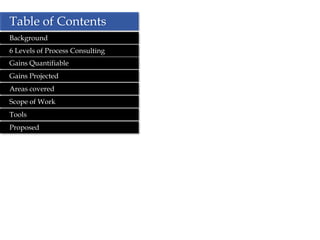
Table of Contents
Background
6 Levels of Process Consulting
Gains Quantifiable
Gains Projected
Areas covered
Scope of Work
Tools
Proposed
Background
Purpose
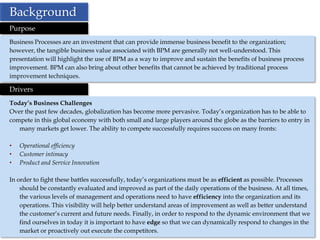
Business Processes are an investment that can provide immense business benefit to the organization;
however, the tangible business value associated with BPM are generally not well-understood. This
presentation will highlight the use of BPM as a way to improve and sustain the benefits of business process
improvement. BPM can also bring about other benefits that cannot be achieved by traditional process
improvement techniques.

Drivers
Today’s Business Challenges
Over the past few decades, globalization has become more pervasive. Today’s organization has to be able to
compete in this global economy with both small and large players around the globe as the barriers to entry in
   many markets get lower. The ability to compete successfully requires success on many fronts:

•   Operational efficiency
•   Customer intimacy
•   Product and Service Innovation

In order to fight these battles successfully, today’s organizations must be as efficient as possible. Processes
    should be constantly evaluated and improved as part of the daily operations of the business. At all times,
    the various levels of management and operations need to have efficiency into the organization and its
    operations. This visibility will help better understand areas of improvement as well as better understand
    the customer’s current and future needs. Finally, in order to respond to the dynamic environment that we
    find ourselves in today it is important to have edge so that we can dynamically respond to changes in the
    market or proactively out execute the competitors.
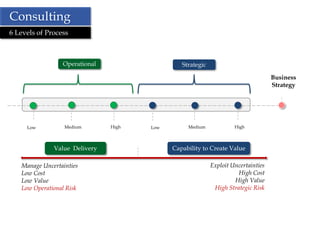
Consulting
6 Levels of Process


                 Operational                   Strategic

                                                                                   Business
                                                                                   Strategy


     Low          Medium       High   Low        Medium             High


              Value Delivery                Capability to Create Value

   Manage Uncertainties                                    Exploit Uncertainties
   Low Cost                                                          High Cost
   Low Value                                                        High Value
   Low Operational Risk                                     High Strategic Risk
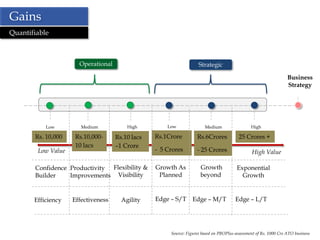
Gains
Quantifiable


                      Operational                                   Strategic

                                                                                                                  Business
                                                                                                                  Strategy


           Low         Medium           High         Low               Medium                  High

       Rs. 10,000    Rs.10,000-     Rs.10 lacs   Rs.1Crore         Rs.6Crores            25 Crores +
                     10 lacs        –1 Crore
        Low Value                                - 5 Crores        - 25 Crores                 High Value

       Confidence Productivity Flexibility &     Growth As           Growth             Exponential
       Builder    Improvements Visibility         Planned            beyond               Growth


       Efficiency   Effectiveness     Agility    Edge – S/T      Edge – M/T            Edge – L/T


                                                      Source: Figures based on PBOPlus assessment of Rs. 1000 Crs ATO business
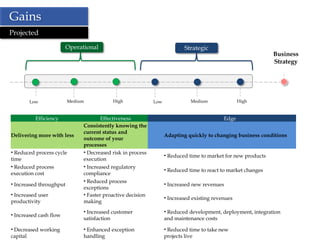
Gains
Projected

                        Operational                                       Strategic
                                                                                                              Business
                                                                                                              Strategy


       Low               Medium           High              Low              Medium               High


          Efficiency                  Effectiveness                                        Edge
                              Consistently knowing the
                              current status and
Delivering more with less                                         Adapting quickly to changing business conditions
                              outcome of your
                              processes
• Reduced process cycle       • Decreased risk in process
                                                                  • Reduced time to market for new products
time                          execution
• Reduced process             • Increased regulatory
                                                                  • Reduced time to react to market changes
execution cost                compliance
                              • Reduced process
• Increased throughput                                            • Increased new revenues
                              exceptions
• Increased user              • Faster proactive decision
                                                                  • Increased existing revenues
productivity                  making
                              • Increased customer                • Reduced development, deployment, integration
• Increased cash flow
                              satisfaction                        and maintenance costs

• Decreased working           • Enhanced exception                • Reduced time to take new
capital                       handling                            projects live
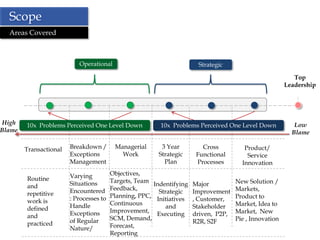
Scope
  Areas Covered


                           Operational                                  Strategic

                                                                                                            Top
                                                                                                         Leadership


High    10x Problems Perceived One Level Down             10x Problems Perceived One Level Down             Low
Blame                                                                                                      Blame

        Transactional   Breakdown /       Managerial      3 Year          Cross          Product/
                        Exceptions          Work         Strategic      Functional        Service
                        Management                         Plan         Processes       Innovation

                        Varying          Objectives,
        Routine                          Targets, Team                                New Solution /
        and             Situations                      Indentifying   Major
                        Encountered      Feedback,                                    Markets,
        repetitive                                        Strategic    Improvement
                        : Processes to   Planning, PPC,                               Product to
        work is                                          Initiatives   , Customer,
                        Handle           Continuous                                   Market, Idea to
        defined                                              and       Stakeholder
                        Exceptions       Improvement,                                 Market, New
        and                                              Executing     driven, P2P,
                        of Regular       SCM, Demand,                                 Pie , Innovation
        practiced                                                      R2R, S2F
                        Nature/          Forecast,
                                         Reporting
Complexity
 Tools and Activities


                          Operational                              Strategic
                                                                                                 Business
                                                                                                 Strategy


  Low                                                                                            High
Complexity                                                                                     Complexity

             ISO,      KAIZEN, SGA,      6 SIGMA,   PORTERS,      BPR, BPM,             BPI
  Tools      FLOW      QC TOOLS, 5S,    LEAN, TPM, BSC, SWOT       VALUE         (Business Process
             CHART                         TQM                      MAP             Innovation)

               No       Linear          Simple       Basic        Discontinuou   Break through
Thinking                                Structured   Unstructured s, Game        Thinking
             Brainer
                                                     , Complex    Changer
                                                     Structured

               1-3         4-7             8 - 12      13 – 20      21 – 100      100 + , in
Activities                                                          in Two         Three +
                                                       in One
                                                         Tier        Tiers          Tiers
Proposed
BPM Investment

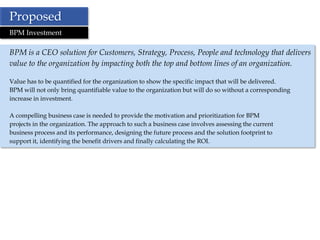
BPM is a CEO solution for Customers, Strategy, Process, People and technology that delivers
value to the organization by impacting both the top and bottom lines of an organization.

Value has to be quantified for the organization to show the specific impact that will be delivered.
BPM will not only bring quantifiable value to the organization but will do so without a corresponding
increase in investment.

A compelling business case is needed to provide the motivation and prioritization for BPM
projects in the organization. The approach to such a business case involves assessing the current
business process and its performance, designing the future process and the solution footprint to
support it, identifying the benefit drivers and finally calculating the ROI.
End of Document
Thank You


For further information, please contact:

 Name:           Vibhanshu Sharma
 Title:          Business Consultant for CXO Level
 Mobile:         +91 99100 18911
 Email:          vibhanshu@pboplus.com
Questions
                                                          Thank you

            Source: http://www.flickr.com/photos/yggg/774488265/sizes/o/in/photostream/

Process Consulting Perspective

  • 1.
    Process Consulting Perspective Presenter: Vibhanshu
  • 2.
    Table of Contents Background 6Levels of Process Consulting Gains Quantifiable Gains Projected Areas covered Scope of Work Tools Proposed
  • 3.
    Background Purpose Business Processes arean investment that can provide immense business benefit to the organization; however, the tangible business value associated with BPM are generally not well-understood. This presentation will highlight the use of BPM as a way to improve and sustain the benefits of business process improvement. BPM can also bring about other benefits that cannot be achieved by traditional process improvement techniques. Drivers Today’s Business Challenges Over the past few decades, globalization has become more pervasive. Today’s organization has to be able to compete in this global economy with both small and large players around the globe as the barriers to entry in many markets get lower. The ability to compete successfully requires success on many fronts: • Operational efficiency • Customer intimacy • Product and Service Innovation In order to fight these battles successfully, today’s organizations must be as efficient as possible. Processes should be constantly evaluated and improved as part of the daily operations of the business. At all times, the various levels of management and operations need to have efficiency into the organization and its operations. This visibility will help better understand areas of improvement as well as better understand the customer’s current and future needs. Finally, in order to respond to the dynamic environment that we find ourselves in today it is important to have edge so that we can dynamically respond to changes in the market or proactively out execute the competitors.
  • 4.
    Consulting 6 Levels ofProcess Operational Strategic Business Strategy Low Medium High Low Medium High Value Delivery Capability to Create Value Manage Uncertainties Exploit Uncertainties Low Cost High Cost Low Value High Value Low Operational Risk High Strategic Risk
  • 5.
    Gains Quantifiable Operational Strategic Business Strategy Low Medium High Low Medium High Rs. 10,000 Rs.10,000- Rs.10 lacs Rs.1Crore Rs.6Crores 25 Crores + 10 lacs –1 Crore Low Value - 5 Crores - 25 Crores High Value Confidence Productivity Flexibility & Growth As Growth Exponential Builder Improvements Visibility Planned beyond Growth Efficiency Effectiveness Agility Edge – S/T Edge – M/T Edge – L/T Source: Figures based on PBOPlus assessment of Rs. 1000 Crs ATO business
  • 6.
    Gains Projected Operational Strategic Business Strategy Low Medium High Low Medium High Efficiency Effectiveness Edge Consistently knowing the current status and Delivering more with less Adapting quickly to changing business conditions outcome of your processes • Reduced process cycle • Decreased risk in process • Reduced time to market for new products time execution • Reduced process • Increased regulatory • Reduced time to react to market changes execution cost compliance • Reduced process • Increased throughput • Increased new revenues exceptions • Increased user • Faster proactive decision • Increased existing revenues productivity making • Increased customer • Reduced development, deployment, integration • Increased cash flow satisfaction and maintenance costs • Decreased working • Enhanced exception • Reduced time to take new capital handling projects live
  • 7.
    Scope AreasCovered Operational Strategic Top Leadership High 10x Problems Perceived One Level Down 10x Problems Perceived One Level Down Low Blame Blame Transactional Breakdown / Managerial 3 Year Cross Product/ Exceptions Work Strategic Functional Service Management Plan Processes Innovation Varying Objectives, Routine Targets, Team New Solution / and Situations Indentifying Major Encountered Feedback, Markets, repetitive Strategic Improvement : Processes to Planning, PPC, Product to work is Initiatives , Customer, Handle Continuous Market, Idea to defined and Stakeholder Exceptions Improvement, Market, New and Executing driven, P2P, of Regular SCM, Demand, Pie , Innovation practiced R2R, S2F Nature/ Forecast, Reporting
  • 8.
    Complexity Tools andActivities Operational Strategic Business Strategy Low High Complexity Complexity ISO, KAIZEN, SGA, 6 SIGMA, PORTERS, BPR, BPM, BPI Tools FLOW QC TOOLS, 5S, LEAN, TPM, BSC, SWOT VALUE (Business Process CHART TQM MAP Innovation) No Linear Simple Basic Discontinuou Break through Thinking Structured Unstructured s, Game Thinking Brainer , Complex Changer Structured 1-3 4-7 8 - 12 13 – 20 21 – 100 100 + , in Activities in Two Three + in One Tier Tiers Tiers
  • 9.
    Proposed BPM Investment BPM isa CEO solution for Customers, Strategy, Process, People and technology that delivers value to the organization by impacting both the top and bottom lines of an organization. Value has to be quantified for the organization to show the specific impact that will be delivered. BPM will not only bring quantifiable value to the organization but will do so without a corresponding increase in investment. A compelling business case is needed to provide the motivation and prioritization for BPM projects in the organization. The approach to such a business case involves assessing the current business process and its performance, designing the future process and the solution footprint to support it, identifying the benefit drivers and finally calculating the ROI.
  • 10.
    End of Document ThankYou For further information, please contact: Name: Vibhanshu Sharma Title: Business Consultant for CXO Level Mobile: +91 99100 18911 Email: vibhanshu@pboplus.com
  • 11.
    Questions Thank you Source: http://www.flickr.com/photos/yggg/774488265/sizes/o/in/photostream/