QUACKERY
Grade 10 Agoho
Rodolfo E. Laycano, Jr.
Classroom Observation 1
Learning Competencies:
•Know how to report fraudulent health
services (H10CH-Ic-24).
1.Differentiate health professionals and health
fraud;
2.Describe the types of health fraud; and
3.Make a poster-slogan on choosing health
care services wisely.
Specific Objectives:
Doctor, Doctor I am sick!
DIRECTION: Name the
professionals based on the picture
being flashed on the screen and tell
their specialization. Based on the
number of letters of the given health
professional, the learner will pass it
to the next learners until it satisfies
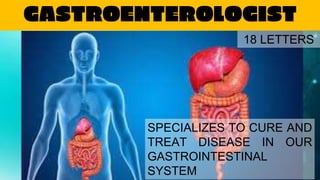
GASTROENTEROLOGIST
SPECIALIZES TO CURE AND
TREAT DISEASE IN OUR
GASTROINTESTINAL
SYSTEM
18 LETTERS
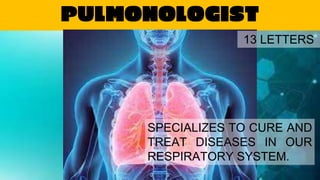
PULMONOLOGIST
SPECIALIZES TO CURE AND
TREAT DISEASES IN OUR
RESPIRATORY SYSTEM.
13 LETTERS
gynecologist
specializes in diseases and
care of the female
reproductive organs
12 LETTERS
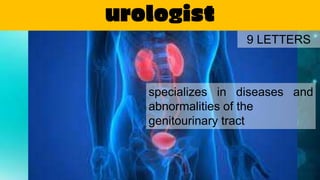
urologist
specializes in diseases and
abnormalities of the
genitourinary tract
9 LETTERS
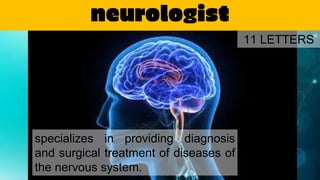
neurologist
specializes in providing diagnosis
and surgical treatment of diseases of
the nervous system.
11 LETTERS
geriatrician
an expert in the branch of
medicine or social science
dealing with the health and
care of old people.
12 LETTERS
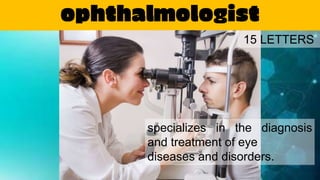
ophthalmologist
specializes in the diagnosis
and treatment of eye
diseases and disorders.
15 LETTERS
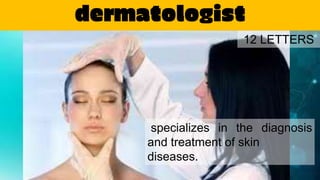
dermatologist
specializes in the diagnosis
and treatment of skin
diseases.
12 LETTERS
pediatrician
specializes in children’s health
care and treatment of
diseases.
12 LETTERS
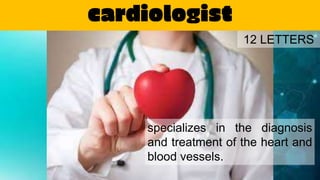
cardiologist
specializes in the diagnosis
and treatment of the heart and
blood vessels.
12 LETTERS
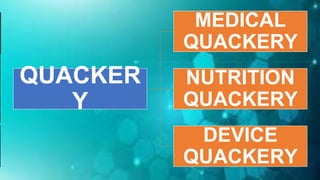
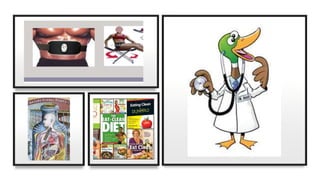
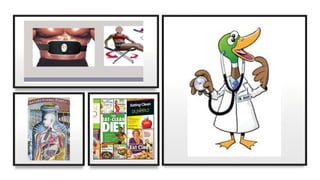
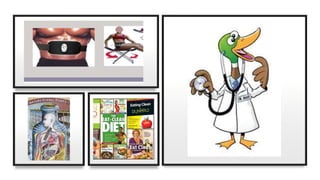
QUACKER
Y
MEDICAL
QUACKERY
NUTRITION
QUACKERY
DEVICE
QUACKERY
PICTURE ANALYSIS
PICTURE ANALYSIS
Process Questions:
1. What is the role of an
albularyo in Filipino
culture?
2. How does an
albularyo diagnose
illnesses?
3. What kinds of
treatments do albularyos
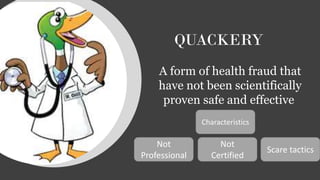
QUACKERY
A form of health fraud that
have not been scientifically
proven safe and effective
Not
Professional
Not
Certified
Scare tactics
Characteristics
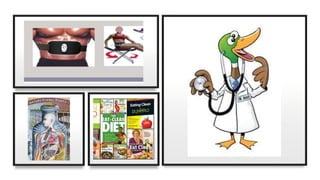
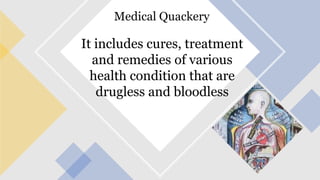
Medical Quackery
It includes cures, treatment
and remedies of various
health condition that are
drugless and bloodless
Nutrition
Quackery
It involves promotion of food
and other nutritional
practices that claim to
be all natural
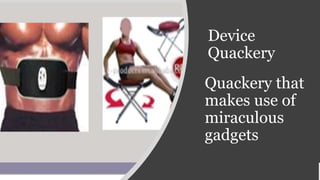
Device
Quackery
Quackery that
makes use of
miraculous
gadgets
Why do people fall for quackery?
1. Desperation: When people are suffering
from serious illnesses or chronic conditions
and traditional medicine has not provided
relief, they may become desperate and
willing to try anything, even if it lacks
scientific evidence. Quacks often prey on
these vulnerable individuals.
Why do people fall for quackery?
2. Lack of Information: Some individuals
may not have access to accurate and
reliable health information. They might rely
on anecdotal stories, word-of-mouth
recommendations, or information from non-
credible sources.
Why do people fall for quackery?
3. Trust in Personal Testimonials:
Testimonials from people who claim to have
experienced miraculous results with a
quack treatment can be persuasive. People
often trust the experiences of others, even if
they are not backed by scientific evidence.
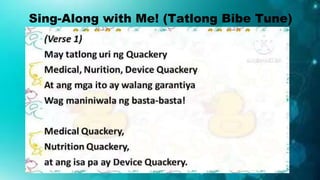
Sing-Along with Me! (Tatlong Bibe Tune)
1.What is again quackery?
2.What are the forms of quackery?
3.Why do people fall for quackery?
4.What is the difference between Physicians
and Quackery?
5.If this happens to you, to whom are you going
to report this kind of fraud?
6.List down at least 5 ways to protect you from
∙ The class will be divided into groups with 8-10
members only.
∙ Work cooperatively and collaboratively.
∙ Prepare the materials intended to bring for
today’s activity (illustration board, coloring
materials, pentel pen, etc.)
∙ In an illustration board, Create a poster-slogan
to combat people from quackery.
POSTER-SLOGAN
CRITERIA:
1. Theme/Message (5)
2. Presentation (5)
3. Cooperation/Teamwork (5)
Perfect Points (15)
∙ TRUE OR FALSE: Write TRUE if the statement is correct and
FALSE if not. Write your answers in your activity notebook.
∙ 1. Quackery refers to legitimate and evidence-based medical
practices.
∙ 2. Quacks often lack proper medical training or credentials.
∙ 3. Quackery can be harmful to individuals' health.
∙ 4. Regulatory agencies play a crucial role in combating quackery.
∙ 5. Quackery is always easy to identify because it involves obviously
absurd treatments.
TRUE OR FALSE
∙ TRUE OR FALSE: Write TRUE if the statement is correct and
FALSE if not. Write your answers in your activity notebook.
∙ 1. Quackery refers to legitimate and evidence-based medical
practices. (False)
∙ 2. Quacks often lack proper medical training or credentials. (True)
∙ 3. Quackery can be harmful to individuals' health. (True)
∙ 4. Regulatory agencies play a crucial role in combating quackery.
(True)
∙ 5. Quackery is always easy to identify because it involves obviously
absurd treatments. (False)
TRUE OR FALSE
PHSYICAL
• -
PSYCHOLOGICAL
• -
ASSIGNMENT:
List down the possible dangers of quackery to person’s
physical and psychological well-being.
See you next time!

Q1-COT-HEALTH10-QUACKERY-PPT.pptx

  • 1.
    QUACKERY Grade 10 Agoho RodolfoE. Laycano, Jr. Classroom Observation 1
  • 2.
    Learning Competencies: •Know howto report fraudulent health services (H10CH-Ic-24). 1.Differentiate health professionals and health fraud; 2.Describe the types of health fraud; and 3.Make a poster-slogan on choosing health care services wisely. Specific Objectives:
  • 3.
    Doctor, Doctor Iam sick! DIRECTION: Name the professionals based on the picture being flashed on the screen and tell their specialization. Based on the number of letters of the given health professional, the learner will pass it to the next learners until it satisfies
  • 4.
    GASTROENTEROLOGIST SPECIALIZES TO CUREAND TREAT DISEASE IN OUR GASTROINTESTINAL SYSTEM 18 LETTERS
  • 5.
    PULMONOLOGIST SPECIALIZES TO CUREAND TREAT DISEASES IN OUR RESPIRATORY SYSTEM. 13 LETTERS
  • 6.
    gynecologist specializes in diseasesand care of the female reproductive organs 12 LETTERS
  • 7.
    urologist specializes in diseasesand abnormalities of the genitourinary tract 9 LETTERS
  • 8.
    neurologist specializes in providingdiagnosis and surgical treatment of diseases of the nervous system. 11 LETTERS
  • 9.
    geriatrician an expert inthe branch of medicine or social science dealing with the health and care of old people. 12 LETTERS
  • 10.
    ophthalmologist specializes in thediagnosis and treatment of eye diseases and disorders. 15 LETTERS
  • 11.
    dermatologist specializes in thediagnosis and treatment of skin diseases. 12 LETTERS

  • 12.
    pediatrician specializes in children’shealth care and treatment of diseases. 12 LETTERS
  • 13.
    cardiologist specializes in thediagnosis and treatment of the heart and blood vessels. 12 LETTERS
  • 15.
  • 16.
  • 17.
    PICTURE ANALYSIS Process Questions: 1.What is the role of an albularyo in Filipino culture? 2. How does an albularyo diagnose illnesses? 3. What kinds of treatments do albularyos
  • 19.
    QUACKERY A form ofhealth fraud that have not been scientifically proven safe and effective Not Professional Not Certified Scare tactics Characteristics
  • 21.
    Medical Quackery It includescures, treatment and remedies of various health condition that are drugless and bloodless
  • 23.
    Nutrition Quackery It involves promotionof food and other nutritional practices that claim to be all natural
  • 25.
  • 26.
    Why do peoplefall for quackery? 1. Desperation: When people are suffering from serious illnesses or chronic conditions and traditional medicine has not provided relief, they may become desperate and willing to try anything, even if it lacks scientific evidence. Quacks often prey on these vulnerable individuals.
  • 27.
    Why do peoplefall for quackery? 2. Lack of Information: Some individuals may not have access to accurate and reliable health information. They might rely on anecdotal stories, word-of-mouth recommendations, or information from non- credible sources.
  • 28.
    Why do peoplefall for quackery? 3. Trust in Personal Testimonials: Testimonials from people who claim to have experienced miraculous results with a quack treatment can be persuasive. People often trust the experiences of others, even if they are not backed by scientific evidence.
  • 29.
    Sing-Along with Me!(Tatlong Bibe Tune)
  • 31.
    1.What is againquackery? 2.What are the forms of quackery? 3.Why do people fall for quackery? 4.What is the difference between Physicians and Quackery? 5.If this happens to you, to whom are you going to report this kind of fraud? 6.List down at least 5 ways to protect you from
  • 33.
    ∙ The classwill be divided into groups with 8-10 members only. ∙ Work cooperatively and collaboratively. ∙ Prepare the materials intended to bring for today’s activity (illustration board, coloring materials, pentel pen, etc.) ∙ In an illustration board, Create a poster-slogan to combat people from quackery. POSTER-SLOGAN CRITERIA: 1. Theme/Message (5) 2. Presentation (5) 3. Cooperation/Teamwork (5) Perfect Points (15)
  • 34.
    ∙ TRUE ORFALSE: Write TRUE if the statement is correct and FALSE if not. Write your answers in your activity notebook. ∙ 1. Quackery refers to legitimate and evidence-based medical practices. ∙ 2. Quacks often lack proper medical training or credentials. ∙ 3. Quackery can be harmful to individuals' health. ∙ 4. Regulatory agencies play a crucial role in combating quackery. ∙ 5. Quackery is always easy to identify because it involves obviously absurd treatments. TRUE OR FALSE
  • 35.
    ∙ TRUE ORFALSE: Write TRUE if the statement is correct and FALSE if not. Write your answers in your activity notebook. ∙ 1. Quackery refers to legitimate and evidence-based medical practices. (False) ∙ 2. Quacks often lack proper medical training or credentials. (True) ∙ 3. Quackery can be harmful to individuals' health. (True) ∙ 4. Regulatory agencies play a crucial role in combating quackery. (True) ∙ 5. Quackery is always easy to identify because it involves obviously absurd treatments. (False) TRUE OR FALSE
  • 36.
    PHSYICAL • - PSYCHOLOGICAL • - ASSIGNMENT: Listdown the possible dangers of quackery to person’s physical and psychological well-being.
  • 37.