QCon北京2014大会 4月17—19日
@InfoQ

infoqchina
Performance Methodology
@ Salesforce
Tina Luo(Performance Engineer)
Why Do We Care Performance?
 User Experience
 Decrease the hardware cost
 More customer can be served
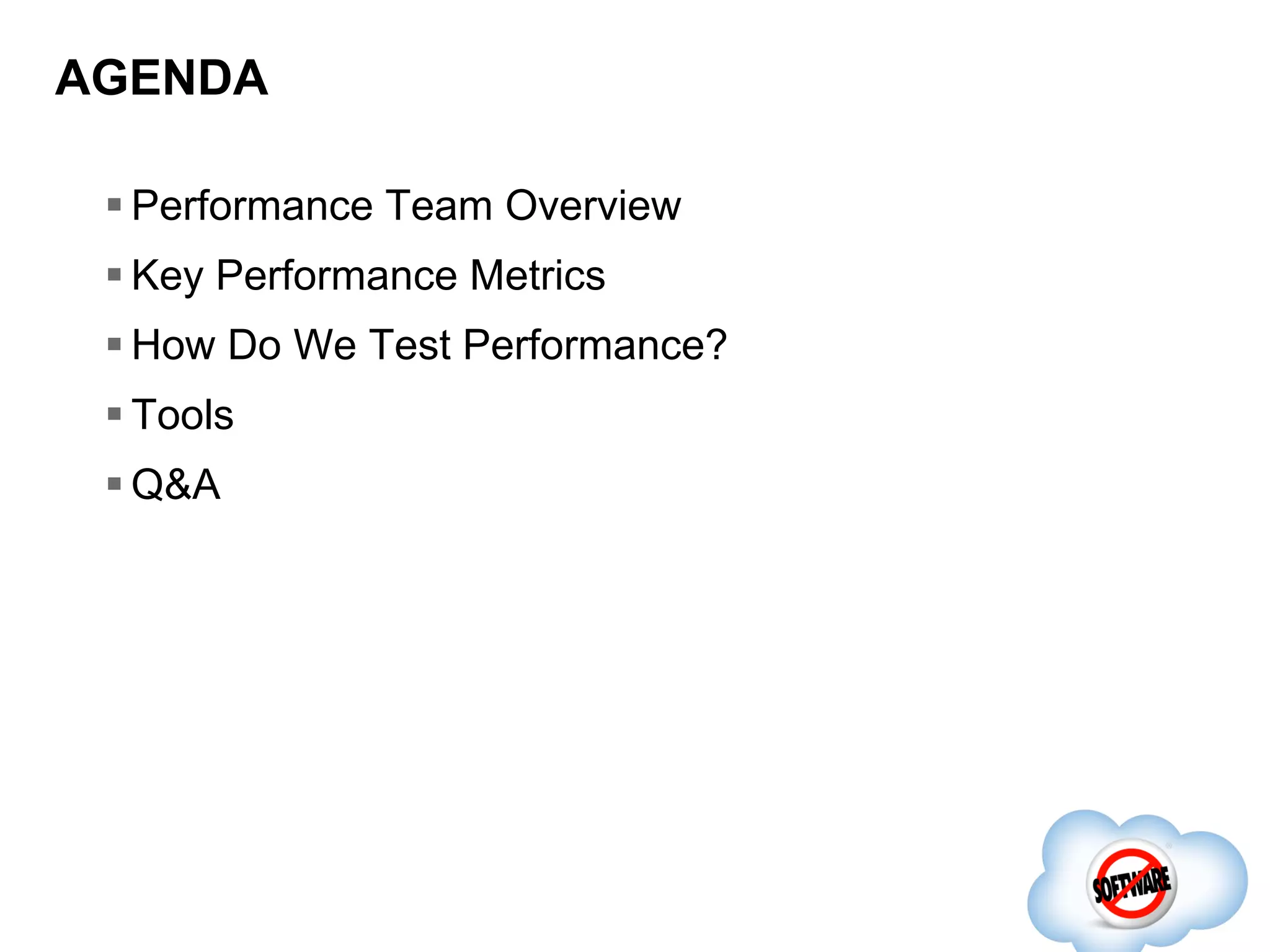
AGENDA
 Performance Team Overview
 Key Performance Metrics
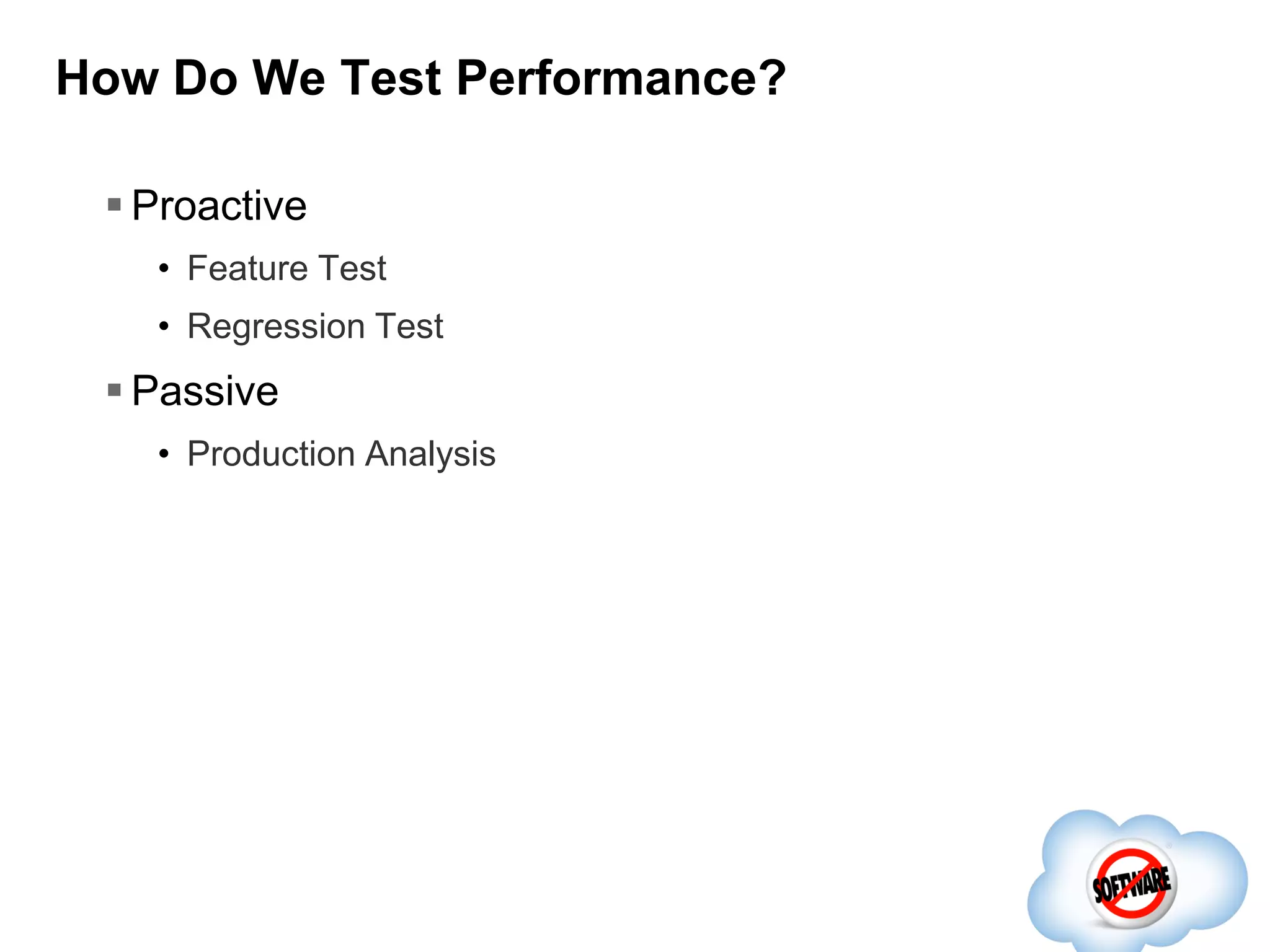
 How Do We Test Performance?

 Tools
 Q&A
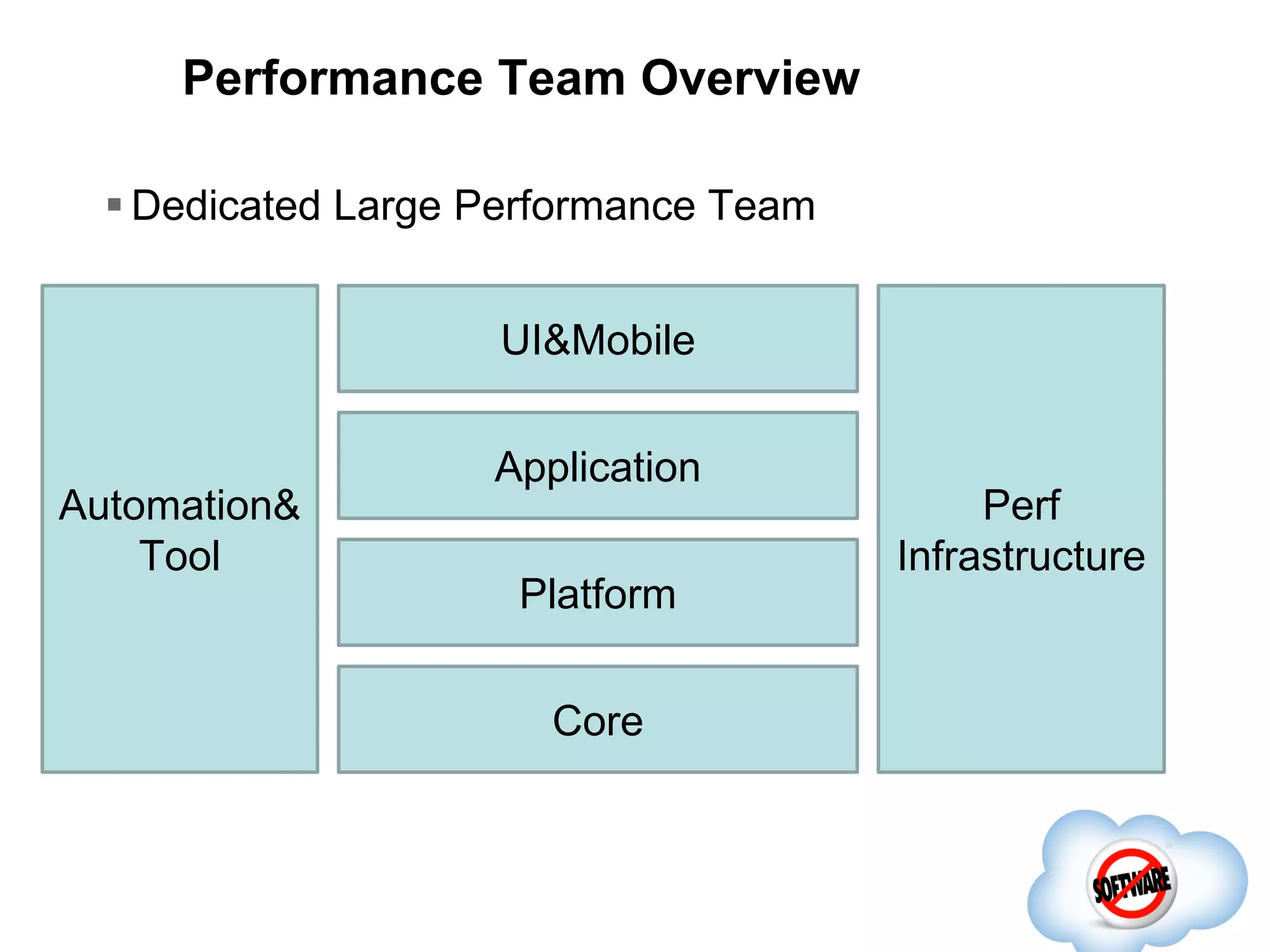
Performance Team Overview
 Dedicated Large Performance Team
UI&Mobile

Automation&
Tool

Application
Platform
Core

Perf
Infrastructure
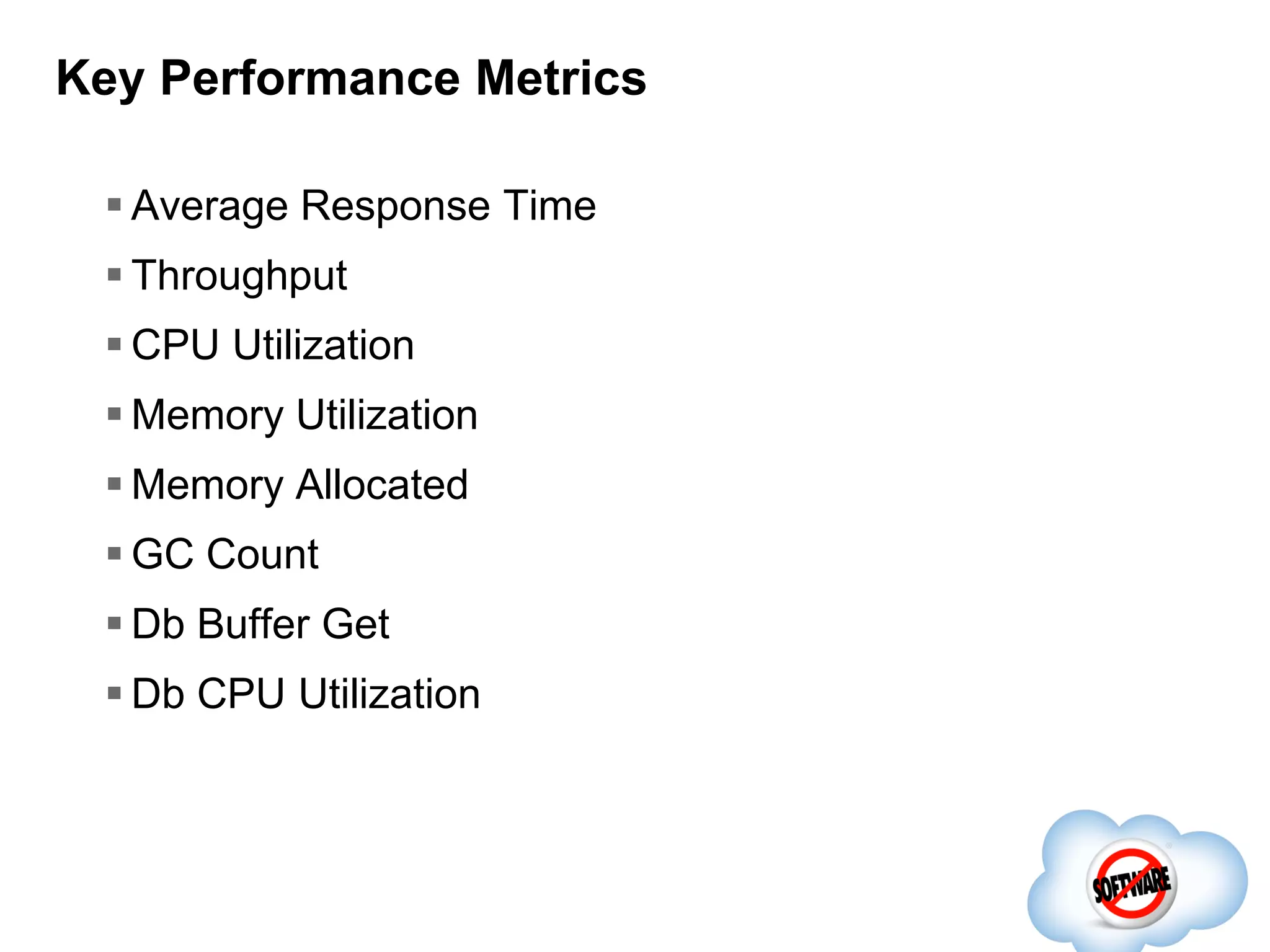
Key Performance Metrics
 Average Response Time
 Throughput
 CPU Utilization

 Memory Utilization
 Memory Allocated
 GC Count
 Db Buffer Get
 Db CPU Utilization
How Do We Test Performance?
 Proactive
• Feature Test
• Regression Test

 Passive
• Production Analysis
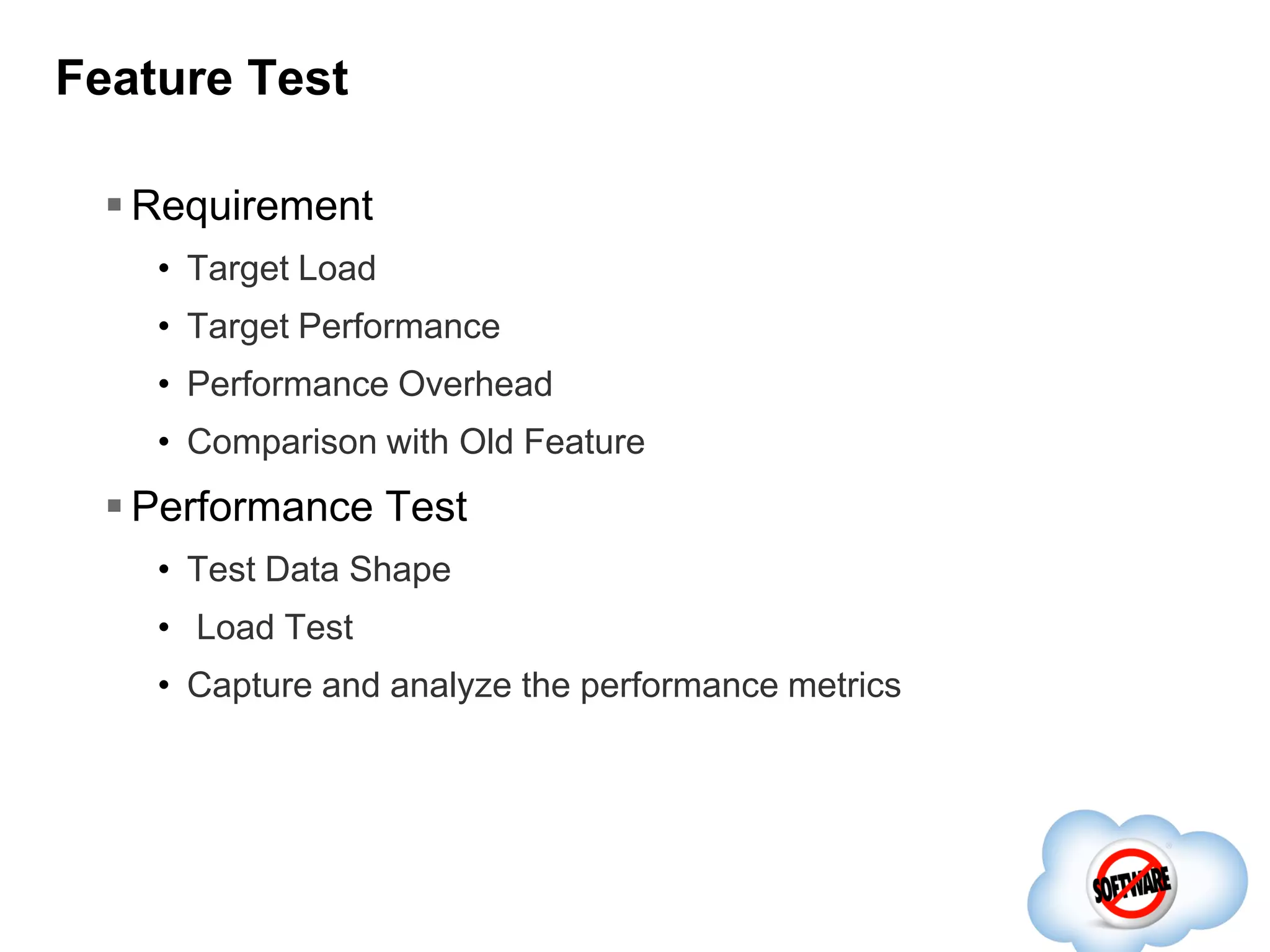
Feature Test
 Requirement
• Target Load
• Target Performance

• Performance Overhead
• Comparison with Old Feature

 Performance Test
• Test Data Shape
• Load Test
• Capture and analyze the performance metrics
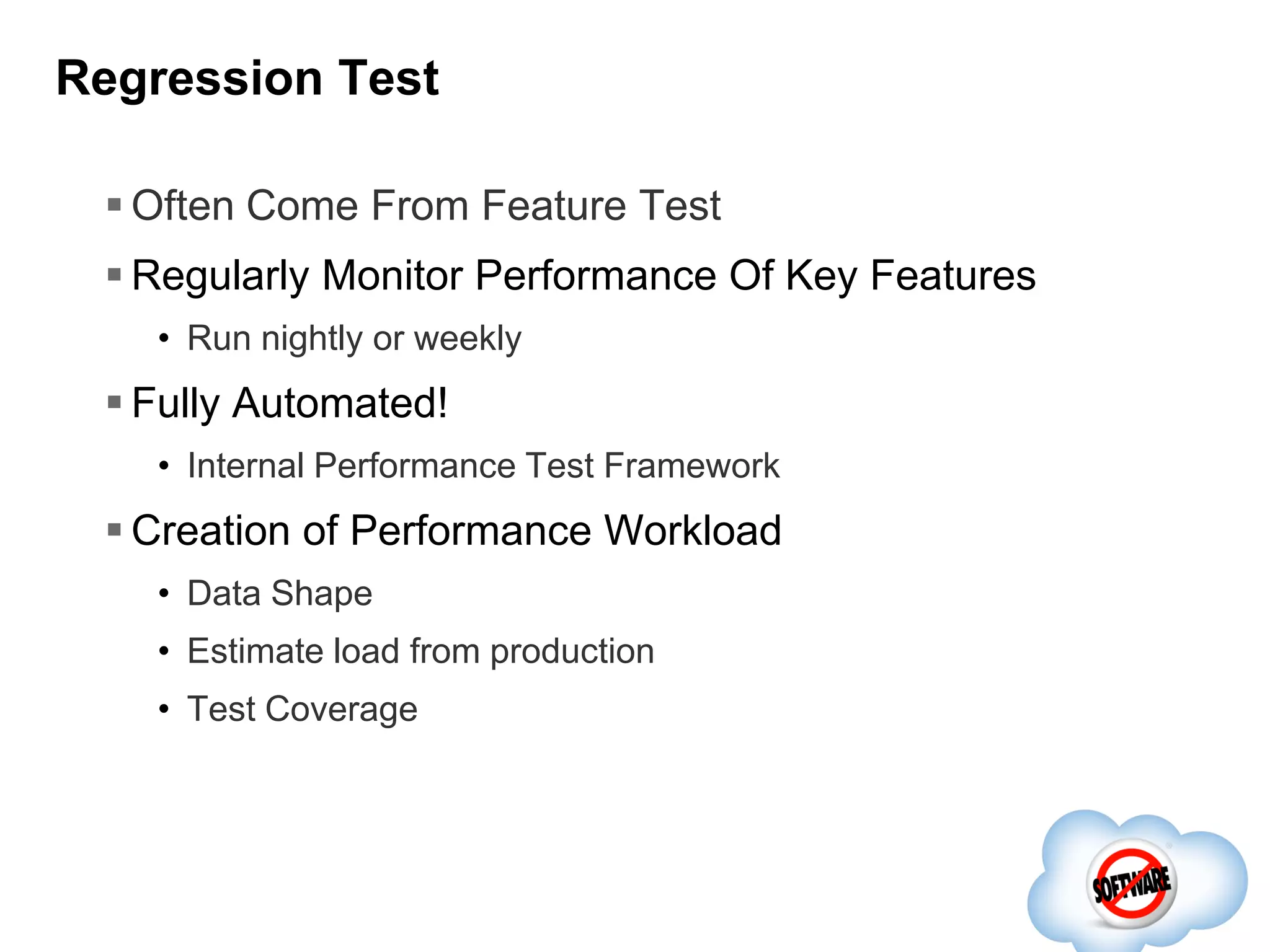
Regression Test
 Often Come From Feature Test
 Regularly Monitor Performance Of Key Features
• Run nightly or weekly

 Fully Automated!
• Internal Performance Test Framework

 Creation of Performance Workload
• Data Shape
• Estimate load from production
• Test Coverage
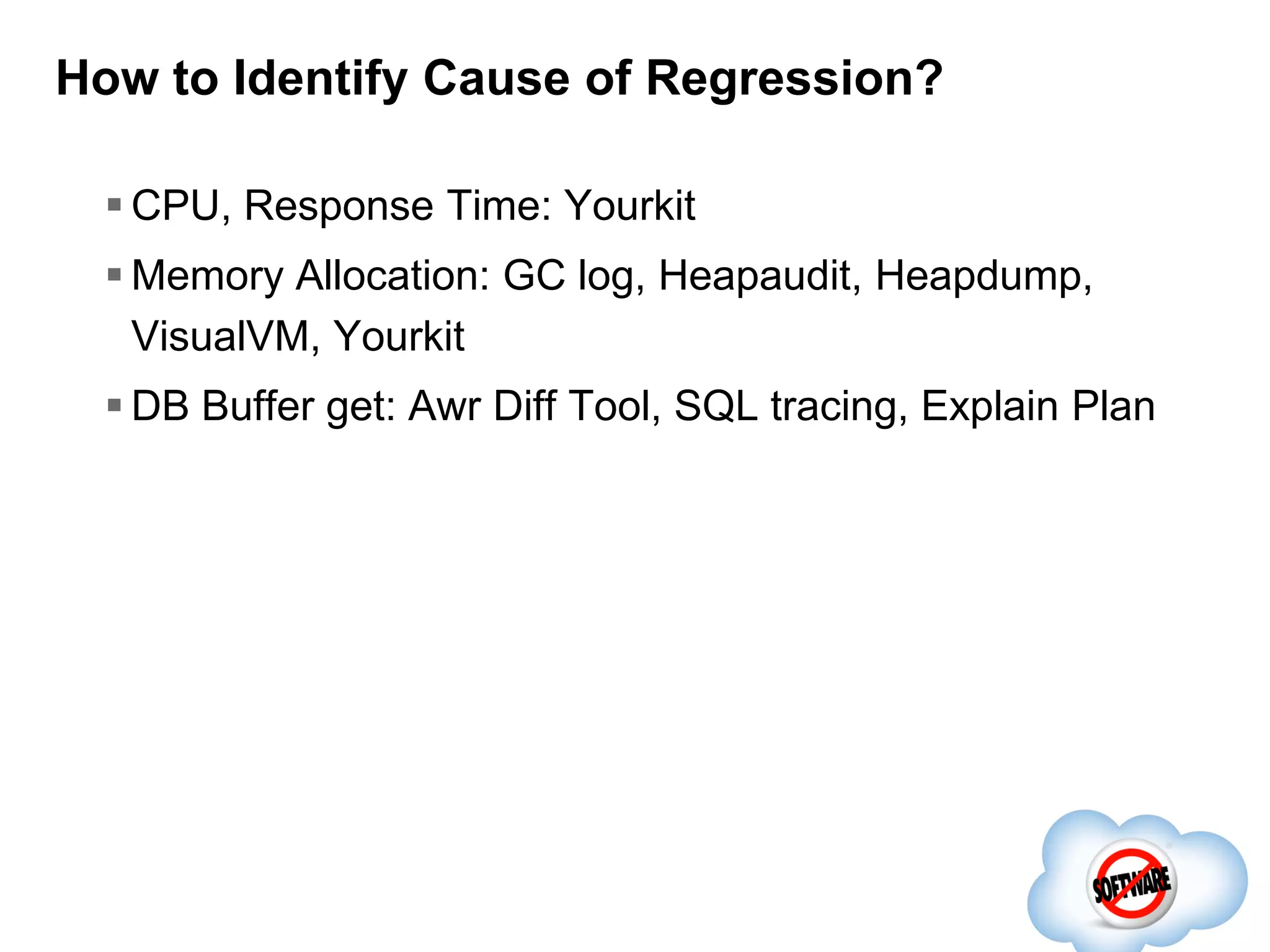
How to Identify Cause of Regression?
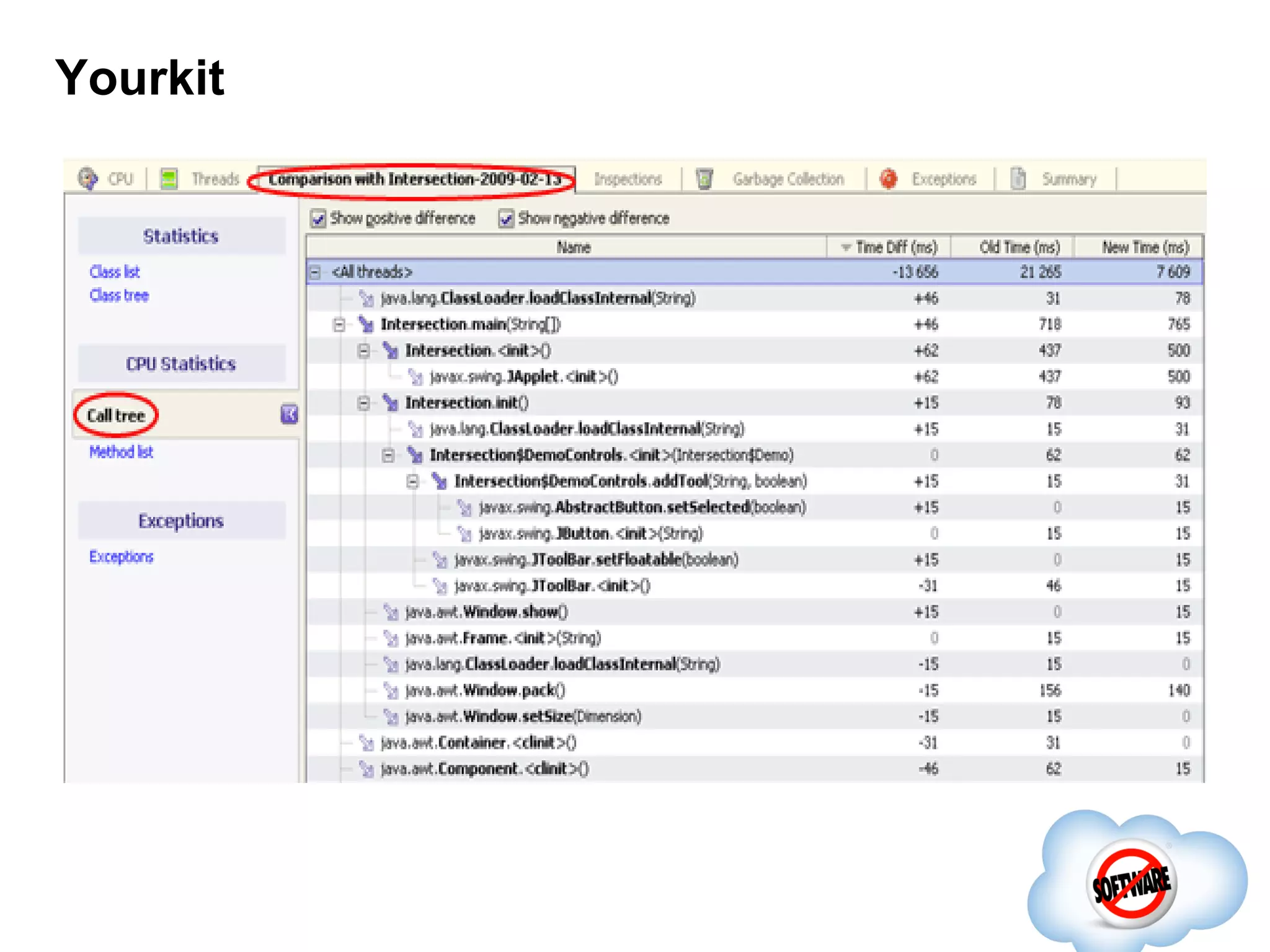
 CPU, Response Time: Yourkit
 Memory Allocation: GC log, Heapaudit, Heapdump,
VisualVM, Yourkit

 DB Buffer get: Awr Diff Tool, SQL tracing, Explain Plan
Production Analysis
 Production Performance Monitor Tools
• Dashboard

 Splunk
• 1. What features do they use
• 2. How the features are used
• 3. How do they perform in production
Some Tools Used
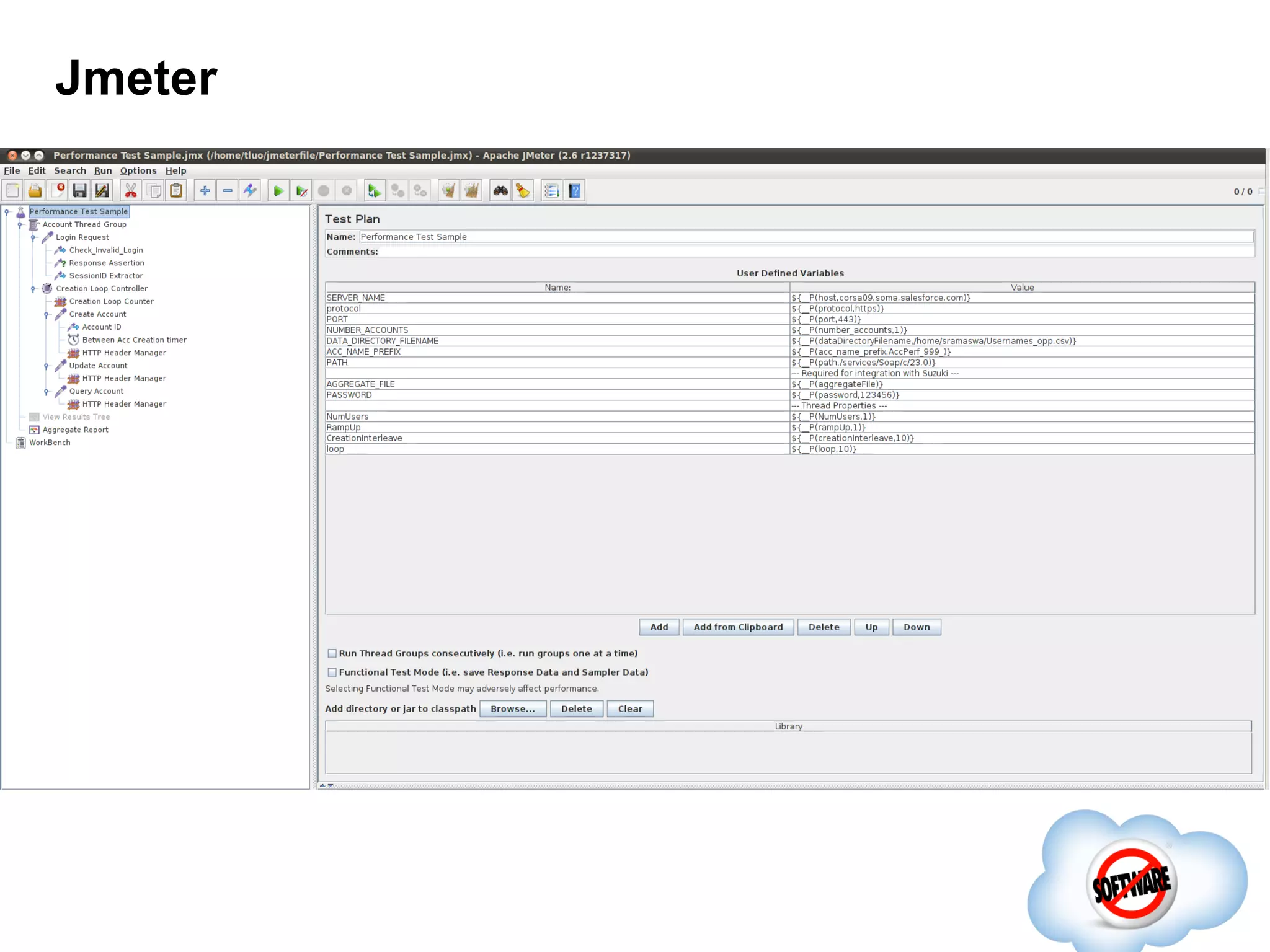
 Jmeter
• Load Generator
• Integrated with Internal performance test framework
Jmeter
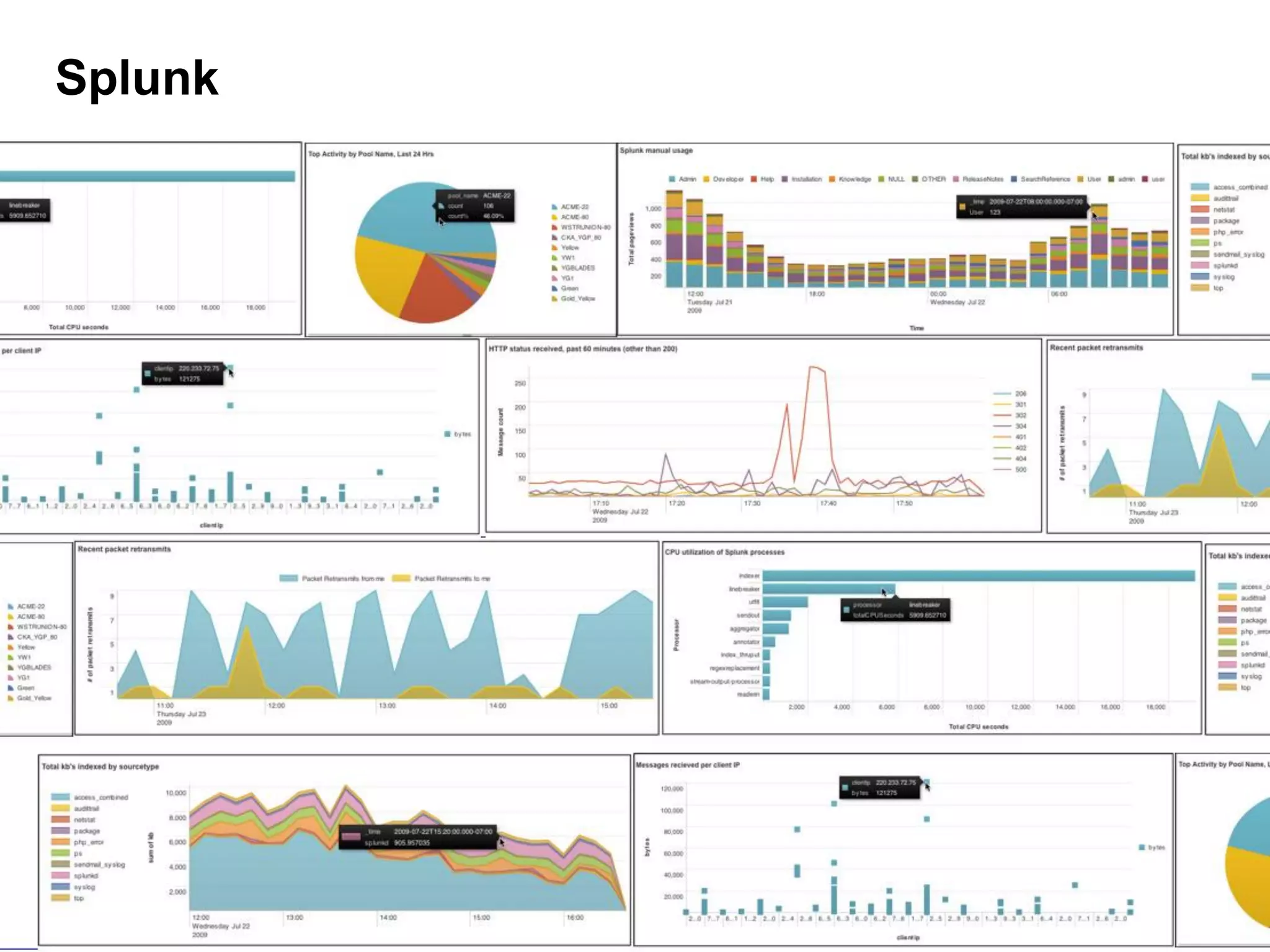
Splunk
 Log analyzing tool
 Search, monitor, and analyze machine-generated big
data

 Production analysis
 Internal performance run log analyzer
 Data Shape
Splunk
Yourkit
 Java Profiler
• CPU Profilling
• Memory Profilling

 Help Find CPU Hotspot, cause of the regression,
memory leak.
Yourkit
HeapAudit
 Java Memory Profiller
 Open source project by Foursquare
 Java agent built on top of ASM

 Three modes: Static, Dynamic, Hybrid
 Only collect allocation of objects you are interested in

https://github.com/foursquare/heapaudit
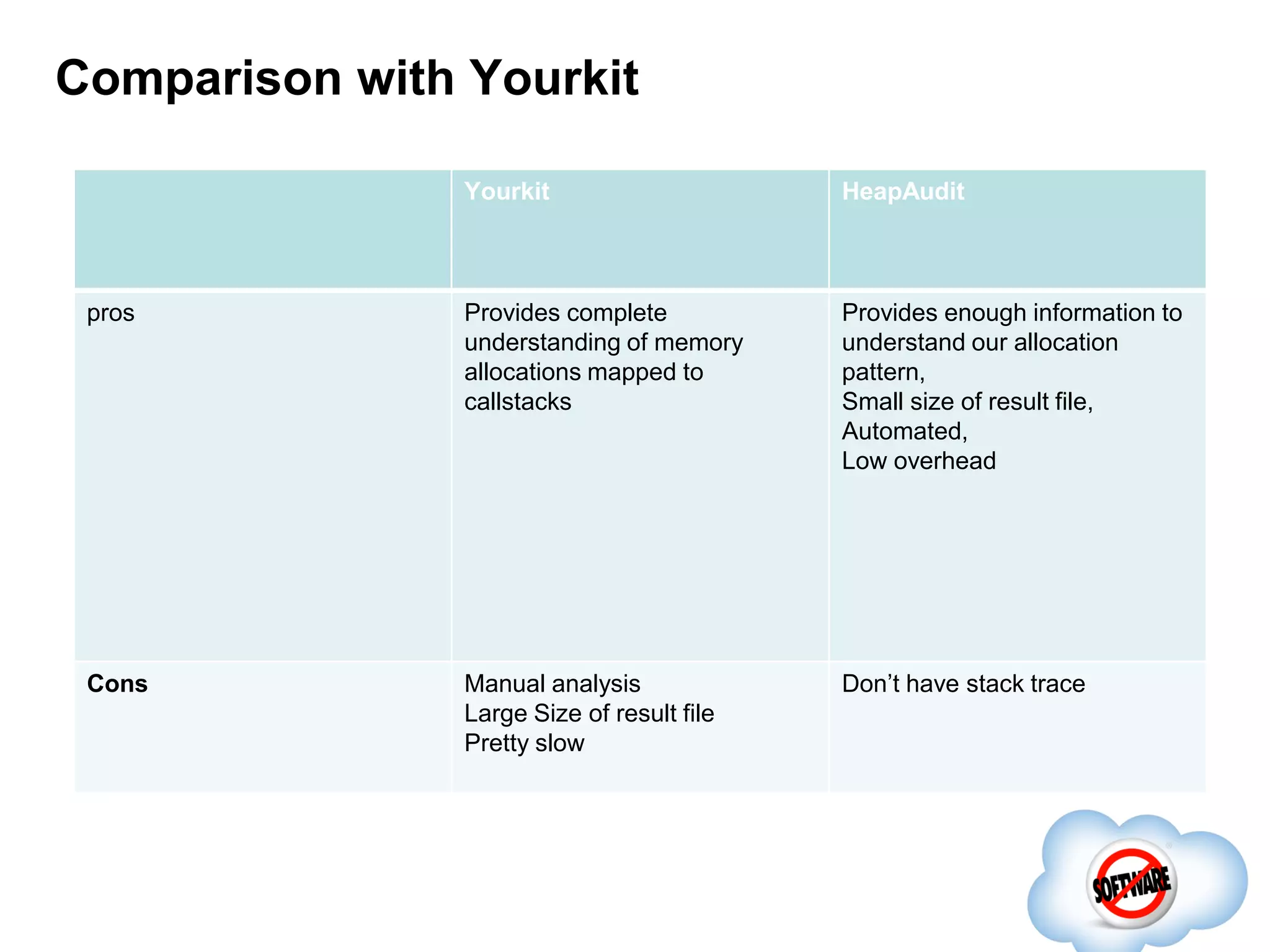
Comparison with Yourkit
Yourkit

HeapAudit

pros

Provides complete
understanding of memory
allocations mapped to
callstacks

Provides enough information to
understand our allocation
pattern,
Small size of result file,
Automated,
Low overhead

Cons

Manual analysis
Large Size of result file
Pretty slow

Don’t have stack trace
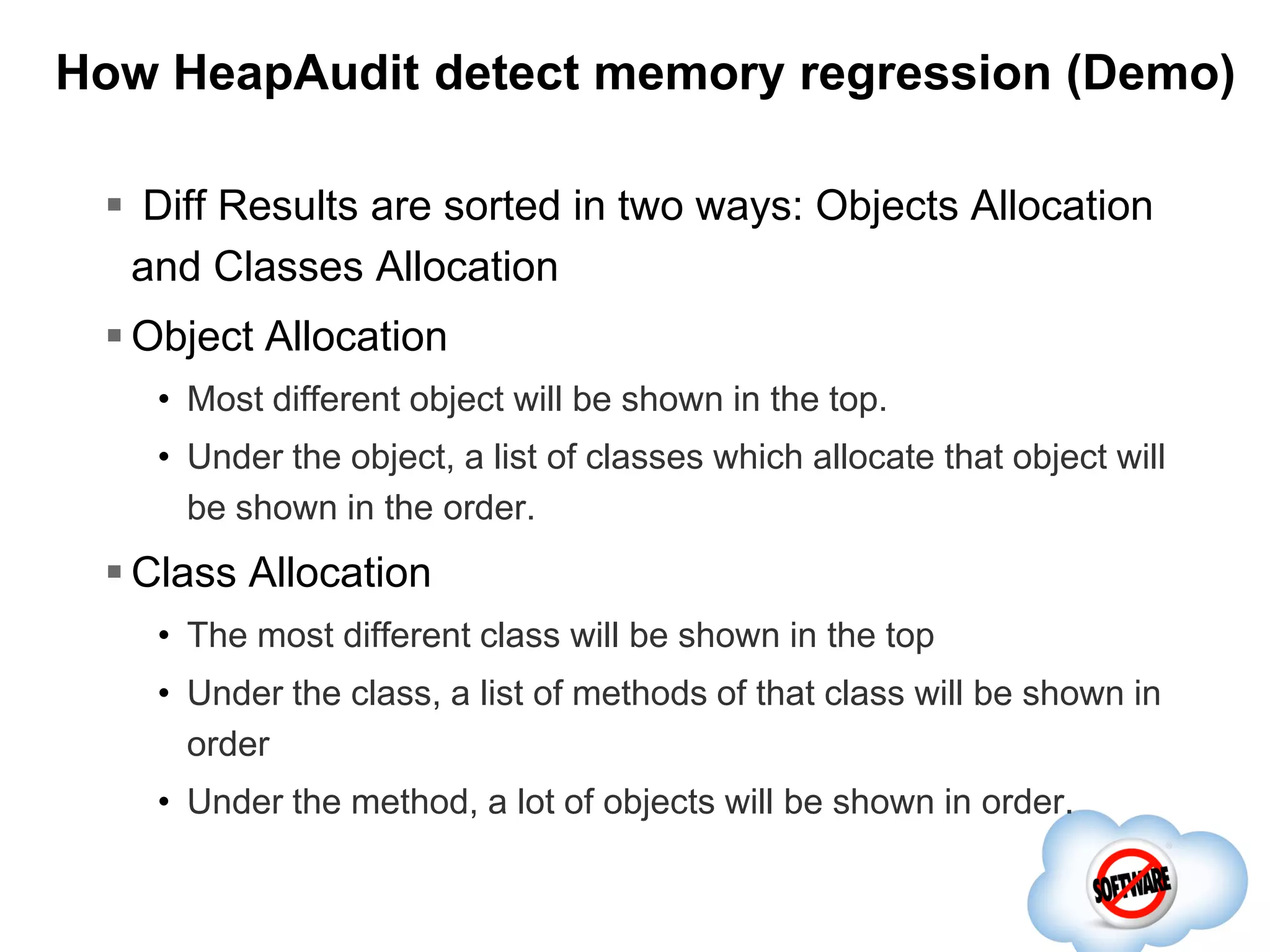
How HeapAudit detect memory regression (Demo)
 Diff Results are sorted in two ways: Objects Allocation
and Classes Allocation
 Object Allocation
• Most different object will be shown in the top.
• Under the object, a list of classes which allocate that object will
be shown in the order.

 Class Allocation
• The most different class will be shown in the top
• Under the class, a list of methods of that class will be shown in
order
• Under the method, a lot of objects will be shown in order.
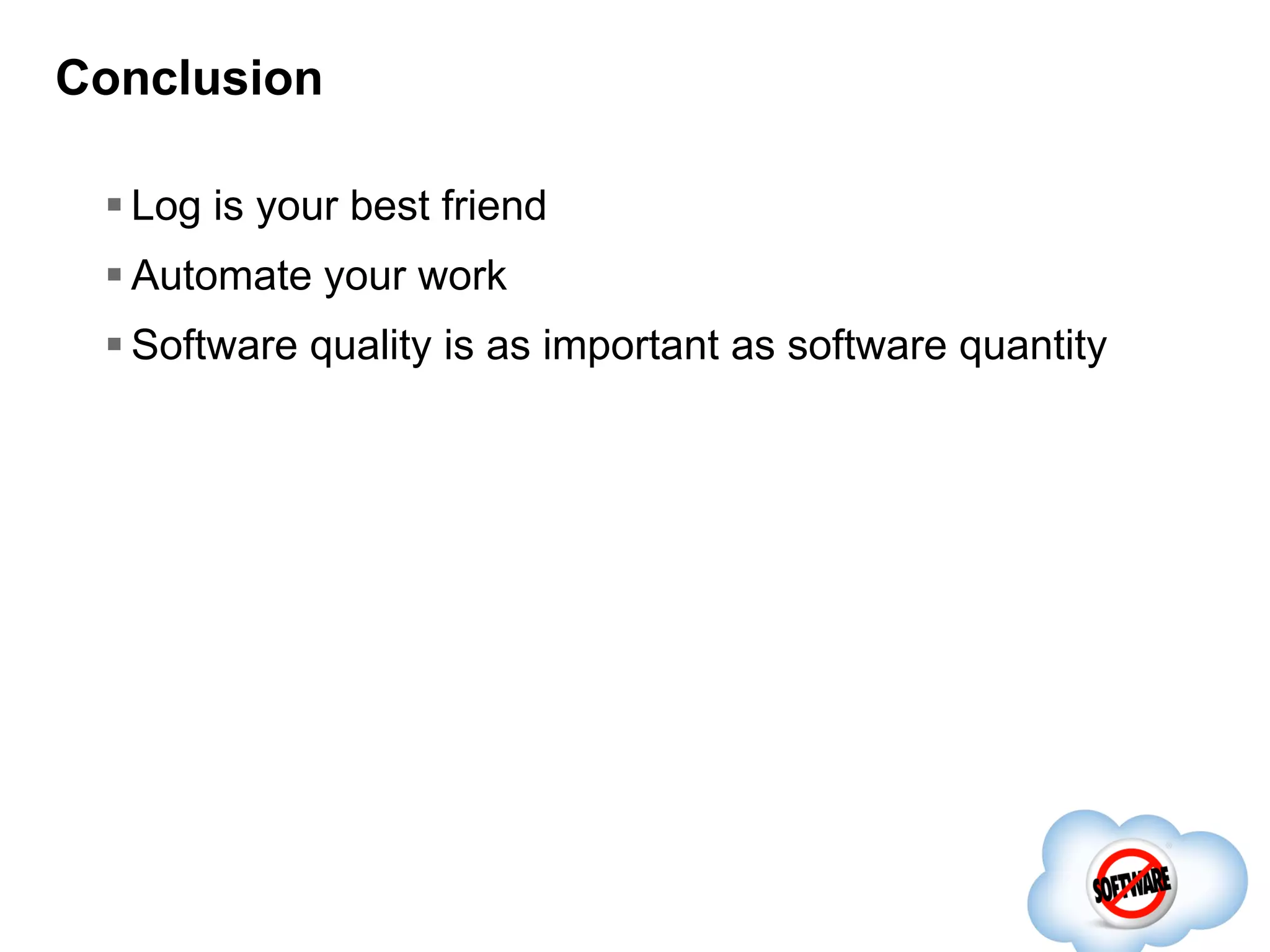
Conclusion
 Log is your best friend
 Automate your work
 Software quality is as important as software quantity
Thanks!
Question?
特别感谢
QCon上海合作伙伴

Q con shanghai2013-罗婷-performance methodology

  • 1.
  • 2.
  • 3.
  • 4.
    Why Do WeCare Performance?  User Experience  Decrease the hardware cost  More customer can be served
  • 5.
    AGENDA  Performance TeamOverview  Key Performance Metrics  How Do We Test Performance?  Tools  Q&A
  • 6.
    Performance Team Overview Dedicated Large Performance Team UI&Mobile Automation& Tool Application Platform Core Perf Infrastructure
  • 7.
    Key Performance Metrics Average Response Time  Throughput  CPU Utilization  Memory Utilization  Memory Allocated  GC Count  Db Buffer Get  Db CPU Utilization
  • 8.
    How Do WeTest Performance?  Proactive • Feature Test • Regression Test  Passive • Production Analysis
  • 9.
    Feature Test  Requirement •Target Load • Target Performance • Performance Overhead • Comparison with Old Feature  Performance Test • Test Data Shape • Load Test • Capture and analyze the performance metrics
  • 10.
    Regression Test  OftenCome From Feature Test  Regularly Monitor Performance Of Key Features • Run nightly or weekly  Fully Automated! • Internal Performance Test Framework  Creation of Performance Workload • Data Shape • Estimate load from production • Test Coverage
  • 11.
    How to IdentifyCause of Regression?  CPU, Response Time: Yourkit  Memory Allocation: GC log, Heapaudit, Heapdump, VisualVM, Yourkit  DB Buffer get: Awr Diff Tool, SQL tracing, Explain Plan
  • 12.
    Production Analysis  ProductionPerformance Monitor Tools • Dashboard  Splunk • 1. What features do they use • 2. How the features are used • 3. How do they perform in production
  • 13.
    Some Tools Used Jmeter • Load Generator • Integrated with Internal performance test framework
  • 14.
  • 15.
    Splunk  Log analyzingtool  Search, monitor, and analyze machine-generated big data  Production analysis  Internal performance run log analyzer  Data Shape
  • 16.
  • 17.
    Yourkit  Java Profiler •CPU Profilling • Memory Profilling  Help Find CPU Hotspot, cause of the regression, memory leak.
  • 18.
  • 19.
    HeapAudit  Java MemoryProfiller  Open source project by Foursquare  Java agent built on top of ASM  Three modes: Static, Dynamic, Hybrid  Only collect allocation of objects you are interested in https://github.com/foursquare/heapaudit
  • 20.
    Comparison with Yourkit Yourkit HeapAudit pros Providescomplete understanding of memory allocations mapped to callstacks Provides enough information to understand our allocation pattern, Small size of result file, Automated, Low overhead Cons Manual analysis Large Size of result file Pretty slow Don’t have stack trace
  • 21.
    How HeapAudit detectmemory regression (Demo)  Diff Results are sorted in two ways: Objects Allocation and Classes Allocation  Object Allocation • Most different object will be shown in the top. • Under the object, a list of classes which allocate that object will be shown in the order.  Class Allocation • The most different class will be shown in the top • Under the class, a list of methods of that class will be shown in order • Under the method, a lot of objects will be shown in order.
  • 22.
    Conclusion  Log isyour best friend  Automate your work  Software quality is as important as software quantity
  • 23.
  • 24.
  • 25.