PBL
Jovita Flores Palos
English Program Directora
GOBIERNO DE PUERTO RICO
DEPARTAMENTO DE EDUCACIÓN
Subsecretaría para Asuntos Académicos
Objetive
 What is Project-Based Learning?
 Why PBL?
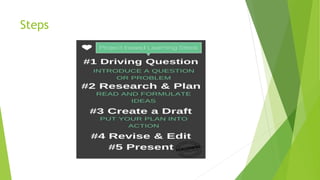
 PBL Steps
 Planning with PBL
Project Based Learning
Is a learning experience in which your students
collaborate to solve a problem in the real-world. It
incorporates standards across content areas, and
takes place over an extended period of time. In
contrast, a project (not to be confused with PBL),
may only take a day or two, only incorporate one
subject area, and may not require your students to
collaborate. Projects have value, but they are not
the same as project based learning
Reasons
 PBL makes school more engaging for students.
 PBL improves learning.
 PBL builds success skills for college, career, and life.
 PBL helps address standards.
 PBL provides opportunities for students to use technology.
 PBL makes teaching more enjoyable and rewarding.
 PBL connects students and schools with communities and the real world.
 PBL promotes educational equity.
Steps
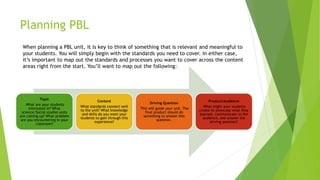
Planning PBL
Topic
What are your students
interested in? What
science/Social studies units
are coming up? What problem
are you encountering in your
classroom?
Content
What standards connect well
to the unit? What knowledge
and skills do you want your
students to gain through this
experience?
Driving Question
This will guide your unit. The
final product should do
something to answer this
question.
Product/Audience
What might your students
create to showcase what they
learned, communicate to the
audience, and answer the
driving question?
When planning a PBL unit, it is key to think of something that is relevant and meaningful to
your students. You will simply begin with the standards you need to cover. In either case,
it’s important to map out the standards and processes you want to cover across the content
areas right from the start. You’ll want to map out the following:
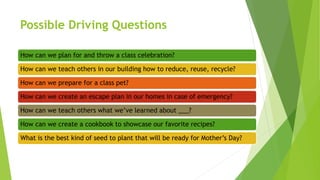
Possible Driving Questions
How can we plan for and throw a class celebration?
How can we teach others in our building how to reduce, reuse, recycle?
How can we prepare for a class pet?
How can we create an escape plan in our homes in case of emergency?
How can we teach others what we’ve learned about ___?
How can we create a cookbook to showcase our favorite recipes?
What is the best kind of seed to plant that will be ready for Mother’s Day?
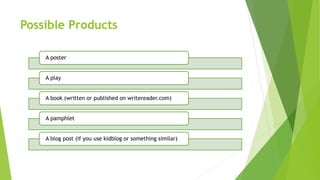
Possible Products
A poster
A play
A book (written or published on writereader.com)
A pamphlet
A blog post (if you use kidblog or something similar)
Possible Audiences
Older students in your school
Another class (invite another class over!)
Parents (you can invite them in on your own or plan PBL units around
open house, back-to-school night, etc. so they will already be there)
Other teachers
The internet (think class twitter or Instagram account, school Facebook
page, etc.)
Community members
Local businesses
PBL presentation

PBL presentation

  • 1.
    PBL Jovita Flores Palos EnglishProgram Directora GOBIERNO DE PUERTO RICO DEPARTAMENTO DE EDUCACIÓN Subsecretaría para Asuntos Académicos
  • 2.
    Objetive  What isProject-Based Learning?  Why PBL?  PBL Steps  Planning with PBL
  • 3.
    Project Based Learning Isa learning experience in which your students collaborate to solve a problem in the real-world. It incorporates standards across content areas, and takes place over an extended period of time. In contrast, a project (not to be confused with PBL), may only take a day or two, only incorporate one subject area, and may not require your students to collaborate. Projects have value, but they are not the same as project based learning
  • 4.
    Reasons  PBL makesschool more engaging for students.  PBL improves learning.  PBL builds success skills for college, career, and life.  PBL helps address standards.  PBL provides opportunities for students to use technology.  PBL makes teaching more enjoyable and rewarding.  PBL connects students and schools with communities and the real world.  PBL promotes educational equity.
  • 5.
  • 6.
    Planning PBL Topic What areyour students interested in? What science/Social studies units are coming up? What problem are you encountering in your classroom? Content What standards connect well to the unit? What knowledge and skills do you want your students to gain through this experience? Driving Question This will guide your unit. The final product should do something to answer this question. Product/Audience What might your students create to showcase what they learned, communicate to the audience, and answer the driving question? When planning a PBL unit, it is key to think of something that is relevant and meaningful to your students. You will simply begin with the standards you need to cover. In either case, it’s important to map out the standards and processes you want to cover across the content areas right from the start. You’ll want to map out the following:
  • 7.
    Possible Driving Questions Howcan we plan for and throw a class celebration? How can we teach others in our building how to reduce, reuse, recycle? How can we prepare for a class pet? How can we create an escape plan in our homes in case of emergency? How can we teach others what we’ve learned about ___? How can we create a cookbook to showcase our favorite recipes? What is the best kind of seed to plant that will be ready for Mother’s Day?
  • 8.
    Possible Products A poster Aplay A book (written or published on writereader.com) A pamphlet A blog post (if you use kidblog or something similar)
  • 9.
    Possible Audiences Older studentsin your school Another class (invite another class over!) Parents (you can invite them in on your own or plan PBL units around open house, back-to-school night, etc. so they will already be there) Other teachers The internet (think class twitter or Instagram account, school Facebook page, etc.) Community members Local businesses