Purpose, Production and Personalization
Ron Martinez
Good morning!
What is the purpose of this workshop
series?
• Review rationale for a focus on production.
• Raise awareness that production should be
meaningful (e.g. personalized, purposeful)
• Tie these concepts to underlying theory, with
a bridge to practice.
The ‘homework’
Quiz time!
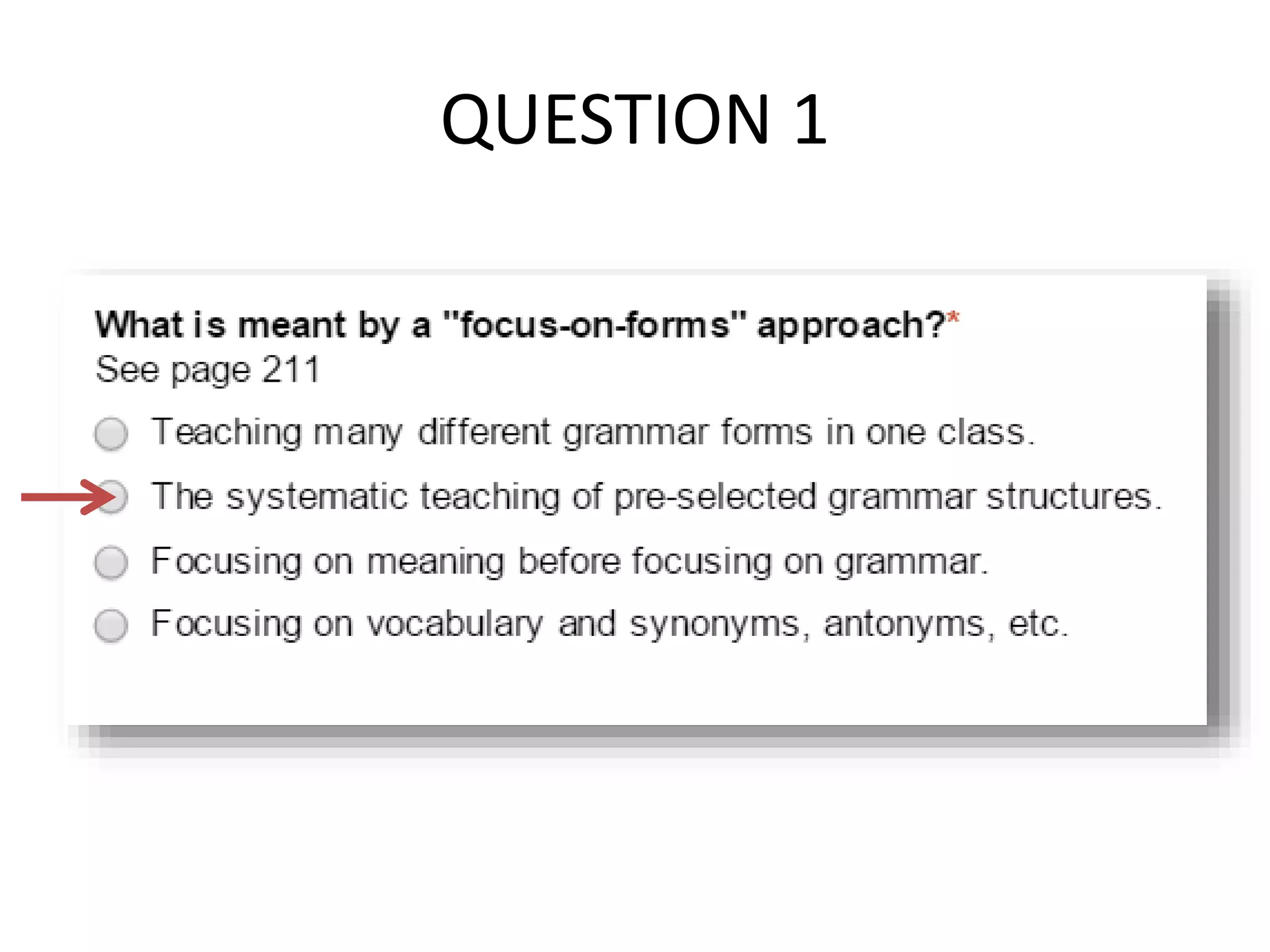
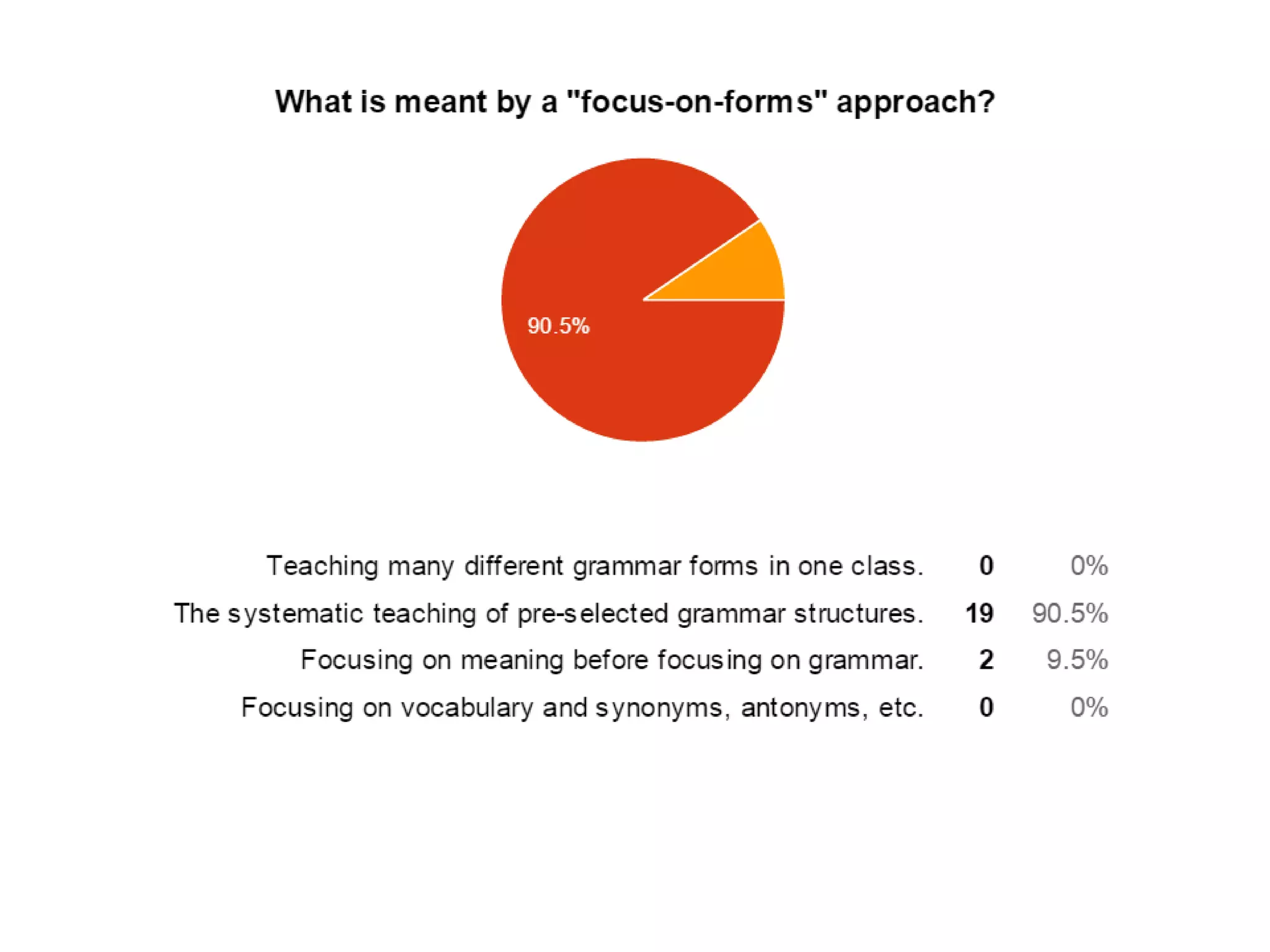
QUESTION 1
QUESTION 2
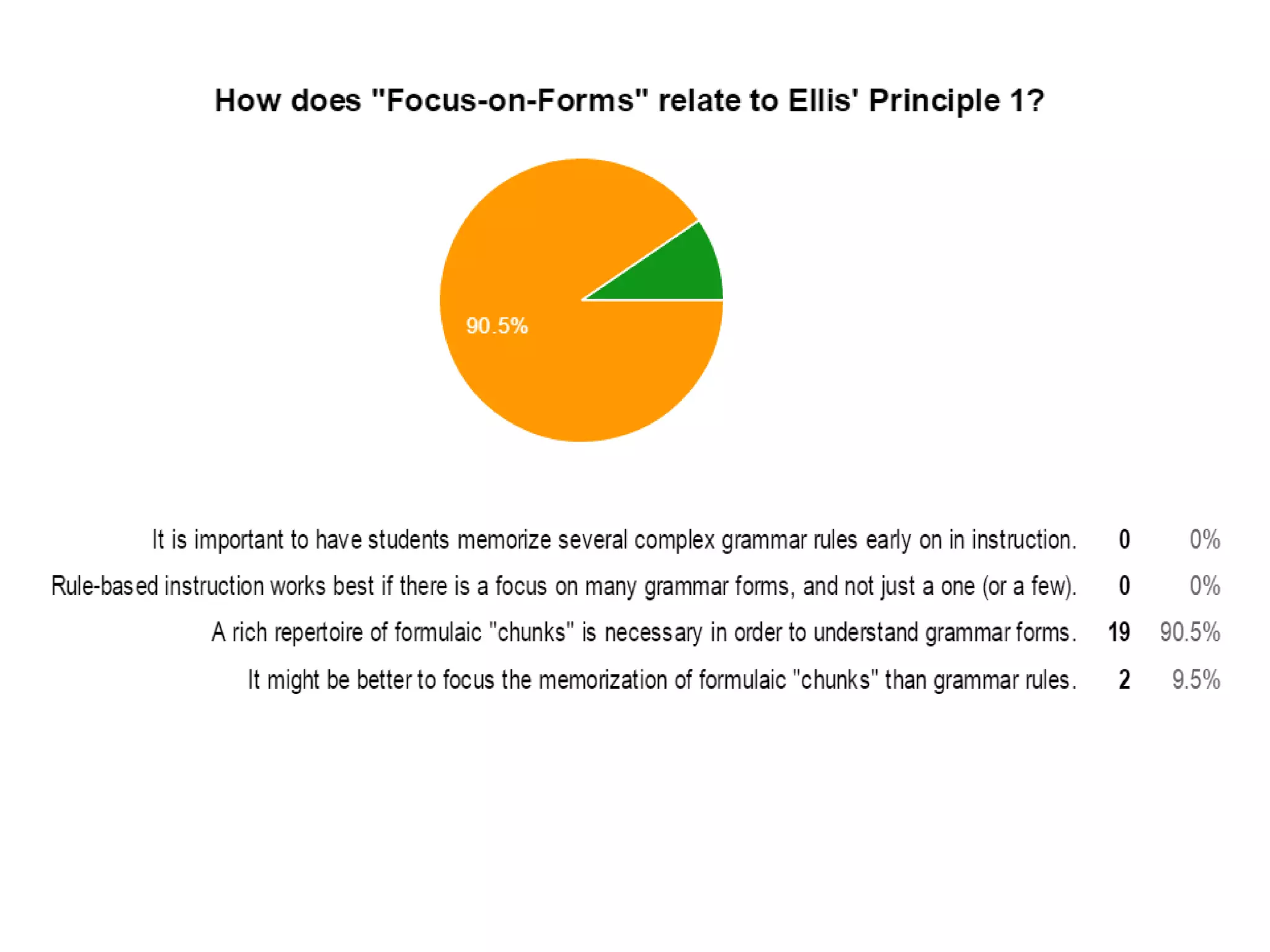
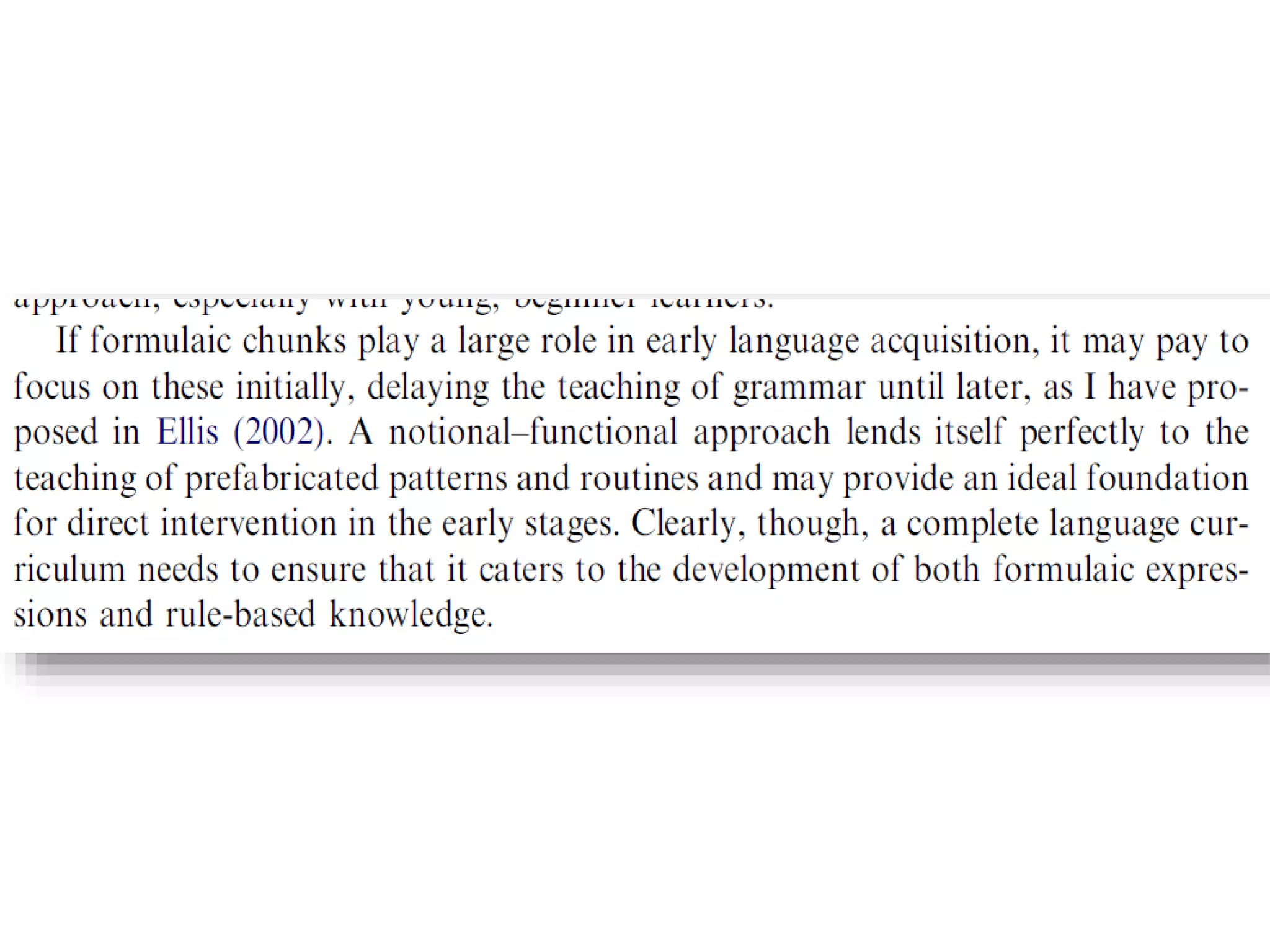
Principle 1 – Importance of formulaic
expressions
“There is now widespread acceptance of the
importance played by formulaic expressions in
language use. […] Traditionally, language
instruction has been directed at developing
rule-based competence (i.e., knowledge of
specific grammatical rules) through the
systematic teaching of pre-selected structures
– what Long (1991) has referred to as a focus-
on-forms approach.” (p. 211)
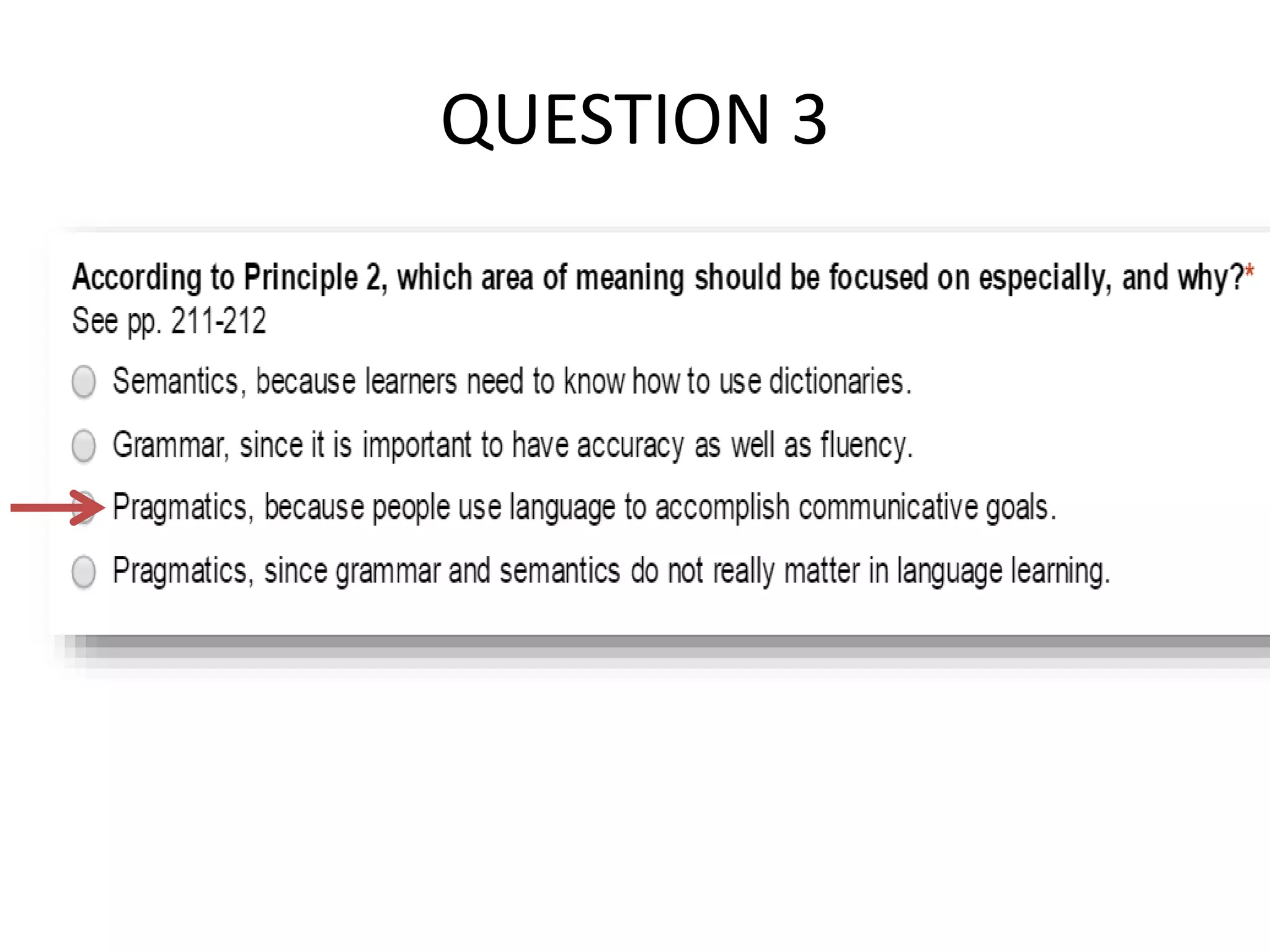
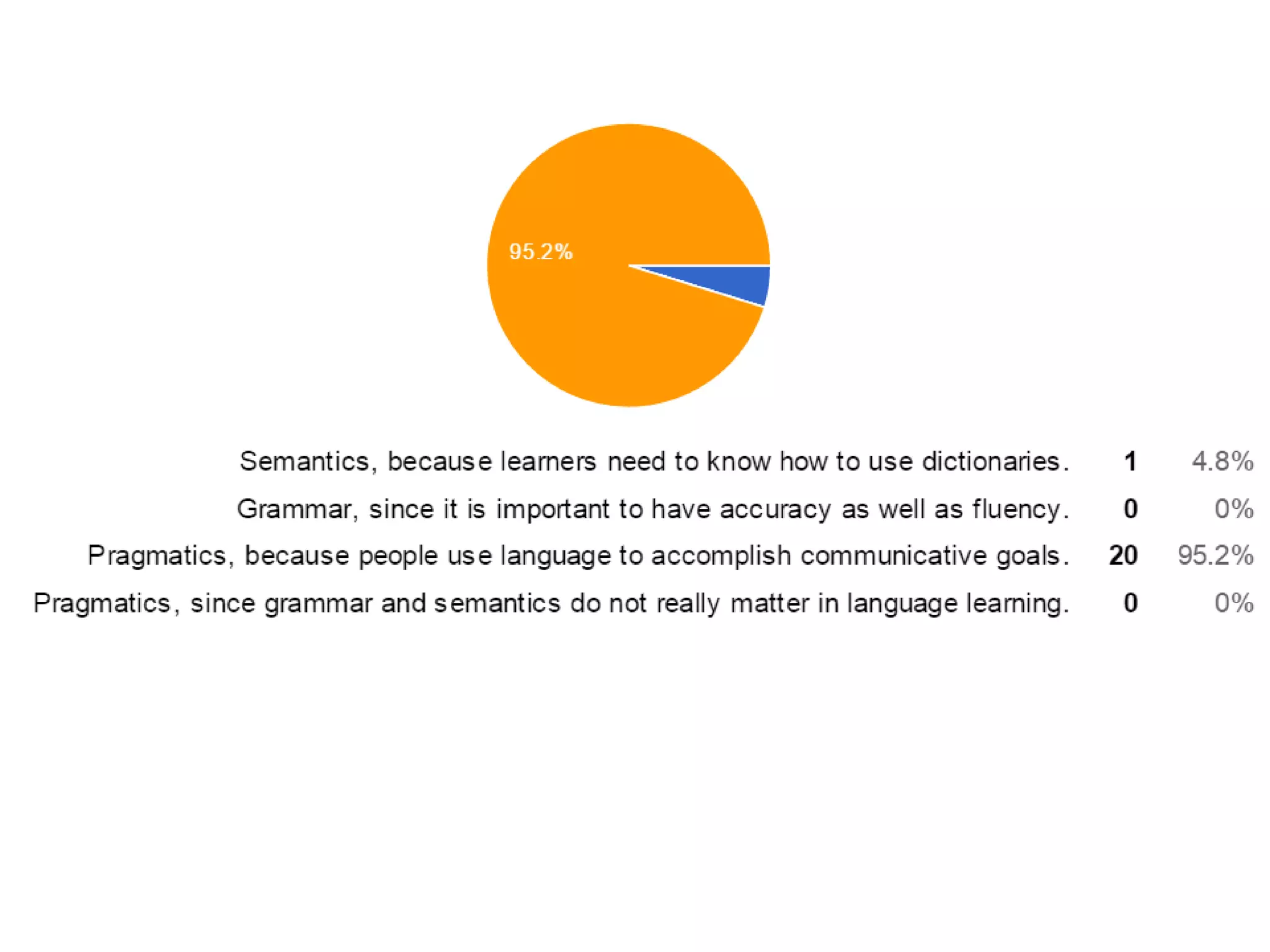
QUESTION 3
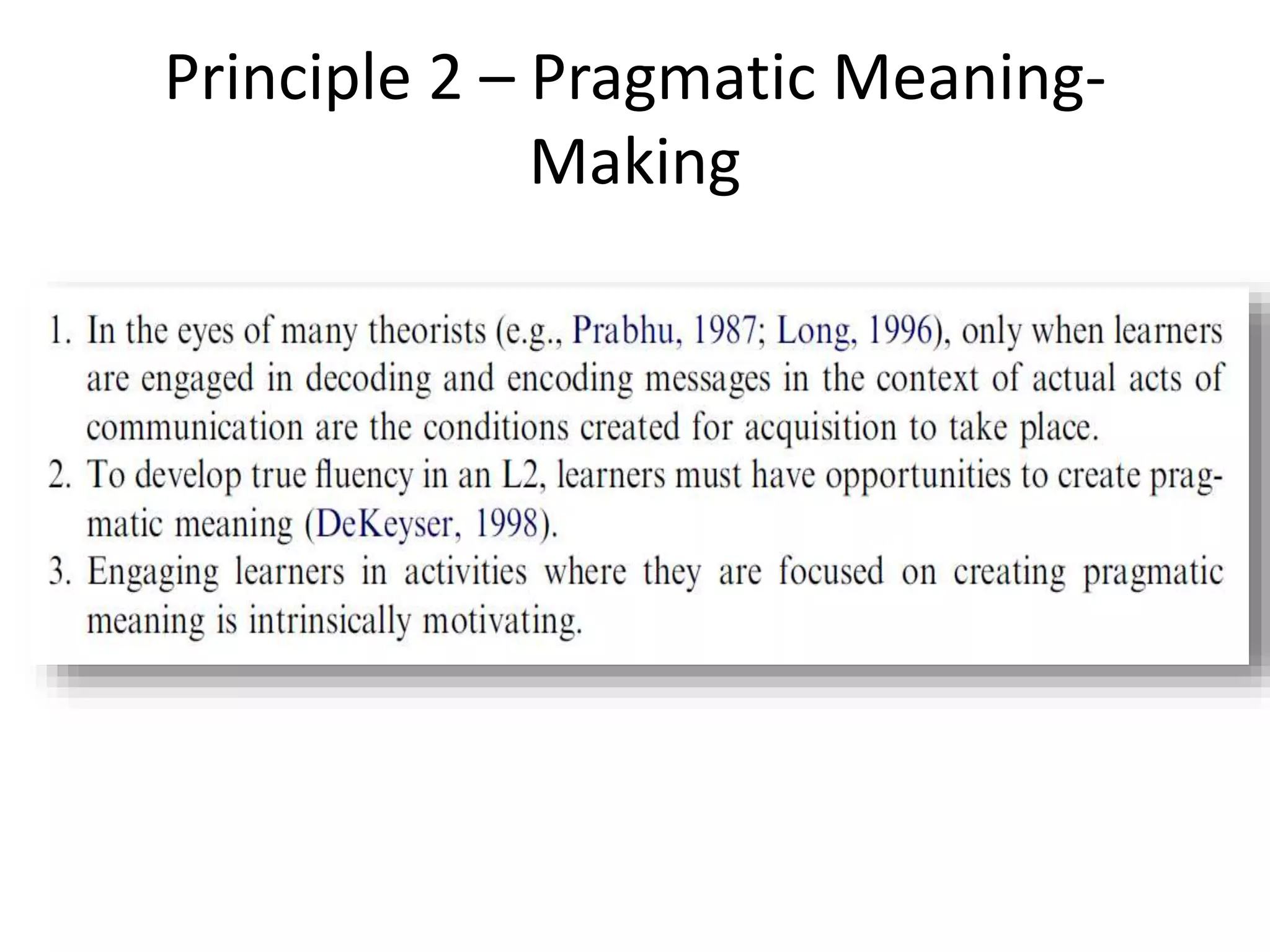
Principle 2 – Pragmatic Meaning-
Making
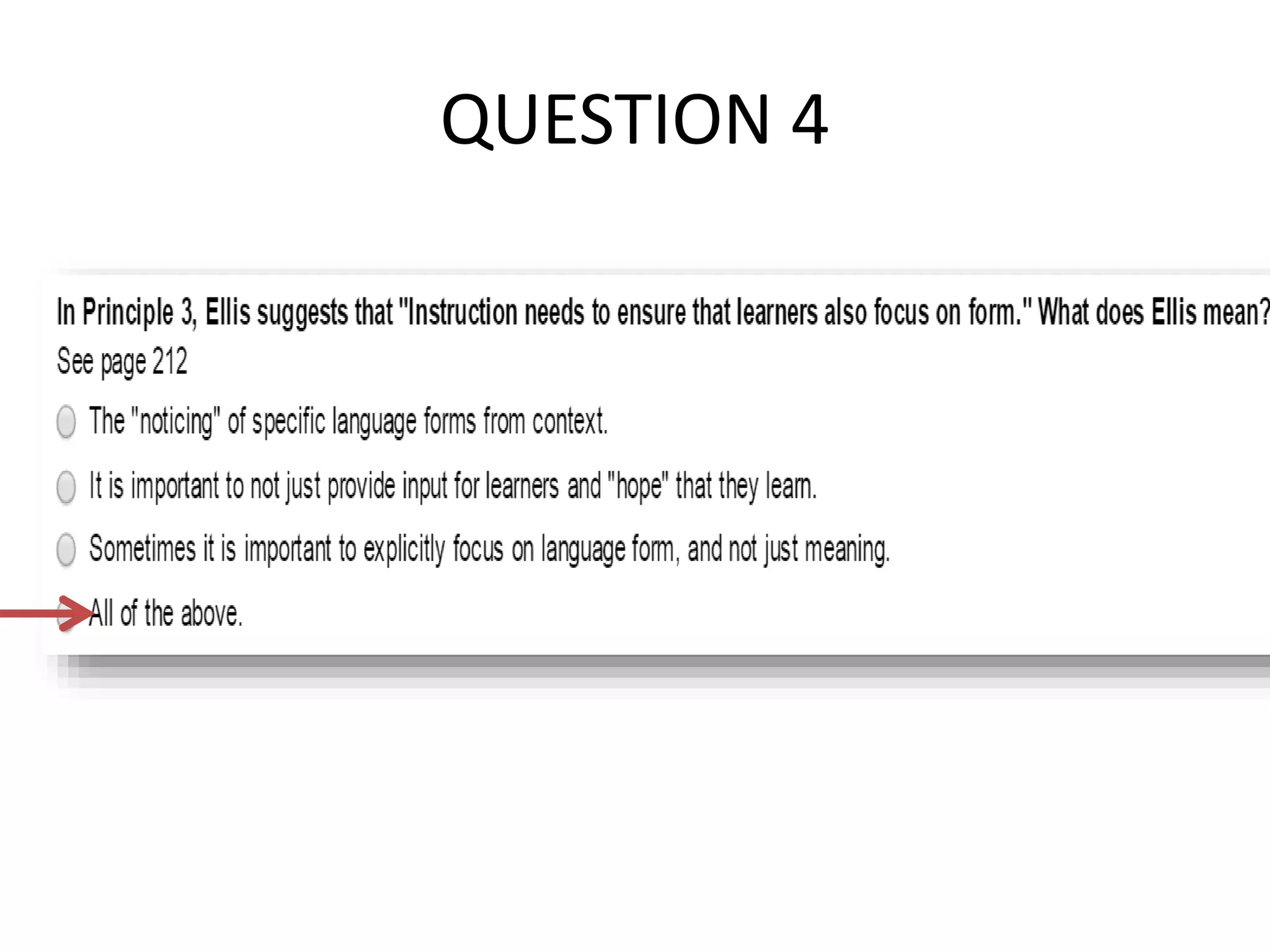
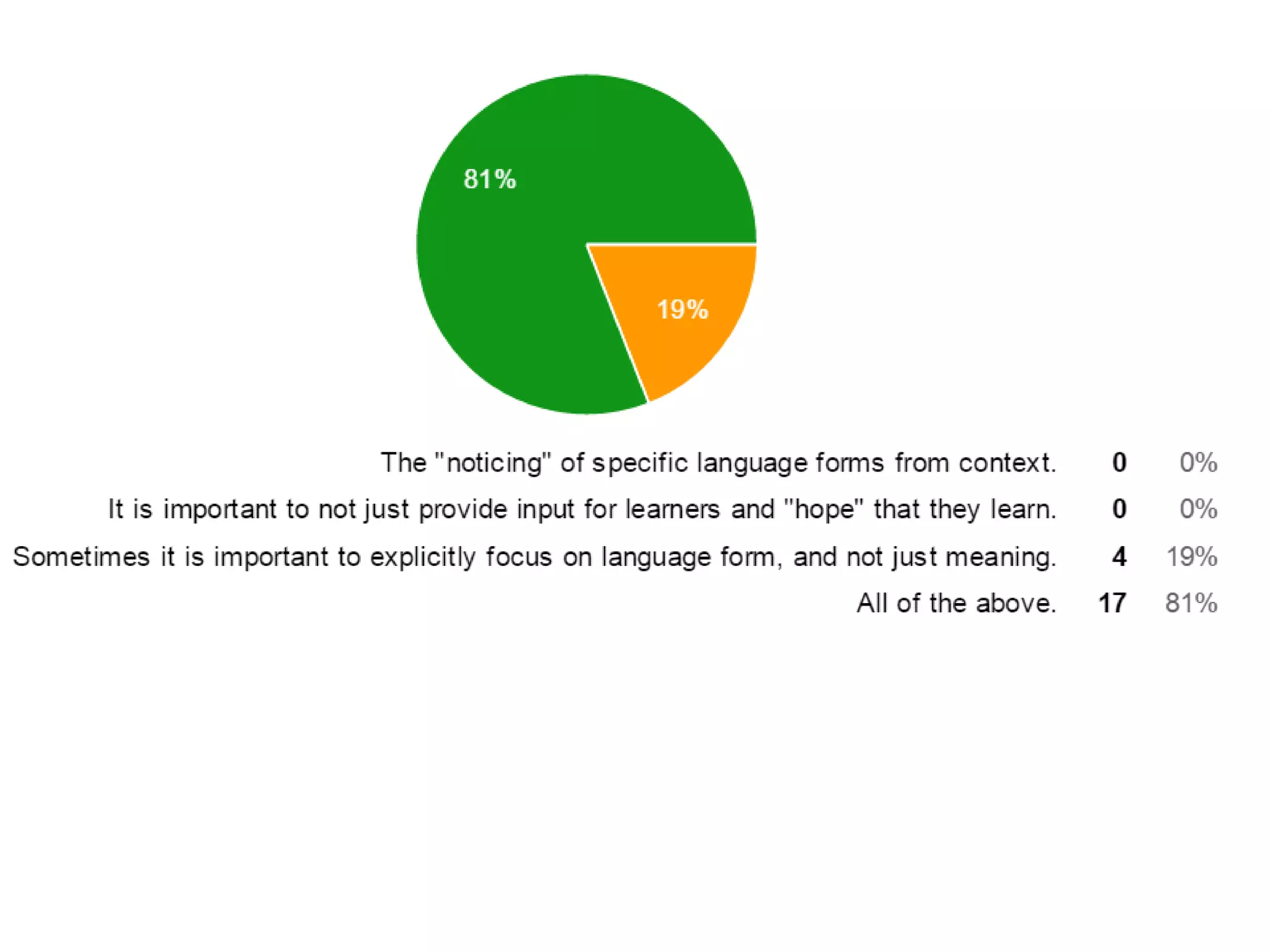
QUESTION 4
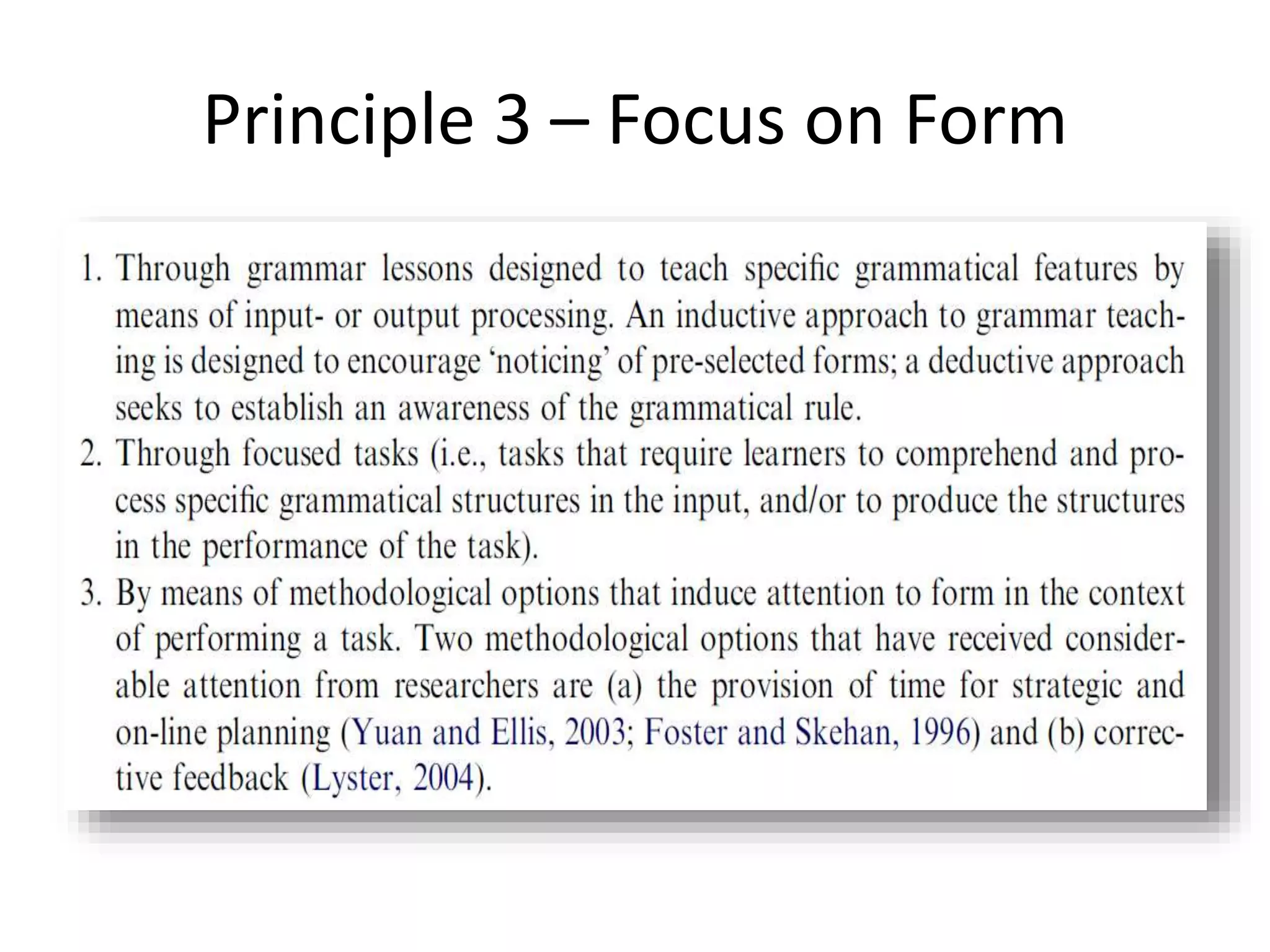
Principle 3 – Focus on Form
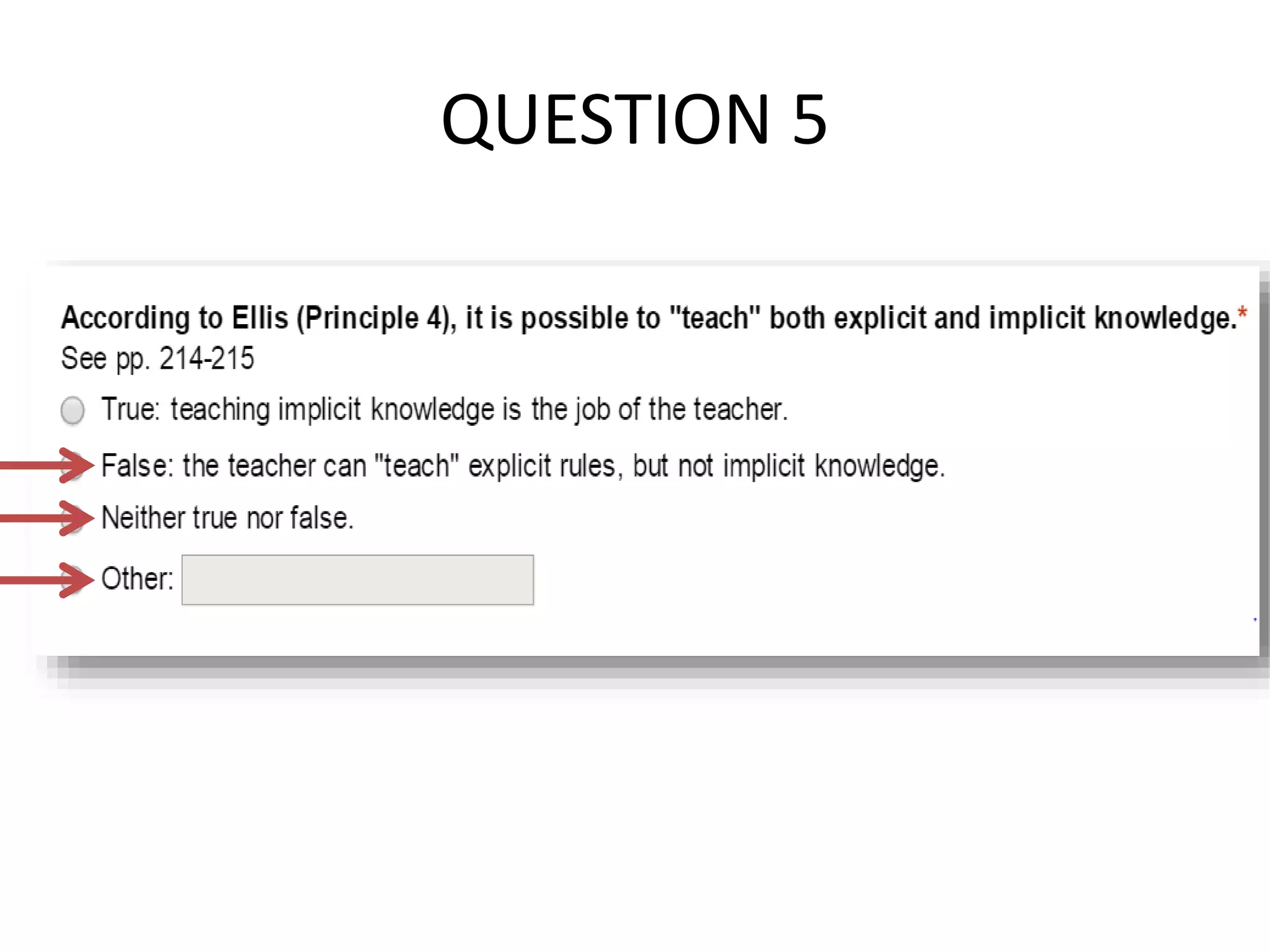
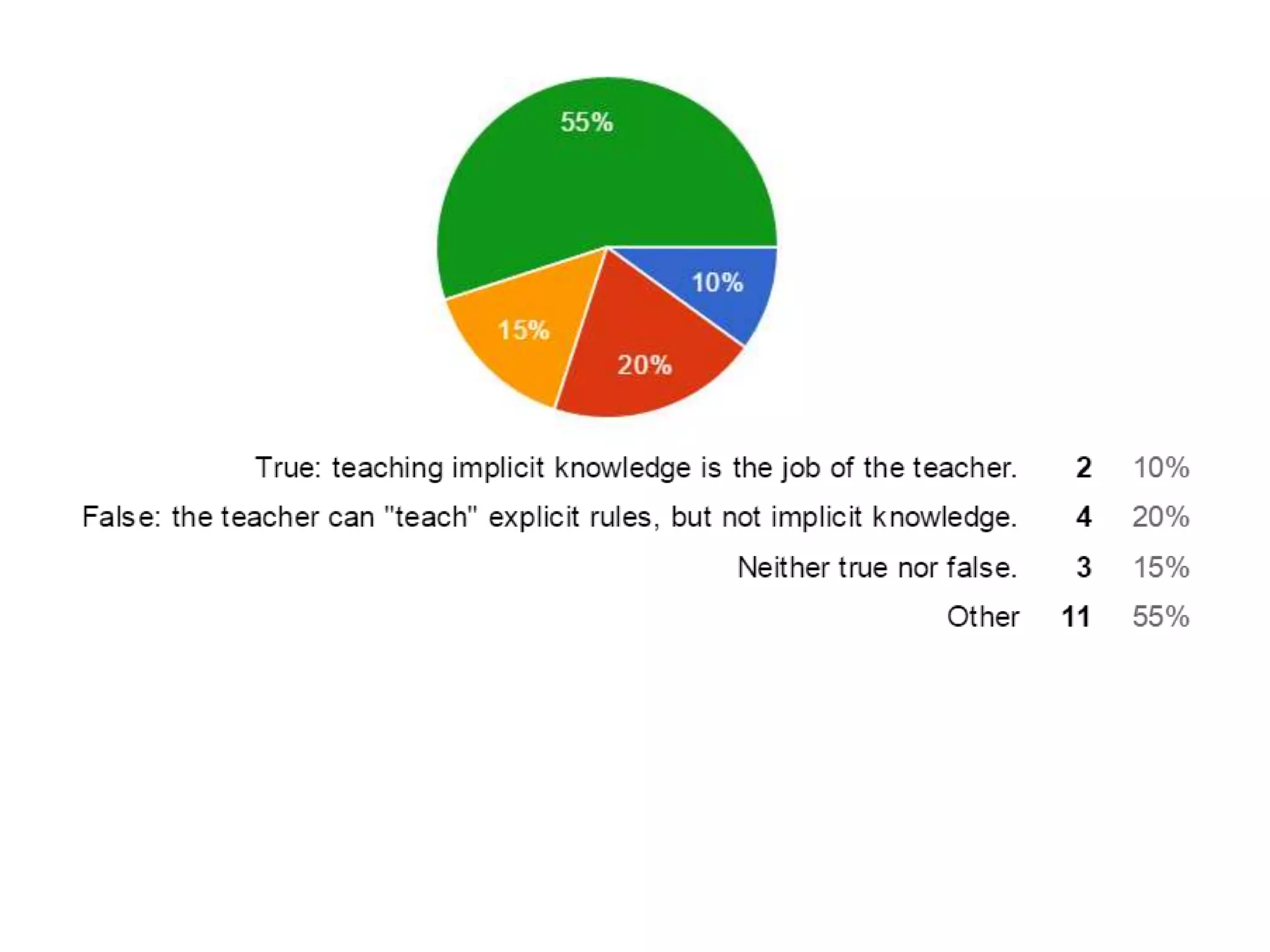
QUESTION 5
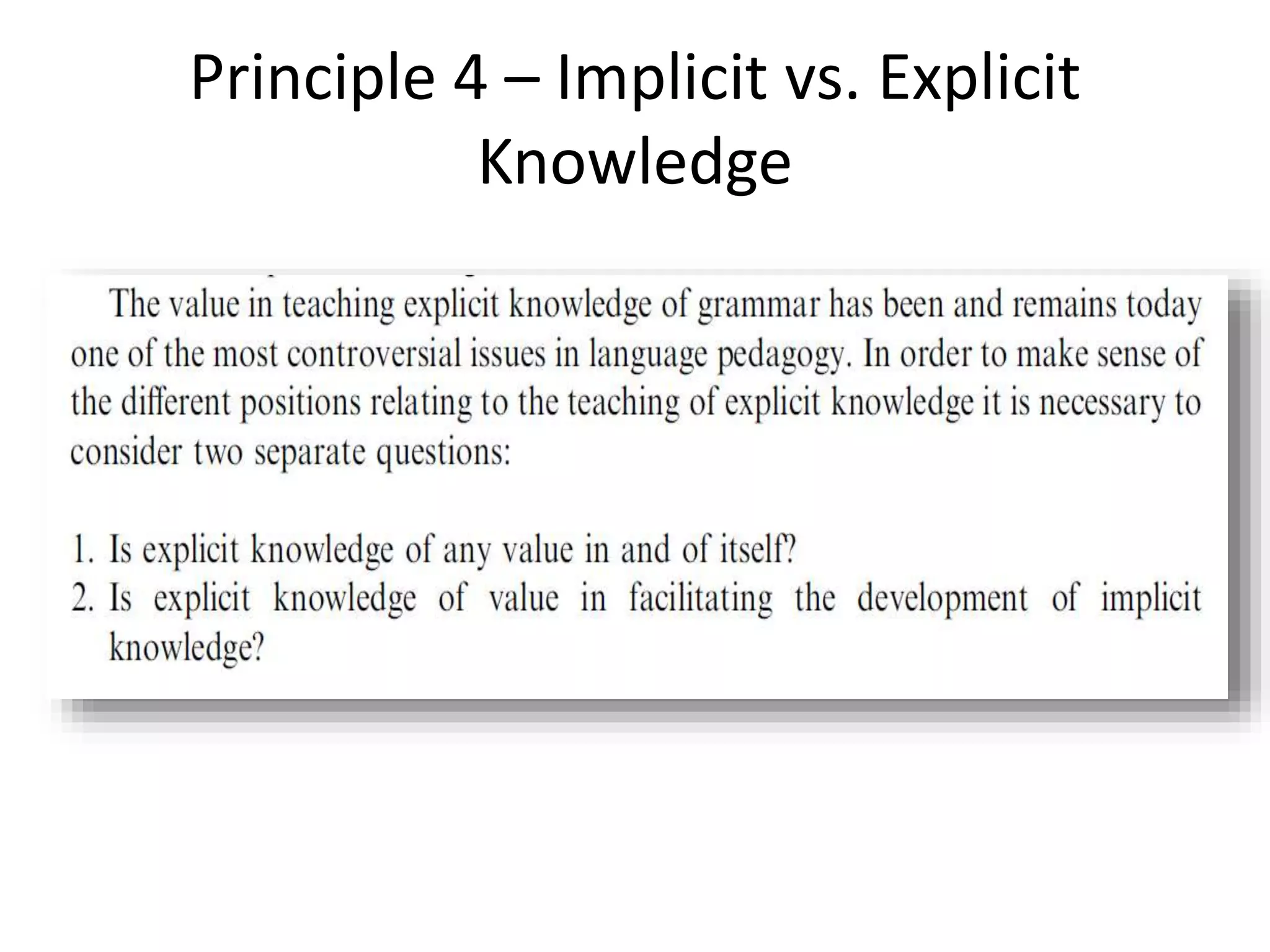
Principle 4 – Implicit vs. Explicit
Knowledge
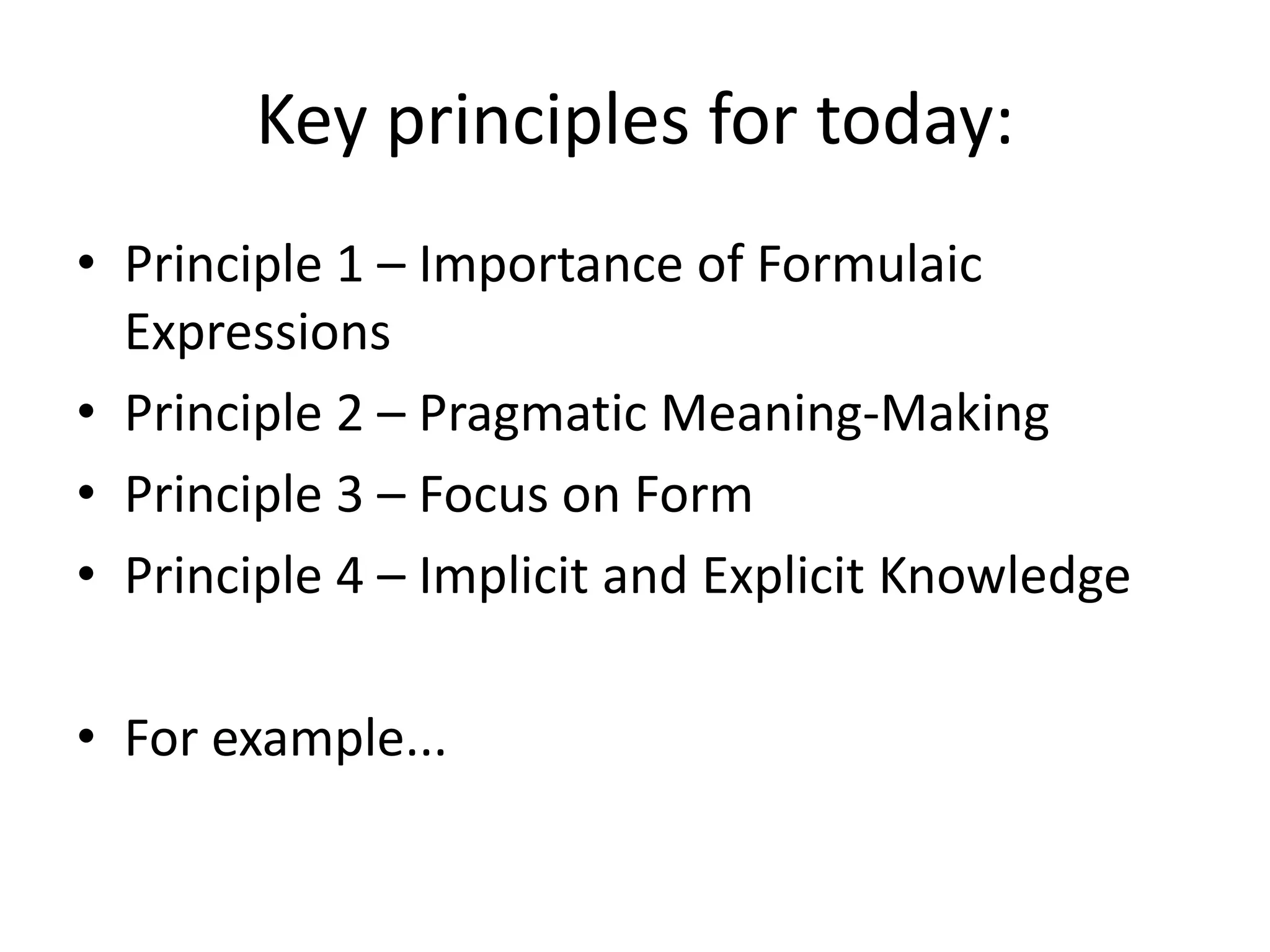
Key principles for today:
• Principle 1 – Importance of Formulaic
Expressions
• Principle 2 – Pragmatic Meaning-Making
• Principle 3 – Focus on Form
• Principle 4 – Implicit and Explicit Knowledge
Key principles for today:
• Principle 1 – Importance of Formulaic
Expressions
• Principle 2 – Pragmatic Meaning-Making
• Principle 3 – Focus on Form
• Principle 4 – Implicit and Explicit Knowledge
• For example...
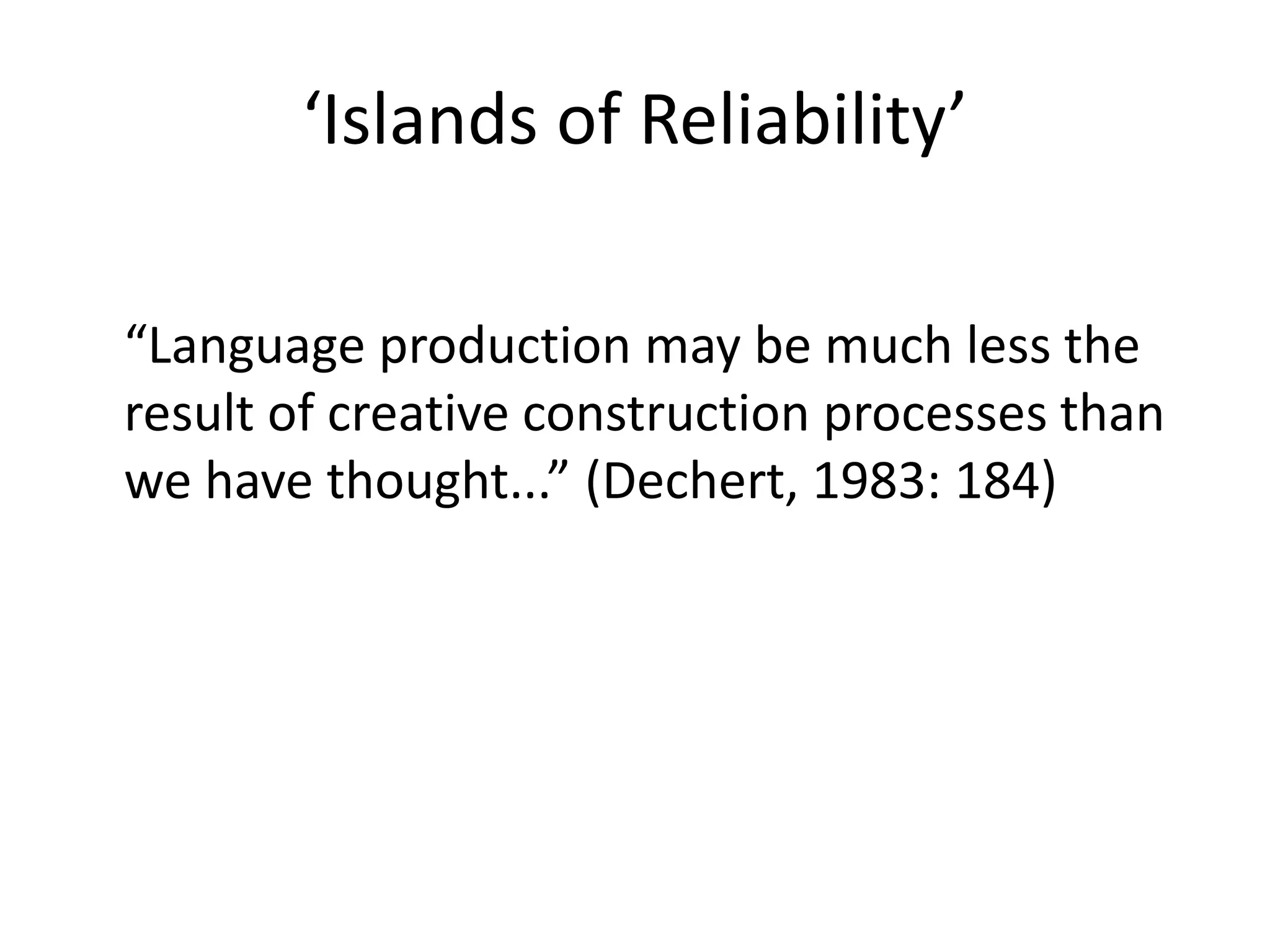
‘Islands of Reliability’
“Language production may be much less the
result of creative construction processes than
we have thought...” (Dechert, 1983: 184)
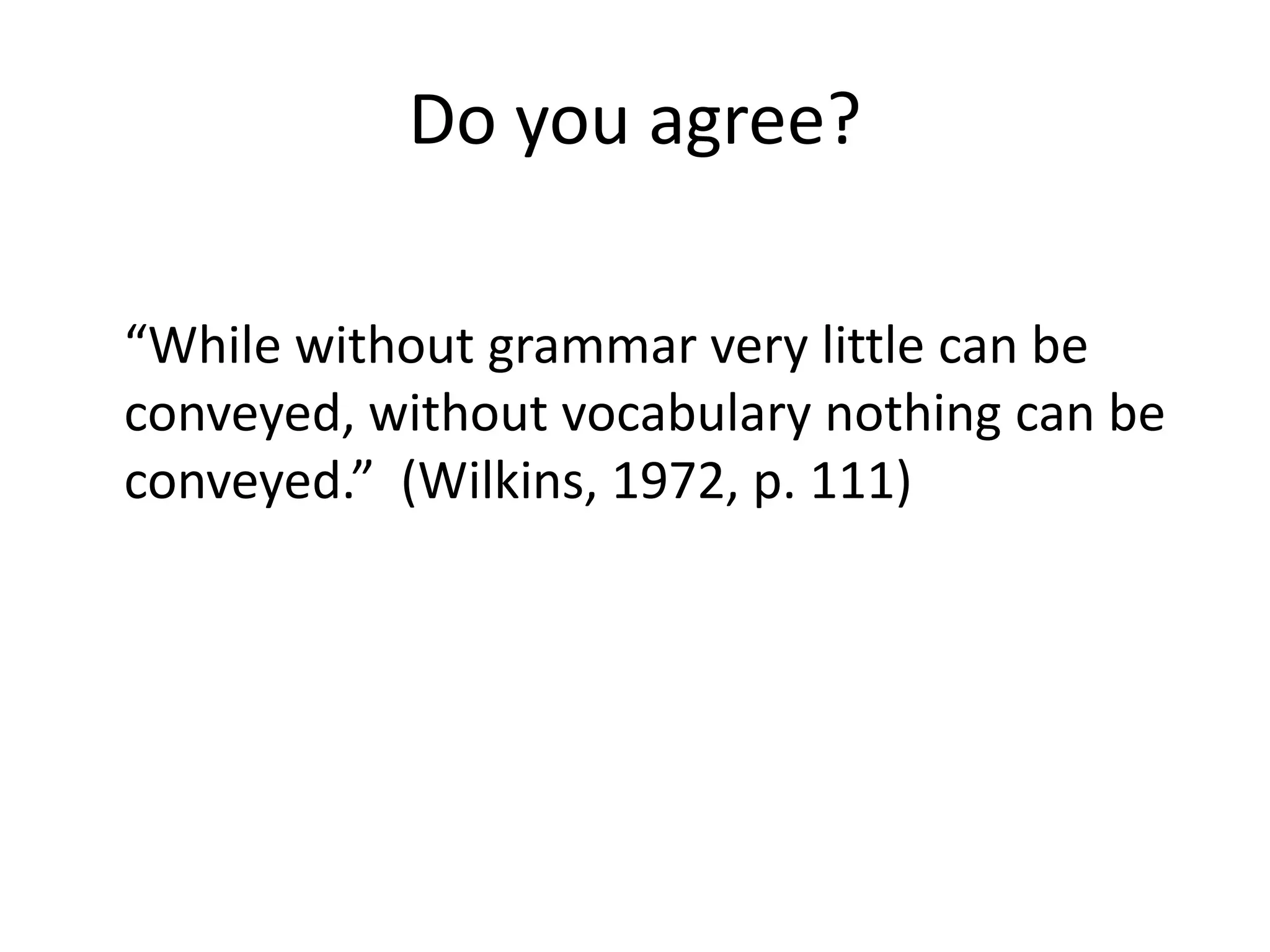
Do you agree?
“While without grammar very little can be
conveyed, without vocabulary nothing can be
conveyed.” (Wilkins, 1972, p. 111)
Key principles for today:
• Principle 1 – Importance of Formulaic
Expressions
• Principle 2 – Pragmatic Meaning-Making
• Principle 3 – Focus on Form
• Principle 4 – Implicit and Explicit Knowledge
‘“Knowing words is the key to understanding
and being understood. The bulk of learning a
new language consists of learning new words.
[…] Grammatical knowledge does not make
for great proficiency in a language.” (Vermeer,
1992, p. 147)
But which words? How?
1992...
Lexical Acquisition
• Best if it arises from context
• ‘Context’ can mean situation, text, need to
express something – but in all cases ideally
comes from the learner (i.e. ‘noticing’)
• Purpose, production, personalization
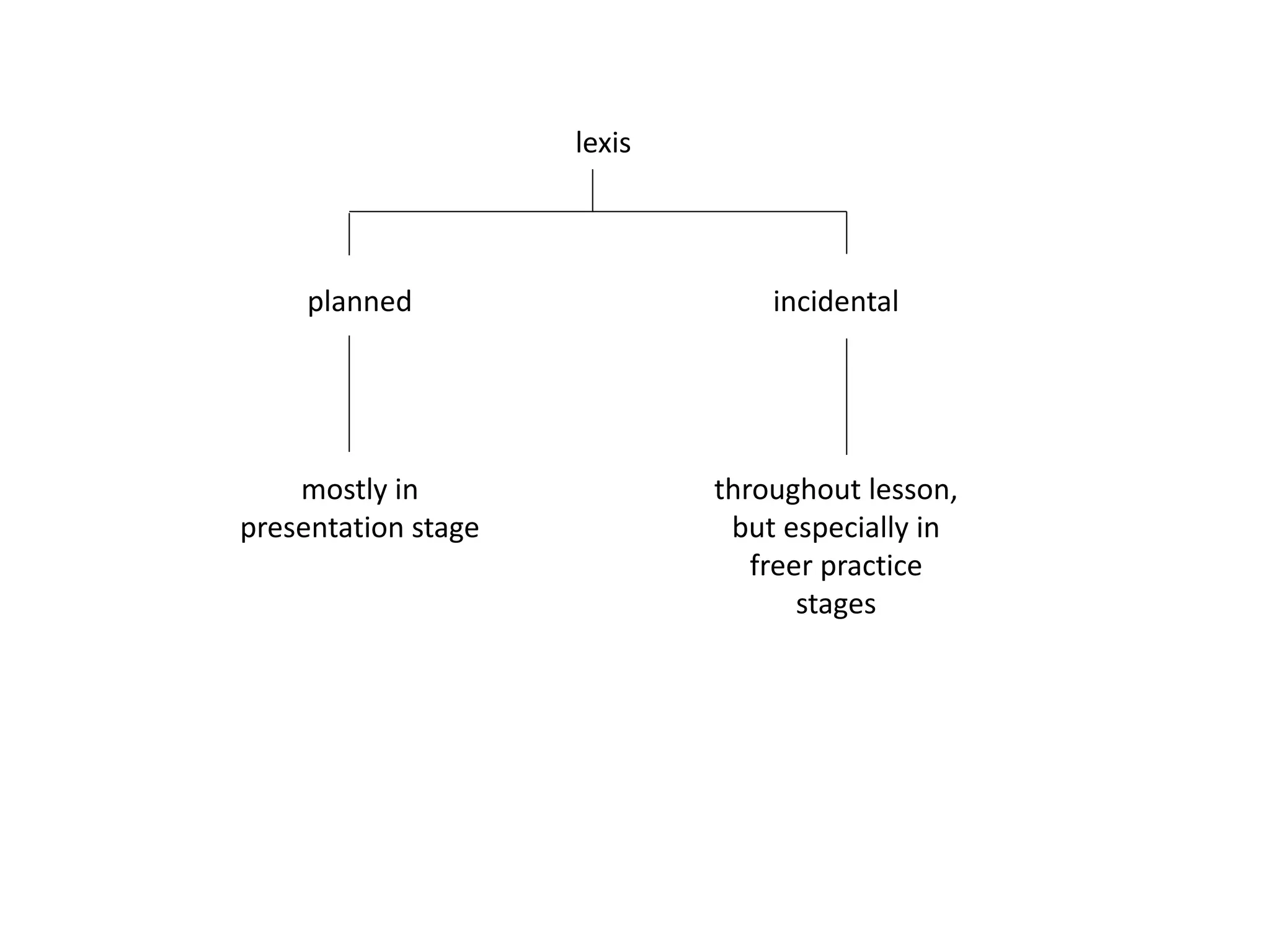
lexis
planned incidental
mostly in
presentation stage
throughout lesson,
but especially in
freer practice
stages
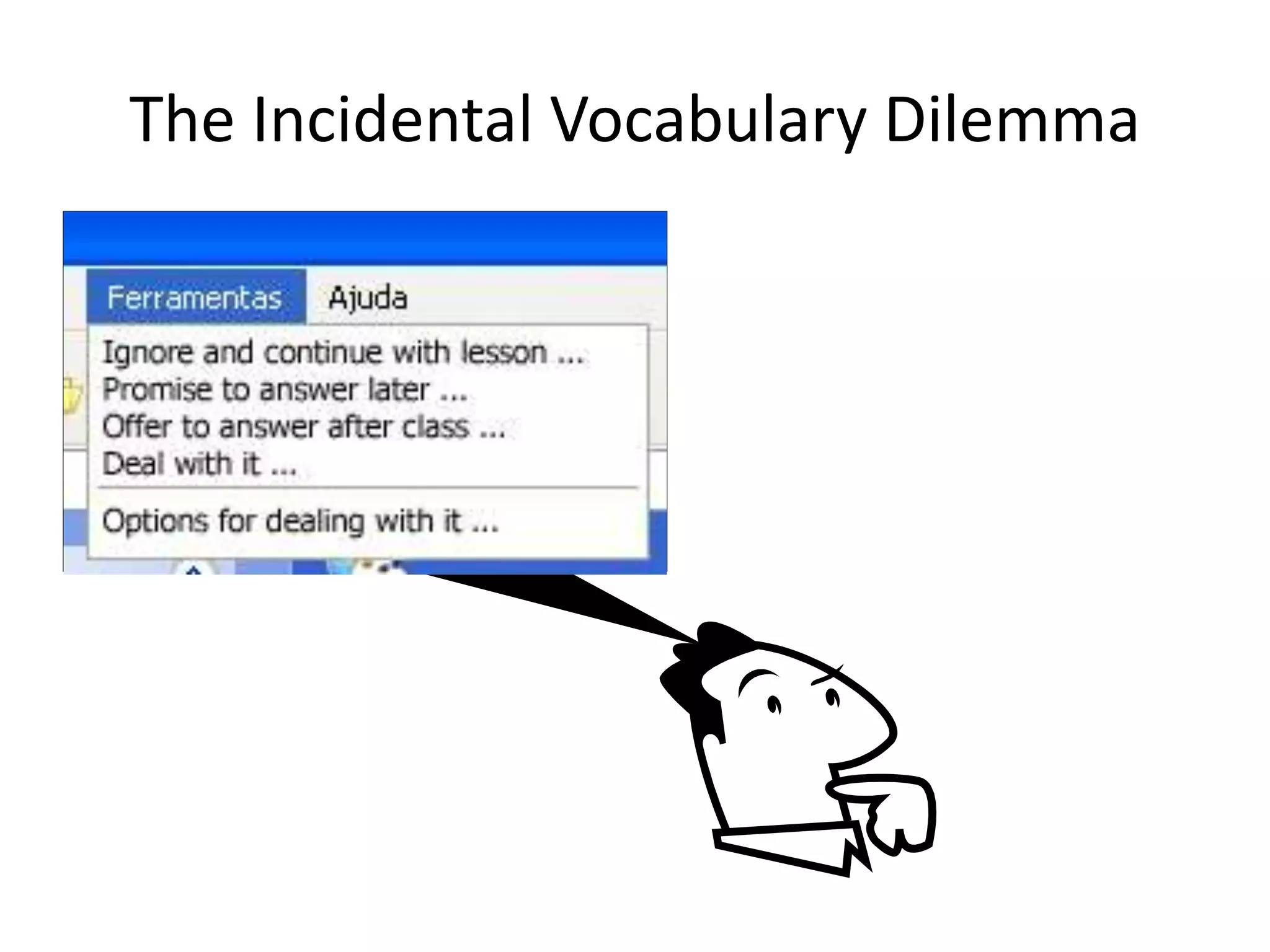
The Incidental Vocabulary Dilemma
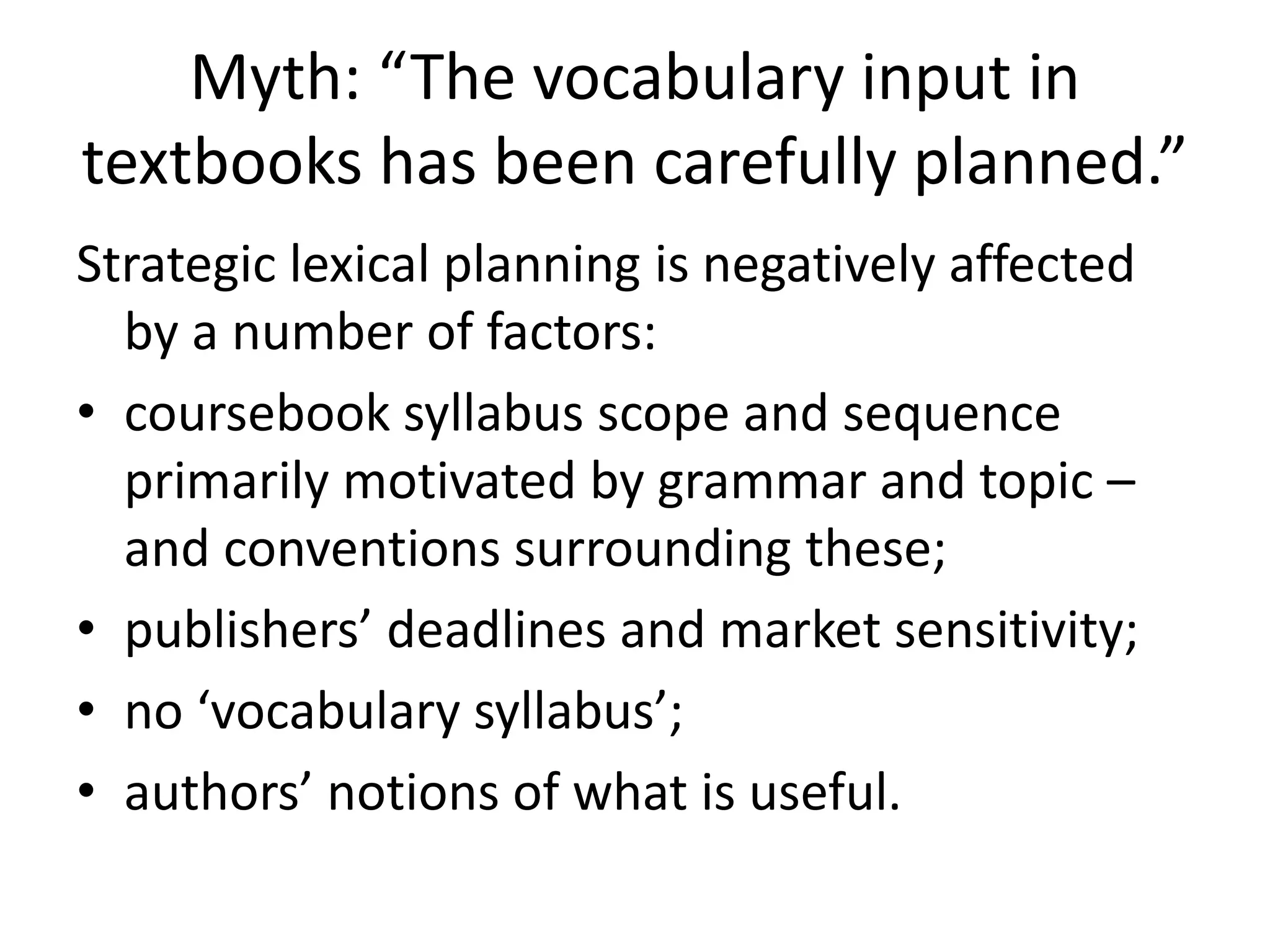
Myth: “The vocabulary input in
textbooks has been carefully planned.”
Strategic lexical planning is negatively affected
by a number of factors:
• coursebook syllabus scope and sequence
primarily motivated by grammar and topic –
and conventions surrounding these;
• publishers’ deadlines and market sensitivity;
• no ‘vocabulary syllabus’;
• authors’ notions of what is useful.
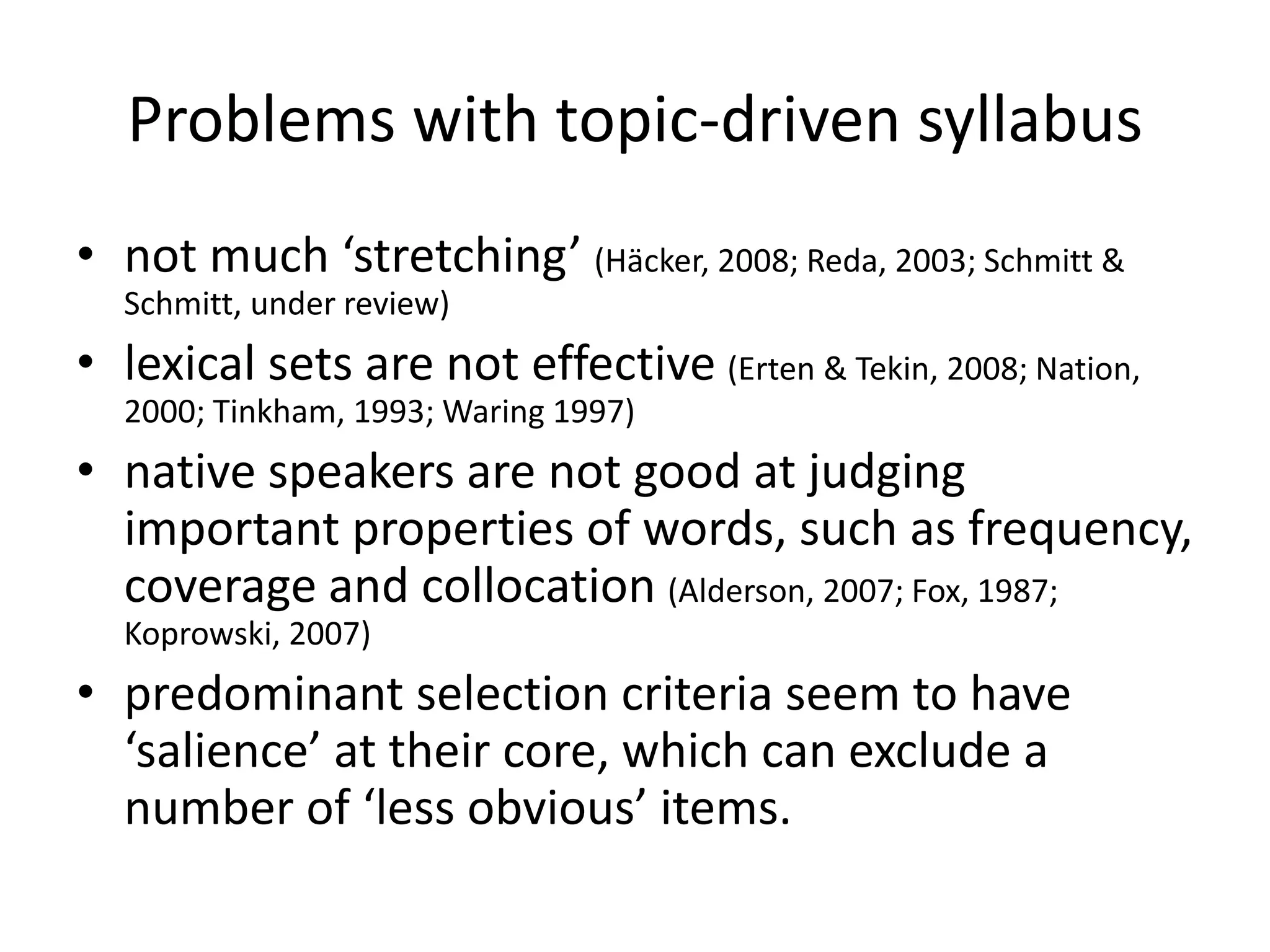
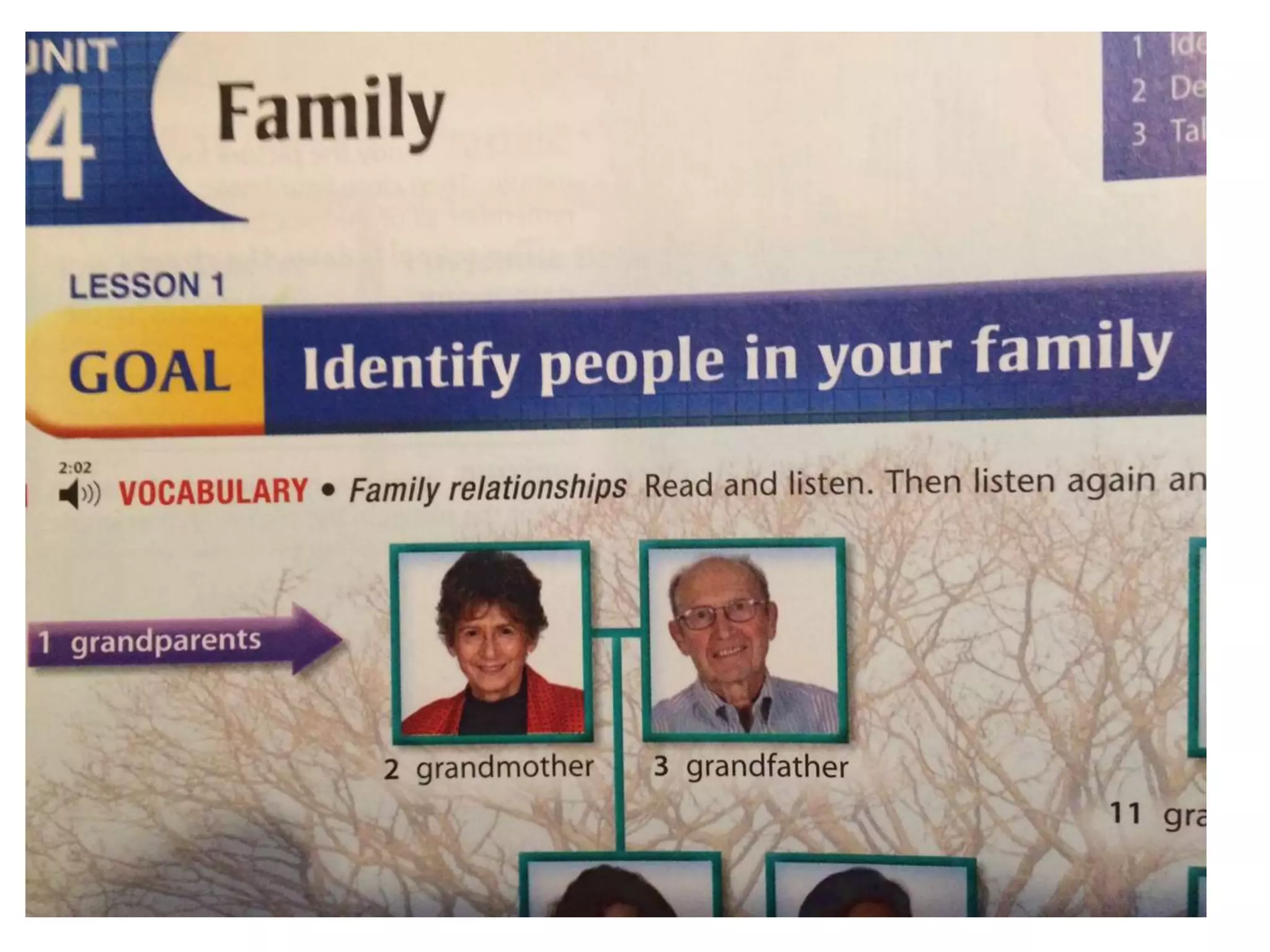
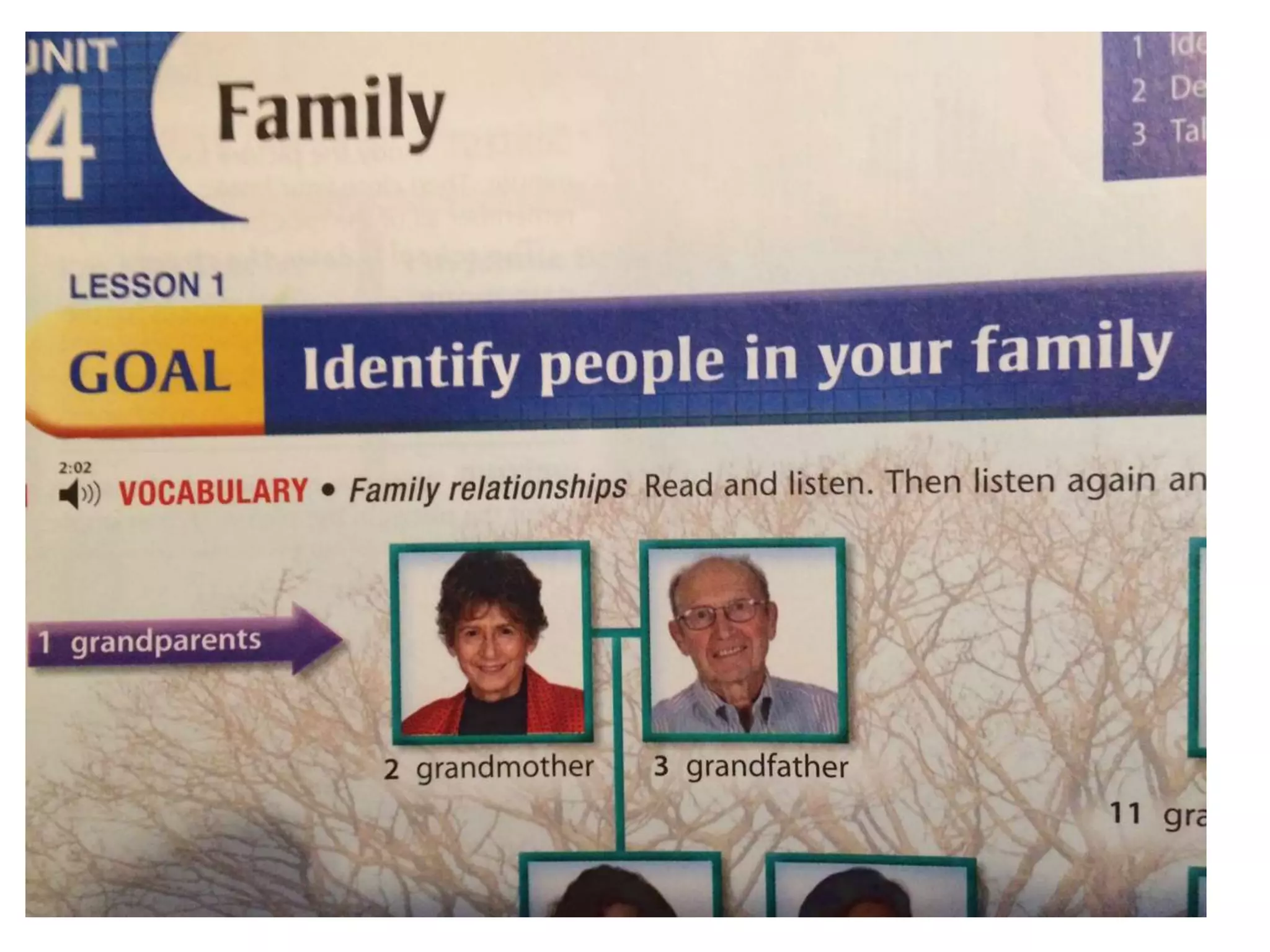
Problems with topic-driven syllabus
• not much ‘stretching’ (Häcker, 2008; Reda, 2003; Schmitt &
Schmitt, under review)
• lexical sets are not effective (Erten & Tekin, 2008; Nation,
2000; Tinkham, 1993; Waring 1997)
• native speakers are not good at judging
important properties of words, such as frequency,
coverage and collocation (Alderson, 2007; Fox, 1987;
Koprowski, 2007)
• predominant selection criteria seem to have
‘salience’ at their core, which can exclude a
number of ‘less obvious’ items.
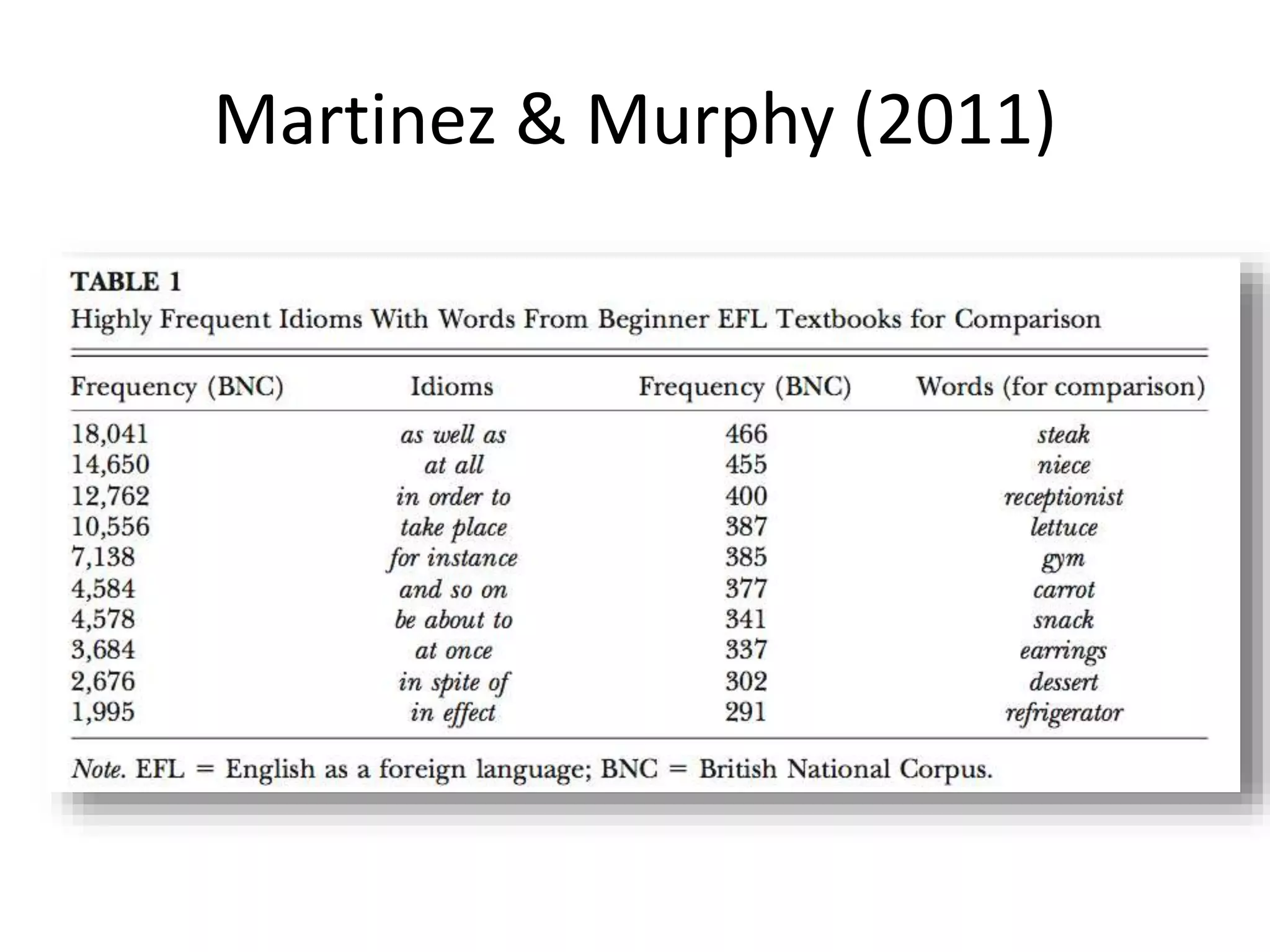
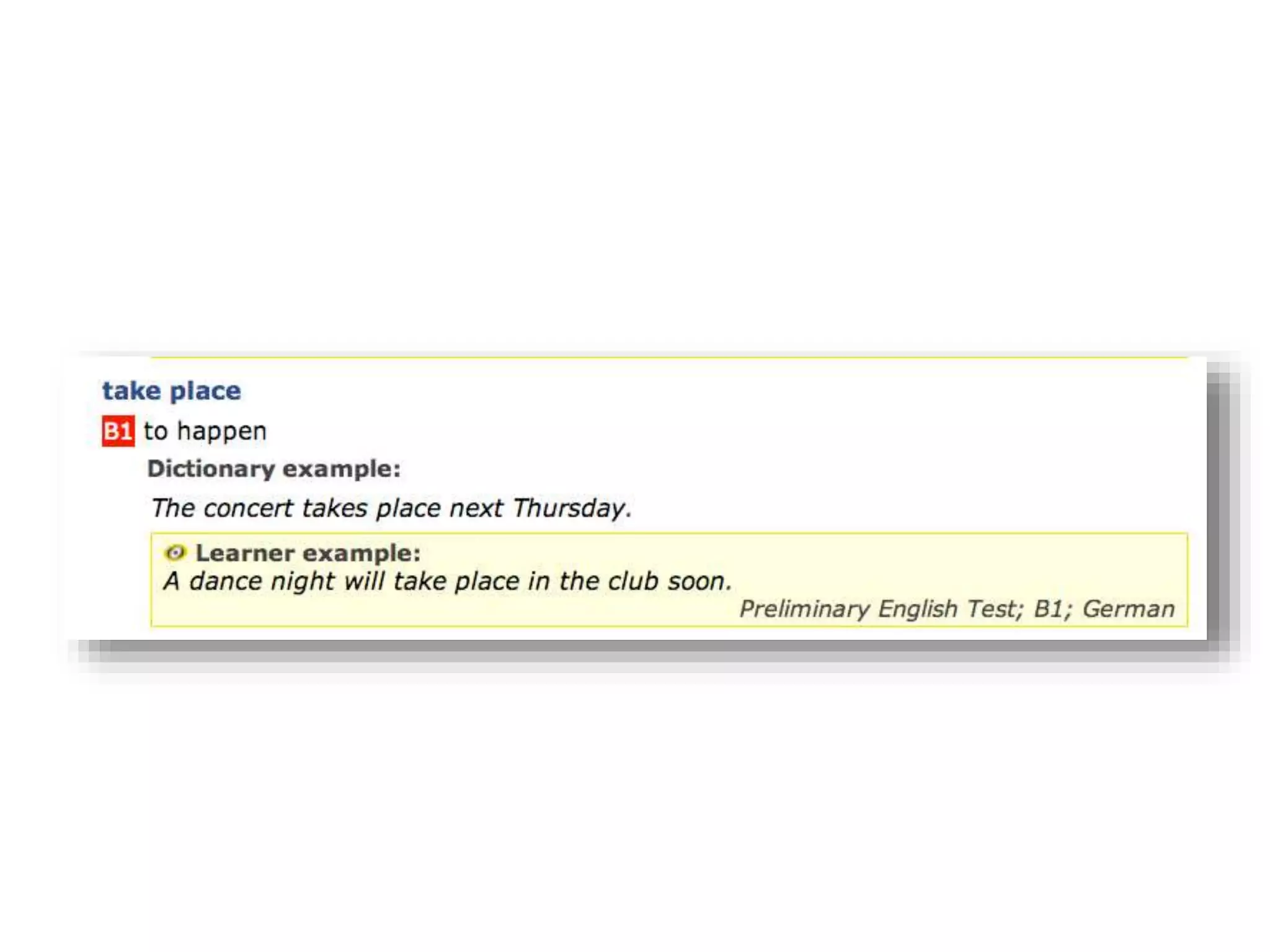
Martinez & Murphy (2011)
The solution?
• Well, not “the” solution, but one way to
address the situation: purpose, production,
and pesonalization.
• For example, use you.
Key principles for today:
• Principle 1 – Importance of Formulaic
Expressions
• Principle 2 – Pragmatic Meaning-Making
• Principle 3 – Focus on Form
• Principle 4 – Implicit and Explicit Knowledge
Key principles for today:
• Principle 1 – Importance of Formulaic
Expressions
• Principle 2 – Pragmatic Meaning-Making
• Principle 3 – Focus on Form
• Principle 4 – Implicit and Explicit Knowledge
The solution?
• Well, not “the” solution, but one way to
address the situation: purpose, production,
and pesonalization.
• For example, use you.
The solution?
• Well, not “the” solution, but one way to
address the situation: purpose, production,
and pesonalization.
• For example, use you.
• Use human nature.
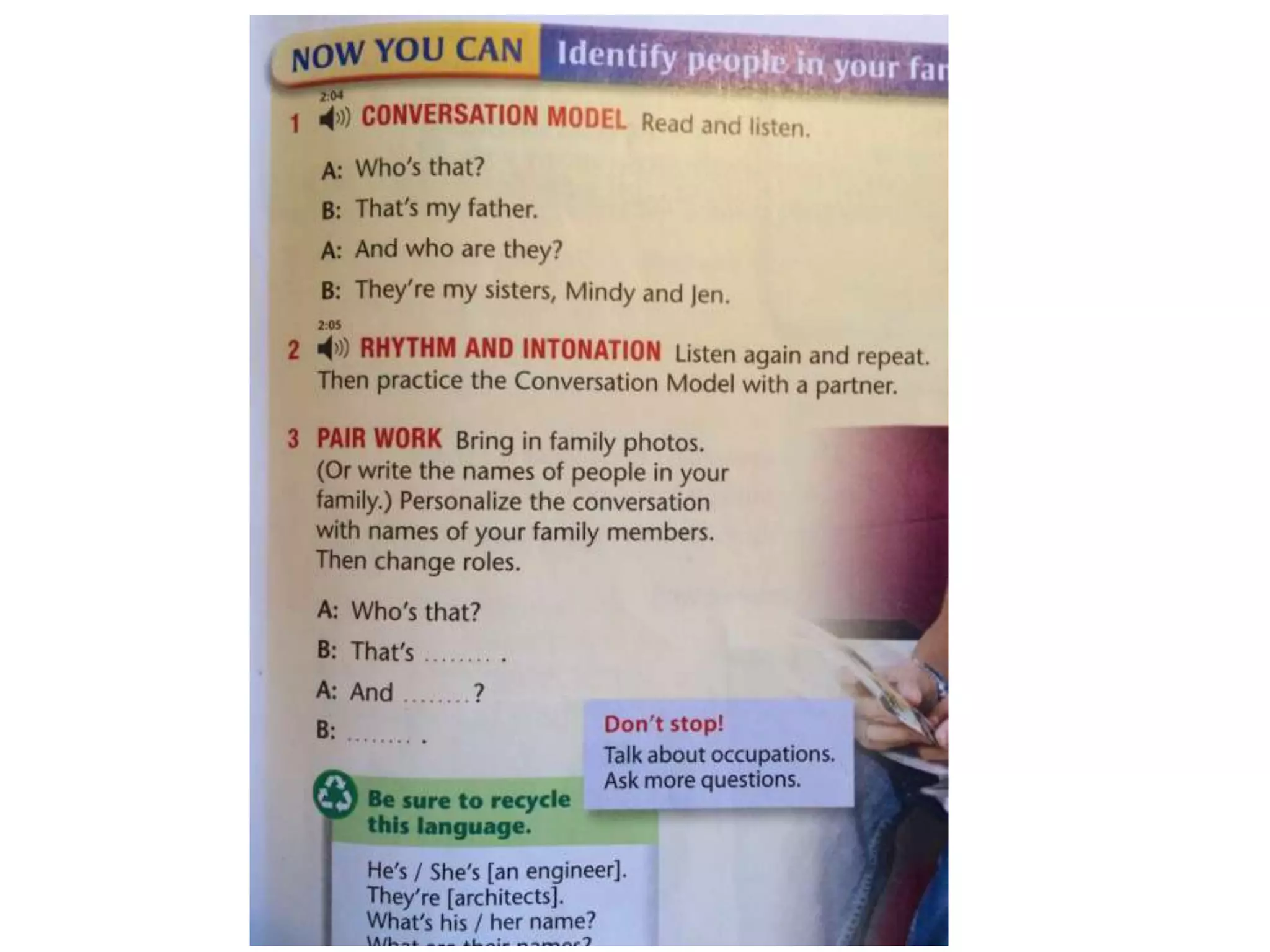
‘Cathy’s Cards’
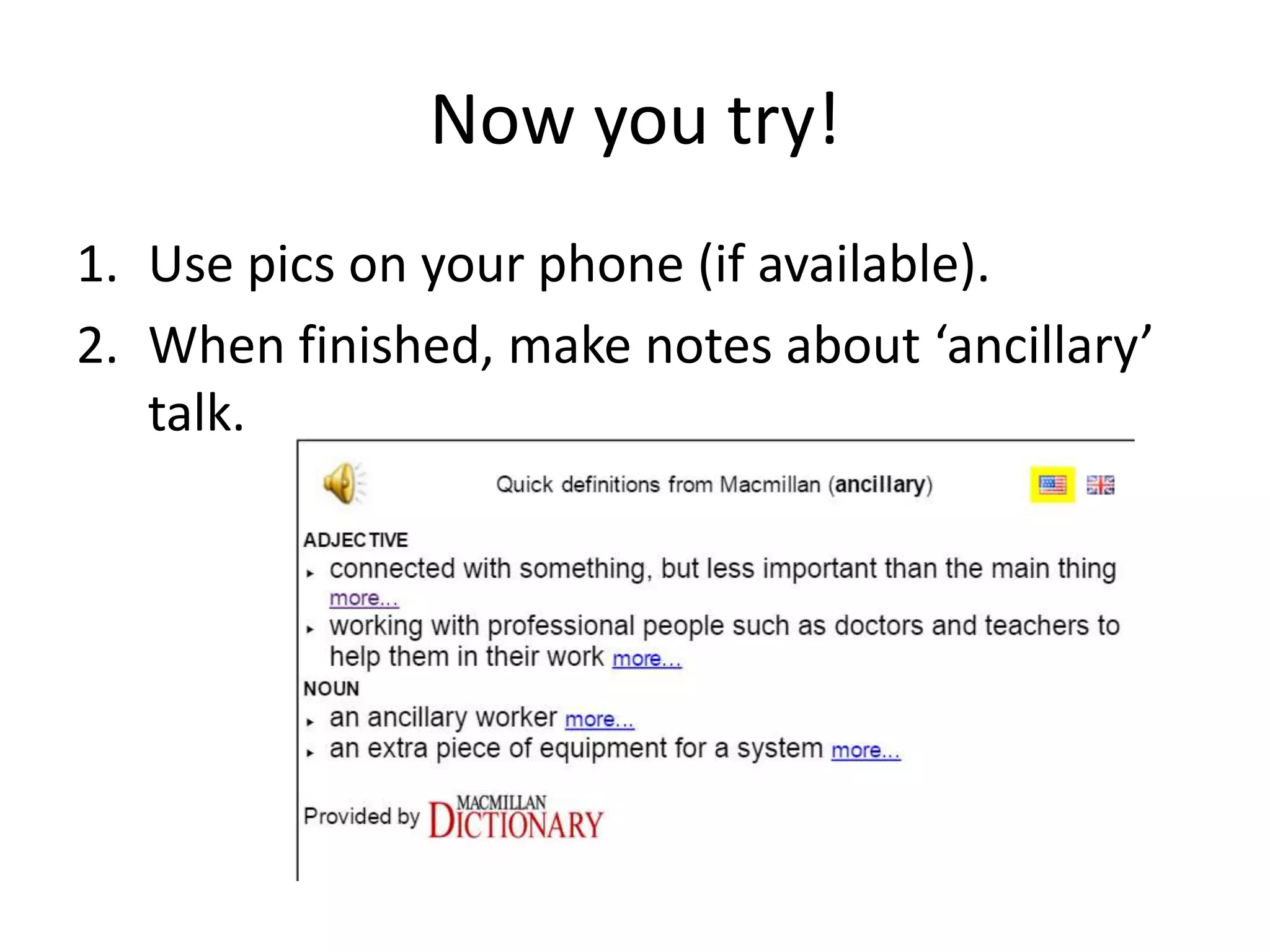
Now you try!
1. Use pics on your phone (if available).
2. When finished, make notes about ‘ancillary’
talk.
planting lexical seeds
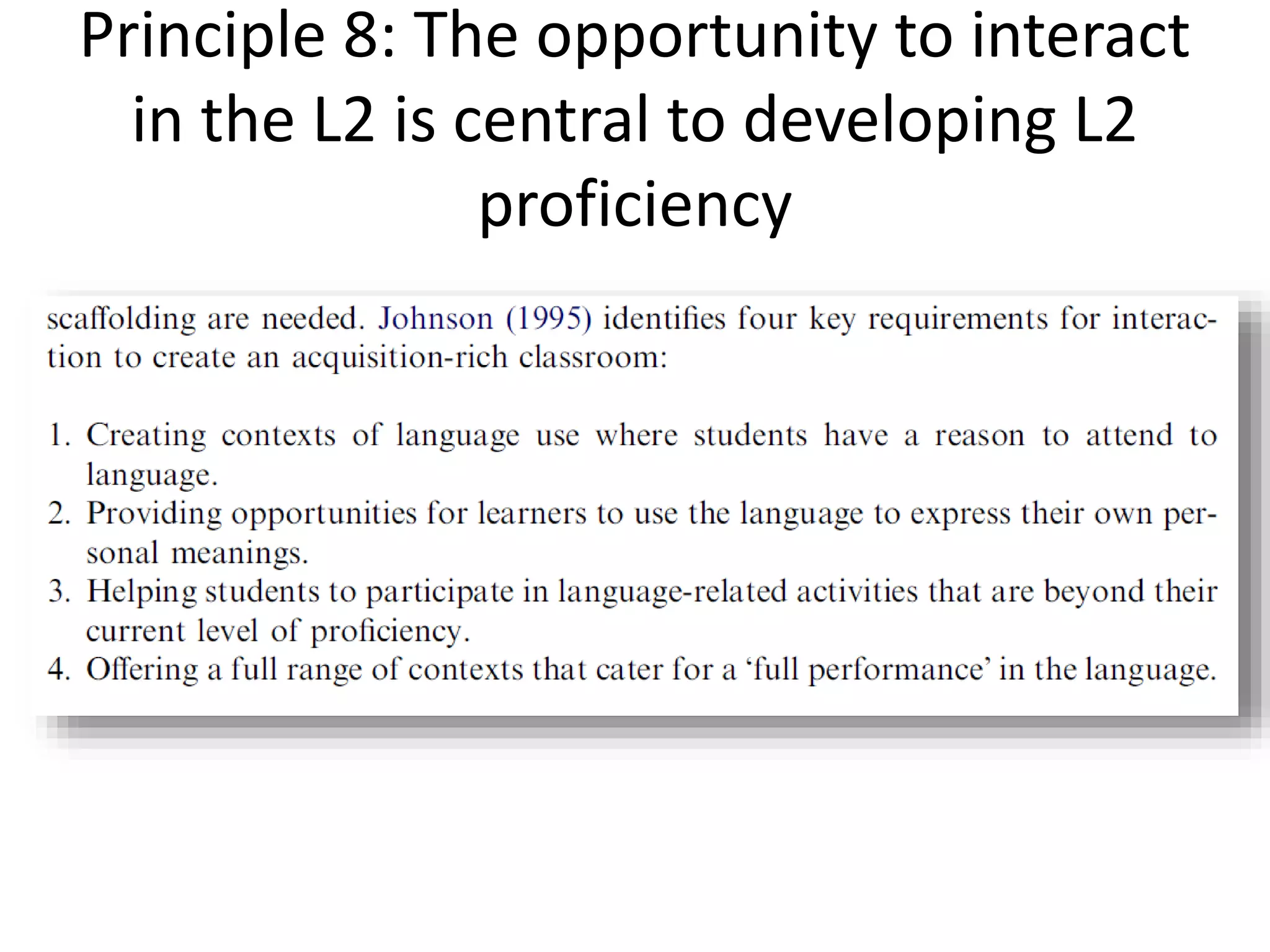
Principle 8: The opportunity to interact
in the L2 is central to developing L2
proficiency
Thanks! See you next time!
Slides and homework will be online!
ronmartinez@ufpr.br
www.drronmartinez.com

Purpose, production and personalization Day 1

  • 1.
    Purpose, Production andPersonalization Ron Martinez
  • 2.
  • 3.
    What is thepurpose of this workshop series? • Review rationale for a focus on production. • Raise awareness that production should be meaningful (e.g. personalized, purposeful) • Tie these concepts to underlying theory, with a bridge to practice.
  • 7.
  • 8.
  • 9.
  • 11.
  • 14.
    Principle 1 –Importance of formulaic expressions “There is now widespread acceptance of the importance played by formulaic expressions in language use. […] Traditionally, language instruction has been directed at developing rule-based competence (i.e., knowledge of specific grammatical rules) through the systematic teaching of pre-selected structures – what Long (1991) has referred to as a focus- on-forms approach.” (p. 211)
  • 15.
  • 17.
    Principle 2 –Pragmatic Meaning- Making
  • 18.
  • 20.
    Principle 3 –Focus on Form
  • 21.
  • 23.
    Principle 4 –Implicit vs. Explicit Knowledge
  • 24.
    Key principles fortoday: • Principle 1 – Importance of Formulaic Expressions • Principle 2 – Pragmatic Meaning-Making • Principle 3 – Focus on Form • Principle 4 – Implicit and Explicit Knowledge
  • 26.
    Key principles fortoday: • Principle 1 – Importance of Formulaic Expressions • Principle 2 – Pragmatic Meaning-Making • Principle 3 – Focus on Form • Principle 4 – Implicit and Explicit Knowledge • For example...
  • 27.
    ‘Islands of Reliability’ “Languageproduction may be much less the result of creative construction processes than we have thought...” (Dechert, 1983: 184)
  • 28.
    Do you agree? “Whilewithout grammar very little can be conveyed, without vocabulary nothing can be conveyed.” (Wilkins, 1972, p. 111)
  • 30.
    Key principles fortoday: • Principle 1 – Importance of Formulaic Expressions • Principle 2 – Pragmatic Meaning-Making • Principle 3 – Focus on Form • Principle 4 – Implicit and Explicit Knowledge
  • 34.
    ‘“Knowing words isthe key to understanding and being understood. The bulk of learning a new language consists of learning new words. […] Grammatical knowledge does not make for great proficiency in a language.” (Vermeer, 1992, p. 147)
  • 35.
  • 36.
  • 37.
    Lexical Acquisition • Bestif it arises from context • ‘Context’ can mean situation, text, need to express something – but in all cases ideally comes from the learner (i.e. ‘noticing’) • Purpose, production, personalization
  • 38.
    lexis planned incidental mostly in presentationstage throughout lesson, but especially in freer practice stages
  • 39.
  • 40.
    Myth: “The vocabularyinput in textbooks has been carefully planned.” Strategic lexical planning is negatively affected by a number of factors: • coursebook syllabus scope and sequence primarily motivated by grammar and topic – and conventions surrounding these; • publishers’ deadlines and market sensitivity; • no ‘vocabulary syllabus’; • authors’ notions of what is useful.
  • 41.
    Problems with topic-drivensyllabus • not much ‘stretching’ (Häcker, 2008; Reda, 2003; Schmitt & Schmitt, under review) • lexical sets are not effective (Erten & Tekin, 2008; Nation, 2000; Tinkham, 1993; Waring 1997) • native speakers are not good at judging important properties of words, such as frequency, coverage and collocation (Alderson, 2007; Fox, 1987; Koprowski, 2007) • predominant selection criteria seem to have ‘salience’ at their core, which can exclude a number of ‘less obvious’ items.
  • 42.
  • 44.
    The solution? • Well,not “the” solution, but one way to address the situation: purpose, production, and pesonalization. • For example, use you.
  • 48.
    Key principles fortoday: • Principle 1 – Importance of Formulaic Expressions • Principle 2 – Pragmatic Meaning-Making • Principle 3 – Focus on Form • Principle 4 – Implicit and Explicit Knowledge
  • 49.
    Key principles fortoday: • Principle 1 – Importance of Formulaic Expressions • Principle 2 – Pragmatic Meaning-Making • Principle 3 – Focus on Form • Principle 4 – Implicit and Explicit Knowledge
  • 51.
    The solution? • Well,not “the” solution, but one way to address the situation: purpose, production, and pesonalization. • For example, use you.
  • 52.
    The solution? • Well,not “the” solution, but one way to address the situation: purpose, production, and pesonalization. • For example, use you. • Use human nature.
  • 53.
  • 55.
    Now you try! 1.Use pics on your phone (if available). 2. When finished, make notes about ‘ancillary’ talk.
  • 56.
  • 58.
    Principle 8: Theopportunity to interact in the L2 is central to developing L2 proficiency
  • 59.
    Thanks! See younext time! Slides and homework will be online! ronmartinez@ufpr.br www.drronmartinez.com

Editor's Notes

  • #27 Examples of phone language: ‘Caiu’, ‘De onde fala?’ – ‘Gostaria de falar com quem?’, ‘Chama, chama, ninguem atende’, ‘Não é daqui’, ‘Tá podendo falar?’
  • #31 Examples of phone language: ‘Caiu’, ‘De onde fala?’ – ‘Gostaria de falar com quem?’, ‘Chama, chama, ninguem atende’, ‘Não é daqui’, ‘Tá podendo falar?’
  • #49 Examples of phone language: ‘Caiu’, ‘De onde fala?’ – ‘Gostaria de falar com quem?’, ‘Chama, chama, ninguem atende’, ‘Não é daqui’, ‘Tá podendo falar?’
  • #50 Examples of phone language: ‘Caiu’, ‘De onde fala?’ – ‘Gostaria de falar com quem?’, ‘Chama, chama, ninguem atende’, ‘Não é daqui’, ‘Tá podendo falar?’