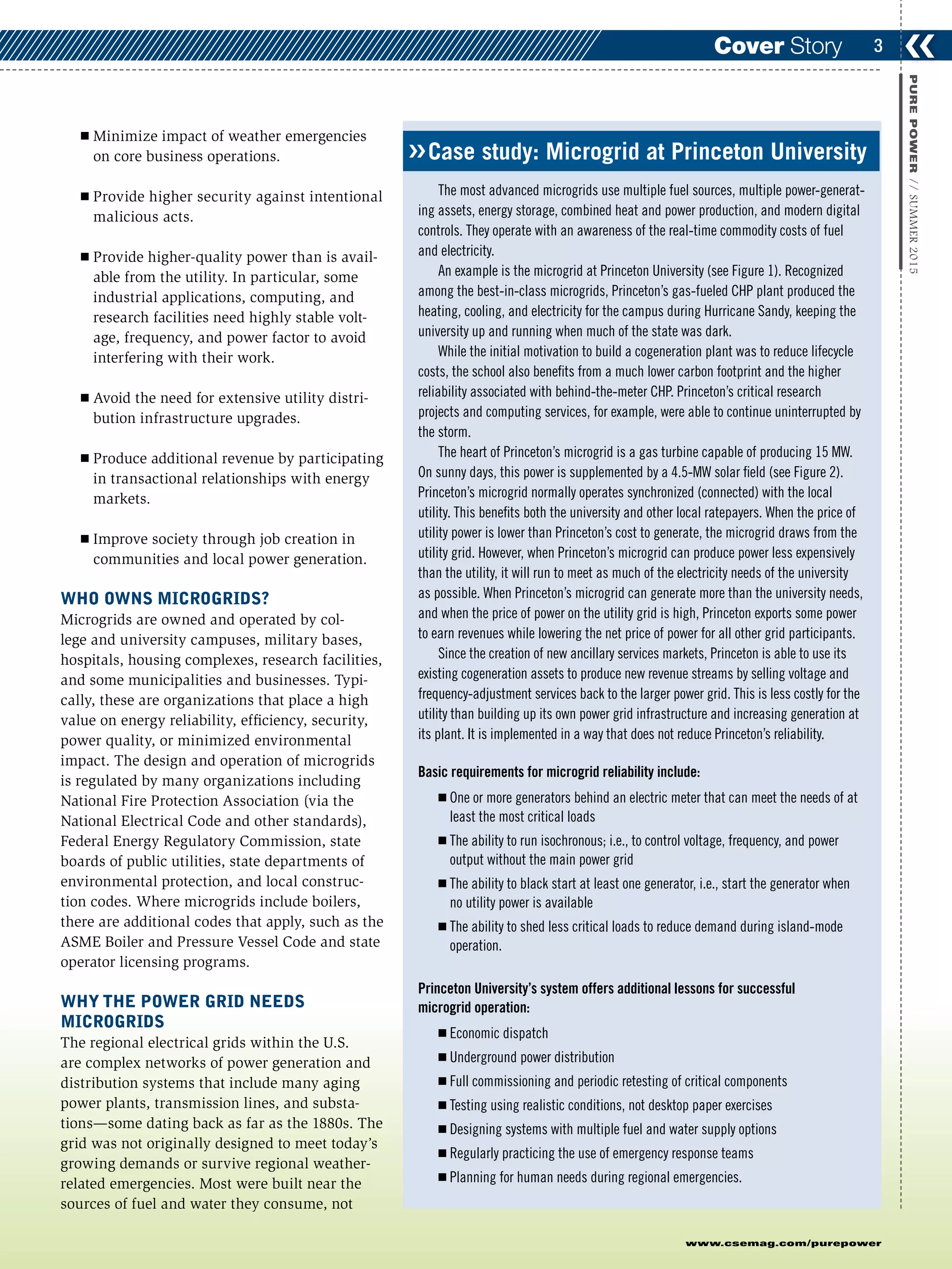
This document discusses microgrids, which are localized power grids that can operate independently from or in parallel with the traditional electric utility grid. Microgrids provide benefits like lower costs, higher reliability and resiliency, and reduced environmental impact compared to centralized utility power. They are owned by organizations that value factors like energy security, efficiency, and power quality, such as universities, hospitals, and businesses. Microgrids use multiple distributed energy resources including generators, energy storage, and renewables. The document provides an example of Princeton University's advanced microgrid, which supported campus operations through a major storm using its gas turbine and solar generators.









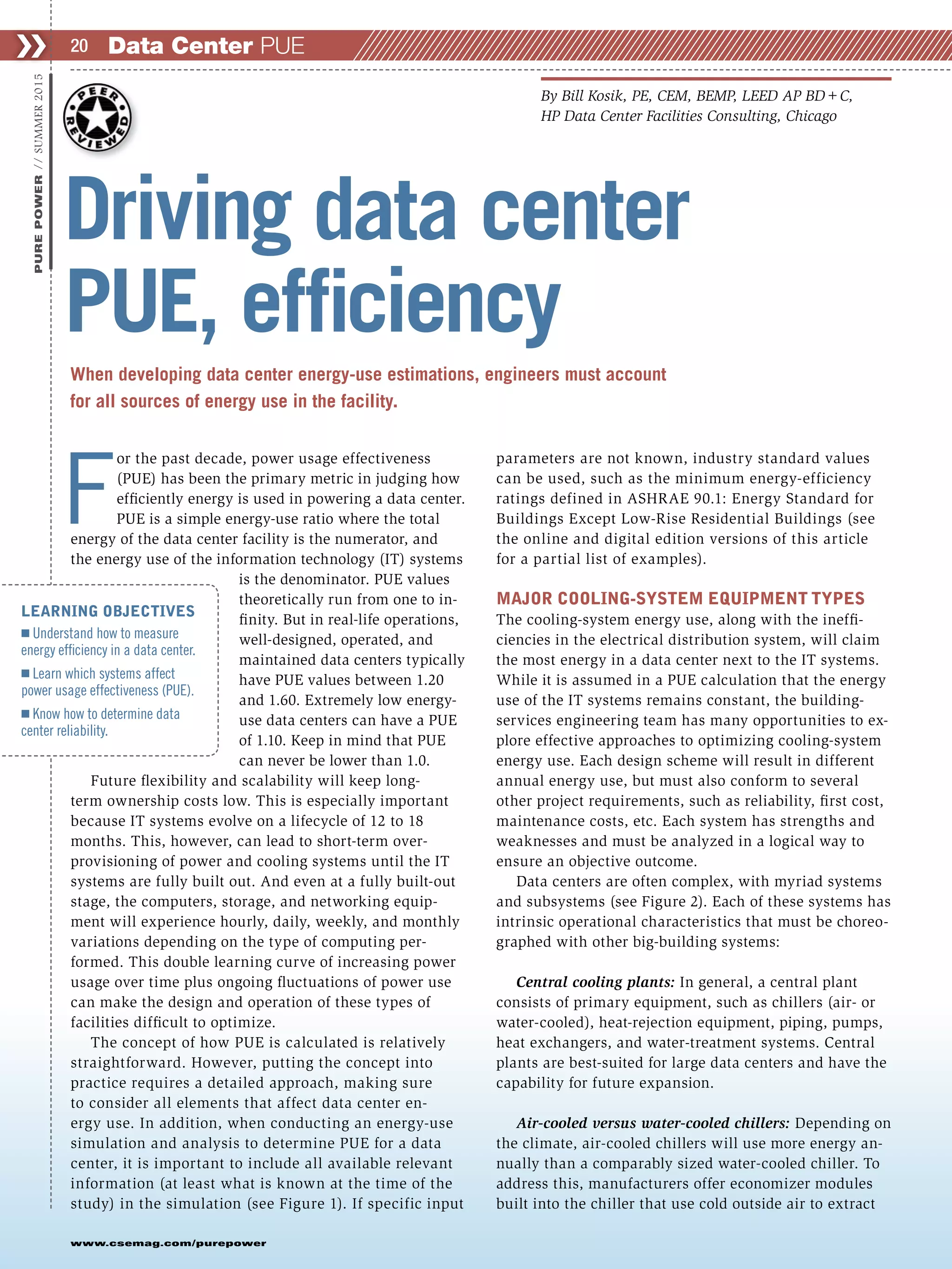
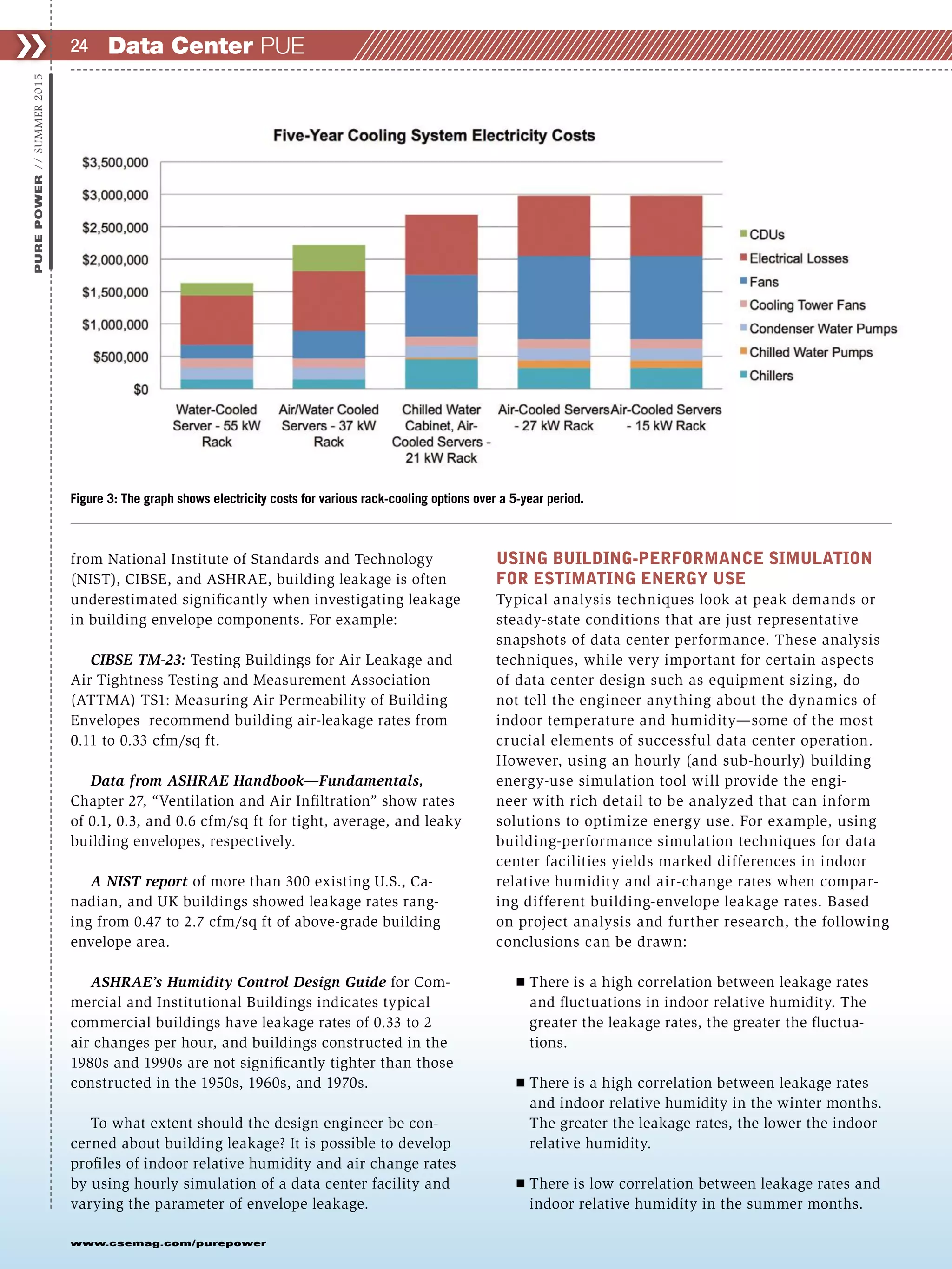
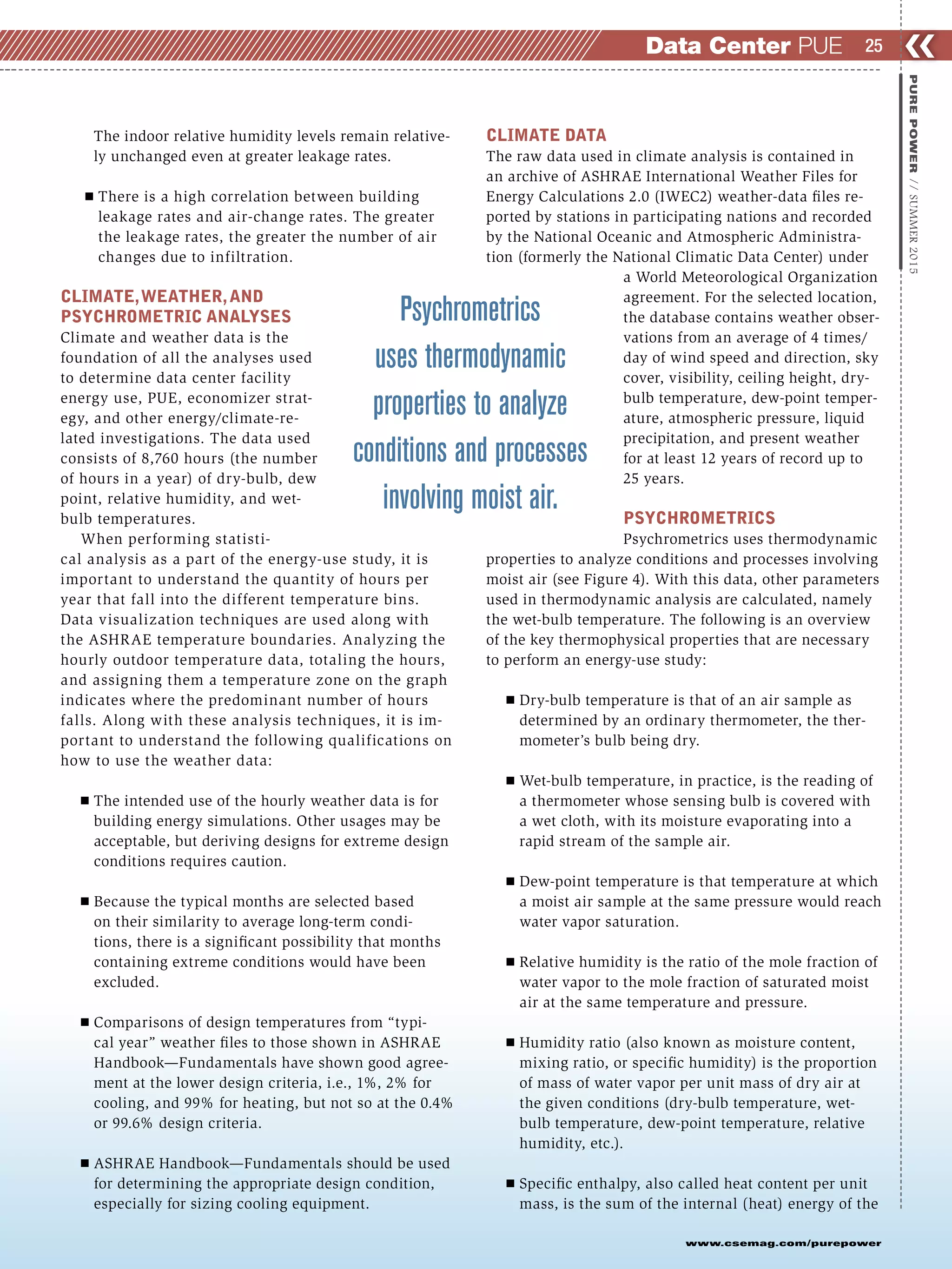
![www.csemag.com/purepower
Data Center PUE❯❯ 26
PUREPOWER//SUMMER2015
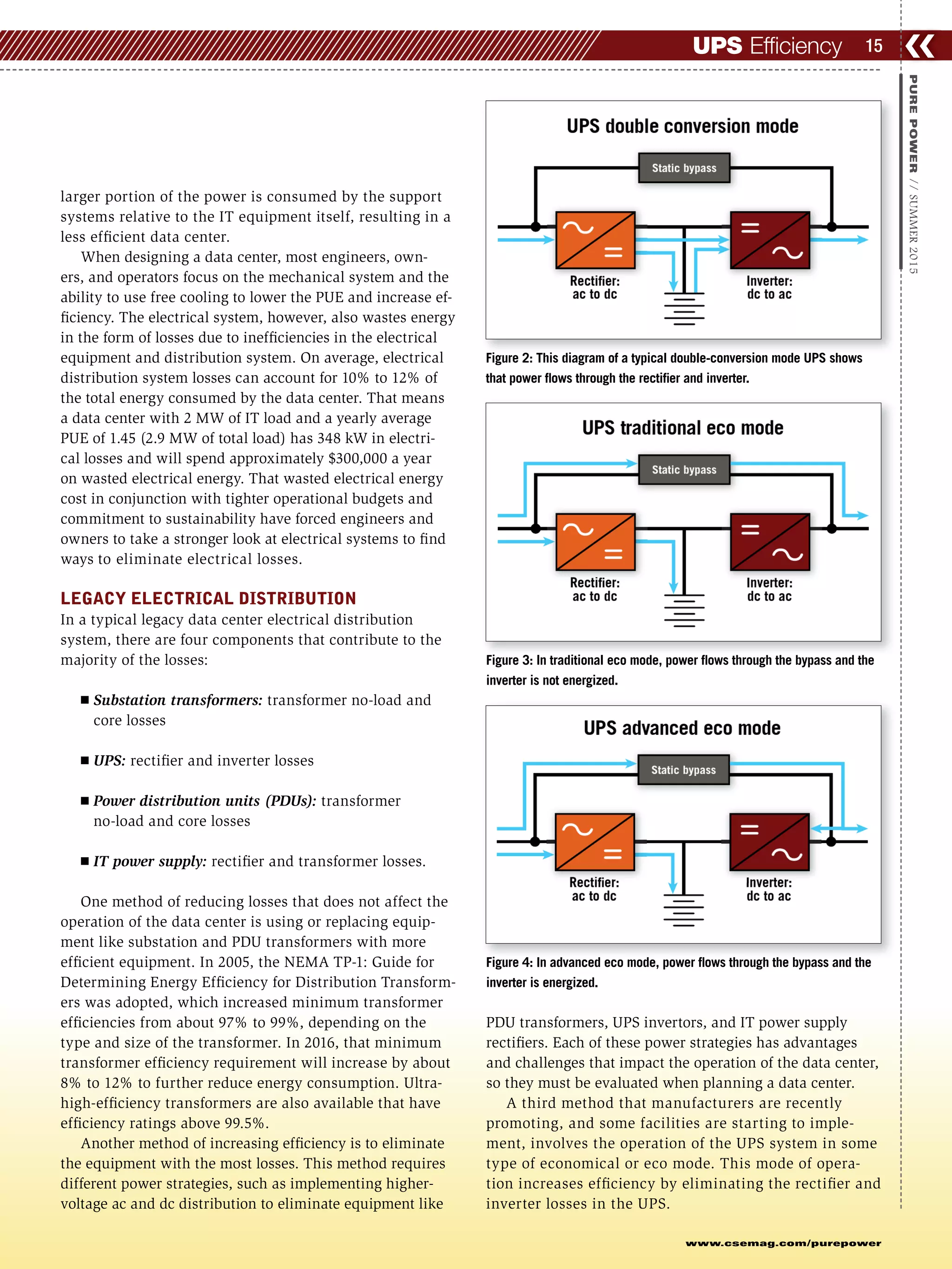
moist air in question, including the heat of the air
and water vapor within.
Ⅲ Specific volume, also called inverse density, is the
volume per unit mass of the air sample.
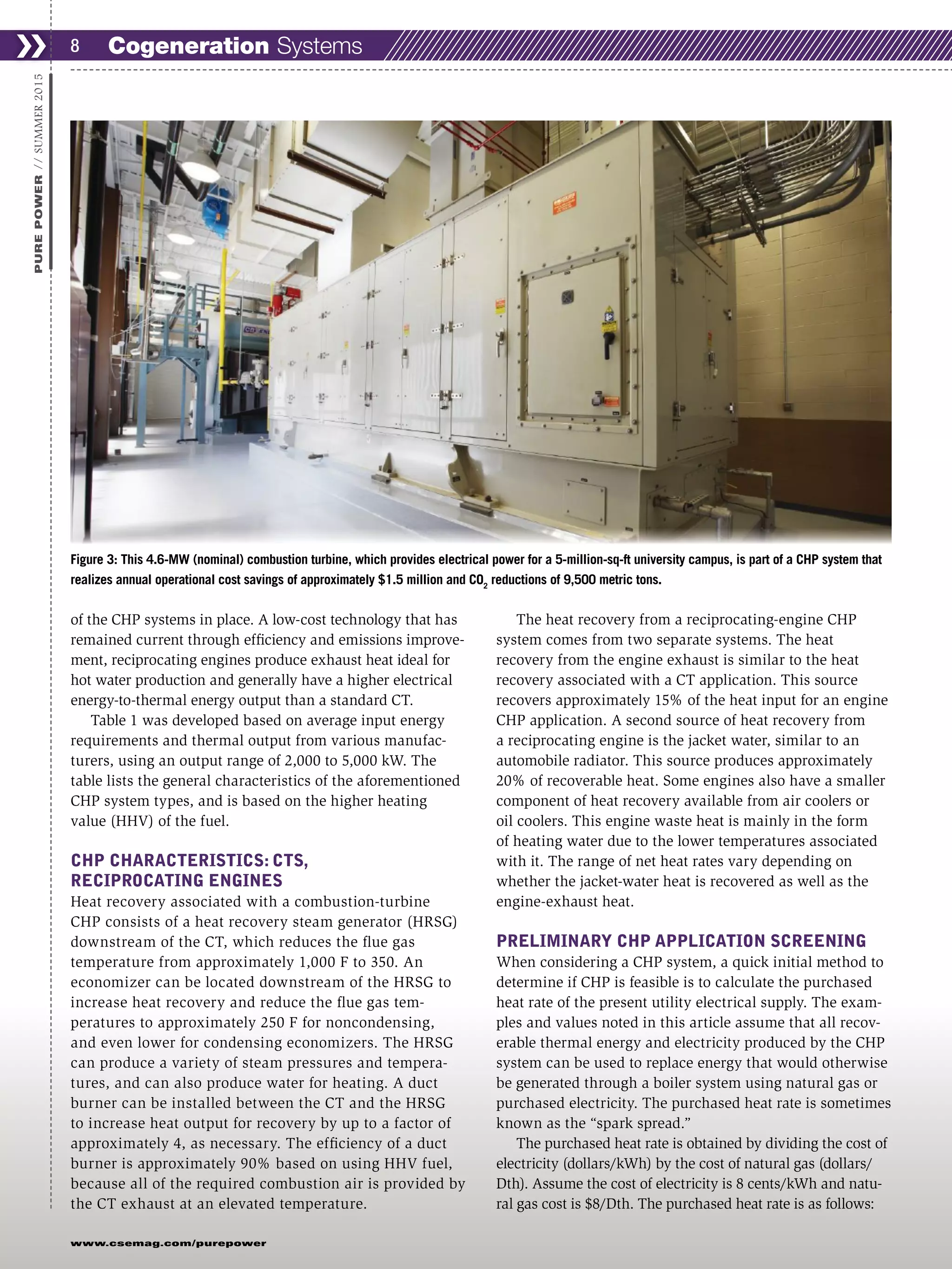
RELIABILITY CONSIDERATIONS
Most reliability strategies revolve around the use of multi-
ple power and cooling modules. For example, the systems
can be arranged in an N+1, N+2, 2N, or
2(N+1) configuration. The basic module
size (N) and the additional modules (+1,
+2, etc.) are configured to pick up part of
the load (or even the entire load) in case
of module failure, or during a scheduled
maintenance event. When all of the UPS
modules, air-handling units, and other
cooling and electrical equipment are
pieced together to create cohesive power-
and-cooling infrastructure designed to
meet certain reliability and availability
requirements, then efficiency values at
the various loading percentages should
be developed for the entire integrated system. When all of
these components are analyzed in different system topolo-
gies, loss curves can be generated so the efficiency levels
can be compared to the reliability of the system, assisting
in the decision-making process.
When we use the language of reliability, the terminol-
ogy is important. For example, “reliability” is the prob-
ability that a system or piece of equipment will operate
properly for a specified period of time under design
operating conditions without failure. Also, “availability”
is the long-term average fraction of time that a component
or system is in service and is satisfactorily performing its
intended function. These are just two of the many metrics
that are calculated by running reliability analyses.
One of the general conclusions often drawn from reli-
ability studies is that data center facilities with large IT
loads have a higher chance of component failure than
data centers with small IT loads. Somewhat intuitive,
the more parts and pieces in the power-and-cooling
infrastructure, the higher the likelihood of a component
failure. Also, system topology will drive reliability as
found when comparing electrical systems with N, N+2,
and 2(N+1) configurations. These systems will have
probabilities of failure (over a 5-year period) that range
from a high of 83% (N) to a low of 4% [2(N+1)].
When analyzing the energy performance of data cen-
ters that use this module design, it becomes evident that
at partial-load conditions, the higher reliability designs
will exhibit lower overall efficiencies. This is certainly
true for UPS and PDU equipment and others that have low
efficiency at low-percent loading.
Understanding that PUE is comprised of all energy
use in the data center facility, the non-data center areas
can be large contributors to the total energy consump-
tion of the facility. While it is not advisable to underes-
timate the energy consumption of non-data center areas,
it is also not advisable to overestimate. Like most areas
in commercial buildings, there are changes in occu-
pancy and lighting over the course of days, weeks, and
months, and these changes will have to be accounted for
when estimating energy use. When
performing energy estimations,
develop schedules that turn lights
and miscellaneous electrical loads
on and off, or assign a percentage of
total load to the variable. It is best
to ascertain these schedules directly
from the owner. If unavailable,
industry guidelines and standards
can be used.
Certainly, no two data centers
are exactly the same, but develop-
ing nomenclature and an approach
to assigning operating schedules to
different rooms within the data center facility will be of
great assistance when energy-use calculations are started:
Data center: primary room(s) housing computer, net-
working, and storage gear; raised floor area or data hall
Data center lighting: lighting for data center(s) as
defined above
Secondary lighting: lighting for all non-data center
rooms, such as UPS, switchgear, battery, etc.; also in-
cludes appropriate administrative areas and corridors
Miscellaneous power: non-data center power for plug
loads and systems such as emergency management
services, building management systems, fire alarm,
security, fire-suppression system, etc.
Secondary HVAC: cooling and ventilation for non-
data center spaces including UPS rooms. It is assumed
that the data center spaces have a different HVAC system
than the rest of the building.
The relationship between the IT systems, equip-
ment, and the cooling system is an important one. The
computers rely heavily on the cooling system to provide
adequate air quantity and temperature. Without the
proper temperature, the servers and other IT equipment
might experience slower processing speed or even a
server-initiated shutdown to prevent damage to internal
components. There are a number of ways to optimize air
flow and temperature.
Proper airflow
management creates
cascading efficiency
through many elements
in the data center.](https://image.slidesharecdn.com/fefdebf3-43eb-4669-87b5-1b16749b7a51-150819162733-lva1-app6892/75/Pure-Power-Magazine-Barter-Implementing-Microgrids-June-Coverstory-28-2048.jpg)
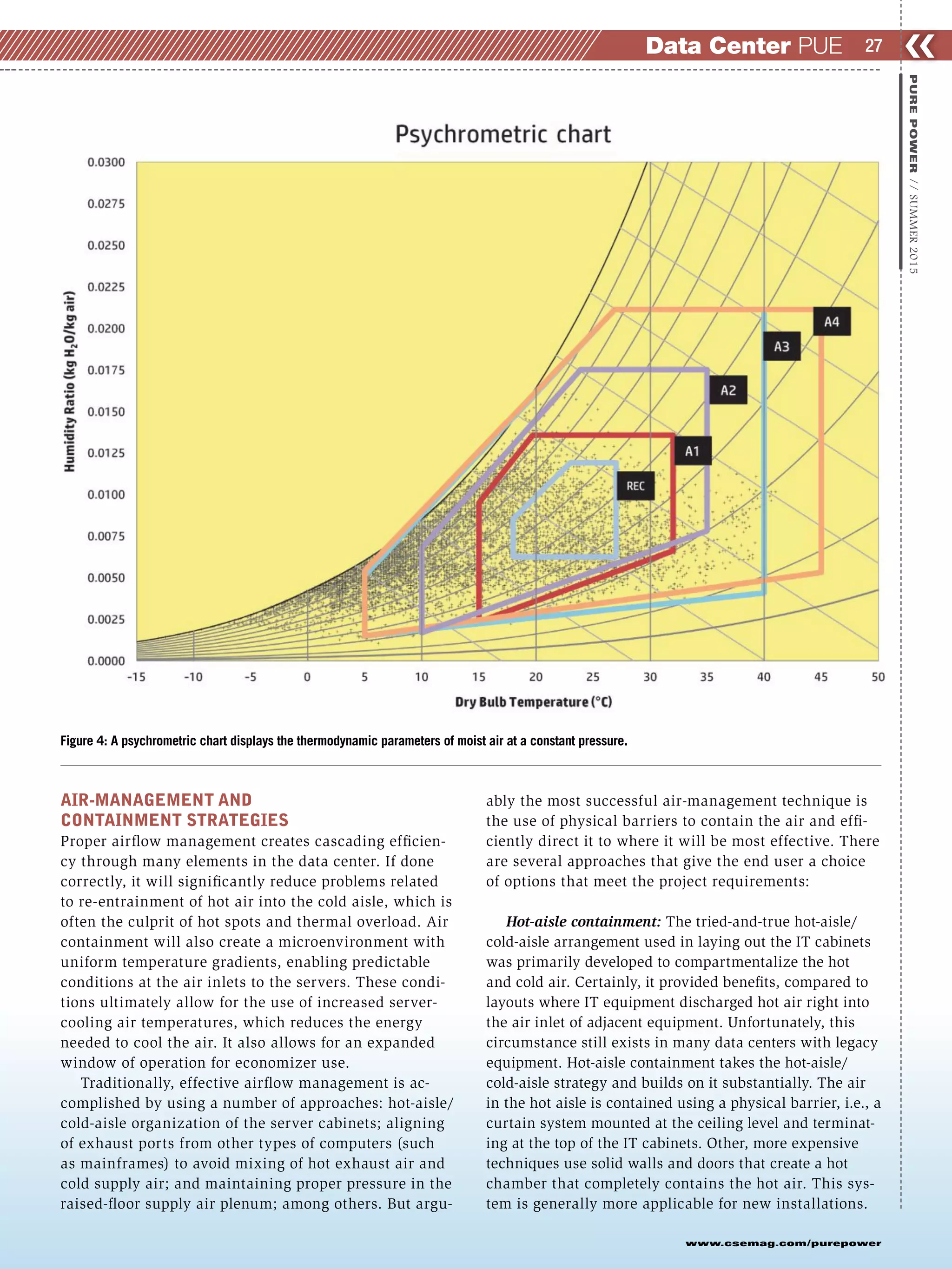

![www.csemag.com/purepower
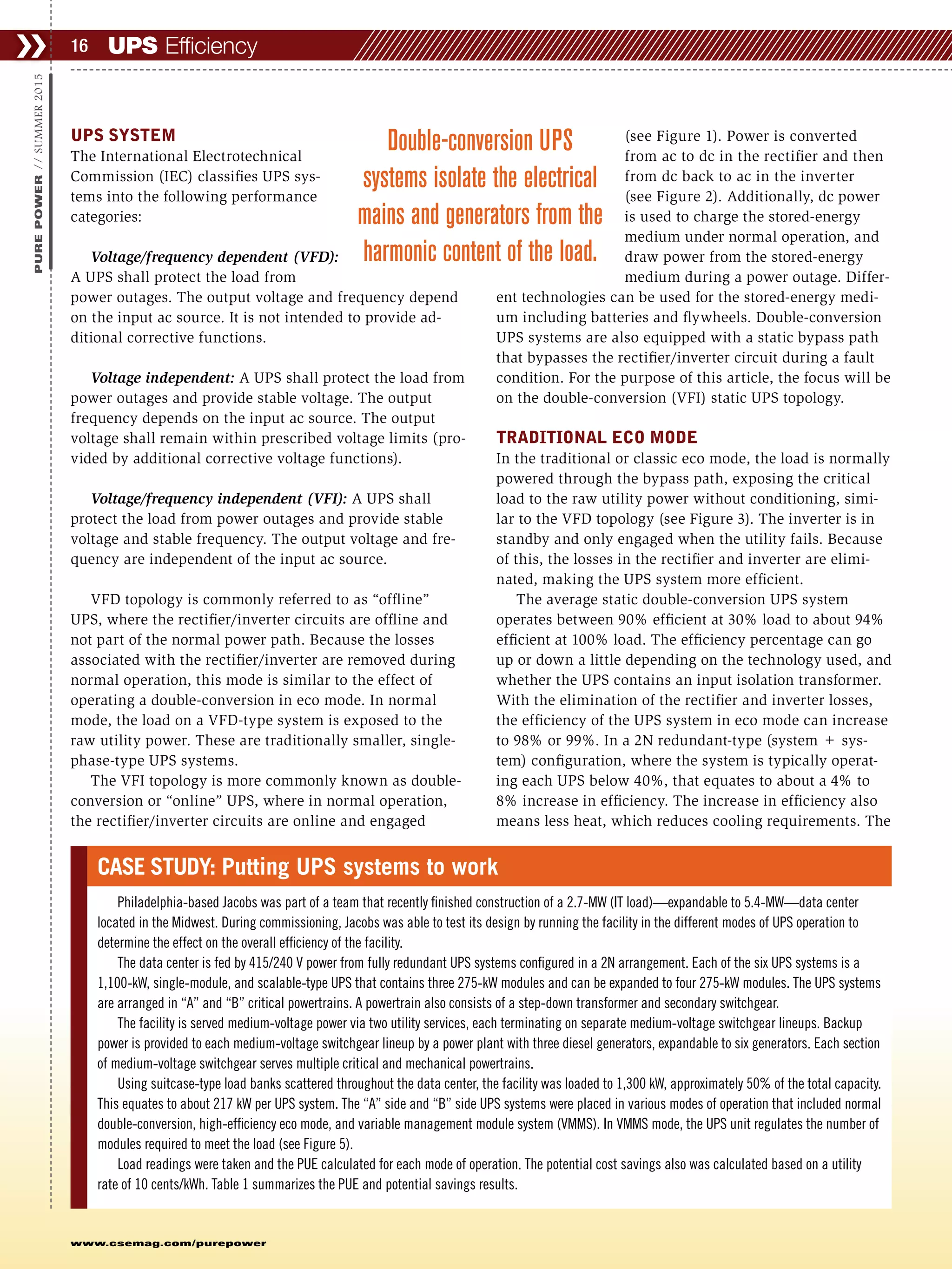
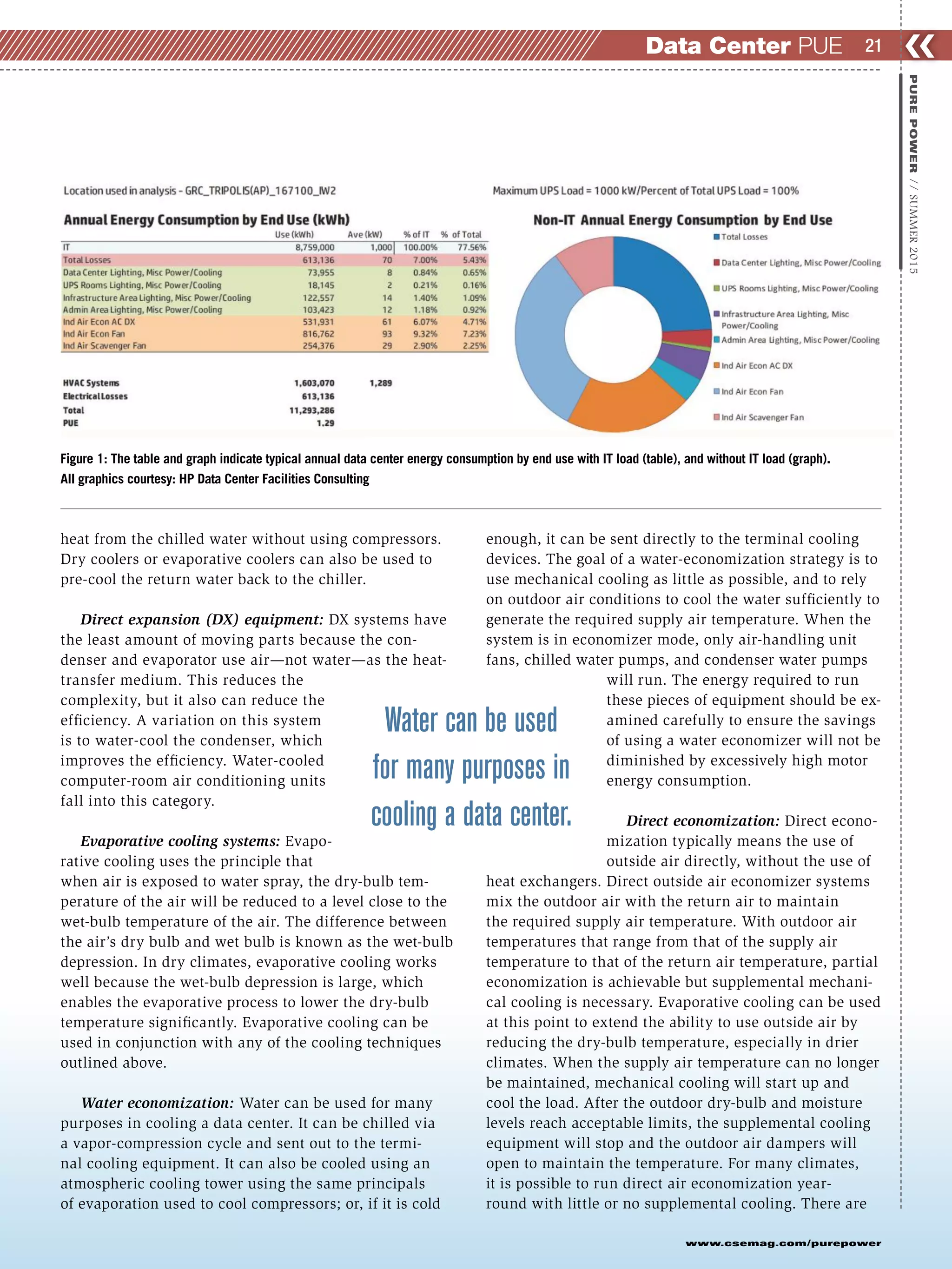
efficiency values at the various loading percentages
should be developed for the entire integrated sys-
tem (see Table 1). When all of these components are
analyzed in different system topologies, loss curves
can be generated so the efficiency levels can be com-
pared to the reliability of the system, assisting in the
decision-making process.
When we use the language of reliability, the ter-
minology is important. For example, “reliability” is
the probability that a system or piece of equipment
will operate properly for a specified period of time
under design operating conditions without failure.
Also, “availability” is the long-term average fraction
of time that a component or system is in service and is
satisfactorily performing its intended function. These
are just two of the many metrics that are calculated by
running reliability analyses.
One of the general conclusions often drawn from
reliability studies is that data center facilities with
large IT loads have a higher chance of component fail-
ure than data centers with small IT loads. Somewhat
intuitive, the more parts and pieces in the power-and-
❮❮
PUREPOWER//SUMMER2015
DE-8Data Center PUE
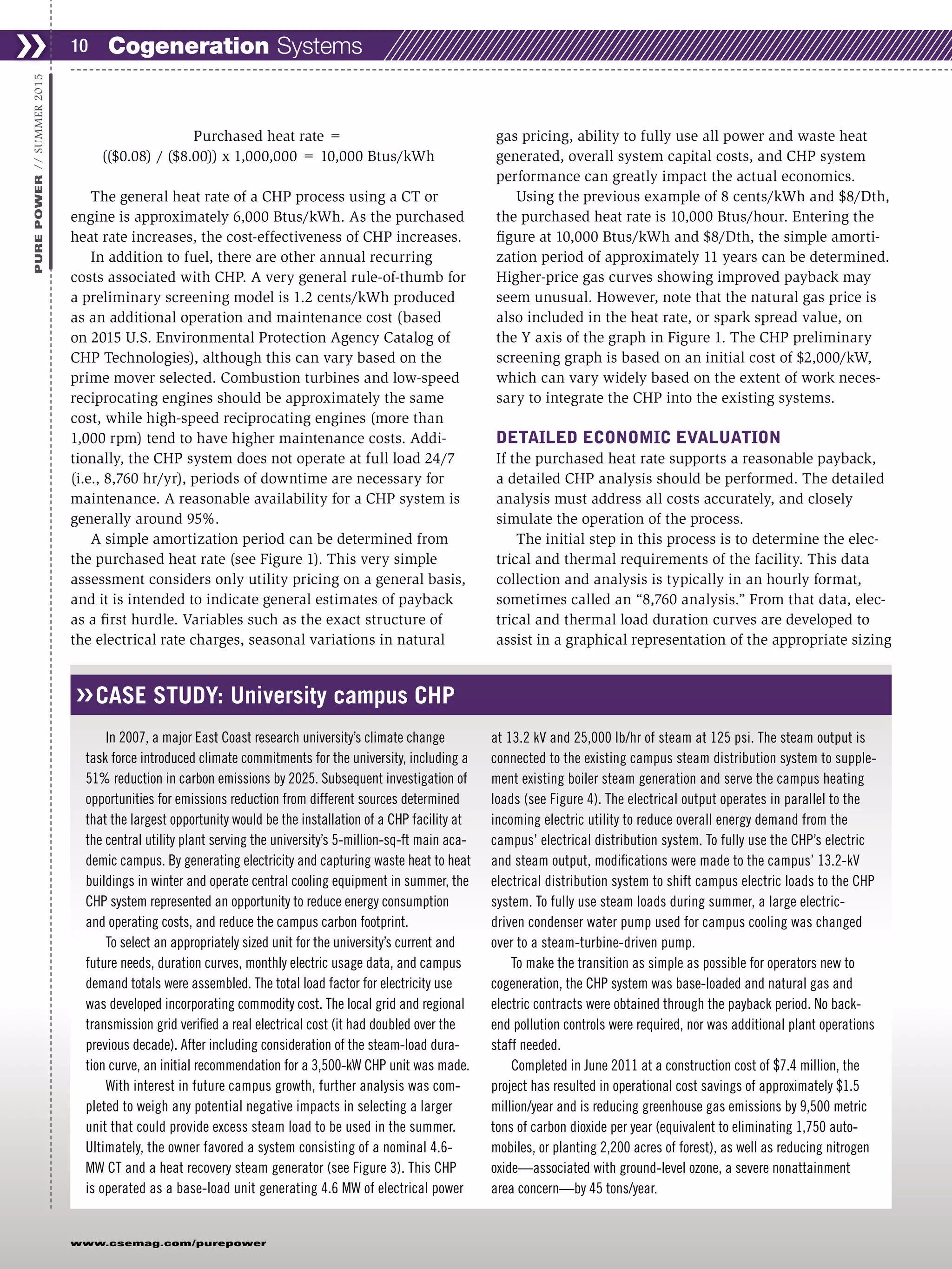
Table 1: Data center reliability comparison for various configurations
Name
Description of
critical distribution system
Mean time between
failures (years)
Mean time to
repair (hours)
Availability
Probability of
failure (5 years)
N gen
N UPS
N = 2 generators
N = 4 UPS modules
2N PDU distribution
to dual-cord loads
7.3 2.08 0.99996755 48.73%
N+1 gen
N+1 UPS
N+1 = 3 generators
N+1 = 5 UPS
modules, 2N PDU
distribution to dual-
cord loads
16.2 3.61 0.99997461 26.47%
N+1 gen
N+1 UPS + utility
static transfer
switch
N+1 = 3 generators
N+1 = 5 UPS
modules, STS/PDUs
with utility power, 2N
PDU distribution to
dual-cord loads
66 1.92 0.99999669 6.70%
2N gen 2N UPS
2N generators
2N UPS modules (4),
2N PDU distribution
to dual-cord loads
68.6 2.55 0.99999576 6.84%
N+1 gen
2 of 3 double-
redundancy UPS
N+1 generators, 2 of
3 distributed
redundant [UPS
modules (2) and PDUs]
to dual-cord loads
57.2 2.28 0.99999544 8.24%
3 of 4 BR Gen +
UPS
3 out of 4 block
redundant [gens,
UPS modules(1)], 2N
STS/PDUs
distribution to
dual-cord loads
58.4 19.05 0.9999628 7.32%
N+1 Gen 3
of 4 RR UPS
N+1 generators, 3
out of 4 redundant
reserve UPS modules (1), 2N
STS/PDUs distribution
to dual-cord loads
69 2.04 0.99999662 6.70%
Source: HP Data Center Facilities Consulting](https://image.slidesharecdn.com/fefdebf3-43eb-4669-87b5-1b16749b7a51-150819162733-lva1-app6892/75/Pure-Power-Magazine-Barter-Implementing-Microgrids-June-Coverstory-39-2048.jpg)
![www.csemag.com/purepower
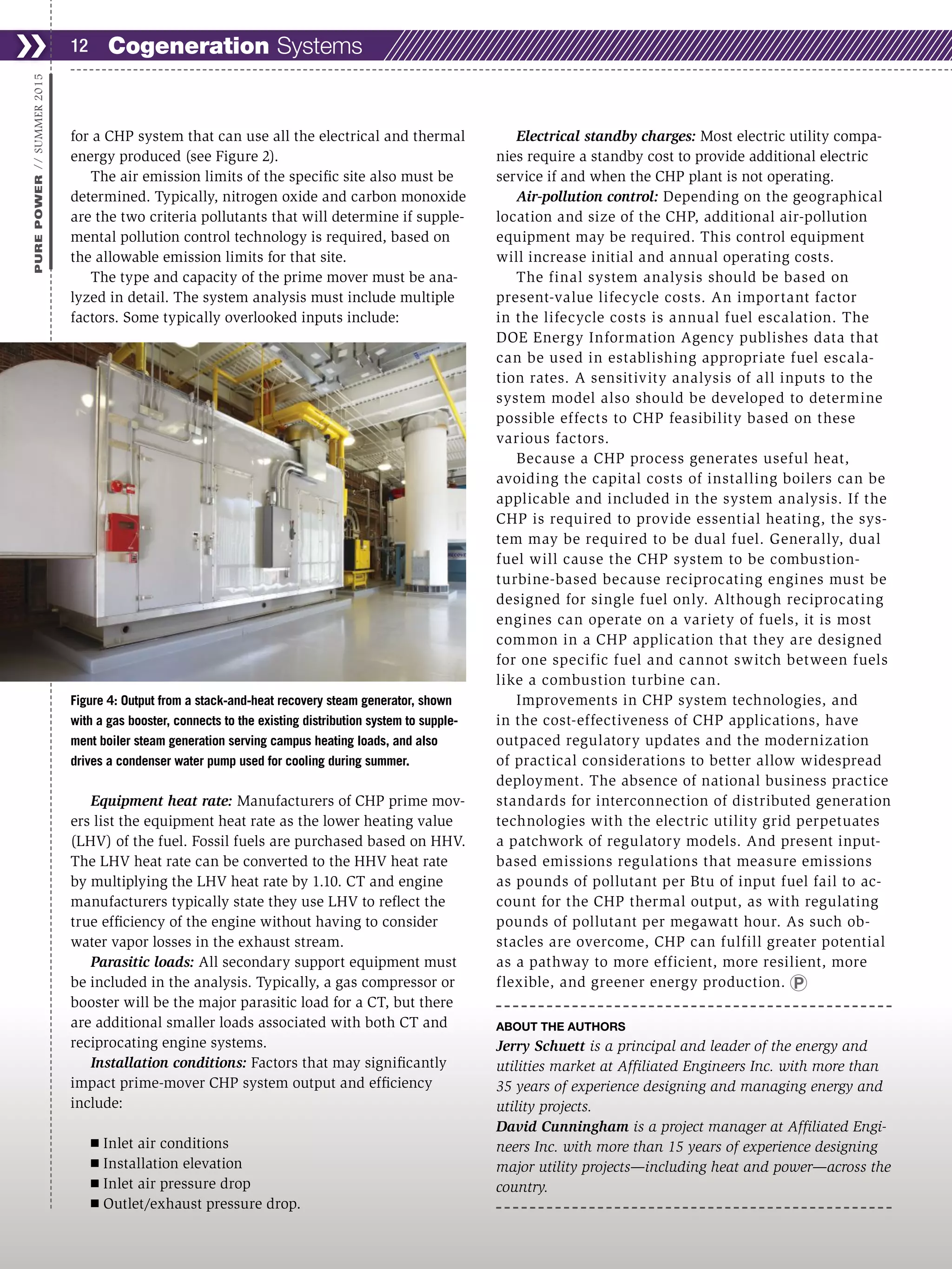
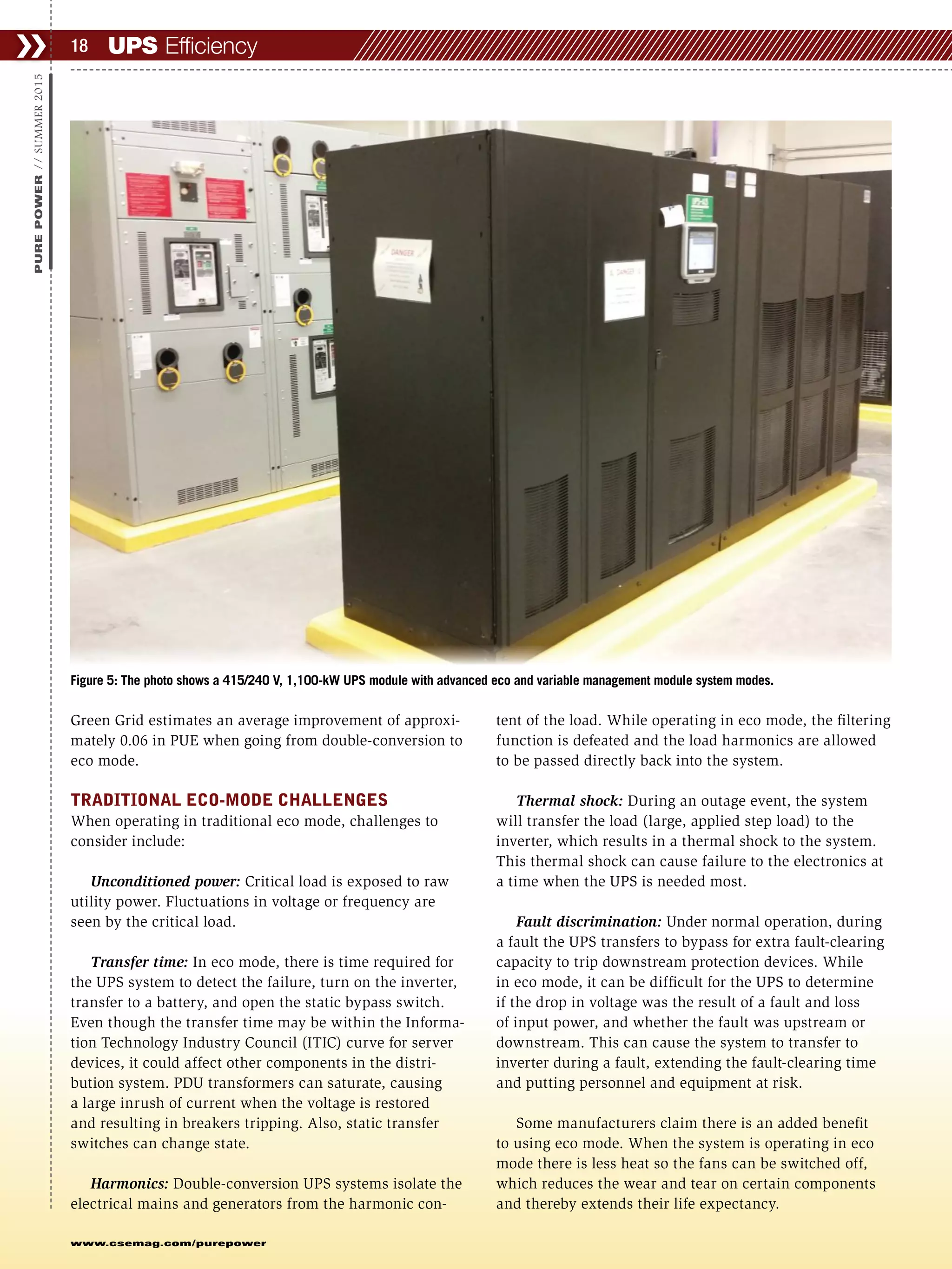
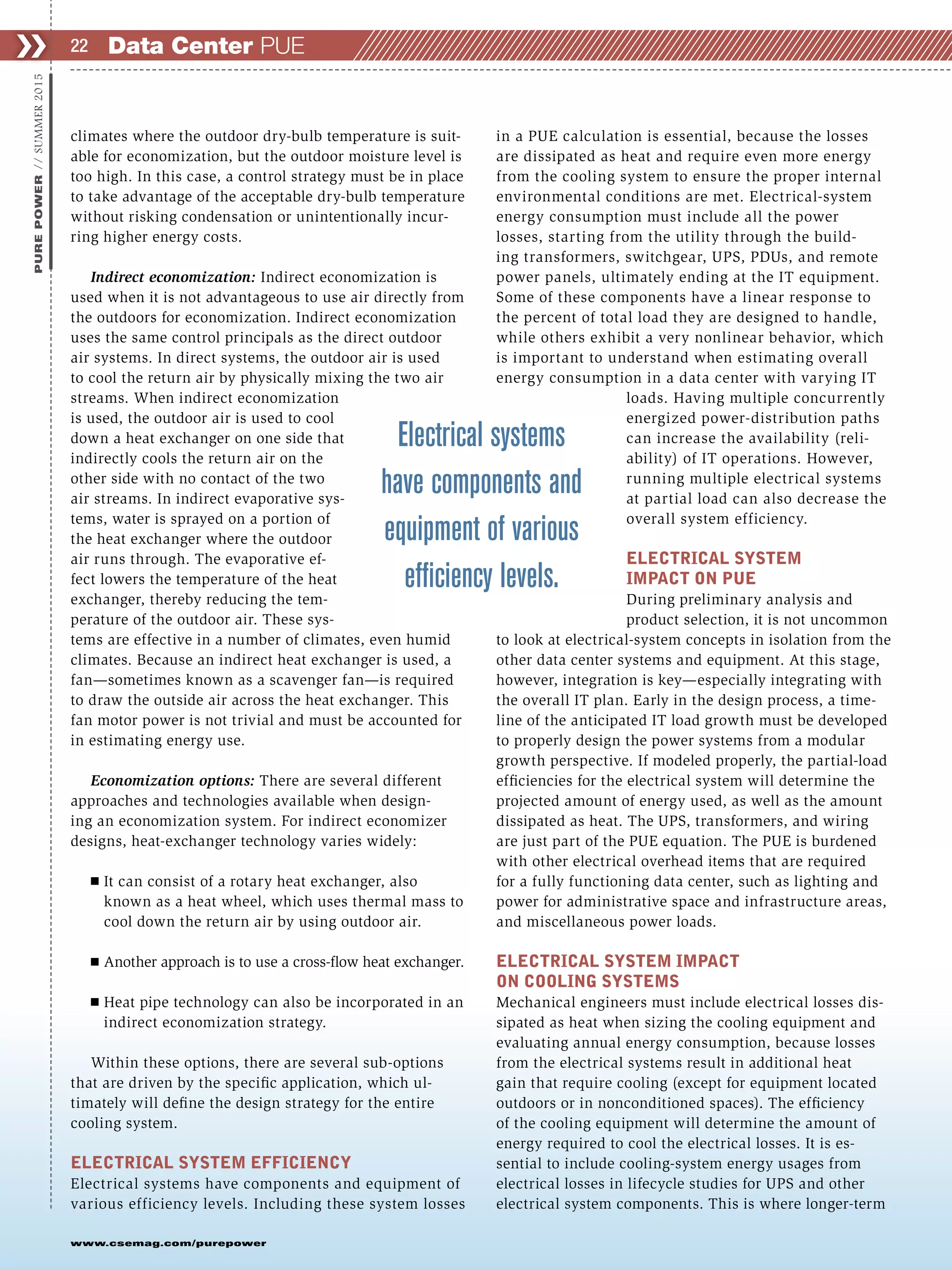
cooling infrastructure, the higher the likelihood of a
component failure. Also, system topology will drive
reliability as found when comparing electrical systems
with N, N+2, and 2(N+1) configurations. These sys-
tems will have probabilities of failure (over a 5-year
period) that range from a high of 83% (N) to a low of
4% [2(N+1)].
When analyzing the energy performance of data
centers that use this module design, it becomes evi-
dent that at partial-load conditions, the higher reli-
ability designs will exhibit lower overall efficiencies.
This is certainly true for UPS and PDU equipment and
others that have low efficiency at
low-percent loading.
Understanding that PUE is com-
prised of all energy use in the data
center facility, the non-data center
areas can be large contributors to
the total energy consumption of the
facility. While it is not advisable to
underestimate the energy consump-
tion of non-data center areas, it is
also not advisable to overestimate.
Like most areas in commercial build-
ings, there are changes in occupancy
and lighting over the course of days,
weeks, and months, and these changes will have to
be accounted for when estimating energy use. When
performing energy estimations, develop schedules that
turn lights and miscellaneous electrical loads on and
off, or assign a percentage of total load to the variable.
It is best to ascertain these schedules directly from the
owner. If unavailable, industry guidelines and stan-
dards can be used.
Certainly, no two data centers are exactly the same,
but developing nomenclature and an approach to as-
signing operating schedules to different rooms within
the data center facility will be of great assistance
when energy-use calculations are started:
Ⅲ Data center: primary room(s) housing computer,
networking, and storage gear; raised floor area or
data hall
Ⅲ Data center lighting: lighting for data center(s) as
defined above
Ⅲ Secondary lighting: lighting for all non-data cen-
ter rooms, such as UPS, switchgear, battery, etc.;
also includes appropriate administrative areas
and corridors
Ⅲ Miscellaneous power: non-data center power for
plug loads and systems such as emergency man-
agement services, building management systems,
fire alarm, security, fire-suppression system, etc.
Ⅲ Secondary HVAC: cooling and ventilation for
non-data center spaces including UPS rooms. It is
assumed that the data center spaces have a differ-
ent HVAC system than the rest of the building.
The relationship between the IT systems, equip-
ment, and the cooling system is an important one. The
computers rely heavily on the cooling system to pro-
vide adequate air quantity and temperature. Without
the proper temperature, the servers
and other IT equipment might ex-
perience slower processing speed or
even a server-initiated shutdown to
prevent damage to internal compo-
nents. There are a number of ways
to optimize air flow and tempera-
ture.
AIR-MANAGEMENT AND
-CONTAINMENT STRATEGIES
Proper airflow management creates
cascading efficiency through many
elements in the data center. If done
correctly, it will significantly reduce problems related
to re-entrainment of hot air into the cold aisle, which
is often the culprit of hot spots and thermal overload.
Air containment will also create a microenvironment
with uniform temperature gradients, enabling predict-
able conditions at the air inlets to the servers. These
conditions ultimately allow for the use of increased
server-cooling air temperatures, which reduces the
energy needed to cool the air. It also allows for an
expanded window of operation for economizer use.
Traditionally, effective airflow management is
accomplished by using a number of approaches:
hot-aisle/cold-aisle organization of the server cabi-
nets; aligning of exhaust ports from other types of
computers (such as mainframes) to avoid mixing of
hot exhaust air and cold supply air; and maintaining
proper pressure in the raised-floor supply air plenum;
among others. But arguably the most successful air-
management technique is the use of physical barriers
to contain the air and efficiently direct it to where it
will be most effective. There are several approaches
that give the end user a choice of options that meet
the project requirements:
Hot-aisle containment: The tried-and-true hot-
aisle/cold-aisle arrangement used in laying out the IT
cabinets was primarily developed to compartmentalize
the hot and cold air. Certainly, it provided benefits,
❯❯PUREPOWER//SUMMER2015
Data Center PUEDE- 9
Proper airflow
management creates
cascading efficiency
through many elements
in the data center.](https://image.slidesharecdn.com/fefdebf3-43eb-4669-87b5-1b16749b7a51-150819162733-lva1-app6892/75/Pure-Power-Magazine-Barter-Implementing-Microgrids-June-Coverstory-40-2048.jpg)





![Rahul[1]](https://cdn.slidesharecdn.com/ss_thumbnails/rahul1-170329035504-thumbnail.jpg?width=640&height=640&fit=bounds)


