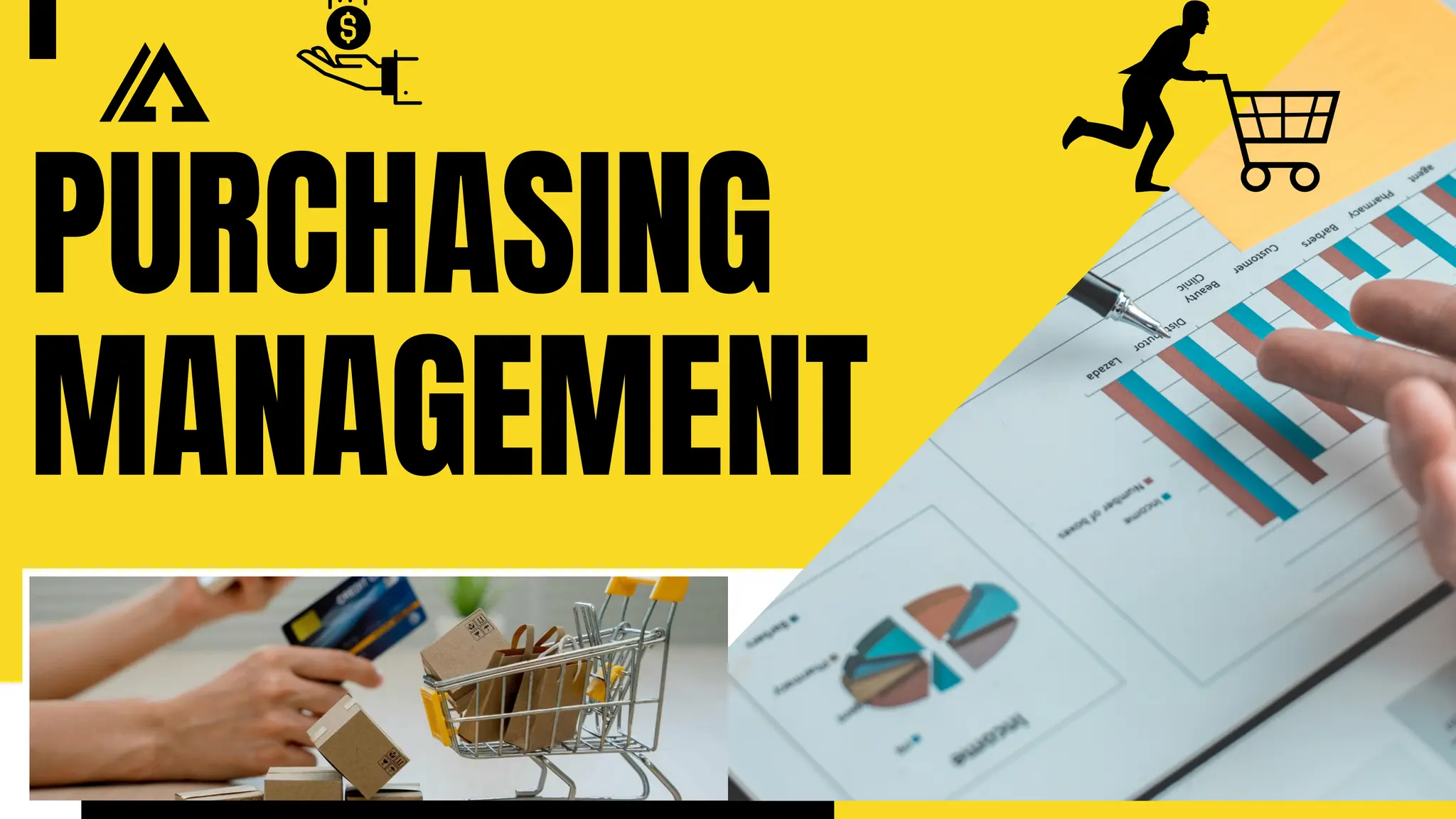
PURCHASING
MANAGEMENT
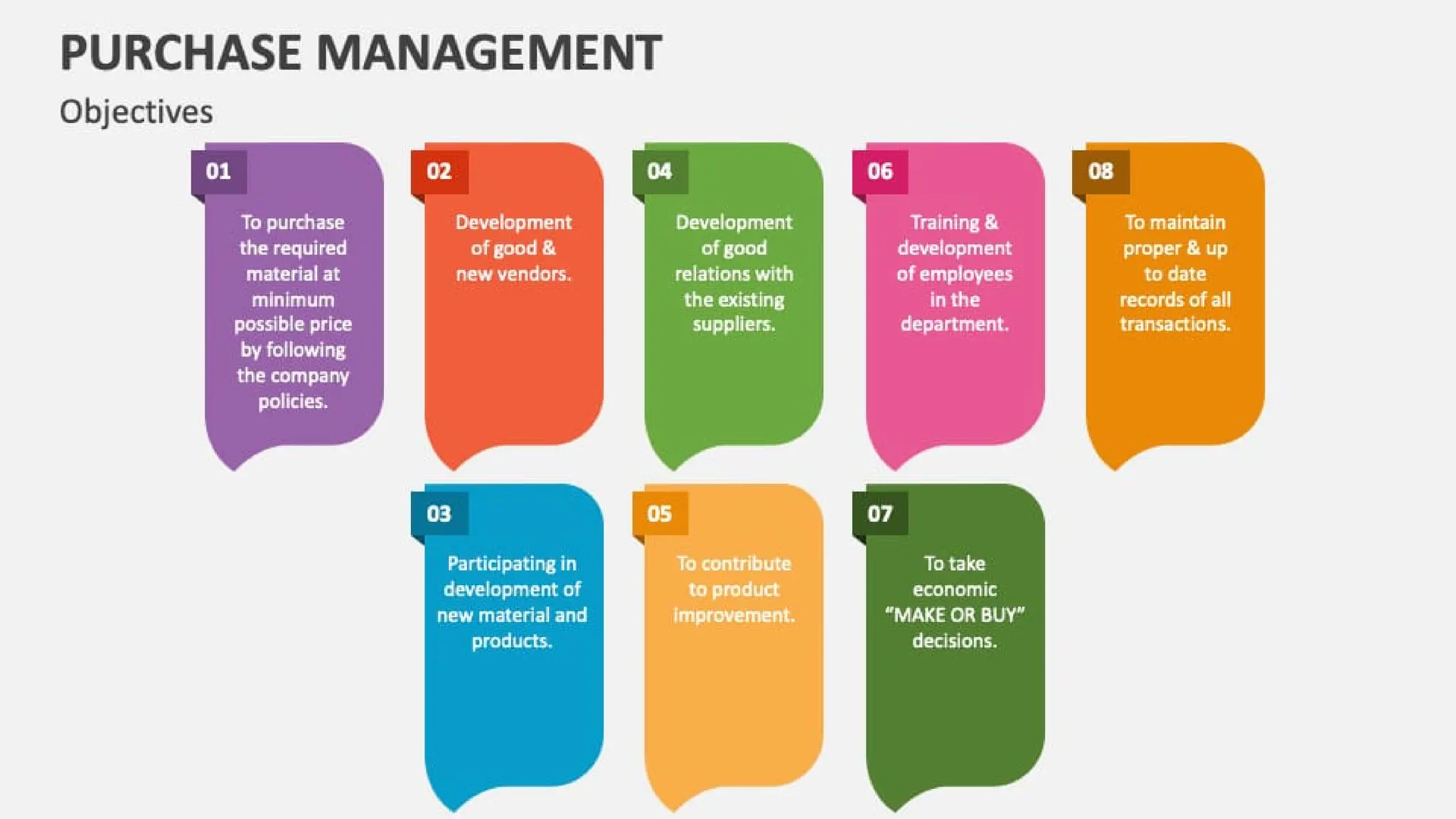
INTRODUCTION OBJECTIVE
Purchase price analysis
Table Of Content
conclusion
Purchase process
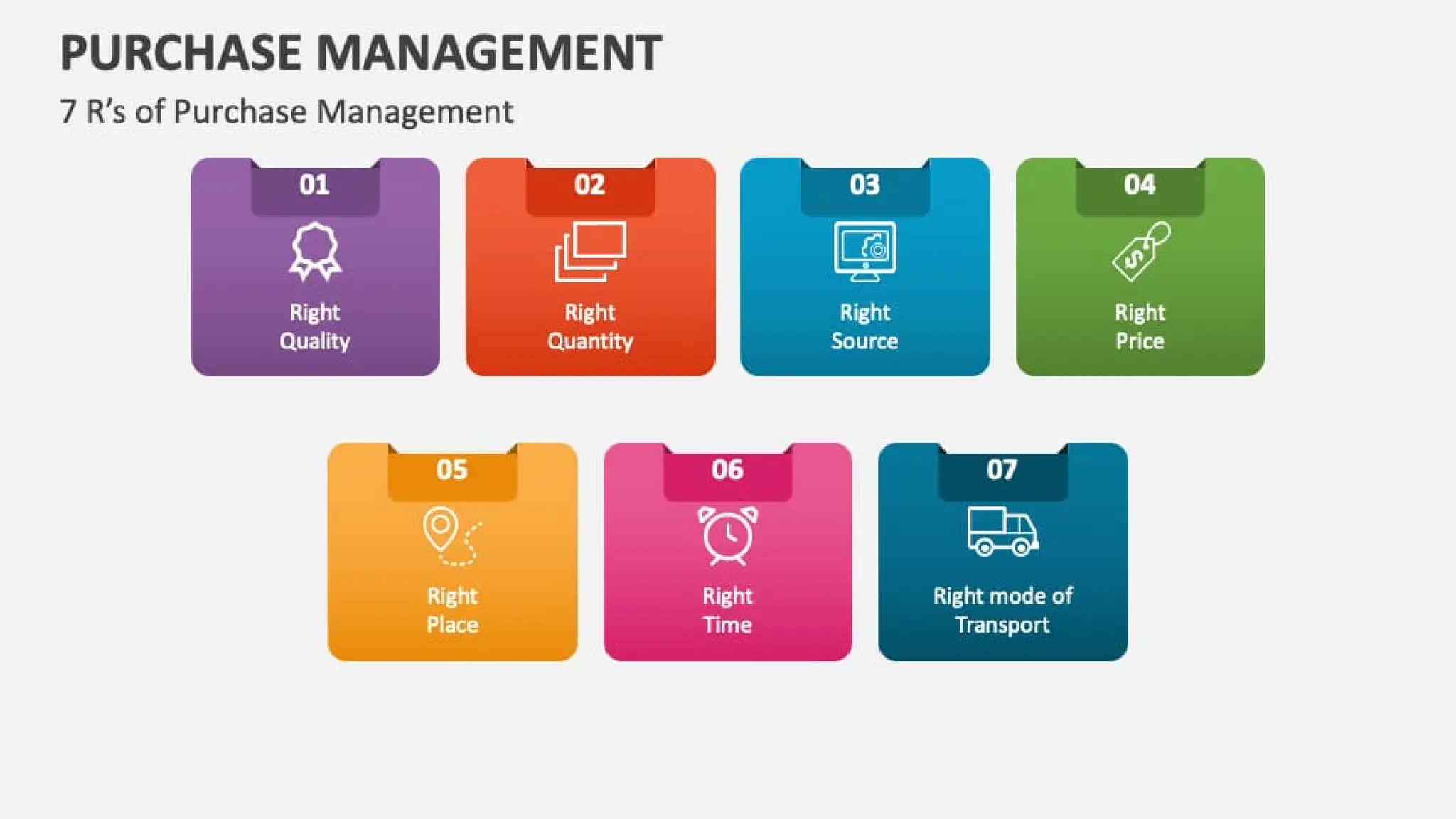
7 R’S of PM
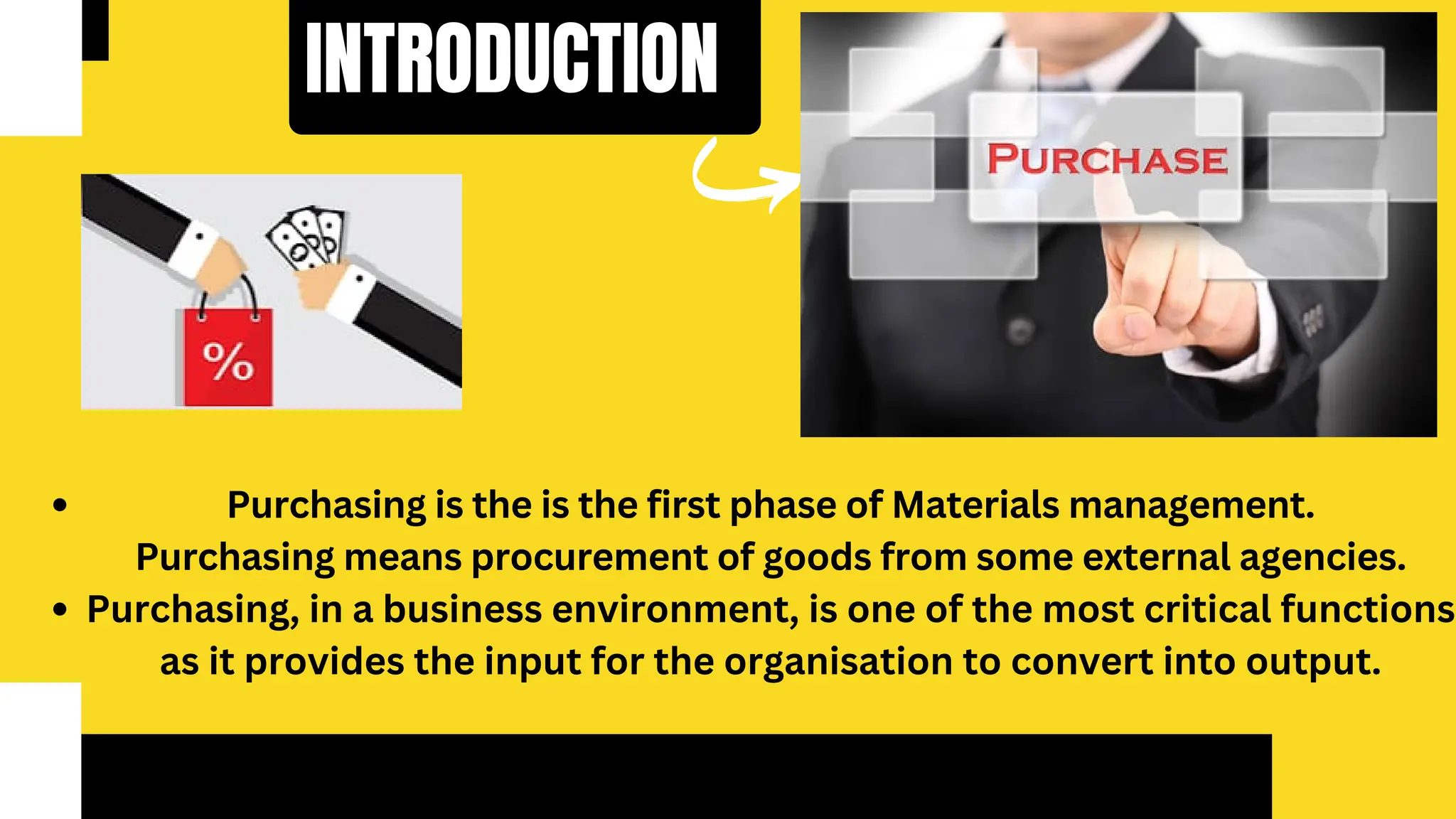
INTRODUCTION
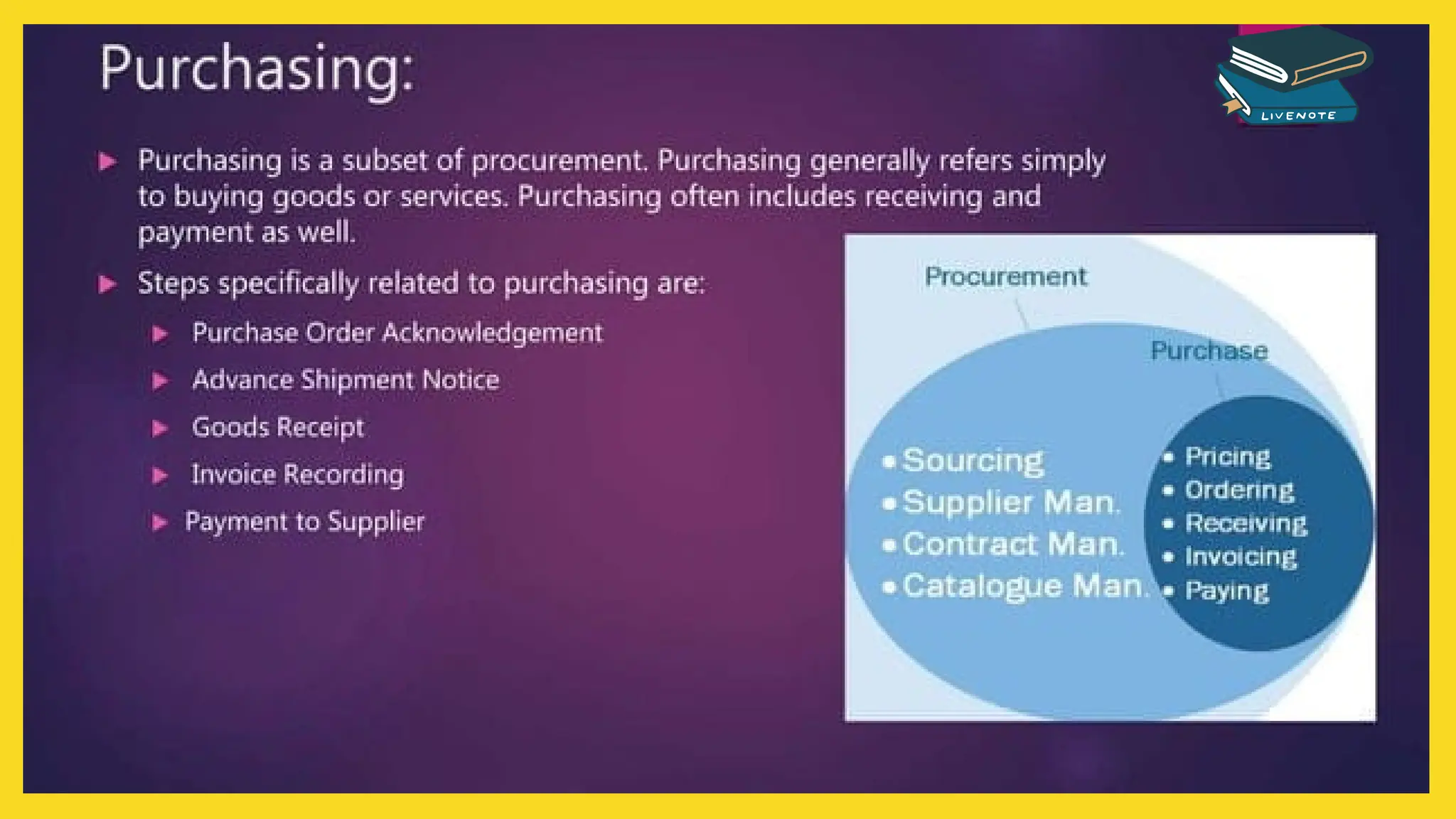
Purchasing is the is the first phase of Materials management.
Purchasing means procurement of goods from some external agencies.
Purchasing, in a business environment, is one of the most critical functions
as it provides the input for the organisation to convert into output.
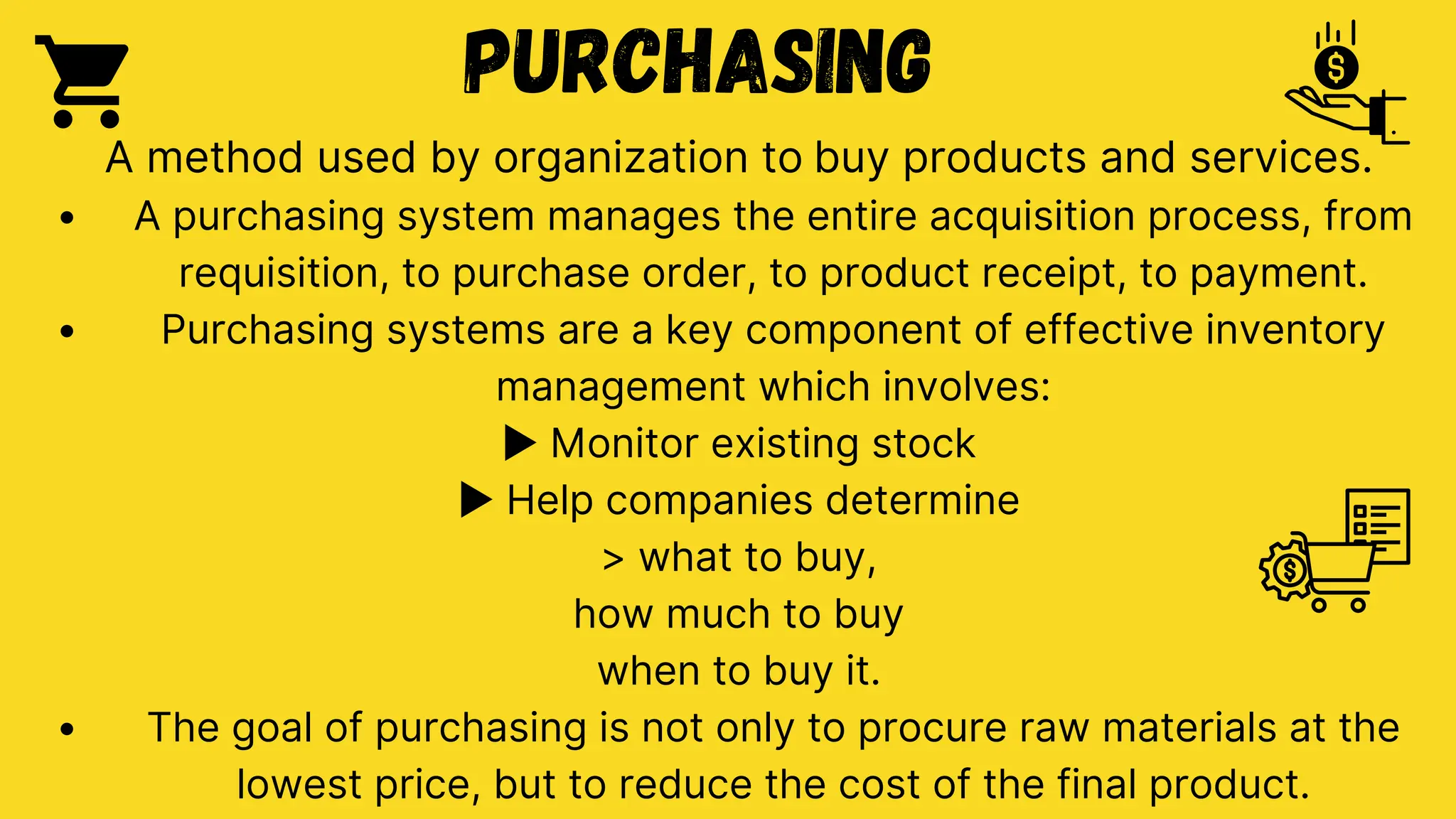
A method used by organization to buy products and services.
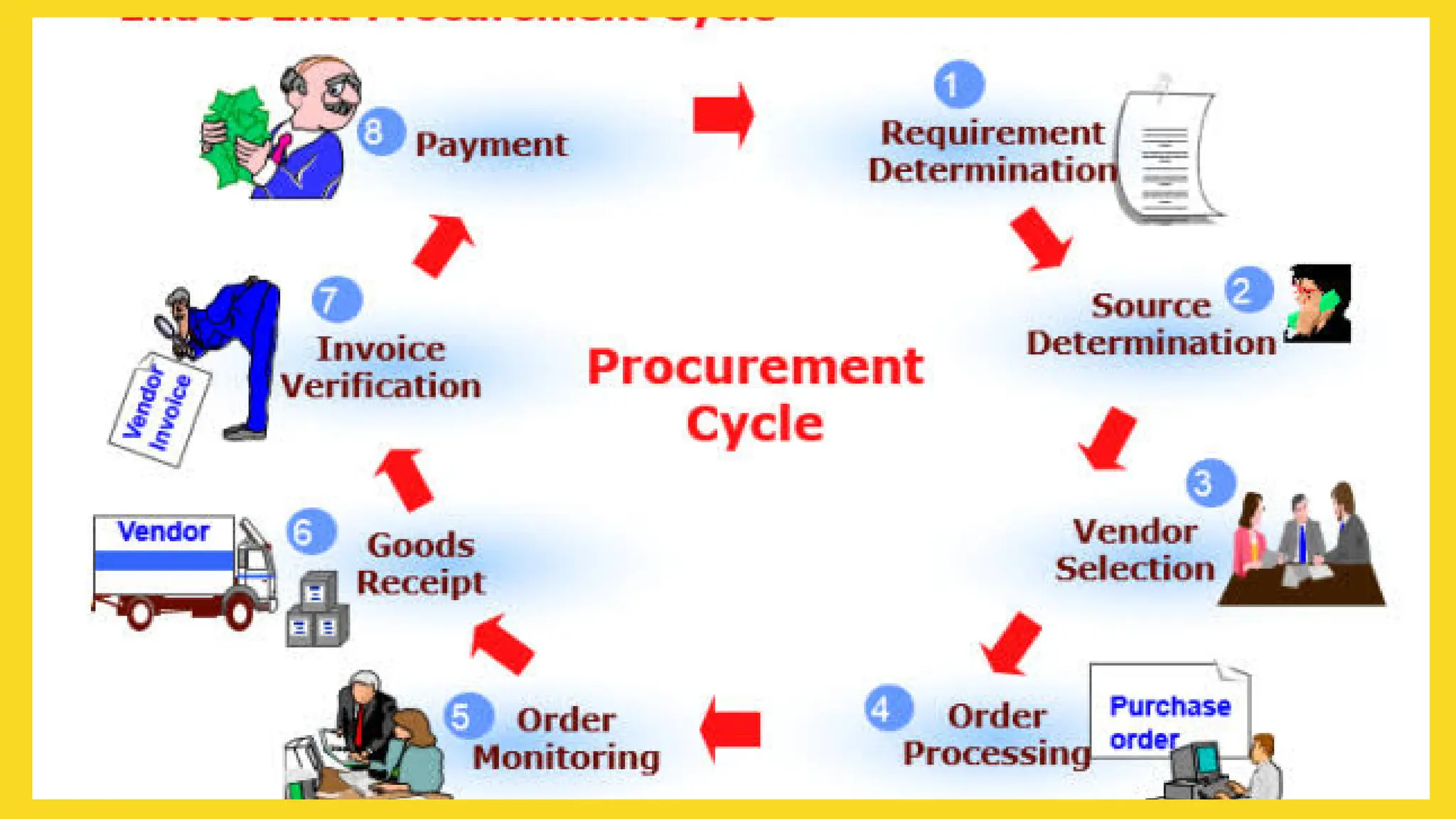
A purchasing system manages the entire acquisition process, from
requisition, to purchase order, to product receipt, to payment.
Purchasing systems are a key component of effective inventory
management which involves:
► Monitor existing stock
► Help companies determine
> what to buy,
how much to buy
when to buy it.
The goal of purchasing is not only to procure raw materials at the
lowest price, but to reduce the cost of the final product.
PURCHASING
Recogination of Need
1.
The purchasing process begins when the business recognizes that they have a need
for a product, tool or service that will enhance their operationsdy text
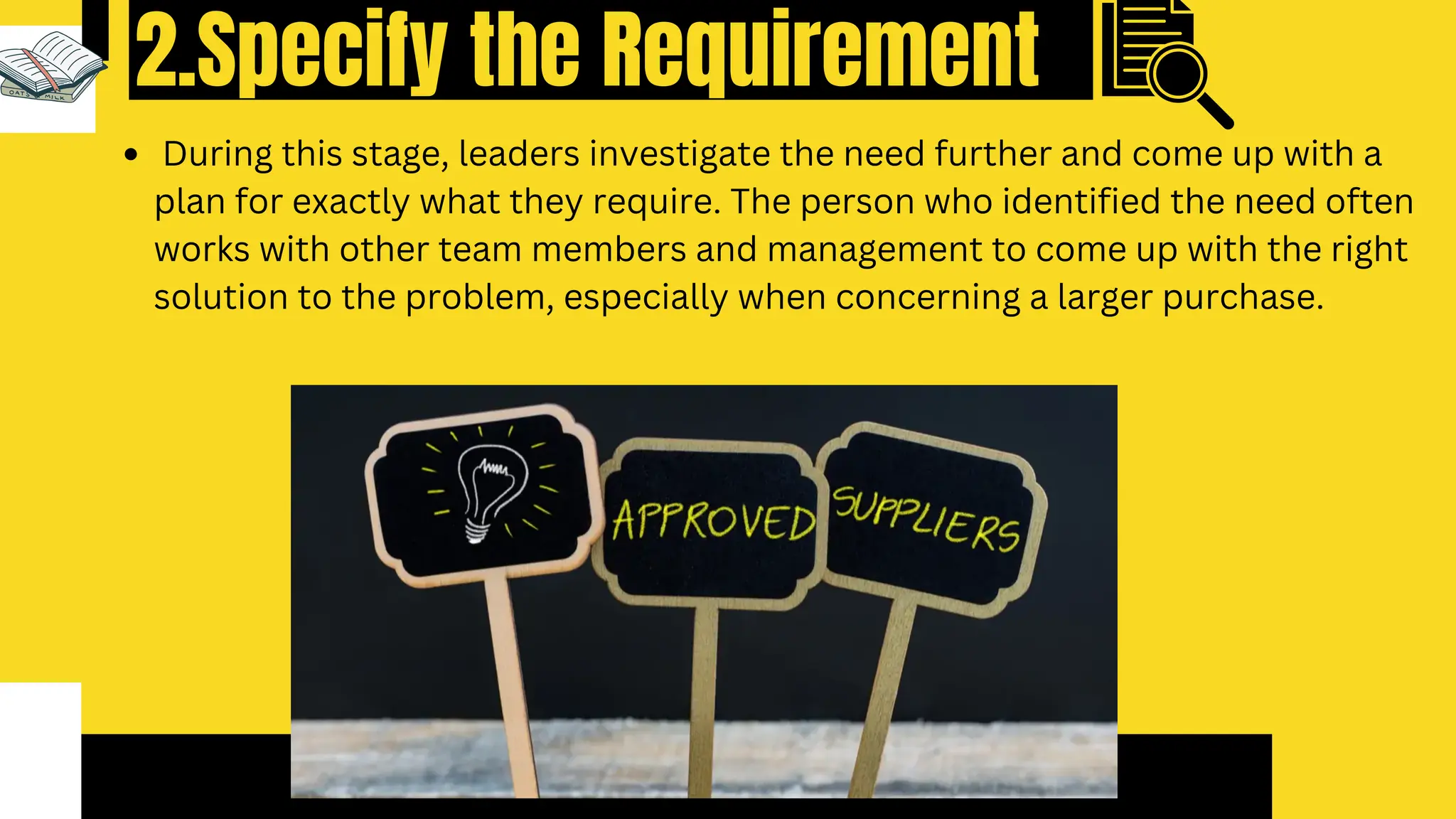
2.Specify the Requirement
During this stage, leaders investigate the need further and come up with a
plan for exactly what they require. The person who identified the need often
works with other team members and management to come up with the right
solution to the problem, especially when concerning a larger purchase.
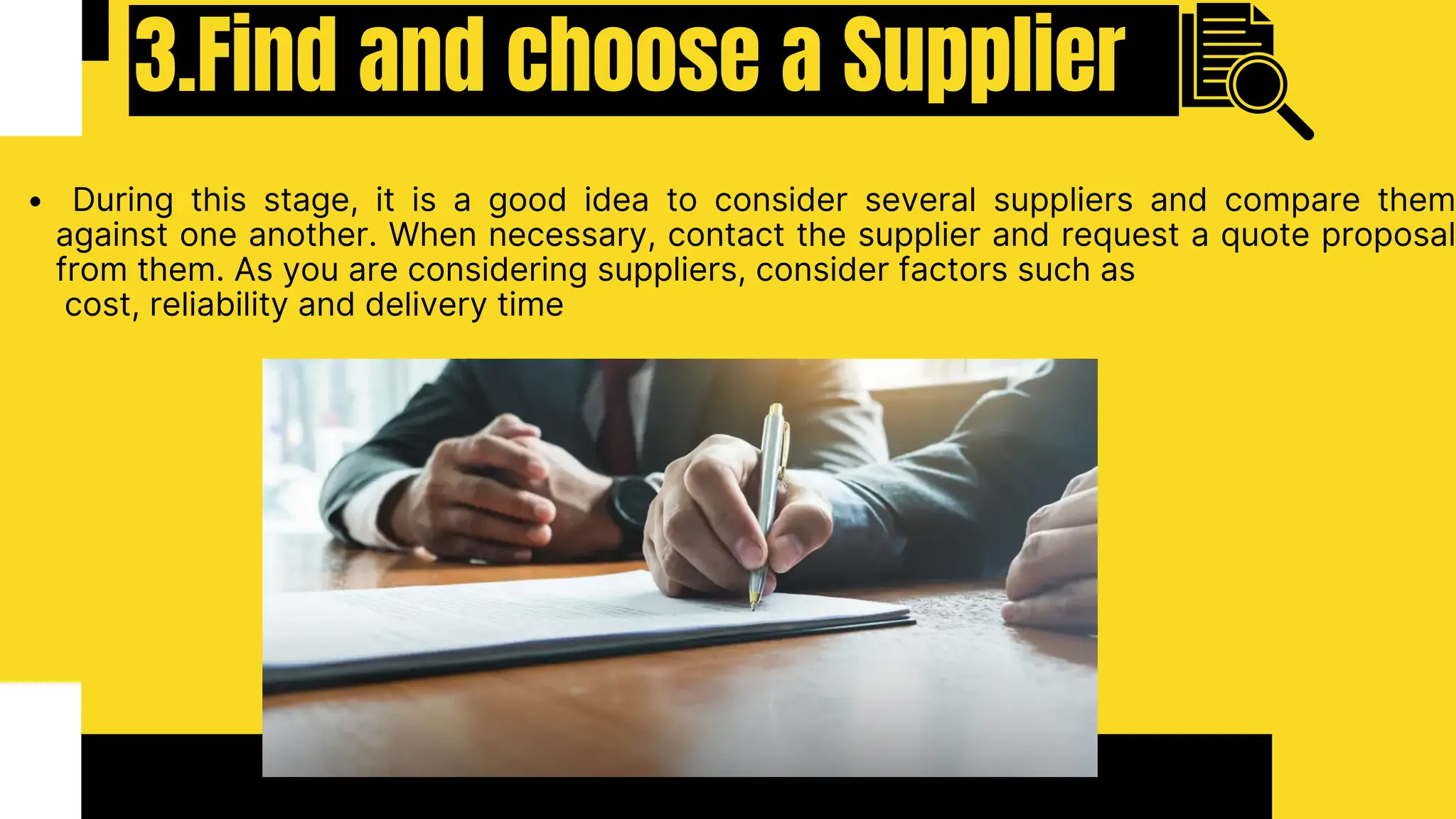
3.Find and choose a Supplier
During this stage, it is a good idea to consider several suppliers and compare them
against one another. When necessary, contact the supplier and request a quote proposal
from them. As you are considering suppliers, consider factors such as
cost, reliability and delivery time
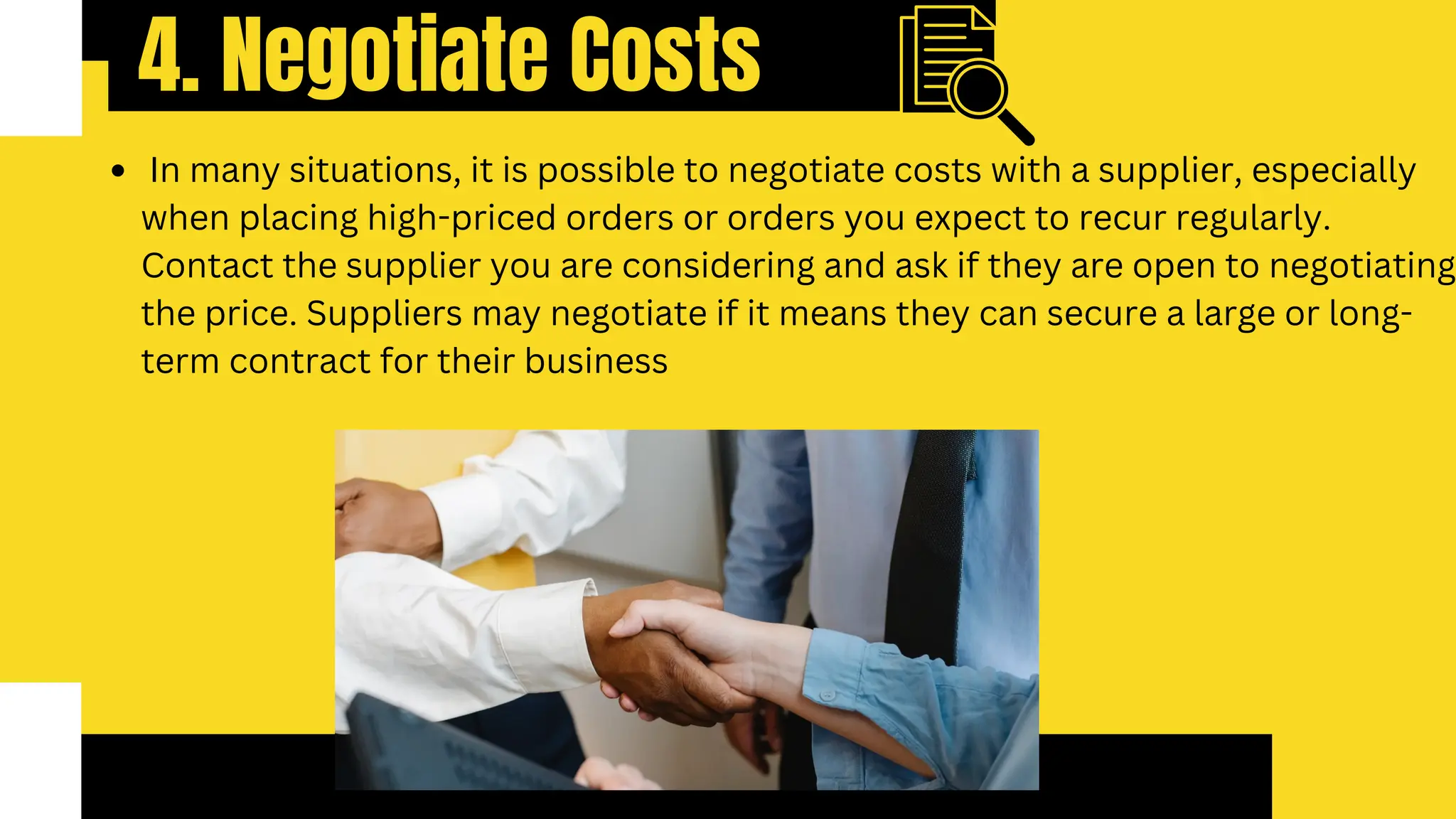
4. Negotiate Costs
In many situations, it is possible to negotiate costs with a supplier, especially
when placing high-priced orders or orders you expect to recur regularly.
Contact the supplier you are considering and ask if they are open to negotiating
the price. Suppliers may negotiate if it means they can secure a large or long-
term contract for their business
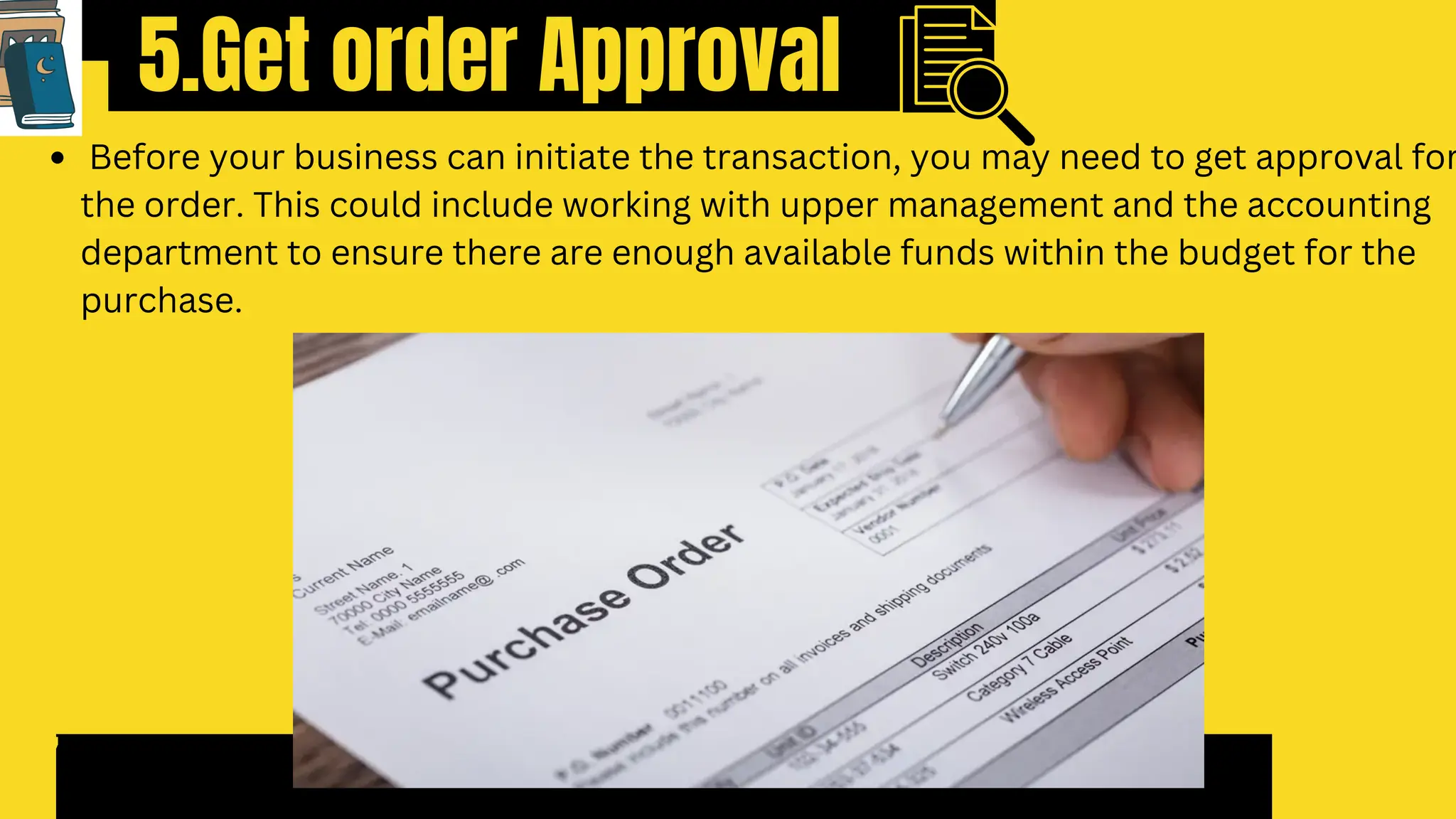
5.Get order Approval
7
Before your business can initiate the transaction, you may need to get approval for
the order. This could include working with upper management and the accounting
department to ensure there are enough available funds within the budget for the
purchase.
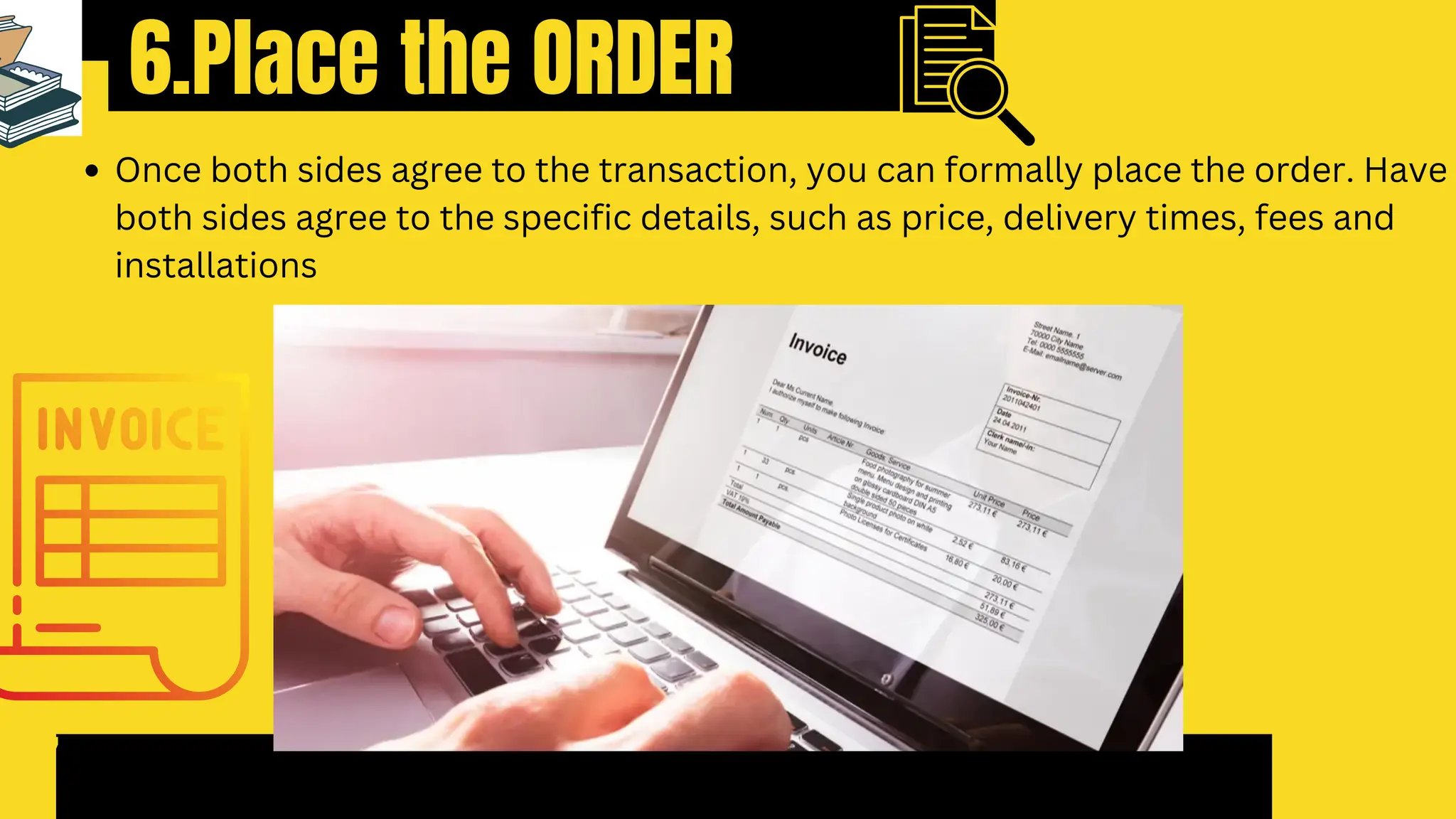
6.Place the ORDER
7
Once both sides agree to the transaction, you can formally place the order. Have
both sides agree to the specific details, such as price, delivery times, fees and
installations
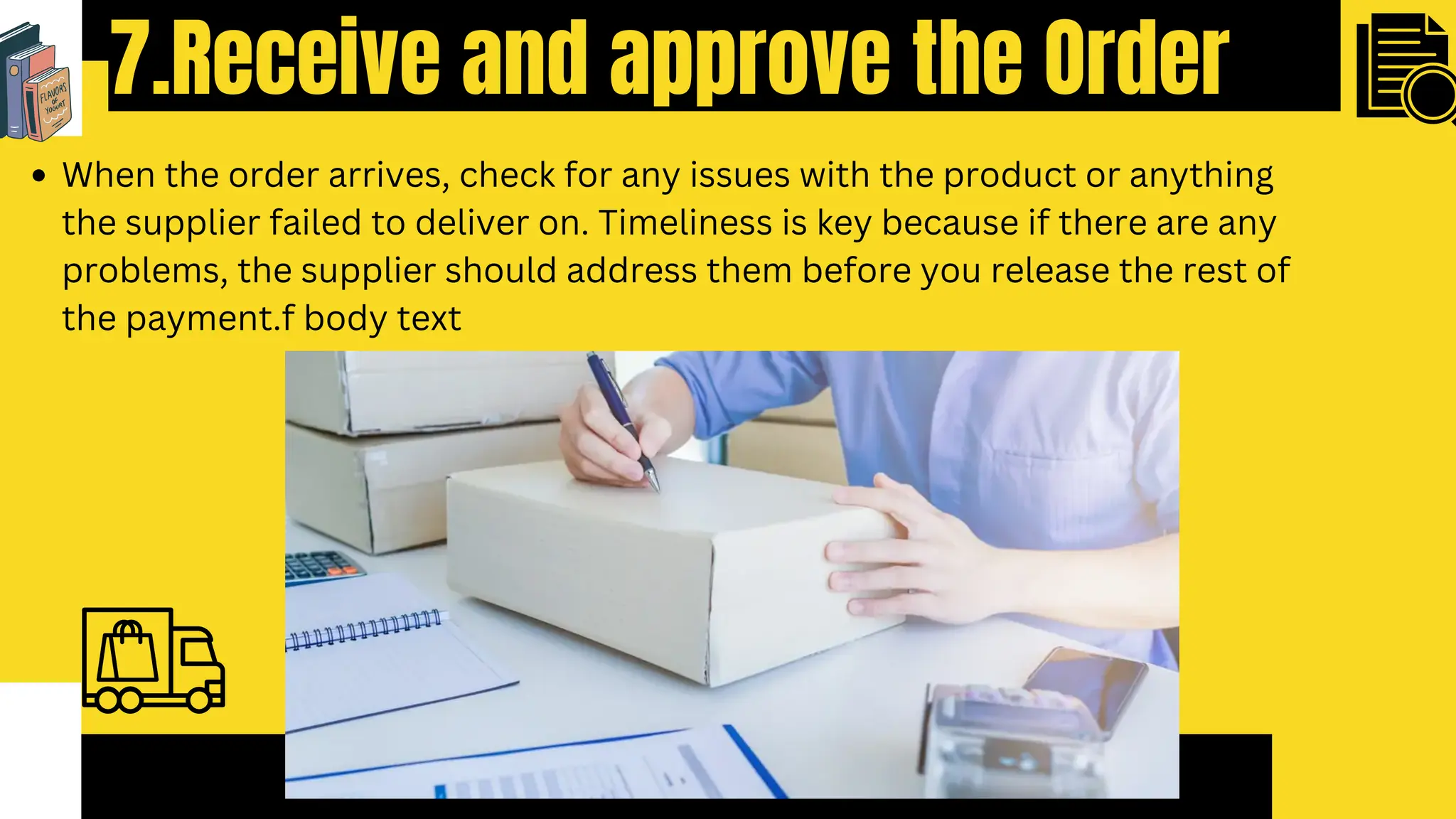
7.Receive and approve the Order
When the order arrives, check for any issues with the product or anything
the supplier failed to deliver on. Timeliness is key because if there are any
problems, the supplier should address them before you release the rest of
the payment.f body text
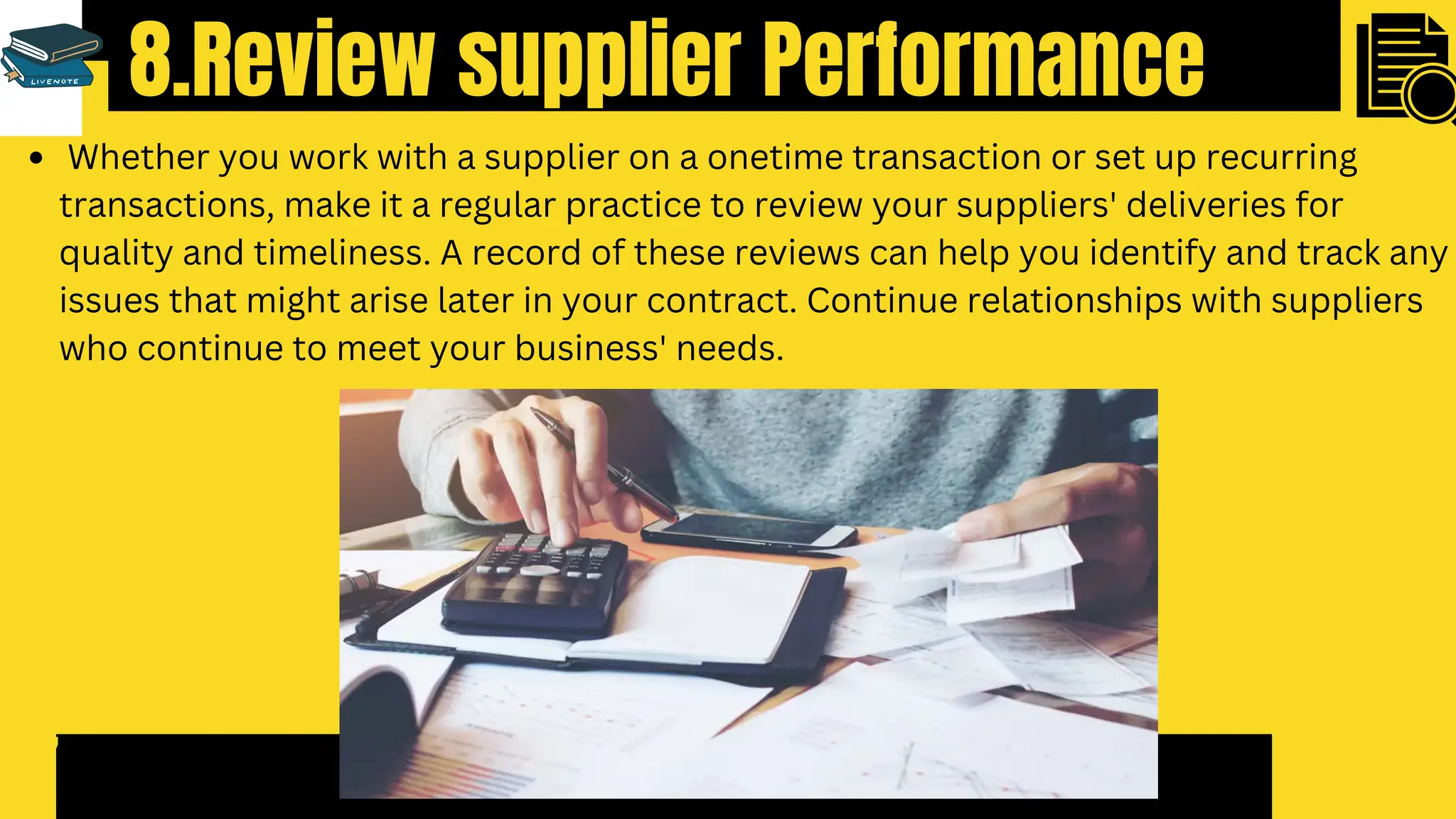
8.Review supplier Performance
7
Whether you work with a supplier on a onetime transaction or set up recurring
transactions, make it a regular practice to review your suppliers' deliveries for
quality and timeliness. A record of these reviews can help you identify and track any
issues that might arise later in your contract. Continue relationships with suppliers
who continue to meet your business' needs.
PURCHASE PRICE ANALYSIS
7
Purchase price analysis enables yo u to negotiate future target prices or
purchase prices based on reliable cost details.
The purchase price analysis enables you to not only determine a reasonable
purchase price and arguments for its implementation, it also enables you to make
constructive suggestions to reduce costs, thus creating an objective and fact-
based foundation for collaborative cost reduction
4
HARSHIT
SHUKLA
Our Team
THANK
www.reallygreatsite.com
YOU

purchase management.pdf presentation on topicMaterial handling: Meaning, objectives and principles.

  • 1.
  • 2.
    INTRODUCTION OBJECTIVE Purchase priceanalysis Table Of Content conclusion Purchase process 7 R’S of PM
  • 3.
    INTRODUCTION Purchasing is theis the first phase of Materials management. Purchasing means procurement of goods from some external agencies. Purchasing, in a business environment, is one of the most critical functions as it provides the input for the organisation to convert into output.
  • 4.
    A method usedby organization to buy products and services. A purchasing system manages the entire acquisition process, from requisition, to purchase order, to product receipt, to payment. Purchasing systems are a key component of effective inventory management which involves: ► Monitor existing stock ► Help companies determine > what to buy, how much to buy when to buy it. The goal of purchasing is not only to procure raw materials at the lowest price, but to reduce the cost of the final product. PURCHASING
  • 10.
    Recogination of Need 1. Thepurchasing process begins when the business recognizes that they have a need for a product, tool or service that will enhance their operationsdy text
  • 11.
    2.Specify the Requirement Duringthis stage, leaders investigate the need further and come up with a plan for exactly what they require. The person who identified the need often works with other team members and management to come up with the right solution to the problem, especially when concerning a larger purchase.
  • 12.
    3.Find and choosea Supplier During this stage, it is a good idea to consider several suppliers and compare them against one another. When necessary, contact the supplier and request a quote proposal from them. As you are considering suppliers, consider factors such as cost, reliability and delivery time
  • 13.
    4. Negotiate Costs Inmany situations, it is possible to negotiate costs with a supplier, especially when placing high-priced orders or orders you expect to recur regularly. Contact the supplier you are considering and ask if they are open to negotiating the price. Suppliers may negotiate if it means they can secure a large or long- term contract for their business
  • 14.
    5.Get order Approval 7 Beforeyour business can initiate the transaction, you may need to get approval for the order. This could include working with upper management and the accounting department to ensure there are enough available funds within the budget for the purchase.
  • 15.
    6.Place the ORDER 7 Onceboth sides agree to the transaction, you can formally place the order. Have both sides agree to the specific details, such as price, delivery times, fees and installations
  • 16.
    7.Receive and approvethe Order When the order arrives, check for any issues with the product or anything the supplier failed to deliver on. Timeliness is key because if there are any problems, the supplier should address them before you release the rest of the payment.f body text
  • 17.
    8.Review supplier Performance 7 Whetheryou work with a supplier on a onetime transaction or set up recurring transactions, make it a regular practice to review your suppliers' deliveries for quality and timeliness. A record of these reviews can help you identify and track any issues that might arise later in your contract. Continue relationships with suppliers who continue to meet your business' needs.
  • 18.
    PURCHASE PRICE ANALYSIS 7 Purchaseprice analysis enables yo u to negotiate future target prices or purchase prices based on reliable cost details. The purchase price analysis enables you to not only determine a reasonable purchase price and arguments for its implementation, it also enables you to make constructive suggestions to reduce costs, thus creating an objective and fact- based foundation for collaborative cost reduction
  • 19.
  • 20.