Surviving 
the 
PhD 
2014 
Edi4on: 
How 
to 
Write 
a 
Literature 
Review 
Marcel 
Bogers 
marcelbogers.com 
@bogers 
November 
3, 
2014 
Scuola 
Superiore 
Sant'Anna, 
Pisa, 
Italy
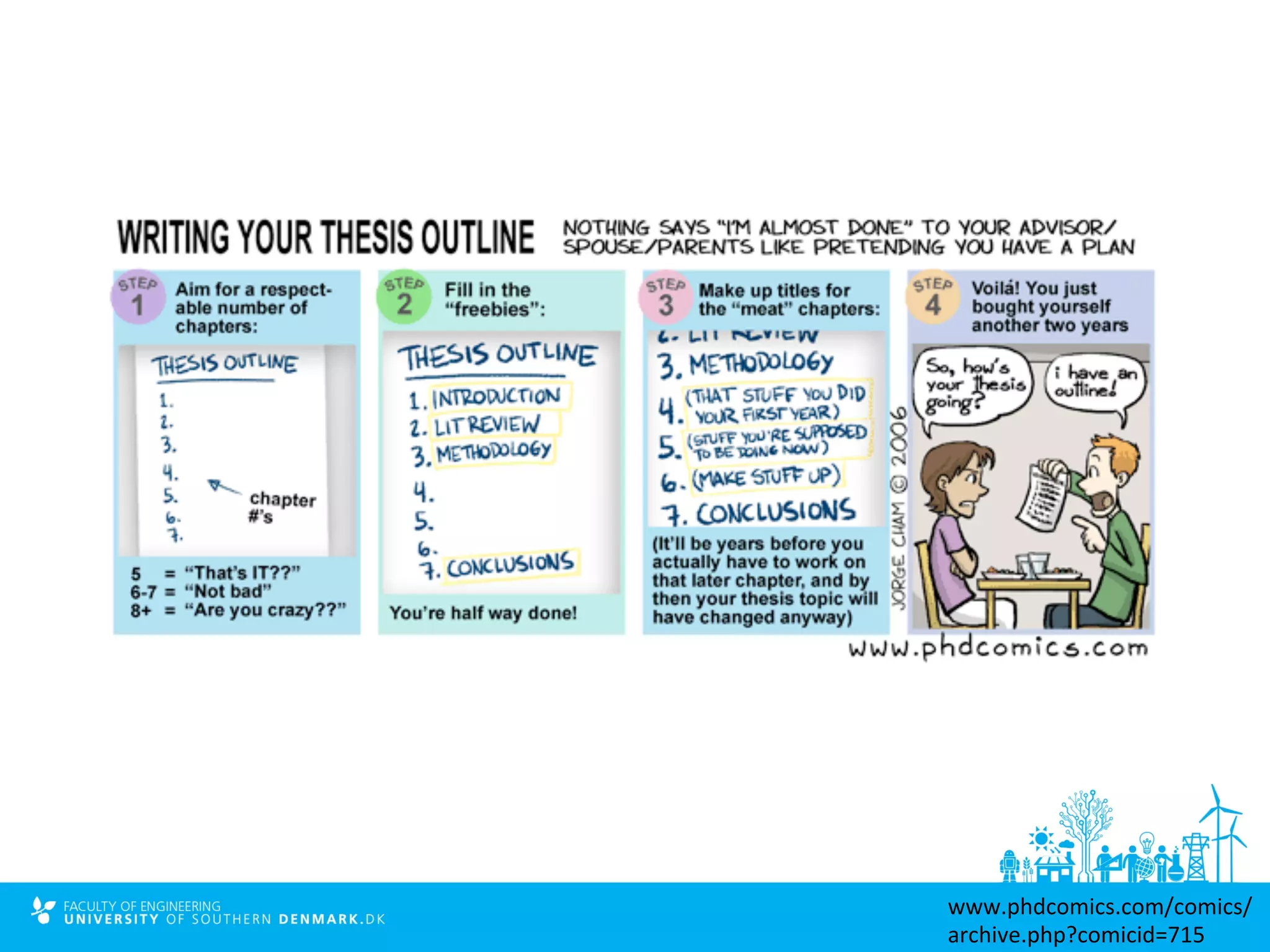
www.phdcomics.com/comics/ 
archive.php?comicid=715
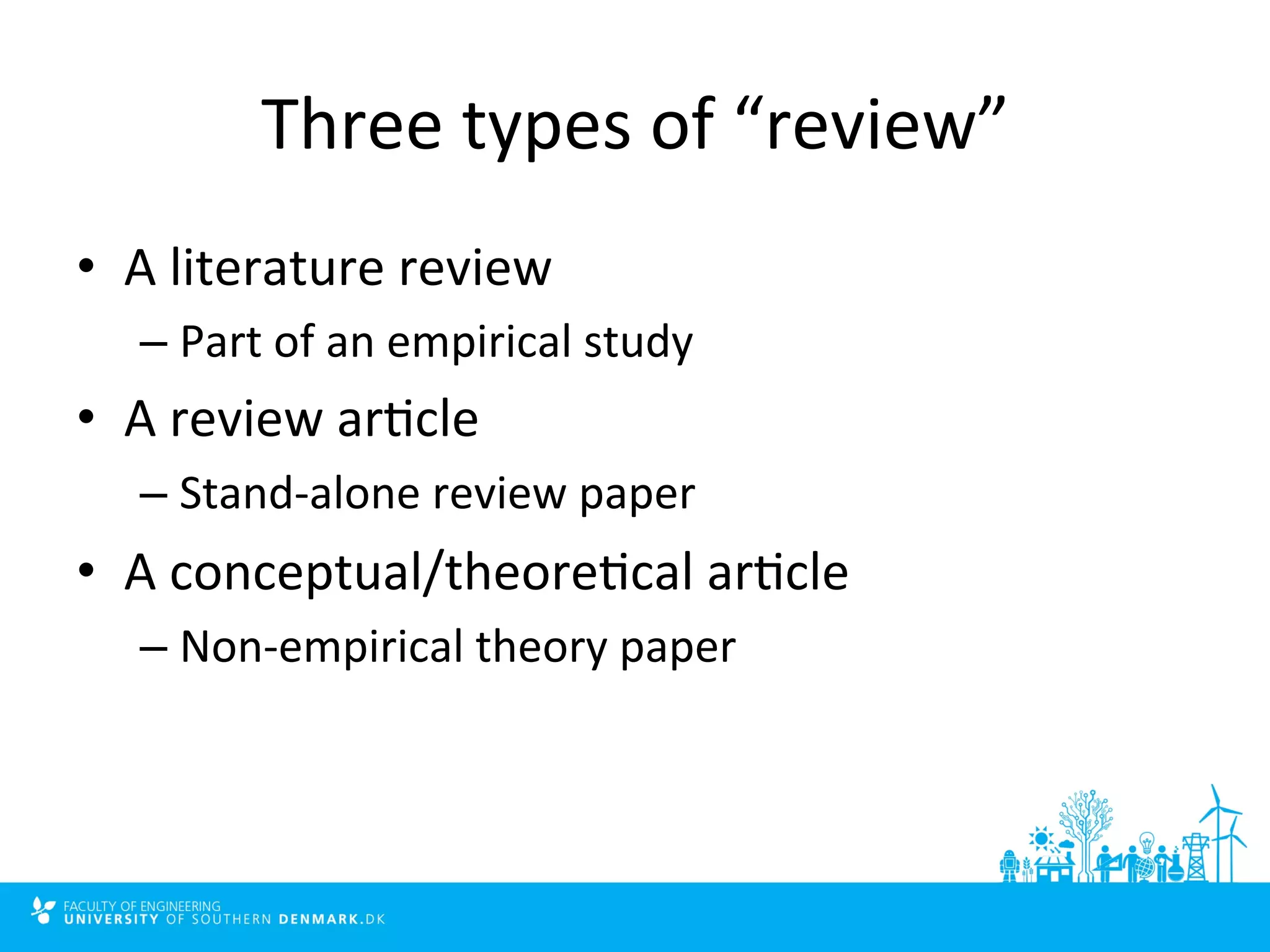
Three 
types 
of 
“review” 
• A 
literature 
review 
– Part 
of 
an 
empirical 
study 
• A 
review 
ar4cle 
– Stand-­‐alone 
review 
paper 
• A 
conceptual/theore4cal 
ar4cle 
– Non-­‐empirical 
theory 
paper
A 
Literature 
Review
What 
is 
a 
literature 
review? 
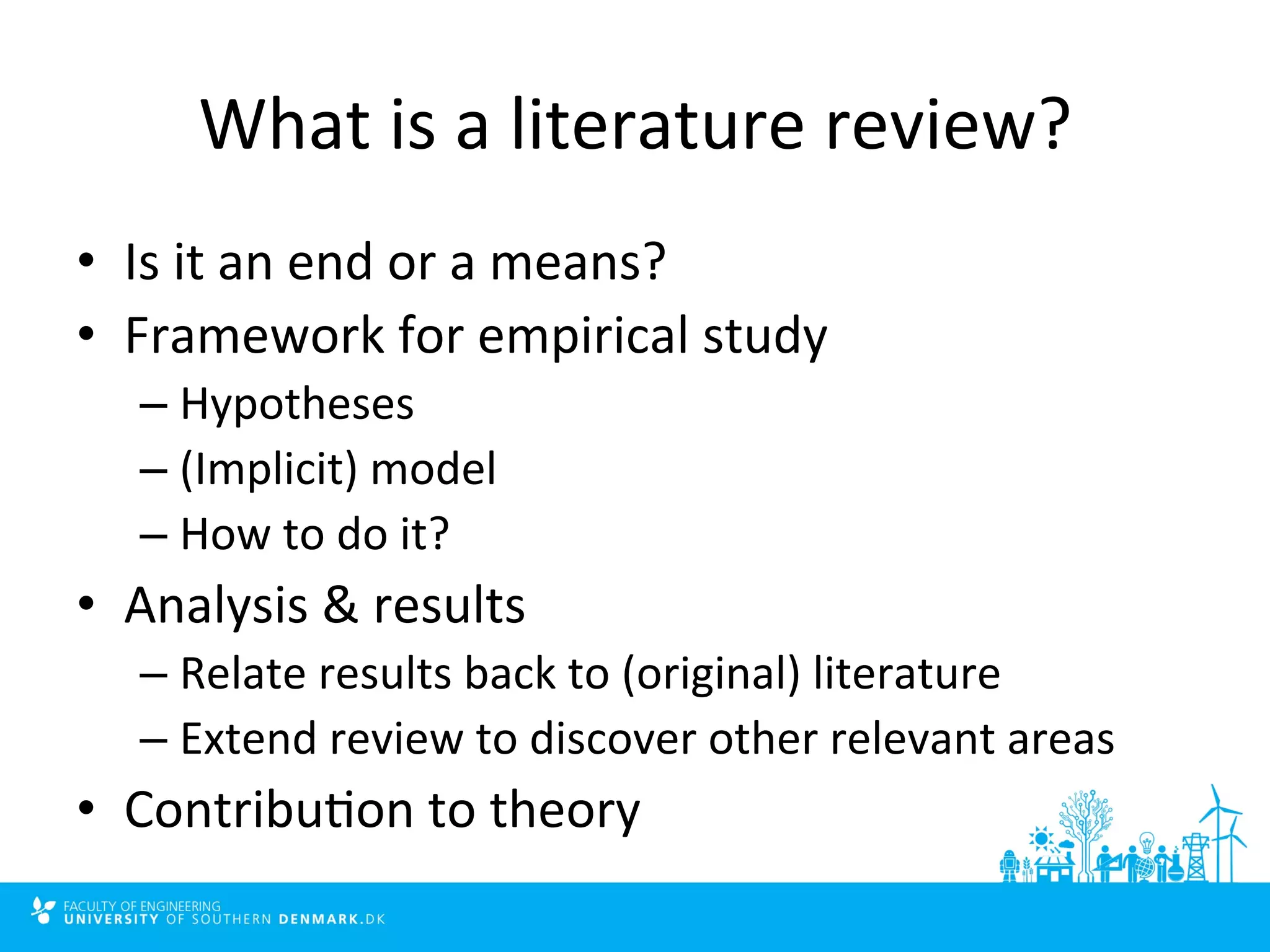
• Is 
it 
an 
end 
or 
a 
means? 
• Framework 
for 
empirical 
study 
– Hypotheses 
– (Implicit) 
model 
– How 
to 
do 
it? 
• Analysis 
& 
results 
– Relate 
results 
back 
to 
(original) 
literature 
– Extend 
review 
to 
discover 
other 
relevant 
areas 
• Contribu4on 
to 
theory
The 
t-­‐word! 
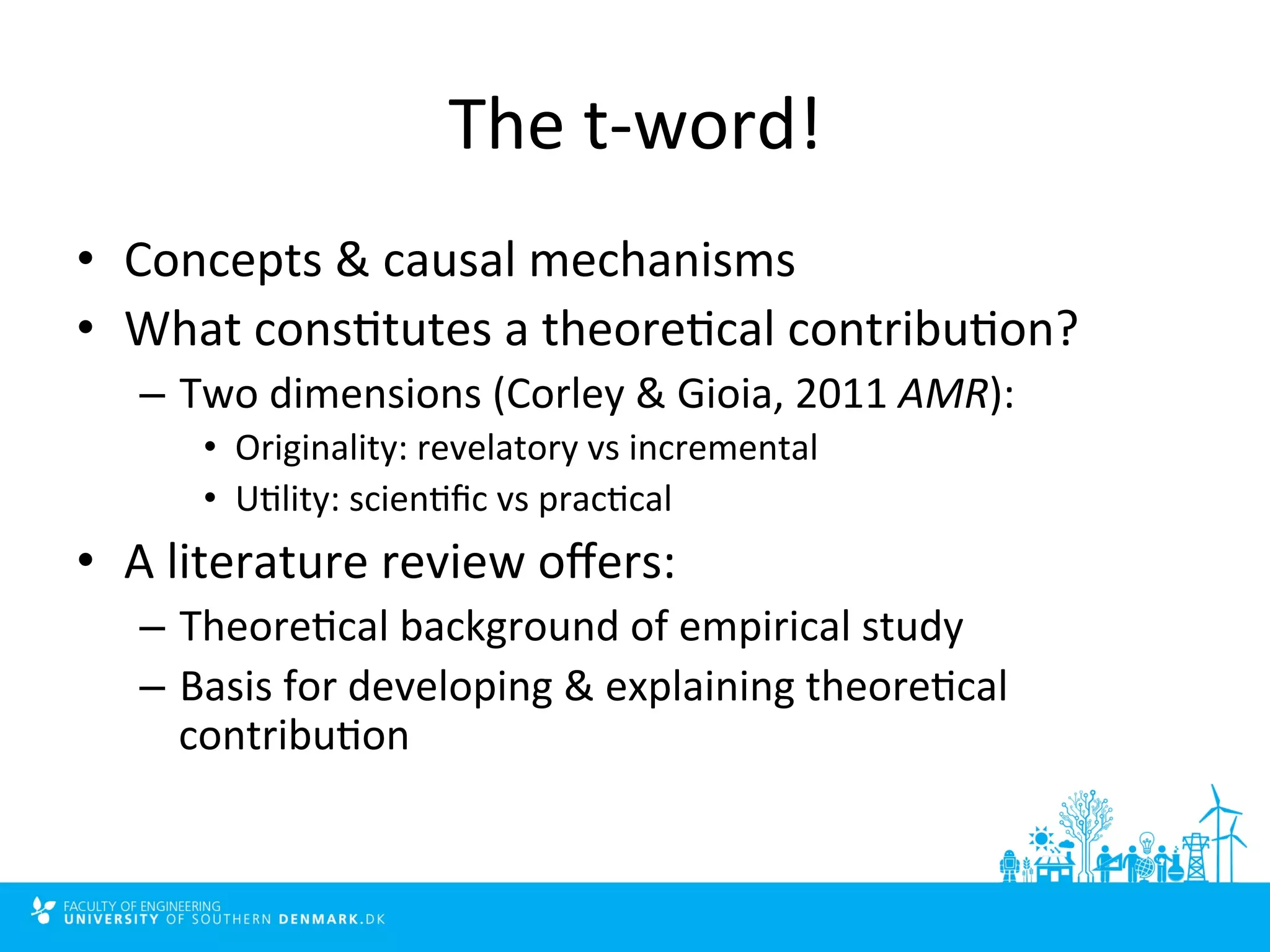
• Concepts 
& 
causal 
mechanisms 
• What 
cons4tutes 
a 
theore4cal 
contribu4on? 
– Two 
dimensions 
(Corley 
& 
Gioia, 
2011 
AMR): 
• Originality: 
revelatory 
vs 
incremental 
• U4lity: 
scien4fic 
vs 
prac4cal 
• A 
literature 
review 
offers: 
– Theore4cal 
background 
of 
empirical 
study 
– Basis 
for 
developing 
& 
explaining 
theore4cal 
contribu4on
A 
Review 
Ar4cle
Why 
write 
a 
review 
paper? 
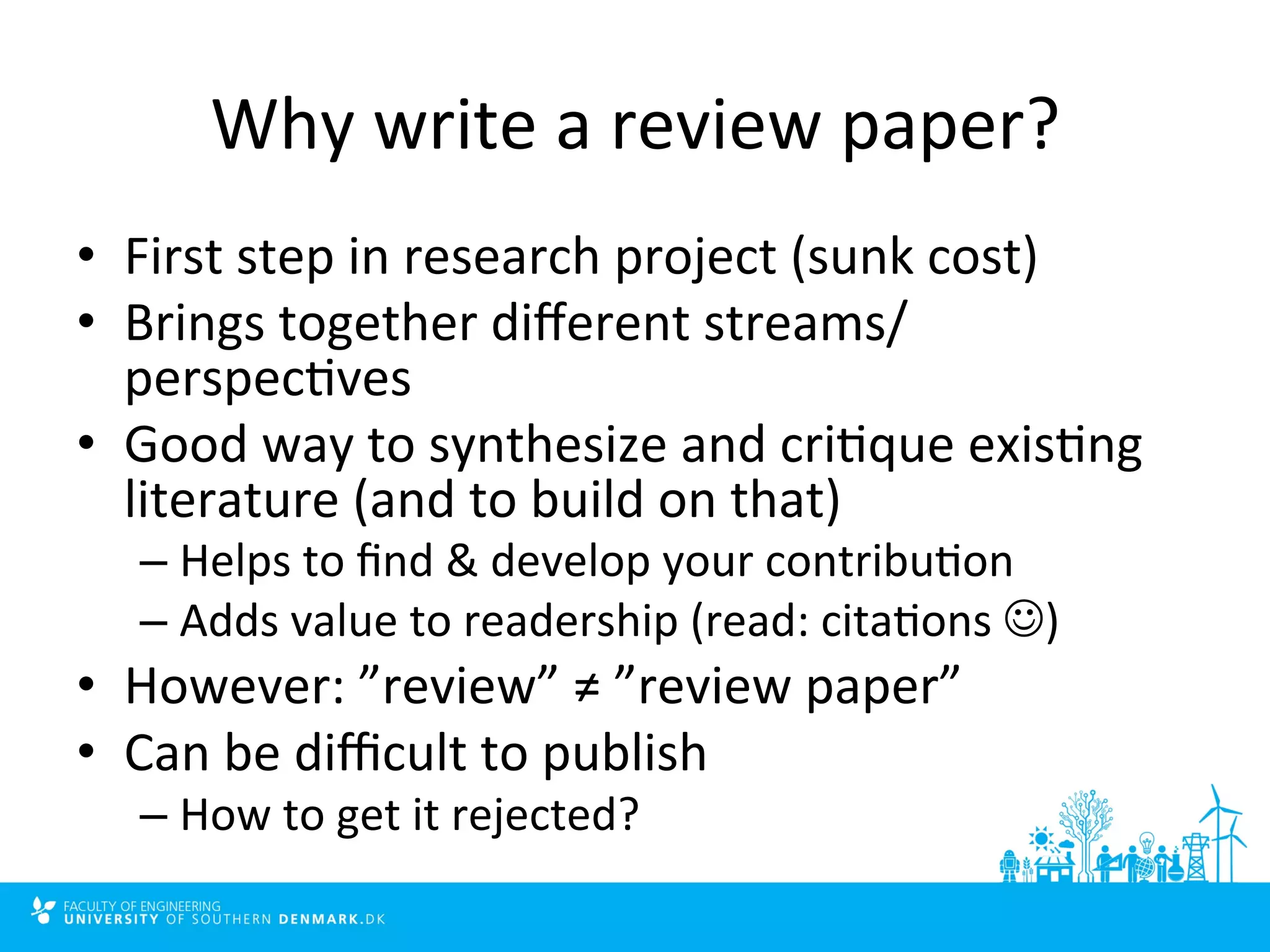
• First 
step 
in 
research 
project 
(sunk 
cost) 
• Brings 
together 
different 
streams/ 
perspec4ves 
• Good 
way 
to 
synthesize 
and 
cri4que 
exis4ng 
literature 
(and 
to 
build 
on 
that) 
– Helps 
to 
find 
& 
develop 
your 
contribu4on 
– Adds 
value 
to 
readership 
(read: 
cita4ons 
J) 
• However: 
”review” 
≠ 
”review 
paper” 
• Can 
be 
difficult 
to 
publish 
– How 
to 
get 
it 
rejected?
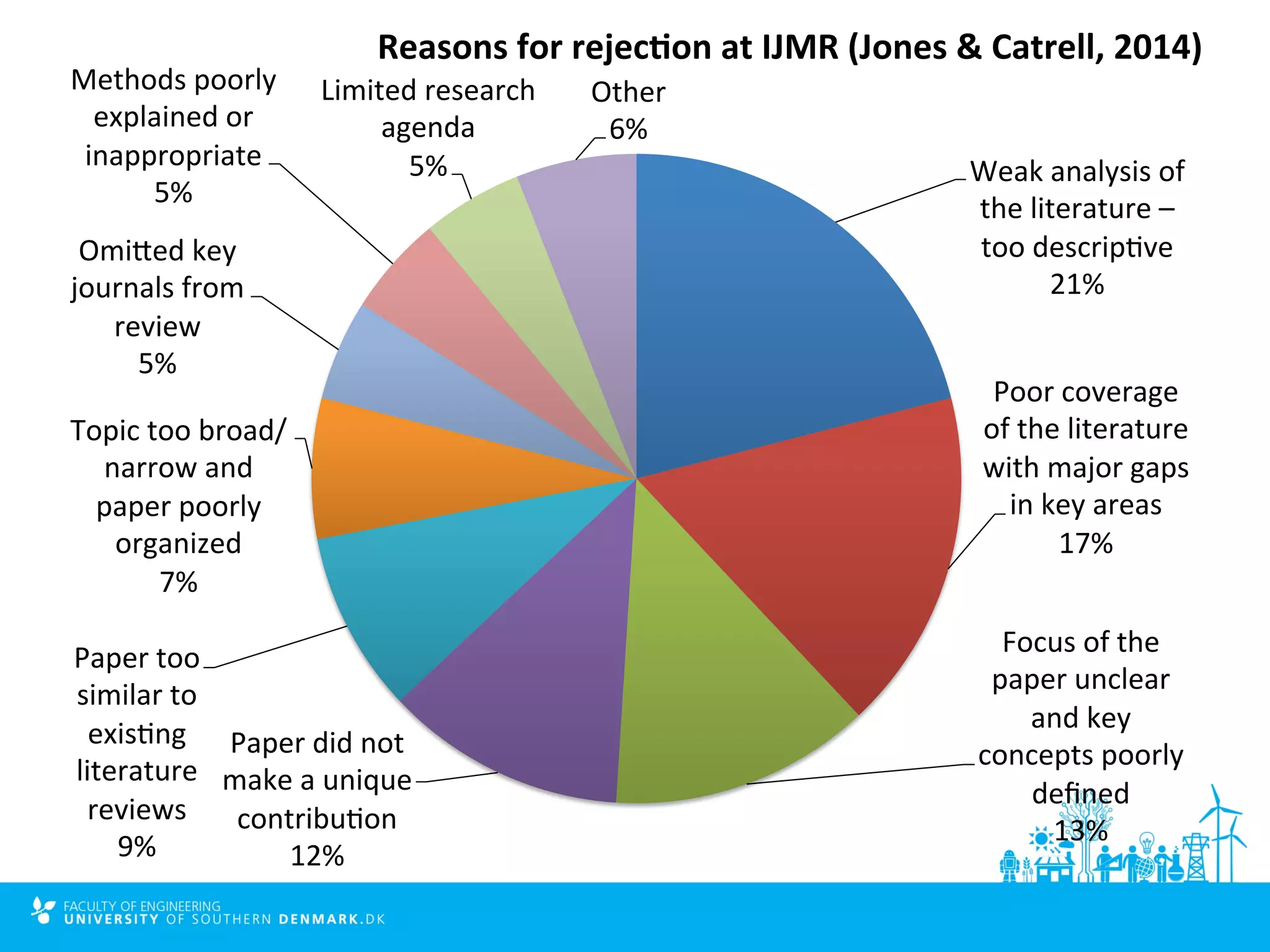
Reasons 
for 
rejec8on 
at 
IJMR 
(Jones 
& 
Catrell, 
2014) 
Weak 
analysis 
of 
the 
literature 
– 
too 
descrip4ve 
21% 
Poor 
coverage 
of 
the 
literature 
with 
major 
gaps 
in 
key 
areas 
17% 
Focus 
of 
the 
paper 
unclear 
and 
key 
concepts 
poorly 
defined 
13% 
Methods 
poorly 
explained 
or 
inappropriate 
5% 
Omiled 
key 
journals 
from 
review 
5% 
Topic 
too 
broad/ 
narrow 
and 
paper 
poorly 
organized 
Paper 
did 
not 
make 
a 
unique 
contribu4on 
12% 
Paper 
too 
similar 
to 
exis4ng 
literature 
reviews 
9% 
7% 
Limited 
research 
agenda 
5% 
Other 
6%
Journal 
of 
Management’s 
call 
for 
proposals 
(2014 
Review 
Issue) 
“Submissions 
will 
be 
evaluated 
with 
respect 
to 
the 
following 
criteria 
… 
a) Relevance 
– The 
proposed 
manuscript 
should 
thoroughly 
review 
a 
significant 
and 
important 
research 
area 
within 
the 
organiza4onal 
sciences. 
b) Viability 
– The 
proposal 
should 
represent 
an 
achievable 
project 
within 
the 
4ght 
4me 
constraints 
required. 
… 
c) Scope 
of 
Interest 
– Papers 
of 
broad 
interest 
to 
scholars 
in 
a 
variety 
of 
specialty 
areas 
are 
greatly 
preferred. 
d) Organiza8on 
and 
Coherence 
– The 
proposal 
should 
follow 
a 
logical 
structure, 
read 
clearly, 
and 
thoroughly 
represent 
the 
available 
research. 
e) Insight 
for 
Future 
Work 
– The 
proposal 
should 
convey 
important 
implica4ons 
for 
future 
management 
scholars.”
Some 
guidelines 
• Gives 
good 
overview/summary/report 
of 
research 
field 
– State 
of 
the 
literature(s) 
– Scope 
& 
depth 
– Brings 
something 
new 
& 
adds 
value 
• Different 
styles 
and 
types 
– Systema4c/rigid 
vs 
qualita4ve/narra4ve-­‐style 
– Different 
structures 
and 
outcomes 
(cf. 
theory) 
• Fit 
with 
the 
journal 
& 
contribu4on 
– Audience, 
“so 
what”, 
& 
future 
research 
• See 
editorials 
for 
more 
guidelines
A 
Conceptual/Theore4cal 
Ar4cle
Wri4ng 
(publishing) 
a 
conceptual/ 
theore4cal 
ar4cle 
• Develops 
some 
sort 
of 
conceptual 
or 
theore4cal 
model 
• The 
t-­‐word 
– “Theory 
is 
a 
statement 
of 
concepts 
and 
their 
interrela4onships 
that 
shows 
how 
and/or 
why 
a 
phenomenon 
occurs” 
(Corley 
& 
Gioia, 
2011 
AMR) 
– ”Theory 
is 
about 
the 
connec4ons 
among 
phenomena, 
a 
story 
about 
why 
acts, 
events, 
structure, 
and 
thoughts 
occur. 
Theory 
emphasizes 
the 
nature 
of 
causal 
rela4onships 
… 
.” 
(Sulon 
& 
Staw, 
1995 
ASQ) 
• What 
does 
it 
mean 
for 
your 
paper? 
– On 
the 
level 
of 
the 
construct 
(not 
opera4onalized) 
– May 
use 
proposi4ons 
(cf. 
hypotheses) 
– Focus 
on 
theory 
• Some 
cri4que 
& 
concern 
related 
to 
theory 
– Lille 
agreement 
on 
what 
theory 
is 
(Corley 
& 
Gioia, 
2011 
AMR) 
– Too 
much 
of 
a 
good 
thing? 
(Hambrick, 
2007 
AMJ)
Surviving 
the 
PhD: 
Good 
luck! 
Marcel 
Bogers 
marcelbogers.com 
@bogers 
www.phdcomics.com/comics/ 
archive.php?comicid=715

How to write (and publish) a literature review

  • 1.
    Surviving the PhD 2014 Edi4on: How to Write a Literature Review Marcel Bogers marcelbogers.com @bogers November 3, 2014 Scuola Superiore Sant'Anna, Pisa, Italy
  • 2.
  • 3.
    Three types of “review” • A literature review – Part of an empirical study • A review ar4cle – Stand-­‐alone review paper • A conceptual/theore4cal ar4cle – Non-­‐empirical theory paper
  • 4.
  • 5.
    What is a literature review? • Is it an end or a means? • Framework for empirical study – Hypotheses – (Implicit) model – How to do it? • Analysis & results – Relate results back to (original) literature – Extend review to discover other relevant areas • Contribu4on to theory
  • 6.
    The t-­‐word! •Concepts & causal mechanisms • What cons4tutes a theore4cal contribu4on? – Two dimensions (Corley & Gioia, 2011 AMR): • Originality: revelatory vs incremental • U4lity: scien4fic vs prac4cal • A literature review offers: – Theore4cal background of empirical study – Basis for developing & explaining theore4cal contribu4on
  • 7.
  • 8.
    Why write a review paper? • First step in research project (sunk cost) • Brings together different streams/ perspec4ves • Good way to synthesize and cri4que exis4ng literature (and to build on that) – Helps to find & develop your contribu4on – Adds value to readership (read: cita4ons J) • However: ”review” ≠ ”review paper” • Can be difficult to publish – How to get it rejected?
  • 9.
    Reasons for rejec8on at IJMR (Jones & Catrell, 2014) Weak analysis of the literature – too descrip4ve 21% Poor coverage of the literature with major gaps in key areas 17% Focus of the paper unclear and key concepts poorly defined 13% Methods poorly explained or inappropriate 5% Omiled key journals from review 5% Topic too broad/ narrow and paper poorly organized Paper did not make a unique contribu4on 12% Paper too similar to exis4ng literature reviews 9% 7% Limited research agenda 5% Other 6%
  • 10.
    Journal of Management’s call for proposals (2014 Review Issue) “Submissions will be evaluated with respect to the following criteria … a) Relevance – The proposed manuscript should thoroughly review a significant and important research area within the organiza4onal sciences. b) Viability – The proposal should represent an achievable project within the 4ght 4me constraints required. … c) Scope of Interest – Papers of broad interest to scholars in a variety of specialty areas are greatly preferred. d) Organiza8on and Coherence – The proposal should follow a logical structure, read clearly, and thoroughly represent the available research. e) Insight for Future Work – The proposal should convey important implica4ons for future management scholars.”
  • 11.
    Some guidelines •Gives good overview/summary/report of research field – State of the literature(s) – Scope & depth – Brings something new & adds value • Different styles and types – Systema4c/rigid vs qualita4ve/narra4ve-­‐style – Different structures and outcomes (cf. theory) • Fit with the journal & contribu4on – Audience, “so what”, & future research • See editorials for more guidelines
  • 12.
  • 13.
    Wri4ng (publishing) a conceptual/ theore4cal ar4cle • Develops some sort of conceptual or theore4cal model • The t-­‐word – “Theory is a statement of concepts and their interrela4onships that shows how and/or why a phenomenon occurs” (Corley & Gioia, 2011 AMR) – ”Theory is about the connec4ons among phenomena, a story about why acts, events, structure, and thoughts occur. Theory emphasizes the nature of causal rela4onships … .” (Sulon & Staw, 1995 ASQ) • What does it mean for your paper? – On the level of the construct (not opera4onalized) – May use proposi4ons (cf. hypotheses) – Focus on theory • Some cri4que & concern related to theory – Lille agreement on what theory is (Corley & Gioia, 2011 AMR) – Too much of a good thing? (Hambrick, 2007 AMJ)
  • 14.
    Surviving the PhD: Good luck! Marcel Bogers marcelbogers.com @bogers www.phdcomics.com/comics/ archive.php?comicid=715