How to read papers
A biologist’s perspective
Holly H. Ganz, UC Davis
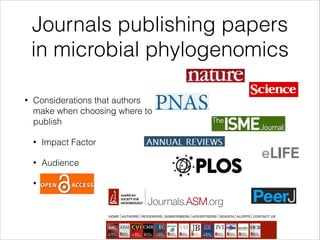
Journals publishing papers
in microbial phylogenomics
•

Considerations that authors
make when choosing where to
publish
•

Impact Factor

•

Audience

•

open access
Learn to read critically, so you
don’t just judge a book by its cover
•

Don’t just assume that a paper
in Science is correct.

•

Important to learn how to
judge each paper on its own
merits.

•

And to identify what else there
is to be done. What are the
unanswered questions?

•

This is a lot of what we learn
how to do in graduate school.
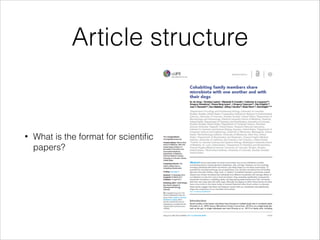
Article structure

•

What is the format for scientific
papers?
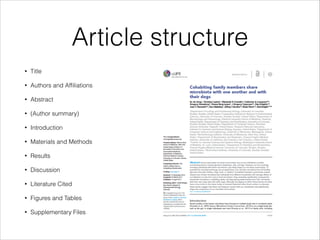
Article structure
•

Title

•

Authors and Affiliations

•

Abstract

•

(Author summary)

•

Introduction

•

Materials and Methods

•

Results

•

Discussion

•

Literature Cited

•

Figures and Tables

•

Supplementary Files
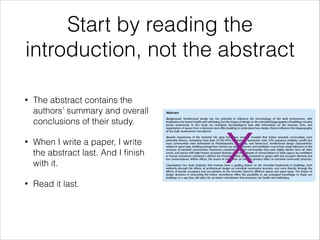
Start by reading the
introduction, not the abstract
•

The abstract contains the
authors’ summary and overall
conclusions of their study.

•

When I write a paper, I write
the abstract last.

•

Read it last.

x
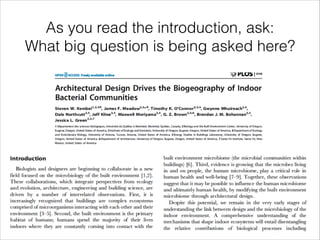
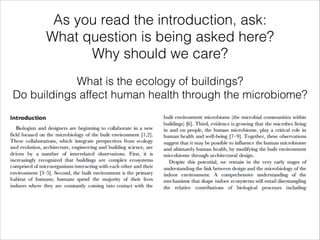
As you read the introduction, ask:
What big question is being asked here?
As you read the introduction, ask:
What question is being asked here?
Why should we care?
What is the ecology of buildings?
Do buildings affect human health through the microbiome?
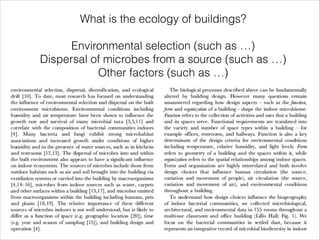
What is the ecology of buildings?
!

Environmental selection (such as …)
Dispersal of microbes from a source (such as …)
Other factors (such as …)
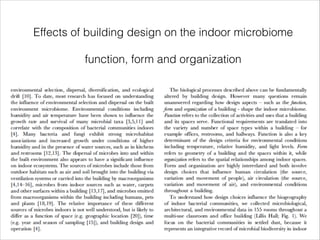
Effects of building design on the indoor microbiome
!

function, form and organization
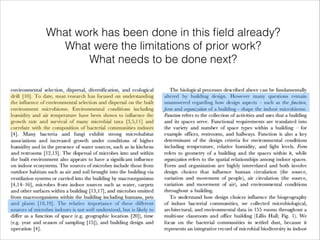
What work has been done in this field already?
What were the limitations of prior work?
What needs to be done next?
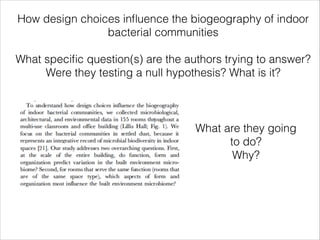
How design choices influence the biogeography of indoor
bacterial communities
!

What specific question(s) are the authors trying to answer?
Were they testing a null hypothesis? What is it?

What are they going
to do?
Why?
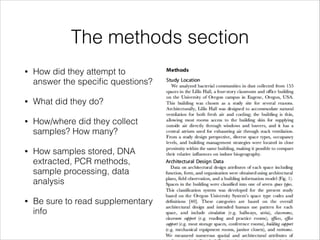
The methods section
•

How did they attempt to
answer the specific questions?

•

What did they do?

•

How/where did they collect
samples? How many?

•

How samples stored, DNA
extracted, PCR methods,
sample processing, data
analysis

•

Be sure to read supplementary
info
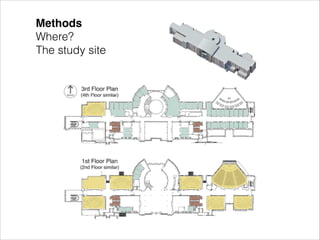
Methods!
Where?
The study site
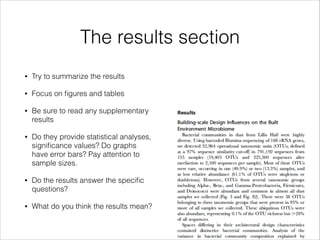
The results section
•

Try to summarize the results

•

Focus on figures and tables

•

Be sure to read any supplementary
results

•

Do they provide statistical analyses,
significance values? Do graphs
have error bars? Pay attention to
sample sizes.

•

Do the results answer the specific
questions?

•

What do you think the results mean?
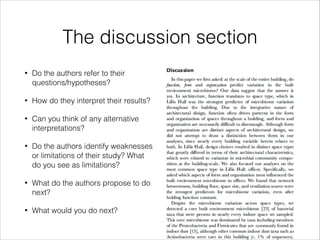
The discussion section
•

Do the authors refer to their
questions/hypotheses?

•

How do they interpret their results?

•

Can you think of any alternative
interpretations?

•

Do the authors identify weaknesses
or limitations of their study? What
do you see as limitations?

•

What do the authors propose to do
next?

•

What would you do next?
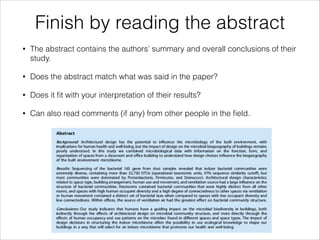
Finish by reading the abstract
•

The abstract contains the authors’ summary and overall conclusions of their
study.

•

Does the abstract match what was said in the paper?

•

Does it fit with your interpretation of their results?

•

Can also read comments (if any) from other people in the field.

How to read scientific papers

  • 1.
    How to readpapers A biologist’s perspective Holly H. Ganz, UC Davis
  • 2.
    Journals publishing papers inmicrobial phylogenomics • Considerations that authors make when choosing where to publish • Impact Factor • Audience • open access
  • 3.
    Learn to readcritically, so you don’t just judge a book by its cover • Don’t just assume that a paper in Science is correct. • Important to learn how to judge each paper on its own merits. • And to identify what else there is to be done. What are the unanswered questions? • This is a lot of what we learn how to do in graduate school.
  • 4.
    Article structure • What isthe format for scientific papers?
  • 5.
    Article structure • Title • Authors andAffiliations • Abstract • (Author summary) • Introduction • Materials and Methods • Results • Discussion • Literature Cited • Figures and Tables • Supplementary Files
  • 6.
    Start by readingthe introduction, not the abstract • The abstract contains the authors’ summary and overall conclusions of their study. • When I write a paper, I write the abstract last. • Read it last. x
  • 7.
    As you readthe introduction, ask: What big question is being asked here?
  • 8.
    As you readthe introduction, ask: What question is being asked here? Why should we care? What is the ecology of buildings? Do buildings affect human health through the microbiome?
  • 9.
    What is theecology of buildings? ! Environmental selection (such as …) Dispersal of microbes from a source (such as …) Other factors (such as …)
  • 10.
    Effects of buildingdesign on the indoor microbiome ! function, form and organization
  • 11.
    What work hasbeen done in this field already? What were the limitations of prior work? What needs to be done next?
  • 12.
    How design choicesinfluence the biogeography of indoor bacterial communities ! What specific question(s) are the authors trying to answer? Were they testing a null hypothesis? What is it? What are they going to do? Why?
  • 13.
    The methods section • Howdid they attempt to answer the specific questions? • What did they do? • How/where did they collect samples? How many? • How samples stored, DNA extracted, PCR methods, sample processing, data analysis • Be sure to read supplementary info
  • 14.
  • 15.
    The results section • Tryto summarize the results • Focus on figures and tables • Be sure to read any supplementary results • Do they provide statistical analyses, significance values? Do graphs have error bars? Pay attention to sample sizes. • Do the results answer the specific questions? • What do you think the results mean?
  • 16.
    The discussion section • Dothe authors refer to their questions/hypotheses? • How do they interpret their results? • Can you think of any alternative interpretations? • Do the authors identify weaknesses or limitations of their study? What do you see as limitations? • What do the authors propose to do next? • What would you do next?
  • 17.
    Finish by readingthe abstract • The abstract contains the authors’ summary and overall conclusions of their study. • Does the abstract match what was said in the paper? • Does it fit with your interpretation of their results? • Can also read comments (if any) from other people in the field.