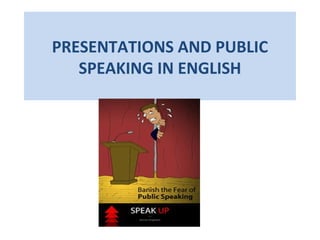
PRESENTATIONS AND PUBLIC
SPEAKING IN ENGLISH
Presentation Tips
• Preparation
• Equipment
• Language
Preparation
• Objective
Why am I making this presentation?'
Your objective should be clear in your mind.
Preparation
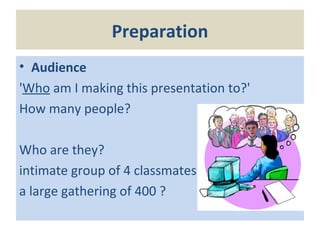
• Audience
'Who am I making this presentation to?'
How many people?
Who are they?
intimate group of 4 classmates
a large gathering of 400 ?
Preparation
• Venue
'Where am I making this presentation?‘
• A small classroom or a large conference hall?
• Facilities and equipment?
• Seating arrangements?
Preparation
• Time and length
'When am I making this presentation and how
long will it be?‘
Will it be 5 minutes or 1 hour? Just before lunch,
when the audience is hungry?
Preparation
• Method
'How should I make this presentation?'
Formal or informal? Lots of visual aids or only a
few? With or without anecdotes and humour?
• Content
'What should I say?'
Include only relevant information. Create a title for
your presentation. The title will help you to focus on
the subject. Prepare your visual aids, if any.
Preparation
• Structure
Organise your presentation in a logical structure:
1 Introduction
welcome your audience
introduce your subject
explain the structure of your presentation
explain rules for questions
2 Body of presentation
present the subject itself
3 Conclusion
summarise your presentation
thank your audience
invite questions
Questions
Preparation
• Notes
Do not read your presentation. Use notes to
remember everything you need to say
• Rehearsal
Practise your presentation two or three times so
that you:
practise difficult pronunciations
check the time that your presentation takes and
make any necessary modifications
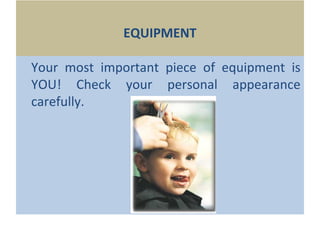
EQUIPMENT
Your most important piece of equipment is
YOU! Check your personal appearance
carefully.
Presentation
• Handouts
samples or documents you distribute to the
audience.
Language
Simplicity and Clarity
If you want your audience to understand your
message, your language must be simple and
clear:
• short words and short sentences
• No jargon
• concrete facts
• use active verbs
Active Verbs
Easier to understand. More powerful.
Sentence 1: Toyota sold two million cars last
year.
Sentence 2: Two million cars were sold by
Toyota last year.
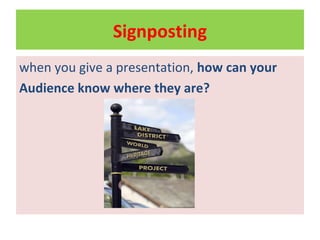
Signposting
when you give a presentation, how can your
Audience know where they are?
Signposting
• Tell your audience the structure of your
presentation, for example:
Signposting
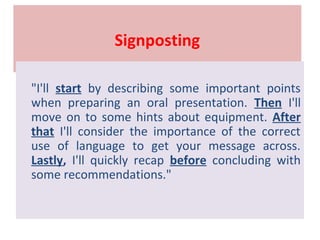
"I'll start by describing some important points
when preparing an oral presentation. Then I'll
move on to some hints about equipment. After
that I'll consider the importance of the correct
use of language to get your message across.
Lastly, I'll quickly recap before concluding with
some recommendations."
A member of the audience can now visualize
your presentation like this:
• Introduction
welcome!
explanation of structure (now)
• Body
Preparation
Equipment
Language
• Conclusion
summing up
recommendations
Signposting
When you finish Equipment and want to start
language, you might say:
"That's all I have to say about equipment. Let's
turn now to Language."
Signposting
When you have finished Language and want to
sum up, you might say:
"Well, we've looked at the three important
points to make a good oral presentation
Preparation, Equipment, and Language. I'd
like to sum up now."
Signposting
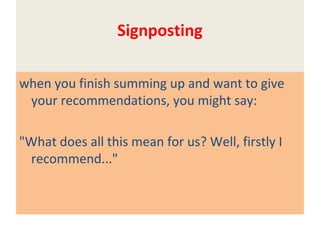
when you finish summing up and want to give
your recommendations, you might say:
"What does all this mean for us? Well, firstly I
recommend..."
Recommendations
• Be enthusiastic
• Give time on visuals
• Maintain eye contact
• Signpost throughout
• Use your notes
• No long text on slides
• Remain polite when dealing with questions
Key expressions
• To signpost the various parts of your
presentation

Public speaking

  • 1.
  • 2.
  • 4.
    Preparation • Objective Why amI making this presentation?' Your objective should be clear in your mind.
  • 5.
    Preparation • Audience 'Who amI making this presentation to?' How many people? Who are they? intimate group of 4 classmates a large gathering of 400 ?
  • 6.
    Preparation • Venue 'Where amI making this presentation?‘ • A small classroom or a large conference hall? • Facilities and equipment? • Seating arrangements?
  • 7.
    Preparation • Time andlength 'When am I making this presentation and how long will it be?‘ Will it be 5 minutes or 1 hour? Just before lunch, when the audience is hungry?
  • 8.
    Preparation • Method 'How shouldI make this presentation?' Formal or informal? Lots of visual aids or only a few? With or without anecdotes and humour? • Content 'What should I say?' Include only relevant information. Create a title for your presentation. The title will help you to focus on the subject. Prepare your visual aids, if any.
  • 9.
    Preparation • Structure Organise yourpresentation in a logical structure: 1 Introduction welcome your audience introduce your subject explain the structure of your presentation explain rules for questions 2 Body of presentation present the subject itself 3 Conclusion summarise your presentation thank your audience invite questions Questions
  • 10.
    Preparation • Notes Do notread your presentation. Use notes to remember everything you need to say • Rehearsal Practise your presentation two or three times so that you: practise difficult pronunciations check the time that your presentation takes and make any necessary modifications
  • 11.
    EQUIPMENT Your most importantpiece of equipment is YOU! Check your personal appearance carefully.
  • 12.
    Presentation • Handouts samples ordocuments you distribute to the audience.
  • 13.
    Language Simplicity and Clarity Ifyou want your audience to understand your message, your language must be simple and clear: • short words and short sentences • No jargon • concrete facts • use active verbs
  • 14.
    Active Verbs Easier tounderstand. More powerful. Sentence 1: Toyota sold two million cars last year. Sentence 2: Two million cars were sold by Toyota last year.
  • 15.
    Signposting when you givea presentation, how can your Audience know where they are?
  • 16.
    Signposting • Tell youraudience the structure of your presentation, for example:
  • 17.
    Signposting "I'll start bydescribing some important points when preparing an oral presentation. Then I'll move on to some hints about equipment. After that I'll consider the importance of the correct use of language to get your message across. Lastly, I'll quickly recap before concluding with some recommendations."
  • 18.
    A member ofthe audience can now visualize your presentation like this: • Introduction welcome! explanation of structure (now) • Body Preparation Equipment Language • Conclusion summing up recommendations
  • 19.
    Signposting When you finishEquipment and want to start language, you might say: "That's all I have to say about equipment. Let's turn now to Language."
  • 20.
    Signposting When you havefinished Language and want to sum up, you might say: "Well, we've looked at the three important points to make a good oral presentation Preparation, Equipment, and Language. I'd like to sum up now."
  • 21.
    Signposting when you finishsumming up and want to give your recommendations, you might say: "What does all this mean for us? Well, firstly I recommend..."
  • 22.
    Recommendations • Be enthusiastic •Give time on visuals • Maintain eye contact • Signpost throughout • Use your notes • No long text on slides • Remain polite when dealing with questions
  • 23.
    Key expressions • Tosignpost the various parts of your presentation