PSYCHOPATHOLOGY
OF EATING
DISORDERS
BY . EHAB ELBAZ
Definition
 A group of disorders Characterized by a
persistent disturbance of eating and eating-
related behavior that results in the altered
consumption or absorption of food and that
significantly impairs physical health or
psychosocial functioning.
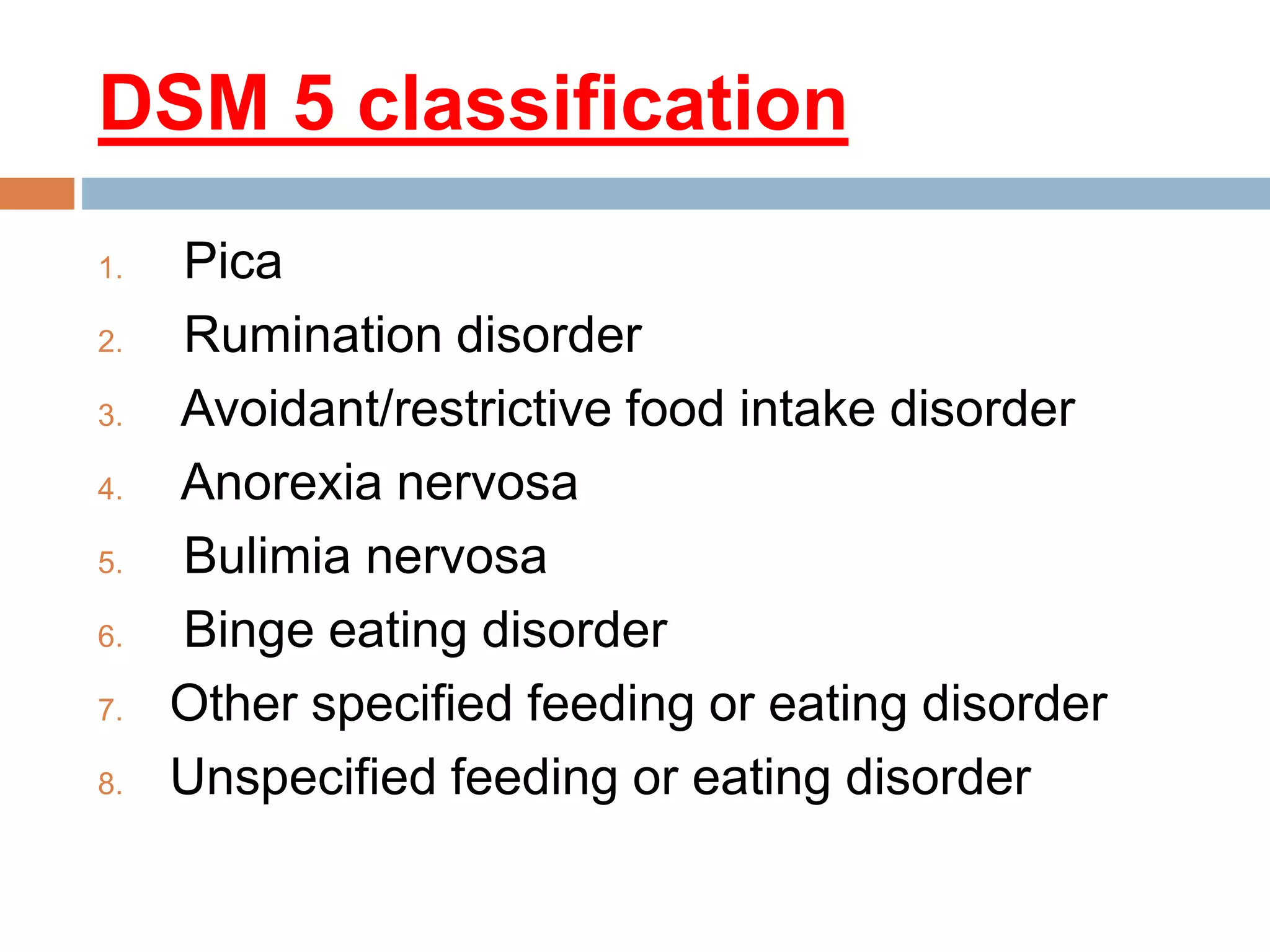
DSM 5 classification
1. Pica
2. Rumination disorder
3. Avoidant/restrictive food intake disorder
4. Anorexia nervosa
5. Bulimia nervosa
6. Binge eating disorder
7. Other specified feeding or eating disorder
8. Unspecified feeding or eating disorder
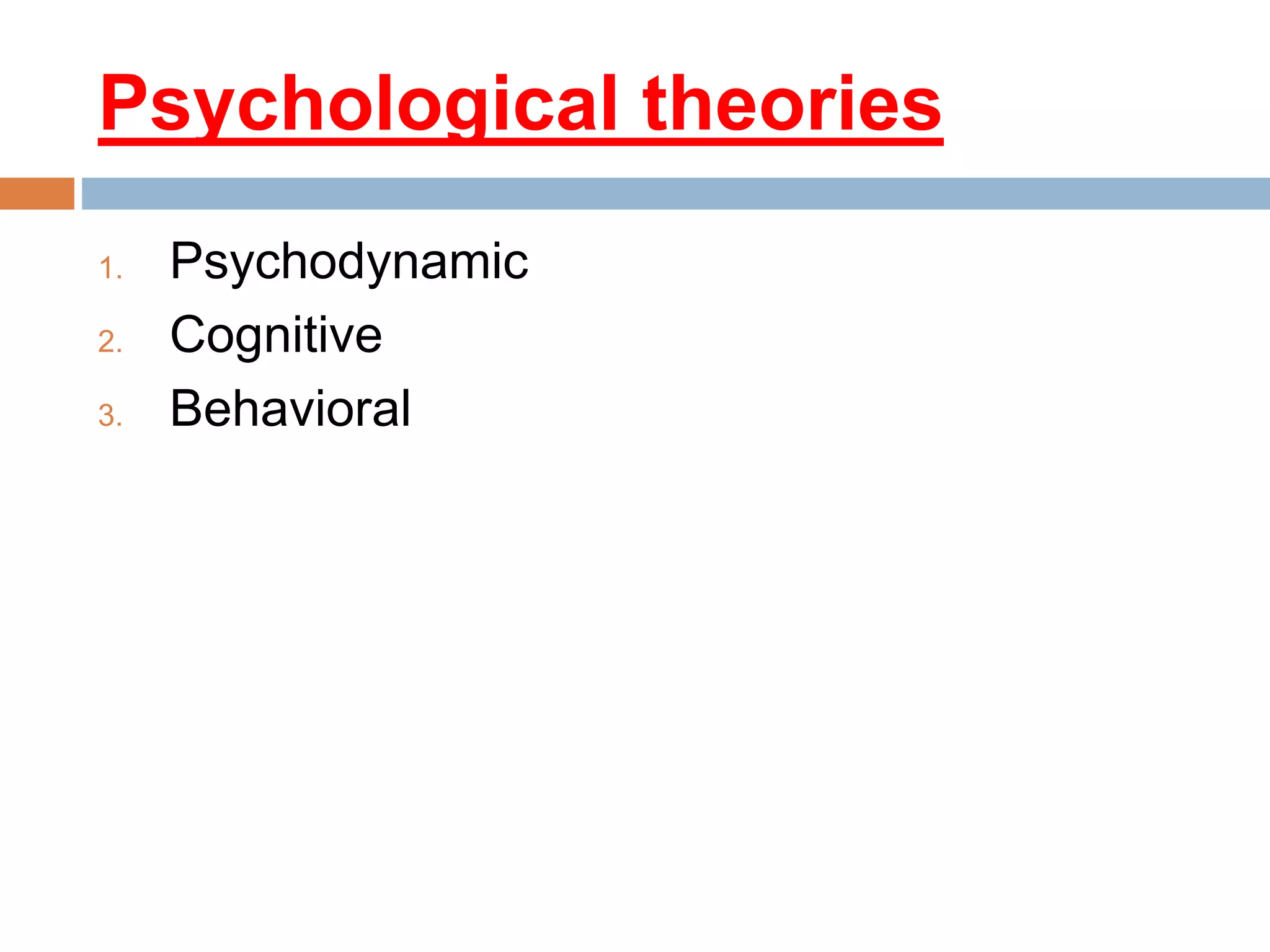
Psychological theories
1. Psychodynamic
2. Cognitive
3. Behavioral
1- Psychoanalytic theories
 Fixation at phallic phase which characterized
by Electra complex.
 Most common in adolescent females
suggesting a conflict and reaction to the
adolescence demands as regard
independence and autonomy
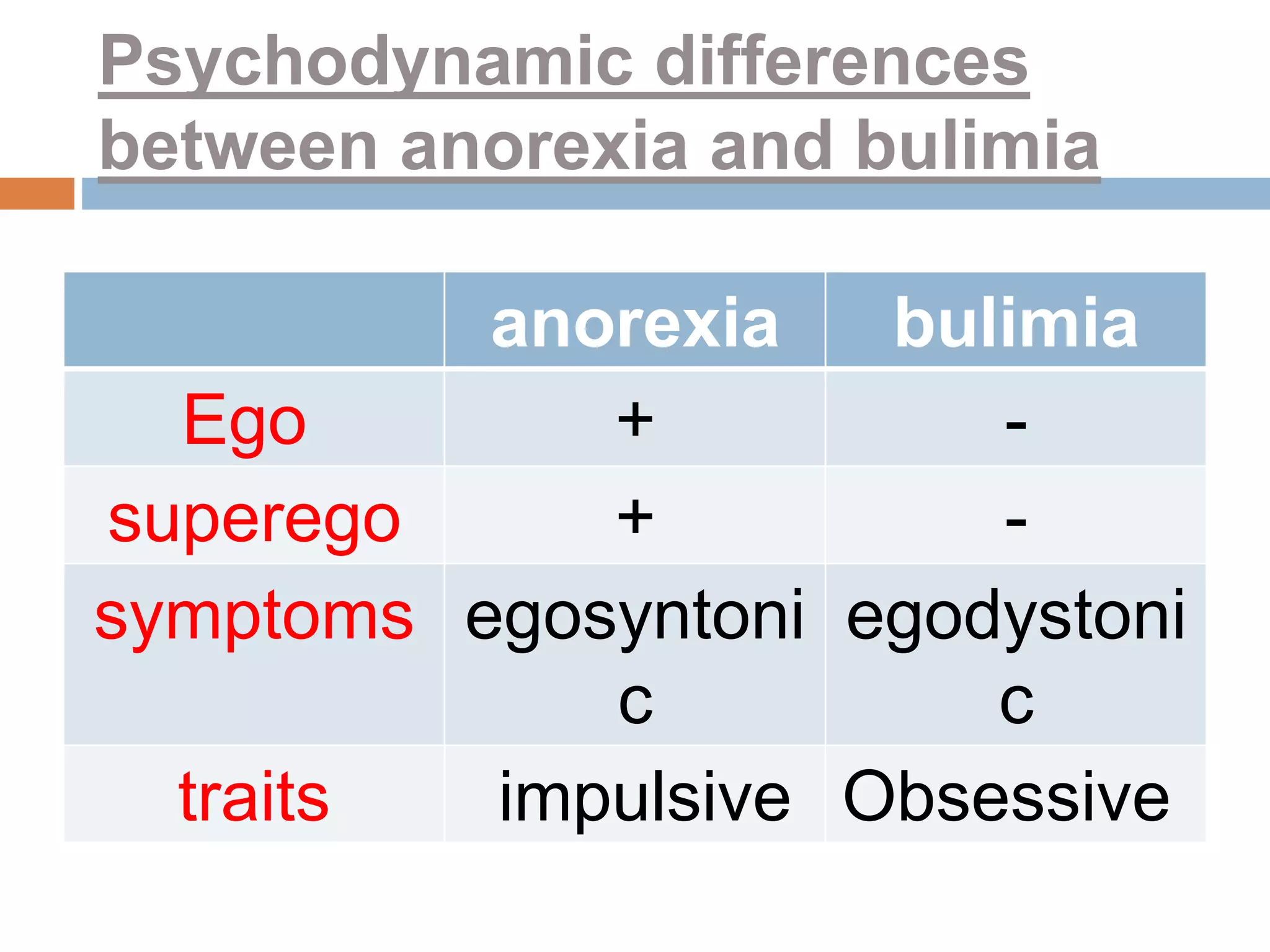
Psychodynamic differences
between anorexia and bulimia
bulimiaanorexia
-+Ego
-+superego
egodystoni
c
egosyntoni
c
symptoms
Obsessiveimpulsivetraits
A- In Anorexia
 Unable to separate psychologically from mother
>>> introjection of the hated mother>>> starvation
to inhibit growth and destroy mother
 Starvation as way to develop sense of autonomy
and control
 Starvation to overcome fear of increased sexual
desire
 Starvation to overcome fear of pregnancy by oral
impregnation.
 Starvation as a way to stop sexual development to
stay child
B- In Bulimia
 Unable to separate from mother >>> no
transitional object >>> use own body as a
transitional object >>> ambivalence about food
as a struggle to separate from mother
 Eating >>> wish to fuse with caregiver
(introjection)
 Regurgitation >>> wish to separation
(projection)
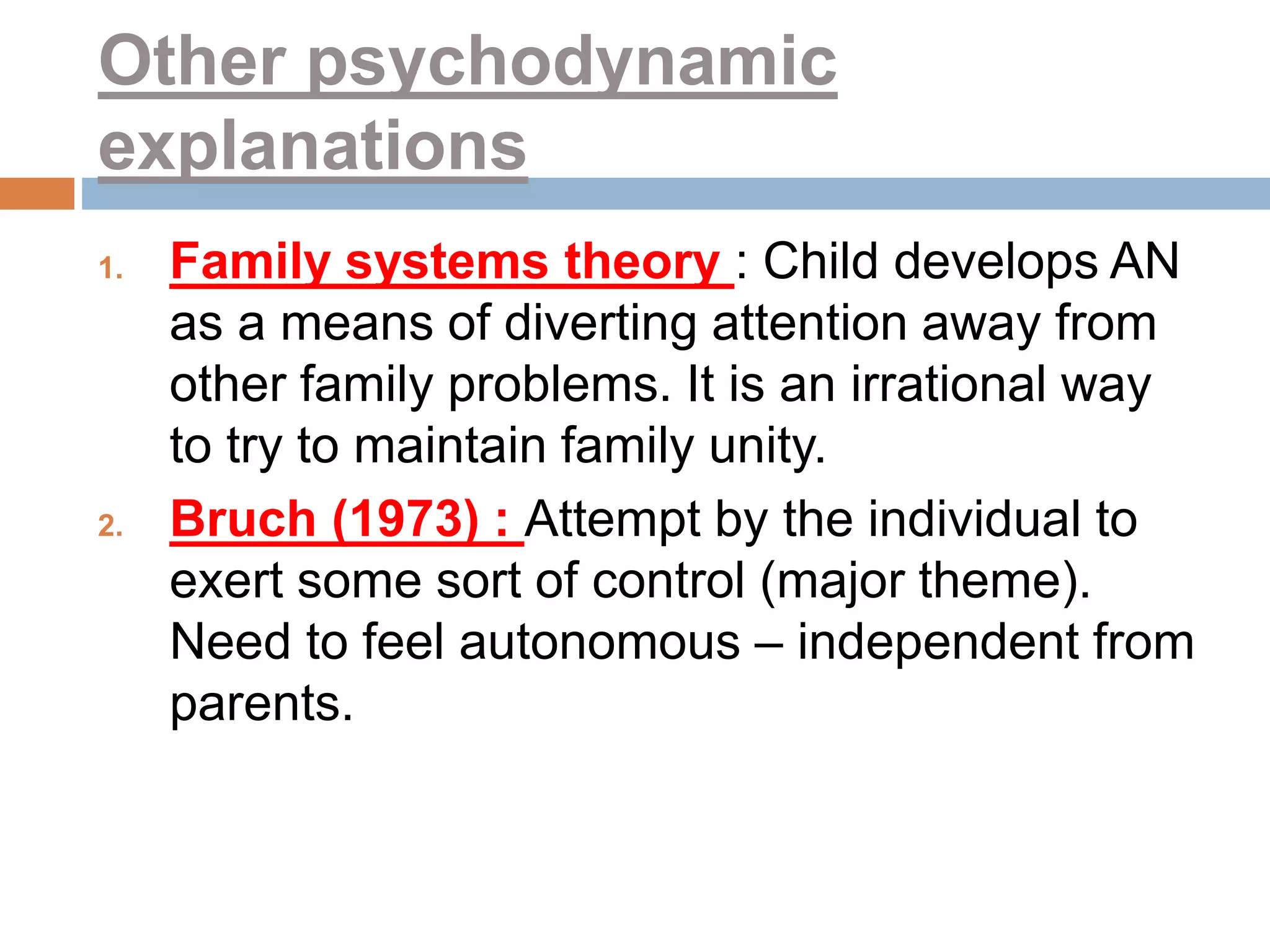
Other psychodynamic
explanations
1. Family systems theory : Child develops AN
as a means of diverting attention away from
other family problems. It is an irrational way
to try to maintain family unity.
2. Bruch (1973) : Attempt by the individual to
exert some sort of control (major theme).
Need to feel autonomous – independent from
parents.
2- Cognitive theory
 People with eating disorders have irrational
beliefs and faulty schemas that is they will not
be valued unless their physical appearance is
ideal.
 Have distorted body image.
 Common cognitive distortions incudes
perfectionism , all or non thinking , negative
self evaluation
3- Behavioral theories
 Classical conditioning : associates being
skinny with feeling good >>> continuous
dieting
 Operant conditioning : being skinny attract
people attention >>> reinforce dieting
 Observational learning : effect of media and
culture to define ideal weight >>> modeling
and imitation
Obesity
 It is not a disorder , it is a form abnormal
eating behavior
 Psychological causes:
1. emotional disturbance
2. hyperphagia as a coping mechanism
3. unconscious conflicts
4. personality structure

Psychopathology of eating disorders

  • 1.
  • 3.
    Definition  A groupof disorders Characterized by a persistent disturbance of eating and eating- related behavior that results in the altered consumption or absorption of food and that significantly impairs physical health or psychosocial functioning.
  • 4.
    DSM 5 classification 1.Pica 2. Rumination disorder 3. Avoidant/restrictive food intake disorder 4. Anorexia nervosa 5. Bulimia nervosa 6. Binge eating disorder 7. Other specified feeding or eating disorder 8. Unspecified feeding or eating disorder
  • 5.
  • 6.
    1- Psychoanalytic theories Fixation at phallic phase which characterized by Electra complex.  Most common in adolescent females suggesting a conflict and reaction to the adolescence demands as regard independence and autonomy
  • 7.
    Psychodynamic differences between anorexiaand bulimia bulimiaanorexia -+Ego -+superego egodystoni c egosyntoni c symptoms Obsessiveimpulsivetraits
  • 8.
    A- In Anorexia Unable to separate psychologically from mother >>> introjection of the hated mother>>> starvation to inhibit growth and destroy mother  Starvation as way to develop sense of autonomy and control  Starvation to overcome fear of increased sexual desire  Starvation to overcome fear of pregnancy by oral impregnation.  Starvation as a way to stop sexual development to stay child
  • 9.
    B- In Bulimia Unable to separate from mother >>> no transitional object >>> use own body as a transitional object >>> ambivalence about food as a struggle to separate from mother  Eating >>> wish to fuse with caregiver (introjection)  Regurgitation >>> wish to separation (projection)
  • 10.
    Other psychodynamic explanations 1. Familysystems theory : Child develops AN as a means of diverting attention away from other family problems. It is an irrational way to try to maintain family unity. 2. Bruch (1973) : Attempt by the individual to exert some sort of control (major theme). Need to feel autonomous – independent from parents.
  • 11.
    2- Cognitive theory People with eating disorders have irrational beliefs and faulty schemas that is they will not be valued unless their physical appearance is ideal.  Have distorted body image.  Common cognitive distortions incudes perfectionism , all or non thinking , negative self evaluation
  • 12.
    3- Behavioral theories Classical conditioning : associates being skinny with feeling good >>> continuous dieting  Operant conditioning : being skinny attract people attention >>> reinforce dieting  Observational learning : effect of media and culture to define ideal weight >>> modeling and imitation
  • 13.
    Obesity  It isnot a disorder , it is a form abnormal eating behavior  Psychological causes: 1. emotional disturbance 2. hyperphagia as a coping mechanism 3. unconscious conflicts 4. personality structure