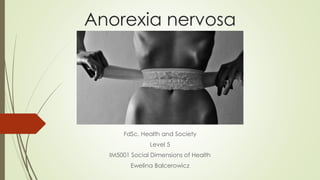
Anorexia nervosa
FdSc. Health and Society
Level 5
IM5001 Social Dimensions of Health
Ewelina Balcerowicz
Anorexia nervosa – clinical features
 Eating disorder (mental health condition)
 Refusal to eat an adequate amount of food (self-starvation), severe weight loss
 Vomiting, abusing laxatives and enemas
 Distorted body image
 Intense fear of gaining weight
 Repetitive checking body weight
 Intense and compulsive exercising
Anorexia nervosa –comorbidities &
causes
 Depression ( 50 % - 75% of
individuals)
 Obsessive-compulsive disorders
 Anxiety
 Low self-esteem
 Alcohol misuse
 Self-harm
 Heritable
 Obstetric complications
(maternal anemia, diabetes)
 Addiction to chemicals released
during starvation
 Serotonin dysregulation
 Twins
Anorexia nervosa – diagnostic criteria
and treatment
 BMI – individual circumstances
( 18,5 to 24,9)
 Pulse and blood pressure
 Assessing muscle strength
 Multidisciplinary approach
 Therapy
 Diet ( calories & weight)
 Medications
 Clinical autonomy
 Clinical gaze
Hidden stats
 Conflicting and poor quality data
 DoH only shows inpatient data
 NICE 2004 – 1,6 million people in
UK, 11% male
 NHS 2007 – 6,4 % adults had a
problem with food
 Royal College of Practitioners –
66% rise in male hospital admission
 Homosexuality
 Highest mortality rates of any
mental disorders – discrepancies
 30-40% recover
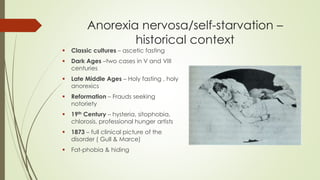
Anorexia nervosa/self-starvation –
historical context
 Classic cultures – ascetic fasting
 Dark Ages –two cases in V and VIII
centuries
 Late Middle Ages – Holy fasting , holy
anorexics
 Reformation – Frauds seeking
notoriety
 19th Century – hysteria, sitophobia,
chlorosis, professional hunger artists
 1873 – full clinical picture of the
disorder ( Gull & Marce)
 Fat-phobia & hiding
Anorexia nervosa and feminism
 (Wolf 1991) "a cultural fixation on
female thinness is not an
obsession about female beauty
but an obsession about female
obedience"
 A rebellion against patriarchy
through rejection of one's own
sexuality
 Some liberal feminists believe that
sexism causes anorexia and other
eating disorders
 Radical feminists believe that
women are being exploited
because men profit from the thin
ideal
Social construction of anorexia
 Constructed through culturally and
historically-specific discourses
rather than being naturally
occurring disorders
 Gendered, cultural ideas
 Thinness or fatness have no
essential meaning unto
themselves; they are given
symbolic value through cultural
mediation
 Anorexia vs obesity
 Hospital numbers vs real world
 Conflicting messages
Psycho-social model and anorexia
 Stress as an onset
 Helplessness
 Perfectionism
 Social comparison
 Feeling secure at school
 Worries about future
 Higher education
 Western ideal
Life-course approach and anorexia
 Where an individual lives and the
quantity of food available as
determinants
 Western children influenced by
“Barbie-doll” body shape
 Infant feeding problems
 Previous history of under-eating
 Maternal depression
 An individual’s eating disorder is
originated in the family’s style of
interacting
 Eating-disordered families found
to be intrusive, hostile, and
negating of the patient’s
emotional needs or overly
concerned with parenting in
general
 Relationship difficulties between
parent and child, often manifest
themselves through food.
 Parents who constantly criticize
about their own body image and
shape will influence their children
that having a negative view on
one’s self is the norm
Lay perceptions and stigma
 The general public lacks sufficient
knowledge and information
about eating disorders
 Self-inflicted
 Choice
 Attention
 Blame
 Vain, difficult to communicate
with
 Trivalisation
 “Anorexic”
Lay perceptions
Pro-ana
 Non-judgmental environment for
anorexics
 Support
 Not a mental illness!
 Lifestyle and self-control
 Social media
 Sense of community
 Glamorization of mental illness
 “Wanna-rexic”
 Red bracelets
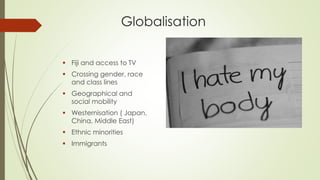
Globalisation
 Fiji and access to TV
 Crossing gender, race
and class lines
 Geographical and
social mobility
 Westernisation ( Japan,
China, Middle East)
 Ethnic minorities
 Immigrants
Media
 Body insecurity can be exported,
imported, and marketed–just like
any other profitable commodity
 Mass media pressure linked to
body dissatisfaction,
internalisation of the thin ideal
and eating disorders
 10.5 more ads in women's
magazines
 “Damaging paradox”
 The gap between actual body
sizes and the cultural ideal
 Beauty industry
Conclusion
 Anorexia nervosa is not a new disease
 Individual, family and cultural factors
 Paradox
 How to counter-act
 Balance
A mixed approach is still fundamental in this area of research because without
biological treatments of the malnutrition, the health of individuals with eating
disorders would be at risk whilst therapists attempt to ‘un‐bind’ them from
these cultural constructions
Thank you !
Anyquestions?

Anorexia nervosa -sociological perspectives

  • 1.
    Anorexia nervosa FdSc. Healthand Society Level 5 IM5001 Social Dimensions of Health Ewelina Balcerowicz
  • 2.
    Anorexia nervosa –clinical features  Eating disorder (mental health condition)  Refusal to eat an adequate amount of food (self-starvation), severe weight loss  Vomiting, abusing laxatives and enemas  Distorted body image  Intense fear of gaining weight  Repetitive checking body weight  Intense and compulsive exercising
  • 3.
    Anorexia nervosa –comorbidities& causes  Depression ( 50 % - 75% of individuals)  Obsessive-compulsive disorders  Anxiety  Low self-esteem  Alcohol misuse  Self-harm  Heritable  Obstetric complications (maternal anemia, diabetes)  Addiction to chemicals released during starvation  Serotonin dysregulation  Twins
  • 4.
    Anorexia nervosa –diagnostic criteria and treatment  BMI – individual circumstances ( 18,5 to 24,9)  Pulse and blood pressure  Assessing muscle strength  Multidisciplinary approach  Therapy  Diet ( calories & weight)  Medications  Clinical autonomy  Clinical gaze
  • 5.
    Hidden stats  Conflictingand poor quality data  DoH only shows inpatient data  NICE 2004 – 1,6 million people in UK, 11% male  NHS 2007 – 6,4 % adults had a problem with food  Royal College of Practitioners – 66% rise in male hospital admission  Homosexuality  Highest mortality rates of any mental disorders – discrepancies  30-40% recover
  • 6.
    Anorexia nervosa/self-starvation – historicalcontext  Classic cultures – ascetic fasting  Dark Ages –two cases in V and VIII centuries  Late Middle Ages – Holy fasting , holy anorexics  Reformation – Frauds seeking notoriety  19th Century – hysteria, sitophobia, chlorosis, professional hunger artists  1873 – full clinical picture of the disorder ( Gull & Marce)  Fat-phobia & hiding
  • 7.
    Anorexia nervosa andfeminism  (Wolf 1991) "a cultural fixation on female thinness is not an obsession about female beauty but an obsession about female obedience"  A rebellion against patriarchy through rejection of one's own sexuality  Some liberal feminists believe that sexism causes anorexia and other eating disorders  Radical feminists believe that women are being exploited because men profit from the thin ideal
  • 8.
    Social construction ofanorexia  Constructed through culturally and historically-specific discourses rather than being naturally occurring disorders  Gendered, cultural ideas  Thinness or fatness have no essential meaning unto themselves; they are given symbolic value through cultural mediation  Anorexia vs obesity  Hospital numbers vs real world  Conflicting messages
  • 9.
    Psycho-social model andanorexia  Stress as an onset  Helplessness  Perfectionism  Social comparison  Feeling secure at school  Worries about future  Higher education  Western ideal
  • 10.
    Life-course approach andanorexia  Where an individual lives and the quantity of food available as determinants  Western children influenced by “Barbie-doll” body shape  Infant feeding problems  Previous history of under-eating  Maternal depression  An individual’s eating disorder is originated in the family’s style of interacting  Eating-disordered families found to be intrusive, hostile, and negating of the patient’s emotional needs or overly concerned with parenting in general  Relationship difficulties between parent and child, often manifest themselves through food.  Parents who constantly criticize about their own body image and shape will influence their children that having a negative view on one’s self is the norm
  • 11.
    Lay perceptions andstigma  The general public lacks sufficient knowledge and information about eating disorders  Self-inflicted  Choice  Attention  Blame  Vain, difficult to communicate with  Trivalisation  “Anorexic”
  • 12.
  • 13.
    Pro-ana  Non-judgmental environmentfor anorexics  Support  Not a mental illness!  Lifestyle and self-control  Social media  Sense of community  Glamorization of mental illness  “Wanna-rexic”  Red bracelets
  • 14.
    Globalisation  Fiji andaccess to TV  Crossing gender, race and class lines  Geographical and social mobility  Westernisation ( Japan, China, Middle East)  Ethnic minorities  Immigrants
  • 15.
    Media  Body insecuritycan be exported, imported, and marketed–just like any other profitable commodity  Mass media pressure linked to body dissatisfaction, internalisation of the thin ideal and eating disorders  10.5 more ads in women's magazines  “Damaging paradox”  The gap between actual body sizes and the cultural ideal  Beauty industry
  • 16.
    Conclusion  Anorexia nervosais not a new disease  Individual, family and cultural factors  Paradox  How to counter-act  Balance A mixed approach is still fundamental in this area of research because without biological treatments of the malnutrition, the health of individuals with eating disorders would be at risk whilst therapists attempt to ‘un‐bind’ them from these cultural constructions
  • 17.