
PROTEIN
The Unit Of Living Organisms
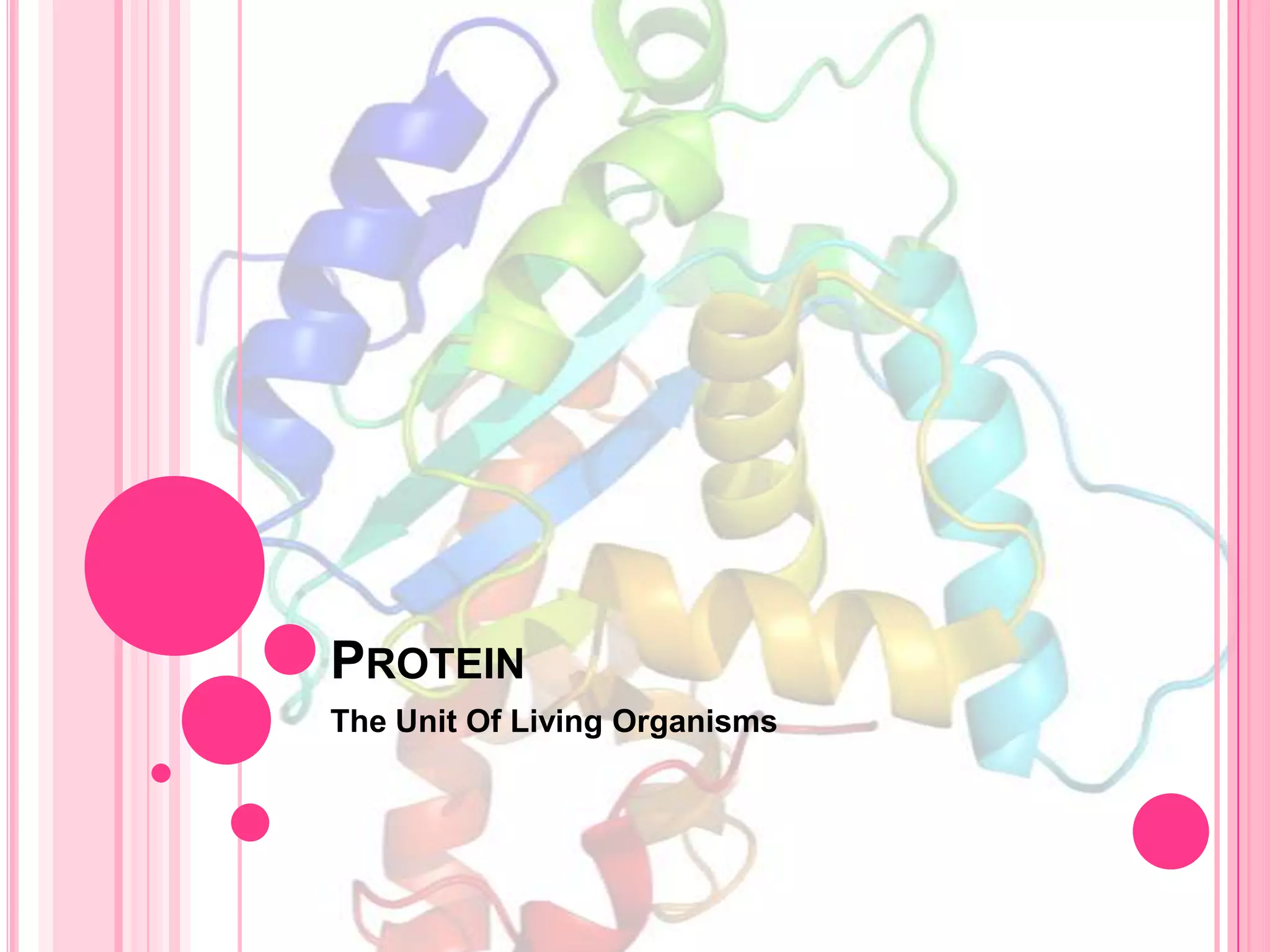
PROTEIN

o

12/26/2013

o

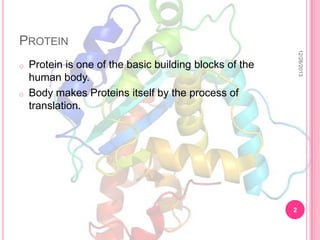
Protein is one of the basic building blocks of the
human body.
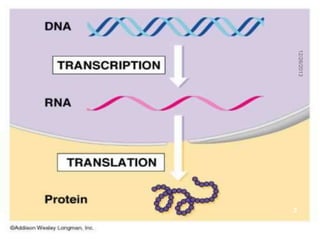
Body makes Proteins itself by the process of
translation.

2
12/26/2013

3
PROTEIN THE UNIT OF LIVING ORGANISMS
12/26/2013

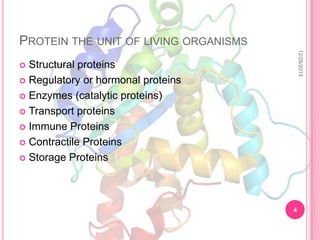
Structural proteins
 Regulatory or hormonal proteins
 Enzymes (catalytic proteins)
 Transport proteins
 Immune Proteins
 Contractile Proteins
 Storage Proteins


4
PROTEIN THE UNIT OF LIVING ORGANISMS
12/26/2013



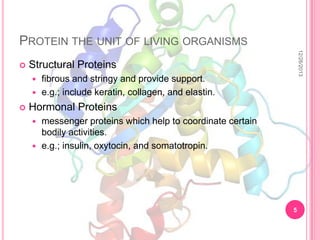
Structural Proteins
fibrous and stringy and provide support.
 e.g.; include keratin, collagen, and elastin.




Hormonal Proteins
messenger proteins which help to coordinate certain
bodily activities.
 e.g.; insulin, oxytocin, and somatotropin.


5
PROTEIN THE UNIT OF LIVING ORGANISMS
12/26/2013



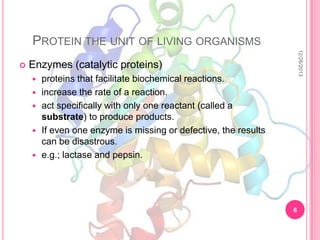
Enzymes (catalytic proteins)






proteins that facilitate biochemical reactions.
increase the rate of a reaction.
act specifically with only one reactant (called a
substrate) to produce products.
If even one enzyme is missing or defective, the results
can be disastrous.
e.g.; lactase and pepsin.

6
PROTEIN THE UNIT OF LIVING ORGANISMS
12/26/2013



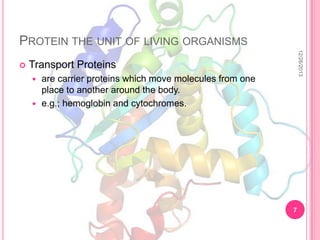
Transport Proteins
are carrier proteins which move molecules from one
place to another around the body.
 e.g.; hemoglobin and cytochromes.


7
PROTEIN THE UNIT OF LIVING ORGANISMS
Immune Proteins(Antibodies)



12/26/2013



specialized proteins involved in defending the body from
antigens (foreign invaders).

Contractile Proteins
responsible for movement.
 proteins are involved in muscle contraction and
movement.
 e.g.; actin and myosin


8
PROTEIN THE UNIT OF LIVING ORGANISMS
12/26/2013



Storage Proteins






a source of amino acids for growing organisms,
serve as reserves of metal ions and amino acids
can be mobilized and utilized for the maintenance and
growth of organisms.
particularly prevalent in plant seeds, egg whites, and
milk.
e.g.; ovalbumin and casein.

9
PROTEIN AS NUTRIENT









12/26/2013

Around 40% of the body’s dry matter is protein.
 If body loses more than 14% of its Protein store, it
could lead to severe health consequences.


Loss of muscle mass causing physical weakness.
Fatigue
A weakened immune system.
Abnormal blood clotting.
Kwashiorkor
Marasmus
Brittle nails
10
12/26/2013

11
REFERENCES
12/26/2013

http://www.chemistryexplained.com/St-Te/StorageProtein.html#ixzz1kaSRE4el
 http://www.ncbi.nlm.nih.gov/books/NBK26830/
 Book: Molecular Genetics Of Plants. Page # 116.
 Book: Essential Cell Biology by Alberts. Bray.
Johnson. Lewis. Raff. Roberts. Walter. Chapter # 5,
Page # 133.


12
12/26/2013

13

Protein

  • 1.
    PROTEIN The Unit OfLiving Organisms
  • 2.
    PROTEIN o 12/26/2013 o Protein is oneof the basic building blocks of the human body. Body makes Proteins itself by the process of translation. 2
  • 3.
  • 4.
    PROTEIN THE UNITOF LIVING ORGANISMS 12/26/2013 Structural proteins  Regulatory or hormonal proteins  Enzymes (catalytic proteins)  Transport proteins  Immune Proteins  Contractile Proteins  Storage Proteins  4
  • 5.
    PROTEIN THE UNITOF LIVING ORGANISMS 12/26/2013  Structural Proteins fibrous and stringy and provide support.  e.g.; include keratin, collagen, and elastin.   Hormonal Proteins messenger proteins which help to coordinate certain bodily activities.  e.g.; insulin, oxytocin, and somatotropin.  5
  • 6.
    PROTEIN THE UNITOF LIVING ORGANISMS 12/26/2013  Enzymes (catalytic proteins)      proteins that facilitate biochemical reactions. increase the rate of a reaction. act specifically with only one reactant (called a substrate) to produce products. If even one enzyme is missing or defective, the results can be disastrous. e.g.; lactase and pepsin. 6
  • 7.
    PROTEIN THE UNITOF LIVING ORGANISMS 12/26/2013  Transport Proteins are carrier proteins which move molecules from one place to another around the body.  e.g.; hemoglobin and cytochromes.  7
  • 8.
    PROTEIN THE UNITOF LIVING ORGANISMS Immune Proteins(Antibodies)   12/26/2013  specialized proteins involved in defending the body from antigens (foreign invaders). Contractile Proteins responsible for movement.  proteins are involved in muscle contraction and movement.  e.g.; actin and myosin  8
  • 9.
    PROTEIN THE UNITOF LIVING ORGANISMS 12/26/2013  Storage Proteins      a source of amino acids for growing organisms, serve as reserves of metal ions and amino acids can be mobilized and utilized for the maintenance and growth of organisms. particularly prevalent in plant seeds, egg whites, and milk. e.g.; ovalbumin and casein. 9
  • 10.
    PROTEIN AS NUTRIENT        12/26/2013 Around40% of the body’s dry matter is protein.  If body loses more than 14% of its Protein store, it could lead to severe health consequences.  Loss of muscle mass causing physical weakness. Fatigue A weakened immune system. Abnormal blood clotting. Kwashiorkor Marasmus Brittle nails 10
  • 11.
  • 12.
    REFERENCES 12/26/2013 http://www.chemistryexplained.com/St-Te/StorageProtein.html#ixzz1kaSRE4el  http://www.ncbi.nlm.nih.gov/books/NBK26830/  Book:Molecular Genetics Of Plants. Page # 116.  Book: Essential Cell Biology by Alberts. Bray. Johnson. Lewis. Raff. Roberts. Walter. Chapter # 5, Page # 133.  12
  • 13.