PROPERTIES OF
VERBS
Prepared by: Aldrin A. Lucas
USES OF TENSE AND ASPECT
Present
A. Simple Present (form in 3rd person
singular; base form for all else). It is
used:
1. For general statements of fact.
Ex. The sun rises in the East and sets
in the West.
ANOTHER EXAMPLES
 London is the capital city of Germany.
 The elephant doesn’t fly.
 The earth goes around the sun.
2. To express habitual or everyday
activity.
Ex.
 Most offices start operation at 8:00
a.m.
 The heart pumps through the body
 Some birds sleep by day and hunt
by night.
B. Present progressive (am/is/are +
present participle). It is used to express
an action that is taking place at the time
of speaking.
Ex. It is raining very hard.
 We are having lunch
 Jane is reading the book “War and
Peace”
C. Present Perfect (have/has + past
participle). It is used.
1. To show actions that started at an
unspecified time the past.
Ex. Rodel has dreamed to be a
popular singing star.
ANOTHER EXAMPLES
 I have been to TOKYO.
 They have never eaten there before.
You have changed so much.
D. Present Perfect Progressive
(have/has + been + present participle).
It is used to indicate continuous past
actions still occurring or happening until
recently.
Ex. Rafael has been thinking about
his business expansion plan.
ANOTHER EXAMPLES
 She has been sneezing since she
got here.
 He has a stomach ache because he
has been eating too much.
 The cat has been hiding under the
couch for over an hour now.
II. Past
A. Simple Past (past form of verb). It is
used:
1. To indicate that an action began and
ended at a particular time in the past.
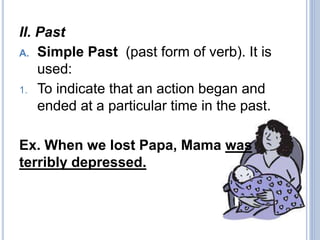
Ex. When we lost Papa, Mama was
terribly depressed.
ANOTHER EXAMPLES
 I sometimes walked home at lunch
time.
 I often brought my lunch to school.
 We saw a good film last week.
B. Past Progressive (was/were +
present participle). It is used to express
past actions that are in progress.
Ex. Ricky was showing his latest
Toyota edition to everyone.
ANOTHER EXAMPLES
 She were taking his examination
seriously.
 Alvin was making a card for his
mother.
 Lorie was looking at a beautiful
landscape.
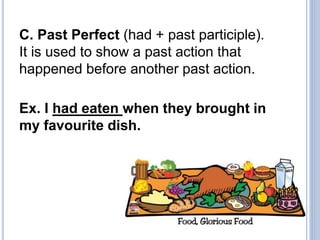
C. Past Perfect (had + past participle).
It is used to show a past action that
happened before another past action.
Ex. I had eaten when they brought in
my favourite dish.
ANOTHER EXAMPLES
 She had fed her dog before she
went out.
 Sheila had walked home from
school.
 His teacher had taught him to be a
better person.
D. Past Perfect Progressive (had +
been + present participle). It is used to
indicate a continuing past action when
another past action occurred.
Ex. Sheila had been writing her
dissertation before her adviser told
her to stop.
ANOTHER EXAMPLES
 He had been painting the door
before the dog scratched it.
 The jury had been considering its
verdict for several hours when the
judge effectively ordered them to
find Jones guilty.
III. FUTURE
A. Simple future (will/shall + based
form). It is used to indicate future
time.
Ex. Will you come here on Monday?
ANOTHER EXAMPLES
 It will rain tomorrow.
 I won’t leave until I’ve seen the
manager.
 Shall we go to the cinema tonight?
B. Future Progressive (will be/shall be
+ present participle). It is used to
indicate an action that will be happening
at a time in the future.
Ex. My sisters will be arriving next
month.
ANOTHER EXAMPLES
 They will be dancing all day long.
 We will be working quiet closely.
 Tomorrow at three o’clock Josh will
be cooking.
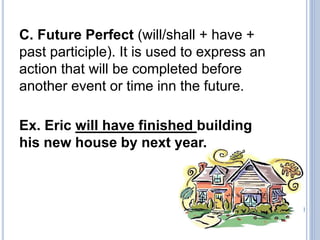
C. Future Perfect (will/shall + have +
past participle). It is used to express an
action that will be completed before
another event or time inn the future.
Ex. Eric will have finished building
his new house by next year.
ANOTHER EXAMPLES
 Jack will have finished his
homework by the time his mother
gets home.
 She will have gotten ready by the
time they leave the house.
 Laura will have cleaned out the
apartment before she gives back
the key.
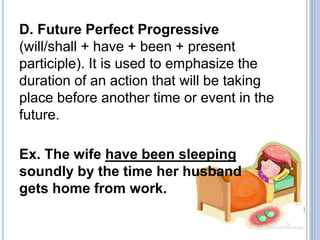
D. Future Perfect Progressive
(will/shall + have + been + present
participle). It is used to emphasize the
duration of an action that will be taking
place before another time or event in the
future.
Ex. The wife have been sleeping
soundly by the time her husband
gets home from work.
ANOTHER EXAMPLES
 At 10pm I will have been swimming
for a six hours.
 They will have been talking for two
hours by then.
THANK YOU 

Properties of Verbs

  • 1.
  • 2.
    USES OF TENSEAND ASPECT Present A. Simple Present (form in 3rd person singular; base form for all else). It is used: 1. For general statements of fact. Ex. The sun rises in the East and sets in the West.
  • 3.
    ANOTHER EXAMPLES  Londonis the capital city of Germany.  The elephant doesn’t fly.  The earth goes around the sun.
  • 4.
    2. To expresshabitual or everyday activity. Ex.  Most offices start operation at 8:00 a.m.  The heart pumps through the body  Some birds sleep by day and hunt by night.
  • 5.
    B. Present progressive(am/is/are + present participle). It is used to express an action that is taking place at the time of speaking. Ex. It is raining very hard.  We are having lunch  Jane is reading the book “War and Peace”
  • 6.
    C. Present Perfect(have/has + past participle). It is used. 1. To show actions that started at an unspecified time the past. Ex. Rodel has dreamed to be a popular singing star.
  • 7.
    ANOTHER EXAMPLES  Ihave been to TOKYO.  They have never eaten there before. You have changed so much.
  • 8.
    D. Present PerfectProgressive (have/has + been + present participle). It is used to indicate continuous past actions still occurring or happening until recently. Ex. Rafael has been thinking about his business expansion plan.
  • 9.
    ANOTHER EXAMPLES  Shehas been sneezing since she got here.  He has a stomach ache because he has been eating too much.  The cat has been hiding under the couch for over an hour now.
  • 10.
    II. Past A. SimplePast (past form of verb). It is used: 1. To indicate that an action began and ended at a particular time in the past. Ex. When we lost Papa, Mama was terribly depressed.
  • 11.
    ANOTHER EXAMPLES  Isometimes walked home at lunch time.  I often brought my lunch to school.  We saw a good film last week.
  • 12.
    B. Past Progressive(was/were + present participle). It is used to express past actions that are in progress. Ex. Ricky was showing his latest Toyota edition to everyone.
  • 13.
    ANOTHER EXAMPLES  Shewere taking his examination seriously.  Alvin was making a card for his mother.  Lorie was looking at a beautiful landscape.
  • 14.
    C. Past Perfect(had + past participle). It is used to show a past action that happened before another past action. Ex. I had eaten when they brought in my favourite dish.
  • 15.
    ANOTHER EXAMPLES  Shehad fed her dog before she went out.  Sheila had walked home from school.  His teacher had taught him to be a better person.
  • 16.
    D. Past PerfectProgressive (had + been + present participle). It is used to indicate a continuing past action when another past action occurred. Ex. Sheila had been writing her dissertation before her adviser told her to stop.
  • 17.
    ANOTHER EXAMPLES  Hehad been painting the door before the dog scratched it.  The jury had been considering its verdict for several hours when the judge effectively ordered them to find Jones guilty.
  • 18.
    III. FUTURE A. Simplefuture (will/shall + based form). It is used to indicate future time. Ex. Will you come here on Monday?
  • 19.
    ANOTHER EXAMPLES  Itwill rain tomorrow.  I won’t leave until I’ve seen the manager.  Shall we go to the cinema tonight?
  • 20.
    B. Future Progressive(will be/shall be + present participle). It is used to indicate an action that will be happening at a time in the future. Ex. My sisters will be arriving next month.
  • 21.
    ANOTHER EXAMPLES  Theywill be dancing all day long.  We will be working quiet closely.  Tomorrow at three o’clock Josh will be cooking.
  • 22.
    C. Future Perfect(will/shall + have + past participle). It is used to express an action that will be completed before another event or time inn the future. Ex. Eric will have finished building his new house by next year.
  • 23.
    ANOTHER EXAMPLES  Jackwill have finished his homework by the time his mother gets home.  She will have gotten ready by the time they leave the house.  Laura will have cleaned out the apartment before she gives back the key.
  • 24.
    D. Future PerfectProgressive (will/shall + have + been + present participle). It is used to emphasize the duration of an action that will be taking place before another time or event in the future. Ex. The wife have been sleeping soundly by the time her husband gets home from work.
  • 25.
    ANOTHER EXAMPLES  At10pm I will have been swimming for a six hours.  They will have been talking for two hours by then.
  • 26.