fables
modern
fun Time!
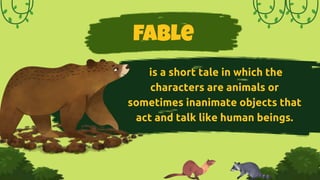
is a short tale in which the
characters are animals or
sometimes inanimate objects that
act and talk like human beings.
fable
sources
of
fables
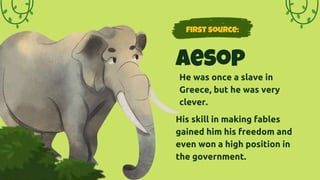
aesop
first source:
He was once a slave in
Greece, but he was very
clever.
His skill in making fables
gained him his freedom and
even won a high position in
the government.
jatakas
second source:
is a Buddhist name for stories
concerning the rebirth of Gautama
buddha, who, according to tradition,
was reincarnated many times in the
forms of many different animals
la fontaigne
third source:
Another name associated
with fable is Jean de La
Fontaigne, a Frenchman who
turned many of the fables of
Aesop into verses.
characteristics
of
fables
• Characters are usually
animals.
• Animals are made to
think, act, and talk like
human beings.
• The moral lesson of the
story is usually at the
end.
• The story is usually short.
5. Animals personify
human beings.
6. The fable is full of
actions and conversations.
7.Full of humor and funny
situations.
8.Some have tragic and
dramatic series of events.
values
of
fables
• They give delight and enjoyment
to both children and adults.
• They teach ethics in an
attractive manner or form.
• They provide background for
the understanding of new or
current expressions and
allusions.
• Some of the fables serve as a
guide to good conduct on the
child's level of expressions.
5. Children enjoy the fables because
of the prominent part played by the
animals.
6. They touch moral and spiritual
sense of values.
7. They cultivate thinking and
imagination.
8. They are good for storytelling
and dramatization of purposes.
there's more!
but wait...
Thank You
group members:
Eran, Jamilyn Febrada, Hazel Eve
Gabriel, Jascha Kaye Ganolon, Christine
Garcia, Junnah Rose Geralde, Maria Quency

Modern Fables.pptx

  • 1.
  • 2.
  • 4.
    is a shorttale in which the characters are animals or sometimes inanimate objects that act and talk like human beings. fable
  • 5.
  • 6.
    aesop first source: He wasonce a slave in Greece, but he was very clever. His skill in making fables gained him his freedom and even won a high position in the government.
  • 7.
    jatakas second source: is aBuddhist name for stories concerning the rebirth of Gautama buddha, who, according to tradition, was reincarnated many times in the forms of many different animals
  • 8.
    la fontaigne third source: Anothername associated with fable is Jean de La Fontaigne, a Frenchman who turned many of the fables of Aesop into verses.
  • 12.
  • 13.
    • Characters areusually animals. • Animals are made to think, act, and talk like human beings. • The moral lesson of the story is usually at the end. • The story is usually short.
  • 14.
    5. Animals personify humanbeings. 6. The fable is full of actions and conversations. 7.Full of humor and funny situations. 8.Some have tragic and dramatic series of events.
  • 15.
  • 16.
    • They givedelight and enjoyment to both children and adults. • They teach ethics in an attractive manner or form. • They provide background for the understanding of new or current expressions and allusions. • Some of the fables serve as a guide to good conduct on the child's level of expressions.
  • 17.
    5. Children enjoythe fables because of the prominent part played by the animals. 6. They touch moral and spiritual sense of values. 7. They cultivate thinking and imagination. 8. They are good for storytelling and dramatization of purposes.
  • 18.
  • 20.
  • 21.
    group members: Eran, JamilynFebrada, Hazel Eve Gabriel, Jascha Kaye Ganolon, Christine Garcia, Junnah Rose Geralde, Maria Quency