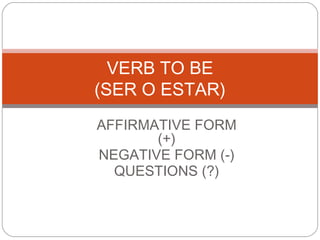
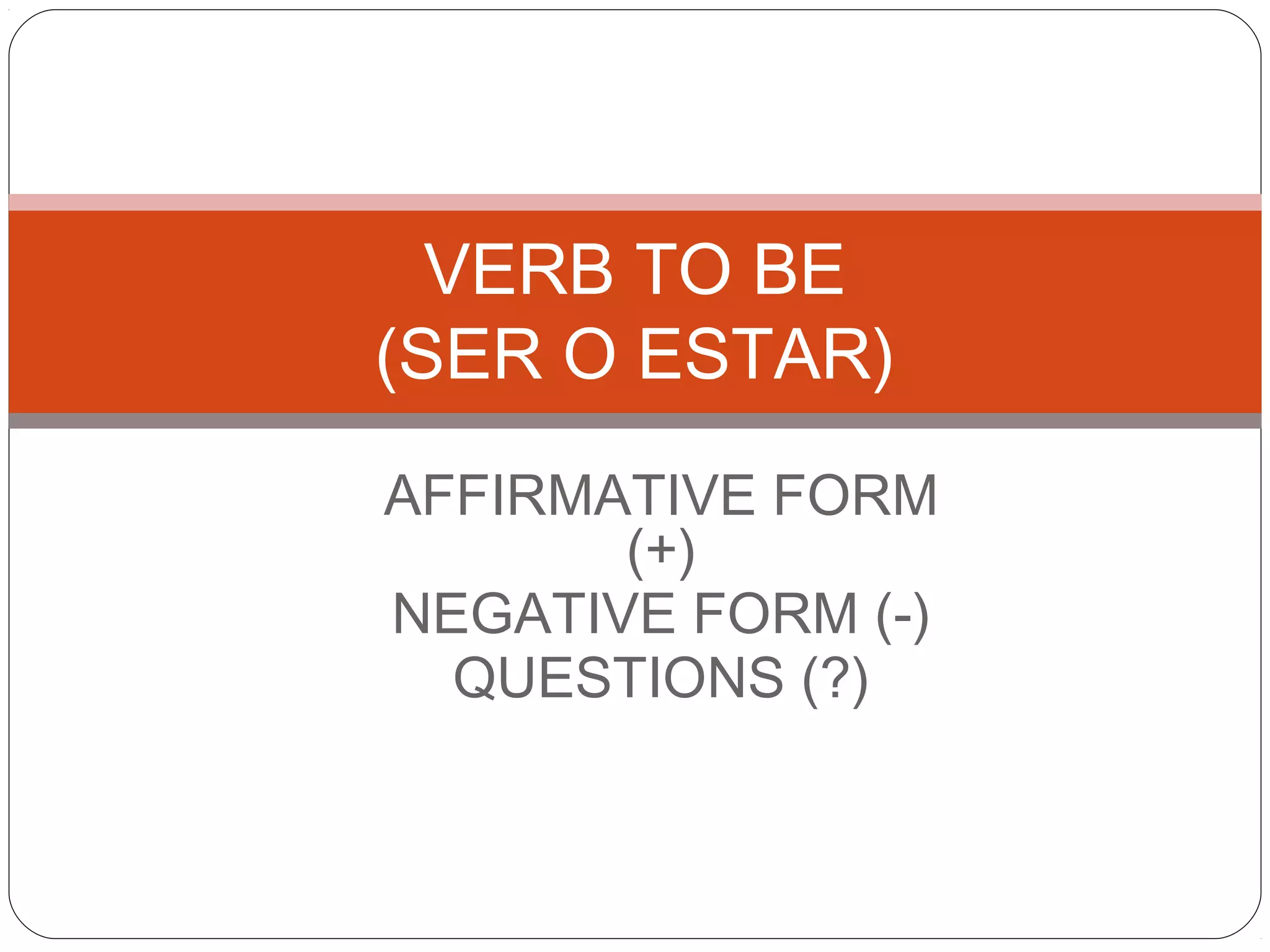
AFFIRMATIVE FORM
(+)
NEGATIVE FORM (-)
QUESTIONS (?)
VERB TO BE
(SER O ESTAR)
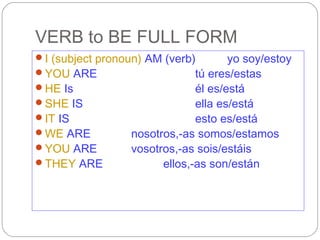
VERB to BE FULL FORM
I (subject pronoun) AM (verb) yo soy/estoy
YOU ARE tú eres/estas
HE Is él es/está
SHE IS ella es/está
IT IS esto es/está
WE ARE nosotros,-as somos/estamos
YOU ARE vosotros,-as sois/estáis
THEY ARE ellos,-as son/están
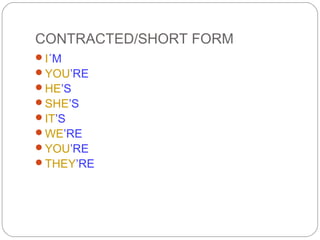
CONTRACTED/SHORT FORM
I´M
YOU’RE
HE’S
SHE’S
IT’S
WE’RE
YOU’RE
THEY’RE
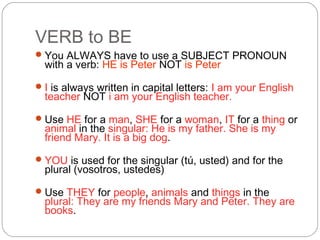
VERB to BE
You ALWAYS have to use a SUBJECT PRONOUN
with a verb: HE is Peter NOT is Peter
I is always written in capital letters: I am your English
teacher NOT i am your English teacher.
Use HE for a man, SHE for a woman, IT for a thing or
animal in the singular: He is my father. She is my
friend Mary. It is a big dog.
YOU is used for the singular (tú, usted) and for the
plural (vosotros, ustedes)
Use THEY for people, animals and things in the
plural: They are my friends Mary and Peter. They are
books.
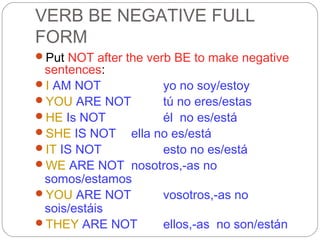
VERB BE NEGATIVE FULL
FORM
Put NOT after the verb BE to make negative
sentences:
I AM NOT yo no soy/estoy
YOU ARE NOT tú no eres/estas
HE Is NOT él no es/está
SHE IS NOT ella no es/está
IT IS NOT esto no es/está
WE ARE NOT nosotros,-as no
somos/estamos
YOU ARE NOT vosotros,-as no
sois/estáis
THEY ARE NOT ellos,-as no son/están
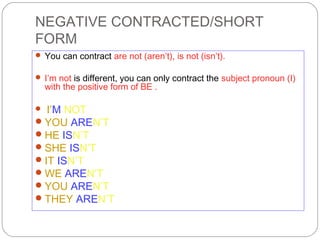
NEGATIVE CONTRACTED/SHORT
FORM
 You can contract are not (aren’t), is not (isn’t).
 I’m not is different, you can only contract the subject pronoun (I)
with the positive form of BE .
 I’M NOT
YOU AREN’T
HE ISN’T
SHE ISN’T
IT ISN’T
WE AREN’T
YOU AREN’T
THEY AREN’T
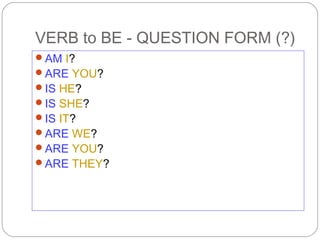
VERB to BE - QUESTION FORM (?)
AM I?
ARE YOU?
IS HE?
IS SHE?
IS IT?
ARE WE?
ARE YOU?
ARE THEY?
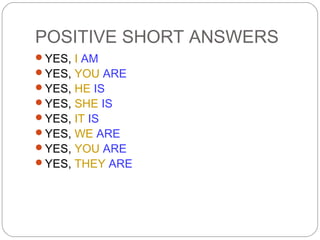
POSITIVE SHORT ANSWERS
YES, I AM
YES, YOU ARE
YES, HE IS
YES, SHE IS
YES, IT IS
YES, WE ARE
YES, YOU ARE
YES, THEY ARE
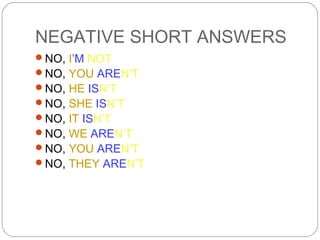
NEGATIVE SHORT ANSWERS
NO, I’M NOT
NO, YOU AREN’T
NO, HE ISN’T
NO, SHE ISN’T
NO, IT ISN’T
NO, WE AREN’T
NO, YOU AREN’T
NO, THEY AREN’T
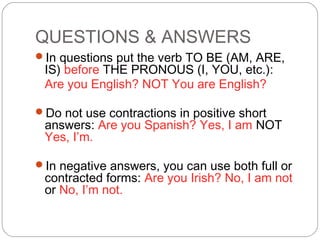
QUESTIONS & ANSWERS
In questions put the verb TO BE (AM, ARE,
IS) before THE PRONOUS (I, YOU, etc.):
Are you English? NOT You are English?
Do not use contractions in positive short
answers: Are you Spanish? Yes, I am NOT
Yes, I’m.
In negative answers, you can use both full or
contracted forms: Are you Irish? No, I am not
or No, I’m not.

Verb To Be

  • 1.
    AFFIRMATIVE FORM (+) NEGATIVE FORM(-) QUESTIONS (?) VERB TO BE (SER O ESTAR)
  • 2.
    VERB to BEFULL FORM I (subject pronoun) AM (verb) yo soy/estoy YOU ARE tú eres/estas HE Is él es/está SHE IS ella es/está IT IS esto es/está WE ARE nosotros,-as somos/estamos YOU ARE vosotros,-as sois/estáis THEY ARE ellos,-as son/están
  • 3.
  • 4.
    VERB to BE YouALWAYS have to use a SUBJECT PRONOUN with a verb: HE is Peter NOT is Peter I is always written in capital letters: I am your English teacher NOT i am your English teacher. Use HE for a man, SHE for a woman, IT for a thing or animal in the singular: He is my father. She is my friend Mary. It is a big dog. YOU is used for the singular (tú, usted) and for the plural (vosotros, ustedes) Use THEY for people, animals and things in the plural: They are my friends Mary and Peter. They are books.
  • 5.
    VERB BE NEGATIVEFULL FORM Put NOT after the verb BE to make negative sentences: I AM NOT yo no soy/estoy YOU ARE NOT tú no eres/estas HE Is NOT él no es/está SHE IS NOT ella no es/está IT IS NOT esto no es/está WE ARE NOT nosotros,-as no somos/estamos YOU ARE NOT vosotros,-as no sois/estáis THEY ARE NOT ellos,-as no son/están
  • 6.
    NEGATIVE CONTRACTED/SHORT FORM  Youcan contract are not (aren’t), is not (isn’t).  I’m not is different, you can only contract the subject pronoun (I) with the positive form of BE .  I’M NOT YOU AREN’T HE ISN’T SHE ISN’T IT ISN’T WE AREN’T YOU AREN’T THEY AREN’T
  • 7.
    VERB to BE- QUESTION FORM (?) AM I? ARE YOU? IS HE? IS SHE? IS IT? ARE WE? ARE YOU? ARE THEY?
  • 8.
    POSITIVE SHORT ANSWERS YES,I AM YES, YOU ARE YES, HE IS YES, SHE IS YES, IT IS YES, WE ARE YES, YOU ARE YES, THEY ARE
  • 9.
    NEGATIVE SHORT ANSWERS NO,I’M NOT NO, YOU AREN’T NO, HE ISN’T NO, SHE ISN’T NO, IT ISN’T NO, WE AREN’T NO, YOU AREN’T NO, THEY AREN’T
  • 10.
    QUESTIONS & ANSWERS Inquestions put the verb TO BE (AM, ARE, IS) before THE PRONOUS (I, YOU, etc.): Are you English? NOT You are English? Do not use contractions in positive short answers: Are you Spanish? Yes, I am NOT Yes, I’m. In negative answers, you can use both full or contracted forms: Are you Irish? No, I am not or No, I’m not.