Promoting Respect in the
      Classroom
            By
      Melissa Winfield
Be Consistent
Respect in the classroom can be elicited from
students by being consistent in your language
and actions, especially in the application of
consequences for violation of rules. Students
like predictability in their day and when the
routine of the classroom is consistent, there is
predictability. Predictability helps to maintain a
structured environment and promotes the
development of self-control in students.
Be Fair
It is often human nature for people to show favoritism--
intentionally or unintentionally -- and it is a practice that
is unfair and fosters resentment in the students who do
not receive preferential treatment. Teachers are human,
so it is possible that a teacher might actually have
favorites. However, working hard to not hold past
indiscretions against students, allowing them to start
each day with a clean slate and treating each student
equally will go a long way to foster respect in your
students. Treat all of them the same, all the time.
Respect As an Expectation
Students need to recognize respect as being an
expectation and anything else will not be tolerated in the
classroom. Actually viewing that respectful exchange will
help them to understand the expectation and serve as a
model of acceptable behavior. Also, students need to
learn to show respect to their peers and expect that
same respect in exchange. The teacher is key in the
development of peer respect. The teacher must mandate
mutual peer respect as a routine class expectation.
Anything less, is unacceptable.
Be Confident and Competent
Exude confidence. In order to gain the
confidence and respect of students, teachers
must exude a high level of confidence and back
up that confidence with confident body language
and tone. Respect is earned, but more easily
earned if the teacher is confidence in their
command of the classroom. It is essential that
students see the teacher as a confident and
competent commander of the classroom and
worthy of respect.
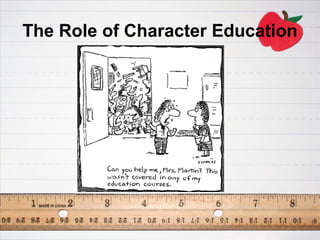
The Role of Character Education
What is character education?
• Character education is a learning process that
  enables students and adults in a school
  community to understand, care about and act on
  core ethical values such as respect, justice, civic
  virtue and citizenship, and responsibility for self
  and others. Upon such core values, we form the
  attitudes and actions that are at the heart of
  safe, healthy and informed communities that
  serve as the foundation of our society.
Why is character education
                 important?
•   1. Students Might Not Be Getting It at Home. Despite the idea that teaching character is really
    the parent’s job, to be played out in the confines of the home, the reality is that many children do
    not have parents that are intentionally challenging them to live lives of kindness and integrity.
    With work schedules and after school activities, sometimes the time spent with a teacher is
    longer during the weekdays than the time spent with a parent, anyway, and so the importance of
    using those hours to teach things that really matter increases.

•   2. Character Education Builds Relationships. When students have the space to engage with
    each other and with a teacher about things of real life beyond math facts and grammar rules,
    relationships are built within the classroom. Students hear each other’s stories, think about their
    lives and grow more connected to the others in the learning environment. This not only has
    benefits socially and personally for students, but it also increases the effectiveness of classroom
    management.

•   3. Character Education Creates Positive School Environments. When classrooms are
    intentionally engaged in discussions and activities about a person’s character, the entire school
    begins to have a more positive atmosphere. Students feel more connected with each other, and
    teacher-student relationships are strengthened. Character education allows teachers to share life
    experience, rather than only book experience.
•   4. Character Education Can Easily Be Integrated Into the Curriculum. Character
    education doesn’t mean hours of research of lesson plans. It can be as simple as 5
    minutes at the beginning of class to discuss a meaningful quote or a half an hour on
    Fridays to share an inspirational video.

•   5. Teaching Character Can Help Prepare Students for Adulthood. The students in
    your classroom will be the adults who shape our society in future years. While it is
    important that they graduate intellectually educated, the value of your students
    becoming citizens who interact in the world with kindness, respect, integrity, and
    moral behavior is also an important factor in their development.

Promoting respect in the classroom

  • 1.
    Promoting Respect inthe Classroom By Melissa Winfield
  • 2.
    Be Consistent Respect inthe classroom can be elicited from students by being consistent in your language and actions, especially in the application of consequences for violation of rules. Students like predictability in their day and when the routine of the classroom is consistent, there is predictability. Predictability helps to maintain a structured environment and promotes the development of self-control in students.
  • 3.
    Be Fair It isoften human nature for people to show favoritism-- intentionally or unintentionally -- and it is a practice that is unfair and fosters resentment in the students who do not receive preferential treatment. Teachers are human, so it is possible that a teacher might actually have favorites. However, working hard to not hold past indiscretions against students, allowing them to start each day with a clean slate and treating each student equally will go a long way to foster respect in your students. Treat all of them the same, all the time.
  • 4.
    Respect As anExpectation Students need to recognize respect as being an expectation and anything else will not be tolerated in the classroom. Actually viewing that respectful exchange will help them to understand the expectation and serve as a model of acceptable behavior. Also, students need to learn to show respect to their peers and expect that same respect in exchange. The teacher is key in the development of peer respect. The teacher must mandate mutual peer respect as a routine class expectation. Anything less, is unacceptable.
  • 5.
    Be Confident andCompetent Exude confidence. In order to gain the confidence and respect of students, teachers must exude a high level of confidence and back up that confidence with confident body language and tone. Respect is earned, but more easily earned if the teacher is confidence in their command of the classroom. It is essential that students see the teacher as a confident and competent commander of the classroom and worthy of respect.
  • 6.
    The Role ofCharacter Education
  • 7.
    What is charactereducation? • Character education is a learning process that enables students and adults in a school community to understand, care about and act on core ethical values such as respect, justice, civic virtue and citizenship, and responsibility for self and others. Upon such core values, we form the attitudes and actions that are at the heart of safe, healthy and informed communities that serve as the foundation of our society.
  • 8.
    Why is charactereducation important? • 1. Students Might Not Be Getting It at Home. Despite the idea that teaching character is really the parent’s job, to be played out in the confines of the home, the reality is that many children do not have parents that are intentionally challenging them to live lives of kindness and integrity. With work schedules and after school activities, sometimes the time spent with a teacher is longer during the weekdays than the time spent with a parent, anyway, and so the importance of using those hours to teach things that really matter increases. • 2. Character Education Builds Relationships. When students have the space to engage with each other and with a teacher about things of real life beyond math facts and grammar rules, relationships are built within the classroom. Students hear each other’s stories, think about their lives and grow more connected to the others in the learning environment. This not only has benefits socially and personally for students, but it also increases the effectiveness of classroom management. • 3. Character Education Creates Positive School Environments. When classrooms are intentionally engaged in discussions and activities about a person’s character, the entire school begins to have a more positive atmosphere. Students feel more connected with each other, and teacher-student relationships are strengthened. Character education allows teachers to share life experience, rather than only book experience.
  • 9.
    4. Character Education Can Easily Be Integrated Into the Curriculum. Character education doesn’t mean hours of research of lesson plans. It can be as simple as 5 minutes at the beginning of class to discuss a meaningful quote or a half an hour on Fridays to share an inspirational video. • 5. Teaching Character Can Help Prepare Students for Adulthood. The students in your classroom will be the adults who shape our society in future years. While it is important that they graduate intellectually educated, the value of your students becoming citizens who interact in the world with kindness, respect, integrity, and moral behavior is also an important factor in their development.