Download to read offline
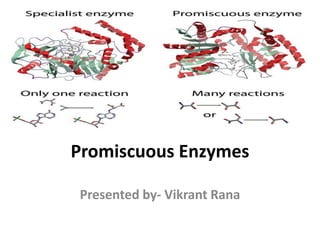
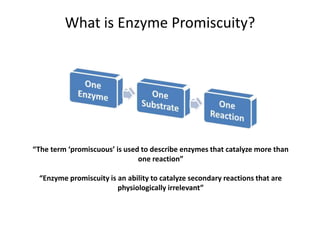
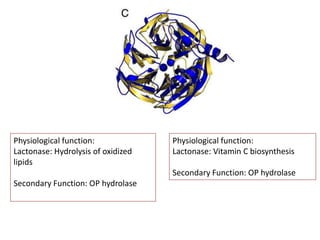
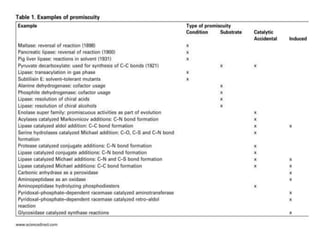
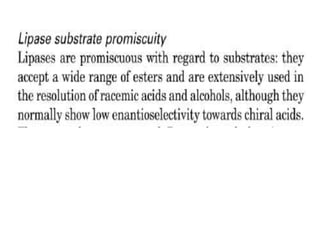
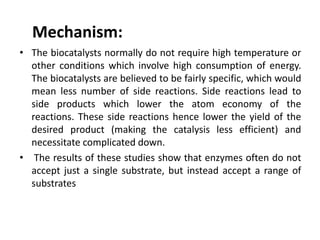
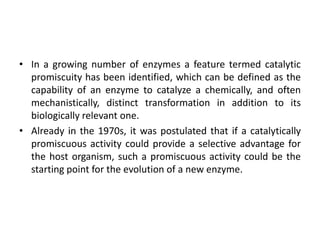
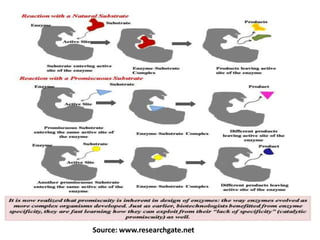
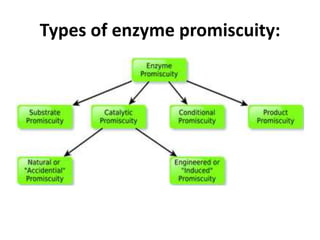
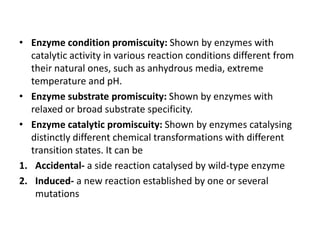
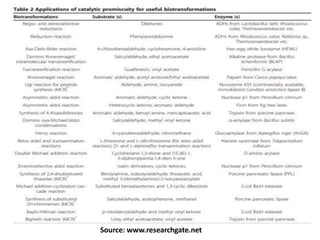
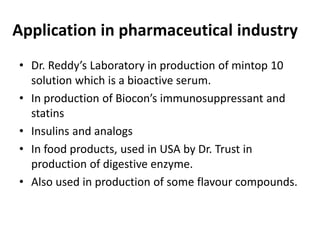


Enzyme promiscuity refers to an enzyme's ability to catalyze secondary reactions beyond its main physiological reaction. While enzymes are highly specific catalysts, they can often perform side reactions in addition to their primary activity. These promiscuous activities are usually less efficient than the main reaction, but can occasionally confer an evolutionary advantage and lead to the development of new enzyme functions. Promiscuous enzyme activities are being exploited in applications such as pharmaceutical production and the synthesis of food and flavor compounds.


