M.SC.,ACCOUNTING AND FINANCE
PROJECT ANALYSIS AND EVALUATION
CODE AcFn621-CREDIT HOURS-3
CHAPTER-THREE
PROJECT PLANNING
PROF. DR. CHINNIAH ANBALAGAN
PROFESSOR OF M.SC., ACCOUNTING & FINANCE
COLLEGE OF BUSINESS AND ECONOMICS
SAMARA UNIVERSITY, ETHIOPIA, EAST AFRICA
EMAIL ID: dr.chinlakshanbu@gmail.com
Fail to Plan . . .
and You Plan to Fail!
Definitions of Project Planning
• Project planning refers to
everything, do to set up the
project for success.
• It's the process go through to
establish the steps required to
define the project objectives, clarify
the scope of what needs to be done
and develop the task list to do it.
Conti…
• Project planning is a procedural step in
project management, where required
documentation is created to ensure
successful project completion.
• Documentation includes all actions
required to define, prepare, integrate
and coordinate additional plans.
• The project plan clearly defines how the
project is executed, monitored,
controlled and closed.
Conti…
• Project planning requires an in-
depth analysis and structuring of the
following activities:
• Setting project goals
• Identifying project deliverables
• Creating project schedules
• Creating supporting plans
The basic steps in project
planning
• Step 1: Identify & Meet with Stakeholders.
...
• Step 2: Set & Prioritize Goals.
• Step 3: Define Deliverables.
• Step 4: Create the Project Schedule.
• Step 5: Identify Issues and Complete a
Risk Assessment.
• Step 6: Present the Project Plan to
Stakeholders.
The Role Of Project Planning
Planning provides a nexus
between the managerial functions
required to activate a project and
the elements needed for
successful project completion.
It is concerned with deciding in
advance what, when, how and who
will take the necessary actions to
accomplish established objectives
Types of the Project Plan
Plan contents
• Scope management
• Requirements management
• Schedule management
• Financial management
• Quality management
• Resource management
• Stakeholder management
• Communications management
• Project change management
• Risk management
Project Planning-5 Stages
• Prepare project overview
• Develop activity plan
• Assign responsibilities
• Put plan into action; track progress
• Prepare closeout report
• High-level summary of the project
• Sets the overall scope
• Clearly written to communicate
• Team leader responsibility
• Critical to get this right!
Stage One: Project Overview
Project Overview
• Statement of Problem (or Opportunity)
• Goals and Objectives
• Measures of Success
• Approach, Process, and Timing
• Assumptions and Risks
Goals and Objectives
Goals and objectives describe what we
want to achieve to solve the problem or
take advantage of the opportunity
– Keep them simple
– Focus on the important items
– Collectively, they define the scope
– They must be measurable for success
– Clearly written
Goals and Objectives
- Use the SMART Test
S – Specific
M – Measurable
A – Attainable
R – Relevant
T – Time-Based
Measures of Success
• Our desired results that can be
quantified
–Numbers, frequency, degrees of
change
• Avoid intangible measures
–Make it “better”
• Superlatives can be hard to achieve!
–Avoid use of “all” or “never”
Approach, Process, & Timing
• Describe how we will go about
our work – what will we do?
• Define the schedule you will
follow
• Consider how success was
achieved in similar projects
• For a new project – be creative!
Assumptions and Risks
• We need to consider the things we
expect to happen, and the “what ifs”
• Assumptions
–Things we believe will happen
–Things needed to be true for success
• Risks
–Undermine success
–Actions can be planned to offset risks
Assumptions and Risks
Might Include:
• Resources needed
• Timing of resources
• Events outside our control
• Potential delays and their effect
Project Overview A Quick Review
• Defined our problem
• Listed goals and objectives
• Decided on measures of success
• Described our approach and timing
• Considered assumptions and risks
A Project Overview
• Helps ensure success
• Helps get everyone on “one page”
• Helps prevent
– Getting off track
– Scope creep
Activity Plan
• Define the activities and tasks needed
to achieve our goals
• Organize & Prioritize activities and
tasks
• Identify which tasks depend on others
• Assign team members to activities
• Define dates to begin and finish
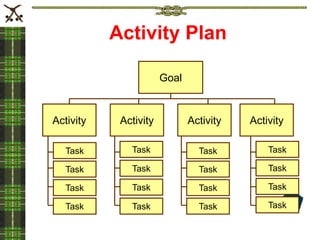
Activity Plan
Goal
Activity Activity Activity
Task
Task
Task
Task
Task
Task
Task
Task
Task
Task
Task
Task
Task
Task
Task
Task
Activity
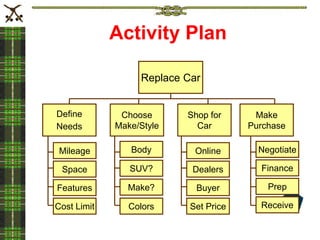
Activity Plan
Replace Car
Choose
Make/Style
Shop for
Car
Make
Purchase
Mileage
Space
Features
Cost Limit
Body
SUV?
Make?
Colors
Negotiate
Finance
Prep
Receive
Online
Dealers
Buyer
Set Price
Define
Needs
Project Activities and Tasks
• Pass the “SMART” test
• Have clear start and stop times
• Include estimated time and cost to
complete
• Be assignable and manageable
Assign Activities
Team Leader Should -
• Confirm availability of resources
• Understand team member skills
• Match skills to tasks
• Establish progress milestones and
reporting procedures
Assign Activities
Team Members Should -
• Know project’s purpose
• Understand their assignments
• Know the availability of resources
• Be clear about deadlines
• Understand how to address issues
Work the Plan
• Now is the time to let the team do
its job!
• Staying to the plan is the clearest
path to success!
• A well-laid plan will help ensure a
team is performing but not storming
Work the Plan
• Get the project going
• Provide leadership to the team
• Assist with decisions & problems
• Obtain additional resources
• Monitor progress of activities
• Monitor team performance
The Leader Should -
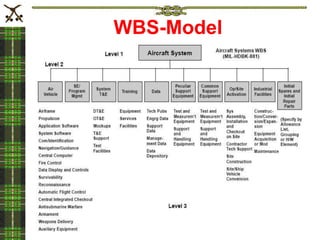
Work-Breakdown Structure
• A work-breakdown structure (WBS)
in project management and systems
engineering, is a deliverable-
oriented breakdown of a project into
smaller components.
• A WBS also provides the necessary
framework for detailed cost estimating
and control along with providing
guidance for schedule development
and control.
Work Breakdown Structure in
Project Management
• Estimate the cost of a project.
• Establish dependencies.
• Determine a project timeline and develop
a schedule.
• Write a statement of work (or SOW, one
of your other acronyms).
• Assign responsibilities and clarify roles.
• Track the progress of a project.
• Identify risk.
Important of Work Breakdown
Structure
• The main purpose of a WBS is to
reduce complicated activities to a
collection of tasks.
• This is important for the project
manager because she can oversee
the tasks more effectively than the
complex activities.
• Tasks must be measurable and
independent, with clearly defined
limits
Benefits of creating a Work
Breakdown Structure
• it defines and organizes the work
required.
• it facilitates the quick development of a
schedule by allocating effort estimates
to specific sections of the WBS.
• it can be used to identify potential scope
risks if it has a branch that is not well
defined.
WBS-Model
Project Modeling
• A project model is a clear and
visual description of how
a project should be carried out.
• Some project models are tailored
for a specific industry, a specific kind
of project, or even for a
specific project.
• In the project model, aspects of
the project are described.
Systems Modeling System
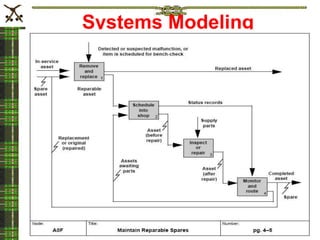
• Systems modeling or system
modeling is the interdisciplinary
study of the use of models to
conceptualize and
construct systems in business and IT
development.
The Business Process
Modeling Notation (BPMN)
• The Business Process Modeling
Notation (BPMN), a graphical
representation for specifying
business processes in a workflow,
can also be considered to be a
systems modeling language
Conti…
• Contrasting the functional
modeling, another type of systems
modeling is architectural
modeling which uses the systems
architecture to conceptually model
the structure, behavior, and
more views of a system.
Systems Modeling
Types of Systems Modeling
A. Business and IT Based
• Functional modeling
• Systems architecture
• Business process modeling
• Enterprise modeling
B. Systems Modeling
• Systems analysis
• Hard systems modeling or operational
research modeling
• Soft system modeling
Closing Out the Project
• Recognize team members
• Prepare After-action report
• Goals and objectives met?
• Completed on schedule?
• Lessons learned?
• Ideas/recommendations for future
projects
Summary
Five Stages of Project Planning
1. Develop a Project Overview
2. Plan the Work
3. Make Activity Assignments
4. Put the Plan into Action
5. Prepare Project Closeout
If you plan the work . . .
. . . you plan for
success!

3. PAE AcFn621 Ch-3 Project Planning.ppt

  • 1.
    M.SC.,ACCOUNTING AND FINANCE PROJECTANALYSIS AND EVALUATION CODE AcFn621-CREDIT HOURS-3 CHAPTER-THREE PROJECT PLANNING PROF. DR. CHINNIAH ANBALAGAN PROFESSOR OF M.SC., ACCOUNTING & FINANCE COLLEGE OF BUSINESS AND ECONOMICS SAMARA UNIVERSITY, ETHIOPIA, EAST AFRICA EMAIL ID: dr.chinlakshanbu@gmail.com
  • 2.
    Fail to Plan. . . and You Plan to Fail!
  • 3.
    Definitions of ProjectPlanning • Project planning refers to everything, do to set up the project for success. • It's the process go through to establish the steps required to define the project objectives, clarify the scope of what needs to be done and develop the task list to do it.
  • 4.
    Conti… • Project planningis a procedural step in project management, where required documentation is created to ensure successful project completion. • Documentation includes all actions required to define, prepare, integrate and coordinate additional plans. • The project plan clearly defines how the project is executed, monitored, controlled and closed.
  • 5.
    Conti… • Project planningrequires an in- depth analysis and structuring of the following activities: • Setting project goals • Identifying project deliverables • Creating project schedules • Creating supporting plans
  • 6.
    The basic stepsin project planning • Step 1: Identify & Meet with Stakeholders. ... • Step 2: Set & Prioritize Goals. • Step 3: Define Deliverables. • Step 4: Create the Project Schedule. • Step 5: Identify Issues and Complete a Risk Assessment. • Step 6: Present the Project Plan to Stakeholders.
  • 7.
    The Role OfProject Planning Planning provides a nexus between the managerial functions required to activate a project and the elements needed for successful project completion. It is concerned with deciding in advance what, when, how and who will take the necessary actions to accomplish established objectives
  • 8.
    Types of theProject Plan Plan contents • Scope management • Requirements management • Schedule management • Financial management • Quality management • Resource management • Stakeholder management • Communications management • Project change management • Risk management
  • 9.
    Project Planning-5 Stages •Prepare project overview • Develop activity plan • Assign responsibilities • Put plan into action; track progress • Prepare closeout report
  • 10.
    • High-level summaryof the project • Sets the overall scope • Clearly written to communicate • Team leader responsibility • Critical to get this right! Stage One: Project Overview
  • 11.
    Project Overview • Statementof Problem (or Opportunity) • Goals and Objectives • Measures of Success • Approach, Process, and Timing • Assumptions and Risks
  • 12.
    Goals and Objectives Goalsand objectives describe what we want to achieve to solve the problem or take advantage of the opportunity – Keep them simple – Focus on the important items – Collectively, they define the scope – They must be measurable for success – Clearly written
  • 13.
    Goals and Objectives -Use the SMART Test S – Specific M – Measurable A – Attainable R – Relevant T – Time-Based
  • 14.
    Measures of Success •Our desired results that can be quantified –Numbers, frequency, degrees of change • Avoid intangible measures –Make it “better” • Superlatives can be hard to achieve! –Avoid use of “all” or “never”
  • 15.
    Approach, Process, &Timing • Describe how we will go about our work – what will we do? • Define the schedule you will follow • Consider how success was achieved in similar projects • For a new project – be creative!
  • 16.
    Assumptions and Risks •We need to consider the things we expect to happen, and the “what ifs” • Assumptions –Things we believe will happen –Things needed to be true for success • Risks –Undermine success –Actions can be planned to offset risks
  • 17.
    Assumptions and Risks MightInclude: • Resources needed • Timing of resources • Events outside our control • Potential delays and their effect
  • 18.
    Project Overview AQuick Review • Defined our problem • Listed goals and objectives • Decided on measures of success • Described our approach and timing • Considered assumptions and risks
  • 19.
    A Project Overview •Helps ensure success • Helps get everyone on “one page” • Helps prevent – Getting off track – Scope creep
  • 20.
    Activity Plan • Definethe activities and tasks needed to achieve our goals • Organize & Prioritize activities and tasks • Identify which tasks depend on others • Assign team members to activities • Define dates to begin and finish
  • 21.
    Activity Plan Goal Activity ActivityActivity Task Task Task Task Task Task Task Task Task Task Task Task Task Task Task Task Activity
  • 22.
    Activity Plan Replace Car Choose Make/Style Shopfor Car Make Purchase Mileage Space Features Cost Limit Body SUV? Make? Colors Negotiate Finance Prep Receive Online Dealers Buyer Set Price Define Needs
  • 23.
    Project Activities andTasks • Pass the “SMART” test • Have clear start and stop times • Include estimated time and cost to complete • Be assignable and manageable
  • 24.
    Assign Activities Team LeaderShould - • Confirm availability of resources • Understand team member skills • Match skills to tasks • Establish progress milestones and reporting procedures
  • 25.
    Assign Activities Team MembersShould - • Know project’s purpose • Understand their assignments • Know the availability of resources • Be clear about deadlines • Understand how to address issues
  • 26.
    Work the Plan •Now is the time to let the team do its job! • Staying to the plan is the clearest path to success! • A well-laid plan will help ensure a team is performing but not storming
  • 27.
    Work the Plan •Get the project going • Provide leadership to the team • Assist with decisions & problems • Obtain additional resources • Monitor progress of activities • Monitor team performance The Leader Should -
  • 28.
    Work-Breakdown Structure • Awork-breakdown structure (WBS) in project management and systems engineering, is a deliverable- oriented breakdown of a project into smaller components. • A WBS also provides the necessary framework for detailed cost estimating and control along with providing guidance for schedule development and control.
  • 29.
    Work Breakdown Structurein Project Management • Estimate the cost of a project. • Establish dependencies. • Determine a project timeline and develop a schedule. • Write a statement of work (or SOW, one of your other acronyms). • Assign responsibilities and clarify roles. • Track the progress of a project. • Identify risk.
  • 30.
    Important of WorkBreakdown Structure • The main purpose of a WBS is to reduce complicated activities to a collection of tasks. • This is important for the project manager because she can oversee the tasks more effectively than the complex activities. • Tasks must be measurable and independent, with clearly defined limits
  • 31.
    Benefits of creatinga Work Breakdown Structure • it defines and organizes the work required. • it facilitates the quick development of a schedule by allocating effort estimates to specific sections of the WBS. • it can be used to identify potential scope risks if it has a branch that is not well defined.
  • 32.
  • 33.
    Project Modeling • Aproject model is a clear and visual description of how a project should be carried out. • Some project models are tailored for a specific industry, a specific kind of project, or even for a specific project. • In the project model, aspects of the project are described.
  • 34.
    Systems Modeling System •Systems modeling or system modeling is the interdisciplinary study of the use of models to conceptualize and construct systems in business and IT development.
  • 35.
    The Business Process ModelingNotation (BPMN) • The Business Process Modeling Notation (BPMN), a graphical representation for specifying business processes in a workflow, can also be considered to be a systems modeling language
  • 36.
    Conti… • Contrasting thefunctional modeling, another type of systems modeling is architectural modeling which uses the systems architecture to conceptually model the structure, behavior, and more views of a system.
  • 37.
  • 38.
    Types of SystemsModeling A. Business and IT Based • Functional modeling • Systems architecture • Business process modeling • Enterprise modeling B. Systems Modeling • Systems analysis • Hard systems modeling or operational research modeling • Soft system modeling
  • 39.
    Closing Out theProject • Recognize team members • Prepare After-action report • Goals and objectives met? • Completed on schedule? • Lessons learned? • Ideas/recommendations for future projects
  • 40.
    Summary Five Stages ofProject Planning 1. Develop a Project Overview 2. Plan the Work 3. Make Activity Assignments 4. Put the Plan into Action 5. Prepare Project Closeout
  • 41.
    If you planthe work . . . . . . you plan for success!