The document discusses the philosophy of progressivism in education. Some key points:
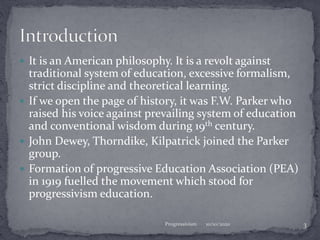
- Progressivism is a revolt against traditional education, focusing on child-centered learning. It emphasizes learning by doing and experiences over formalism.
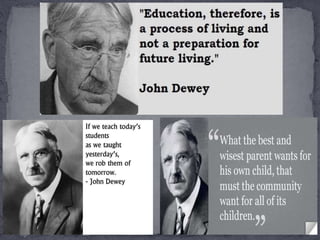
- Major early proponents included John Dewey and F.W. Parker in the 19th century. The Progressive Education Association was formed in 1919.
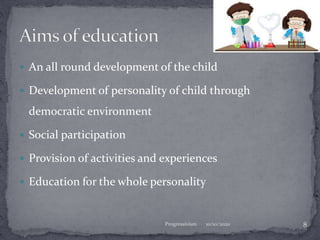
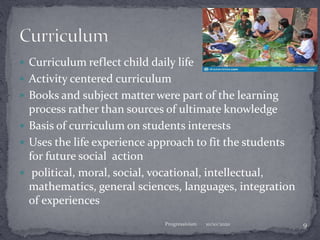
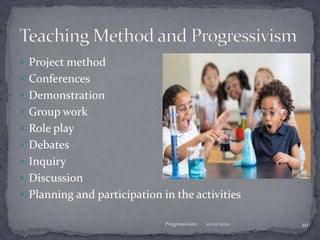
- Progressivism believes education should develop the whole child through a curriculum based on their interests and experiences. Learning happens through projects, group work, role playing and other active methods.
- The teacher acts as a guide rather than sole authority. Assessment focuses on productions, presentations and feedback rather than exams.