Presented by:
Floresilio Calubag
Rica E. Ayupan
Quennie Jane R. Caballero
It is an American philosophy, which is a revolt
against the formal/conventional/traditional’
system of education. It become popular, in 1929
the economic depression of USA adversely
affected the educational system of the country.
The principles underlying progressive education
have influenced the modern educational theories
and practices to a very great extent to all over the
world.
Educational is centered around for the presence
life itself. The development of an individual and
the society is only possible, when education
facilitates the growth of every phase of the child.

Progressivism is a theory of education that is
concerned with “learning by doing” that
children learn best when pursuing their own
interests and satisfying their own needs.
Progressivist believe that people learn best from
what they consider most relevant to their lives.
Progressivist center curriculum on their needs,
experience, interest and abilities of student.
Provoke curiosity in students.
John Dewey ; William James; G Thomas Lawrence;
William Kilpatric
A large number of schools in Europe and USA were
started
An American philosopher, psychologist and
educational reformer
His philosophy based on pragmatism
He established “Laboratory Schools” in 1896.
He was the father of educational philosophy.
He introduced progressive method of teaching.
He believed that book learning was no substitute for
actually doing things.
Progressivism is the educational philosophy which is
grounded in the “pure” philosophy of pragmatism.
Pragmatic ontology holds that reality is in the area of
everyday life, personal experience. Its view is that
idea should be tested for their utility.
Progressivism focuses on real-world problem solving
and individual development.
 Emphasis on learning by doing
 Hands-on projects
 Experiential learning
 Integrated curriculum focused on thematic units
 Strong emphasis on problem solving critical thinking
 Group work and development of social skills
 Understanding and action as the goals of learning as opposed
to role knowledge
 Collaborative and cooperative learning projects
 Education for social responsibility and democracy
Contemporary reform movement in
education, social and political affairs.
Dewey viewed the schools as a miniature
democratic society in which students could
learn and practice the skill and tools necessary
for democratic living
Educational progressivism is the belief that education
must be based on the principle that humans are social
animals who learn best in real-life activities with other
people.
The skills and tools of learning include problem solving
methods and scientific inquiry.
Learning experience include cooperative behavior and
self-discipline.
Schools can transmit the culture of society while it
prepares students in the changing world.
The philosophy places emphasis on how to think and nor
what to think.
Progressive education focused on the child as the learner
rather than on subject, emphasized activities and
experiences rather than verbal and literary skills and
encouraged cooperative group learning activities rather
competitive individualized lesson plan.
To develop the personally of an individual through
providing a democratic environment in the
educational institutions.
An all-around development of child.
Co-cooperative behavior and social participation.
Education of the whole man, or whole personality,
which includes the physical, emotional, social and
intellectual aspects of the individual.
 It should be based on the actual giving, environment to the
child. It must reflect his daily life.
 The curriculums is interdisciplinary in nature.
 Books and subject matter were part of the learning process
rather than sources of ultimate knowledge.
 Curriculum is based on students’ interest, involves the
application of human problem and affairs.
 It uses the life experience approach to fit the student for
future social action
 Curriculum is based on a specific group of students.
Political; moral; social; vocational; intellectual;
mathematics; general science, languages;
integration of experience.
 Project method-active participants of the pupils in learning.
 Socialized method – to bring all the individuals into a group system of
interaction.
 Conference
 Demonstration
 Group work
 Role play
 Debates
 Inquiry
 Discussion
 Planning and participation in the activities.
 The human elements, human beings are given more importance.
The teacher has to meet the needs of pupil as good human being.
 As a facilitator or guide.
 Determine student interest.
 Involve students in curriculum development.
 Stimulate direct learning process.
The teacher, who is vital in education process and having richer
superior experience and can analyses the present situation. Teacher
will act as a stage setter, guide and coordinator but he is not total
authority, just he guides the situation.
School is a cooperative enterprise, it provide
conductive environment for democratic growth of the
child.
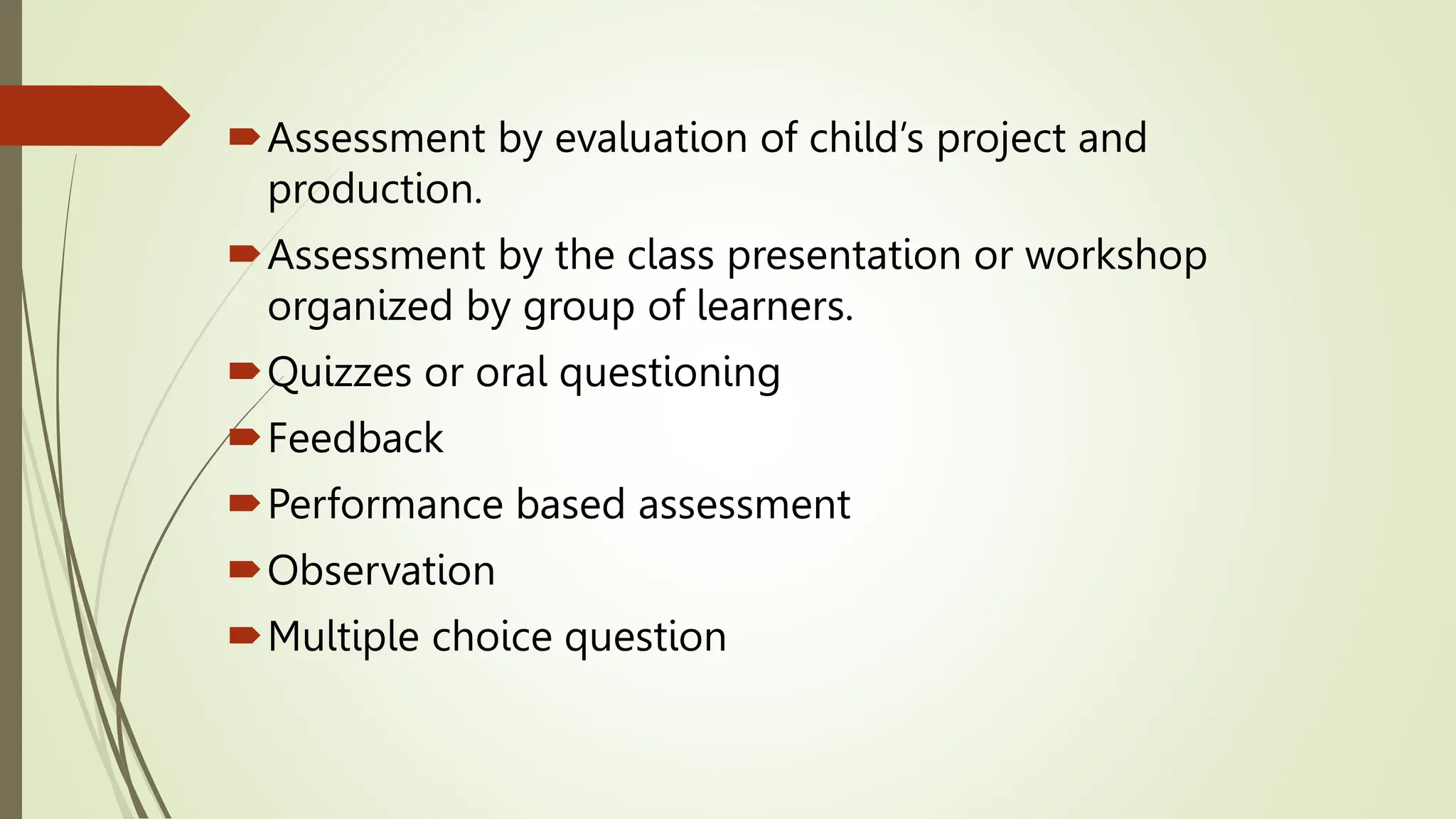
Assessment by evaluation of child’s project and
production.
Assessment by the class presentation or workshop
organized by group of learners.
Quizzes or oral questioning
Feedback
Performance based assessment
Observation
Multiple choice question
Progressivists believe that the education should focus on the child rather
that the subject matter. The student’s interests are important, as is
integration of thinking, feeling and doing. Learners should be active and
learn to solve problems by experimenting and reflecting on their
experience. School should help the students develop personal and social
values so that they can become thoughtful, productive, citizen because
society is always changing, new ideas are important to make the future
better than the past.
 The critics of progressive method of teaching say that the
pupils the progressive classroom lack in the discipline.
 Progressivism system of education required more funding or
budget.
 Countries are not that much strong financially or have budget
to provide material for practical work.
 The role of teacher is only to facilitate or guide means not
required to expert in their subject.
By understanding this philosophy of education, as a
teacher, we have to know which approach can suit well to
our learners’ needs. Despite of the good points of
process approach underlying this philosophy.
It is provide with passage of time that his philosophy and
concept of education and curriculum is a very useful and
effective to all date and helping to prepare skilled and
useful and effective to till date and helping to prepare
skilled and useful citizens for a society.

PHILOSOPHY OF EDUCATION.pptx DJCNDJNSKJSANJ

  • 1.
    Presented by: Floresilio Calubag RicaE. Ayupan Quennie Jane R. Caballero
  • 2.
    It is anAmerican philosophy, which is a revolt against the formal/conventional/traditional’ system of education. It become popular, in 1929 the economic depression of USA adversely affected the educational system of the country. The principles underlying progressive education have influenced the modern educational theories and practices to a very great extent to all over the world.
  • 3.
    Educational is centeredaround for the presence life itself. The development of an individual and the society is only possible, when education facilitates the growth of every phase of the child.
  • 4.
     Progressivism is atheory of education that is concerned with “learning by doing” that children learn best when pursuing their own interests and satisfying their own needs. Progressivist believe that people learn best from what they consider most relevant to their lives. Progressivist center curriculum on their needs, experience, interest and abilities of student. Provoke curiosity in students.
  • 6.
    John Dewey ;William James; G Thomas Lawrence; William Kilpatric A large number of schools in Europe and USA were started
  • 7.
    An American philosopher,psychologist and educational reformer His philosophy based on pragmatism He established “Laboratory Schools” in 1896. He was the father of educational philosophy. He introduced progressive method of teaching. He believed that book learning was no substitute for actually doing things.
  • 8.
    Progressivism is theeducational philosophy which is grounded in the “pure” philosophy of pragmatism. Pragmatic ontology holds that reality is in the area of everyday life, personal experience. Its view is that idea should be tested for their utility. Progressivism focuses on real-world problem solving and individual development.
  • 10.
     Emphasis onlearning by doing  Hands-on projects  Experiential learning  Integrated curriculum focused on thematic units  Strong emphasis on problem solving critical thinking  Group work and development of social skills  Understanding and action as the goals of learning as opposed to role knowledge  Collaborative and cooperative learning projects  Education for social responsibility and democracy
  • 12.
    Contemporary reform movementin education, social and political affairs. Dewey viewed the schools as a miniature democratic society in which students could learn and practice the skill and tools necessary for democratic living
  • 14.
    Educational progressivism isthe belief that education must be based on the principle that humans are social animals who learn best in real-life activities with other people. The skills and tools of learning include problem solving methods and scientific inquiry. Learning experience include cooperative behavior and self-discipline. Schools can transmit the culture of society while it prepares students in the changing world.
  • 15.
    The philosophy placesemphasis on how to think and nor what to think. Progressive education focused on the child as the learner rather than on subject, emphasized activities and experiences rather than verbal and literary skills and encouraged cooperative group learning activities rather competitive individualized lesson plan.
  • 17.
    To develop thepersonally of an individual through providing a democratic environment in the educational institutions. An all-around development of child. Co-cooperative behavior and social participation. Education of the whole man, or whole personality, which includes the physical, emotional, social and intellectual aspects of the individual.
  • 19.
     It shouldbe based on the actual giving, environment to the child. It must reflect his daily life.  The curriculums is interdisciplinary in nature.  Books and subject matter were part of the learning process rather than sources of ultimate knowledge.  Curriculum is based on students’ interest, involves the application of human problem and affairs.  It uses the life experience approach to fit the student for future social action  Curriculum is based on a specific group of students.
  • 20.
    Political; moral; social;vocational; intellectual; mathematics; general science, languages; integration of experience.
  • 22.
     Project method-activeparticipants of the pupils in learning.  Socialized method – to bring all the individuals into a group system of interaction.  Conference  Demonstration  Group work  Role play  Debates  Inquiry  Discussion  Planning and participation in the activities.
  • 24.
     The humanelements, human beings are given more importance. The teacher has to meet the needs of pupil as good human being.  As a facilitator or guide.  Determine student interest.  Involve students in curriculum development.  Stimulate direct learning process. The teacher, who is vital in education process and having richer superior experience and can analyses the present situation. Teacher will act as a stage setter, guide and coordinator but he is not total authority, just he guides the situation.
  • 25.
    School is acooperative enterprise, it provide conductive environment for democratic growth of the child.
  • 27.
    Assessment by evaluationof child’s project and production. Assessment by the class presentation or workshop organized by group of learners. Quizzes or oral questioning Feedback Performance based assessment Observation Multiple choice question
  • 28.
    Progressivists believe thatthe education should focus on the child rather that the subject matter. The student’s interests are important, as is integration of thinking, feeling and doing. Learners should be active and learn to solve problems by experimenting and reflecting on their experience. School should help the students develop personal and social values so that they can become thoughtful, productive, citizen because society is always changing, new ideas are important to make the future better than the past.
  • 29.
     The criticsof progressive method of teaching say that the pupils the progressive classroom lack in the discipline.  Progressivism system of education required more funding or budget.  Countries are not that much strong financially or have budget to provide material for practical work.  The role of teacher is only to facilitate or guide means not required to expert in their subject.
  • 30.
    By understanding thisphilosophy of education, as a teacher, we have to know which approach can suit well to our learners’ needs. Despite of the good points of process approach underlying this philosophy. It is provide with passage of time that his philosophy and concept of education and curriculum is a very useful and effective to all date and helping to prepare skilled and useful and effective to till date and helping to prepare skilled and useful citizens for a society.