Professor Iain Gordon
       Chief Executive

Collaborating to increase the
impact of science


“Science connecting land and people”
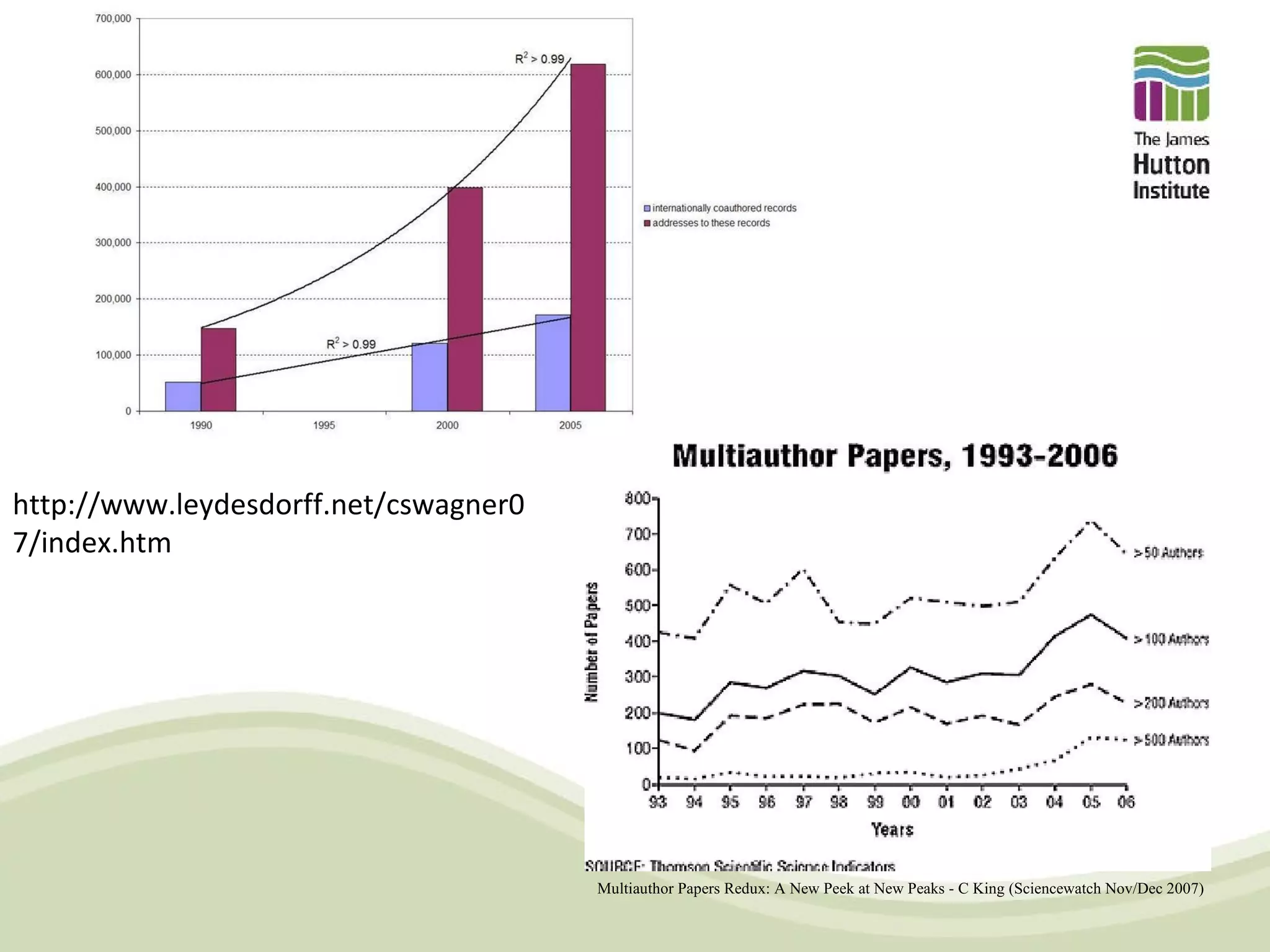
(Graph of proportion of
          multicountry papers per
          year)


http://www.leydesdorff.net/cswagner0
7/index.htm


                                       Multiauthor Papers Redux: A New Peek at New Peaks - C King (Sciencewatch Nov/Dec 2007)
With a little help from Friends….
James Hutton (1726 – 1797)

 The founder of modern geology. His work
spanned chemistry, medicine, meteorology,
geology, botany and zoology and he
experimented in plant and animal breeding.

 Struggled with translating his work into the
public domain. One of his biographers stated
that his writings were “almost entirely
innocent of rhetorical accomplishments”.

 John Playfair - a good friend and himself an
accomplished writer, secured the recognition
of Hutton’s work it so deserved. In 1802 he
published ‘Illustrations of the Huttonian
Theory of the Earth’ (http://www.strangescience.net/hutton.htm)
Vision Statement


o be a world leader in research and engagement
to deliver evidence-based solutions to the global
challenges facing land and natural resource use
both now and in the future.
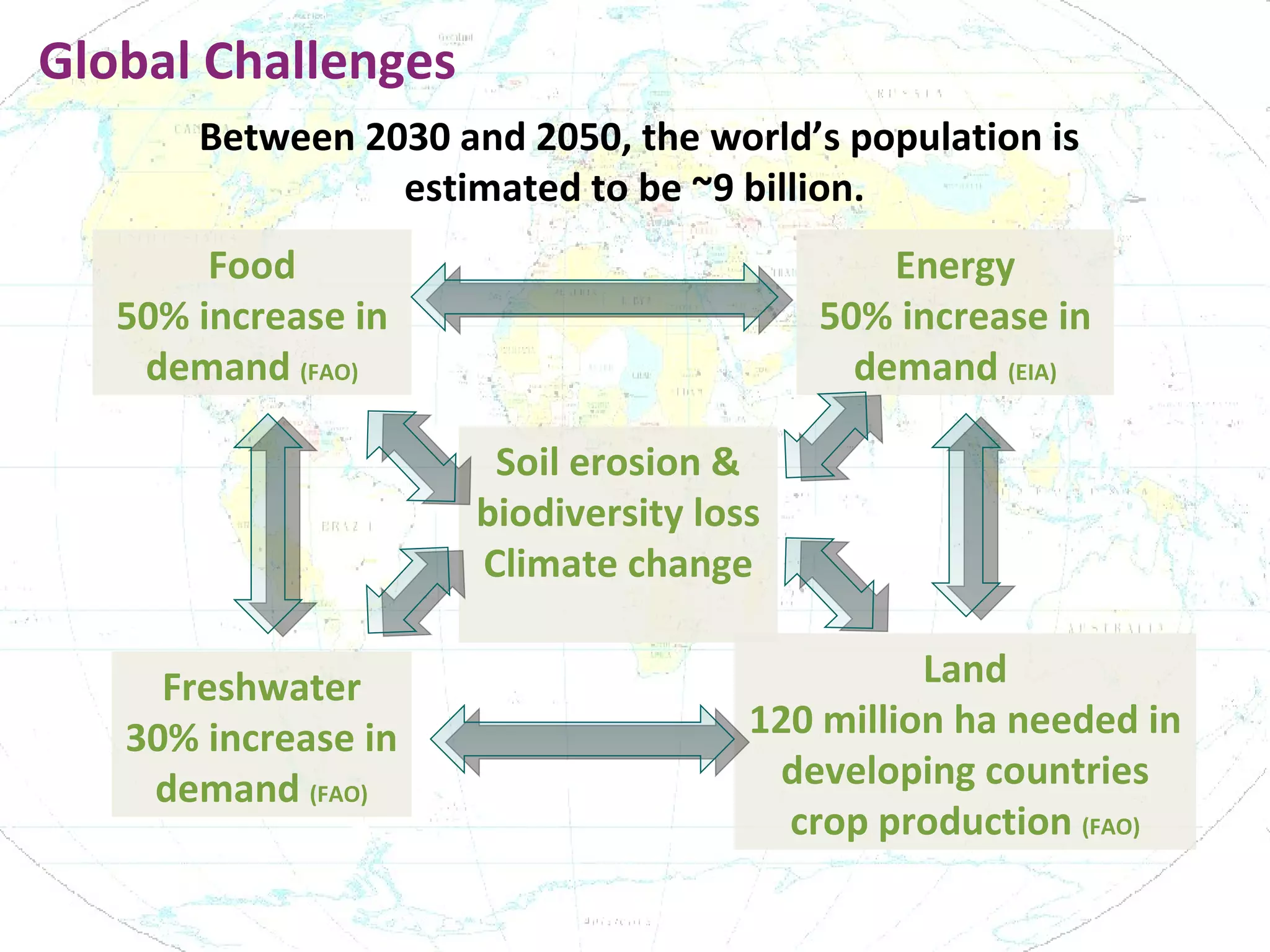
Global Challenges
       Between 2030 and 2050, the world’s population is
                 estimated to be ~9 billion.
        Food                                  Energy
   50% increase in                        50% increase in
    demand (FAO)                            demand (EIA)

                       Soil erosion &
                      biodiversity loss
                      Climate change

     Freshwater                                 Land
   30% increase in                    120 million ha needed in
    demand (FAO)                       developing countries
                                        crop production (FAO)
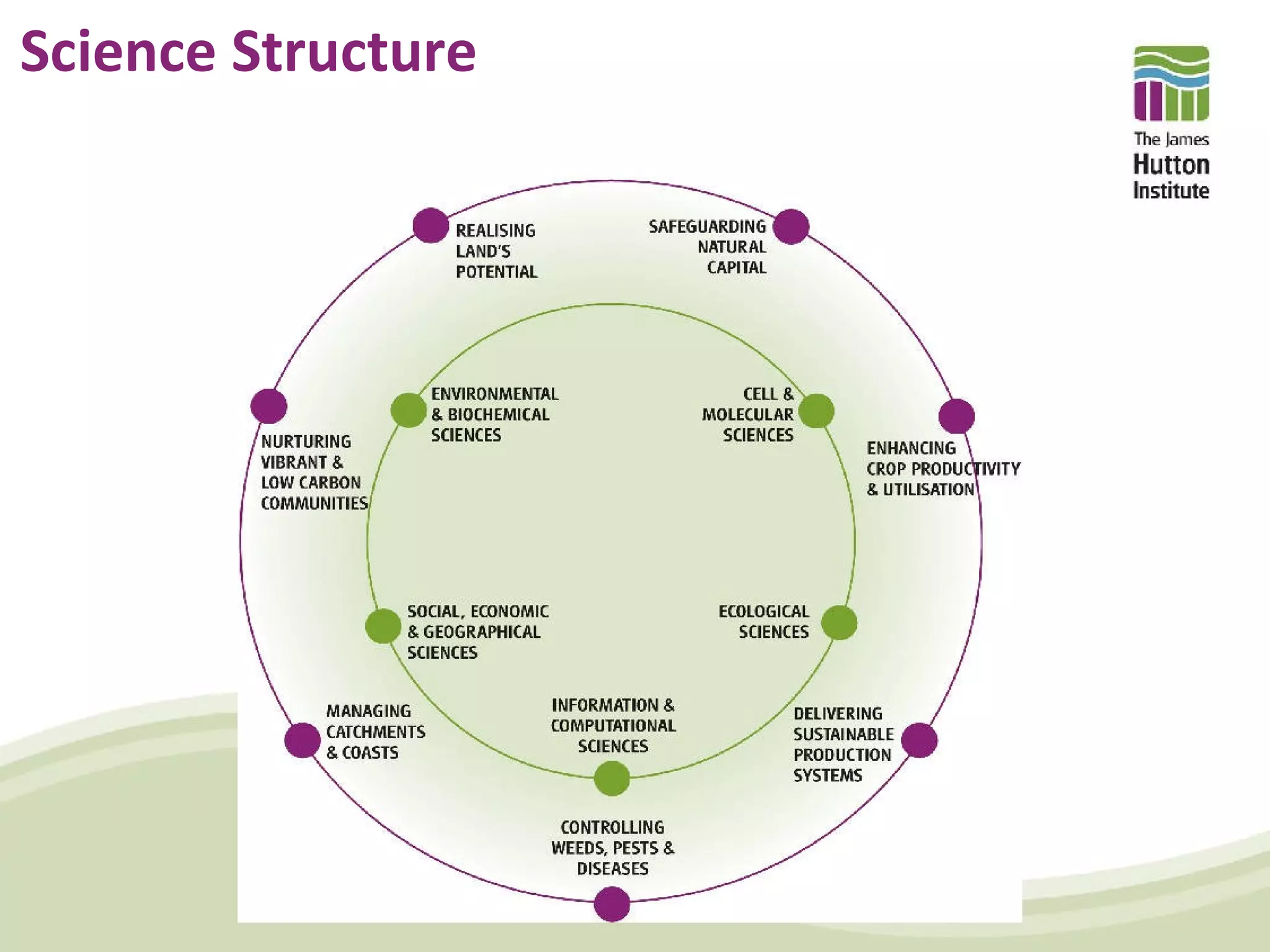
Science Structure
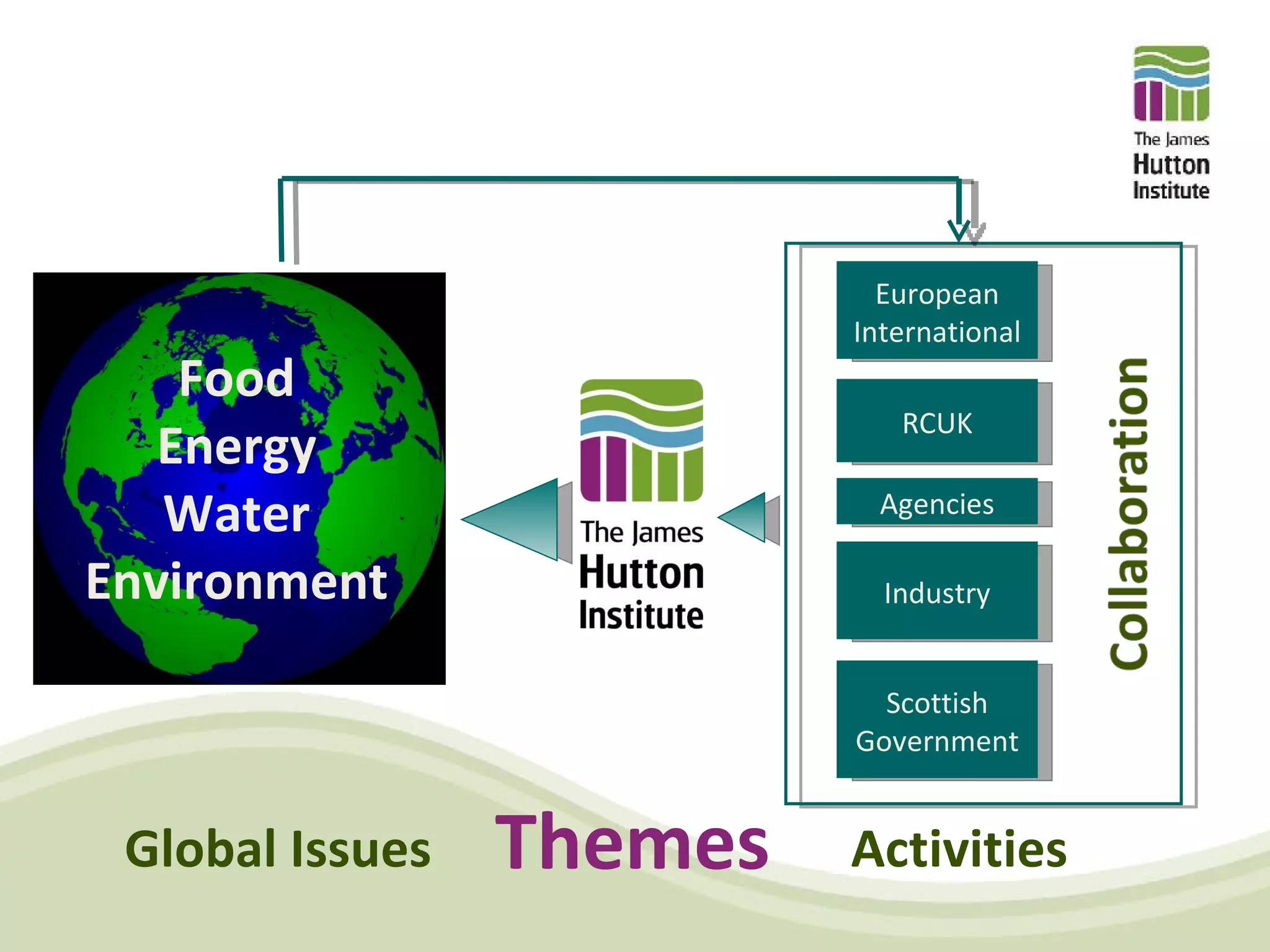
European
                          International
    Food
                             RCUK
   Energy
   Water                    Agencies

Environment                 Industry


                            Scottish
                          Government


 Global Issues   Themes   Activities
"It is hardly possible to overrate the
value.., of placing human beings in
contact with persons dissimilar to
themselves, and with modes of thought
and action unlike those with which they
are familiar… Such communication has
always been, and is peculiarly in the
present age, one of the primary sources
of progress.“

                  John Stuart Mill (1848)
Excellence & Impact

 Impact is reflected in how society uses and benefits
  from the science we do
 Responding to requirements of funders
    tighter link between research and users of research
    needs closer links between science and users at the outset

 The Research Themes at the James Hutton Institute assist in
    Promoting the relevance and impact of our science
        Looking for added value and complementarity
    Enhancing interdisciplinary research where appropriate
    Strengthening knowledge exchange and engagement
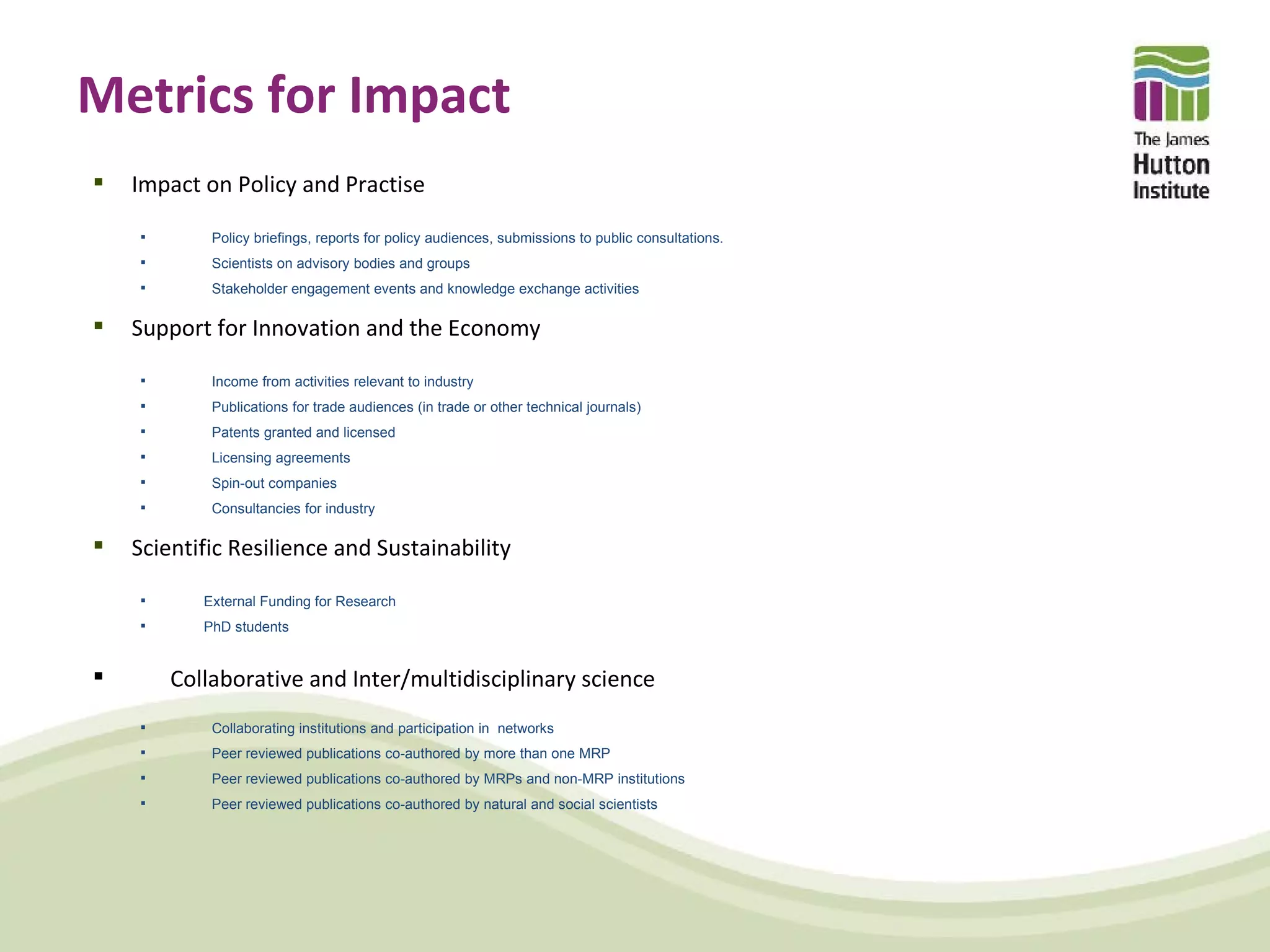
Metrics for Impact
   Impact on Policy and Practise

           Policy briefings, reports for policy audiences, submissions to public consultations.
           Scientists on advisory bodies and groups
           Stakeholder engagement events and knowledge exchange activities

   Support for Innovation and the Economy

           Income from activities relevant to industry
           Publications for trade audiences (in trade or other technical journals)
           Patents granted and licensed
           Licensing agreements
           Spin-out companies
           Consultancies for industry

   Scientific Resilience and Sustainability

          External Funding for Research
          PhD students


       Collaborative and Inter/multidisciplinary science
           Collaborating institutions and participation in networks
           Peer reviewed publications co-authored by more than one MRP
           Peer reviewed publications co-authored by MRPs and non-MRP institutions
           Peer reviewed publications co-authored by natural and social scientists
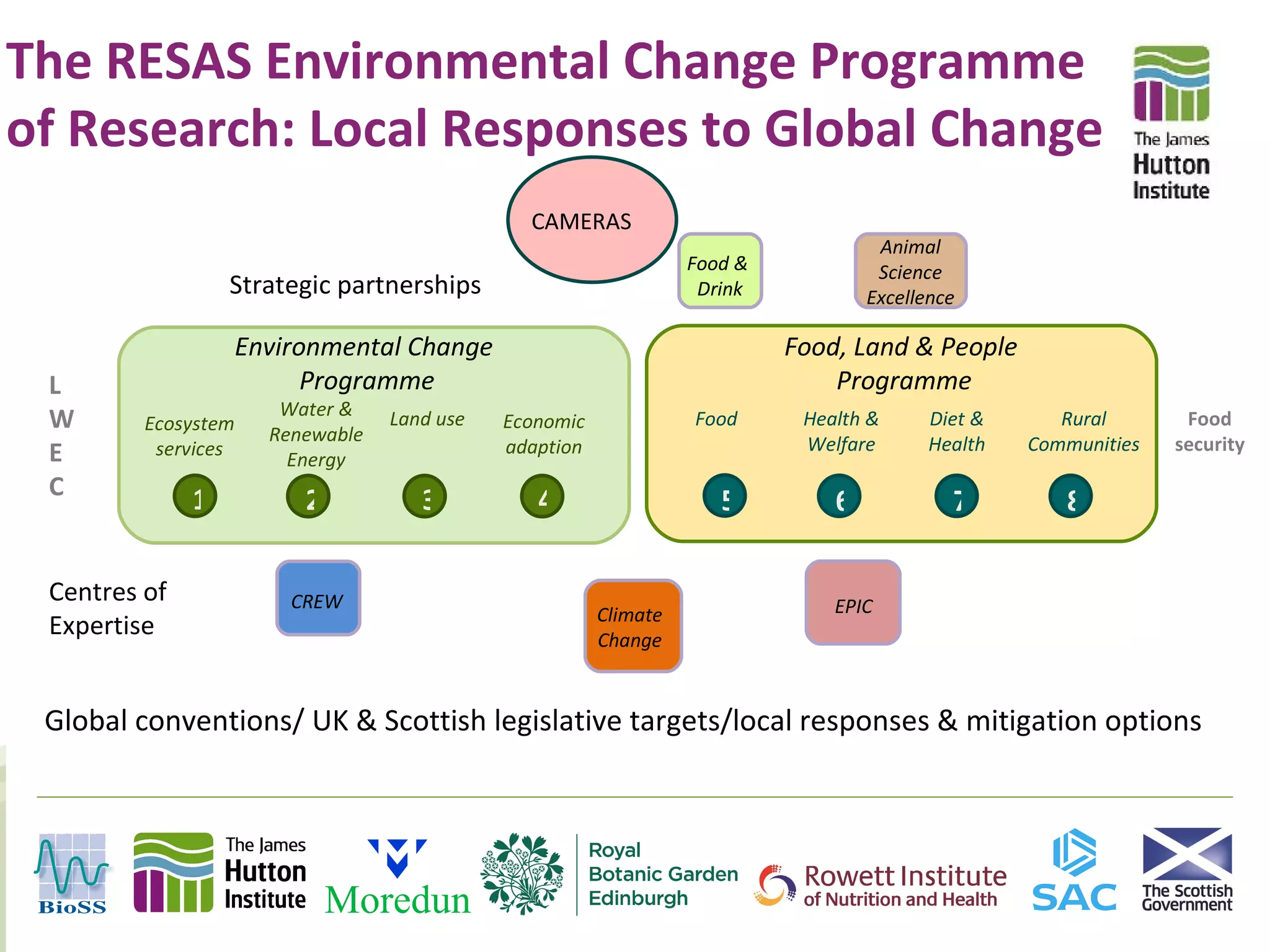
The RESAS Environmental Change Programme
of Research: Local Responses to Global Change
                                                CAMERAS
                                                                                     Animal
                                                                   Food &            Science
                  Strategic partnerships                            Drink           Excellence

                     Environmental Change                                   Food, Land & People
 L                         Programme                                            Programme
                        Water &
 W       Ecosystem
                       Renewable
                                   Land use   Economic             Food      Health &      Diet &      Rural       Food
                                              adaption                       Welfare       Health   Communities   security
 E        services
                         Energy
 C
              1           2           3          4                    5         6            7         8

 Centres of              CREW                                                   EPIC
                                                         Climate
 Expertise                                               Change


 Global conventions/ UK & Scottish legislative targets/local responses & mitigation options
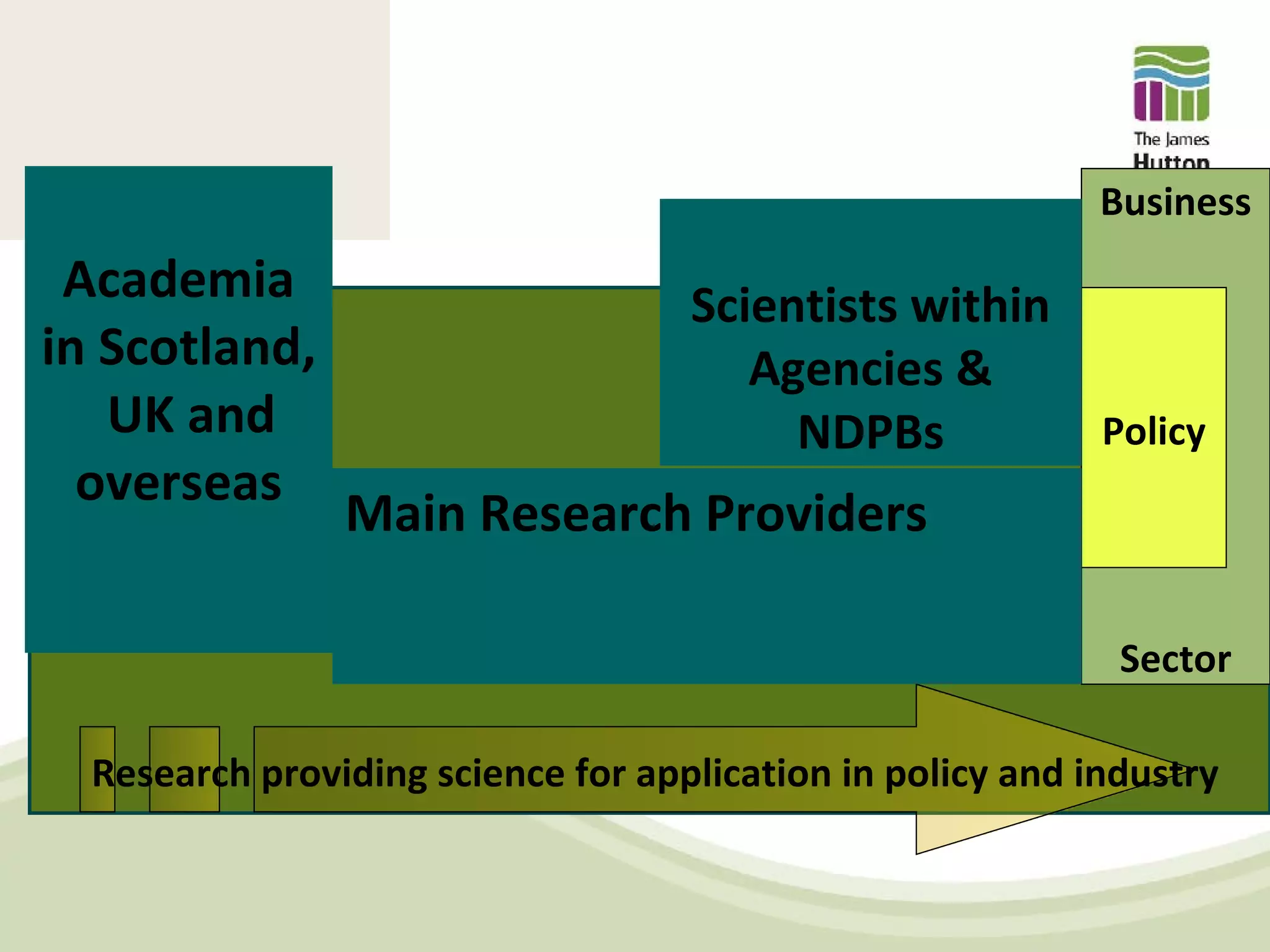
Business
 Academia                           Scientists within
in Scotland,                           Agencies &
   UK and                                NDPBs        Policy
  overseas
                Main Research Providers

                                                             Sector

  Research providing science for application in policy and industry
Centres of Expertise & Strategic Partnerships

Centres of Expertise
“To create a world renowned centre of expertise to deliver
  objective, independent integrated and authoritative evidence
  to support the Scottish Government”

Strategic Partnerships

“To enhance closer collaboration between MRPs and Scottish
universities in the context of the Scottish Government single
purpose and Government Economic Strategy ”
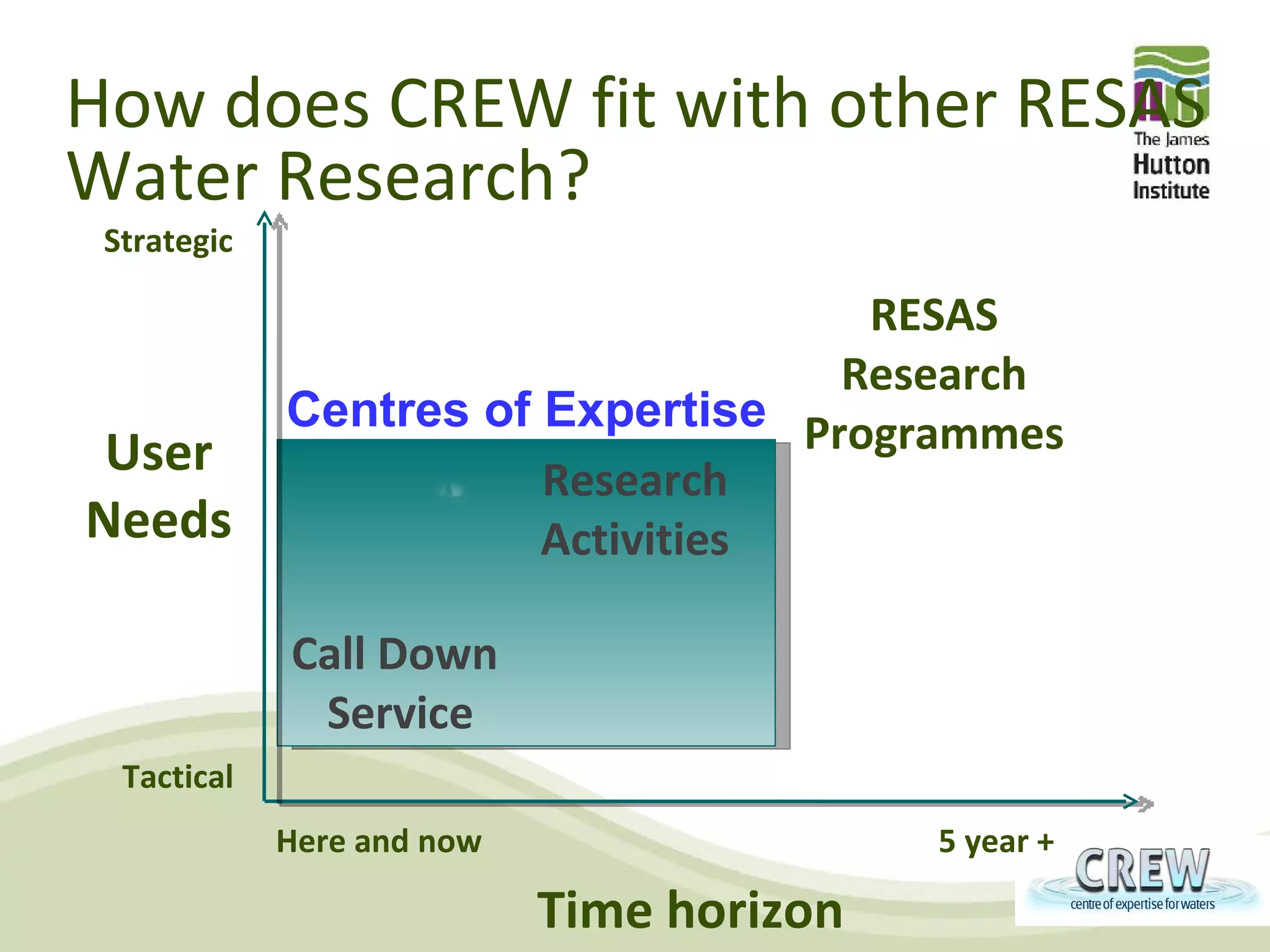
How does CREW fit with other RESAS
Water Research?
 Strategic

                                     RESAS
                                    Research
             Centres of Expertise Programmes
 User                   Research
Needs                   Activities

             Call Down
              Service
  Tactical
             Here and now                  5 year +

                            Time horizon
CREW Delivery Mechanisms
  Image: think4photop / FreeDigitalPhotos.net


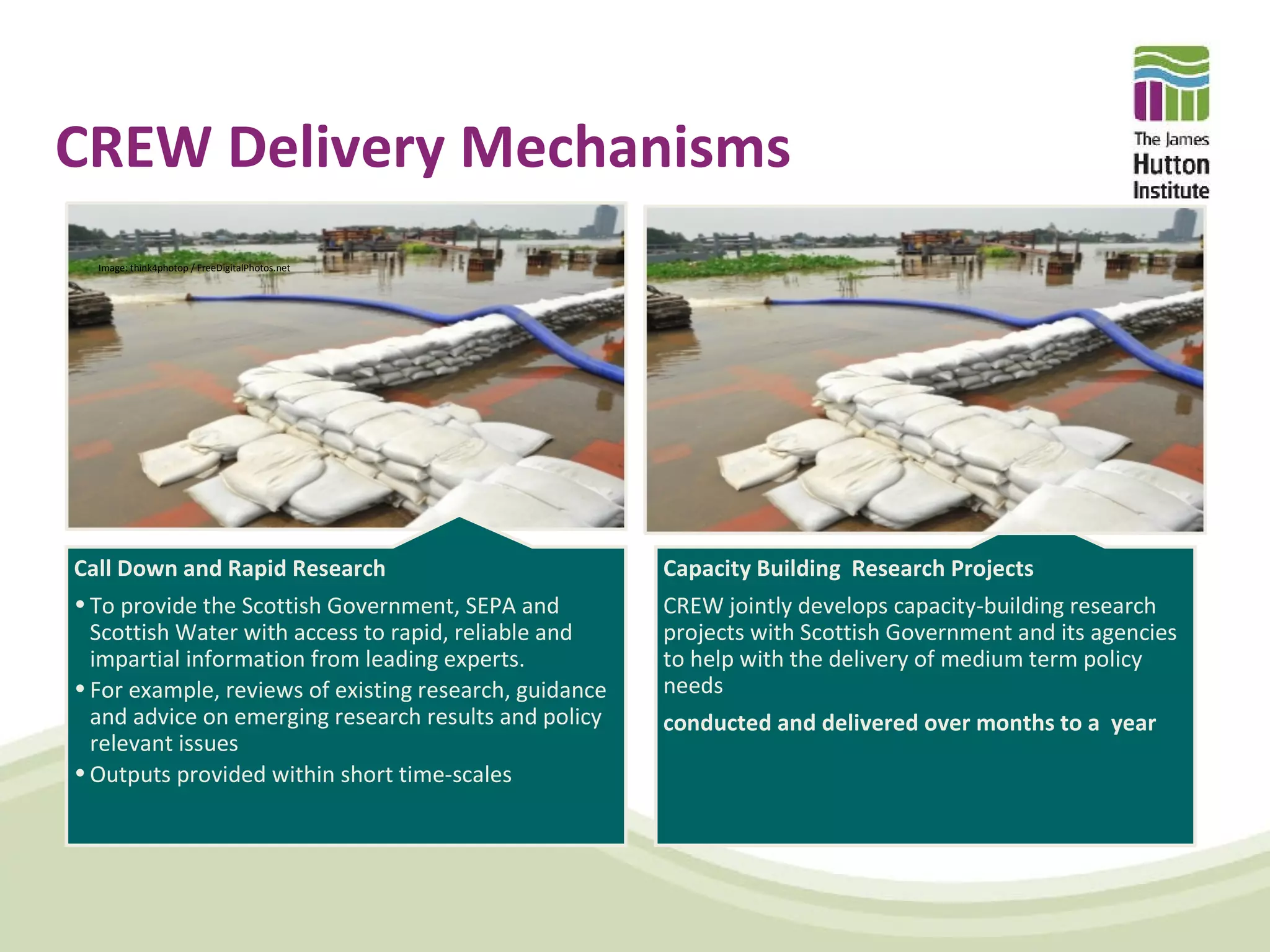
Call Down and Rapid Research                            Capacity Building Research Projects
• To provide the Scottish Government, SEPA and          CREW jointly develops capacity-building research
  Scottish Water with access to rapid, reliable and     projects with Scottish Government and its agencies
  impartial information from leading experts.           to help with the delivery of medium term policy
• For example, reviews of existing research, guidance   needs
  and advice on emerging research results and policy    conducted and delivered over months to a year
  relevant issues
• Outputs provided within short time-scales
ClimateXChange

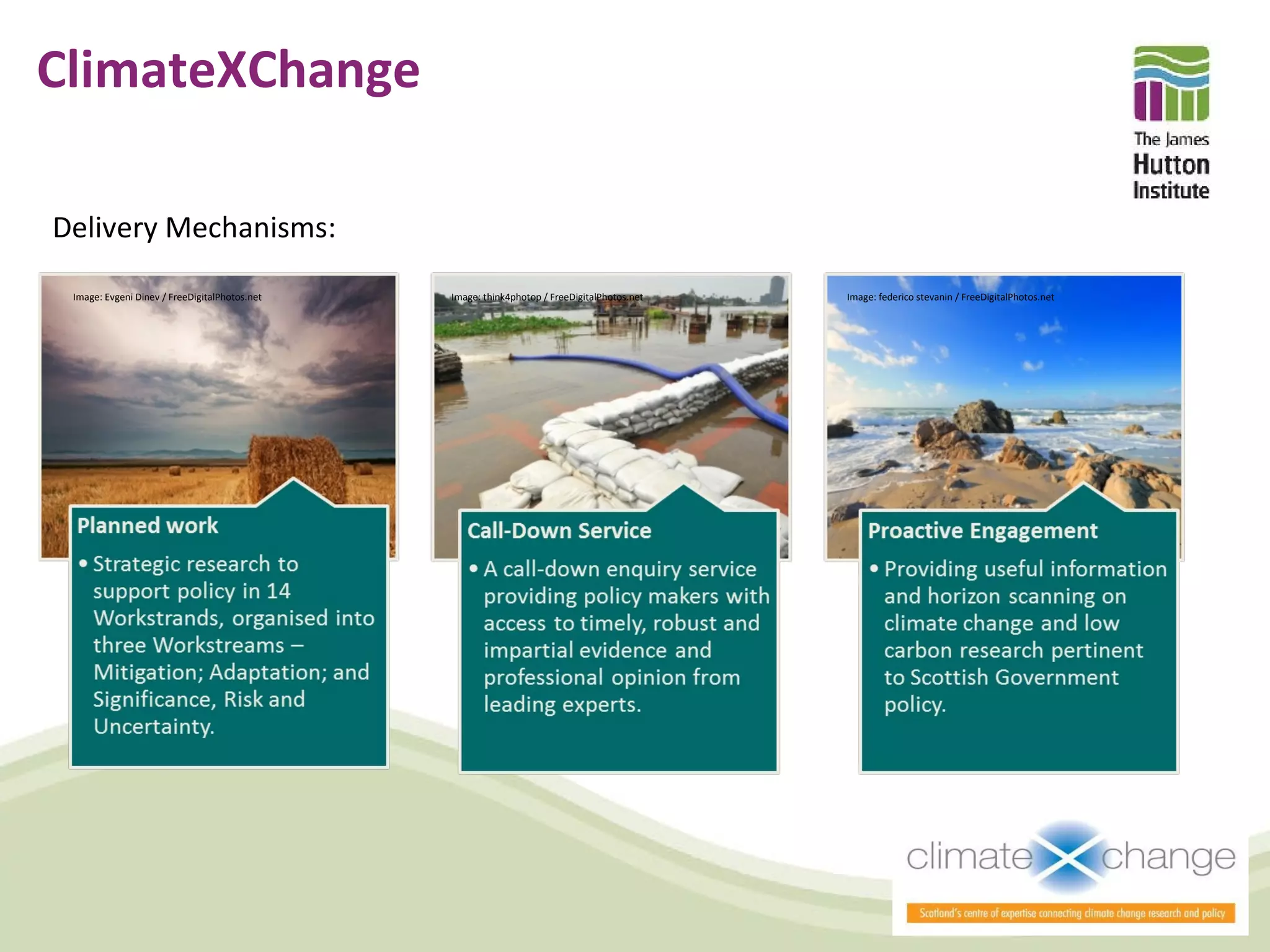
Delivery Mechanisms:
 Image: Evgeni Dinev / FreeDigitalPhotos.net   Image: think4photop / FreeDigitalPhotos.net   Image: federico stevanin / FreeDigitalPhotos.net
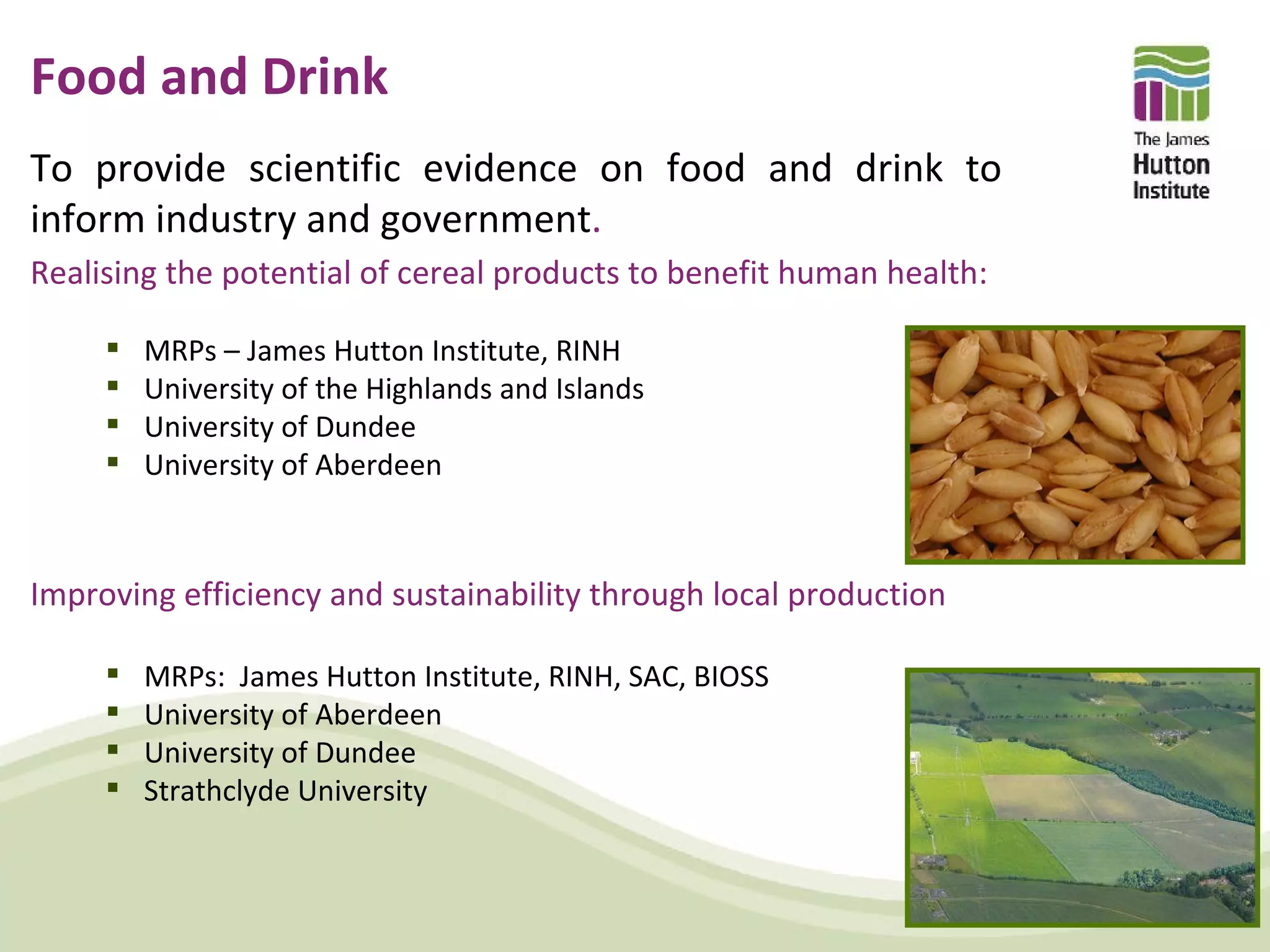
Food and Drink
To provide scientific evidence on food and drink to
inform industry and government.
Realising the potential of cereal products to benefit human health:

        MRPs – James Hutton Institute, RINH
        University of the Highlands and Islands
        University of Dundee
        University of Aberdeen


Improving efficiency and sustainability through local production

        MRPs: James Hutton Institute, RINH, SAC, BIOSS
        University of Aberdeen
        University of Dundee
        Strathclyde University
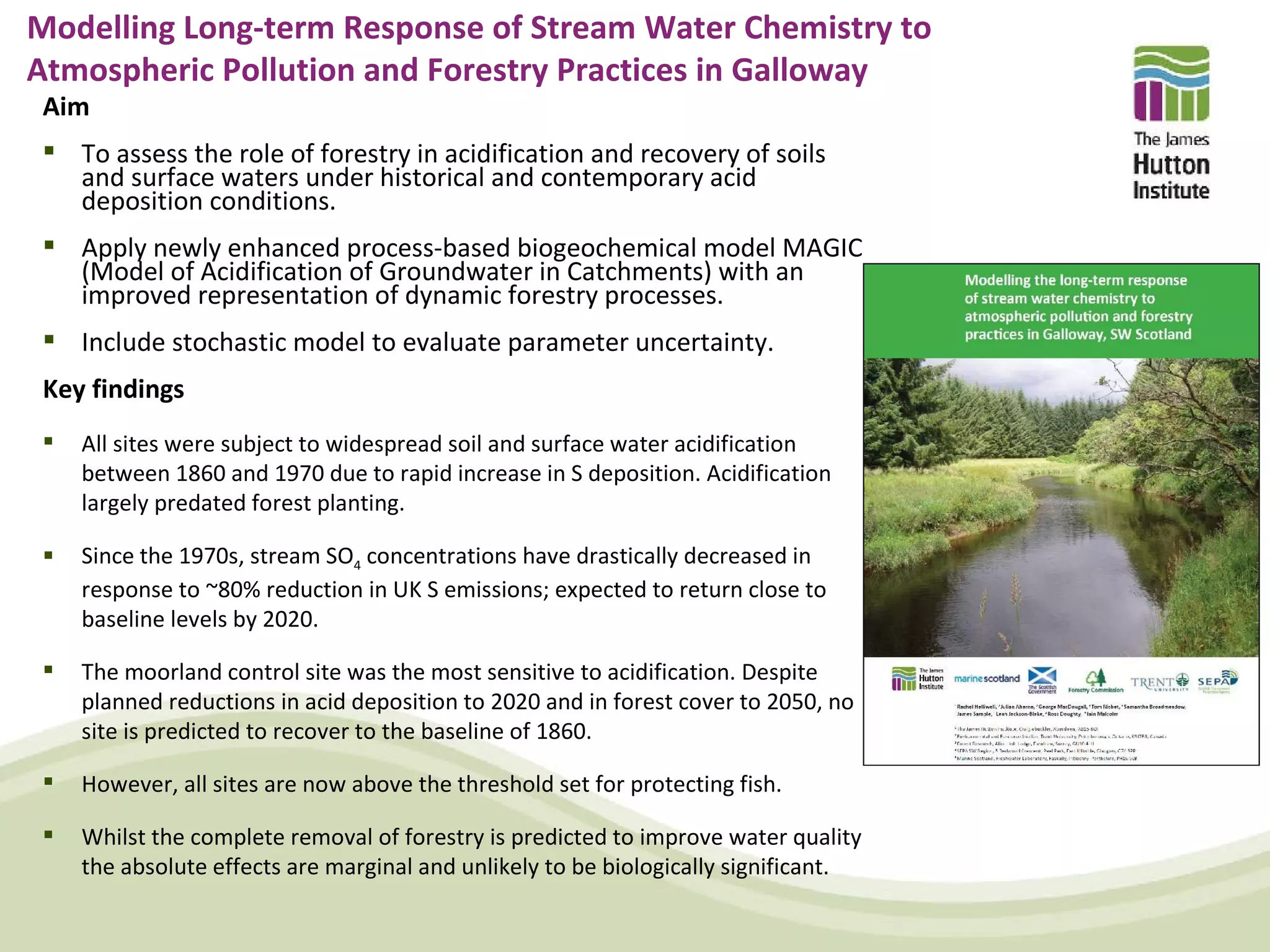
Modelling Long-term Response of Stream Water Chemistry to
Atmospheric Pollution and Forestry Practices in Galloway
 Aim
  To assess the role of forestry in acidification and recovery of soils
   and surface waters under historical and contemporary acid
   deposition conditions.
  Apply newly enhanced process-based biogeochemical model MAGIC
   (Model of Acidification of Groundwater in Catchments) with an
   improved representation of dynamic forestry processes.
  Include stochastic model to evaluate parameter uncertainty.
 Key findings
    All sites were subject to widespread soil and surface water acidification
     between 1860 and 1970 due to rapid increase in S deposition. Acidification
     largely predated forest planting.

    Since the 1970s, stream SO4 concentrations have drastically decreased in
     response to ~80% reduction in UK S emissions; expected to return close to
     baseline levels by 2020.

    The moorland control site was the most sensitive to acidification. Despite
     planned reductions in acid deposition to 2020 and in forest cover to 2050, no
     site is predicted to recover to the baseline of 1860.

    However, all sites are now above the threshold set for protecting fish.

    Whilst the complete removal of forestry is predicted to improve water quality
     the absolute effects are marginal and unlikely to be biologically significant.
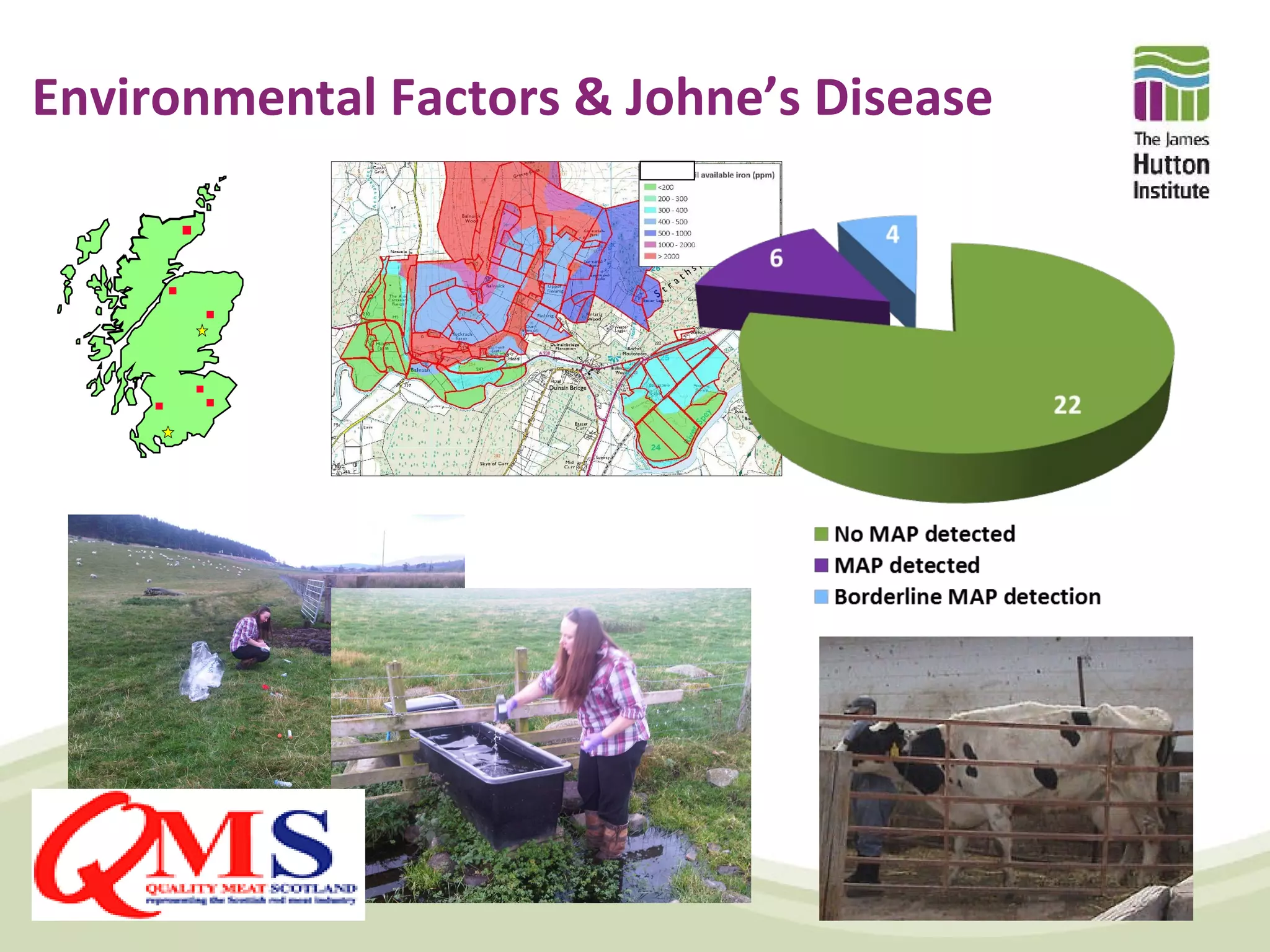
Environmental Factors & Johne’s Disease
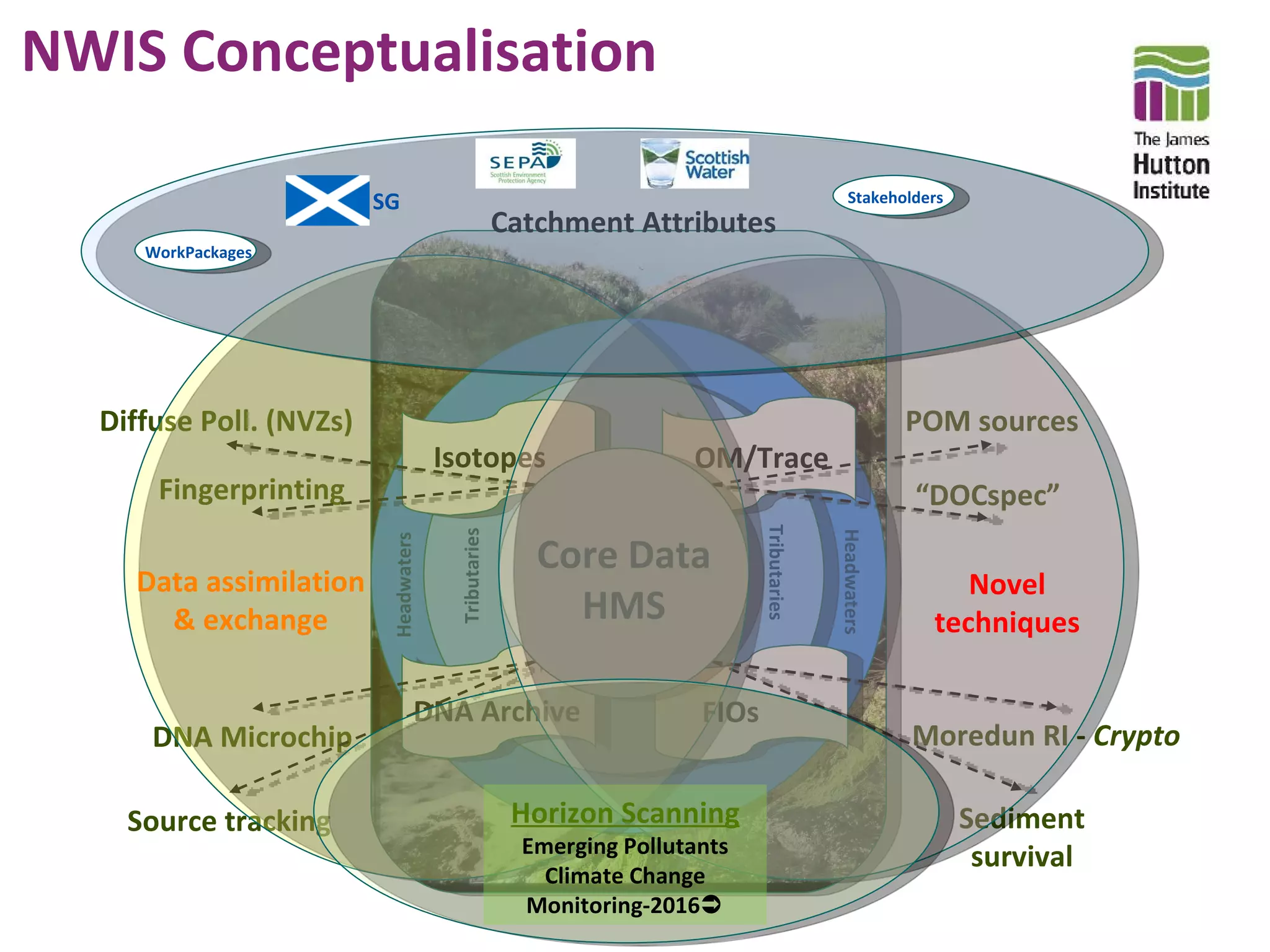
National Waters Inventory for Scotland (NWIS)
 Develop novel monitoring approaches and establish a
  “quality” baseline for water bodies across different
  catchment ecosystems
    Scoping study to develop and prioritise an agreed sampling
      regime strategy – Year 1
    Administrating a novel analytical framework to add value to
      routine nationwide monitoring and address research-led
      hypotheses at smaller spatio-temporal scales – Year 2-4
    Determine positive/negative outcomes from the water
      quality inventory study and assess future work – Year 5
NWIS Conceptualisation

                         SG                                                                     Stakeholders
                                                      Catchment Attributes
     WorkPackages


  Diffuse Poll. (NVZs)                                                                                    POM sources
                                       Isotopes                        OM/Trace
      Fingerprinting                                                                                      “DOCspec”


                                                                               Tributaries
                                        Tributaries


                                                         Core Data


                                                                                             Headwaters
                          Headwaters


    Data assimilation                                                                                         Novel
      & exchange                                           HMS                                             techniques

                                  DNA Archive                           FIOs
      DNA Microchip                                                                                       Moredun RI - Crypto

    Source tracking                                    Horizon Scanning                                        Sediment
                                                        Emerging Pollutants
                                                                                                                survival
                                                          Climate Change
                                                        Monitoring-2016
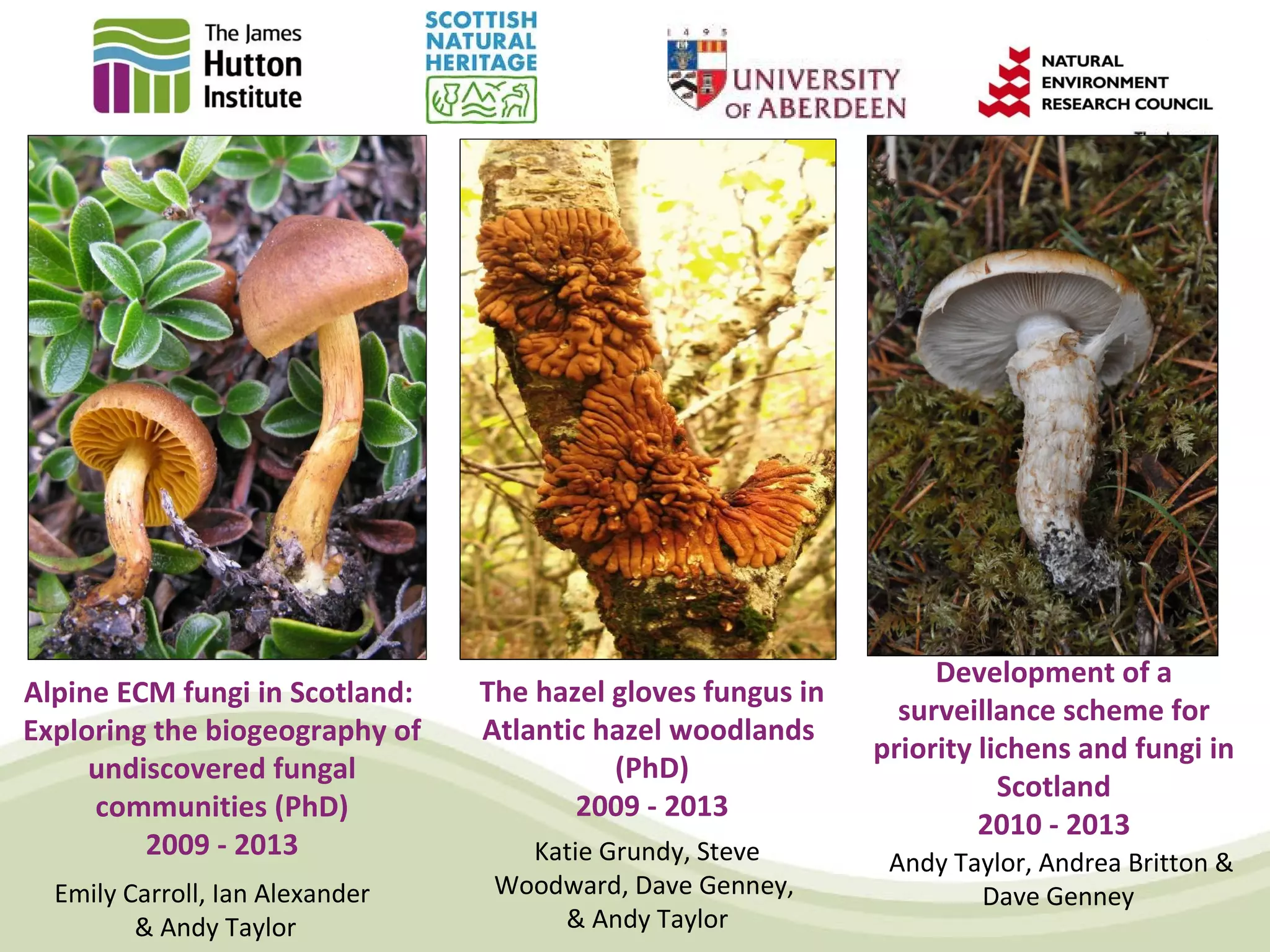
Development of a
Alpine ECM fungi in Scotland:    The hazel gloves fungus in
                                                                surveillance scheme for
Exploring the biogeography of    Atlantic hazel woodlands
                                                              priority lichens and fungi in
     undiscovered fungal                   (PhD)
                                                                         Scotland
     communities (PhD)                  2009 - 2013
                                                                       2010 - 2013
         2009 - 2013                Katie Grundy, Steve        Andy Taylor, Andrea Britton &
  Emily Carroll, Ian Alexander    Woodward, Dave Genney,              Dave Genney
         & Andy Taylor                & Andy Taylor
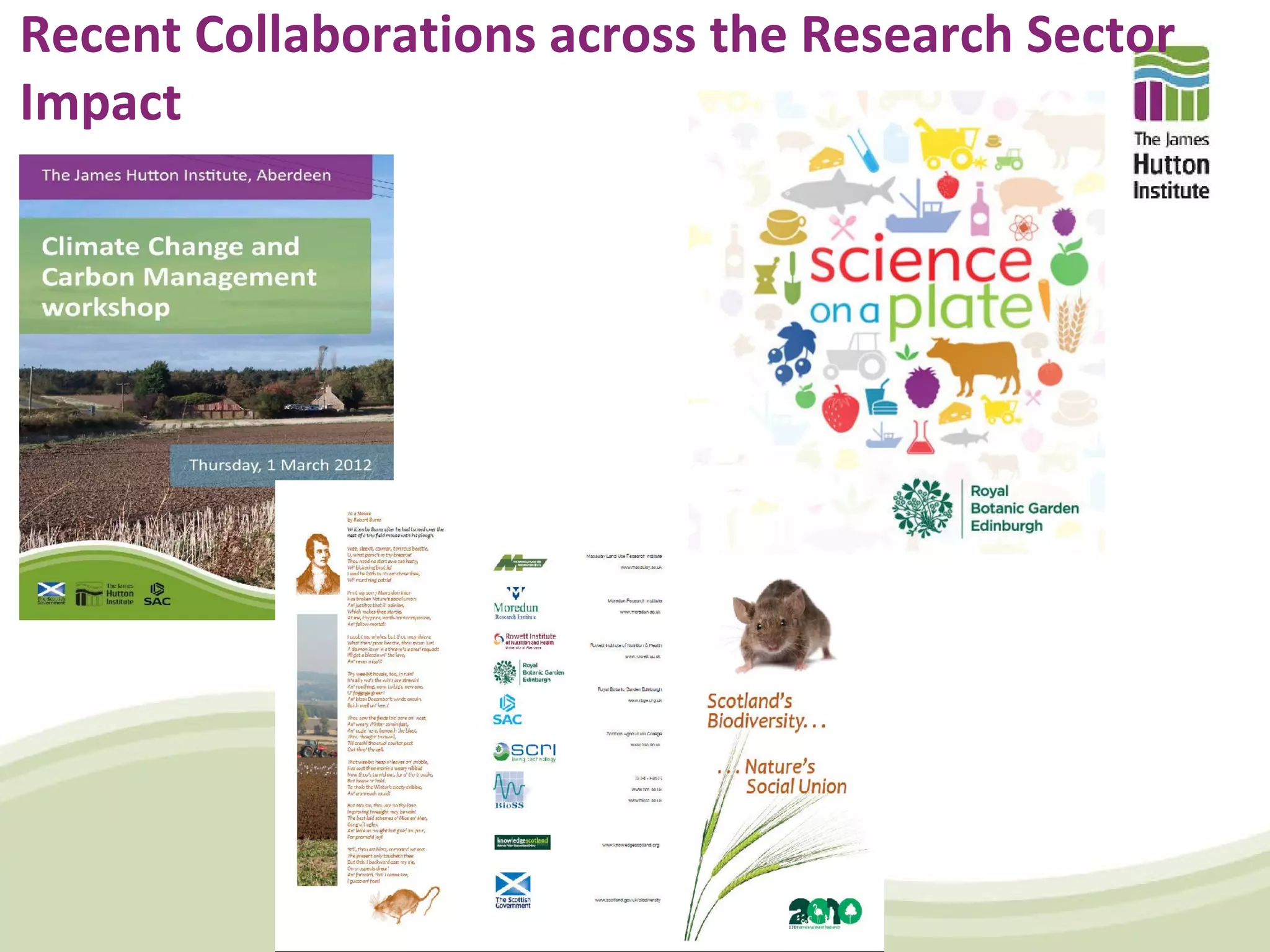
Recent Collaborations across the Research Sector
Impact
Benefits of collaboration
 Draw on a wider pool of science disciplines

        Wide range of skills and knowledge needed to address
         the increasing complex issues and problems

 Transfer of knowledge and skills

        Greater understanding achieved of the issues and
         challenges faced from all perspectives

 Extend and enhance research network

        Build up key contacts with specific skills/knowledge
        who can contribute to other projects

 Wider dissemination of project outcomes
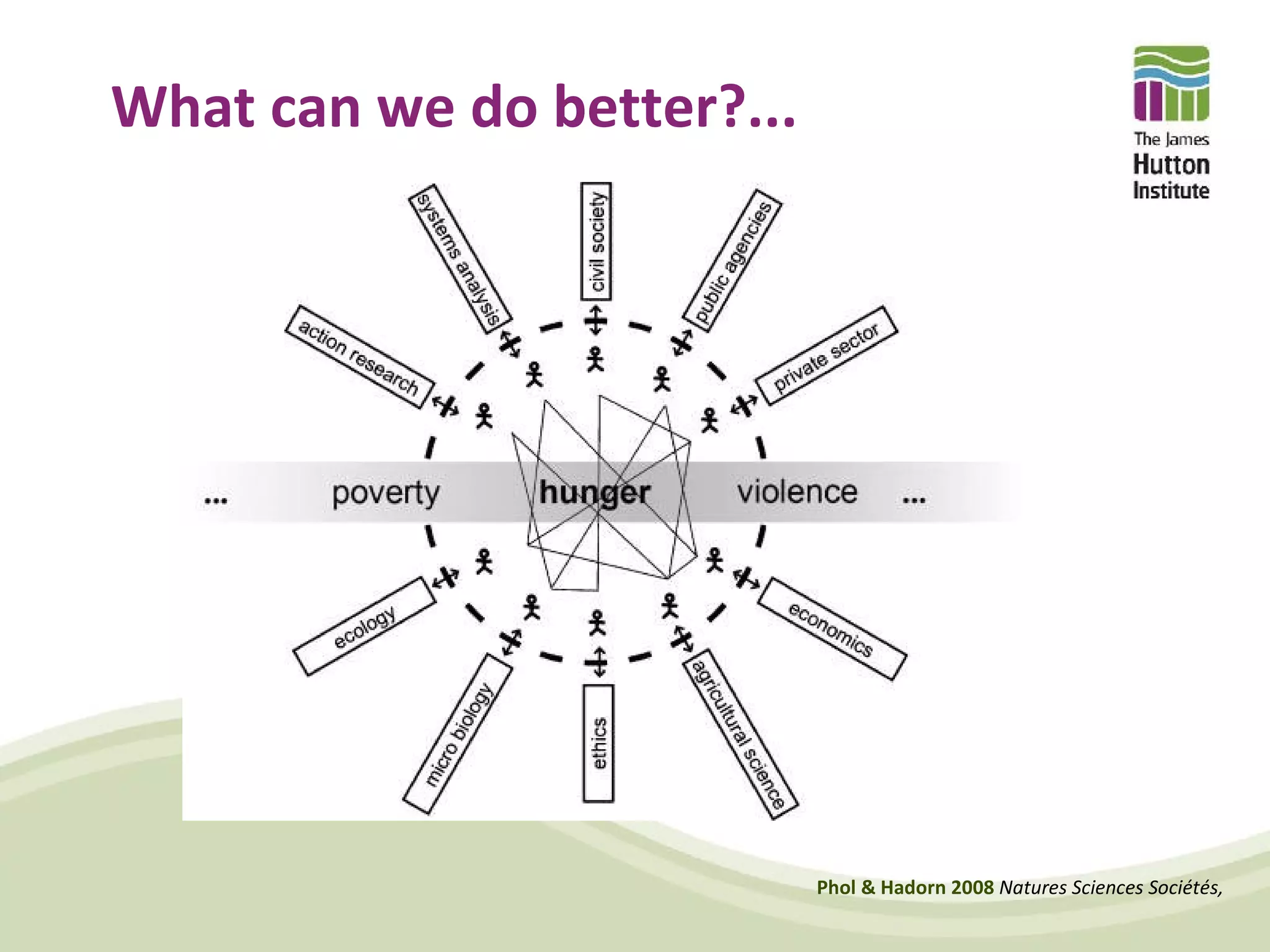
What can we do better?...


                            Phol & Hadorn 2008 Natures Sciences Sociétés,
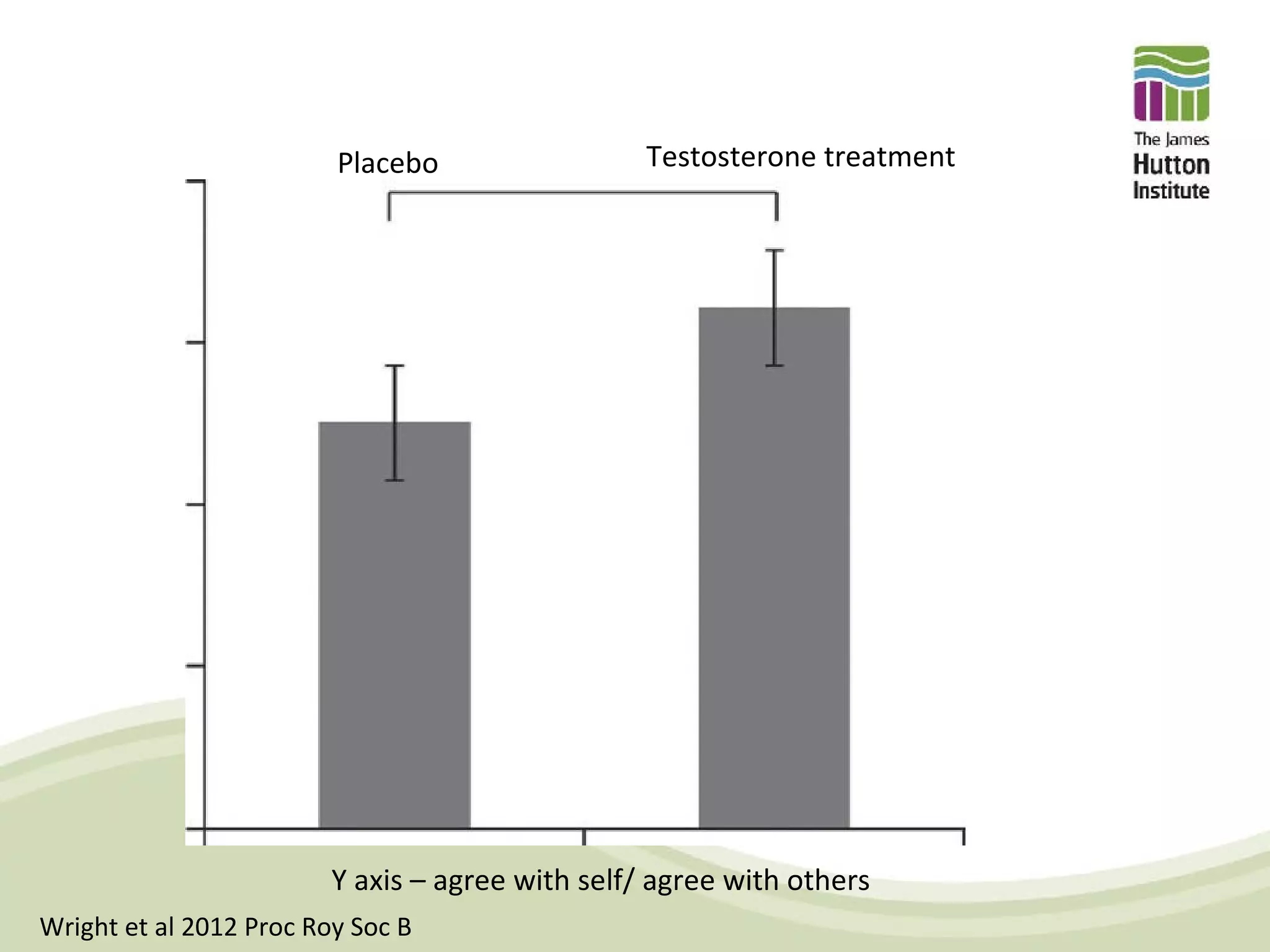
Placebo                  Testosterone treatment


                         Y axis – agree with self/ agree with others
Wright et al 2012 Proc Roy Soc B
Thank you

Pete Goddard, Wendy Kenyon, Bob
Ferrier, Phil Taylor, Matt Ogston,
Andy Taylor, Julian Dawson,
Rupert Hough, Colin Campbell, Lisa
Avery, Geoff Elliott, Charlie Shand,
Renate Wendler, Malcolm Coull,
Derek Stewart, Rachel Helliwell,
Carol Ann Stannard


                                       www.hutton.ac.uk

Professor Iain Gordon - James Hutton Institute

  • 1.
    Professor Iain Gordon Chief Executive Collaborating to increase the impact of science “Science connecting land and people”
  • 2.
    (Graph of proportionof multicountry papers per year) http://www.leydesdorff.net/cswagner0 7/index.htm Multiauthor Papers Redux: A New Peek at New Peaks - C King (Sciencewatch Nov/Dec 2007)
  • 3.
    With a littlehelp from Friends…. James Hutton (1726 – 1797)  The founder of modern geology. His work spanned chemistry, medicine, meteorology, geology, botany and zoology and he experimented in plant and animal breeding.  Struggled with translating his work into the public domain. One of his biographers stated that his writings were “almost entirely innocent of rhetorical accomplishments”.  John Playfair - a good friend and himself an accomplished writer, secured the recognition of Hutton’s work it so deserved. In 1802 he published ‘Illustrations of the Huttonian Theory of the Earth’ (http://www.strangescience.net/hutton.htm)
  • 4.
    Vision Statement o bea world leader in research and engagement to deliver evidence-based solutions to the global challenges facing land and natural resource use both now and in the future.
  • 5.
    Global Challenges Between 2030 and 2050, the world’s population is estimated to be ~9 billion. Food Energy 50% increase in 50% increase in demand (FAO) demand (EIA) Soil erosion & biodiversity loss Climate change Freshwater Land 30% increase in 120 million ha needed in demand (FAO) developing countries crop production (FAO)
  • 6.
  • 7.
    European International Food RCUK Energy Water Agencies Environment Industry Scottish Government Global Issues Themes Activities
  • 8.
    "It is hardlypossible to overrate the value.., of placing human beings in contact with persons dissimilar to themselves, and with modes of thought and action unlike those with which they are familiar… Such communication has always been, and is peculiarly in the present age, one of the primary sources of progress.“ John Stuart Mill (1848)
  • 9.
    Excellence & Impact Impact is reflected in how society uses and benefits from the science we do  Responding to requirements of funders  tighter link between research and users of research  needs closer links between science and users at the outset  The Research Themes at the James Hutton Institute assist in  Promoting the relevance and impact of our science  Looking for added value and complementarity  Enhancing interdisciplinary research where appropriate  Strengthening knowledge exchange and engagement
  • 10.
    Metrics for Impact  Impact on Policy and Practise  Policy briefings, reports for policy audiences, submissions to public consultations.  Scientists on advisory bodies and groups  Stakeholder engagement events and knowledge exchange activities  Support for Innovation and the Economy  Income from activities relevant to industry  Publications for trade audiences (in trade or other technical journals)  Patents granted and licensed  Licensing agreements  Spin-out companies  Consultancies for industry  Scientific Resilience and Sustainability  External Funding for Research  PhD students  Collaborative and Inter/multidisciplinary science  Collaborating institutions and participation in networks  Peer reviewed publications co-authored by more than one MRP  Peer reviewed publications co-authored by MRPs and non-MRP institutions  Peer reviewed publications co-authored by natural and social scientists
  • 11.
    The RESAS EnvironmentalChange Programme of Research: Local Responses to Global Change CAMERAS Animal Food & Science Strategic partnerships Drink Excellence Environmental Change Food, Land & People L Programme Programme Water & W Ecosystem Renewable Land use Economic Food Health & Diet & Rural Food adaption Welfare Health Communities security E services Energy C 1 2 3 4 5 6 7 8 Centres of CREW EPIC Climate Expertise Change Global conventions/ UK & Scottish legislative targets/local responses & mitigation options
  • 12.
    Business Academia Scientists within in Scotland, Agencies & UK and NDPBs Policy overseas Main Research Providers Sector Research providing science for application in policy and industry
  • 13.
    Centres of Expertise& Strategic Partnerships Centres of Expertise “To create a world renowned centre of expertise to deliver objective, independent integrated and authoritative evidence to support the Scottish Government” Strategic Partnerships “To enhance closer collaboration between MRPs and Scottish universities in the context of the Scottish Government single purpose and Government Economic Strategy ”
  • 14.
    How does CREWfit with other RESAS Water Research? Strategic RESAS Research Centres of Expertise Programmes User Research Needs Activities Call Down Service Tactical Here and now 5 year + Time horizon
  • 15.
    CREW Delivery Mechanisms Image: think4photop / FreeDigitalPhotos.net Call Down and Rapid Research Capacity Building Research Projects • To provide the Scottish Government, SEPA and CREW jointly develops capacity-building research Scottish Water with access to rapid, reliable and projects with Scottish Government and its agencies impartial information from leading experts. to help with the delivery of medium term policy • For example, reviews of existing research, guidance needs and advice on emerging research results and policy conducted and delivered over months to a year relevant issues • Outputs provided within short time-scales
  • 16.
    ClimateXChange Delivery Mechanisms: Image:Evgeni Dinev / FreeDigitalPhotos.net Image: think4photop / FreeDigitalPhotos.net Image: federico stevanin / FreeDigitalPhotos.net
  • 17.
    Food and Drink Toprovide scientific evidence on food and drink to inform industry and government. Realising the potential of cereal products to benefit human health:  MRPs – James Hutton Institute, RINH  University of the Highlands and Islands  University of Dundee  University of Aberdeen Improving efficiency and sustainability through local production  MRPs: James Hutton Institute, RINH, SAC, BIOSS  University of Aberdeen  University of Dundee  Strathclyde University
  • 18.
    Modelling Long-term Responseof Stream Water Chemistry to Atmospheric Pollution and Forestry Practices in Galloway Aim  To assess the role of forestry in acidification and recovery of soils and surface waters under historical and contemporary acid deposition conditions.  Apply newly enhanced process-based biogeochemical model MAGIC (Model of Acidification of Groundwater in Catchments) with an improved representation of dynamic forestry processes.  Include stochastic model to evaluate parameter uncertainty. Key findings  All sites were subject to widespread soil and surface water acidification between 1860 and 1970 due to rapid increase in S deposition. Acidification largely predated forest planting.  Since the 1970s, stream SO4 concentrations have drastically decreased in response to ~80% reduction in UK S emissions; expected to return close to baseline levels by 2020.  The moorland control site was the most sensitive to acidification. Despite planned reductions in acid deposition to 2020 and in forest cover to 2050, no site is predicted to recover to the baseline of 1860.  However, all sites are now above the threshold set for protecting fish.  Whilst the complete removal of forestry is predicted to improve water quality the absolute effects are marginal and unlikely to be biologically significant.
  • 19.
    Environmental Factors &Johne’s Disease
  • 20.
    National Waters Inventoryfor Scotland (NWIS)  Develop novel monitoring approaches and establish a “quality” baseline for water bodies across different catchment ecosystems  Scoping study to develop and prioritise an agreed sampling regime strategy – Year 1  Administrating a novel analytical framework to add value to routine nationwide monitoring and address research-led hypotheses at smaller spatio-temporal scales – Year 2-4  Determine positive/negative outcomes from the water quality inventory study and assess future work – Year 5
  • 21.
    NWIS Conceptualisation SG Stakeholders Catchment Attributes WorkPackages Diffuse Poll. (NVZs) POM sources Isotopes OM/Trace Fingerprinting “DOCspec” Tributaries Tributaries Core Data Headwaters Headwaters Data assimilation Novel & exchange HMS techniques DNA Archive FIOs DNA Microchip Moredun RI - Crypto Source tracking Horizon Scanning Sediment Emerging Pollutants survival Climate Change Monitoring-2016
  • 22.
    Development of a AlpineECM fungi in Scotland: The hazel gloves fungus in surveillance scheme for Exploring the biogeography of Atlantic hazel woodlands priority lichens and fungi in undiscovered fungal (PhD) Scotland communities (PhD) 2009 - 2013 2010 - 2013 2009 - 2013 Katie Grundy, Steve Andy Taylor, Andrea Britton & Emily Carroll, Ian Alexander Woodward, Dave Genney, Dave Genney & Andy Taylor & Andy Taylor
  • 23.
    Recent Collaborations acrossthe Research Sector Impact
  • 24.
    Benefits of collaboration Draw on a wider pool of science disciplines Wide range of skills and knowledge needed to address the increasing complex issues and problems  Transfer of knowledge and skills Greater understanding achieved of the issues and challenges faced from all perspectives  Extend and enhance research network Build up key contacts with specific skills/knowledge who can contribute to other projects  Wider dissemination of project outcomes
  • 25.
    What can wedo better?... Phol & Hadorn 2008 Natures Sciences Sociétés,
  • 26.
    Placebo Testosterone treatment Y axis – agree with self/ agree with others Wright et al 2012 Proc Roy Soc B
  • 27.
    Thank you Pete Goddard,Wendy Kenyon, Bob Ferrier, Phil Taylor, Matt Ogston, Andy Taylor, Julian Dawson, Rupert Hough, Colin Campbell, Lisa Avery, Geoff Elliott, Charlie Shand, Renate Wendler, Malcolm Coull, Derek Stewart, Rachel Helliwell, Carol Ann Stannard www.hutton.ac.uk

Editor's Notes

  • #4 JH - a leading figure of the Scottish Enlightenment, in a golden age of intellectual and scientific achievements. Acknowledged for his work and contributions to some many aspects of science and yet, without the help of his friend John Playfair, his work would have gone unrecognised. Example of the benefits of good collaboration.
  • #6 WHY COLLABORATE: Global Challenges. The UN estimated that the global population will reach 9.3 billion by 2050 – On 31 st Oct, the global population figure reached 7 billion. The pressures on Food, Energy, Water and Land to support this planet’s ever expanding population are immense.
  • #8 The JHI through collaboration with others are working to address these global challenges.
  • #9 He has been called "the most influential English-speaking philosopher of the nineteenth century" [5] Mill's conception of liberty justified the freedom of the individual in opposition to unlimited state control. [6]
  • #10 We collaborate with other organisations to boost research capacity and build international credibility.
  • #12 All driven by high level policy objectives
  • #14 Why we collaborate reason 2: to address the Scottish Government objectives of ‘A greener, healthier, safer, smarter, wealthier and fairer Scotland’. Our engagement with the Centres of Expertise and Strategic Partnerships.
  • #17 It was established to deliver: objective, independent, integrated and authoritative evidence to support the Scottish Government in relation to its activities on climate change mitigation, adaption and the transition to a low carbon economy. ClimateXChange is a collaboration between 7 leading Scottish research institutions, 7 Scottish universities, SNIFFER and Crichton Carbon Centre. ClimateXChange has over 80 Staff.
  • #18 First work area – Realising the potential of cereal products to benefit human health. The James Hutton Institute will focus on cereal  -glucan biosynthesis and functionality, and how  -glucan accumulation influences other quality criteria. Second work area – Improving efficiency and sustainability through local production. The James Hutton Institute will focus on how the local environment impacts upon crop quality, nutritive and economic value. Multiple crop foci - potato, wheat, barley, beans and OSR.
  • #19 For your info only: Rachel Helliwell is part of the steering group involved in the revision of the Forest and Water Guidelines – revision of the guidelines is rather political. This project involved close collaboration with the FC and SEPA (CAMERAS) but the project lead: Rachel Helliwell, also felt that it was important to engage the Galloway Fisheries Trust (GFT), and indeed they were actively involved in the sites selection process, workshops and drafting the report. The outcome has been positive. The main benefits of collaborating with the FC are: 1. Transfer of knowledge, skills and information: My key contact was Tom Nisbet who has a  background in soil/water acidification, but has worked specifically in forest related research since  1987 and is a highly regarded scientist. We learnt a great deal from each other during the contract (Tom regarding biogeochemical modelling/uncertainty, and I learnt about forest policy, future forest plans, and working in a very politically driven area of research). I was also able to make use of the valuable datasets held by the FC including digital forestry stock maps, future plans for forestry, datasets on nutrient uptakes for different tree species, yield classes etc. 2. Enhances dissemination of project: Since the completion of this contract the report has been published on the FC website, the FC supported an extension to the contract to allow a paper to be written (now submitted to Ecological Indicators), the results have also been presented at 2 workshops with representatives from the GFT, SEPA, RAFTS, FC, MRS, and academia. 3. Extends networks: I made some excellent contacts with colleagues at FC and FR (& SEPA) with useful skills to contribute to biogeochemical modelling and other RESAS research 4. Research was stimulating and creative
  • #20 Project team: Rupert Hough (project leader); Colin Campbell, Lisa Avery, Geoff Elliott (microbiology); Charlie Shand, Renate Wendler (soil geochemistry); Malcolm Coull (GIS mapping) Background: Johne’s disease (caused by Mycobacterium avium ss. Paratuberculosis (MAP)) is a widespread problem in Scottish cattle farming & in economic terms is the biggest problem in the sector It is a wasting disease (see photo bottom right) – ultimately fatal On some farms, best practice and health schemes based on blood testing & culling have been successful On other farms this is not the case, suggesting other unrecognised factors involved QMS have asked us to look into whether the environment plays a role in disease prevalence – as part of the large PARABAN consortium project ( Delivering knowledge exchange for control of paratuberculosis (Johne’s Disease) with Scottish cattle farmers) funded by Scottish Research Council under SPIRIT initiative with Scottish Government funding JHI. Activities: Developed quantitative PCR detection method for soil and environmental samples 8 farms visited (6 Beef; 2 Dairy) Reviewed environmental risk factors and identified soil pH and possible link to iron status. The organism requires available iron to survive – used soil geochemical maps, and farmer knowledge to identify ‘hot spots’ and ‘cold spots’ & sampled soils and water supplies Samples analysed for the organism using quantitative molecular techniques - Of six positive samples, five predicted as those likely to harbour the organism Next stage is to use this knowledge to develop an intervention study to investigate simple management techniques, such as liming, to reduce organism survival Benefits of working with QMS: Access to farms and farmers ensures research is of practical relevance Access to dissemination such as QMS publications that are read directly by their members – outcomes of the research read by those most affected QMS actively work with us and provide on-going feedback – project findings presented to their R&D committee as well as the project officer = good range of feedback Opportunities for on-going work – e.g. have recently secured funding for similar project looking at cryptosporidium in the farm environment QMS active in early stage preparation and stimulating ideas and then linking science partners from seemingly disparate areas together in a team – co-construction QMS can broker and advise on KE methods
  • #21 Priority Areas are: Natural Isotopes (tracers and fingerprinting), Organic matter characterisation & trace elements, Waters DNA archive (Molecular data on pathogens & microbial communities) and Faecal Indicator Organisms (FIOs) Year 1 Report on the National Waters Inventory for Scotland (NWIS) programme and engagement with SEPA: SW are aware of the programme but the main cooperation in this work is with SEPA. Planning and testing of methods has been undertaken to enable a programme of national sampling for water quality characterisation to begin in March 2012. The sampling is being co-ordinated through SEPA and will involve collection of monthly samples from 65 surface water sites and 28 groundwater sites. A number of coordination meetings with SEPA have been undertaken at various levels of the organisation to outline the national sampling remit and strategy and coordinate logistics of river, loch and ground water sample collection from SEPA laboratories for subsequent analysis by JHI staff. Familiarisation of techniques and method development has been undertaken in relation to isotopes; spectroscopic analyses of organic matter; DNA in waters; pathogen recovery from large water volumes. In addition during year 1, 105 loch samples have been sampled for δ 18 O and δ 2 H isotopes with approximately 85 already analysed to provide an initial isoscape map of Scotland.
  • #22 HMS - Harmonised Monitoring Scheme (56 sites). Collaboration outcomes: 1. Added value to routine monitoring programmes complementing existing studies and knowledge 2. Facilitate data assimilation/exchange pathways - Liaison with SEPA and Scottish Water etc.. 3. Integrate data with spatial catchment attributes - Soils, land use, climate, deposition etc.. Development and “ Proof Testing ” of novel and innovative techniques to monitoring water quality 5. Establish a National resource library of water quality attributes from which to detect changes in the environment
  • #23 Example of collaborating with SNH. At JHI we have seven collaborative profits with SNH. Benefits from collaborating on this project with SNH: Financial - Even a small contribution can make a huge impact, for example SNH have contributed £2000 per year to the Alpine ECM project and this has allowed much greater scope for both sampling and for using the latest high-throughput sequencing technologies - so instead of getting probably 1000 or so sequences from our samples we could get 200,000 sequences. The benefit gained by SNH with respect to our fungal biodiversity is really totally disproportionate to this small contribution. 3. Financial support from SNH is also allowing us to develop surveillance strategies for fungi - it would be virtually impossible to get support for these kinds of studies from any other sources - even though the development of surveillance strategies and schemes is part of EU directive on biodiversity 4. Partnership with SNH also gives direct access to the huge knowledge base which they possess - personnel, published and grey literature. This access is invaluable for locating potential field sites, for access to sites and for contacts with the local knowledge base. 5. Collaboration also ensures that the research is useful and not simply esoteric.
  • #24 In March this year, we hosted, with SAC, a climate change and carbon management workshop. This followed on from an Agriculture & Climate Change Knowledge Exchange Event that we held last October at the Royal Botanic Garden in Edinburgh and introduced by the Environment and Climate Change Minister, Stewart Stevenson MSP. The purpose was to summarise the work on climate change undertaken by the Scottish research institutes since 2005. Speakers were from the Scottish Government, the James Hutton Institute, SAC, the Rowett Institute of Nutrition and Health and the Moredun Research Institute. Among the audience were policy officials from the Scottish and UK Governments, CAMERAS partners, scientists and representatives from food and farming bodies including the National Farmers Union Scotland. There were also delegates from Wales and Northern Ireland at the event. Scientists from the James Hutton Institute, and all the main research providers, have been collaborating on the Science on a Plate public engagement project currently running at the Royal Botanic Garden Edinburgh. The initiative stems from the John Hope Gateway Programme Advisory Group comprised of representatives from all the research institutes. It is billed as Scotland's first festival of science & food. It has received extensive coverage in the Scottish media and attracted large number of visitors to the John Hope Gateway at the RBGE. The International Year of Biodiversity gave us an opportunity to collaborate across the Scottish research institutes to achieve a greater, collective impact as we tried to take the messages to a wider audience. Together the then partners produced a leaflet, using a Rabbie Burns sentiment from his poem “To a Mouse”. This contained information about the many projects supported by Scottish Government across the main research providers that supported the protection of biodiversity. This work was coordinated by a committee established by Scottish Government which included our CAMERAS organisations.
  • #25 I have selected a few benefits of collaboration from the paper by (Loan-Clarke & Preston, 2002) and expanded them using the benefits cited by our researchers. For point 2 – you could refer the audience back to the collaborative project between JHI and Forestry Commission : transfer of knowledge = Tom (FC) learnt about biogeochemical modelling/uncertainty, and Rachel (JHI) learnt about forest policy, future forest plans, and working in a very politically driven area of research. Point 3 – example: SNH also gives direct access to the huge knowledge base which they possess - personnel, published and grey literature and FC. Point 4: All of them.
  • #27 This recent paper by Wright et al, 2012 has an interesting hypothesis about collaboration.