



Bed Bugs
Manual and Heat Treatment Options
Dale Hodgson, BCE
Regional Technical Manager
ROSE PEST SOLUTIONS
Smarter, Safer, Faster, BETTER !
Central Ohio Bed BugTask Force
October 16, 2015
Manual Treatments
• What is working
• What we are finding out
Heat Treatments
• How they work
• What we’ve learned along the way
Next Steps
• Should we be looking at both as a combination
Objectives
Bed Bugs vs Bat Bugs vs…….. Chimney Swift Bugs
Before Doing Anything……
Make SureYou Know ExactlyWhatYou’re Dealing With
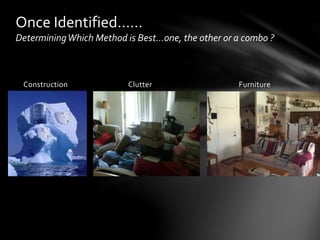
Construction Clutter Furniture
Once Identified……
DeterminingWhich Method is Best…one, the other or a combo ?
Determined by treatment method chosen
• Rule of thumb is prep for the most effective treatment
Heat is a little different than manual
• Heat is a little less intensive but not much….
Preparation
• Clear floor of clutter
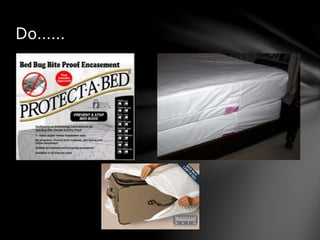
• Strip beds (box springs will be leaned against wall; ticking will be
removed)
• Wash bedding and replace after treatment
• Empty drawers, night stands, desks, etc.
• Check items for bed bugs, place in plastic bags or containers if infested and discard
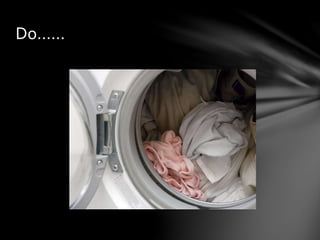
• Do the laundry…all the laundry
• Move furniture away from walls
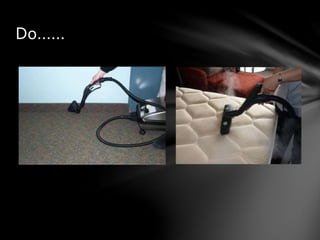
• Window treatments are inspected…if infested should be steam cleaned
• Check pet areas; launder bedding
• Remove “personal items”…if you leave them we WILL find them
ManualTreatment Prep
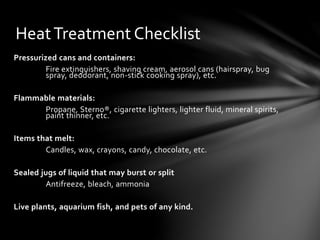
HeatTreatment Checklist
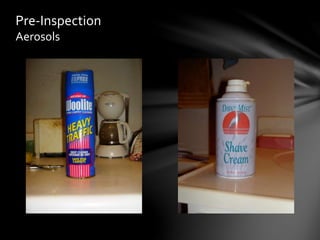
Pressurized cans and containers:
Fire extinguishers, shaving cream, aerosol cans (hairspray, bug
spray, deodorant, non-stick cooking spray), etc.
Flammable materials:
Propane, Sterno®, cigarette lighters, lighter fluid, mineral spirits,
paint thinner, etc.
Items that melt:
Candles, wax, crayons, candy, chocolate, etc.
Sealed jugs of liquid that may burst or split
Antifreeze, bleach, ammonia
Live plants, aquarium fish, and pets of any kind.
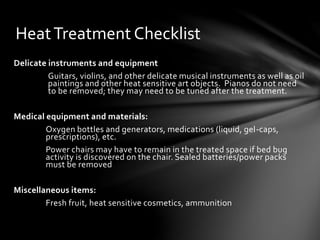
HeatTreatment Checklist
Delicate instruments and equipment
Guitars, violins, and other delicate musical instruments as well as oil
paintings and other heat sensitive art objects. Pianos do not need
to be removed; they may need to be tuned after the treatment.
Medical equipment and materials:
Oxygen bottles and generators, medications (liquid, gel-caps,
prescriptions), etc.
Power chairs may have to remain in the treated space if bed bug
activity is discovered on the chair. Sealed batteries/power packs
must be removed
Miscellaneous items:
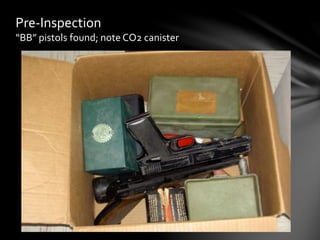
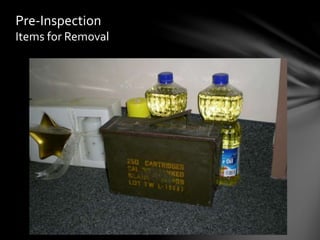
Fresh fruit, heat sensitive cosmetics, ammunition
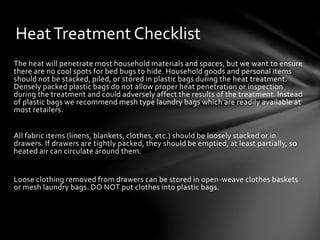
HeatTreatment Checklist
The heat will penetrate most household materials and spaces, but we want to ensure
there are no cool spots for bed bugs to hide. Household goods and personal items
should not be stacked, piled, or stored in plastic bags during the heat treatment.
Densely packed plastic bags do not allow proper heat penetration or inspection
during the treatment and could adversely affect the results of the treatment. Instead
of plastic bags we recommend mesh type laundry bags which are readily available at
most retailers.
All fabric items (linens, blankets, clothes, etc.) should be loosely stacked or in
drawers. If drawers are tightly packed, they should be emptied, at least partially, so
heated air can circulate around them.
Loose clothing removed from drawers can be stored in open-weave clothes baskets
or mesh laundry bags. DO NOT put clothes into plastic bags.
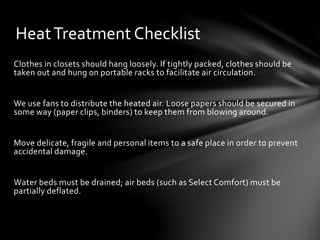
HeatTreatment Checklist
Clothes in closets should hang loosely. If tightly packed, clothes should be
taken out and hung on portable racks to facilitate air circulation.
We use fans to distribute the heated air. Loose papers should be secured in
some way (paper clips, binders) to keep them from blowing around.
Move delicate, fragile and personal items to a safe place in order to prevent
accidental damage.
Water beds must be drained; air beds (such as Select Comfort) must be
partially deflated.
Advantages
• Treatment happens quickly once prep is done
• Can be done with/without “conventional” pesticides
• DE’s (Mother Earth D), Silica Aerogel (Cimexa)
• Vacumming, steam, Cryonite
• Lower cost
Disadvantages
• Extensive prep on client’s part
• Residents must vacate
• Odors may be present shortly afterwards
ManualTreatments
What is working
• Available products seem to be working
• Some are slow; others areVERY slow
• Combination products (Temprid,Transport) seem to work well
• Still have to match the product with the substrate (old school still holds true)
• Example would be use a microcap or suspension on porous materials
• Dusts have been overlooked but shouldn’t be
• Extremely valuable tool for voids and “oddball” gaps in furniture
What we are finding out
• Bed bug behavior is different
• Tend to not rest on surfaces treated with deltamethrin but will rest upon other
pyrethroids
• Thoroughness of preparation and treatment is a priority
• Can be thought of as an “old school” cockroach treatment
ManualTreatments
Advantages
• Most items remain
• Can be done with/without “conventional” pesticides
• DE’s (Mother Earth D), Silica Aerogel (Cimexa)
• Vacumming, steam, Cryonite
• Results achieved quickly (except for those “dead bugs walkin’”)
• Eliminates all stages from egg-adult
• A little less intensive prep on client’s part
• Residents return home the same day
Disadvantages
• Residents must vacate for 6-8 hours
• Higher cost
HeatTreatments
How it works
• 80- 85 degrees F is optimum for bed bug development
• Once temps reach 112-115 heat becomes lethal after 90 min. exposure
• 118 for 20 minutes is lethal
• Doesn’t mean that bed bugs aren’t inVegas…they are!
What we’ve learned along the way
• Construction matters!
• Deep protected double voids can provide a safe haven
• Air circulation matters
• Convective air currents make heating more efficient
• Materials treated matter
• Some materials (porcelain, ceramics are very insulating)
HeatTreatment
Advantages
• Less prep than manual; more than a heat treat
• Can be done with/without “conventional” pesticides
• DE’s (Mother Earth D), Silica Aerogel (Cimexa)
• Vacumming, steam, Cryonite
• Results achieved quickly (except for those “dead bugs walkin’”)
• Eliminates all stages from egg-adult
• A little less intensive prep on client’s part
• Residents should be able to return home the same day
Disadvantages
• Residents must vacate for 6-8 hours
• Higher cost because of heat equipment involved
ComboTreatments
The Order of Business…
• Which is done first; heat or application?
• Depends on what is going to be used
• Dusts in wall voids may help intercept movement during heating
• Cannot be applied once circulation fans are in use
• Liquid residuals for crack and crevice work
• Can be done either before or after; thermal breakdown was formally a concern
but has largely been dismissed by the manufacturers
• Vacumming, steam, Cryonite
• Can be done before or after; not a good idea during
ComboTreatments
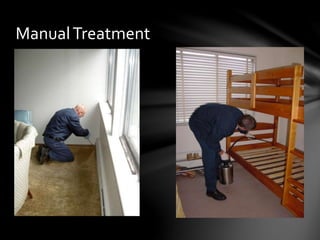
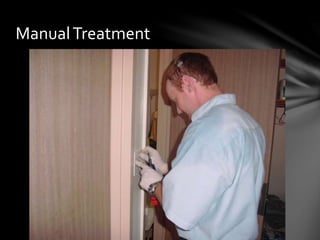
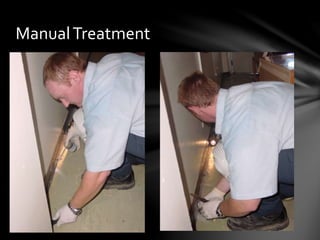
ManualTreatment
ManualTreatment
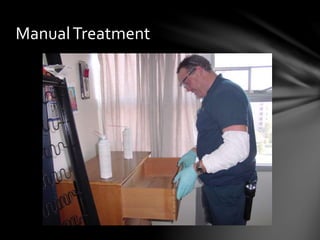
ManualTreatment
ManualTreatment
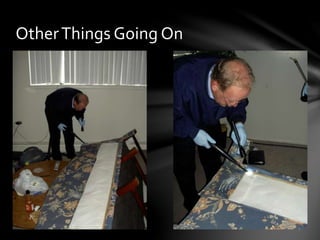
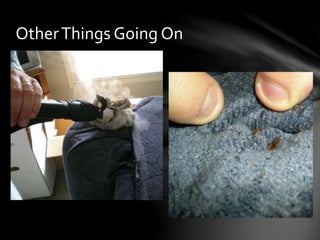
OtherThings Going On
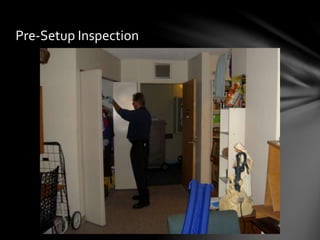
Pre-Setup Inspection
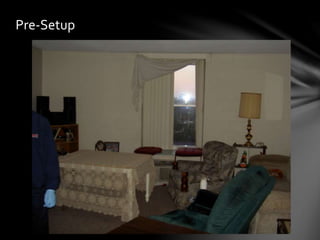
Pre-Setup
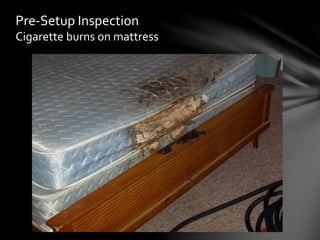
Pre-Setup Inspection
Cigarette burns on mattress
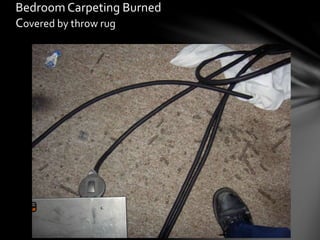
Bedroom Carpeting Burned
Covered by throw rug
Pre-Inspection
“BB” pistols found; note CO2 canister
Pre-Inspection
Aerosols
Pre-Inspection
Items for Removal
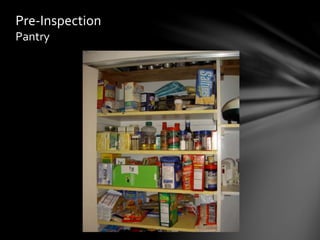
Pre-Inspection
Pantry
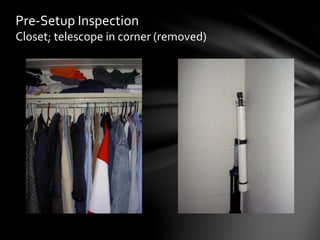
Pre-Setup Inspection
Closet; telescope in corner (removed)
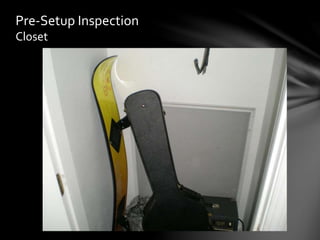
Pre-Setup Inspection
Closet
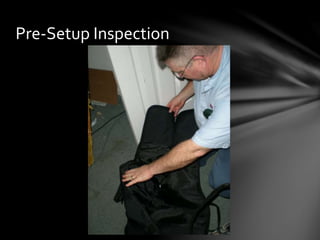
Pre-Setup Inspection
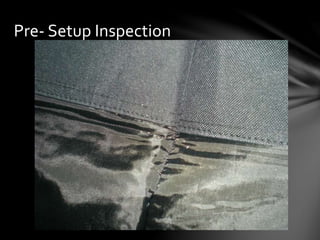
Pre- Setup Inspection
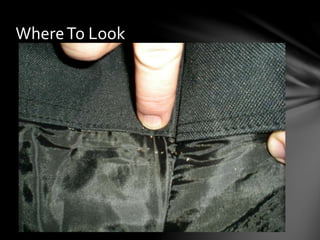
WhereTo Look
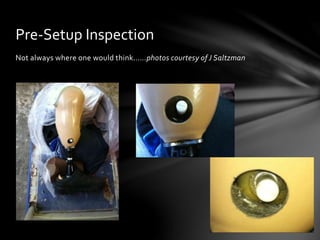
Not always where one would think……photos courtesy of J Saltzman
Pre-Setup Inspection
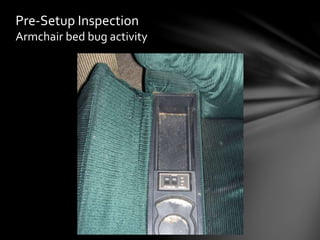
Armchair bed bug activity
Pre-Setup Inspection
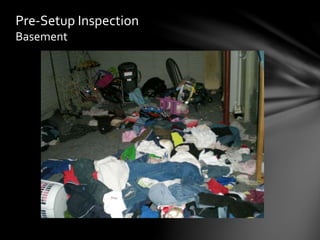
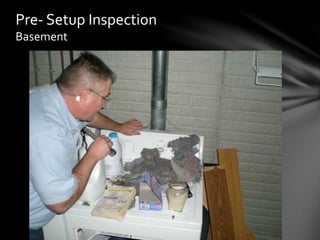
Basement
Pre- Setup Inspection
Basement
Pre- Setup Inspection
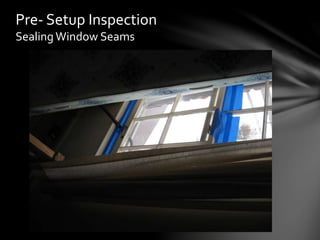
Sealing Window Seams
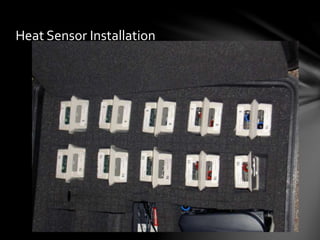
Heat Sensor Installation
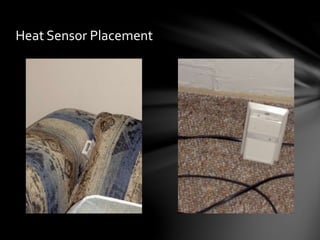
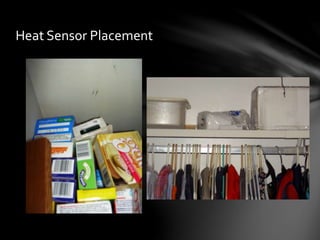
Heat Sensor Placement
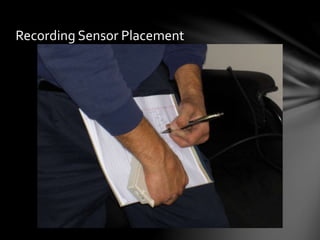
Recording Sensor Placement
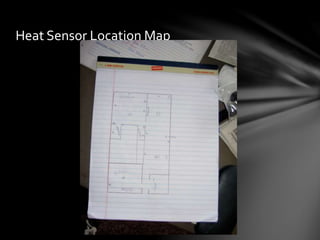
Heat Sensor Location Map
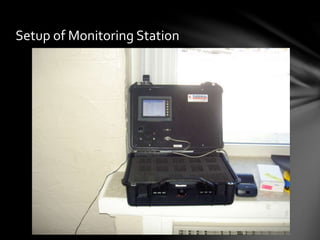
Setup of Monitoring Station
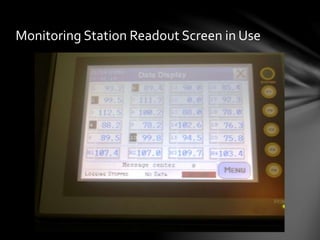
Monitoring Station Readout Screen in Use
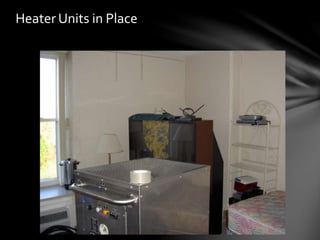
Heater Units in Place
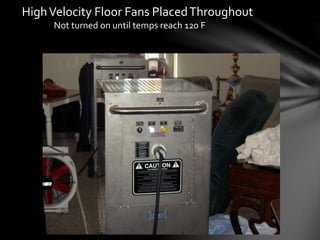
HighVelocity Floor Fans PlacedThroughout
Not turned on until temps reach 120 F
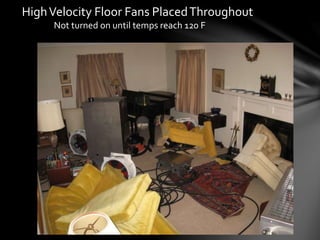
HighVelocity Floor Fans PlacedThroughout
Not turned on until temps reach 120 F
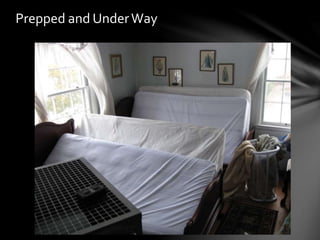
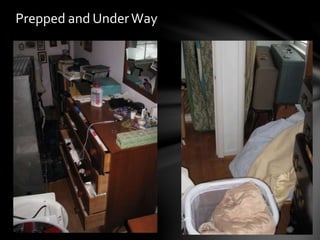
Prepped and UnderWay
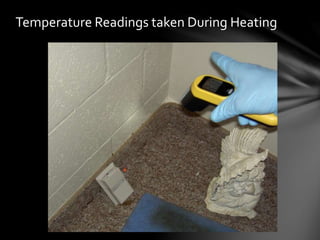
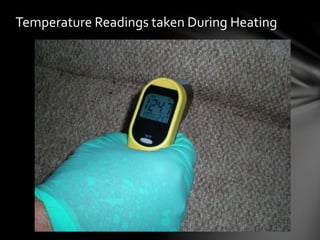
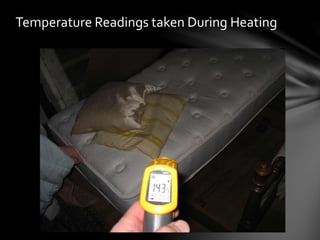
Temperature Readings taken During Heating
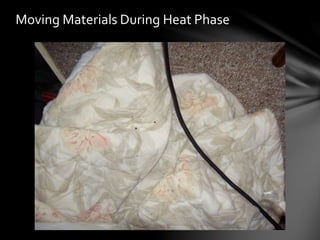
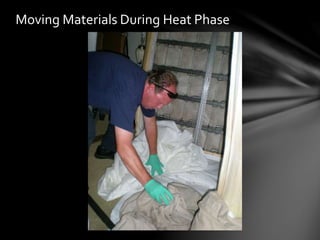
Moving Materials During Heat Phase
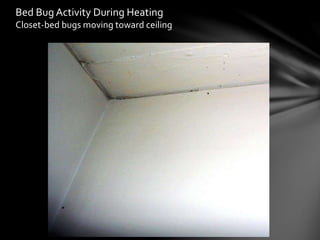
Bed Bug Activity During Heating
Closet-bed bugs moving toward ceiling
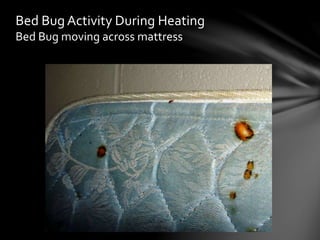
Bed Bug Activity During Heating
Bed Bug moving across mattress
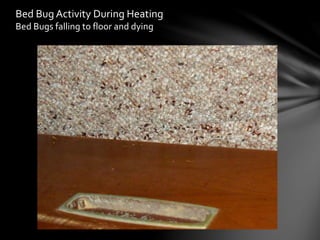
Bed Bug Activity During Heating
Bed Bugs falling to floor and dying
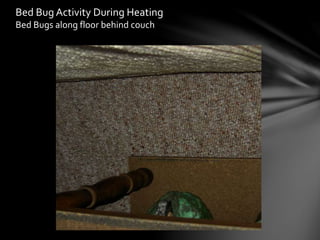
Bed Bug Activity During Heating
Bed Bugs along floor behind couch
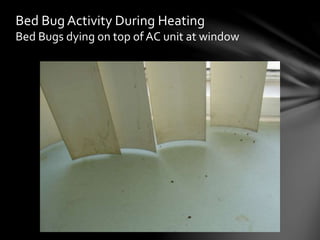
Bed Bug Activity During Heating
Bed Bugs dying on top of AC unit at window
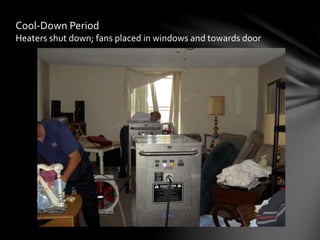
Cool-Down Period
Heaters shut down; fans placed in windows and towards door
Do……
Do……
Do……
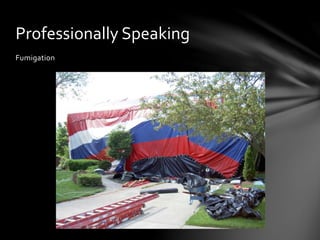
Fumigation
Professionally Speaking
Thanks !

Professional treatment options options

  • 1.
    Bed Bugs Manual andHeat Treatment Options Dale Hodgson, BCE Regional Technical Manager ROSE PEST SOLUTIONS Smarter, Safer, Faster, BETTER ! Central Ohio Bed BugTask Force October 16, 2015
  • 2.
    Manual Treatments • Whatis working • What we are finding out Heat Treatments • How they work • What we’ve learned along the way Next Steps • Should we be looking at both as a combination Objectives
  • 3.
    Bed Bugs vsBat Bugs vs…….. Chimney Swift Bugs Before Doing Anything…… Make SureYou Know ExactlyWhatYou’re Dealing With
  • 4.
    Construction Clutter Furniture OnceIdentified…… DeterminingWhich Method is Best…one, the other or a combo ?
  • 5.
    Determined by treatmentmethod chosen • Rule of thumb is prep for the most effective treatment Heat is a little different than manual • Heat is a little less intensive but not much…. Preparation
  • 6.
    • Clear floorof clutter • Strip beds (box springs will be leaned against wall; ticking will be removed) • Wash bedding and replace after treatment • Empty drawers, night stands, desks, etc. • Check items for bed bugs, place in plastic bags or containers if infested and discard • Do the laundry…all the laundry • Move furniture away from walls • Window treatments are inspected…if infested should be steam cleaned • Check pet areas; launder bedding • Remove “personal items”…if you leave them we WILL find them ManualTreatment Prep
  • 7.
    HeatTreatment Checklist Pressurized cansand containers: Fire extinguishers, shaving cream, aerosol cans (hairspray, bug spray, deodorant, non-stick cooking spray), etc. Flammable materials: Propane, Sterno®, cigarette lighters, lighter fluid, mineral spirits, paint thinner, etc. Items that melt: Candles, wax, crayons, candy, chocolate, etc. Sealed jugs of liquid that may burst or split Antifreeze, bleach, ammonia Live plants, aquarium fish, and pets of any kind.
  • 8.
    HeatTreatment Checklist Delicate instrumentsand equipment Guitars, violins, and other delicate musical instruments as well as oil paintings and other heat sensitive art objects. Pianos do not need to be removed; they may need to be tuned after the treatment. Medical equipment and materials: Oxygen bottles and generators, medications (liquid, gel-caps, prescriptions), etc. Power chairs may have to remain in the treated space if bed bug activity is discovered on the chair. Sealed batteries/power packs must be removed Miscellaneous items: Fresh fruit, heat sensitive cosmetics, ammunition
  • 9.
    HeatTreatment Checklist The heatwill penetrate most household materials and spaces, but we want to ensure there are no cool spots for bed bugs to hide. Household goods and personal items should not be stacked, piled, or stored in plastic bags during the heat treatment. Densely packed plastic bags do not allow proper heat penetration or inspection during the treatment and could adversely affect the results of the treatment. Instead of plastic bags we recommend mesh type laundry bags which are readily available at most retailers. All fabric items (linens, blankets, clothes, etc.) should be loosely stacked or in drawers. If drawers are tightly packed, they should be emptied, at least partially, so heated air can circulate around them. Loose clothing removed from drawers can be stored in open-weave clothes baskets or mesh laundry bags. DO NOT put clothes into plastic bags.
  • 10.
    HeatTreatment Checklist Clothes inclosets should hang loosely. If tightly packed, clothes should be taken out and hung on portable racks to facilitate air circulation. We use fans to distribute the heated air. Loose papers should be secured in some way (paper clips, binders) to keep them from blowing around. Move delicate, fragile and personal items to a safe place in order to prevent accidental damage. Water beds must be drained; air beds (such as Select Comfort) must be partially deflated.
  • 11.
    Advantages • Treatment happensquickly once prep is done • Can be done with/without “conventional” pesticides • DE’s (Mother Earth D), Silica Aerogel (Cimexa) • Vacumming, steam, Cryonite • Lower cost Disadvantages • Extensive prep on client’s part • Residents must vacate • Odors may be present shortly afterwards ManualTreatments
  • 12.
    What is working •Available products seem to be working • Some are slow; others areVERY slow • Combination products (Temprid,Transport) seem to work well • Still have to match the product with the substrate (old school still holds true) • Example would be use a microcap or suspension on porous materials • Dusts have been overlooked but shouldn’t be • Extremely valuable tool for voids and “oddball” gaps in furniture What we are finding out • Bed bug behavior is different • Tend to not rest on surfaces treated with deltamethrin but will rest upon other pyrethroids • Thoroughness of preparation and treatment is a priority • Can be thought of as an “old school” cockroach treatment ManualTreatments
  • 13.
    Advantages • Most itemsremain • Can be done with/without “conventional” pesticides • DE’s (Mother Earth D), Silica Aerogel (Cimexa) • Vacumming, steam, Cryonite • Results achieved quickly (except for those “dead bugs walkin’”) • Eliminates all stages from egg-adult • A little less intensive prep on client’s part • Residents return home the same day Disadvantages • Residents must vacate for 6-8 hours • Higher cost HeatTreatments
  • 14.
    How it works •80- 85 degrees F is optimum for bed bug development • Once temps reach 112-115 heat becomes lethal after 90 min. exposure • 118 for 20 minutes is lethal • Doesn’t mean that bed bugs aren’t inVegas…they are! What we’ve learned along the way • Construction matters! • Deep protected double voids can provide a safe haven • Air circulation matters • Convective air currents make heating more efficient • Materials treated matter • Some materials (porcelain, ceramics are very insulating) HeatTreatment
  • 15.
    Advantages • Less prepthan manual; more than a heat treat • Can be done with/without “conventional” pesticides • DE’s (Mother Earth D), Silica Aerogel (Cimexa) • Vacumming, steam, Cryonite • Results achieved quickly (except for those “dead bugs walkin’”) • Eliminates all stages from egg-adult • A little less intensive prep on client’s part • Residents should be able to return home the same day Disadvantages • Residents must vacate for 6-8 hours • Higher cost because of heat equipment involved ComboTreatments
  • 16.
    The Order ofBusiness… • Which is done first; heat or application? • Depends on what is going to be used • Dusts in wall voids may help intercept movement during heating • Cannot be applied once circulation fans are in use • Liquid residuals for crack and crevice work • Can be done either before or after; thermal breakdown was formally a concern but has largely been dismissed by the manufacturers • Vacumming, steam, Cryonite • Can be done before or after; not a good idea during ComboTreatments
  • 17.
  • 18.
  • 19.
  • 20.
  • 21.
  • 22.
  • 23.
  • 24.
  • 25.
  • 26.
  • 27.
  • 28.
  • 29.
  • 30.
  • 31.
  • 32.
  • 33.
  • 34.
  • 35.
  • 36.
    Not always whereone would think……photos courtesy of J Saltzman Pre-Setup Inspection
  • 37.
  • 38.
  • 39.
  • 40.
  • 41.
  • 42.
  • 43.
  • 44.
  • 45.
  • 46.
  • 47.
  • 48.
  • 49.
    HighVelocity Floor FansPlacedThroughout Not turned on until temps reach 120 F
  • 50.
    HighVelocity Floor FansPlacedThroughout Not turned on until temps reach 120 F
  • 51.
  • 52.
  • 53.
  • 54.
  • 55.
  • 56.
  • 57.
  • 58.
    Bed Bug ActivityDuring Heating Closet-bed bugs moving toward ceiling
  • 59.
    Bed Bug ActivityDuring Heating Bed Bug moving across mattress
  • 60.
    Bed Bug ActivityDuring Heating Bed Bugs falling to floor and dying
  • 61.
    Bed Bug ActivityDuring Heating Bed Bugs along floor behind couch
  • 62.
    Bed Bug ActivityDuring Heating Bed Bugs dying on top of AC unit at window
  • 63.
    Cool-Down Period Heaters shutdown; fans placed in windows and towards door
  • 64.
  • 65.
  • 66.
  • 67.
  • 68.