Professional Ethics
Chapter 1 – Human Values
The primary most important human knowledge
Objectives
• The objectives of this course on 'Professional Ethics and Human Values'
are:
• to understand the moral values that ought to guide the Engineering
profession,
• resolve the moral issues in the profession, and
• justify the moral judgment concerning the profession.
Morals
• Moral is defined as a principle that governs right and wrong or concerned
with the principles or rules of right conduct or the distinction between right
and wrong; ethical: moral attitudes., expressing or conveying truths or
counsel as to right conduct, as a speaker or a literary work.
Values
• Value is the regard that something is held to deserve; the importance, worth,
or usefulness of something or a person's principles or standards of
behavior; one's judgment of what is important in life.
•
Ethics
• Ethics or moral philosophy is a branch of philosophy that involves
systematizing, defending, and recommending concepts of right and wrong
conduct. Ethics seeks to resolve questions of human morality by defining
concepts such as good and evil, right and wrong, virtue and vice, justice and
crime. As a field of intellectual enquiry, moral philosophy also is related to
the fields of moral psychology, descriptive ethics, and value theory.
Integrity
• Integrity is the qualifications of being honest and having strong moral
principles; moral uprightness. It is generally a personal choice to hold oneself
to consistent moral and ethical standards. In ethics, integrity is regarded by
many as the honesty and truthfulness or accuracy of one's actions. Integrity
can stand in opposition to hypocrisy, in that judging with the standards of
integrity involves regarding internal consistency as a virtue,
Work ethics
• Work ethic is a belief that work, hard work and diligence has a moral benefit
and an inherent ability, virtue or value to strengthen character. It is about
prioritizing work and putting it in the center of life. Factors that demonstrate
a Strong Work Ethic are Integrity ,Sense of Responsibility, Emphasis on
Quality ,Discipline ,Sense of Teamwork etc.
Service learning
• Service learning is a teaching and learning strategy that integrates meaningful
community service with instruction and reflection to enrich the learning
experience, teach civic responsibility, and strengthen communities.Service-
learning provides students with opportunities to develop civic engagement
skills. By working with community members, students can enhance their
group, organizational and interpersonal skills. They also can gain important
experience working with diverse members of their communities.
Virtues
• A virtue is a trait or quality that is deemed to be morally good and thus is
valued as a foundation of principle and good moral being. Personal virtues
are characteristics valued as promoting collective and individual greatness.
Respect for others
• Respect is an overall evaluation you give someone based on many factors –
what that person is doing with their life, how they treat you and others,
whether they are honest or not and if they seem to consistently do good
things, large or small, for other people.
Living peacefully
• Living in peace is about living harmoniously with yourself, others, and all
sentient beings around you. Living in peace is both an outward and an
inward process. Outwardly, living in peace is a way of life in which we
respect and love each other in spite of our cultural, religious, and political
differences. Inwardly, we all need to search our hearts and minds and
understand the fear that causes the impulse to violence, for in continuing to
ignore the rage within, the storm outside will never subside.
Caring
• displaying kindness and concern for others.
• the work or practice of looking after those unable to care for themselves,
especially sick and elderly people.
Sharing
• Sharing is the joint use of a resource or space. In its narrow sense, it refers to
joint or alternating use of inherently finite goods, such as a common pasture
or a shared residence. It is also the process of dividing and distributing.
Honesty
• Honesty refers to a facet of moral character and connotes positive and
virtuous attributes such as integrity, truthfulness, straightforwardness,
including straightforwardness of conduct, along with the absence of lying,
cheating, theft, etc. Honesty also involves being trustworthy, loyal, fair, and
sincere. Honesty is valued in many ethnic and religious cultures
Courage
• Courage (also called bravery or valor) is the choice and willingness to
confront agony, pain, danger, uncertainty, or intimidation. Physical courage is
bravery in the face of physical pain, hardship, death or threat of death, while
moral courage is the ability to act rightly in the face of popular opposition,
shame, scandal, discouragement, or personal loss.
Valuing time
• Time is More Valuable than Money. But, they don't look at their time the
same way, and end up wasting this incredibly valuable resource. In fact, time
is much more valuable than money because you can use your time to make
money, but you can't use money to purchase more time. Time management
helps you make conscious choices, so you can spend more of your time
doing things that are important and valuable to you.
Cooperation
• Cooperation (sometimes written as co-operation) is the process of groups of
organisms working or acting together for common or mutual benefit, as
opposed to working in competition for selfish benefit. It rests on four
functional variables: 1) flexibility or the ability to adapt to other people's
needs; 2) consideration or the willingness to take other people's opinions and
feelings into account; 3) exchange of information; and 4) joint problem
resolution.
Commitment
• an act of committing to a charge or trust
• an agreement or pledge to do something in the future
• Commitment is a strong belief in an idea or system.
Empathy
• Empathy is the capacity to understand or feel what another person is
experiencing from within the other person's frame of reference
• empathy involves being tenderhearted toward another person
Self-confidence
• self-confidence is commonly used as self-assurance in one's personal
judgment, ability, power, etc. One increases self-confidence from experiences
of having mastered particular activities .It is a positive belief that in the
future one can generally accomplish what one wishes to do. Self-confidence
is not the same as self-esteem, which is an evaluation of one’s own worth,
whereas self-confidence is more specifically trust in one’s ability to achieve
some goal.
Challenges in the work place
• Communication
• Staying Engaged and Motivated
• Project Management and Organization
• Staff Attitudes and Hierarchy/Bureaucracy
• Dealing with Change
• Countering Negativity - Morale
• Ability to be Creative
Challenges in the work place
• Difficult Clients or Patrons
• Problem Solving
• New Skills and Professional Development
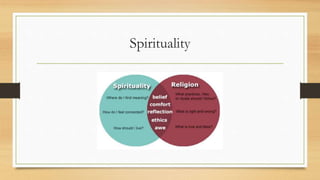
Spirituality
• Spirituality is a broad concept with room for many perspectives. In general, it
includes a sense of connection to something bigger than ourselves, and it
typically involves a search for meaning in life. As such, it is a universal human
experience—something that touches us all.
Spirituality
•Thank you

Professional ethics

  • 1.
    Professional Ethics Chapter 1– Human Values The primary most important human knowledge
  • 2.
    Objectives • The objectivesof this course on 'Professional Ethics and Human Values' are: • to understand the moral values that ought to guide the Engineering profession, • resolve the moral issues in the profession, and • justify the moral judgment concerning the profession.
  • 4.
    Morals • Moral isdefined as a principle that governs right and wrong or concerned with the principles or rules of right conduct or the distinction between right and wrong; ethical: moral attitudes., expressing or conveying truths or counsel as to right conduct, as a speaker or a literary work.
  • 5.
    Values • Value isthe regard that something is held to deserve; the importance, worth, or usefulness of something or a person's principles or standards of behavior; one's judgment of what is important in life. •
  • 6.
    Ethics • Ethics ormoral philosophy is a branch of philosophy that involves systematizing, defending, and recommending concepts of right and wrong conduct. Ethics seeks to resolve questions of human morality by defining concepts such as good and evil, right and wrong, virtue and vice, justice and crime. As a field of intellectual enquiry, moral philosophy also is related to the fields of moral psychology, descriptive ethics, and value theory.
  • 7.
    Integrity • Integrity isthe qualifications of being honest and having strong moral principles; moral uprightness. It is generally a personal choice to hold oneself to consistent moral and ethical standards. In ethics, integrity is regarded by many as the honesty and truthfulness or accuracy of one's actions. Integrity can stand in opposition to hypocrisy, in that judging with the standards of integrity involves regarding internal consistency as a virtue,
  • 8.
    Work ethics • Workethic is a belief that work, hard work and diligence has a moral benefit and an inherent ability, virtue or value to strengthen character. It is about prioritizing work and putting it in the center of life. Factors that demonstrate a Strong Work Ethic are Integrity ,Sense of Responsibility, Emphasis on Quality ,Discipline ,Sense of Teamwork etc.
  • 9.
    Service learning • Servicelearning is a teaching and learning strategy that integrates meaningful community service with instruction and reflection to enrich the learning experience, teach civic responsibility, and strengthen communities.Service- learning provides students with opportunities to develop civic engagement skills. By working with community members, students can enhance their group, organizational and interpersonal skills. They also can gain important experience working with diverse members of their communities.
  • 10.
    Virtues • A virtueis a trait or quality that is deemed to be morally good and thus is valued as a foundation of principle and good moral being. Personal virtues are characteristics valued as promoting collective and individual greatness.
  • 11.
    Respect for others •Respect is an overall evaluation you give someone based on many factors – what that person is doing with their life, how they treat you and others, whether they are honest or not and if they seem to consistently do good things, large or small, for other people.
  • 12.
    Living peacefully • Livingin peace is about living harmoniously with yourself, others, and all sentient beings around you. Living in peace is both an outward and an inward process. Outwardly, living in peace is a way of life in which we respect and love each other in spite of our cultural, religious, and political differences. Inwardly, we all need to search our hearts and minds and understand the fear that causes the impulse to violence, for in continuing to ignore the rage within, the storm outside will never subside.
  • 13.
    Caring • displaying kindnessand concern for others. • the work or practice of looking after those unable to care for themselves, especially sick and elderly people.
  • 14.
    Sharing • Sharing isthe joint use of a resource or space. In its narrow sense, it refers to joint or alternating use of inherently finite goods, such as a common pasture or a shared residence. It is also the process of dividing and distributing.
  • 15.
    Honesty • Honesty refersto a facet of moral character and connotes positive and virtuous attributes such as integrity, truthfulness, straightforwardness, including straightforwardness of conduct, along with the absence of lying, cheating, theft, etc. Honesty also involves being trustworthy, loyal, fair, and sincere. Honesty is valued in many ethnic and religious cultures
  • 16.
    Courage • Courage (alsocalled bravery or valor) is the choice and willingness to confront agony, pain, danger, uncertainty, or intimidation. Physical courage is bravery in the face of physical pain, hardship, death or threat of death, while moral courage is the ability to act rightly in the face of popular opposition, shame, scandal, discouragement, or personal loss.
  • 17.
    Valuing time • Timeis More Valuable than Money. But, they don't look at their time the same way, and end up wasting this incredibly valuable resource. In fact, time is much more valuable than money because you can use your time to make money, but you can't use money to purchase more time. Time management helps you make conscious choices, so you can spend more of your time doing things that are important and valuable to you.
  • 18.
    Cooperation • Cooperation (sometimeswritten as co-operation) is the process of groups of organisms working or acting together for common or mutual benefit, as opposed to working in competition for selfish benefit. It rests on four functional variables: 1) flexibility or the ability to adapt to other people's needs; 2) consideration or the willingness to take other people's opinions and feelings into account; 3) exchange of information; and 4) joint problem resolution.
  • 19.
    Commitment • an actof committing to a charge or trust • an agreement or pledge to do something in the future • Commitment is a strong belief in an idea or system.
  • 20.
    Empathy • Empathy isthe capacity to understand or feel what another person is experiencing from within the other person's frame of reference • empathy involves being tenderhearted toward another person
  • 21.
    Self-confidence • self-confidence iscommonly used as self-assurance in one's personal judgment, ability, power, etc. One increases self-confidence from experiences of having mastered particular activities .It is a positive belief that in the future one can generally accomplish what one wishes to do. Self-confidence is not the same as self-esteem, which is an evaluation of one’s own worth, whereas self-confidence is more specifically trust in one’s ability to achieve some goal.
  • 22.
    Challenges in thework place • Communication • Staying Engaged and Motivated • Project Management and Organization • Staff Attitudes and Hierarchy/Bureaucracy • Dealing with Change • Countering Negativity - Morale • Ability to be Creative
  • 23.
    Challenges in thework place • Difficult Clients or Patrons • Problem Solving • New Skills and Professional Development
  • 24.
    Spirituality • Spirituality isa broad concept with room for many perspectives. In general, it includes a sense of connection to something bigger than ourselves, and it typically involves a search for meaning in life. As such, it is a universal human experience—something that touches us all.
  • 25.
  • 26.