Types, Characteristics,
and Identification of
Gifted and Talented
Learners
DEFINITIONS OF
GIFTEDNESS
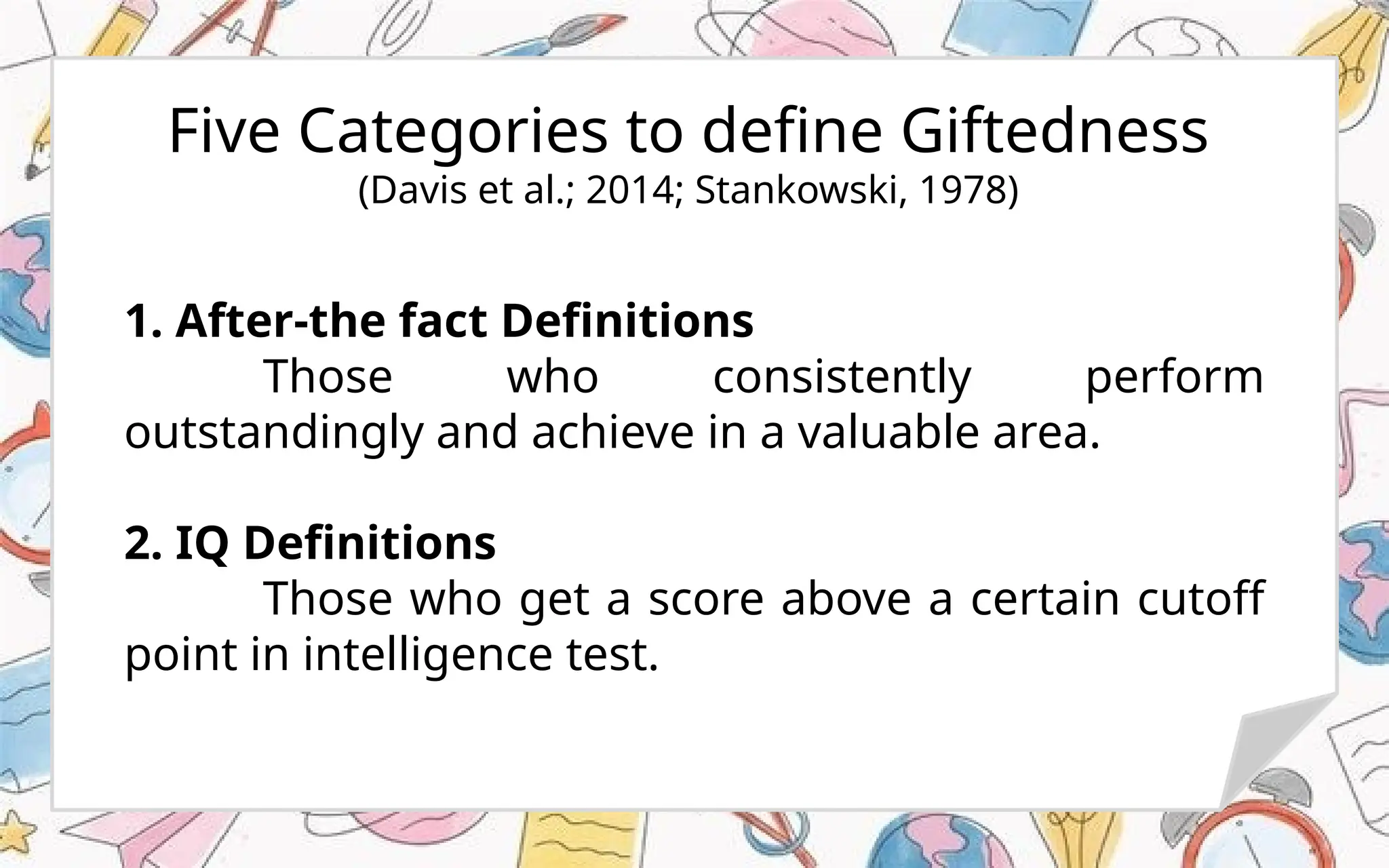
Five Categories to define Giftedness
(Davis et al.; 2014; Stankowski, 1978)
1. After-the fact Definitions
Those who consistently perform
outstandingly and achieve in a valuable area.
2. IQ Definitions
Those who get a score above a certain cutoff
point in intelligence test.
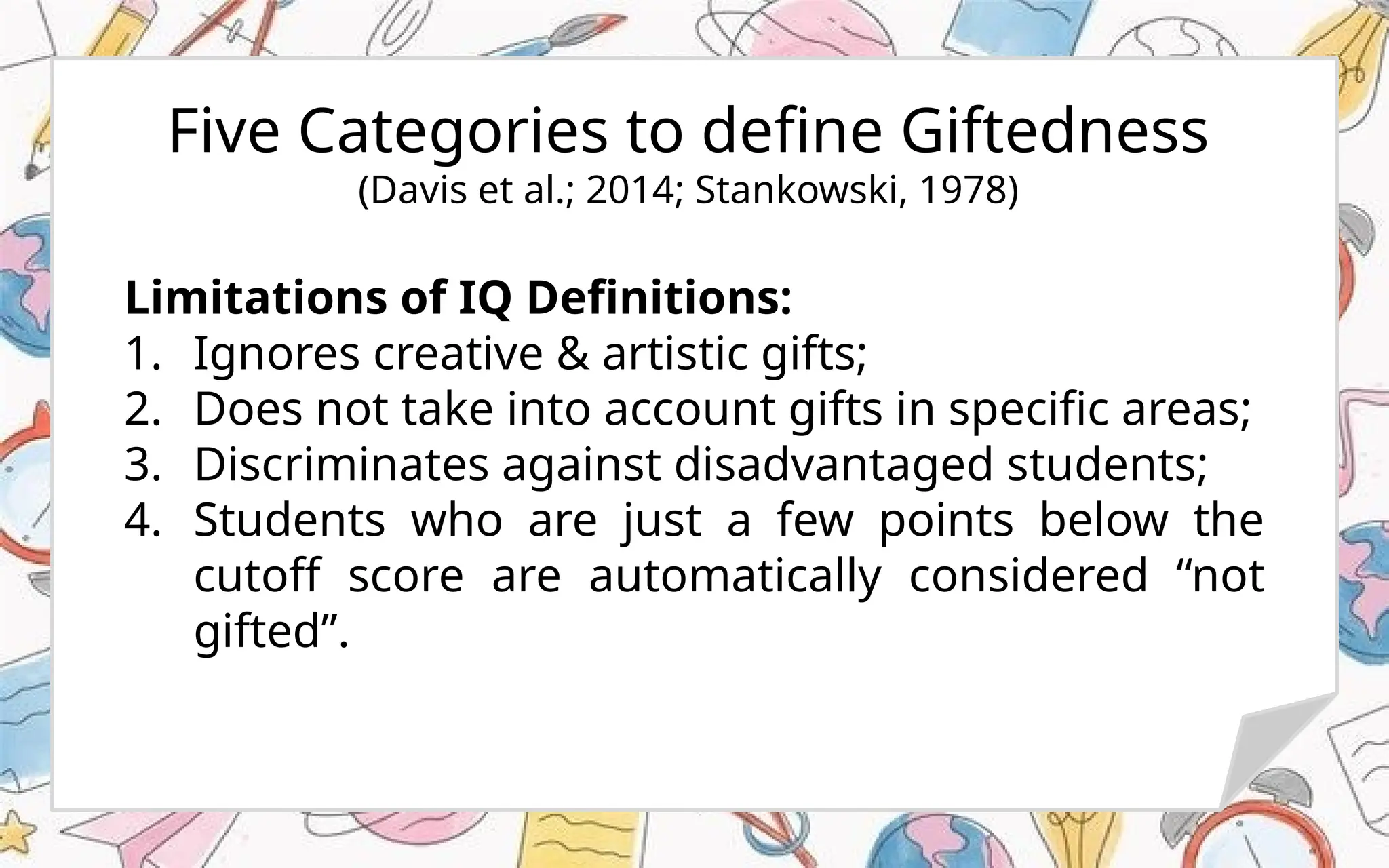
Five Categories to define Giftedness
(Davis et al.; 2014; Stankowski, 1978)
Limitations of IQ Definitions:
1. Ignores creative & artistic gifts;
2. Does not take into account gifts in specific areas;
3. Discriminates against disadvantaged students;
4. Students who are just a few points below the
cutoff score are automatically considered “not
gifted”.
Five Categories to define Giftedness
(Davis et al.; 2014; Stankowski, 1978)
3. Percentage Definitions
Those who belong to a fixed proportion that a
school or district sets.
4. Talent Definitions
Those who excel in specific aesthetics or
academic area/s.
5. Creativity Definitions
Those who possess superior creative abilities.
IMPORTANCE OF
RECOGNIZING
GIFTED
LEARNERS
It is important to
determine gifted
learners as failure to
do so could have
deleterious
consequences.
Consequences such as:
Demotivation
Frustrations
Embarrassing questions
Impatience
Intolerant of imperfection
Sensitivity towards criticism
Acting out & Monopolization
Boredom
CHARACTERISTICS
OF GIFTED
LEARNERS
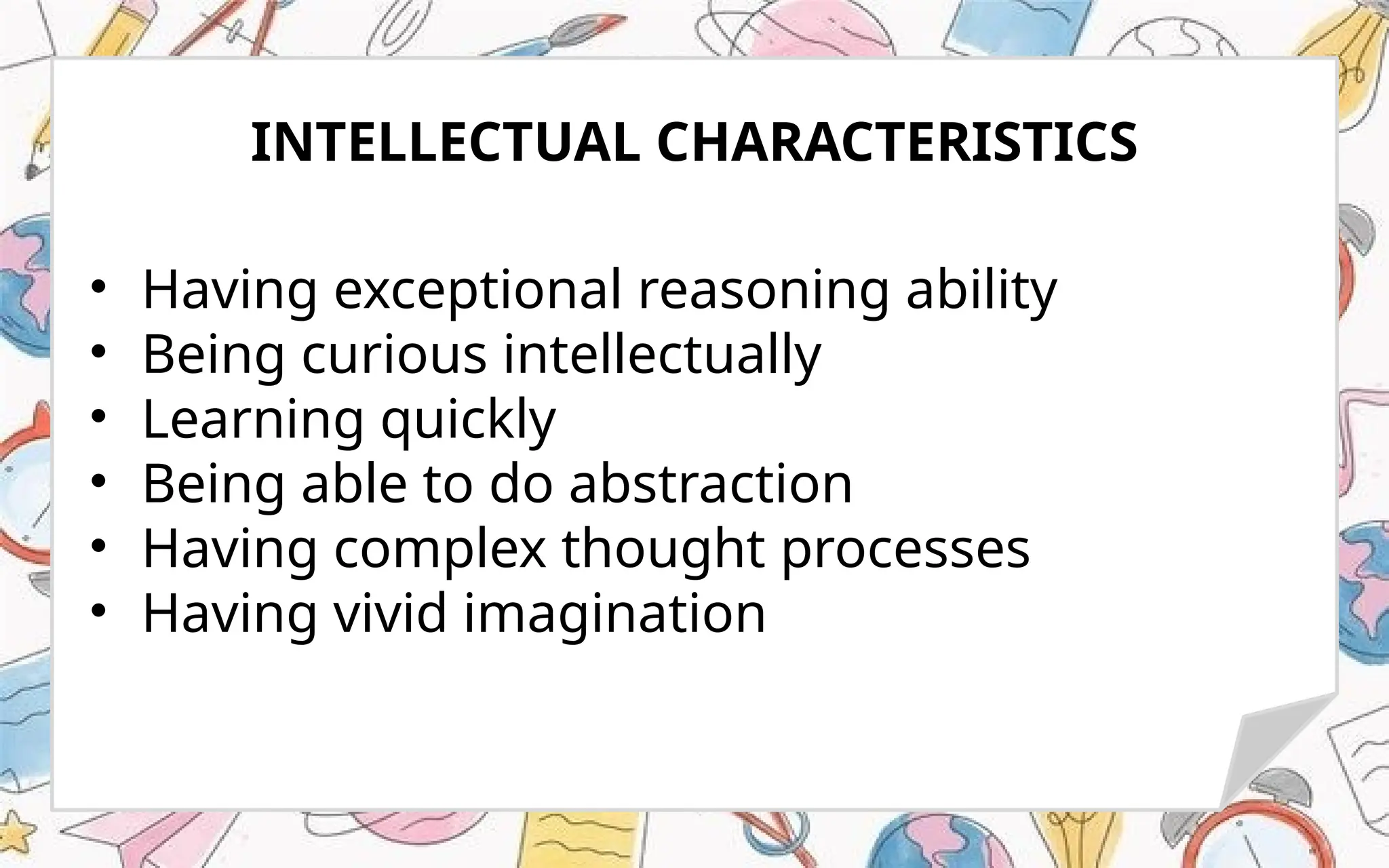
• Having exceptional reasoning ability
• Being curious intellectually
• Learning quickly
• Being able to do abstraction
• Having complex thought processes
• Having vivid imagination
INTELLECTUAL CHARACTERISTICS
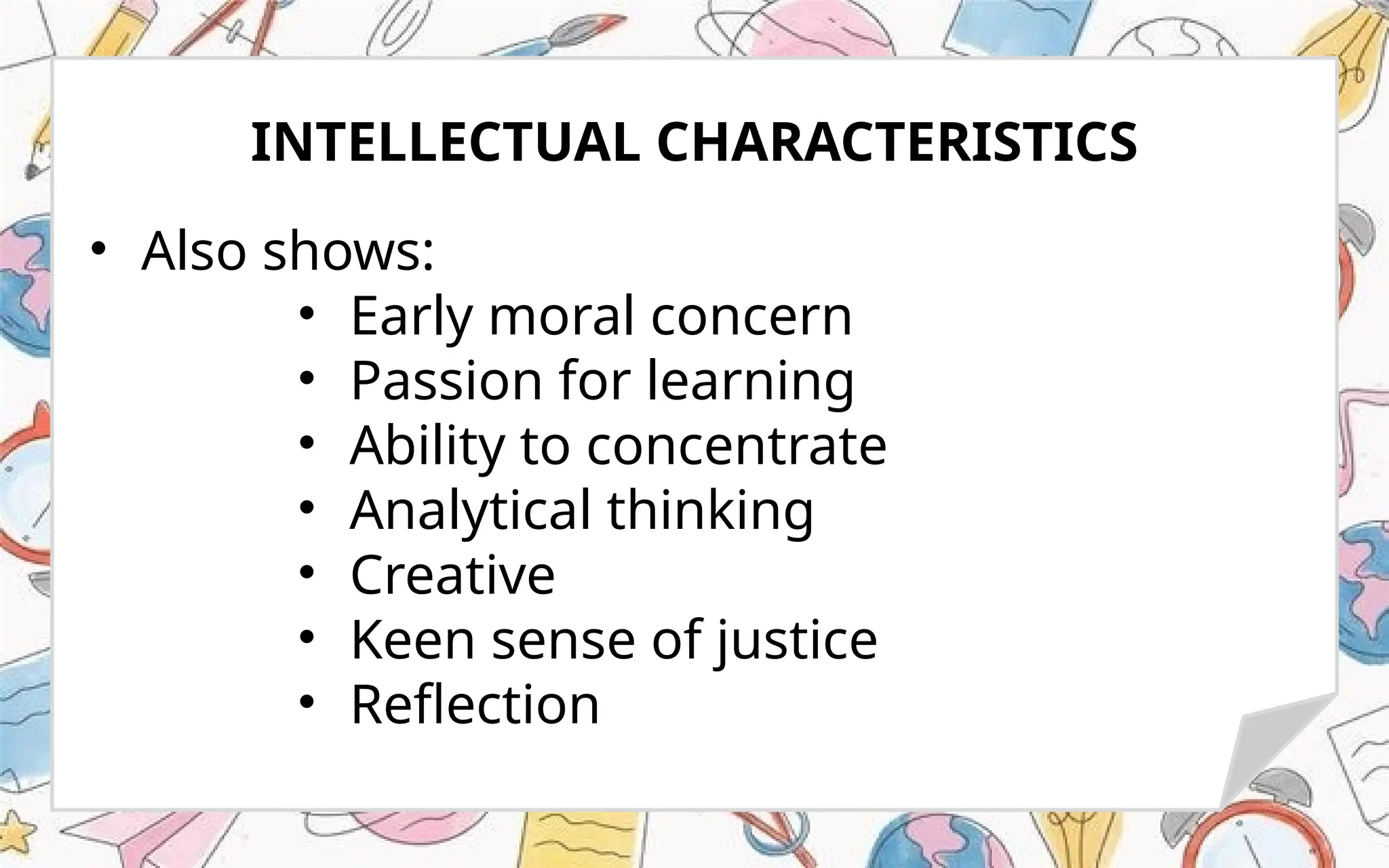
• Also shows:
• Early moral concern
• Passion for learning
• Ability to concentrate
• Analytical thinking
• Creative
• Keen sense of justice
• Reflection
INTELLECTUAL CHARACTERISTICS
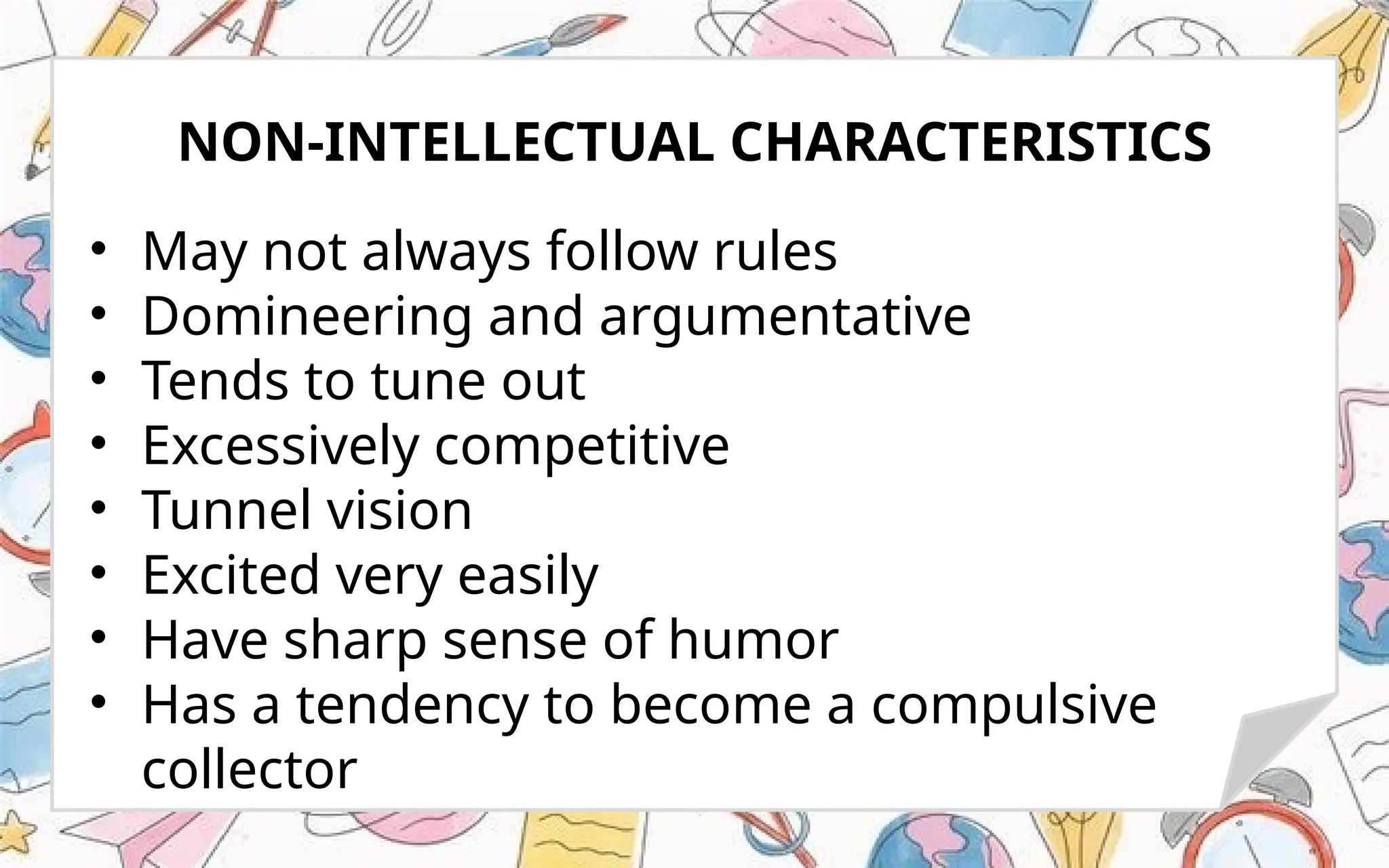
• May not always follow rules
• Domineering and argumentative
• Tends to tune out
• Excessively competitive
• Tunnel vision
• Excited very easily
• Have sharp sense of humor
• Has a tendency to become a compulsive
collector
NON-INTELLECTUAL CHARACTERISTICS
• Learner is insightful
• Has a strong need to understand and be
stimulated mentally
• Possibility towards perfectionism
• High need for precision and logic
• Excellent sense of humor and sensitivity
toward others
• Show intensity, perseverance and self-
awareness
PERSONALITY CHARACTERISTICS
PROFILES OF
GIFTED
LEARNERS
This learner is a convergent thinker who
learns easily and excels in exams, eager to gain
approval of parents and teachers and to be
liked by peers.
They also possess positive self-concept
but is unaware of deficiencies.
TYPE I : THE SUCCESSFUL
This learner is divergently gifted. However,
it can be challenging when the learner’s needs
are not meet. Due to the little recognition this
type of learner receives, one usually
experiences self-esteem issues and is at a high
risk for eventually drop out from school.
TYPE II : THE CREATIVE
Due to social pressure, this learner may
hide giftedness in order to fit in with non-gifted
peer groups. This could lead to sudden decline
in grades, and this learner may experience
conflict between one’s needs and the
expectations of one’s parents and teachers.
TYPE III : THE UNDERGROUND
The giftedness needs of this learner have
not been met, resulting to defensiveness and
anger toward adults or oneself. This could lead
to symptoms of depression and withdrawal as
well as acting out.
TYPE IV : THE AT-RISK
This leaner usually develops interests that
are outside of the school’s regular curriculum
and has a poor self-concept.
TYPE IV : THE AT-RISK
The learner possesses giftedness at the
same time as being physically challenged.
Because of learning abilities or poor verbal
abilities, this learner is not typically identified as
gifted.
TYPE V : TWICE EXCEPTIONAL
This leaner adapt easily to the school
system and is able to create oneself new
opportunities.
This has positive self-concept and receives
positive attention and support for one’s
accomplishments.
TYPE VI : THE AUTONOMOUS LEARNER
Moreover, this learner receives positive
regard from adults and peers, and is often put
at a leadership roles.
This learner is independent and self-
direct.
TYPE VI : THE AUTONOMOUS LEARNER
TYPICAL AND
ATYPICAL
DEVELOPMENT
Developmental milestones for typical
development provide a very useful anchor to
which teachers and parents can compare a
child’s development with.
It has the following areas: cognition,
language, motor coordination, social
interaction, and adaptive development.

PROF-ED-Gifted and Talented Learners.pptx

  • 1.
    Types, Characteristics, and Identificationof Gifted and Talented Learners
  • 2.
  • 3.
    Five Categories todefine Giftedness (Davis et al.; 2014; Stankowski, 1978) 1. After-the fact Definitions Those who consistently perform outstandingly and achieve in a valuable area. 2. IQ Definitions Those who get a score above a certain cutoff point in intelligence test.
  • 4.
    Five Categories todefine Giftedness (Davis et al.; 2014; Stankowski, 1978) Limitations of IQ Definitions: 1. Ignores creative & artistic gifts; 2. Does not take into account gifts in specific areas; 3. Discriminates against disadvantaged students; 4. Students who are just a few points below the cutoff score are automatically considered “not gifted”.
  • 5.
    Five Categories todefine Giftedness (Davis et al.; 2014; Stankowski, 1978) 3. Percentage Definitions Those who belong to a fixed proportion that a school or district sets. 4. Talent Definitions Those who excel in specific aesthetics or academic area/s. 5. Creativity Definitions Those who possess superior creative abilities.
  • 6.
  • 7.
    It is importantto determine gifted learners as failure to do so could have deleterious consequences.
  • 8.
    Consequences such as: Demotivation Frustrations Embarrassingquestions Impatience Intolerant of imperfection Sensitivity towards criticism Acting out & Monopolization Boredom
  • 9.
  • 10.
    • Having exceptionalreasoning ability • Being curious intellectually • Learning quickly • Being able to do abstraction • Having complex thought processes • Having vivid imagination INTELLECTUAL CHARACTERISTICS
  • 11.
    • Also shows: •Early moral concern • Passion for learning • Ability to concentrate • Analytical thinking • Creative • Keen sense of justice • Reflection INTELLECTUAL CHARACTERISTICS
  • 12.
    • May notalways follow rules • Domineering and argumentative • Tends to tune out • Excessively competitive • Tunnel vision • Excited very easily • Have sharp sense of humor • Has a tendency to become a compulsive collector NON-INTELLECTUAL CHARACTERISTICS
  • 13.
    • Learner isinsightful • Has a strong need to understand and be stimulated mentally • Possibility towards perfectionism • High need for precision and logic • Excellent sense of humor and sensitivity toward others • Show intensity, perseverance and self- awareness PERSONALITY CHARACTERISTICS
  • 14.
  • 15.
    This learner isa convergent thinker who learns easily and excels in exams, eager to gain approval of parents and teachers and to be liked by peers. They also possess positive self-concept but is unaware of deficiencies. TYPE I : THE SUCCESSFUL
  • 16.
    This learner isdivergently gifted. However, it can be challenging when the learner’s needs are not meet. Due to the little recognition this type of learner receives, one usually experiences self-esteem issues and is at a high risk for eventually drop out from school. TYPE II : THE CREATIVE
  • 17.
    Due to socialpressure, this learner may hide giftedness in order to fit in with non-gifted peer groups. This could lead to sudden decline in grades, and this learner may experience conflict between one’s needs and the expectations of one’s parents and teachers. TYPE III : THE UNDERGROUND
  • 18.
    The giftedness needsof this learner have not been met, resulting to defensiveness and anger toward adults or oneself. This could lead to symptoms of depression and withdrawal as well as acting out. TYPE IV : THE AT-RISK
  • 19.
    This leaner usuallydevelops interests that are outside of the school’s regular curriculum and has a poor self-concept. TYPE IV : THE AT-RISK
  • 20.
    The learner possessesgiftedness at the same time as being physically challenged. Because of learning abilities or poor verbal abilities, this learner is not typically identified as gifted. TYPE V : TWICE EXCEPTIONAL
  • 21.
    This leaner adapteasily to the school system and is able to create oneself new opportunities. This has positive self-concept and receives positive attention and support for one’s accomplishments. TYPE VI : THE AUTONOMOUS LEARNER
  • 22.
    Moreover, this learnerreceives positive regard from adults and peers, and is often put at a leadership roles. This learner is independent and self- direct. TYPE VI : THE AUTONOMOUS LEARNER
  • 23.
  • 24.
    Developmental milestones fortypical development provide a very useful anchor to which teachers and parents can compare a child’s development with. It has the following areas: cognition, language, motor coordination, social interaction, and adaptive development.