GNS Science
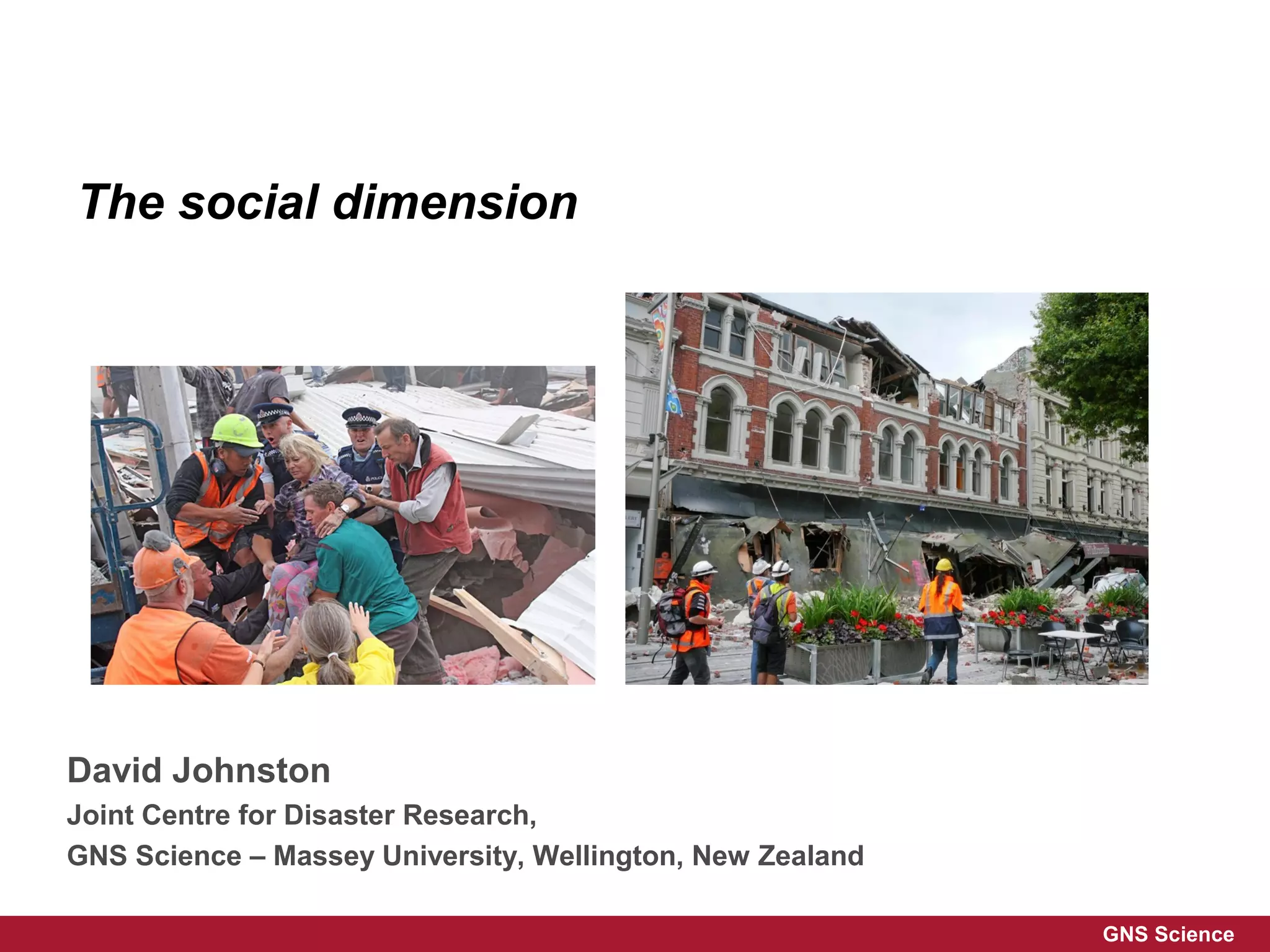
The social dimension
David Johnston
Joint Centre for Disaster Research,
GNS Science – Massey University, Wellington, New Zealand
GNS Science
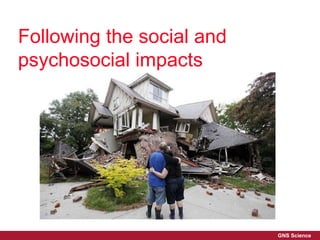
Following the social and
psychosocial impacts
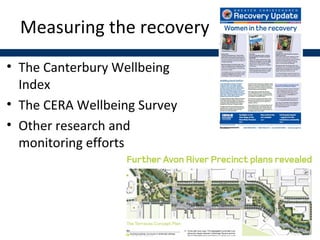
Measuring the recovery
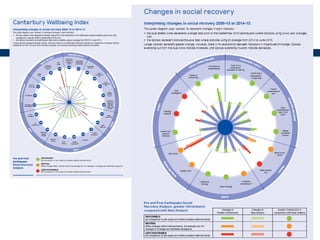
• The Canterbury Wellbeing
Index
• The CERA Wellbeing Survey
• Other research and
monitoring efforts
CERA Wellbeing Survey
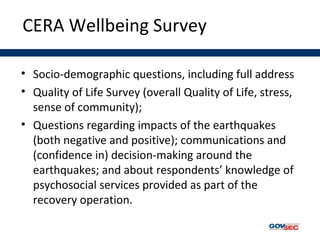
• Socio-demographic questions, including full address
• Quality of Life Survey (overall Quality of Life, stress,
sense of community);
• Questions regarding impacts of the earthquakes
(both negative and positive); communications and
(confidence in) decision-making around the
earthquakes; and about respondents’ knowledge of
psychosocial services provided as part of the
recovery operation.
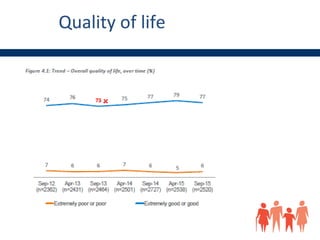
Quality of life
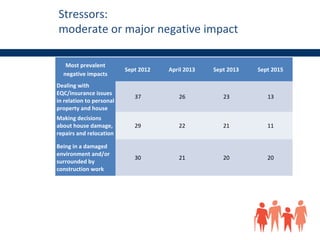
Stressors:
moderate or major negative impact
Most prevalent
negative impacts
Sept 2012 April 2013 Sept 2013 Sept 2015
Dealing with
EQC/insurance issues
in relation to personal
property and house
37 26 23 13
Making decisions
about house damage,
repairs and relocation
29 22 21 11
Being in a damaged
environment and/or
surrounded by
construction work
30 21 20 20
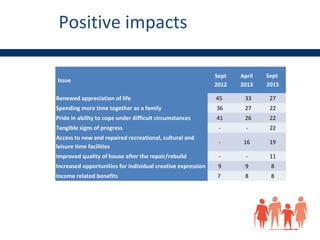
Positive impacts
Issue
Sept
2012
April
2013
Sept
2015
Renewed appreciation of life 45 33 27
Spending more time together as a family 36 27 22
Pride in ability to cope under difficult circumstances 41 26 22
Tangible signs of progress - - 22
Access to new and repaired recreational, cultural and
leisure time facilities
- 16 19
Improved quality of house after the repair/rebuild - - 11
Increased opportunities for individual creative expression 9 9 8
Income related benefits 7 8 8
• The People in Disasters Conference was in
Christchurch on 24-26 February 2016
• The conference was about the health, in its
broadest sense, of people in disasters,
including both the ill-health suffered, and the
determinants of that ill-health.
• There has been a failure to adequately learn
from the lessons of past events to inform
future practice.
• Intergenerational impacts focusing on the most
vulnerable (young children, elderly, homeless)
• Cumulative mental health impact are not well
understood where those who are symptom free
develop delayed ‘not coping’ symptoms
• http://www.peopleindisasters.org.nz/

Prof David Johnston, Senior Scientist, GNS

  • 1.
    GNS Science The socialdimension David Johnston Joint Centre for Disaster Research, GNS Science – Massey University, Wellington, New Zealand
  • 2.
    GNS Science Following thesocial and psychosocial impacts
  • 3.
    Measuring the recovery •The Canterbury Wellbeing Index • The CERA Wellbeing Survey • Other research and monitoring efforts
  • 5.
    CERA Wellbeing Survey •Socio-demographic questions, including full address • Quality of Life Survey (overall Quality of Life, stress, sense of community); • Questions regarding impacts of the earthquakes (both negative and positive); communications and (confidence in) decision-making around the earthquakes; and about respondents’ knowledge of psychosocial services provided as part of the recovery operation.
  • 6.
  • 7.
    Stressors: moderate or majornegative impact Most prevalent negative impacts Sept 2012 April 2013 Sept 2013 Sept 2015 Dealing with EQC/insurance issues in relation to personal property and house 37 26 23 13 Making decisions about house damage, repairs and relocation 29 22 21 11 Being in a damaged environment and/or surrounded by construction work 30 21 20 20
  • 8.
    Positive impacts Issue Sept 2012 April 2013 Sept 2015 Renewed appreciationof life 45 33 27 Spending more time together as a family 36 27 22 Pride in ability to cope under difficult circumstances 41 26 22 Tangible signs of progress - - 22 Access to new and repaired recreational, cultural and leisure time facilities - 16 19 Improved quality of house after the repair/rebuild - - 11 Increased opportunities for individual creative expression 9 9 8 Income related benefits 7 8 8
  • 9.
    • The Peoplein Disasters Conference was in Christchurch on 24-26 February 2016 • The conference was about the health, in its broadest sense, of people in disasters, including both the ill-health suffered, and the determinants of that ill-health.
  • 10.
    • There hasbeen a failure to adequately learn from the lessons of past events to inform future practice.
  • 11.
    • Intergenerational impactsfocusing on the most vulnerable (young children, elderly, homeless) • Cumulative mental health impact are not well understood where those who are symptom free develop delayed ‘not coping’ symptoms
  • 12.

Editor's Notes

  • #7 Slight drop in QoL due to decrease in WDC residents reporting an extremely good or good quality of life. Changes in QoL compared with three months ago: 23% report a decrease (down on 25% in April) and (compared with 21% in the Six Cities QoL report 2012) 18% report an increase (compared with 19% in April) and (compared with 24% in the Six Cities QoL report 2012)