Production and Materials Management

Production Systems

    •   Objectives

            –   Create production plan

            –   Acquire raw materials

            –   Schedule equipment, facilities, human resources

            –   Design products

            –   Produce appropriate quantities and expected quality level

Production Planning and Manufacturing Processes

    •   Operational-level processes

            –   Daily activities

                     •   Purchasing

                              –    Acquire correct quantity of raw materials and supplies

                     •   Receiving

                              –    Inspection of delivered products and processing

                     •   Quality control

                              –    Monitoring of receivables and identification of unacceptable deliveries

                              –    Monitoring quality of production goods

                     •   Inventory management

                              –    Maintains appropriate levels


Information Systems Support

    •   Production planning and manufacturing processes

            –   Supported by information systems

                     •   Data collection systems

                     •   Material management systems

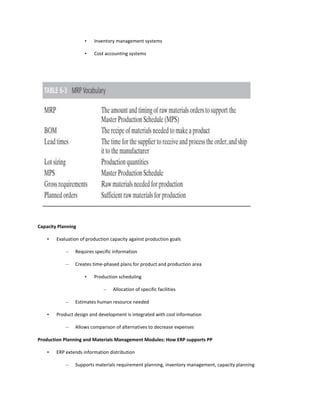
                     •   BOM systems
•   Inventory management systems

                     •   Cost accounting systems


Capacity Planning

    •   Evaluation of production capacity against production goals

            –   Requires specific information

            –   Creates time-phased plans for product and production area

                     •   Production scheduling

                             –    Allocation of specific facilities

            –   Estimates human resource needed

    •   Product design and development is integrated with cost information

            –   Allows comparison of alternatives to decrease expenses

Production Planning and Materials Management Modules: How ERP supports PP

    •   ERP extends information distribution

            –   Supports materials requirement planning, inventory management, capacity planning
•   Allows for merging of multiple databases

              –   Eliminates paperwork and bottlenecks

              –   Decreases design costs, lead time, personnel costs

              –   Increases productivity

    •   Sales forecasts employed to develop production plans

    •   MPS created through demand management

              –   Determines quantities and dates for finished products

    •   MRP creates efficient, detailed material plan

              –   Determines what needs to be ordered and when

              –   Creates work orders sent to production

ERP systems provides integration


Materials Management Modules

    •   MES

              –   Factory floor information and communication systems

              –   Provide feedback on real-time basis

              –   Can be front-end combined with back-end applications

    •   APS systems

              –   Business analysis and support

              –   Leverage data for decision support

    •   Data collection

              –   Real-time data gathered with mobile phone or Internet-enabled devices

              –   Automated data collection

Production and materials management

  • 1.
    Production and MaterialsManagement Production Systems • Objectives – Create production plan – Acquire raw materials – Schedule equipment, facilities, human resources – Design products – Produce appropriate quantities and expected quality level Production Planning and Manufacturing Processes • Operational-level processes – Daily activities • Purchasing – Acquire correct quantity of raw materials and supplies • Receiving – Inspection of delivered products and processing • Quality control – Monitoring of receivables and identification of unacceptable deliveries – Monitoring quality of production goods • Inventory management – Maintains appropriate levels Information Systems Support • Production planning and manufacturing processes – Supported by information systems • Data collection systems • Material management systems • BOM systems
  • 2.
    Inventory management systems • Cost accounting systems Capacity Planning • Evaluation of production capacity against production goals – Requires specific information – Creates time-phased plans for product and production area • Production scheduling – Allocation of specific facilities – Estimates human resource needed • Product design and development is integrated with cost information – Allows comparison of alternatives to decrease expenses Production Planning and Materials Management Modules: How ERP supports PP • ERP extends information distribution – Supports materials requirement planning, inventory management, capacity planning
  • 3.
    Allows for merging of multiple databases – Eliminates paperwork and bottlenecks – Decreases design costs, lead time, personnel costs – Increases productivity • Sales forecasts employed to develop production plans • MPS created through demand management – Determines quantities and dates for finished products • MRP creates efficient, detailed material plan – Determines what needs to be ordered and when – Creates work orders sent to production ERP systems provides integration Materials Management Modules • MES – Factory floor information and communication systems – Provide feedback on real-time basis – Can be front-end combined with back-end applications • APS systems – Business analysis and support – Leverage data for decision support • Data collection – Real-time data gathered with mobile phone or Internet-enabled devices – Automated data collection