New Product Development
So Far So Good…
Product Design & Development
4
Product Design & Development
A DESIGN PROCESS is the set of technical
activities within a product development process. It
rarely include business, financial, or marketing
activities
A PRODUCT DEVELOPMENT PROCESS is the
entire set of activities required to bring a new
concept to a state of market readiness.
Competitive Advantage
Through Products / Services
 The Ultimate objective a company is
looking for.
 This is the time to sow the seed.
 Can you think of any????
Some Well Known Companies Having
Competitive Advantage Through Their
Products
 Organizations provide goods and services for
the society. Great products are key to the
success. They provide competitive advantage.
 Honda: engine technology
 Microsoft: PC software
 Intel: Microprocessors
 Michelin: Tires
 Dell Computer: Customized hardware and
software and Dell does this very fast.
Some Well Known Companies Having
Competitive Advantage Through Their Products
 Toyota’s competitive advantage is rapid response to
changing customer demand. Their shorter design
time (less than 2 years which is below the industry
standard) gives them a competitive advantage.
 Hospitals specialize to gain competitive advantage ,
- Children hospital,
- AFIC
- AFIU
- PIC
The objective of the product decision is
to develop and implement a product
strategy that meets the demands of the
marketplace with a competitive
advantage
Product Decision
QUALITY
 What is a Quality Product?
Quality Function Deployment
1. Identify what will satisfy
the customer
2. Translate those customer
desires into the TARGET
DESIGN
Source: NPD 2011 Pearson Education, Inc. publishing as Prentice Hall
Issues for Product
Development
 Robust design
 Modular design
 Computer-aided design (CAD)
 Computer-aided manufacturing (CAM)
 Virtual reality technology
 Value analysis
 Environmentally friendly design
2011 Pearson Education, Inc. publishing as Prentice Hall
Robust Design
 Product is designed so that
small variations in production
or assembly do not adversely
affect the product
 Typically results in lower cost
and higher quality
2011 Pearson Education, Inc. publishing as Prentice Hall
Modular Design
 Products designed in easily segmented
components
 Adds flexibility to both production and
marketing
 Improved ability to satisfy customer
requirements
Comp Manufacturing vdo
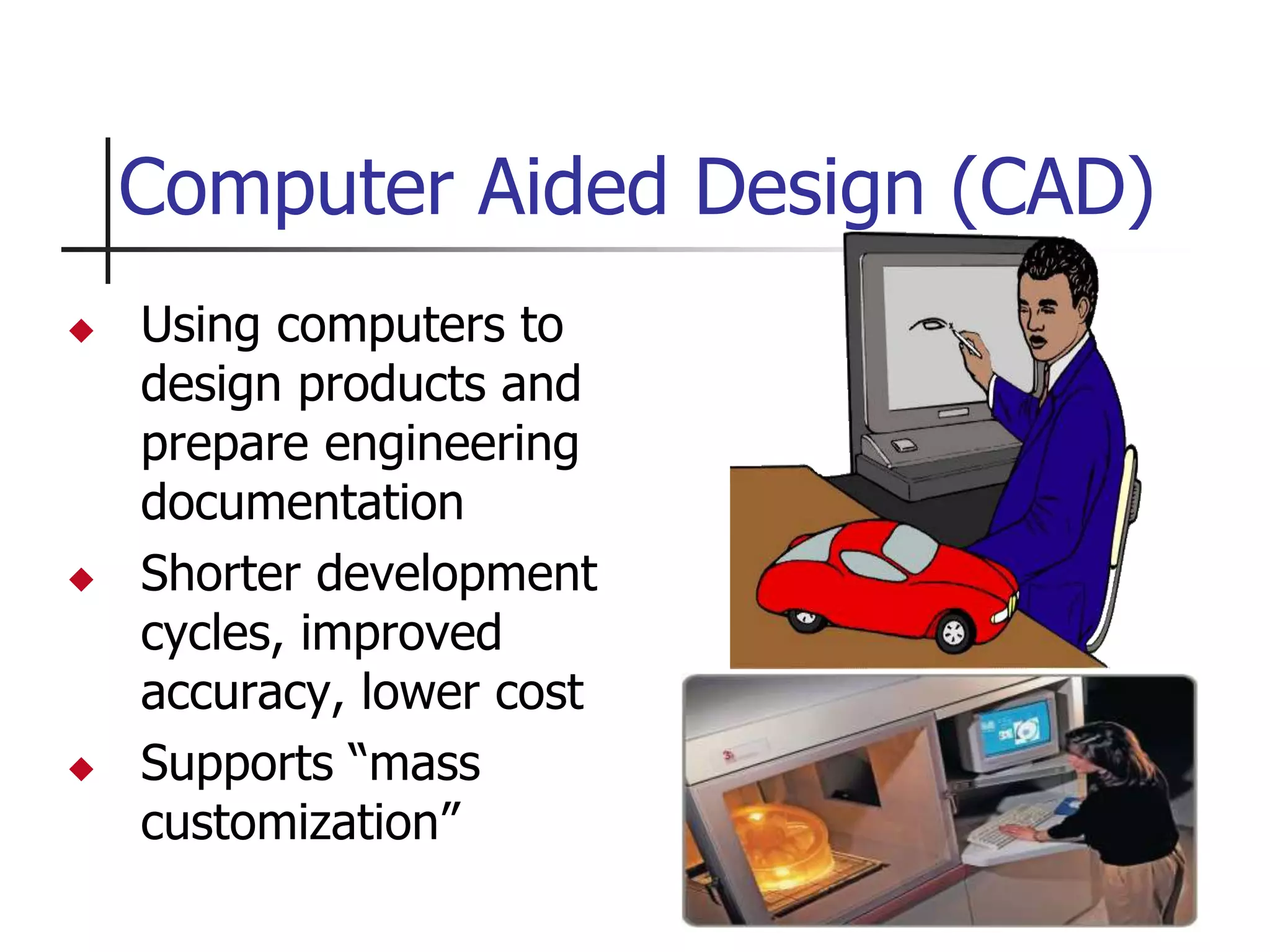
 Using computers to
design products and
prepare engineering
documentation
 Shorter development
cycles, improved
accuracy, lower cost
 Supports “mass
customization”
Computer Aided Design (CAD)
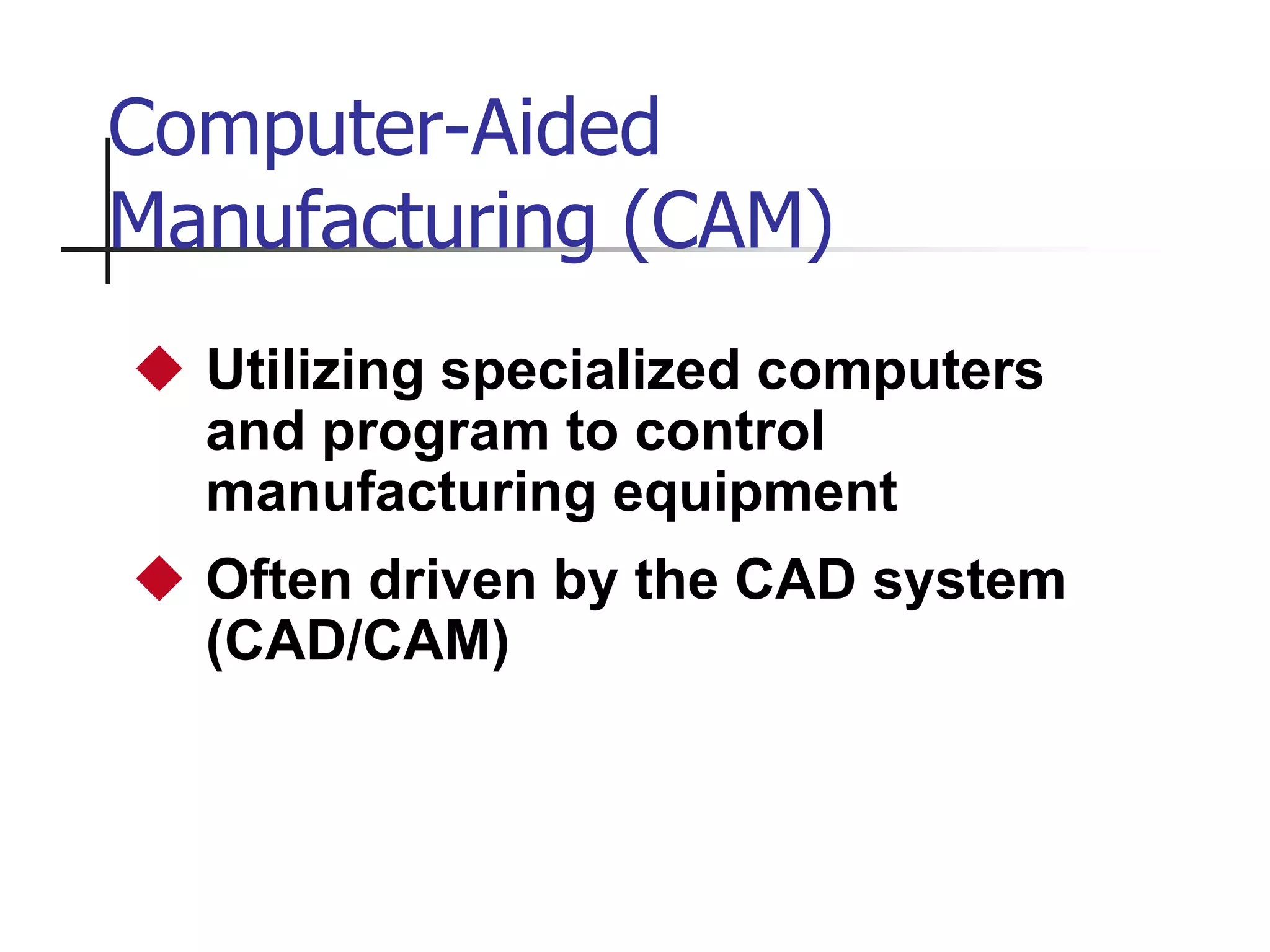
Computer-Aided
Manufacturing (CAM)
 Utilizing specialized computers
and program to control
manufacturing equipment
 Often driven by the CAD system
(CAD/CAM)
1. Better Product quality
2. Shorter design time
3. Less Production cost
4. Database availability
Benefits of CAD/CAM
Virtual Reality Technology
 Computer technology used to develop
an interactive, 3-D model of a product
from the basic CAD data
 Allows people to ‘see’ the finished
design before a physical model is built
 Very effective in large-scale designs
such as plant layout
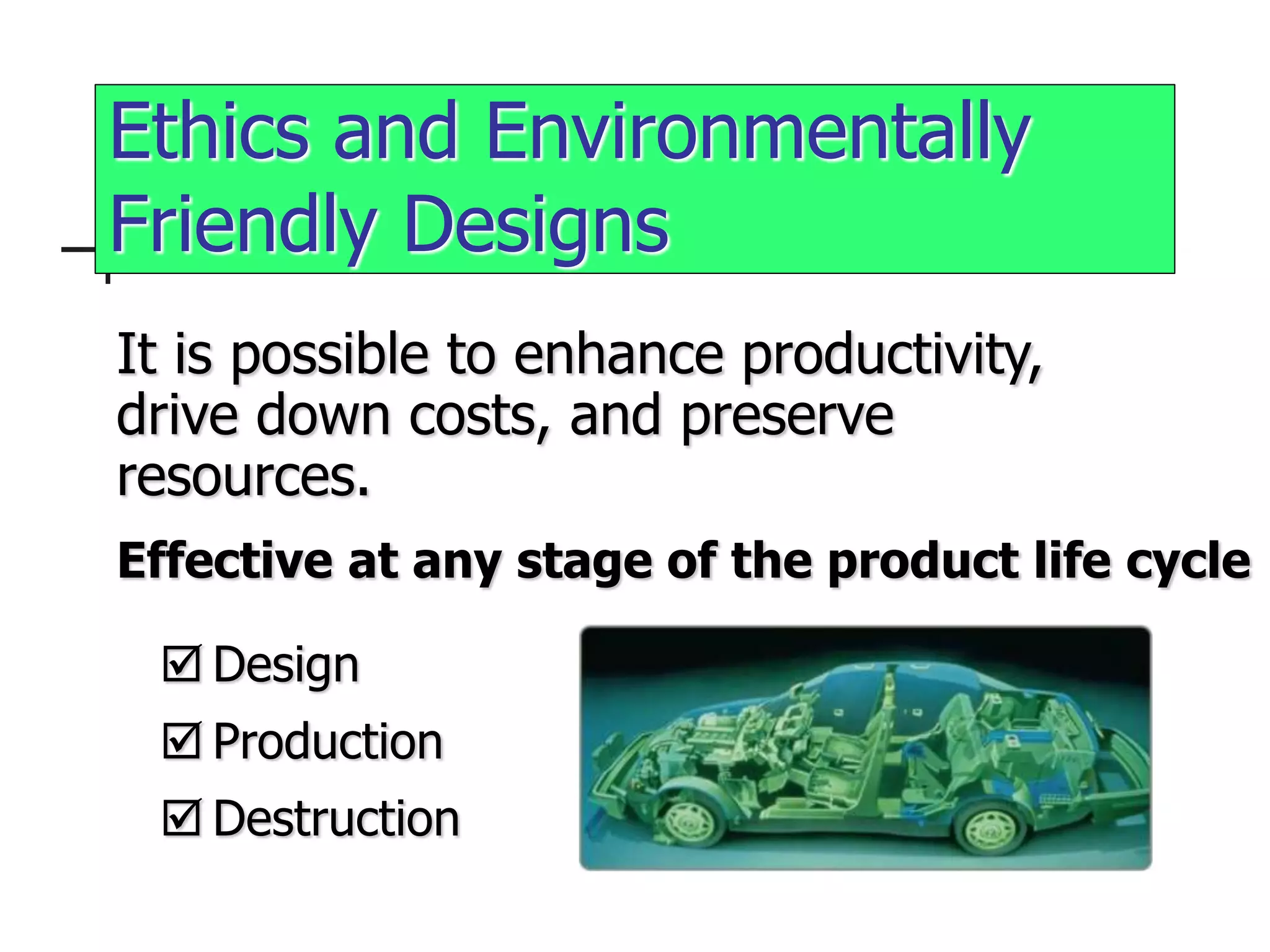
Ethics and Environmentally
Friendly Designs
It is possible to enhance productivity,
drive down costs, and preserve
resources.
Effective at any stage of the product life cycle
 Design
 Production
 Destruction
Guidelines for Environmentally
Friendly Designs
1. Make products recyclable
2. Use recycled materials
3. Use less harmful ingredients
(Using soy-based inks)
4. Use lighter components
Mercedes is using banana plant fiber for car exteriors
Biodegradable and lightweight
5. Use less energy
6. Use less material
Time-Based
Competition
 Product life cycles are
becoming shorter and the rate
of technological change is
increasing
 Developing new products faster
can result in a competitive
advantage
Defining The Product For
Manufacturing
 Define the functions of product
 Define design specifications to
achieve these functions
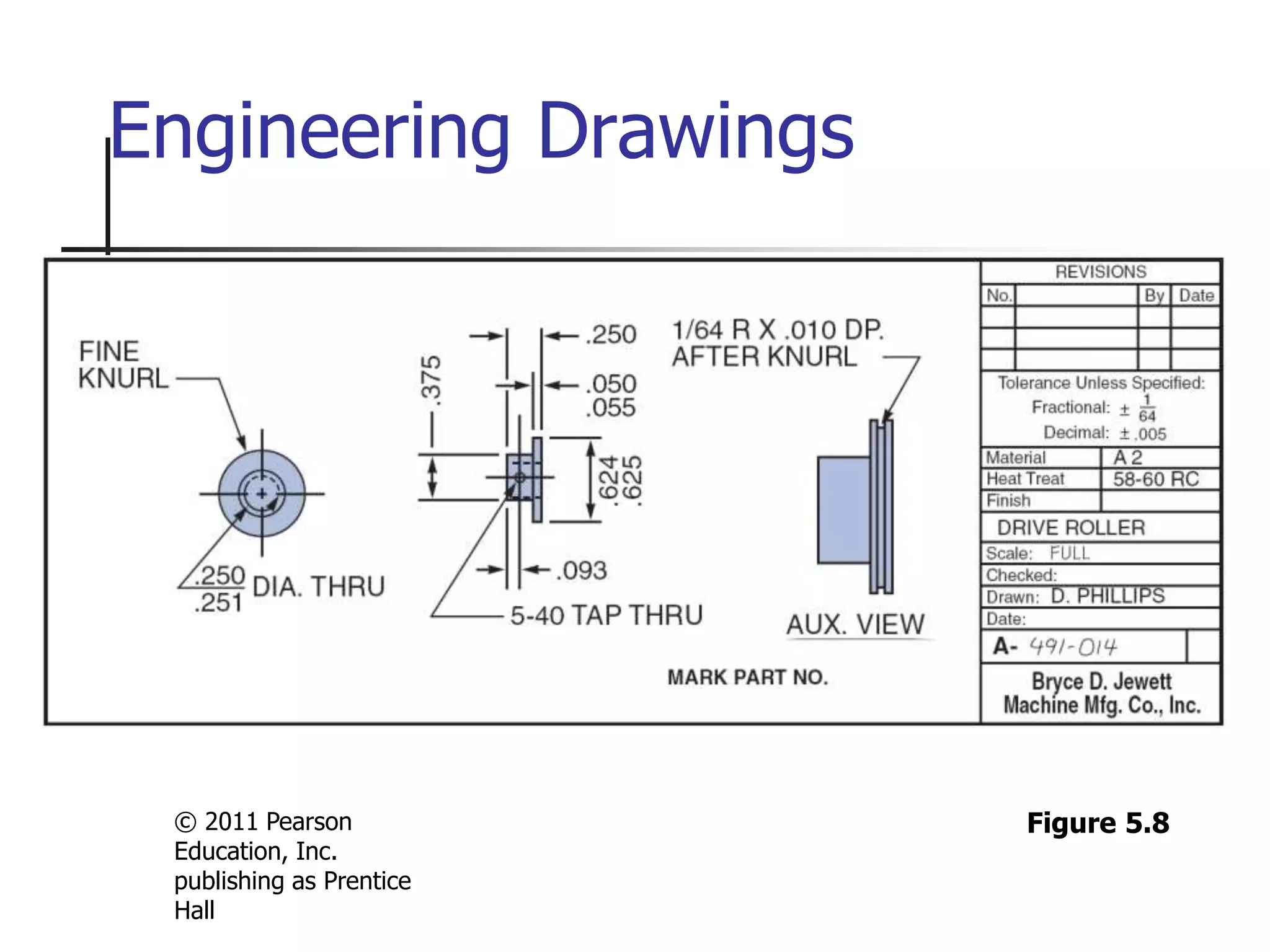
 Prepare an engineering drawing
 List the components of a product,
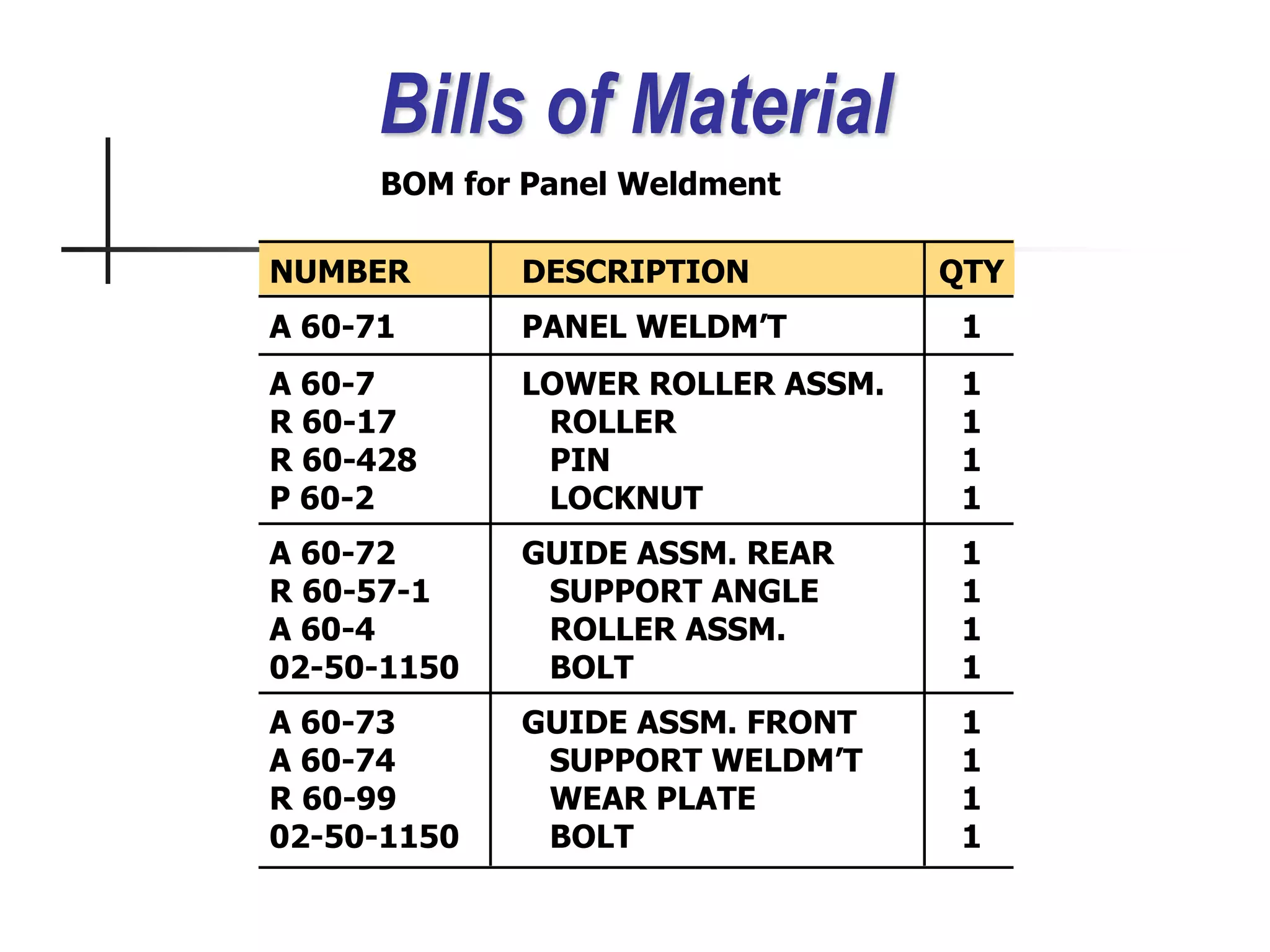
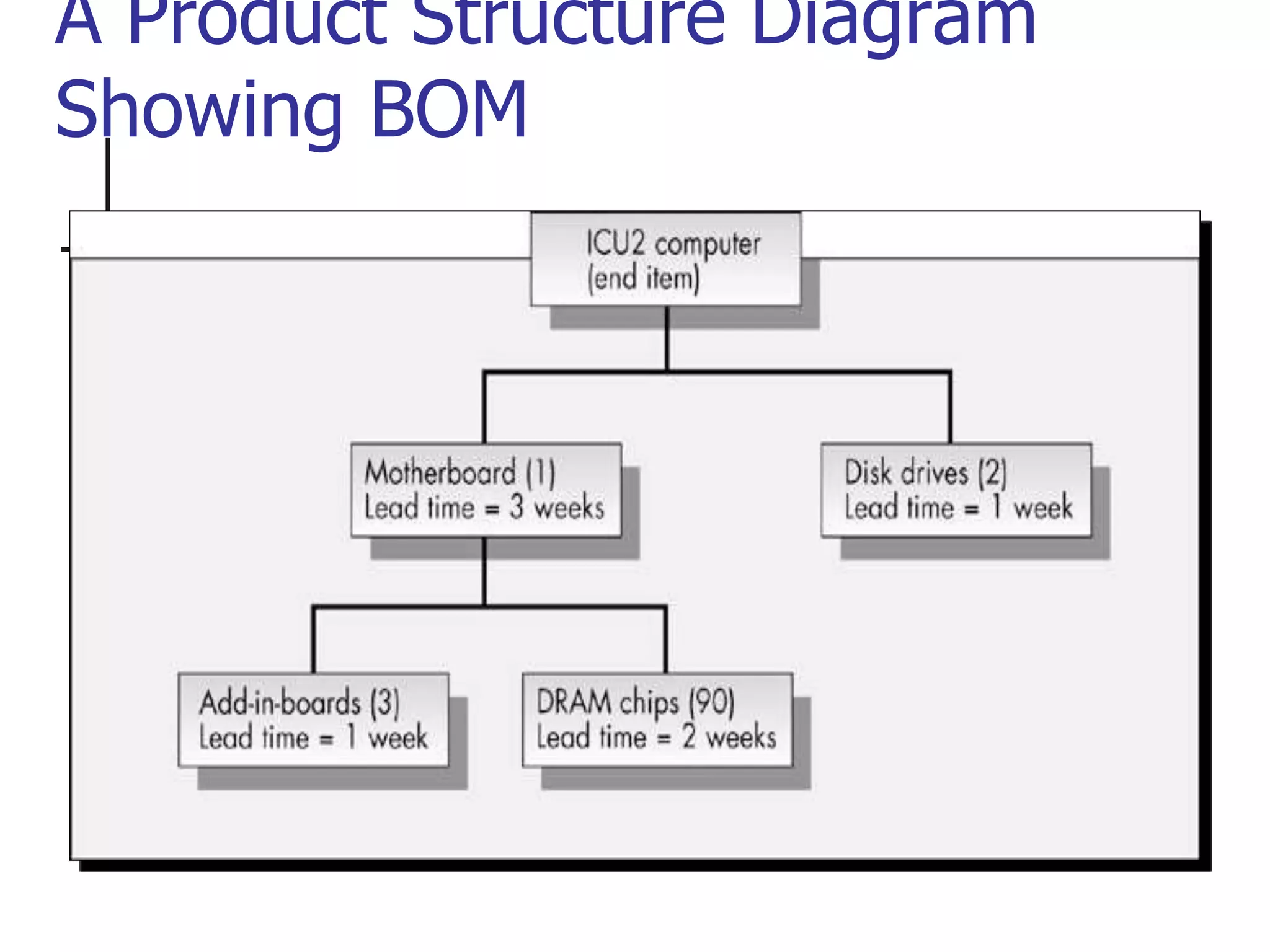
Bill of material (BOM)
 Determine equipment, layout and
human resources
© 2011 Pearson
Education, Inc.
publishing as Prentice
Hall
Engineering Drawings
Figure 5.8
Bills of Material
BOM for Panel Weldment
NUMBER DESCRIPTION QTY
A 60-71 PANEL WELDM’T 1
A 60-7 LOWER ROLLER ASSM. 1
R 60-17 ROLLER 1
R 60-428 PIN 1
P 60-2 LOCKNUT 1
A 60-72 GUIDE ASSM. REAR 1
R 60-57-1 SUPPORT ANGLE 1
A 60-4 ROLLER ASSM. 1
02-50-1150 BOLT 1
A 60-73 GUIDE ASSM. FRONT 1
A 60-74 SUPPORT WELDM’T 1
R 60-99 WEAR PLATE 1
02-50-1150 BOLT 1
A Product Structure Diagram
Showing BOM
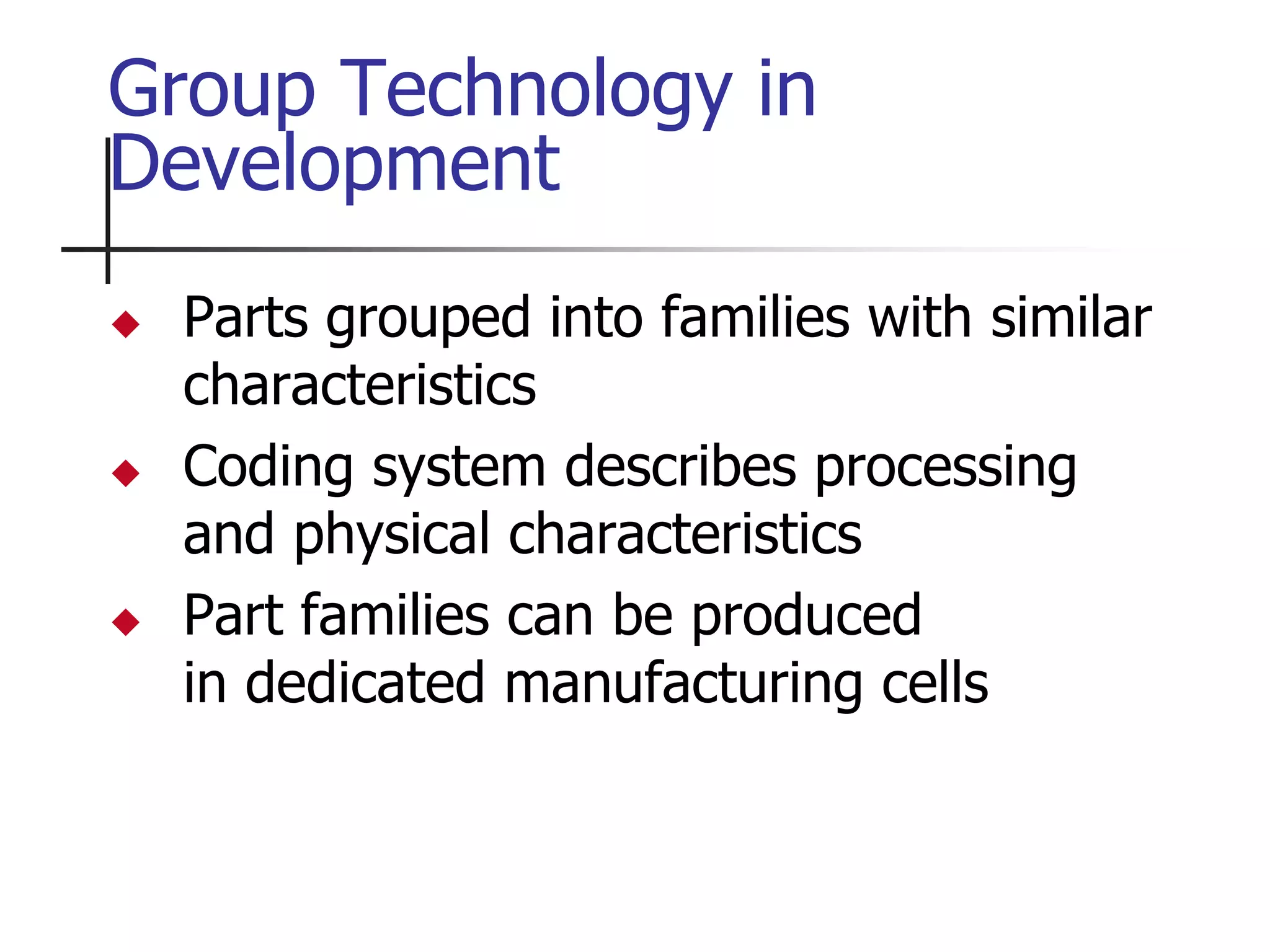
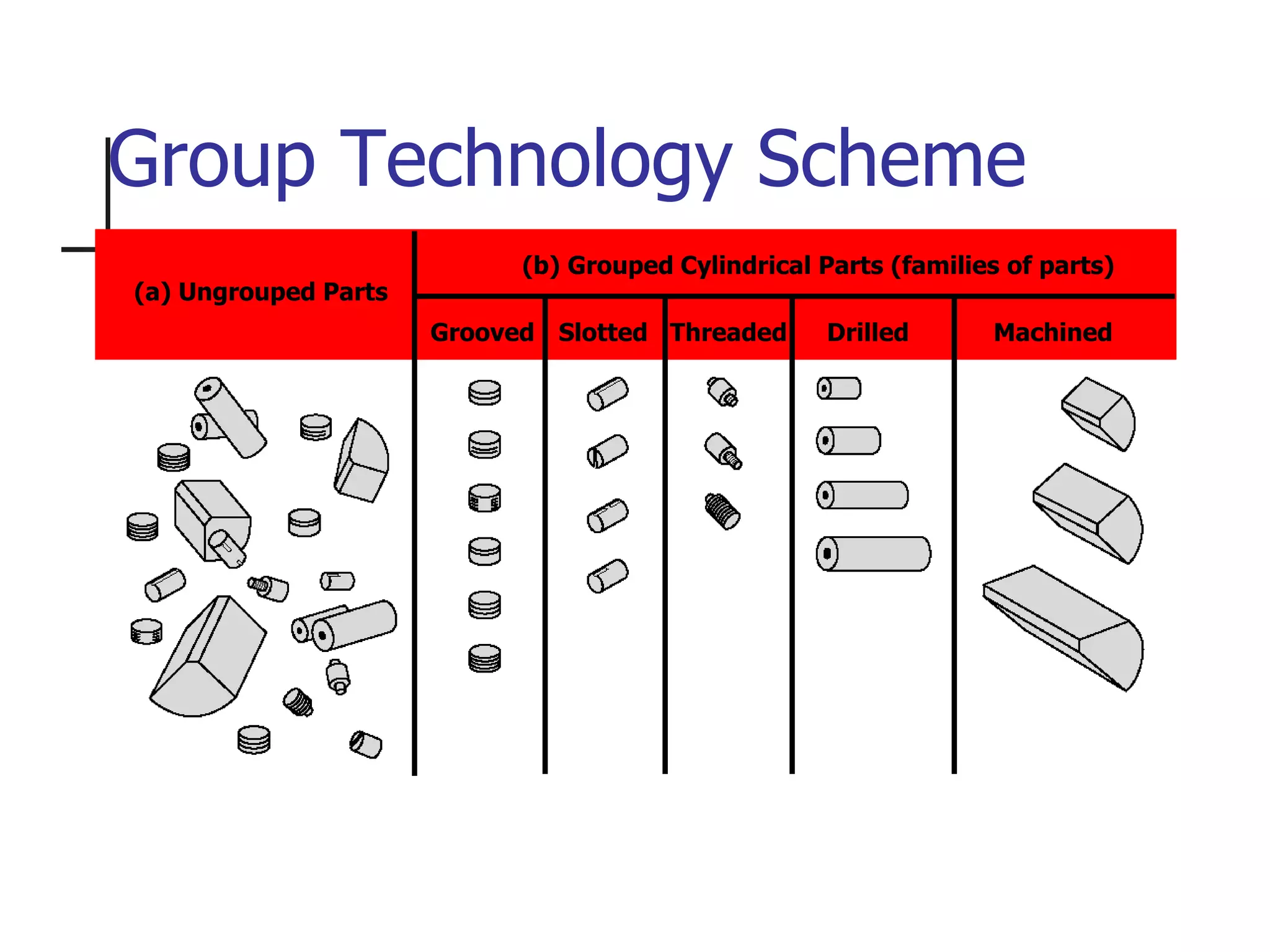
 Parts grouped into families with similar
characteristics
 Coding system describes processing
and physical characteristics
 Part families can be produced
in dedicated manufacturing cells
Group Technology in
Development
Group Technology Scheme
(a) Ungrouped Parts
(b) Grouped Cylindrical Parts (families of parts)
Grooved Slotted Threaded Drilled Machined
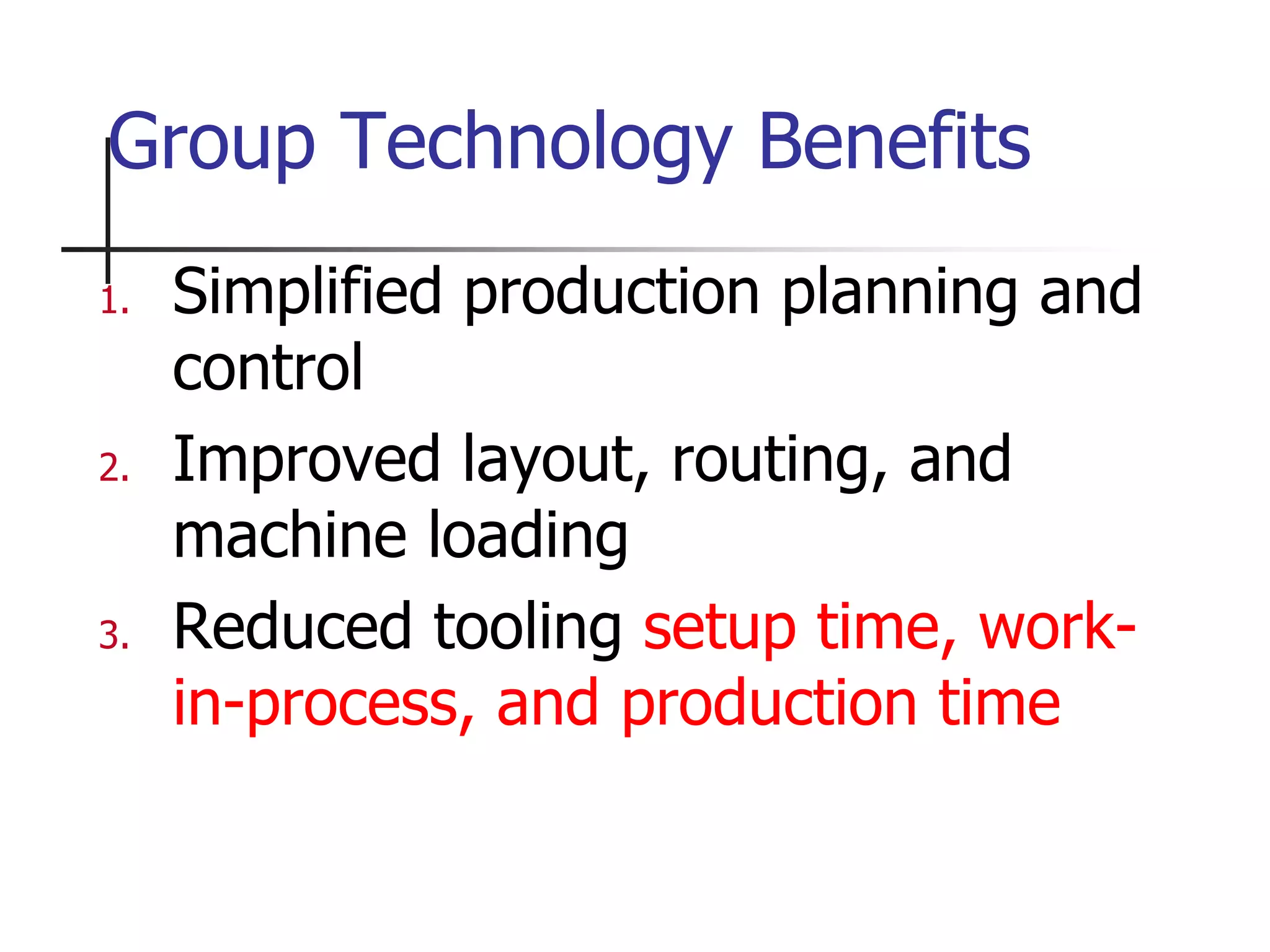
1. Simplified production planning and
control
2. Improved layout, routing, and
machine loading
3. Reduced tooling setup time, work-
in-process, and production time
Group Technology Benefits
Documents for Production
 Assembly drawing
 Assembly chart
 Route sheet
 Work order
 Engineering change notices (ECNs)
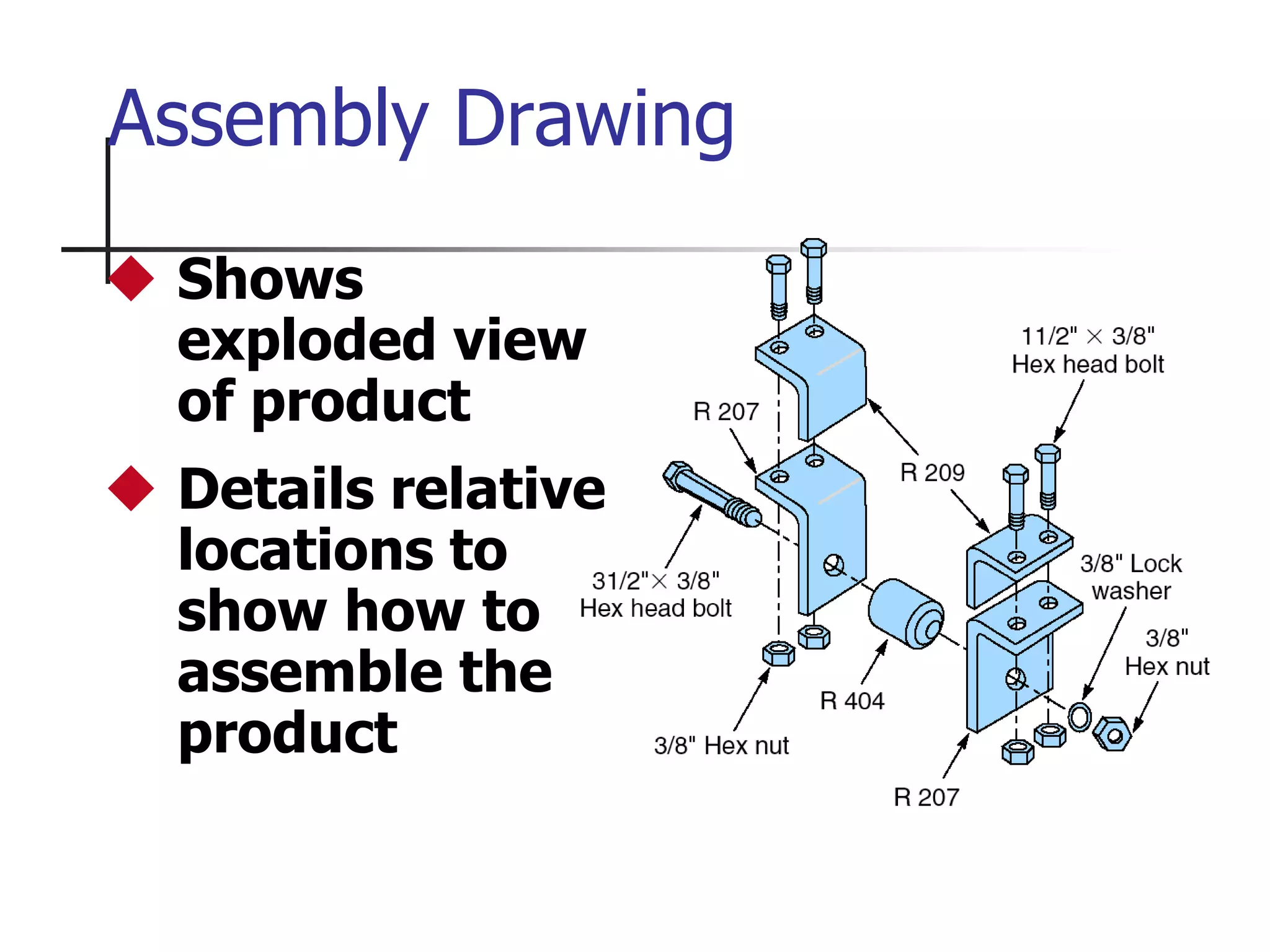
Assembly Drawing
 Shows
exploded view
of product
 Details relative
locations to
show how to
assemble the
product
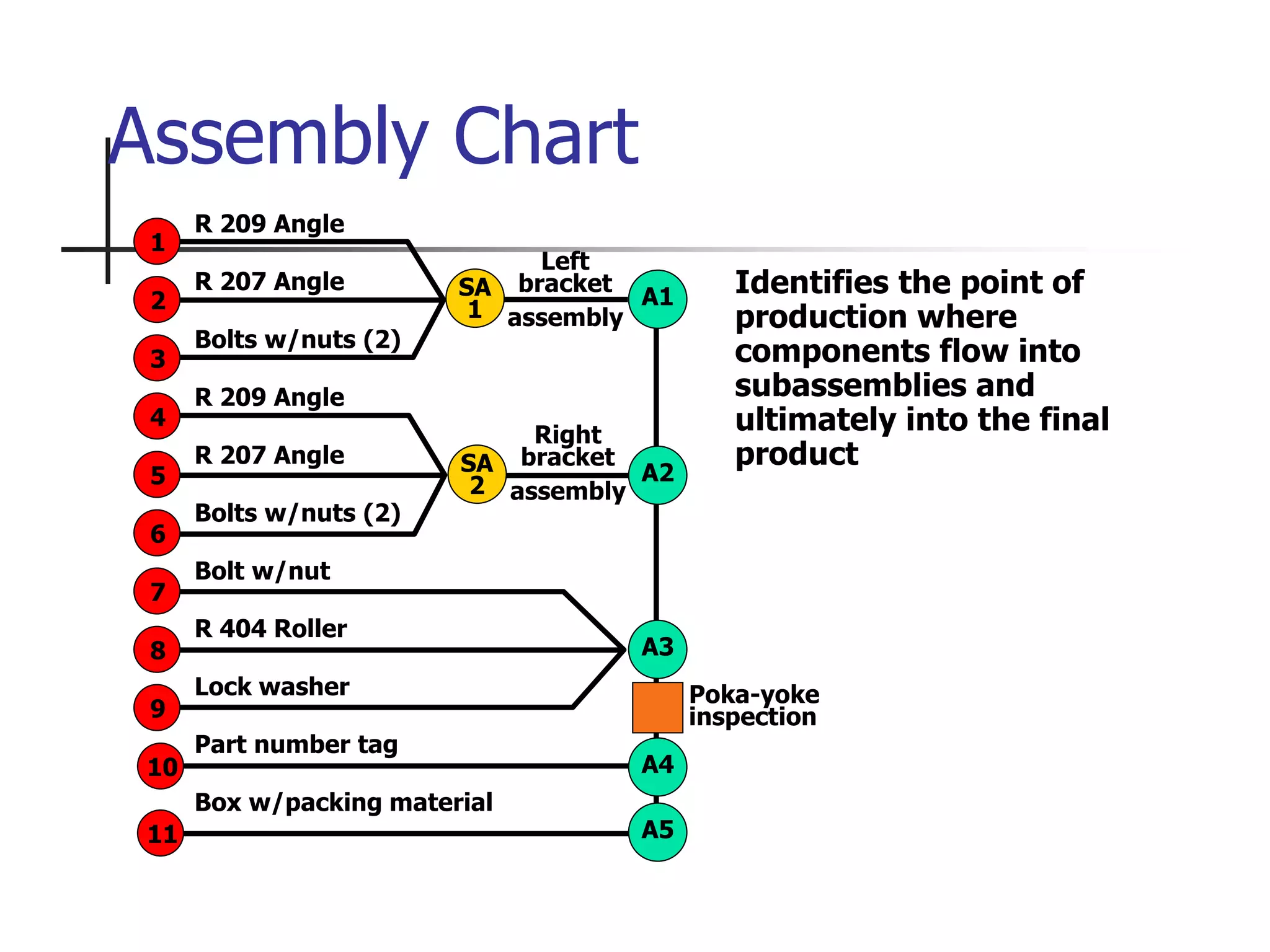
Assembly Chart
1
2
3
4
5
6
7
8
9
10
11
R 209 Angle
R 207 Angle
Bolts w/nuts (2)
R 209 Angle
R 207 Angle
Bolt w/nut
R 404 Roller
Lock washer
Part number tag
Box w/packing material
Bolts w/nuts (2)
SA
1
SA
2
A1
A2
A3
A4
A5
Left
bracket
assembly
Right
bracket
assembly
Poka-yoke
inspection
Identifies the point of
production where
components flow into
subassemblies and
ultimately into the final
product
Route Sheet
Lists the operations and times
required to produce a component
Setup Operation
Process Machine Operations Time Time/Unit
1 Auto Insert 2 Insert Component 1.5 .4
Set 56
2 Manual Insert Component .5 2.3
Insert 1 Set 12C
3 Wave Solder Solder all 1.5 4.1
components
to board
4 Test 4 Circuit integrity .25 .5
test 4GY
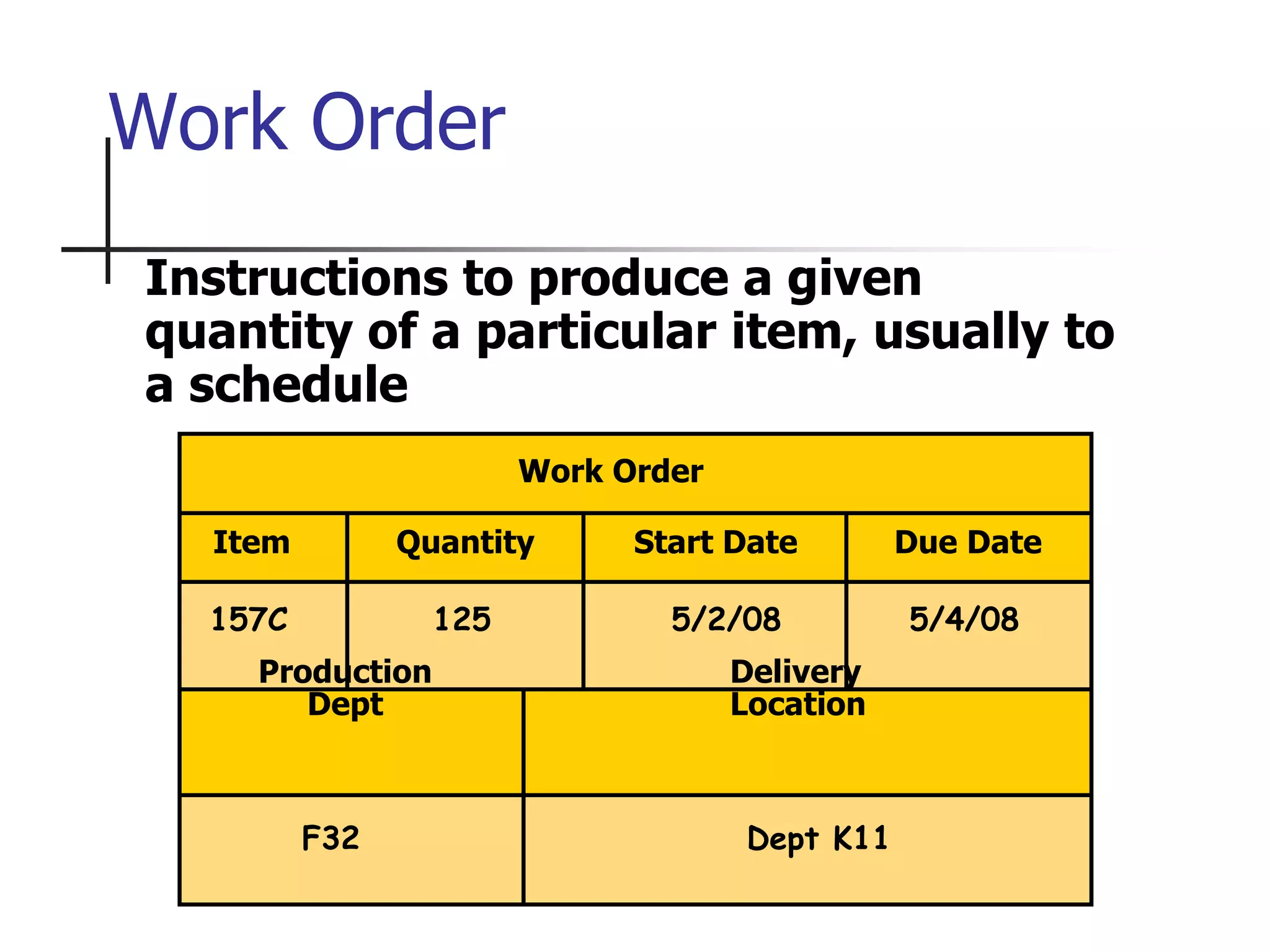
Work Order
Instructions to produce a given
quantity of a particular item, usually to
a schedule
Work Order
Item Quantity Start Date Due Date
Production Delivery
Dept Location
157C 125 5/2/08 5/4/08
F32 Dept K11
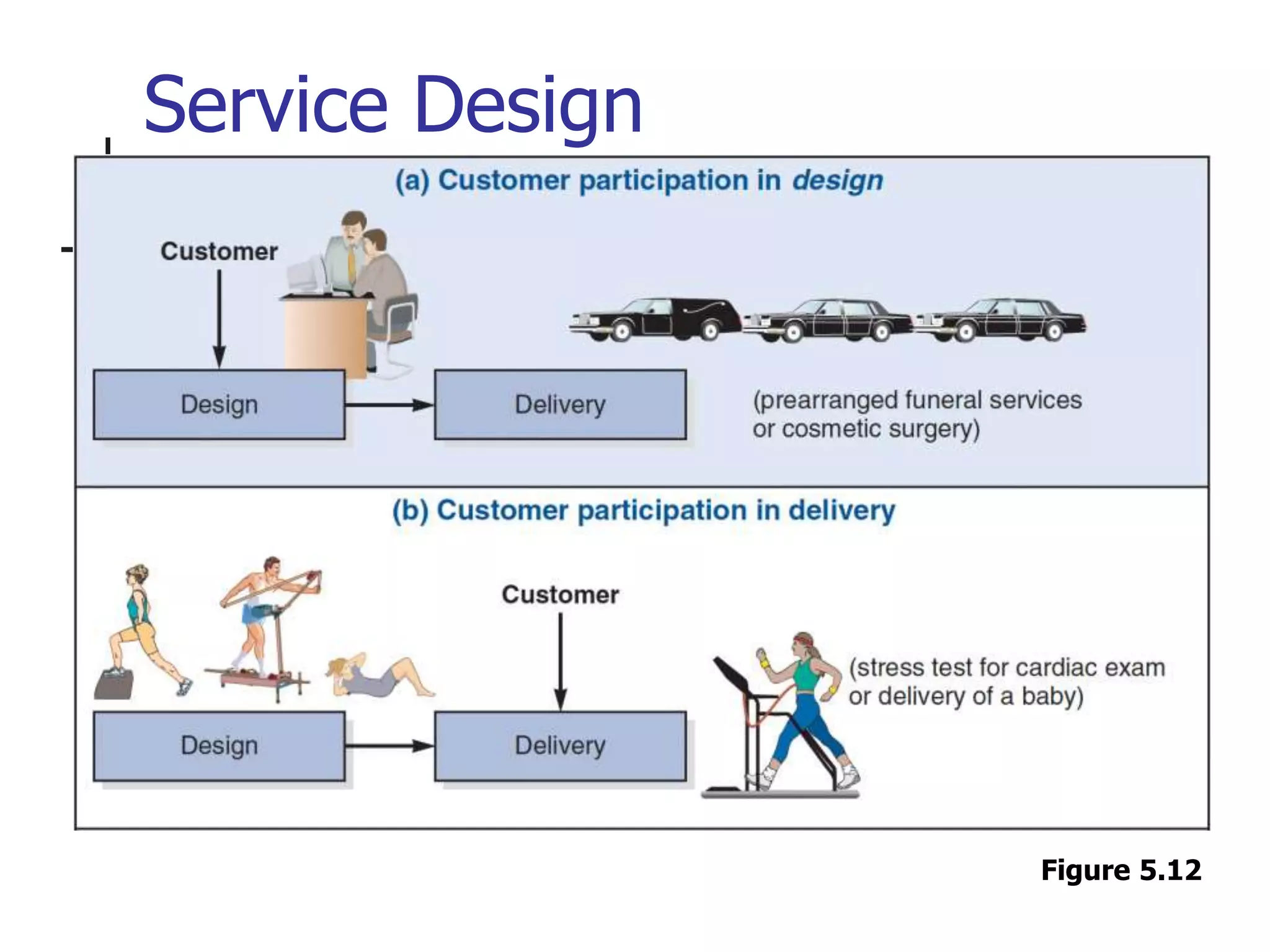
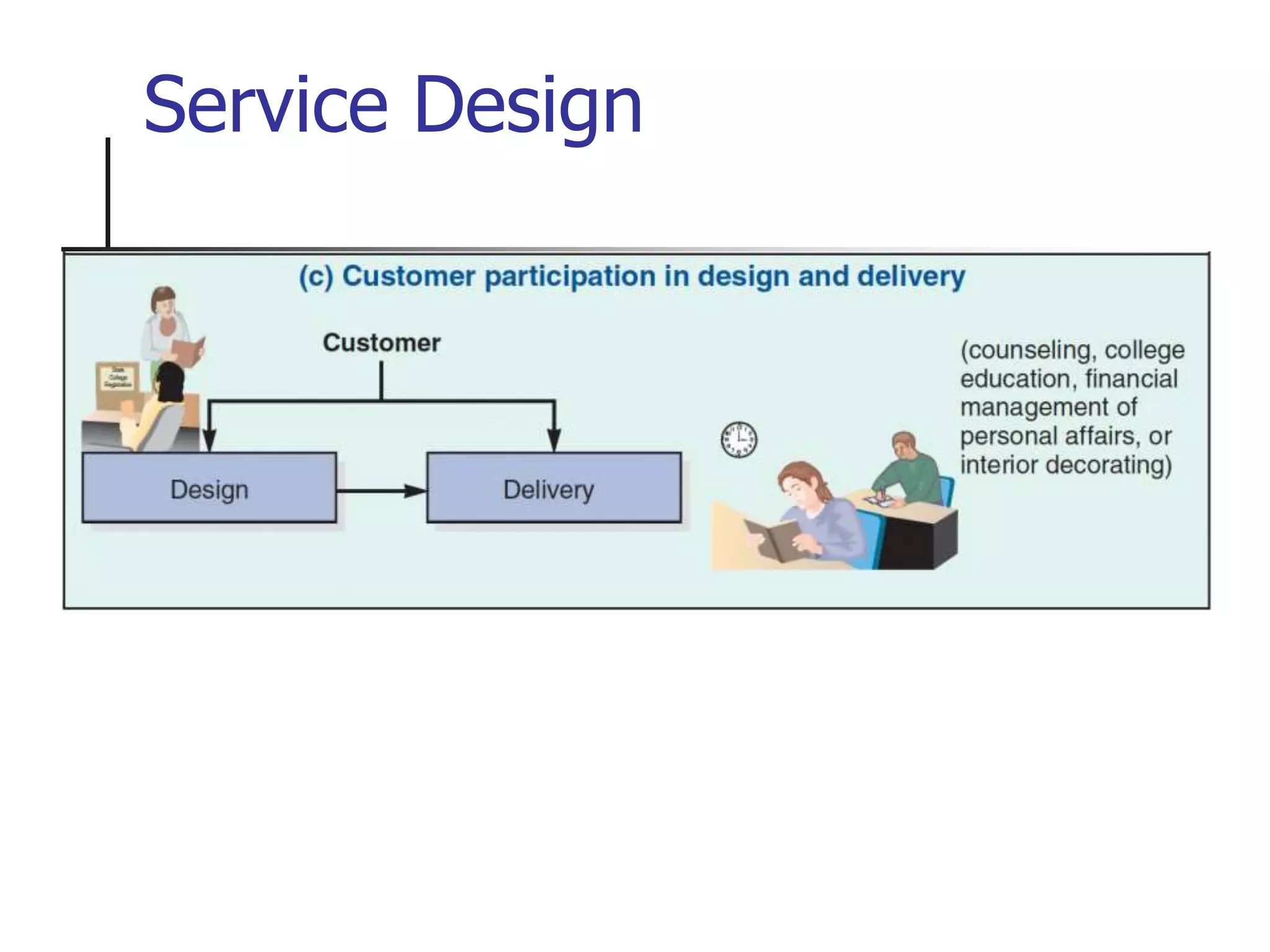
Service Design
 Service typically includes direct
interaction with the customer
 Increased opportunity for
customization
 Reduced productivity
Service Design
Figure 5.12
Service Design

Product Design and Development.ppt

  • 1.
  • 3.
    Product Design &Development
  • 4.
    4 Product Design &Development A DESIGN PROCESS is the set of technical activities within a product development process. It rarely include business, financial, or marketing activities A PRODUCT DEVELOPMENT PROCESS is the entire set of activities required to bring a new concept to a state of market readiness.
  • 5.
    Competitive Advantage Through Products/ Services  The Ultimate objective a company is looking for.  This is the time to sow the seed.  Can you think of any????
  • 6.
    Some Well KnownCompanies Having Competitive Advantage Through Their Products  Organizations provide goods and services for the society. Great products are key to the success. They provide competitive advantage.  Honda: engine technology  Microsoft: PC software  Intel: Microprocessors  Michelin: Tires  Dell Computer: Customized hardware and software and Dell does this very fast.
  • 7.
    Some Well KnownCompanies Having Competitive Advantage Through Their Products  Toyota’s competitive advantage is rapid response to changing customer demand. Their shorter design time (less than 2 years which is below the industry standard) gives them a competitive advantage.  Hospitals specialize to gain competitive advantage , - Children hospital, - AFIC - AFIU - PIC
  • 8.
    The objective ofthe product decision is to develop and implement a product strategy that meets the demands of the marketplace with a competitive advantage Product Decision
  • 9.
    QUALITY  What isa Quality Product?
  • 10.
    Quality Function Deployment 1.Identify what will satisfy the customer 2. Translate those customer desires into the TARGET DESIGN
  • 11.
    Source: NPD 2011Pearson Education, Inc. publishing as Prentice Hall Issues for Product Development  Robust design  Modular design  Computer-aided design (CAD)  Computer-aided manufacturing (CAM)  Virtual reality technology  Value analysis  Environmentally friendly design
  • 12.
    2011 Pearson Education,Inc. publishing as Prentice Hall Robust Design  Product is designed so that small variations in production or assembly do not adversely affect the product  Typically results in lower cost and higher quality
  • 13.
    2011 Pearson Education,Inc. publishing as Prentice Hall Modular Design  Products designed in easily segmented components  Adds flexibility to both production and marketing  Improved ability to satisfy customer requirements Comp Manufacturing vdo
  • 14.
     Using computersto design products and prepare engineering documentation  Shorter development cycles, improved accuracy, lower cost  Supports “mass customization” Computer Aided Design (CAD)
  • 15.
    Computer-Aided Manufacturing (CAM)  Utilizingspecialized computers and program to control manufacturing equipment  Often driven by the CAD system (CAD/CAM)
  • 17.
    1. Better Productquality 2. Shorter design time 3. Less Production cost 4. Database availability Benefits of CAD/CAM
  • 19.
    Virtual Reality Technology Computer technology used to develop an interactive, 3-D model of a product from the basic CAD data  Allows people to ‘see’ the finished design before a physical model is built  Very effective in large-scale designs such as plant layout
  • 21.
    Ethics and Environmentally FriendlyDesigns It is possible to enhance productivity, drive down costs, and preserve resources. Effective at any stage of the product life cycle  Design  Production  Destruction
  • 22.
    Guidelines for Environmentally FriendlyDesigns 1. Make products recyclable 2. Use recycled materials 3. Use less harmful ingredients (Using soy-based inks) 4. Use lighter components Mercedes is using banana plant fiber for car exteriors Biodegradable and lightweight 5. Use less energy 6. Use less material
  • 23.
    Time-Based Competition  Product lifecycles are becoming shorter and the rate of technological change is increasing  Developing new products faster can result in a competitive advantage
  • 24.
    Defining The ProductFor Manufacturing  Define the functions of product  Define design specifications to achieve these functions  Prepare an engineering drawing  List the components of a product, Bill of material (BOM)  Determine equipment, layout and human resources
  • 25.
    © 2011 Pearson Education,Inc. publishing as Prentice Hall Engineering Drawings Figure 5.8
  • 26.
    Bills of Material BOMfor Panel Weldment NUMBER DESCRIPTION QTY A 60-71 PANEL WELDM’T 1 A 60-7 LOWER ROLLER ASSM. 1 R 60-17 ROLLER 1 R 60-428 PIN 1 P 60-2 LOCKNUT 1 A 60-72 GUIDE ASSM. REAR 1 R 60-57-1 SUPPORT ANGLE 1 A 60-4 ROLLER ASSM. 1 02-50-1150 BOLT 1 A 60-73 GUIDE ASSM. FRONT 1 A 60-74 SUPPORT WELDM’T 1 R 60-99 WEAR PLATE 1 02-50-1150 BOLT 1
  • 27.
    A Product StructureDiagram Showing BOM
  • 28.
     Parts groupedinto families with similar characteristics  Coding system describes processing and physical characteristics  Part families can be produced in dedicated manufacturing cells Group Technology in Development
  • 29.
    Group Technology Scheme (a)Ungrouped Parts (b) Grouped Cylindrical Parts (families of parts) Grooved Slotted Threaded Drilled Machined
  • 30.
    1. Simplified productionplanning and control 2. Improved layout, routing, and machine loading 3. Reduced tooling setup time, work- in-process, and production time Group Technology Benefits
  • 31.
    Documents for Production Assembly drawing  Assembly chart  Route sheet  Work order  Engineering change notices (ECNs)
  • 33.
    Assembly Drawing  Shows explodedview of product  Details relative locations to show how to assemble the product
  • 34.
    Assembly Chart 1 2 3 4 5 6 7 8 9 10 11 R 209Angle R 207 Angle Bolts w/nuts (2) R 209 Angle R 207 Angle Bolt w/nut R 404 Roller Lock washer Part number tag Box w/packing material Bolts w/nuts (2) SA 1 SA 2 A1 A2 A3 A4 A5 Left bracket assembly Right bracket assembly Poka-yoke inspection Identifies the point of production where components flow into subassemblies and ultimately into the final product
  • 35.
    Route Sheet Lists theoperations and times required to produce a component Setup Operation Process Machine Operations Time Time/Unit 1 Auto Insert 2 Insert Component 1.5 .4 Set 56 2 Manual Insert Component .5 2.3 Insert 1 Set 12C 3 Wave Solder Solder all 1.5 4.1 components to board 4 Test 4 Circuit integrity .25 .5 test 4GY
  • 36.
    Work Order Instructions toproduce a given quantity of a particular item, usually to a schedule Work Order Item Quantity Start Date Due Date Production Delivery Dept Location 157C 125 5/2/08 5/4/08 F32 Dept K11
  • 37.
    Service Design  Servicetypically includes direct interaction with the customer  Increased opportunity for customization  Reduced productivity
  • 38.
  • 39.