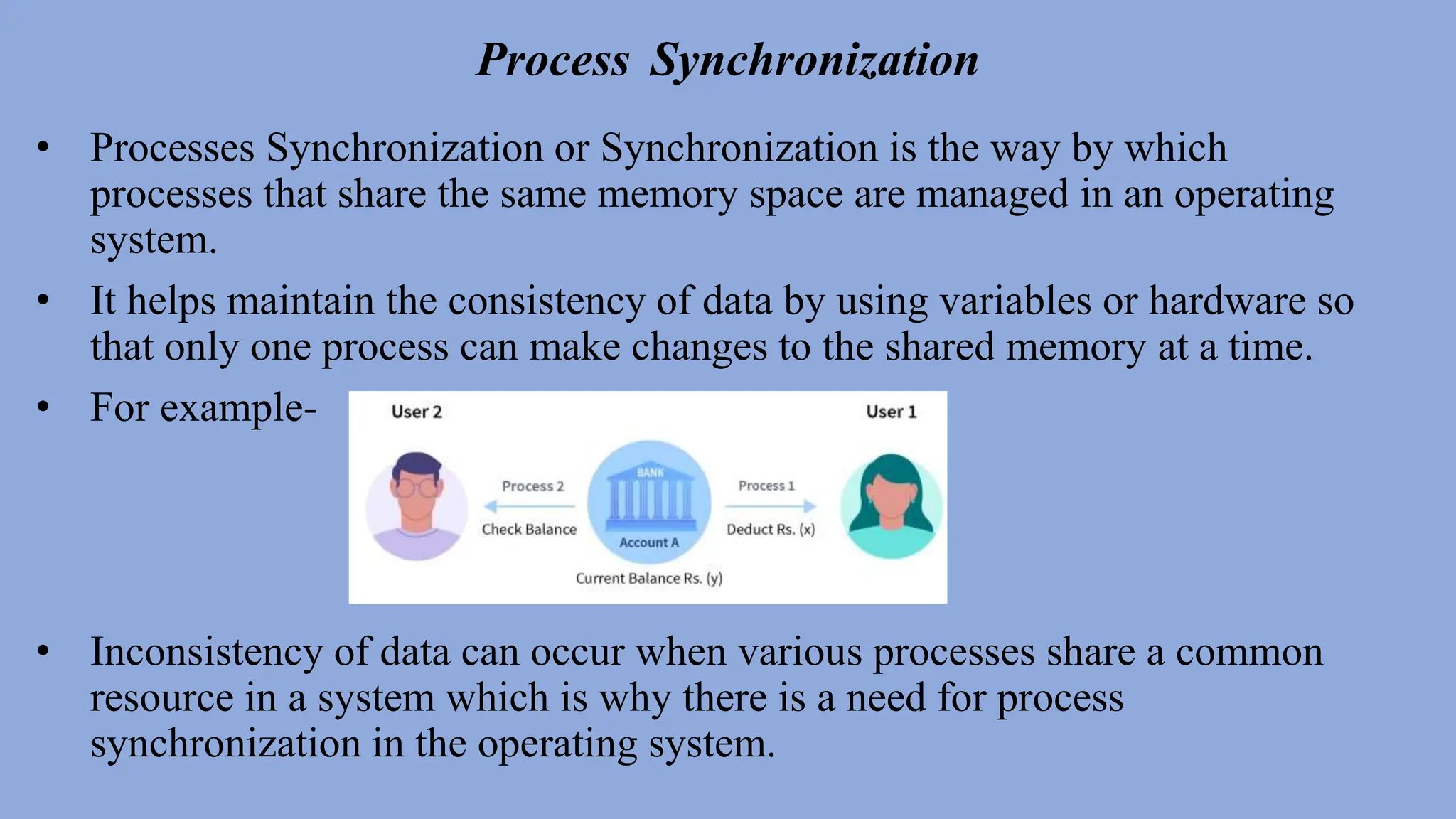
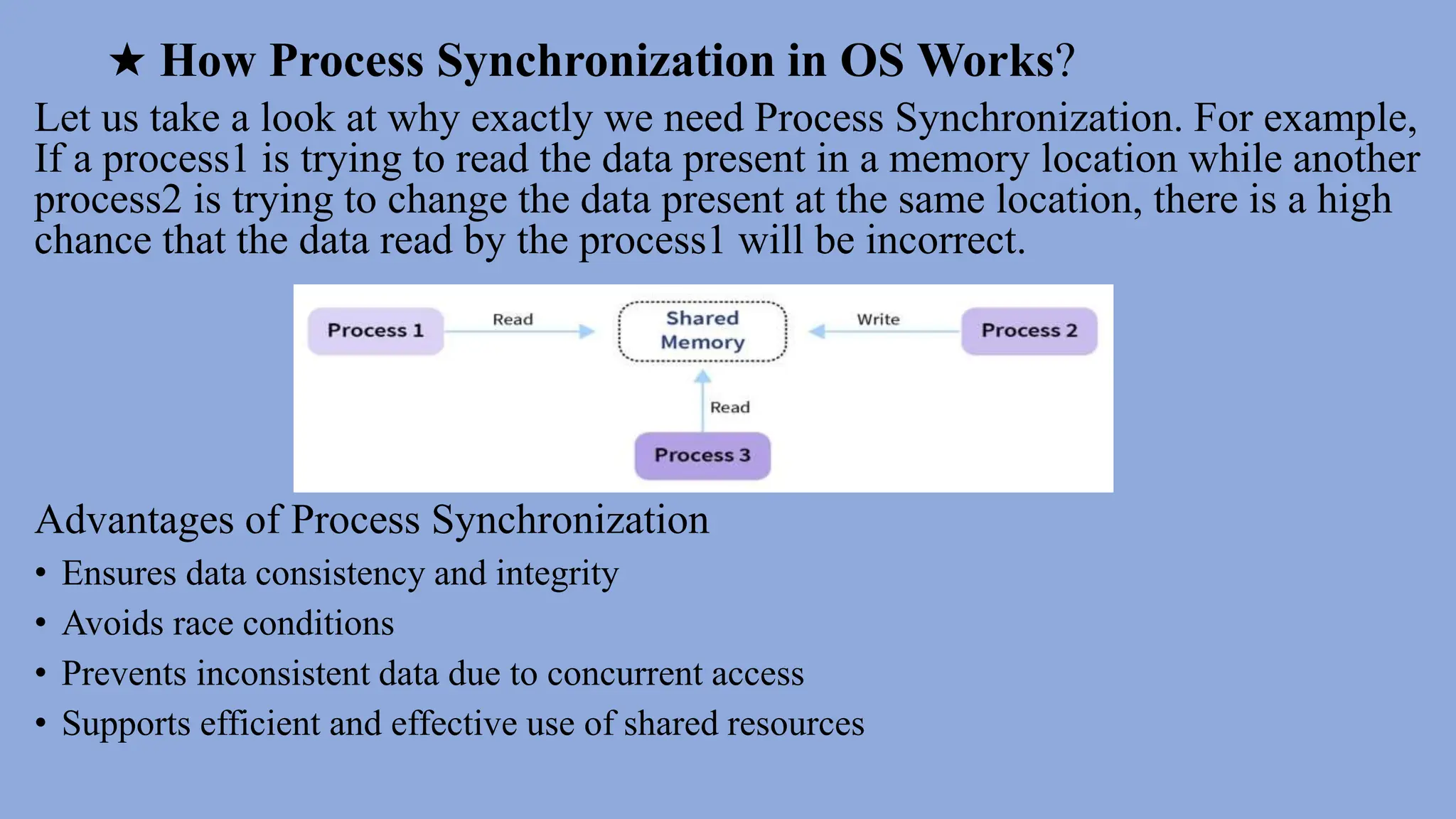
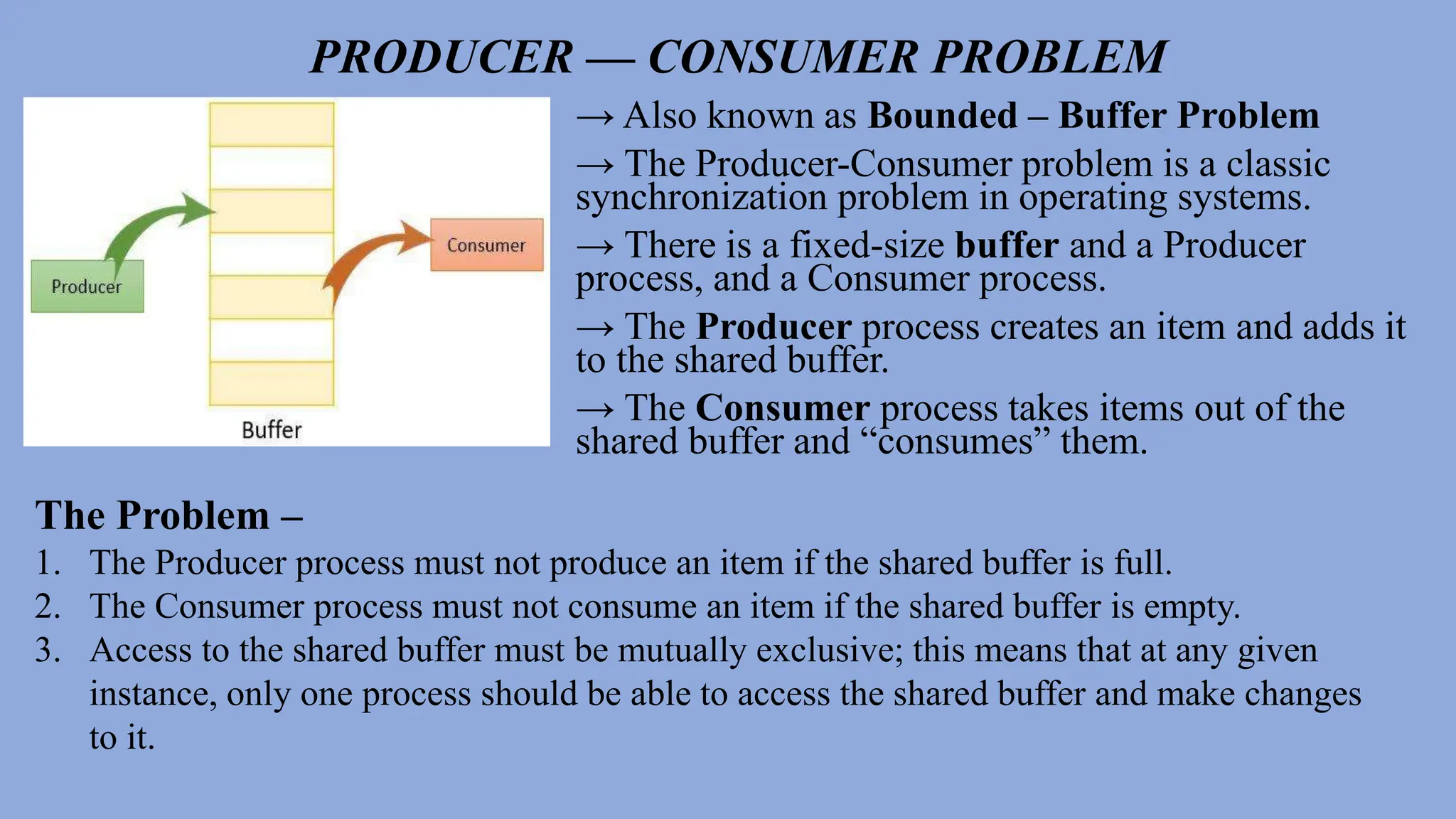
Process synchronization in operating systems manages processes sharing the same memory space to maintain data consistency and integrity while avoiding race conditions and inconsistent data access. A key example of this is the producer-consumer problem, which involves a producer adding items to a fixed-size buffer and a consumer removing them, necessitating mutual exclusion and proper semaphore management. Semaphores track available resources, with 'full' for filled buffer space, 'empty' for available space, and 'mutex' for mutual access control.