






PRESENTED BY-PANDIT KHYATI R.
F.Y.M.SC.NURSING.
ROLL NO. 11
SAMPLING
ERRORS
It is the deviation of the selected
sample from the true characteristics,
traits, behaviours, qualities, or figures
of the entire population.
WHY IT OCCURS?
Researcher draws different subject from
the same population, but still the subjects
have individual differences.
A sample, it is only a subject of the entire
population; therefore, there may be a
differences between the sample and
population.
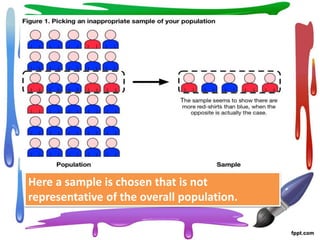
Here a sample is chosen that is not
representative of the overall population.
SAMPLE SIZE AND
SAMPLING ERROR
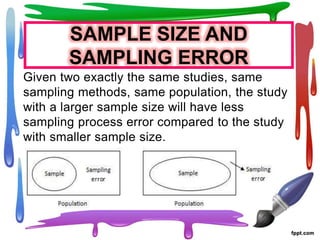
Given two exactly the same studies, same
sampling methods, same population, the study
with a larger sample size will have less
sampling process error compared to the study
with smaller sample size.
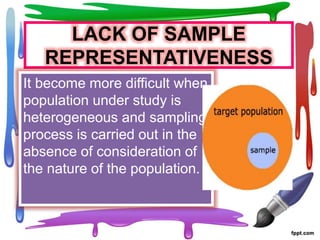
LACK OF SAMPLE
REPRESENTATIVENESS
It become more difficult when
population under study is
heterogeneous and sampling
process is carried out in the
absence of consideration of
the nature of the population.
DIFFICULTY IN
ESTIMATION OF SAMPLE
SIZEStudies conducted on
undetermined sample
size do not facilitate to
generalize the findings
for the particular
population.
LACK OF KNOWLEDGE
ABOUT THE SAMPLING
PROCESS
It is generally observed that researchers
usually carry superficial knowledge
about the sampling methods and
sampling process that leads to poor
sample selection and ultimately affects
the study results.
LACK OF
RESOURCES
It becomes very difficult for
researcher to draw a
representative sample in
absence of adequate
resources.
LACK OF
COOPERATION
With simple random
sampling and found that
several subjects are not
interested to participate in
study that ultimately
disturbs the sampling
process causes an addition
burden to researcher.
LACK OF EXISTING
APPROPRIATE SAMPLING
FRAMES FOR LARGER
POPULATION
It is generally observed that in
developing countries including
India it is very difficult to get
existing sampling process.
For example, a nurse researcher is
interested in sample selection from
nurses presently participating in
Punjab, but Punjab nurses registration
council did not make provision
renewal of the registered nurses
licenses, and therefore one cannot get
a list of registered nurses presently
practicing as nurse in Punjab.
CALLOUS APPROCH OF THE
RESEARCHER TOWARDS
SAMPLING PROCESS
Generally it is observed that researcher pay very
little attention for appropriateness of the
sampling method for a particular phenomenon
under study. Further, they casually choose a
particular type of the sampling technique to select
a sample rather than an effective sampling
process plan.
Problems of sampling

Problems of sampling

  • 2.
    PRESENTED BY-PANDIT KHYATIR. F.Y.M.SC.NURSING. ROLL NO. 11
  • 3.
    SAMPLING ERRORS It is thedeviation of the selected sample from the true characteristics, traits, behaviours, qualities, or figures of the entire population.
  • 4.
    WHY IT OCCURS? Researcherdraws different subject from the same population, but still the subjects have individual differences. A sample, it is only a subject of the entire population; therefore, there may be a differences between the sample and population.
  • 5.
    Here a sampleis chosen that is not representative of the overall population.
  • 6.
    SAMPLE SIZE AND SAMPLINGERROR Given two exactly the same studies, same sampling methods, same population, the study with a larger sample size will have less sampling process error compared to the study with smaller sample size.
  • 7.
    LACK OF SAMPLE REPRESENTATIVENESS Itbecome more difficult when population under study is heterogeneous and sampling process is carried out in the absence of consideration of the nature of the population.
  • 8.
    DIFFICULTY IN ESTIMATION OFSAMPLE SIZEStudies conducted on undetermined sample size do not facilitate to generalize the findings for the particular population.
  • 9.
    LACK OF KNOWLEDGE ABOUTTHE SAMPLING PROCESS It is generally observed that researchers usually carry superficial knowledge about the sampling methods and sampling process that leads to poor sample selection and ultimately affects the study results.
  • 10.
    LACK OF RESOURCES It becomesvery difficult for researcher to draw a representative sample in absence of adequate resources.
  • 11.
    LACK OF COOPERATION With simplerandom sampling and found that several subjects are not interested to participate in study that ultimately disturbs the sampling process causes an addition burden to researcher.
  • 12.
    LACK OF EXISTING APPROPRIATESAMPLING FRAMES FOR LARGER POPULATION It is generally observed that in developing countries including India it is very difficult to get existing sampling process.
  • 13.
    For example, anurse researcher is interested in sample selection from nurses presently participating in Punjab, but Punjab nurses registration council did not make provision renewal of the registered nurses licenses, and therefore one cannot get a list of registered nurses presently practicing as nurse in Punjab.
  • 14.
    CALLOUS APPROCH OFTHE RESEARCHER TOWARDS SAMPLING PROCESS Generally it is observed that researcher pay very little attention for appropriateness of the sampling method for a particular phenomenon under study. Further, they casually choose a particular type of the sampling technique to select a sample rather than an effective sampling process plan.