PROBLEMS IN FOREST SOIL
AND THEIR MANAGEMENT
SUBMITTED TO
College of Forestry
Odisha University of Agriculture & Technology
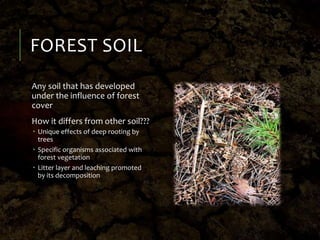
FOREST SOIL
Any soil that has developed
under the influence of forest
cover
How it differs from other soil???
 Unique effects of deep rooting by
trees
 Specific organisms associated with
forest vegetation
 Litter layer and leaching promoted
by its decomposition
PHYSICAL PROBLEMS IN
FOREST SOIL
Slow permeable soil
Excessively permeable soil
Sub soil hardening or hardpan
Surface crusting
Shallow soil
Waterlogged and marshy soil
SLOW PERMEABLE SOIL
Low infiltration rate (6cm/day) due to high clay content
Results in surface runoff and nutrient removal
Management
 Drainage by open or close sub surface drain
 Forming contour and compartmental bunding
 Adding river sand to change soil texture
 Application of FYM, compost, composted coir pith etc.
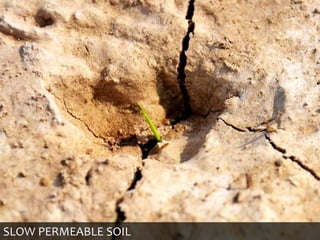
SLOW PERMEABLE SOIL
EXCESSIVELY PERMEABLE
SOIL
Having more than 70% sand
Inert, unable to retain nutrient and water due to absence of finer
particles and organic matter
Management
 Application of clay soil (100 tonnes/ha) to make soil texture finer
 Application of organic matter to improve aggregation
EXCESSIVELY PERMEABLE SOIL
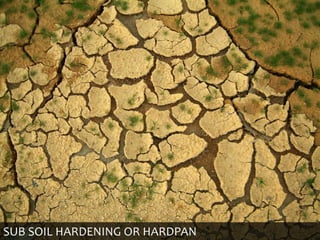
SUB SOIL HARDENING OR
HARDPAN
Occurs in red soils due to illuviation of clay + oxides of Fe, Al and
CaCO3
Prevents root proliferation and limits nutrient uptake
Management
 Application of organic manures to improve the aggregation and the soil
structure
 Cultivation of deep rooted crops to encourage breaking of the hardpan
SUB SOIL HARDENING OR HARDPAN
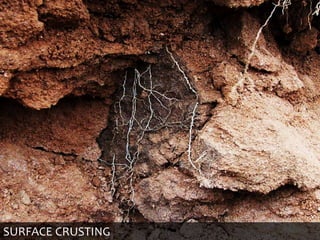
SURFACE CRUSTING
Surface hardiness due to presence of colloidal oxides of iron and
aluminium
Prevents seed germination, inhibition of root growth, increase in
surface runoff and poor nodule formation
Management
 Application of 2 tonnes of lime/ha
 Application of 12.5 tonne s of organic manure/ha
 Growing of resistant spp.
SURFACE CRUSTING
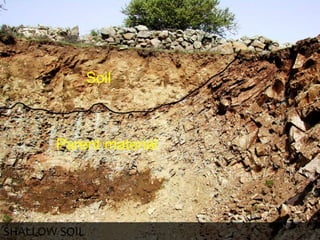
SHALLOW SOIL
Presence of parent rock immediately below the soil surface
Restricts root elongation & spreading
Management
 Frequent renewal of soil fertility
 Breaking of hard rocks by ploughing
SHALLOW SOIL
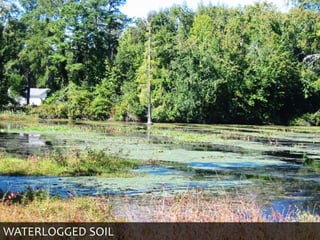
WATERLOGGED AND
MARSHY SOIL
Resulting in restriction of normal circulation of air
Decline in level of oxygen & increases the level of CO2
Management
 Sufficient drainage to remove excess water both from surface & sub-surface
 Appropriate land use i.e. use land for suitable tree species such as Bamboo &
Eucalyptus
WATERLOGGED SOIL
CHEMICAL PROBLEMS IN
FOREST SOIL
Salt affected soil
 Alkaline soil
 Saline soil
Acid soil
SALT AFFECTED SOIL
Causes imbalance in nutrient uptake & absorption of water due to
excess soluble salts, high concentrated ions
2 types,
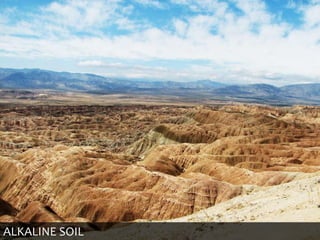
 Alkaline soil – pH > 8.5, carry carbonates and bicarbonates, found in semiarid and
subhumid climate
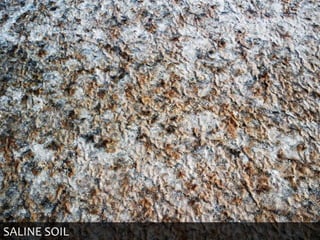
 Saline soil – pH < 8.5, carry chlorides and sulphates, found in arid and semiarid
climate
Management
 Leaching of excess salts with good quality irrigation water for saline soil
 Suitable Ca supplement for alkali soil
 Incorporation of sand to increase soil permeability and improve air–water
relation in root zone
ALKALINE SOIL
SALINE SOIL
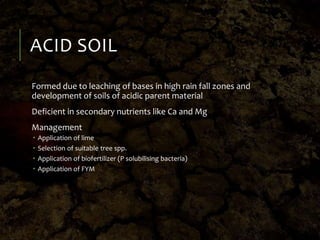
ACID SOIL
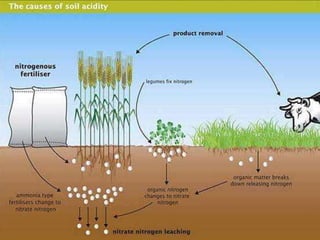
Formed due to leaching of bases in high rain fall zones and
development of soils of acidic parent material
Deficient in secondary nutrients like Ca and Mg
Management
 Application of lime
 Selection of suitable tree spp.
 Application of biofertilizer (P solubilising bacteria)
 Application of FYM
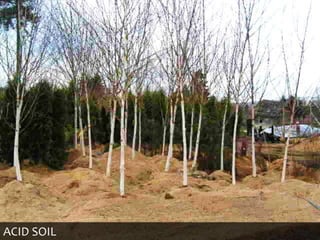
ACID SOIL
CONCLUSION
The challenge of managing problematic soil is 3 fold,
 To utilize problematic barren lands for plantation purpose
 To provide adequate nutrients to the plants in the area
 To ensure that inputs in balance with plant utilization
As soil is at the heart of terrestrial ecology, human should be well
aware to preserve and make good use of it.
REFERENCES
Google – http;//www.google.com
Nature & Properties of Soil (13th edition), N.C. Brady
Indian Forestry, S. Prabhu
For in the end, we’ll conserve only what
we love,
We’ll love only what we understand
And we’ll understand only what we are
taught
Baba Dioum
African Conservationist
Thank You

Problems in forest soil and their management

  • 1.
    PROBLEMS IN FORESTSOIL AND THEIR MANAGEMENT SUBMITTED TO College of Forestry Odisha University of Agriculture & Technology
  • 2.
    FOREST SOIL Any soilthat has developed under the influence of forest cover How it differs from other soil???  Unique effects of deep rooting by trees  Specific organisms associated with forest vegetation  Litter layer and leaching promoted by its decomposition
  • 3.
    PHYSICAL PROBLEMS IN FORESTSOIL Slow permeable soil Excessively permeable soil Sub soil hardening or hardpan Surface crusting Shallow soil Waterlogged and marshy soil
  • 4.
    SLOW PERMEABLE SOIL Lowinfiltration rate (6cm/day) due to high clay content Results in surface runoff and nutrient removal Management  Drainage by open or close sub surface drain  Forming contour and compartmental bunding  Adding river sand to change soil texture  Application of FYM, compost, composted coir pith etc.
  • 5.
  • 6.
    EXCESSIVELY PERMEABLE SOIL Having morethan 70% sand Inert, unable to retain nutrient and water due to absence of finer particles and organic matter Management  Application of clay soil (100 tonnes/ha) to make soil texture finer  Application of organic matter to improve aggregation
  • 7.
  • 8.
    SUB SOIL HARDENINGOR HARDPAN Occurs in red soils due to illuviation of clay + oxides of Fe, Al and CaCO3 Prevents root proliferation and limits nutrient uptake Management  Application of organic manures to improve the aggregation and the soil structure  Cultivation of deep rooted crops to encourage breaking of the hardpan
  • 9.
  • 10.
    SURFACE CRUSTING Surface hardinessdue to presence of colloidal oxides of iron and aluminium Prevents seed germination, inhibition of root growth, increase in surface runoff and poor nodule formation Management  Application of 2 tonnes of lime/ha  Application of 12.5 tonne s of organic manure/ha  Growing of resistant spp.
  • 11.
  • 12.
    SHALLOW SOIL Presence ofparent rock immediately below the soil surface Restricts root elongation & spreading Management  Frequent renewal of soil fertility  Breaking of hard rocks by ploughing
  • 13.
  • 14.
    WATERLOGGED AND MARSHY SOIL Resultingin restriction of normal circulation of air Decline in level of oxygen & increases the level of CO2 Management  Sufficient drainage to remove excess water both from surface & sub-surface  Appropriate land use i.e. use land for suitable tree species such as Bamboo & Eucalyptus
  • 15.
  • 16.
    CHEMICAL PROBLEMS IN FORESTSOIL Salt affected soil  Alkaline soil  Saline soil Acid soil
  • 17.
    SALT AFFECTED SOIL Causesimbalance in nutrient uptake & absorption of water due to excess soluble salts, high concentrated ions 2 types,  Alkaline soil – pH > 8.5, carry carbonates and bicarbonates, found in semiarid and subhumid climate  Saline soil – pH < 8.5, carry chlorides and sulphates, found in arid and semiarid climate Management  Leaching of excess salts with good quality irrigation water for saline soil  Suitable Ca supplement for alkali soil  Incorporation of sand to increase soil permeability and improve air–water relation in root zone
  • 18.
  • 19.
  • 20.
    ACID SOIL Formed dueto leaching of bases in high rain fall zones and development of soils of acidic parent material Deficient in secondary nutrients like Ca and Mg Management  Application of lime  Selection of suitable tree spp.  Application of biofertilizer (P solubilising bacteria)  Application of FYM
  • 22.
  • 23.
    CONCLUSION The challenge ofmanaging problematic soil is 3 fold,  To utilize problematic barren lands for plantation purpose  To provide adequate nutrients to the plants in the area  To ensure that inputs in balance with plant utilization As soil is at the heart of terrestrial ecology, human should be well aware to preserve and make good use of it.
  • 24.
    REFERENCES Google – http;//www.google.com Nature& Properties of Soil (13th edition), N.C. Brady Indian Forestry, S. Prabhu
  • 25.
    For in theend, we’ll conserve only what we love, We’ll love only what we understand And we’ll understand only what we are taught Baba Dioum African Conservationist Thank You