Diagnosing Problems
Leader
Good Problem Solvers know

    Types of Thinking they need
      Breakthrough
      Incremental

     How much time they have
2 Types of Thinking Needed
Reproductive Thinking:
   Valuable when Consequences of
    failure are high (Incremental).

Productive Thinking:
   Valuable when Consequences of
    failure are low (Breakthrough)
Overarching Principles

    Creative Thinking (Breakthrough)

            is separate from

     Critical Thinking (Incremental)
Productive Thinking
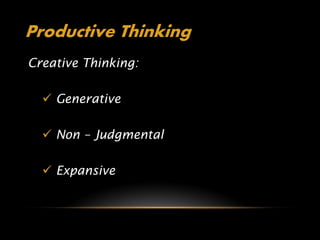
Creative Thinking:

   Generative

   Non – Judgmental

   Expansive
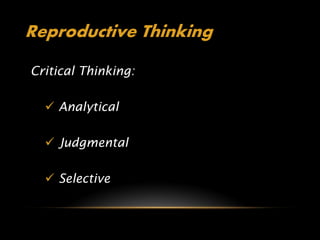
Reproductive Thinking

Critical Thinking:

   Analytical

   Judgmental

   Selective
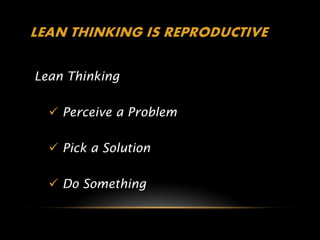
LEAN THINKING IS REPRODUCTIVE

Lean Thinking

   Perceive a Problem

   Pick a Solution

   Do Something
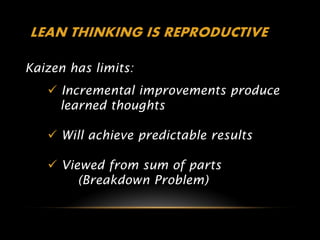
LEAN THINKING IS REPRODUCTIVE

Kaizen has limits:
    Incremental improvements produce
     learned thoughts

    Will achieve predictable results

    Viewed from sum of parts
        (Breakdown Problem)
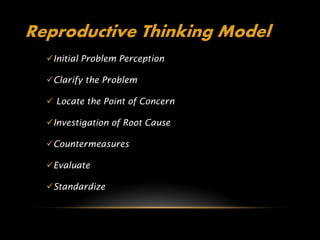
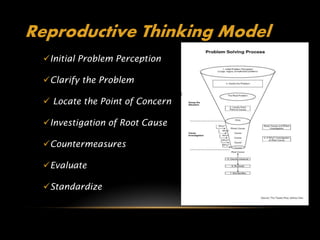
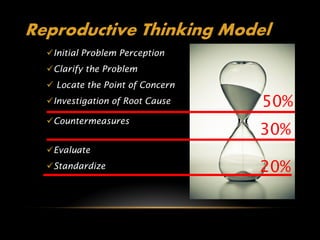
Reproductive Thinking Model
  Initial Problem Perception

  Clarify the Problem

   Locate the Point of Concern

  Investigation of Root Cause

  Countermeasures

  Evaluate

  Standardize
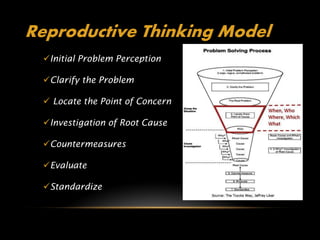
Reproductive Thinking Model
  Initial Problem Perception

  Clarify the Problem

   Locate the Point of Concern

  Investigation of Root Cause

  Countermeasures

  Evaluate

  Standardize
Reproductive Thinking Model
  Initial Problem Perception

  Clarify the Problem

   Locate the Point of Concern

  Investigation of Root Cause

  Countermeasures

  Evaluate

  Standardize
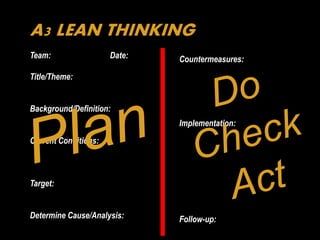
A3 LEAN THINKING
Team:                 Date:   Countermeasures:
Title/Theme:


Background/Definition:
                              Implementation:
Current Conditions:


Target:


Determine Cause/Analysis:     Follow-up:
Based
 on Scientific
Experimentatio
      n
Productive Thinking
Creative Thinking:

   Generative

   Non – Judgmental

   Expansive
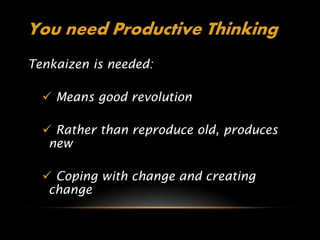
You need Productive Thinking
Tenkaizen is needed:

   Means good revolution

   Rather than reproduce old, produces
   new

   Coping with change and creating
   change
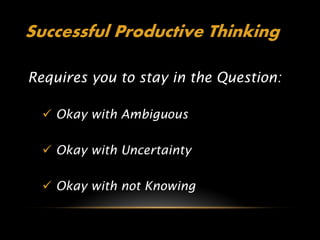
Successful Productive Thinking

Requires you to stay in the Question:

   Okay with Ambiguous

   Okay with Uncertainty

   Okay with not Knowing
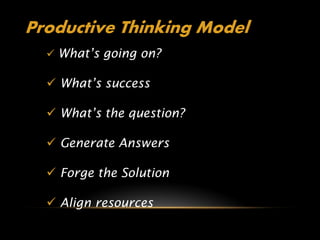
Productive Thinking Model
   What’s going on?

   What’s success

   What’s the question?

   Generate Answers

   Forge the Solution

   Align resources
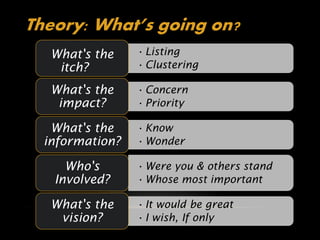
Theory: What’s going on?
   What's the    • Listing
    itch?        • Clustering

   What's the    • Concern
    impact?      • Priority

   What's the    • Know
  information?   • Wonder

     Who's       • Were you & others stand
   Involved?     • Whose most important

   What's the    • It would be great
    vision?      • I wish, If only
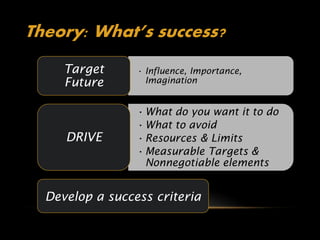
Theory: What’s success?
     Target      • Influence, Importance,
     Future        Imagination


                 • What do you want it to do
                 • What to avoid
     DRIVE       • Resources & Limits
                 • Measurable Targets &
                   Nonnegotiable elements


  Develop a success criteria
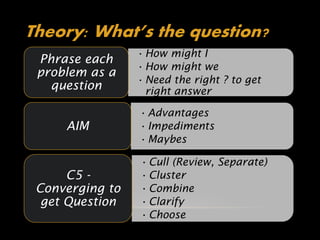
Theory: What’s the question?
                 • How might I
 Phrase each
                 • How might we
 problem as a
                 • Need the right ? to get
   question        right answer

                 • Advantages
     AIM         • Impediments
                 • Maybes

                 • Cull (Review, Separate)
      C5 -       • Cluster
 Converging to   • Combine
  get Question   • Clarify
                 • Choose
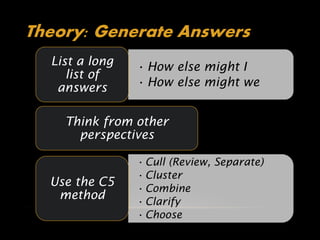
Theory: Generate Answers
  List a long   • How else might I
     list of
   answers      • How else might we


    Think from other
      perspectives

                • Cull (Review, Separate)
                • Cluster
  Use the C5    • Combine
   method       • Clarify
                • Choose
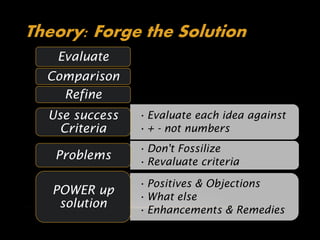
Theory: Forge the Solution
   Evaluate
  Comparison
    Refine
  Use success   • Evaluate each idea against
    Criteria    • + - not numbers
                • Don't Fossilize
   Problems     • Revaluate criteria

                • Positives & Objections
   POWER up     • What else
    solution    • Enhancements & Remedies
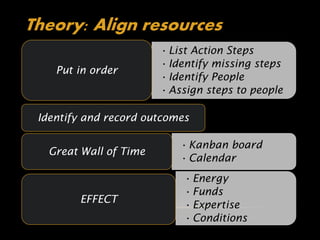
Theory: Align resources
                        • List Action Steps
                        • Identify missing steps
    Put in order
                        • Identify People
                        • Assign steps to people

 Identify and record outcomes

                           • Kanban board
   Great Wall of Time
                           • Calendar
                            • Energy
                            • Funds
        EFFECT
                            • Expertise
                            • Conditions
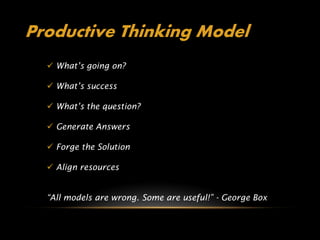
Productive Thinking Model
   What’s going on?

   What’s success

   What’s the question?

   Generate Answers

   Forge the Solution

   Align resources


  “All models are wrong. Some are useful!” - George Box
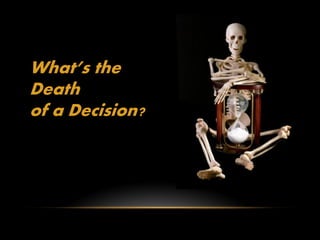
What’s the
Death
of a Decision?
Poorly Managed Time….
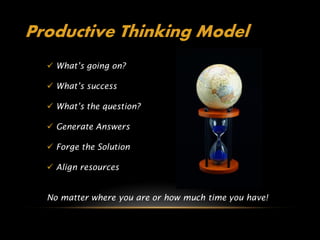
Productive Thinking Model
   What’s going on?

   What’s success

   What’s the question?

   Generate Answers

   Forge the Solution

   Align resources


  No matter where you are or how much time you have!
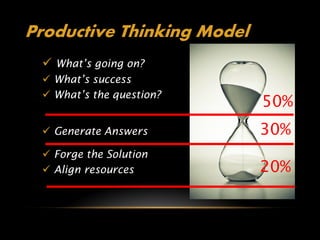
Productive Thinking Model
  What’s going on?
  What’s success
  What’s the question?
                            50%
  Generate Answers         30%
  Forge the Solution
  Align resources          20%
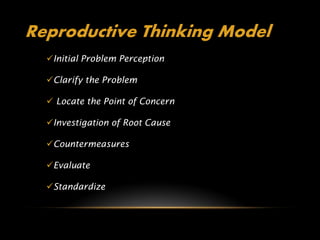
Reproductive Thinking Model
  Initial Problem Perception

  Clarify the Problem

   Locate the Point of Concern

  Investigation of Root Cause

  Countermeasures

  Evaluate

  Standardize
Reproductive Thinking Model
  Initial Problem Perception
  Clarify the Problem
   Locate the Point of Concern
  Investigation of Root Cause    50%
  Countermeasures
                                  30%
  Evaluate
  Standardize                    20%
Manage Time, Manage Decisions
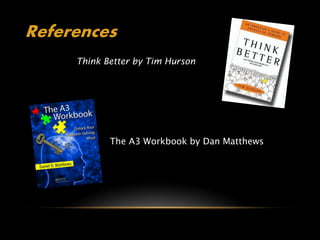
References
     Think Better by Tim Hurson


            The A3 Workbook by Dan Matthews
Visit the Business901 Website

                       Lean Marketing House
                       Marketing with PDCA
                       Marketing with A3
                       Lean Engagement Team


Our Mission is to bring Continuous Improvement
                 to Sales and Marketing.

Problem Diagnostics - Q & A

  • 1.
  • 3.
  • 8.
    Good Problem Solversknow Types of Thinking they need Breakthrough Incremental  How much time they have
  • 9.
    2 Types ofThinking Needed Reproductive Thinking:  Valuable when Consequences of failure are high (Incremental). Productive Thinking:  Valuable when Consequences of failure are low (Breakthrough)
  • 10.
    Overarching Principles Creative Thinking (Breakthrough) is separate from Critical Thinking (Incremental)
  • 11.
    Productive Thinking Creative Thinking:  Generative  Non – Judgmental  Expansive
  • 12.
    Reproductive Thinking Critical Thinking:  Analytical  Judgmental  Selective
  • 13.
    LEAN THINKING ISREPRODUCTIVE Lean Thinking  Perceive a Problem  Pick a Solution  Do Something
  • 14.
    LEAN THINKING ISREPRODUCTIVE Kaizen has limits:  Incremental improvements produce learned thoughts  Will achieve predictable results  Viewed from sum of parts (Breakdown Problem)
  • 15.
    Reproductive Thinking Model Initial Problem Perception Clarify the Problem  Locate the Point of Concern Investigation of Root Cause Countermeasures Evaluate Standardize
  • 16.
    Reproductive Thinking Model Initial Problem Perception Clarify the Problem  Locate the Point of Concern Investigation of Root Cause Countermeasures Evaluate Standardize
  • 17.
    Reproductive Thinking Model Initial Problem Perception Clarify the Problem  Locate the Point of Concern Investigation of Root Cause Countermeasures Evaluate Standardize
  • 18.
    A3 LEAN THINKING Team: Date: Countermeasures: Title/Theme: Background/Definition: Implementation: Current Conditions: Target: Determine Cause/Analysis: Follow-up:
  • 19.
  • 20.
    Productive Thinking Creative Thinking:  Generative  Non – Judgmental  Expansive
  • 21.
    You need ProductiveThinking Tenkaizen is needed:  Means good revolution  Rather than reproduce old, produces new  Coping with change and creating change
  • 22.
    Successful Productive Thinking Requiresyou to stay in the Question:  Okay with Ambiguous  Okay with Uncertainty  Okay with not Knowing
  • 23.
    Productive Thinking Model  What’s going on?  What’s success  What’s the question?  Generate Answers  Forge the Solution  Align resources
  • 24.
    Theory: What’s goingon? What's the • Listing itch? • Clustering What's the • Concern impact? • Priority What's the • Know information? • Wonder Who's • Were you & others stand Involved? • Whose most important What's the • It would be great vision? • I wish, If only
  • 25.
    Theory: What’s success? Target • Influence, Importance, Future Imagination • What do you want it to do • What to avoid DRIVE • Resources & Limits • Measurable Targets & Nonnegotiable elements Develop a success criteria
  • 26.
    Theory: What’s thequestion? • How might I Phrase each • How might we problem as a • Need the right ? to get question right answer • Advantages AIM • Impediments • Maybes • Cull (Review, Separate) C5 - • Cluster Converging to • Combine get Question • Clarify • Choose
  • 27.
    Theory: Generate Answers List a long • How else might I list of answers • How else might we Think from other perspectives • Cull (Review, Separate) • Cluster Use the C5 • Combine method • Clarify • Choose
  • 28.
    Theory: Forge theSolution Evaluate Comparison Refine Use success • Evaluate each idea against Criteria • + - not numbers • Don't Fossilize Problems • Revaluate criteria • Positives & Objections POWER up • What else solution • Enhancements & Remedies
  • 29.
    Theory: Align resources • List Action Steps • Identify missing steps Put in order • Identify People • Assign steps to people Identify and record outcomes • Kanban board Great Wall of Time • Calendar • Energy • Funds EFFECT • Expertise • Conditions
  • 30.
    Productive Thinking Model  What’s going on?  What’s success  What’s the question?  Generate Answers  Forge the Solution  Align resources “All models are wrong. Some are useful!” - George Box
  • 31.
  • 32.
  • 33.
    Productive Thinking Model  What’s going on?  What’s success  What’s the question?  Generate Answers  Forge the Solution  Align resources No matter where you are or how much time you have!
  • 34.
    Productive Thinking Model  What’s going on?  What’s success  What’s the question? 50%  Generate Answers 30%  Forge the Solution  Align resources 20%
  • 35.
    Reproductive Thinking Model Initial Problem Perception Clarify the Problem  Locate the Point of Concern Investigation of Root Cause Countermeasures Evaluate Standardize
  • 36.
    Reproductive Thinking Model Initial Problem Perception Clarify the Problem  Locate the Point of Concern Investigation of Root Cause 50% Countermeasures 30% Evaluate Standardize 20%
  • 37.
  • 38.
    References Think Better by Tim Hurson The A3 Workbook by Dan Matthews
  • 39.
    Visit the Business901Website Lean Marketing House Marketing with PDCA Marketing with A3 Lean Engagement Team Our Mission is to bring Continuous Improvement to Sales and Marketing.